

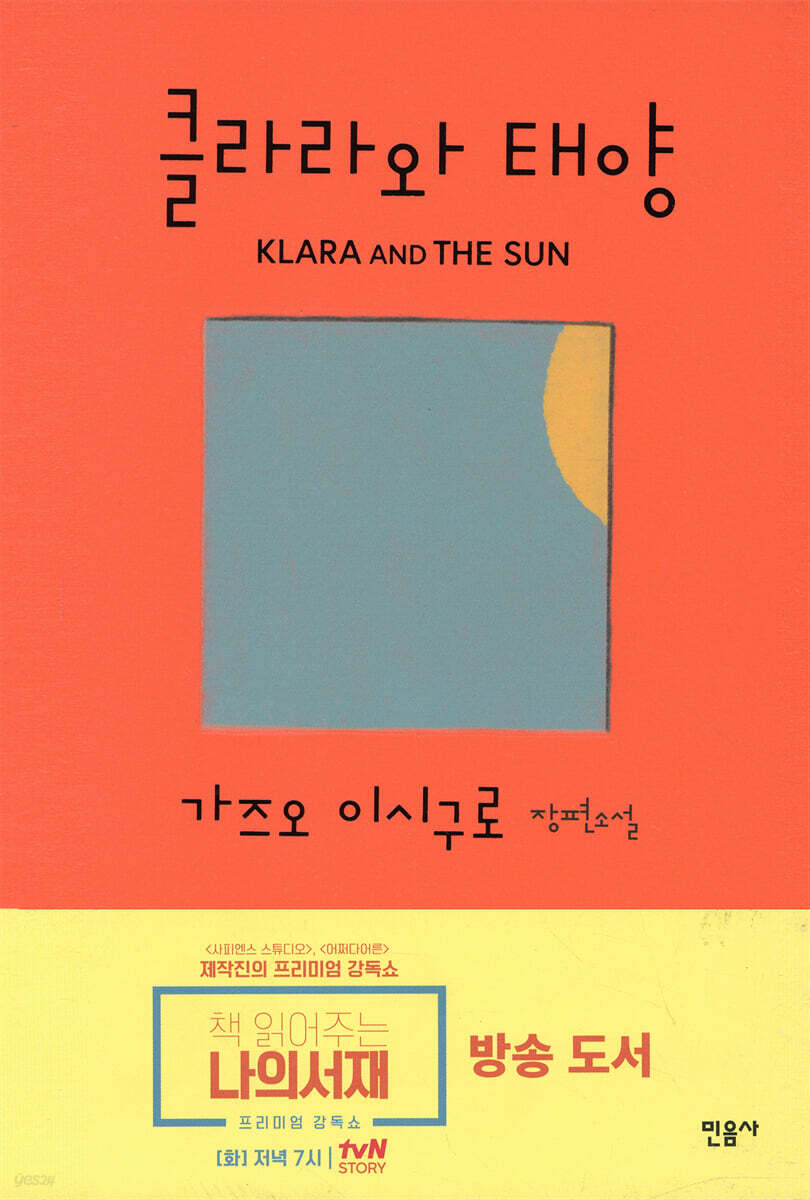
Clara and the Sun
 |
Description
Book Introduction
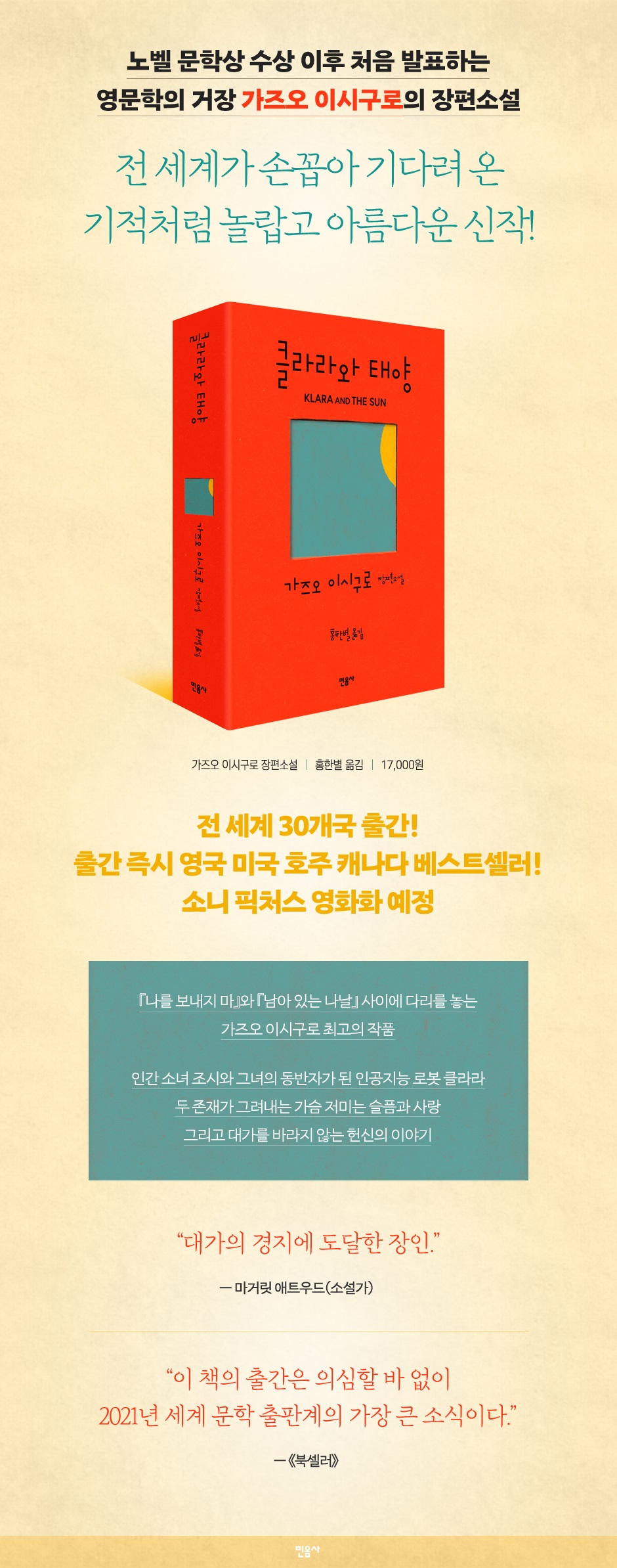
This is the first announcement since receiving the Nobel Prize in Literature. A novel by the master Kazuo Ishiguro A new, stunningly beautiful work, like a miracle the whole world has been waiting for! Kazuo Ishiguro, winner of the 2017 Nobel Prize in Literature and considered one of the greatest contemporary English writers, has published his first full-length novel since winning the Nobel Prize. This work, "Clara and the Sun," which readers around the world have been eagerly awaiting, contains the story of an artificial intelligence robot and a girl. Immediately after its publication, it rose to the number 1 bestseller in the UK, number 3 on the New York Times bestseller list in the US, number 1 in Australia, and number 2 in Canada, amid rave reviews from the media and enthusiasm from readers. Additionally, Sony Pictures has acquired the film rights and it will soon be made into a movie. In the not-too-distant future, artificial intelligence robots called AF (Artificial Friend) begin to be produced and sold as friends to human children. Among them, AF Clara, a girl who is particularly interested in observing humans and learning about their emotions and communication, waits for a fateful encounter with a child who will take her away in the AF store window. One day, a girl named Josie approaches Clara, who was observing the street. Josh promises to take Clara with him, and Clara waits for that day to come. Kazuo Ishiguro, in his greeting to Korean readers, stated that this book would serve as a bridge between his representative works, “The Remains of the Day” and “Never Let Me Go,” and major media outlets have grouped it together with “Never Let Me Go” and “The Buried Giant” as a trilogy, given that the protagonist is an artificial intelligence robot. Angus Carzil, editor-in-chief of Faber Publishing in the UK, which published the book, said the novel is “a work of the human heart that desperately speaks to the ‘here/now’ from somewhere else,” and that “as always with Ishiguro, it is a heart-pounding and surprising story, while still remaining in sync with his entire oeuvre.” |
- You can preview some of the book's contents.
Preview
index
Part 1, Chapter 9
Part 2, Chapter 75
Part 3 169
Part 4 267
Part 5, 385
Part 6, 415
Part 2, Chapter 75
Part 3 169
Part 4 267
Part 5, 385
Part 6, 415
Detailed image
Into the book
When Rosa and I first came into the world, we were in the middle of the store, near the magazine table, and even from our seats, we could see more than half the windows.
So I could see the outside world. (…) On lucky days when I could see the sun moving like this, I would stick my face out and try to receive as much of the sun's nutrients as possible.
When Rosa was around, I told her to do the same.
--- pp.11, 12
The boy who was with us, AF Rex, told us not to worry, that the sun could come to us no matter where we were.
Rex said, pointing to the floor.
“That’s the sun’s pattern.
If you're worried, just touch that.
Then it will become strong again.”
--- p.12
Sometimes the person who stopped walking didn't seem interested in us at all.
Just take off your sneakers and try to do something
Or sometimes I would stop to look at Oblong.
But there were also people who came up to the window and looked inside.
Mostly children, the age group we most closely resembled, approached us and seemed to enjoy seeing us.
Children came alone or with adults, pointing at us, laughing, making weird faces, tapping on the glass, and waving.
Sometimes the child would come up to us and look at us, with a sad or angry expression on his face, as if we had done something wrong.
This child quickly changed and began to smile and wave like other children, but after two days of standing in front of the window, I could still sense that there was something different among the other children.
--- p.21
Josh walked close enough to the window to allow pedestrians to pass behind him, then stopped and smiled at me.
“Hello,” Josh said from beyond the window.
“Can you hear me?”
Because the child spoke to me, I was able to turn to the child, smile back, and nod.
“Really?” said Josh.
“It’s so noisy that I can’t hear my own voice very well.
“Can you really hear my voice?”
I nodded and Josh shook his head as if he was curious.
--- p.24
As they reached the RPO building, the two hugged each other tightly as if they were one body.
However, seeing that sight, he poured out all his nutrients on the two of them.
The coffee cup lady still couldn't see his face, but she could see that the man had his eyes tightly shut.
I couldn't tell if I was happy or upset.
“I guess you’re really happy to meet those people.” The manager said, and I realized that he was looking at the two of them as I was.
“Yes, you look very happy.
But strangely enough, it also seems like he's upset."
“Oh, Clara.
“You’re not missing anything,” the manager said quietly.
--- p.39
The manager turned around again, as if about to leave.
"That's not it, Clara. You don't think you made a promise to anyone, do you?"
I wish the manager would scold me like he scolded the two boys AF for laughing at the beggar man in the window.
I thought so.
But the manager put his hand on my shoulder and spoke in an even lower voice than before.
“Listen to me carefully.
Kids make promises all the time.
Come to the window and make all kinds of promises.
Tell him you'll be back and don't follow anyone else.
That happens all the time.
But there are many more children who never come back.
In more severe cases, the child comes back, but unfortunately, he ignores the AF he was waiting for and chooses another AF.
That's just how kids are.
You have always learned a lot by observing the world.
Keep this in mind too.
Do you understand?
"yes."
"good.
“Well then, let’s call this story a day.” The manager patted my arm and turned around.
So I could see the outside world. (…) On lucky days when I could see the sun moving like this, I would stick my face out and try to receive as much of the sun's nutrients as possible.
When Rosa was around, I told her to do the same.
--- pp.11, 12
The boy who was with us, AF Rex, told us not to worry, that the sun could come to us no matter where we were.
Rex said, pointing to the floor.
“That’s the sun’s pattern.
If you're worried, just touch that.
Then it will become strong again.”
--- p.12
Sometimes the person who stopped walking didn't seem interested in us at all.
Just take off your sneakers and try to do something
Or sometimes I would stop to look at Oblong.
But there were also people who came up to the window and looked inside.
Mostly children, the age group we most closely resembled, approached us and seemed to enjoy seeing us.
Children came alone or with adults, pointing at us, laughing, making weird faces, tapping on the glass, and waving.
Sometimes the child would come up to us and look at us, with a sad or angry expression on his face, as if we had done something wrong.
This child quickly changed and began to smile and wave like other children, but after two days of standing in front of the window, I could still sense that there was something different among the other children.
--- p.21
Josh walked close enough to the window to allow pedestrians to pass behind him, then stopped and smiled at me.
“Hello,” Josh said from beyond the window.
“Can you hear me?”
Because the child spoke to me, I was able to turn to the child, smile back, and nod.
“Really?” said Josh.
“It’s so noisy that I can’t hear my own voice very well.
“Can you really hear my voice?”
I nodded and Josh shook his head as if he was curious.
--- p.24
As they reached the RPO building, the two hugged each other tightly as if they were one body.
However, seeing that sight, he poured out all his nutrients on the two of them.
The coffee cup lady still couldn't see his face, but she could see that the man had his eyes tightly shut.
I couldn't tell if I was happy or upset.
“I guess you’re really happy to meet those people.” The manager said, and I realized that he was looking at the two of them as I was.
“Yes, you look very happy.
But strangely enough, it also seems like he's upset."
“Oh, Clara.
“You’re not missing anything,” the manager said quietly.
--- p.39
The manager turned around again, as if about to leave.
"That's not it, Clara. You don't think you made a promise to anyone, do you?"
I wish the manager would scold me like he scolded the two boys AF for laughing at the beggar man in the window.
I thought so.
But the manager put his hand on my shoulder and spoke in an even lower voice than before.
“Listen to me carefully.
Kids make promises all the time.
Come to the window and make all kinds of promises.
Tell him you'll be back and don't follow anyone else.
That happens all the time.
But there are many more children who never come back.
In more severe cases, the child comes back, but unfortunately, he ignores the AF he was waiting for and chooses another AF.
That's just how kids are.
You have always learned a lot by observing the world.
Keep this in mind too.
Do you understand?
"yes."
"good.
“Well then, let’s call this story a day.” The manager patted my arm and turned around.
--- pp.56, 57
Publisher's Review
Bridging the gap between "Don't Let Me Go" and "The Remains of the Day"
Kazuo Ishiguro's best works
Josie, a human girl, and Clara, an artificial intelligence robot who becomes her companion.
The heartbreaking sadness and love portrayed by two beings,
And a story of devotion that expects nothing in return
In the not-too-distant future, artificial intelligence robots called AF (Artificial Friend) begin to be produced and sold as friends to human children.
Among them, AF Clara, a girl who is particularly interested in observing humans and learning about their emotions and communication, waits for a fateful encounter with a child who will take her away in the AF store window.
One day, a girl named Josie approaches Clara, who was observing the street.
Josh promises to take Clara with him, and Clara waits for that day to come.
Kazuo Ishiguro, in his greeting to Korean readers, stated that this book would serve as a bridge between his representative works, “The Remains of the Day” and “Never Let Me Go,” and major media outlets have grouped it together with “Never Let Me Go” and “The Buried Giant” as a trilogy, given that the protagonist is an artificial intelligence robot.
Angus Carzil, editor-in-chief of Faber Publishing in the UK, which published the book, said the novel is “a work of the human heart that desperately speaks to the ‘here/now’ from somewhere else,” and that “as always with Ishiguro, it is a heart-pounding and surprising story, while still remaining in sync with his entire oeuvre.”
The Korean version of "Clara and the Sun" will be available in Korea starting March 29th, when pre-orders end, and a limited first edition of 5,000 copies will be printed and signed by the author.
Additionally, Kazuo Ishiguro's representative works, "The Remains of the Day," "Never Let Me Go," and "Nocturne," will soon be republished with new covers.
Clara and the Sun continues the meditation (on life and death) powerfully and effectively.
Kazuo Ishiguro uses non-human characters to examine our lives through theological reflection.
The New Yorker
Clara builds a relationship that is steady and beautiful, like Zeno's arrow aimed at the heart.
Readers will love this book.
Because it reenacts how we learn to love.
The Guardian
Kazuo Ishiguro once again demonstrates his mastery of writing, unfolding a fable about robots and loneliness through quiet yet powerful emotion. Evening Standard
There is no fault to be found.
A book with the same DNA as Never Let Me Go: emotionally open, inviting us to look inside ourselves, and filled with affectionate, touching, and genuine humanity.
The Times
A masterful masterpiece of immense beauty, meticulous control, and, above all, clarity and simplicity. 《Financial Times》
Kazuo Ishiguro, Nobel Prize winner in literature, leads readers into the hazy dream of a future world of scientific advancement, as he did in Never Let Me Go.
A fable about love, humanity, and science.
It delights readers with its amazing skill in handling the genre.
Entertainment Weekly
Kazuo Ishiguro's best works
Josie, a human girl, and Clara, an artificial intelligence robot who becomes her companion.
The heartbreaking sadness and love portrayed by two beings,
And a story of devotion that expects nothing in return
In the not-too-distant future, artificial intelligence robots called AF (Artificial Friend) begin to be produced and sold as friends to human children.
Among them, AF Clara, a girl who is particularly interested in observing humans and learning about their emotions and communication, waits for a fateful encounter with a child who will take her away in the AF store window.
One day, a girl named Josie approaches Clara, who was observing the street.
Josh promises to take Clara with him, and Clara waits for that day to come.
Kazuo Ishiguro, in his greeting to Korean readers, stated that this book would serve as a bridge between his representative works, “The Remains of the Day” and “Never Let Me Go,” and major media outlets have grouped it together with “Never Let Me Go” and “The Buried Giant” as a trilogy, given that the protagonist is an artificial intelligence robot.
Angus Carzil, editor-in-chief of Faber Publishing in the UK, which published the book, said the novel is “a work of the human heart that desperately speaks to the ‘here/now’ from somewhere else,” and that “as always with Ishiguro, it is a heart-pounding and surprising story, while still remaining in sync with his entire oeuvre.”
The Korean version of "Clara and the Sun" will be available in Korea starting March 29th, when pre-orders end, and a limited first edition of 5,000 copies will be printed and signed by the author.
Additionally, Kazuo Ishiguro's representative works, "The Remains of the Day," "Never Let Me Go," and "Nocturne," will soon be republished with new covers.
Clara and the Sun continues the meditation (on life and death) powerfully and effectively.
Kazuo Ishiguro uses non-human characters to examine our lives through theological reflection.
The New Yorker
Clara builds a relationship that is steady and beautiful, like Zeno's arrow aimed at the heart.
Readers will love this book.
Because it reenacts how we learn to love.
The Guardian
Kazuo Ishiguro once again demonstrates his mastery of writing, unfolding a fable about robots and loneliness through quiet yet powerful emotion. Evening Standard
There is no fault to be found.
A book with the same DNA as Never Let Me Go: emotionally open, inviting us to look inside ourselves, and filled with affectionate, touching, and genuine humanity.
The Times
A masterful masterpiece of immense beauty, meticulous control, and, above all, clarity and simplicity. 《Financial Times》
Kazuo Ishiguro, Nobel Prize winner in literature, leads readers into the hazy dream of a future world of scientific advancement, as he did in Never Let Me Go.
A fable about love, humanity, and science.
It delights readers with its amazing skill in handling the genre.
Entertainment Weekly
GOODS SPECIFICS
- Publication date: March 29, 2021
- Format: Hardcover book binding method guide
- Page count, weight, size: 448 pages | 638g | 137*197*30mm
- ISBN13: 9788937417566
- ISBN10: 8937417561
You may also like
카테고리
korean


korean

![GQ KOREA Mark (Monthly): December [2025]](http://librairie.coreenne.fr/cdn/shop/files/8ef265dbbfbf186523ed75ba7319009d.jpg?v=1765340328&width=3840)


