

The dream I become
 |
Description
Book Introduction
- A word from MD
-
A story about finding the whole 'me'"The Dream of Becoming Me" depicts the process of the protagonist, now an adult, facing his past and finding his true self.
The universal moments of life, thoughts, and emotions that arise from the pain of the past, all of which are vividly expressed in the author's unhesitating sentences, washed clean and taken out.
March 5, 2021. Novel/Poetry PD Park Hyung-wook
The thirty-third novel in the special feature series "Modern Literature Pin Series" of the monthly magazine [Modern Literature], which selects the most modern and cutting-edge writers of contemporary Korean literature and includes new poetry and novels, has been published. Choi Jin-young's "The Dream of Becoming Me" is the latest.
Since his debut in 2006 with [Practical Literature], the author has been looking into the realistic issues of this era and building a literary world that is both direct and profound. This new work is a revised version of the novel published in the May 2020 issue of [Modern Literature].
This novel delicately depicts the process of a woman, so deeply wounded that she wants to erase her existence, facing the past she had turned away from after the death of her grandmother, with whom she had lived since childhood, and discovering the true meaning of her existence and the relationships intertwined with her.
Since his debut in 2006 with [Practical Literature], the author has been looking into the realistic issues of this era and building a literary world that is both direct and profound. This new work is a revised version of the novel published in the May 2020 issue of [Modern Literature].
This novel delicately depicts the process of a woman, so deeply wounded that she wants to erase her existence, facing the past she had turned away from after the death of her grandmother, with whom she had lived since childhood, and discovering the true meaning of her existence and the relationships intertwined with her.
- You can preview some of the book's contents.
Preview
index
My Dream 009
Preface 224
Author's Note 236
Preface 224
Author's Note 236
Detailed image
Into the book
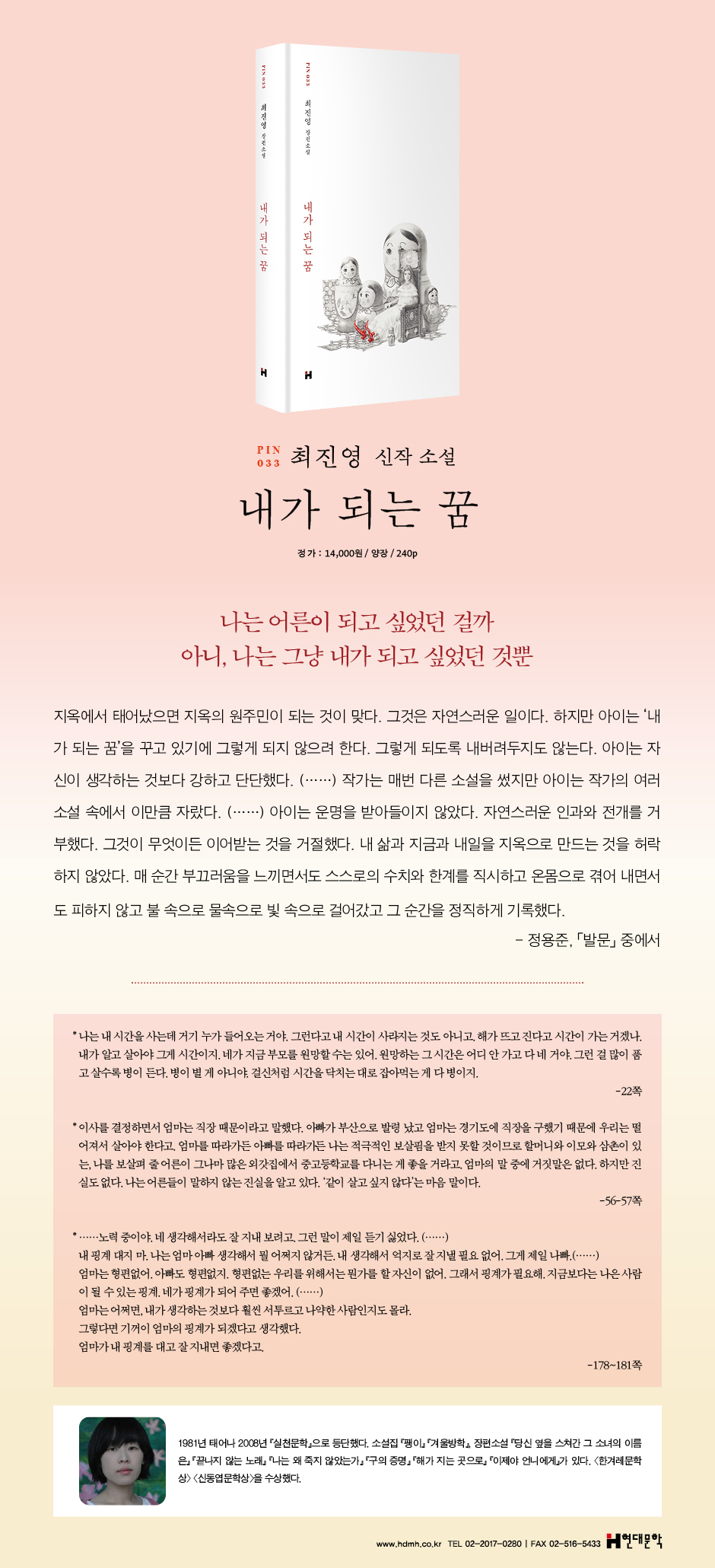
My dad often said, 'This is not the life I wanted.'
With an expression of extreme resentment and anger.
The life my dad wants only exists in my head.
Dad wants life to take care of itself.
My dad doesn't seem to realize that he is life.
Maybe someday I too will become a polite, polite, and honest person.
But I'm only fourteen now.
Even my dad, who's much older than me, doesn't seem to be that kind of person yet, so how could he expect that of me? He doesn't even know me, yet he suddenly asks me who my best friend is and what I usually do with her...
--- p.54
When we decided to move, my mom said it was because of work.
My dad was transferred to Busan and my mom got a job in Gyeonggi-do, so we have to live apart.
Whether I follow in my mother's footsteps or my father's, I won't receive much active care, so I think it would be better for me to attend middle and high school at my maternal grandparents' house, where there are many adults who can take care of me, including my grandmother, aunts, and uncles.
There are no lies in what my mother says.
But there is no truth.
I know the truth that adults don't tell.
It means that you don't want to live together.
--- p.56~57
When I think about the weight of the textbooks and workbooks I carried from elementary school until I graduated from high school, words like "training" and "practice" come to mind.
The reason we train our shoulders and muscles by carrying backpacks as students is because, as adults, we have to carry enormous rocks, like the Earth itself. Even when carrying rocks the size of the Earth, adults barely feel their weight.
Because it's been trained.
Then, when you step into a puddle or a hole, you realize it.
Oh, this was so heavy
--- p.74
If it's something that can be solved, don't worry. If it's something that can't be solved, don't worry.
I never thought I would be a great person, but I never imagined myself to be like this.
The past is a waste.
I regret the days I've clearly lived more than the days I have left to live.
It was just for this to happen.
No one can be me and I can't be someone else.
All I can be is me.
If I'm not careful, even I might not be able to do it.
--- p.98~99
If you have something to say to your mom, say it.
There is no such thing.
When you're angry, say you're angry.
If you're upset, say you're upset.
Is that so, Mom? Huh? Does Mom tell Grandma everything? No, I don't think so.
Then, Mom, you tell me everything? You're an adult.
What does that matter?
I do that because I feel sorry for my mom.
Then just say you're sorry.
Sorry.
okay.
Look at this.
what.
Saying sorry won't change anything.
Well, the person who said sorry has to change.
--- p.156~157
I thought everyone except me would live in a harmonious home.
Other people's parents don't fight, and like the loving families we see countless times on television, a family made up of a father, mother, son, and daughter lives together loving and caring for each other.
I knew the 'family standard'.
I've seen it in books and learned it at school since I was little.
Dad wears a suit, Mom wears an apron, and the children, who are always siblings, listen to their parents well and all have gentle smiles on their faces.
I believed that my family was the right answer, even though I had never really looked into how other families around me lived.
That belief made me feel more miserable.
Perhaps a family that really lives like that is very rare.
Maybe everyone pretends to live like that, even though they don't.
People who don't even know they are deceiving each other and become more unhappy.
With an expression of extreme resentment and anger.
The life my dad wants only exists in my head.
Dad wants life to take care of itself.
My dad doesn't seem to realize that he is life.
Maybe someday I too will become a polite, polite, and honest person.
But I'm only fourteen now.
Even my dad, who's much older than me, doesn't seem to be that kind of person yet, so how could he expect that of me? He doesn't even know me, yet he suddenly asks me who my best friend is and what I usually do with her...
--- p.54
When we decided to move, my mom said it was because of work.
My dad was transferred to Busan and my mom got a job in Gyeonggi-do, so we have to live apart.
Whether I follow in my mother's footsteps or my father's, I won't receive much active care, so I think it would be better for me to attend middle and high school at my maternal grandparents' house, where there are many adults who can take care of me, including my grandmother, aunts, and uncles.
There are no lies in what my mother says.
But there is no truth.
I know the truth that adults don't tell.
It means that you don't want to live together.
--- p.56~57
When I think about the weight of the textbooks and workbooks I carried from elementary school until I graduated from high school, words like "training" and "practice" come to mind.
The reason we train our shoulders and muscles by carrying backpacks as students is because, as adults, we have to carry enormous rocks, like the Earth itself. Even when carrying rocks the size of the Earth, adults barely feel their weight.
Because it's been trained.
Then, when you step into a puddle or a hole, you realize it.
Oh, this was so heavy
--- p.74
If it's something that can be solved, don't worry. If it's something that can't be solved, don't worry.
I never thought I would be a great person, but I never imagined myself to be like this.
The past is a waste.
I regret the days I've clearly lived more than the days I have left to live.
It was just for this to happen.
No one can be me and I can't be someone else.
All I can be is me.
If I'm not careful, even I might not be able to do it.
--- p.98~99
If you have something to say to your mom, say it.
There is no such thing.
When you're angry, say you're angry.
If you're upset, say you're upset.
Is that so, Mom? Huh? Does Mom tell Grandma everything? No, I don't think so.
Then, Mom, you tell me everything? You're an adult.
What does that matter?
I do that because I feel sorry for my mom.
Then just say you're sorry.
Sorry.
okay.
Look at this.
what.
Saying sorry won't change anything.
Well, the person who said sorry has to change.
--- p.156~157
I thought everyone except me would live in a harmonious home.
Other people's parents don't fight, and like the loving families we see countless times on television, a family made up of a father, mother, son, and daughter lives together loving and caring for each other.
I knew the 'family standard'.
I've seen it in books and learned it at school since I was little.
Dad wears a suit, Mom wears an apron, and the children, who are always siblings, listen to their parents well and all have gentle smiles on their faces.
I believed that my family was the right answer, even though I had never really looked into how other families around me lived.
That belief made me feel more miserable.
Perhaps a family that really lives like that is very rare.
Maybe everyone pretends to live like that, even though they don't.
People who don't even know they are deceiving each other and become more unhappy.
--- p.204~205
Publisher's Review
With the most modern and cutting-edge writers of contemporary Korean literature
The thirty-third book in the "Modern Literature Pin Series" novel collection has been published!
The path to finding my true self, the dream of becoming myself
Since his literary debut in 2006, Choi Jin-young has demonstrated his unrivaled presence by winning the Hankyoreh Literary Award and the Shin Dong-yup Literary Award. He has published eight full-length novels and two short story collections to date, occupying an important position in the Korean literary world with his delicate sensibility, unstoppable narrative, and brilliant prose.
He did not hesitate to confront the dark realities of his time, including women who experienced loss, girls who grew up in abusive homes, and young irregular workers. In his new full-length novel, "The Dream I Become," he presents a story of encountering the sources of his own wounds that he had buried and ignored.
It looks back on the lives of 'adults' filled with regrets they have witnessed and experienced since childhood, and heartbreakingly unfolds the story of the protagonist who strives to become not just an adult, but his true self.
The protagonist, Tae-hee, who grew up with her maternal grandparents after being separated from her parents during her childhood, recalls the time she lived with her maternal grandparents when her maternal grandmother, who raised her, dies of old age.
A mother who couldn't even remember her birthday, a father who never contacted her, a friend from elementary school named Sunji who taught her the meaning of humiliation, a homeroom teacher who used verbally and sexually harassed her, and even a fight with her aunt who took out her anger on her for living in her room...
And he remembers a letter that was delivered to him.
It was a letter that ended up in the hands of young Taehee because the recipient's name was the same as hers, even though it was addressed to the wrong address.
Tae-hee, who was wandering in the sadness of being left alone, writes a letter lamenting all the relationships that are drifting apart while hiding the truth, just like the person who wrote the wrongly delivered letter, and puts it in the mailbox.
And surprisingly, the letter arrives at her studio apartment as an adult.
This novel delicately depicts the inner self of Tae-hee, who has lived her life ignoring the wounds engraved in her life from childhood to adulthood, only to suffer again in a conflicted relationship, and begins to look again at all her relationships, including her past self, which she cannot reconcile unless she unfolds them.
While reading the novel, I reflected on a scene from my life that I had long ignored.
It's a bit awkward to call it courage, but I was inspired by the protagonist's vitality, and I thought that since it was a problem about relationships and, as the sentence says, the problem was about people, there would be no answer.
But it was so simple and that's why the answer was clearer.
As in the text, I seemed to have avoided contemplating the tangled web of emotions, not people, as if I had been chasing the fragrant wind without finding the lilacs.
Who would have thought that the questions I had left hanging like a tangled necklace would be led by the hand of this young protagonist?
Transparent sentences seep silently into consciousness.
That's why this article is scary.
-Jeon Ari (novelist)
Author's Note
It's frustrating to think, 'I'm only one.'
Am I supposed to take responsibility for this life alone? When that happens, I think of myself at different ages.
Me at seven, fifteen, twenty-three, thirty-six, forty-eight, fifty-nine, and so on.
When I feel so dissatisfied with myself that I get stuck in a sticky, hazy mood, I think of my past self and my future self coexisting with my present self.
Here I am, heavily weary, but there I am shaking off my sorrow and smiling.
Imagining things like this gives me strength.
My sense of responsibility is gradually strengthening.
If I exist in various times, spaces, and universes… … When I am sad in one world, I am happy in another.
In that world, when I am lost in the wonders of life, in that world I curse life with all my might.
The countless I's cannot be called I, and the only I'm is a fleeting moment.
The universe is so vast, deep, and mysterious that it doesn't matter whether I am unique or countless; it's all the same.
If you don't forget the futility, you can be optimistic.
You can focus on the present.
this
The more I think about it, the more courage I gain.
You can write a novel while letting your eccentric anxiety talk to itself.
If you keep using it, you will be able to bear it.
(……) I can’t say that the me of yesterday and the me of today are the same, but I hope that the me of tomorrow will still be a writer.
Did I want to be an adult?
No, I just wanted to be me
If you were born in hell, you must become a native of hell.
It's natural.
But the child doesn't want to become like that because he is dreaming of becoming me.
I won't let that happen.
The child was stronger and more resilient than he thought.
(……) The author wrote a different novel every time.
Man-ai has grown this much in the author's many novels.
(……) The child did not accept his fate.
It rejected natural causality and development.
He refused to take over whatever it was.
I didn't allow my life, my present and my future to become hell.
Even though I felt ashamed at every moment, I faced my own shame and limitations, and experienced them with my whole body, but I did not avoid them, but walked into fire, into water, into light, and honestly recorded those moments.
-Jeong Yong-jun, from “Preface”
The thirty-third volume of the monthly "Pin Novel" published by the monthly magazine "Modern Literature"!
The "Modern Literature Pin Series" is a project that selects the most modern and cutting-edge writers of contemporary Korean literature, presents them in the monthly magazine "Modern Literature," and then publishes them in book form.
The single volumes presented here are individual works, but are also curated by six authors as a 'series'.
Modern literature hopes that the seriousness of this series will be ironically combined with the delicate lightness of the word 'pin'.
The <Modern Literature Pin Series> novel selection is also a monthly pin published by the monthly magazine 『Modern Literature』.
The follow-up issues, scheduled to be published on the 25th of each month, are designed to allow readers to see new works by Korea's top authors on a set date.
This is a kind of 'salary book' concept that is being introduced for the first time in Korean publishing history.
001 to 006 are composed of works by writers born between 1971 and 1973 and debuted between the late 1990s and 2000s, who are currently the backbone of Korean novels. 007 to 012 are composed of works by writers born between the late 1970s and early 1980s and debuted in the mid-to-late 2000s, who are currently the most active writers in Korean novels.
013 to 018 are composed of works by writers born between the mid-to-late 1950s and the 1960s, who played a pivotal role in leading the development of contemporary Korean literature, and writers who debuted between the 1980s and the mid-1990s. 019 to 024 are composed of works by young, energetic writers born in the 1980s who are writing a new history of Korean literature.
The Finn novels, which were published by generation, were grouped and published under the category of genre novels in 025-030, and 031-036 will be composed of works by writers born in the mid-to-late 1970s, when literature was at its peak.
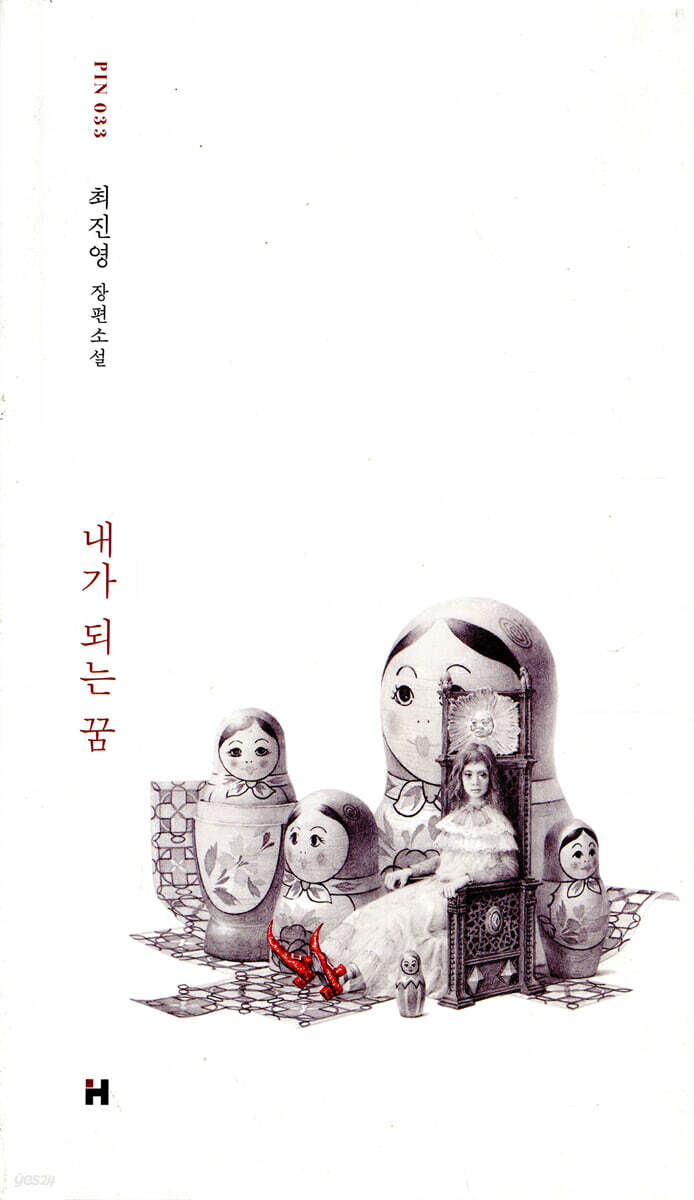
Modern Literature × Artist Park Min-jun
The "Modern Literature Pin Series" has become an original novel collection, an art anthology, reconstructed as a special work of art with a cover work imbued with the artist's soul.
The reason each novel possesses its own unique fragrance and profound artistic fascination is probably because of the spiritual harmony created by the meeting of the two worlds of novels and art.
Park Min-jun
Graduated from the Department of Painting, College of Fine Arts, Hongik University.
Graduated from the Department of Painting at the Graduate School of the same university, and completed the research course at the Department of Materials and Techniques at the Graduate School of Tokyo University of the Arts.
Exhibited at numerous domestic and international institutions and venues, including the Seoul Museum of Art and Gallery Hyundai.
He is also active as a novelist, having written “Raport Circus.”
By adding mythical images or historical anecdotes to new stories he has imagined, he is creating original screens that are 'unseen anywhere' but 'not completely unfamiliar'.
The thirty-third book in the "Modern Literature Pin Series" novel collection has been published!
The path to finding my true self, the dream of becoming myself
Since his literary debut in 2006, Choi Jin-young has demonstrated his unrivaled presence by winning the Hankyoreh Literary Award and the Shin Dong-yup Literary Award. He has published eight full-length novels and two short story collections to date, occupying an important position in the Korean literary world with his delicate sensibility, unstoppable narrative, and brilliant prose.
He did not hesitate to confront the dark realities of his time, including women who experienced loss, girls who grew up in abusive homes, and young irregular workers. In his new full-length novel, "The Dream I Become," he presents a story of encountering the sources of his own wounds that he had buried and ignored.
It looks back on the lives of 'adults' filled with regrets they have witnessed and experienced since childhood, and heartbreakingly unfolds the story of the protagonist who strives to become not just an adult, but his true self.
The protagonist, Tae-hee, who grew up with her maternal grandparents after being separated from her parents during her childhood, recalls the time she lived with her maternal grandparents when her maternal grandmother, who raised her, dies of old age.
A mother who couldn't even remember her birthday, a father who never contacted her, a friend from elementary school named Sunji who taught her the meaning of humiliation, a homeroom teacher who used verbally and sexually harassed her, and even a fight with her aunt who took out her anger on her for living in her room...
And he remembers a letter that was delivered to him.
It was a letter that ended up in the hands of young Taehee because the recipient's name was the same as hers, even though it was addressed to the wrong address.
Tae-hee, who was wandering in the sadness of being left alone, writes a letter lamenting all the relationships that are drifting apart while hiding the truth, just like the person who wrote the wrongly delivered letter, and puts it in the mailbox.
And surprisingly, the letter arrives at her studio apartment as an adult.
This novel delicately depicts the inner self of Tae-hee, who has lived her life ignoring the wounds engraved in her life from childhood to adulthood, only to suffer again in a conflicted relationship, and begins to look again at all her relationships, including her past self, which she cannot reconcile unless she unfolds them.
While reading the novel, I reflected on a scene from my life that I had long ignored.
It's a bit awkward to call it courage, but I was inspired by the protagonist's vitality, and I thought that since it was a problem about relationships and, as the sentence says, the problem was about people, there would be no answer.
But it was so simple and that's why the answer was clearer.
As in the text, I seemed to have avoided contemplating the tangled web of emotions, not people, as if I had been chasing the fragrant wind without finding the lilacs.
Who would have thought that the questions I had left hanging like a tangled necklace would be led by the hand of this young protagonist?
Transparent sentences seep silently into consciousness.
That's why this article is scary.
-Jeon Ari (novelist)
Author's Note
It's frustrating to think, 'I'm only one.'
Am I supposed to take responsibility for this life alone? When that happens, I think of myself at different ages.
Me at seven, fifteen, twenty-three, thirty-six, forty-eight, fifty-nine, and so on.
When I feel so dissatisfied with myself that I get stuck in a sticky, hazy mood, I think of my past self and my future self coexisting with my present self.
Here I am, heavily weary, but there I am shaking off my sorrow and smiling.
Imagining things like this gives me strength.
My sense of responsibility is gradually strengthening.
If I exist in various times, spaces, and universes… … When I am sad in one world, I am happy in another.
In that world, when I am lost in the wonders of life, in that world I curse life with all my might.
The countless I's cannot be called I, and the only I'm is a fleeting moment.
The universe is so vast, deep, and mysterious that it doesn't matter whether I am unique or countless; it's all the same.
If you don't forget the futility, you can be optimistic.
You can focus on the present.
this
The more I think about it, the more courage I gain.
You can write a novel while letting your eccentric anxiety talk to itself.
If you keep using it, you will be able to bear it.
(……) I can’t say that the me of yesterday and the me of today are the same, but I hope that the me of tomorrow will still be a writer.
Did I want to be an adult?
No, I just wanted to be me
If you were born in hell, you must become a native of hell.
It's natural.
But the child doesn't want to become like that because he is dreaming of becoming me.
I won't let that happen.
The child was stronger and more resilient than he thought.
(……) The author wrote a different novel every time.
Man-ai has grown this much in the author's many novels.
(……) The child did not accept his fate.
It rejected natural causality and development.
He refused to take over whatever it was.
I didn't allow my life, my present and my future to become hell.
Even though I felt ashamed at every moment, I faced my own shame and limitations, and experienced them with my whole body, but I did not avoid them, but walked into fire, into water, into light, and honestly recorded those moments.
-Jeong Yong-jun, from “Preface”
The thirty-third volume of the monthly "Pin Novel" published by the monthly magazine "Modern Literature"!
The "Modern Literature Pin Series" is a project that selects the most modern and cutting-edge writers of contemporary Korean literature, presents them in the monthly magazine "Modern Literature," and then publishes them in book form.
The single volumes presented here are individual works, but are also curated by six authors as a 'series'.
Modern literature hopes that the seriousness of this series will be ironically combined with the delicate lightness of the word 'pin'.
The <Modern Literature Pin Series> novel selection is also a monthly pin published by the monthly magazine 『Modern Literature』.
The follow-up issues, scheduled to be published on the 25th of each month, are designed to allow readers to see new works by Korea's top authors on a set date.
This is a kind of 'salary book' concept that is being introduced for the first time in Korean publishing history.
001 to 006 are composed of works by writers born between 1971 and 1973 and debuted between the late 1990s and 2000s, who are currently the backbone of Korean novels. 007 to 012 are composed of works by writers born between the late 1970s and early 1980s and debuted in the mid-to-late 2000s, who are currently the most active writers in Korean novels.
013 to 018 are composed of works by writers born between the mid-to-late 1950s and the 1960s, who played a pivotal role in leading the development of contemporary Korean literature, and writers who debuted between the 1980s and the mid-1990s. 019 to 024 are composed of works by young, energetic writers born in the 1980s who are writing a new history of Korean literature.
The Finn novels, which were published by generation, were grouped and published under the category of genre novels in 025-030, and 031-036 will be composed of works by writers born in the mid-to-late 1970s, when literature was at its peak.
Modern Literature × Artist Park Min-jun
The "Modern Literature Pin Series" has become an original novel collection, an art anthology, reconstructed as a special work of art with a cover work imbued with the artist's soul.
The reason each novel possesses its own unique fragrance and profound artistic fascination is probably because of the spiritual harmony created by the meeting of the two worlds of novels and art.
Park Min-jun
Graduated from the Department of Painting, College of Fine Arts, Hongik University.
Graduated from the Department of Painting at the Graduate School of the same university, and completed the research course at the Department of Materials and Techniques at the Graduate School of Tokyo University of the Arts.
Exhibited at numerous domestic and international institutions and venues, including the Seoul Museum of Art and Gallery Hyundai.
He is also active as a novelist, having written “Raport Circus.”
By adding mythical images or historical anecdotes to new stories he has imagined, he is creating original screens that are 'unseen anywhere' but 'not completely unfamiliar'.
GOODS SPECIFICS
- Publication date: February 25, 2021
- Format: Hardcover book binding method guide
- Page count, weight, size: 240 pages | 316g | 110*190*23mm
- ISBN13: 9791190885621
- ISBN10: 119088562X
You may also like
카테고리
korean


korean

![GQ KOREA Mark (Monthly): December [2025]](http://librairie.coreenne.fr/cdn/shop/files/8ef265dbbfbf186523ed75ba7319009d.jpg?v=1765340328&width=3840)


