

Dictionary of Lost Words
 |
Description
Book Introduction
- A word from MD
-
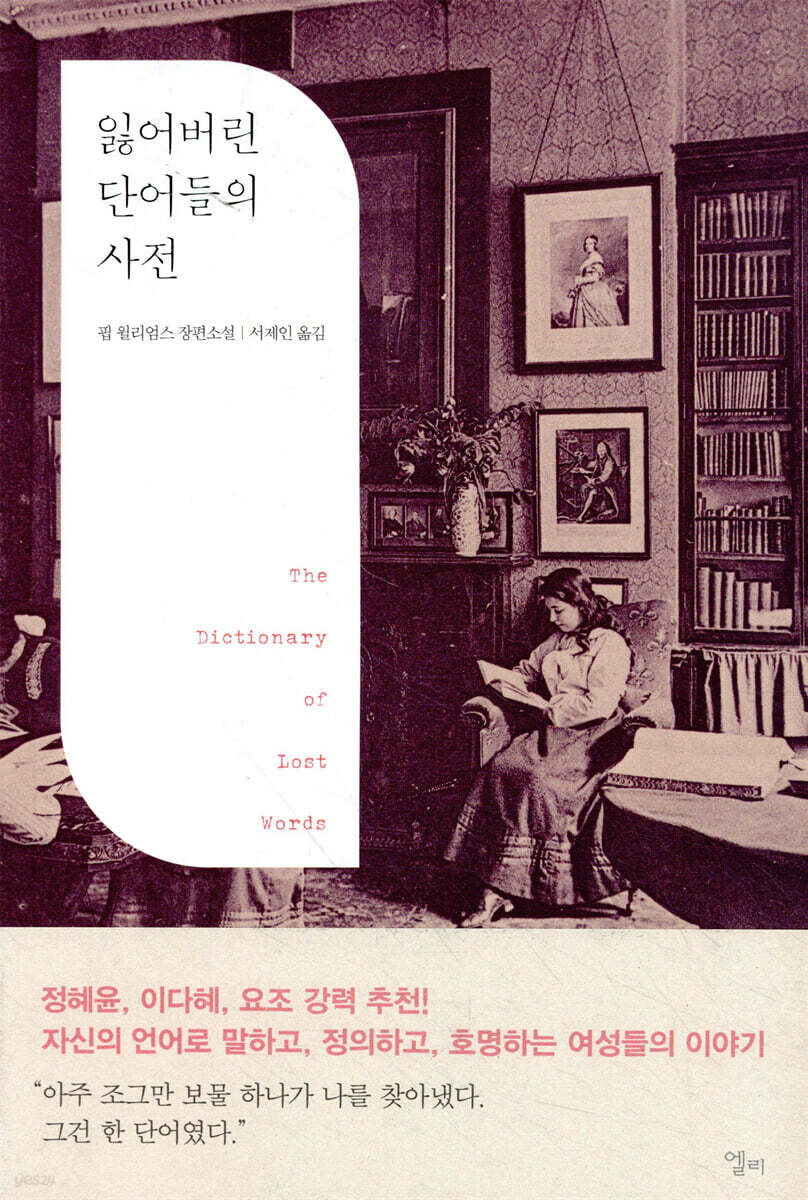
About the lost beings among the written wordsA novel based on the editor of the Oxford English Dictionary.
The story follows the perspective of a girl who spent a significant portion of her childhood in a dictionary editing room.
A child's questions about words soon lead to questions about the world, and in the journey to find answers, the history of those who have disappeared and deserve to be restored is revived.
February 2, 2021. Novel/Poetry PD Park Hyung-wook
Highly recommended by Jeong Hye-yoon, Lee Da-hye, and Yojo!
Stories of women speaking, defining, and calling out in their own language
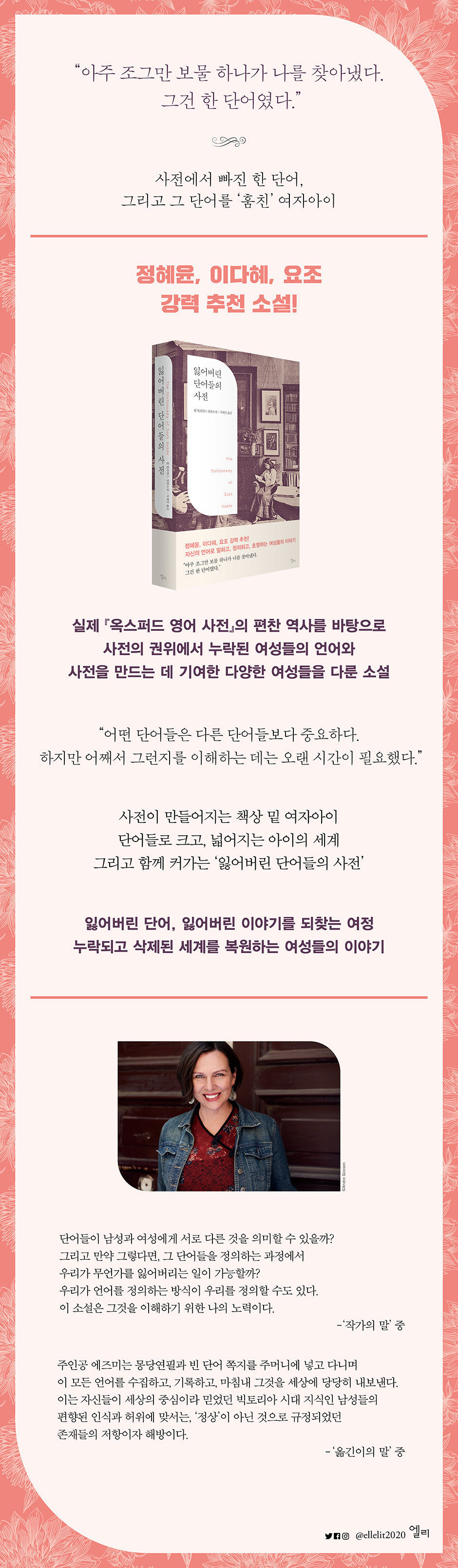
Based on the actual compilation history of the Oxford English Dictionary, this book shifts focus from the male editors who created this dictionary, which can be called the "canon of English," to highlight the diverse women who contributed to the dictionary's creation and the language of women who were left out of the dictionary's authority.
This novel begins with the perspective of a child named Esme under a desk, and as he grows, his perspective expands further and wider, moving on to fundamental questions about not only the history of dictionaries but also about words and writing.
The novel creates and explains this world, but it is not included in official authority, and it creates a world of words that are not written down but clearly exist and explain a certain world, with delicate emotions, beautiful sentences, and a love for writing and words.
This book is a fascinating history of the dictionary, a moving coming-of-age story of a young girl, and a history of women's rights, including the suffragette movement. Set at the turn of the century, it beautifully unfolds between the official world of the predominantly male elite and the colorful world behind it.
A hot topic with publishing contracts in over 10 countries around the world.
Stories of women speaking, defining, and calling out in their own language
Based on the actual compilation history of the Oxford English Dictionary, this book shifts focus from the male editors who created this dictionary, which can be called the "canon of English," to highlight the diverse women who contributed to the dictionary's creation and the language of women who were left out of the dictionary's authority.
This novel begins with the perspective of a child named Esme under a desk, and as he grows, his perspective expands further and wider, moving on to fundamental questions about not only the history of dictionaries but also about words and writing.
The novel creates and explains this world, but it is not included in official authority, and it creates a world of words that are not written down but clearly exist and explain a certain world, with delicate emotions, beautiful sentences, and a love for writing and words.
This book is a fascinating history of the dictionary, a moving coming-of-age story of a young girl, and a history of women's rights, including the suffragette movement. Set at the turn of the century, it beautifully unfolds between the official world of the predominantly male elite and the colorful world behind it.
A hot topic with publishing contracts in over 10 countries around the world.
- You can preview some of the book's contents.
Preview
index
Prologue February 1886
Part 1 1887-1896 Batten Plank~Distrustful
Part 2 1897-1901 Distrustfully~KyxEmpty stem
Part 3 1902-1907 Lap Knee~Nywe New
Part 4 1907-1913 Polygenous ~ Sorrow
Part 5 1914-1915 Speech~Sullen
Part 6 1928 Wise~Wyzen Esophagus
Epilogue Adelaide, 1989
Oxford English Dictionary Chronology
Chronology of major historical events appearing in the novel
Author's Note
Acknowledgements
Translator's Note
Part 1 1887-1896 Batten Plank~Distrustful
Part 2 1897-1901 Distrustfully~KyxEmpty stem
Part 3 1902-1907 Lap Knee~Nywe New
Part 4 1907-1913 Polygenous ~ Sorrow
Part 5 1914-1915 Speech~Sullen
Part 6 1928 Wise~Wyzen Esophagus
Epilogue Adelaide, 1989
Oxford English Dictionary Chronology
Chronology of major historical events appearing in the novel
Author's Note
Acknowledgements
Translator's Note
Detailed image
Into the book
Some words are more important than others.
Growing up in Scriptorium, that's what I was taught.
But it took a long time to understand why.
--- p.12
A very small treasure found me.
That was one word.
--- p.18
It was special because it came to me.
It was almost nothing, but it wasn't nothing either.
It was small and fragile, and might not have contained any significant meaning.
But I had to keep it from being thrown into the fireplace flames.
--- p.25~26
“It’s not paper I collect, Lizzie.
“They are words.” “But why are these words so important?” I didn’t know exactly.
It was closer to emotion than I thought.
Some words sounded like baby birds that had fallen from the nest.
Other words gave me the feeling that I had found a clue.
I knew those words were important, but I didn't know exactly why.
--- p.61~62
Custom has never helped any woman.
--- p.90
If I were a word, I sometimes wondered what kind of note I would be written on.
It's obviously a very long note.
It's probably a weird color.
It's probably just a piece of paper that doesn't quite fit the specifications.
I was afraid that maybe I would never find my place in the sorting bin.
--- p.170
“A dictionary is a history book, Esumi.
If I learned anything from that, it's that much of how we imagine the world today is bound to change.
How will things change? Well, we can only hope and speculate, but here's what we know for sure:
“Your future will be different from what your mother expected when she was your age.”
--- p.218
“The problem is, Esumi, Esumi is afraid of the wrong things.
Without the right to vote, nothing we say will be of any use, and that is what we should be afraid of.”
--- p.231~232
“The important thing isn’t forgiveness, Esmei.
We can't always make the choices we want.
But you just have to make the best of it with what you have to accept.
“Don’t think too deeply about it.”
--- p.316
I thought about all the words I had collected from Mabel, Lizzie, and the other women—the women who cut fish, cut cloth, and cleaned the women's restrooms on Magdalen Street.
They expressed their feelings in words that suited them, and they looked at me in awe as I wrote their words on the note.
These notes were precious to me, and I hid them in my trunk to keep them safe.
But from what? Was I afraid of being interrogated and being judged as flawed? Or was it my own fear?
--- p.342~343
“These words,” I said, reaching into my trunk and pulling out a handful of notes.
“These things didn’t come to me to hide.
These words need to be aired out.
It needs to be read, shared, and understood.
Maybe you'll be rejected, but you have to give it a chance.
“Like all the other words in the scriptorium.”
--- p.353
We looked at the notes in the trunk, which was in a mess.
I thought about all those days when I would search through books and folders to find the right words to describe what I was feeling, what I was experiencing.
The words chosen by the men who compiled the dictionary were not enough.
It happened so often.
--- p.353~354
How reassuring it is to know how you should behave.
As if he had his own definition printed cleanly in black letters.
--- p.367
Charlotte Marsh was the daughter of the painter Arthur Hardwick Marsh.
Laura Ainsworth's father was a respected schoolmaster.
Mary Lee was a builder's wife.
This is how women were defined.
'bondwoman'.
That word came to mind again, and I realized that the words that most often define us are those that describe the roles we play in relation to others.
--- p.368~369
This is going to be a long fight.
Fight where you can demonstrate your skills, and let others fight their own battles.
--- p.373
Courage and fear fought within me.
I hoped fear wouldn't win.
--- p.391~392
For some experiences, dictionaries only provide words that come close to it.
I already knew that 'sadness' was one of them.
--- p.436
There aren't many words with as many variants as 'love'.
I felt the word resonate deeply within me, and I realized that it meant something different from any other word I had ever heard or said.
--- p.453
All these women and their words.
The joy of writing their names down.
The hope that some part of them will remain long after they are forgotten.
--- p.491
As a poet, you might be able to expand certain words to mean more than our dictionary makers have given them.
My love, I am not a poet.
The words I possess pale and feeble compared to the immense power of this experience.
--- p.510
That's what Esumi did.
Noticing who is missing from the official records and giving them a chance to speak.
Growing up in Scriptorium, that's what I was taught.
But it took a long time to understand why.
--- p.12
A very small treasure found me.
That was one word.
--- p.18
It was special because it came to me.
It was almost nothing, but it wasn't nothing either.
It was small and fragile, and might not have contained any significant meaning.
But I had to keep it from being thrown into the fireplace flames.
--- p.25~26
“It’s not paper I collect, Lizzie.
“They are words.” “But why are these words so important?” I didn’t know exactly.
It was closer to emotion than I thought.
Some words sounded like baby birds that had fallen from the nest.
Other words gave me the feeling that I had found a clue.
I knew those words were important, but I didn't know exactly why.
--- p.61~62
Custom has never helped any woman.
--- p.90
If I were a word, I sometimes wondered what kind of note I would be written on.
It's obviously a very long note.
It's probably a weird color.
It's probably just a piece of paper that doesn't quite fit the specifications.
I was afraid that maybe I would never find my place in the sorting bin.
--- p.170
“A dictionary is a history book, Esumi.
If I learned anything from that, it's that much of how we imagine the world today is bound to change.
How will things change? Well, we can only hope and speculate, but here's what we know for sure:
“Your future will be different from what your mother expected when she was your age.”
--- p.218
“The problem is, Esumi, Esumi is afraid of the wrong things.
Without the right to vote, nothing we say will be of any use, and that is what we should be afraid of.”
--- p.231~232
“The important thing isn’t forgiveness, Esmei.
We can't always make the choices we want.
But you just have to make the best of it with what you have to accept.
“Don’t think too deeply about it.”
--- p.316
I thought about all the words I had collected from Mabel, Lizzie, and the other women—the women who cut fish, cut cloth, and cleaned the women's restrooms on Magdalen Street.
They expressed their feelings in words that suited them, and they looked at me in awe as I wrote their words on the note.
These notes were precious to me, and I hid them in my trunk to keep them safe.
But from what? Was I afraid of being interrogated and being judged as flawed? Or was it my own fear?
--- p.342~343
“These words,” I said, reaching into my trunk and pulling out a handful of notes.
“These things didn’t come to me to hide.
These words need to be aired out.
It needs to be read, shared, and understood.
Maybe you'll be rejected, but you have to give it a chance.
“Like all the other words in the scriptorium.”
--- p.353
We looked at the notes in the trunk, which was in a mess.
I thought about all those days when I would search through books and folders to find the right words to describe what I was feeling, what I was experiencing.
The words chosen by the men who compiled the dictionary were not enough.
It happened so often.
--- p.353~354
How reassuring it is to know how you should behave.
As if he had his own definition printed cleanly in black letters.
--- p.367
Charlotte Marsh was the daughter of the painter Arthur Hardwick Marsh.
Laura Ainsworth's father was a respected schoolmaster.
Mary Lee was a builder's wife.
This is how women were defined.
'bondwoman'.
That word came to mind again, and I realized that the words that most often define us are those that describe the roles we play in relation to others.
--- p.368~369
This is going to be a long fight.
Fight where you can demonstrate your skills, and let others fight their own battles.
--- p.373
Courage and fear fought within me.
I hoped fear wouldn't win.
--- p.391~392
For some experiences, dictionaries only provide words that come close to it.
I already knew that 'sadness' was one of them.
--- p.436
There aren't many words with as many variants as 'love'.
I felt the word resonate deeply within me, and I realized that it meant something different from any other word I had ever heard or said.
--- p.453
All these women and their words.
The joy of writing their names down.
The hope that some part of them will remain long after they are forgotten.
--- p.491
As a poet, you might be able to expand certain words to mean more than our dictionary makers have given them.
My love, I am not a poet.
The words I possess pale and feeble compared to the immense power of this experience.
--- p.510
That's what Esumi did.
Noticing who is missing from the official records and giving them a chance to speak.
--- p.539
Publisher's Review
A word missing from the dictionary, and the girl who 'stole' it
A life between the lines, nurtured by curiosity and love for writing and words
“A very small treasure found me.
“That was one word.”
“It was special because it came to me.
It was almost nothing, but it wasn't nothing either.
It was small and fragile, and might not have contained any significant meaning.
But I had to keep it from being thrown into the fireplace flames.”
Ezumi, who is too young to go to school and has no mother, spends every day in the editing room where the dictionary is created with her father, the editor of the Oxford English Dictionary.
Esumi's seat is under the editing table.
One day, Esumi accidentally picks up a piece of paper with the word 'Bondmaid' written on it that rolled under the table, and begins to collect the words that people have 'lost' one by one.
Esumi gradually collects the words of more and more 'rejected/likely to be rejected' women and packs her own 'dictionary of lost words' in an old trunk.
Words that have been pushed aside by the solemn authority of the dictionary, words that the men who create the dictionary do not recognize, pile up inside, and Esumi, who has grown so much that she can no longer fit under the table, gradually realizes that these words are mainly the language of women.
In the atmosphere of the dictionary editing room surrounding Esumi, the heartbreaking pain of growing up, and among various women with different languages, Esumi grows and lives with words.
The publication of the first edition of the Oxford English Dictionary was an unprecedented project that took over 70 years to complete.
The novel meticulously recreates the fascinating historical moment when the Oxford English Dictionary, considered the world's most authoritative dictionary, was compiled, through meticulous data analysis and reporting.
Although centered around a fictional character named Esmi, most of the characters in the novel are real people, and the process of creating the dictionary, as well as the incident in which the word "Bondmaid" was omitted, are part of the dictionary's history.
Using the date of dictionary compilation as a framework, we meticulously research and add materials such as anecdotes, letters, and vocabulary notes, and fill in the gaps left by official records with sharp questions and rich and beautiful imagination.
Author Pip Williams looks behind the scenes of official history, which is often characterized by elite men, and vividly portrays the people who lived within it.
With a curiosity and passion for words no less than Esme's, the author delves into the history of the Oxford English Dictionary and brings to light the stories of women who lived between the lines.
A journey to reclaim lost words and lost stories
The story of women restoring a lost and erased world.
“All these women and their horses.
The joy of writing their names down.
“I hope that some part of them will remain long after they are forgotten.”
The Scriptorium, a dictionary editing room where Britain's best people when it comes to words gather, is a grandiosely named but in reality just a backyard shed, and to young Esme it is a "magical place" like a genie's lamp.
“Everything that ever was, and everything that could have been,” says Esumi’s father, is there.
But there, Esumi discovers 'lost words', and these words tell her that there is a world that the dictionary does not include.
In the rough chatter of those passing by on the shabby market stalls, in the sharp discussions taking place in the living room, in the ordinary conversations in the kitchen preparing three meals, there are words that clearly exist, and in the people who speak, experience, and live those words.
Their words are ignored or forgotten, and some voices are left silent.
Esumi takes up paper and pencil and goes out into the world outside the editorial office to search for lost words and lost stories.
Esumi emerges from under the pre-editing table and steps out of the editing room, encountering the changes taking place at the turn of the century.
In the early 20th century, when the women's suffrage movement was in full swing, various women, including suffragettes, actively fought for women's rights, represented by the right to vote.
Esumi, unable to stand at the forefront, blames herself for her lack of courage and confidence, but soon accepts that her role is to observe and record those voices, and to collect the thoughts and words of ordinary people on the periphery of the struggle.
The subsequent outbreak of World War I plunged dictionary editors and other places into the ravages of war, and many dictionary makers began to doubt what language could do in the face of this immense tragedy.
Amidst the ups and downs of this great historical event, Esumi is swept up and shaken, but with a steadfast love and sincerity for words and writing, she continues to fight what she can in her position.
Esumi spends her life among words and people who obsess over words, and she herself becomes someone who “lives tied” to words.
Growing up under the editing table and eventually working at it, Ezumi devotes herself to dictionary editing while also carefully cultivating her own "Dictionary of Lost Words."
Even in the saddest and most difficult times of my life, I carry a notepad and pencil in my pocket to write down words, and I strive to discover, define, and record words that no one else has discovered.
Sometimes, when faced with words that despise and discriminate against women, words that reveal the breakdown of humanity, Esumi struggles to decide which words to record and leave behind.
But because “what happened to women in the midst of men’s experiences needs to be known,” because those who are left out of the official record need to be given a chance to speak, Esme writes down even the words she wants to erase, words that will one day have to be erased.
The lost words, the silenced voices, say that a polite and neatly edited world is not enough, that there are stories they cannot tell, that a reality does not disappear just because it is not in the dictionary.
How can we be defined, in what words?
A touching coming-of-age story about a woman seeking her own justice.
“If I were a word, what kind of note would I be written on, I sometimes wondered.
It's obviously a very long note.
It's probably a weird color.
It's probably just a piece of paper that doesn't quite fit the specifications.
“I was afraid that maybe I would never find my place in the classification.”
Esumi experiences joy and sorrow as she grows from a child under the table to an adult with her own work and words.
Growth isn't just about joy.
Although Esumi grows up surrounded by warm people and affection, she also experiences the bitterness of encountering overbearing people and losing loved ones.
In such moments, language does nothing, and dictionaries “only provide words that are close to it.”
Faced with the despair of moments beyond words, faced with the suffragettes' slogan of "actions speak louder than words," faced with the horrors of war that cannot be expressed in words, Esumi feels the powerlessness of language.
But just as she carefully held and treasured the first word she discovered as a child with both hands, Esumi never gives up her love for words.
Still holding the pencil, Esumi continues to write down the words she has discovered and record various voices.
So, Esumi's curiosity and passion reach people, not just words.
What Esumi writes down is not a dictionary, but the lives of voices that have been ignored or forgotten.
As she comes to understand and empathize with the resistance and struggle of Tilda's unstoppable words, as she embraces Mabel's witty words and the life they represent, and as she writes down the words of Lizzie, the maid who has cared for her since childhood, and comes to face her as a complete human being, Esme's world expands and deepens.
And words become “something more than letters on paper,” a means of connecting and understanding each other, a means of defining, speaking, and calling out the world differently.
Esumi fills the "Dictionary of Lost Words" with various women, revealing the very existence of life and learning to speak in her own language.
Meanwhile, the 'Dictionary of Lost Words' thickens, calling forth more and more diverse lives, and remains to continue the "long fight" as a new beginning rather than completion.
As Pip Williams said, both dictionaries and language are always “works in progress,” and the novel suggests that by constantly rediscovering and redefining words, we will speak more and more diverse languages.
Author's Note
"Can words mean different things to men and women? And if so, is it possible that in defining those words, we lose something? The way we define language may also define us.
This novel is my effort to understand that.”
Translator's Note
“This story is a historical novel, a coming-of-age story, a woman’s life story, and a book that asks a variety of fascinating questions about language, but it is also more than all of these combined.
The protagonist, Esumi, carries a pencil and blank word sheets in her pocket, collects all these languages, records them, and finally proudly releases them into the world.
“This is a resistance and liberation of those who were defined as not ‘normal,’ against the biased perceptions and falsehoods of Victorian intellectual men who believed they were the center of the world.”
A life between the lines, nurtured by curiosity and love for writing and words
“A very small treasure found me.
“That was one word.”
“It was special because it came to me.
It was almost nothing, but it wasn't nothing either.
It was small and fragile, and might not have contained any significant meaning.
But I had to keep it from being thrown into the fireplace flames.”
Ezumi, who is too young to go to school and has no mother, spends every day in the editing room where the dictionary is created with her father, the editor of the Oxford English Dictionary.
Esumi's seat is under the editing table.
One day, Esumi accidentally picks up a piece of paper with the word 'Bondmaid' written on it that rolled under the table, and begins to collect the words that people have 'lost' one by one.
Esumi gradually collects the words of more and more 'rejected/likely to be rejected' women and packs her own 'dictionary of lost words' in an old trunk.
Words that have been pushed aside by the solemn authority of the dictionary, words that the men who create the dictionary do not recognize, pile up inside, and Esumi, who has grown so much that she can no longer fit under the table, gradually realizes that these words are mainly the language of women.
In the atmosphere of the dictionary editing room surrounding Esumi, the heartbreaking pain of growing up, and among various women with different languages, Esumi grows and lives with words.
The publication of the first edition of the Oxford English Dictionary was an unprecedented project that took over 70 years to complete.
The novel meticulously recreates the fascinating historical moment when the Oxford English Dictionary, considered the world's most authoritative dictionary, was compiled, through meticulous data analysis and reporting.
Although centered around a fictional character named Esmi, most of the characters in the novel are real people, and the process of creating the dictionary, as well as the incident in which the word "Bondmaid" was omitted, are part of the dictionary's history.
Using the date of dictionary compilation as a framework, we meticulously research and add materials such as anecdotes, letters, and vocabulary notes, and fill in the gaps left by official records with sharp questions and rich and beautiful imagination.
Author Pip Williams looks behind the scenes of official history, which is often characterized by elite men, and vividly portrays the people who lived within it.
With a curiosity and passion for words no less than Esme's, the author delves into the history of the Oxford English Dictionary and brings to light the stories of women who lived between the lines.
A journey to reclaim lost words and lost stories
The story of women restoring a lost and erased world.
“All these women and their horses.
The joy of writing their names down.
“I hope that some part of them will remain long after they are forgotten.”
The Scriptorium, a dictionary editing room where Britain's best people when it comes to words gather, is a grandiosely named but in reality just a backyard shed, and to young Esme it is a "magical place" like a genie's lamp.
“Everything that ever was, and everything that could have been,” says Esumi’s father, is there.
But there, Esumi discovers 'lost words', and these words tell her that there is a world that the dictionary does not include.
In the rough chatter of those passing by on the shabby market stalls, in the sharp discussions taking place in the living room, in the ordinary conversations in the kitchen preparing three meals, there are words that clearly exist, and in the people who speak, experience, and live those words.
Their words are ignored or forgotten, and some voices are left silent.
Esumi takes up paper and pencil and goes out into the world outside the editorial office to search for lost words and lost stories.
Esumi emerges from under the pre-editing table and steps out of the editing room, encountering the changes taking place at the turn of the century.
In the early 20th century, when the women's suffrage movement was in full swing, various women, including suffragettes, actively fought for women's rights, represented by the right to vote.
Esumi, unable to stand at the forefront, blames herself for her lack of courage and confidence, but soon accepts that her role is to observe and record those voices, and to collect the thoughts and words of ordinary people on the periphery of the struggle.
The subsequent outbreak of World War I plunged dictionary editors and other places into the ravages of war, and many dictionary makers began to doubt what language could do in the face of this immense tragedy.
Amidst the ups and downs of this great historical event, Esumi is swept up and shaken, but with a steadfast love and sincerity for words and writing, she continues to fight what she can in her position.
Esumi spends her life among words and people who obsess over words, and she herself becomes someone who “lives tied” to words.
Growing up under the editing table and eventually working at it, Ezumi devotes herself to dictionary editing while also carefully cultivating her own "Dictionary of Lost Words."
Even in the saddest and most difficult times of my life, I carry a notepad and pencil in my pocket to write down words, and I strive to discover, define, and record words that no one else has discovered.
Sometimes, when faced with words that despise and discriminate against women, words that reveal the breakdown of humanity, Esumi struggles to decide which words to record and leave behind.
But because “what happened to women in the midst of men’s experiences needs to be known,” because those who are left out of the official record need to be given a chance to speak, Esme writes down even the words she wants to erase, words that will one day have to be erased.
The lost words, the silenced voices, say that a polite and neatly edited world is not enough, that there are stories they cannot tell, that a reality does not disappear just because it is not in the dictionary.
How can we be defined, in what words?
A touching coming-of-age story about a woman seeking her own justice.
“If I were a word, what kind of note would I be written on, I sometimes wondered.
It's obviously a very long note.
It's probably a weird color.
It's probably just a piece of paper that doesn't quite fit the specifications.
“I was afraid that maybe I would never find my place in the classification.”
Esumi experiences joy and sorrow as she grows from a child under the table to an adult with her own work and words.
Growth isn't just about joy.
Although Esumi grows up surrounded by warm people and affection, she also experiences the bitterness of encountering overbearing people and losing loved ones.
In such moments, language does nothing, and dictionaries “only provide words that are close to it.”
Faced with the despair of moments beyond words, faced with the suffragettes' slogan of "actions speak louder than words," faced with the horrors of war that cannot be expressed in words, Esumi feels the powerlessness of language.
But just as she carefully held and treasured the first word she discovered as a child with both hands, Esumi never gives up her love for words.
Still holding the pencil, Esumi continues to write down the words she has discovered and record various voices.
So, Esumi's curiosity and passion reach people, not just words.
What Esumi writes down is not a dictionary, but the lives of voices that have been ignored or forgotten.
As she comes to understand and empathize with the resistance and struggle of Tilda's unstoppable words, as she embraces Mabel's witty words and the life they represent, and as she writes down the words of Lizzie, the maid who has cared for her since childhood, and comes to face her as a complete human being, Esme's world expands and deepens.
And words become “something more than letters on paper,” a means of connecting and understanding each other, a means of defining, speaking, and calling out the world differently.
Esumi fills the "Dictionary of Lost Words" with various women, revealing the very existence of life and learning to speak in her own language.
Meanwhile, the 'Dictionary of Lost Words' thickens, calling forth more and more diverse lives, and remains to continue the "long fight" as a new beginning rather than completion.
As Pip Williams said, both dictionaries and language are always “works in progress,” and the novel suggests that by constantly rediscovering and redefining words, we will speak more and more diverse languages.
Author's Note
"Can words mean different things to men and women? And if so, is it possible that in defining those words, we lose something? The way we define language may also define us.
This novel is my effort to understand that.”
Translator's Note
“This story is a historical novel, a coming-of-age story, a woman’s life story, and a book that asks a variety of fascinating questions about language, but it is also more than all of these combined.
The protagonist, Esumi, carries a pencil and blank word sheets in her pocket, collects all these languages, records them, and finally proudly releases them into the world.
“This is a resistance and liberation of those who were defined as not ‘normal,’ against the biased perceptions and falsehoods of Victorian intellectual men who believed they were the center of the world.”
GOODS SPECIFICS
- Date of issue: January 29, 2021
- Page count, weight, size: 580 pages | 724g | 140*210*35mm
- ISBN13: 9791191247022
- ISBN10: 1191247023
You may also like
카테고리
korean


korean

![GQ KOREA Mark (Monthly): December [2025]](http://librairie.coreenne.fr/cdn/shop/files/8ef265dbbfbf186523ed75ba7319009d.jpg?v=1765340328&width=3840)


