

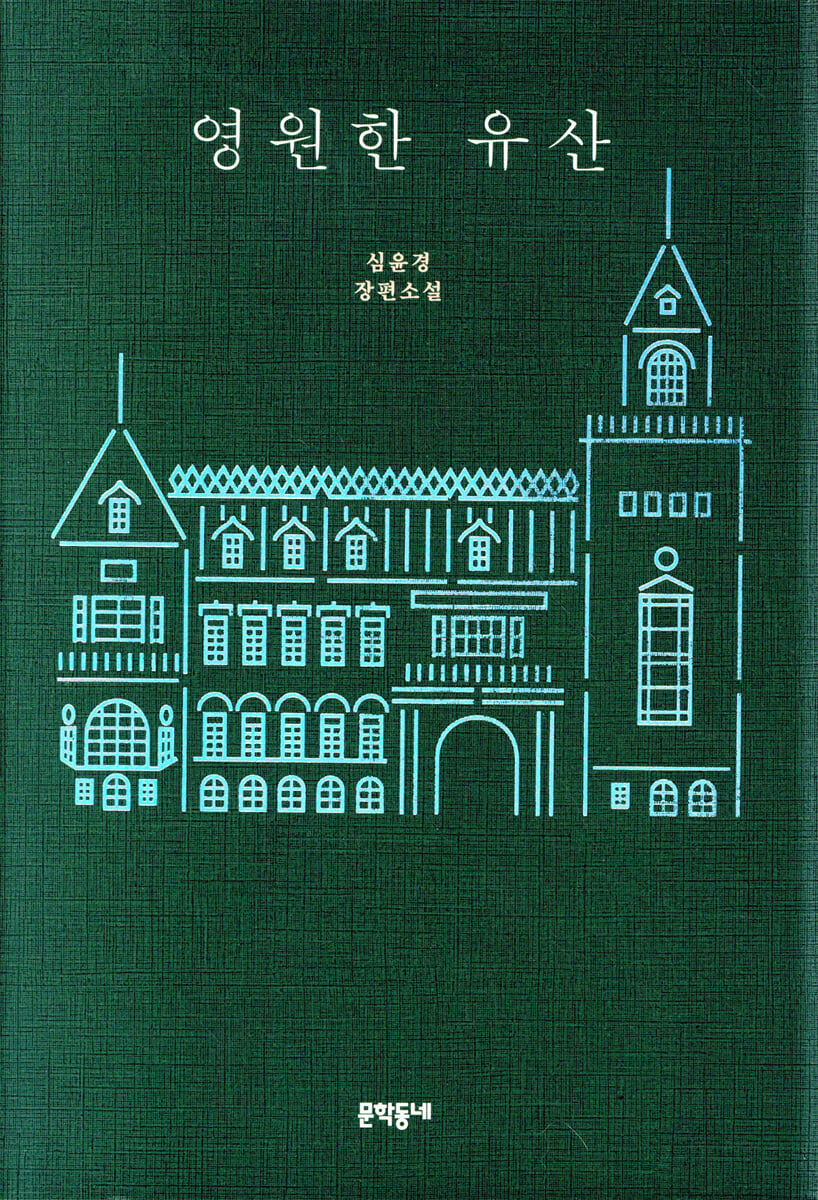
Eternal Legacy
 |
Description
Book Introduction
- A word from MD
-
『Snow』, a novel by Sim Yun-gyeongThe grand mansion left behind by a notorious pro-Japanese collaborator, and his daughter, Yoon Won-seop, who clings to it and seeks to regain her glory.
With the appearance of Yun Won-seop, the life of Lee Hae-dong, the son of an unknown independence activist who had been living as an ordinary citizen, begins to be shaken, and the author illuminates the history of each individual within the grand flow of time through two characters with completely different values.
December 22, 2020. Novel/Poetry PD Park Hyung-wook
“This novel is the result of eight years of pondering that peculiar forgetfulness.”
『My Beautiful Garden』 『Altar of the Moon』 『Snow』…
The definitive work of Shim Yun-kyung, a master of long novels
A new full-length novel has been published by Sim Yun-kyung, an author whose works are difficult to find commonalities and who fiercely renews her work.
It has been nearly two years since the publication of 『Seol-i』, a story of a girl's harsh growth as a newborn who was found abandoned in a food waste bin on New Year's Day.
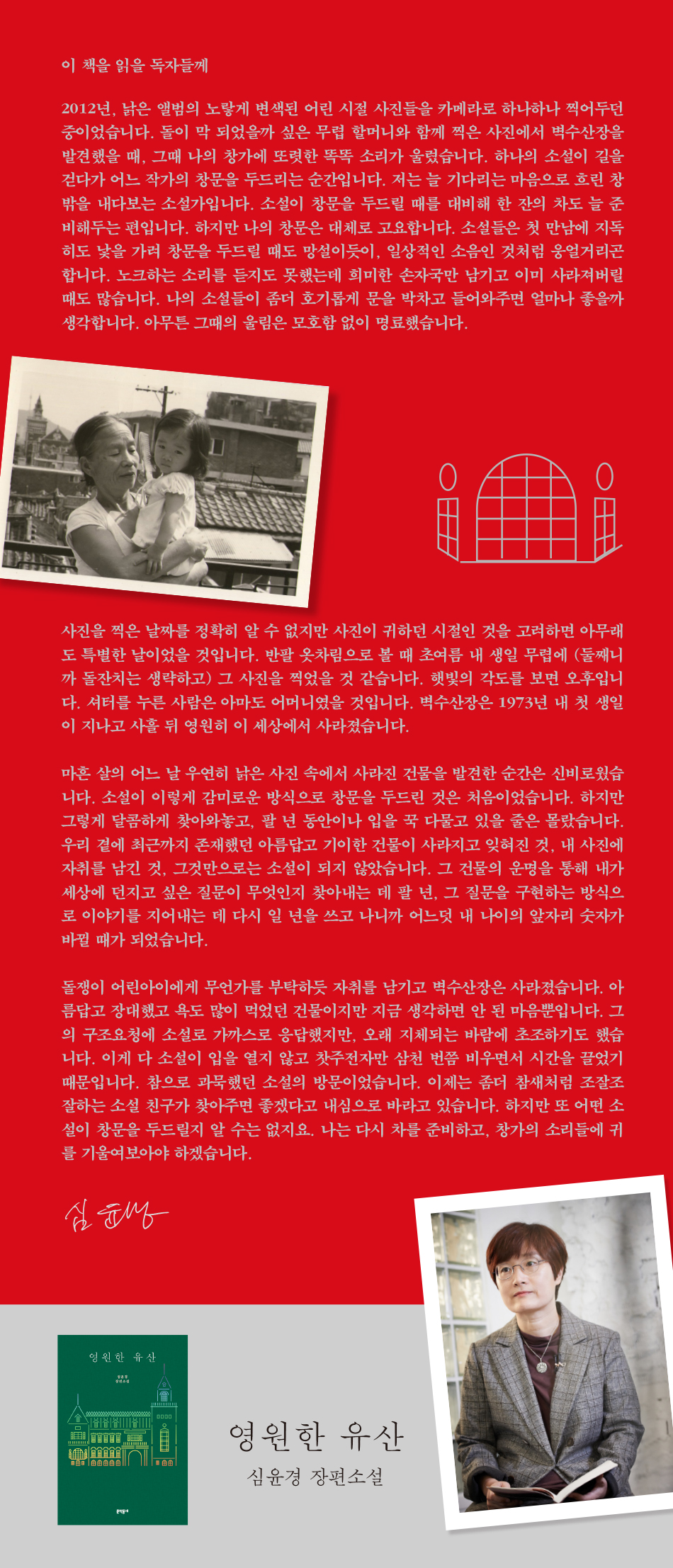
The new work, "Eternal Legacy," began with a single photo from the author's old album.
It was out of curiosity about the unfamiliar building in the photo of the writer and his grandmother when they were children, a large and beautiful modern building with an impressive European-style spire and windows with white sawtooth frames.
The building, which has now disappeared, was built by the notorious pro-Japanese collaborator Yun Deok-yeong, and was called 'Byeoksu Mountain Lodge' after his pen name.
It is ironic that after liberation, it was nationalized and used as the headquarters of the UN Commission for the Unification and Rehabilitation of Korea, abbreviated as UNCURK.
It was demolished in the spring of 1973 and forgotten surprisingly quickly.
For the author, who was born and raised in the same neighborhood and still lives there, this forgetting remains very special.
The existence and disappearance of a mansion that has captivated the author for eight years since 2012, when he first recognized the wall-mounted villa in the photo.
Here, the author's imagination is combined and another completely new story is completed.
A novel that embraces the forgotten and the existing, old callings and new destinies.
『My Beautiful Garden』 『Altar of the Moon』 『Snow』…
The definitive work of Shim Yun-kyung, a master of long novels
A new full-length novel has been published by Sim Yun-kyung, an author whose works are difficult to find commonalities and who fiercely renews her work.
It has been nearly two years since the publication of 『Seol-i』, a story of a girl's harsh growth as a newborn who was found abandoned in a food waste bin on New Year's Day.
The new work, "Eternal Legacy," began with a single photo from the author's old album.
It was out of curiosity about the unfamiliar building in the photo of the writer and his grandmother when they were children, a large and beautiful modern building with an impressive European-style spire and windows with white sawtooth frames.
The building, which has now disappeared, was built by the notorious pro-Japanese collaborator Yun Deok-yeong, and was called 'Byeoksu Mountain Lodge' after his pen name.
It is ironic that after liberation, it was nationalized and used as the headquarters of the UN Commission for the Unification and Rehabilitation of Korea, abbreviated as UNCURK.
It was demolished in the spring of 1973 and forgotten surprisingly quickly.
For the author, who was born and raised in the same neighborhood and still lives there, this forgetting remains very special.
The existence and disappearance of a mansion that has captivated the author for eight years since 2012, when he first recognized the wall-mounted villa in the photo.
Here, the author's imagination is combined and another completely new story is completed.
A novel that embraces the forgotten and the existing, old callings and new destinies.
- You can preview some of the book's contents.
Preview
index
Eternal Legacy
Author's Note
References
Author's Note
References
Detailed image
Into the book
Something tainted.
Being insulted.
To be ridiculed so easily.
The father whose face he had never even seen traded his life for something so insignificant.
Such things created endless ripples in the blue dawn of the thawing.
--- p.242
Would the mansion ever be restored? Or would it simply collapse and fade into memory? Haedong couldn't quite figure out which way to turn.
The mansion seemed like it belonged to the country, the United Nations, or Yoon Won-seop.
It was a rotten house that the descendants of pro-Japanese collaborators clung to, but it was also a beautiful place like no other in the world.
Red Mountain, it was so confusing to people.
I couldn't tell if it was a rotten pus that needed to be squeezed out, or a precious asset that would never be regained.
--- p.274
But on that day, while he was delivering those short, simple words, he was crushed by an unbearable burden, as if the interpreter's duty was not only to communicate language, but also to convey a whole person, and to shoulder the honor of a world and an era all on his own shoulders.
It felt terribly unfair to him and he even felt unhappy.
--- p.92
If the harsh fate of a man who ended at the age of twenty-four was determined by a misunderstanding, it is even more devastating when you think about how Haedong's life was soaked in the ink of that harshness before it even began. But that was just how the world was.
When you think about it, it wasn't all that big of a deal.
--- p.233
"My father had resigned himself to the inevitable Japanese rule over Korea, but he wished to restore Korea's pride, and he followed that path as he had intended." "What path did he take?" "This very mansion, as you know."
--- p.119
There was an invisible wall of Gyeongwon City between the parks and Haedong, and Haedong liked to think of it as a matter of privilege rather than a difference in status.
Now I regret it.
When Yoon Won-seop suddenly appeared, Haedong, who had been living behind a high wall of privilege, was suddenly isolated.
--- p.215
If there is a safest path, I will choose that path.
But now we have reached a point where we don't know which way is safe.
Being insulted.
To be ridiculed so easily.
The father whose face he had never even seen traded his life for something so insignificant.
Such things created endless ripples in the blue dawn of the thawing.
--- p.242
Would the mansion ever be restored? Or would it simply collapse and fade into memory? Haedong couldn't quite figure out which way to turn.
The mansion seemed like it belonged to the country, the United Nations, or Yoon Won-seop.
It was a rotten house that the descendants of pro-Japanese collaborators clung to, but it was also a beautiful place like no other in the world.
Red Mountain, it was so confusing to people.
I couldn't tell if it was a rotten pus that needed to be squeezed out, or a precious asset that would never be regained.
--- p.274
But on that day, while he was delivering those short, simple words, he was crushed by an unbearable burden, as if the interpreter's duty was not only to communicate language, but also to convey a whole person, and to shoulder the honor of a world and an era all on his own shoulders.
It felt terribly unfair to him and he even felt unhappy.
--- p.92
If the harsh fate of a man who ended at the age of twenty-four was determined by a misunderstanding, it is even more devastating when you think about how Haedong's life was soaked in the ink of that harshness before it even began. But that was just how the world was.
When you think about it, it wasn't all that big of a deal.
--- p.233
"My father had resigned himself to the inevitable Japanese rule over Korea, but he wished to restore Korea's pride, and he followed that path as he had intended." "What path did he take?" "This very mansion, as you know."
--- p.119
There was an invisible wall of Gyeongwon City between the parks and Haedong, and Haedong liked to think of it as a matter of privilege rather than a difference in status.
Now I regret it.
When Yoon Won-seop suddenly appeared, Haedong, who had been living behind a high wall of privilege, was suddenly isolated.
--- p.215
If there is a safest path, I will choose that path.
But now we have reached a point where we don't know which way is safe.
--- p.223
Publisher's Review
“There are things in this world that never disappear.”
The new gray area left by the era of dichotomy
Meet the portraits of people and times on the border
The setting is 1966, 20 years after liberation, and the main stage is 'Byeoksu Mountain Lodge' in Okindong.
Lee Hae-dong, the son of an unnamed independence activist, works as an interpreter and secretary at the United Nations Commission for the Unification and Rehabilitation of Korea (UNCURK).
The mansion Byeoksusanjang, currently used as Unkurke's office, was a villa built by Yun Deok-yeong, a pro-Japanese collaborator.
One day, Yoon Won-seop, the youngest daughter of Yoon Deok-yeong, appears in front of Lee Hae-dong, a young man of modest means who receives his salary in dollars and thinks, "I'm living a decent life."
After being released from Seodaemun Prison, Yun Won-seop returns to the Byeoksusanjang, which is used as an international organization, and discovers a secret room that no one knew about, impressing his position as the former owner of the mansion on the diplomats dispatched to Unkerk.
As he interprets the brazen words of Yoon Won-seop, who has become more arrogant, cracks begin to appear in Hae-dong Lee's life.
The mansion Byeoksusanjang, which is enemy property to Lee Hae-dong and a legacy to Yoon Won-seop, looks down on all of this, and the completely different lives of the two characters who inherited contrasting spiritual legacies are depicted with great excitement.
And on Arbor Day that year, a strange flame erupted from Byeoksusanjang… …
Characters
Lee Hae-dong (27 years old)
Works as an interpreter and secretary for the Australian representative at Unkirk.
A person who grew up in the care of missionaries and lost his parents at an early age and learned English.
His father, whose face he didn't even know, was said to have been captured and killed while fighting for independence, but he was just one of the many deaths that left no trace in history.
Haedong is not bound by that fact.
It was the work of the previous generation, and he thought he was doing well in his life.
That was until Yoon Won-seop showed up.
Until Yoon Won-seop confirmed his past power by visiting Unkerk (Byeoksu Mountain Lodge), his workplace, as if it were his own home.
Until it caught the eye of his superiors and the Unkirk leadership.
Until he finally managed to interpret Yoon Won-seop's words and speak them out loud.
But that woman, Yoon Won-seop, is really a shameless pro-Japanese collaborator who is rising through the ranks with a fake career. She tells me to work under her instead of Mr. Aconan. Should I continue working under her?
But why me? Other people live well without any worries like this, so why am I the only one who has to worry about this?
Following my father, why am I the only one who has to pay the price for something that is not my fault?
Pages 234-235
Yoon Won-seop (51 years old)
The youngest daughter of Yun Deok-yeong, who was called a greater pro-Japanese collaborator than Yi Wan-yong.
He was a descendant of a noble family, but after liberation, his family's fortunes declined and his house (Byeoksu Mountain Lodge) was nationalized as enemy property.
He served two years and two months in prison for fraud.
He is a person who values self-expression, to the point that the first thing he packs after being released from prison is his Chanel bag.
With a noble bloodline, the darkness of the prison, and the secret mystery of the Red Mansion all wrapped up in one, you will be drawn into the Unkirk people's grasp with the help of a secret passage hidden within the mansion and the two keys that open it.
He is resourceful, quick-witted, and knows how to manipulate people, so he skillfully turns all situations and words to his advantage.
In the end, he joins Unkurk as the 'Cultural Restoration Director' and even manages the budget... What exactly does Yoon Won-seop want?
"Who is this rude fellow? How can a squat salaryman like you even talk about the Haepyeong Yun clan? Even a million of you, combined, wouldn't dare stand up to my father, Yun Deok-yeong!" _Page 183
Akenan (47 years old)
Unkirk is the Australian representative and is the employer of Lee Hae-dong.
As a diplomat, he is a man of common sense and rationality, and he represents the perspective of a third party who feels no guilt about the independence movement or pro-Japanese activities.
Although I do not doubt Yun Won-seop's swindler nature, it is also true that I was fascinated by the special aura that came from the fallen nobleman of a mysterious age and the history of Byeoksusanjang that he remembered.
Some suspect she harbors feelings of affection for Yoon Won-seop, but is this really the case? Unkirk, as a UN agency, cannot remain detached from international affairs. Akenan intends to use the unique story of Byeoksusanjang to restore Unkirk's increasingly precarious reputation.
"I know that Yun Ja-jak's family is being criticized for their actions during the Japanese colonial period, but aren't today's Republic of Korea and the Joseon of that time worlds different? I believe the circumstances of those who lived during that era should be understood through the lens of that time." _Page 97
Son Jin-hyung (24 years old)
A woman introduced by Haedong's aunt, whom he followed like a parent.
Although it has been three or four years since he came to Seoul from the countryside, he does not show any signs of sophistication.
In short, she is a 'going to Seoul girl' who is clearly different from a 'Seoul girl'.
I work as an accountant at a small textile company.
Although not wealthy, she grew up in a family with strong sibling bonds and family ties as the youngest daughter of three sons and two daughters.
The embrace of a happy family that Haedong never had.
Will Jinhyeong be able to share the healthy and strong roots he possesses with Haedong?
“If you don’t have any issues on Tuesday, would you like to go with your sister? I’ll see the other siblings there too…” “Tuesday?” “Yes, because the next day is Arbor Day, so my brother-in-law and I have the day off.
Let's all go on a picnic together the next morning to plant trees.
Let's meet up when I get off work in the evening and go together.
My sister's house is in Chunghyeon-dong." _Page 257
The grand mansion left behind by a notorious pro-Japanese collaborator, his youngest daughter who clings to it and seeks to regain her glory, and Haedong, a young man from the lower middle class who is caught between his shameless and proud hatred for his enemies and the undeniably beautiful mansion.
The author uses the historical facts of Byeoksusanjang and Unkurke as a basis, and by introducing two fictional characters, Yun Won-seop and Lee Hae-dong, leads us into a story that is more cinematic than a movie and more novel than a novel.
History often presents a period of harsh dichotomies, where the two sides become entangled and a strange gray area is created.
And there are difficult paths that people on the borderline have chosen to protect their values and lives, and to convince themselves.
“Although grand things like pro-Japanese collaborators, the royal family, international organizations, and mansions appear, the true protagonists are ordinary people who strived to maintain honesty and dignity amidst the ebb and flow of ideology that pushes people here and there,” the author’s reflections leave a more profound impression.
While there are feature films that do a good job of capturing a person's life, there are also excellent feature films, like this one, that capture a crucial moment in someone's life.
When the sentences pile up and begin to shine in context, that is where the joy of reading a novel lies.
It is so beautiful and sad to speak of the incomprehensibility of life, and that is the time of the novel.
All Haedong had was insignificant things.
(…) Such insignificant things were quickly soiled like spider webs on the roadside, torn apart by any footstep, and were the first to disappear without a trace.
Even those who could testify that such a thing existed were scattered, and the evidence to say that it actually existed was thin.
Compared to that, how certain, solid, and undeniable are the existence of Yoon Deok-yeong, Byeoksusanjang, and Unkirk.
There are things in this world that do not disappear.
I couldn't help but admit it.
Things that do not shake or disappear.
Having experienced its tenacious vitality for the past three months, Haedong concluded that it was 'power'.
There were undeniably powerful forces in the world.
From the perspective of not having it, it may be frustrating and sad, but it is impossible to say that it does not exist at all.
Pages 248-249
The new gray area left by the era of dichotomy
Meet the portraits of people and times on the border
The setting is 1966, 20 years after liberation, and the main stage is 'Byeoksu Mountain Lodge' in Okindong.
Lee Hae-dong, the son of an unnamed independence activist, works as an interpreter and secretary at the United Nations Commission for the Unification and Rehabilitation of Korea (UNCURK).
The mansion Byeoksusanjang, currently used as Unkurke's office, was a villa built by Yun Deok-yeong, a pro-Japanese collaborator.
One day, Yoon Won-seop, the youngest daughter of Yoon Deok-yeong, appears in front of Lee Hae-dong, a young man of modest means who receives his salary in dollars and thinks, "I'm living a decent life."
After being released from Seodaemun Prison, Yun Won-seop returns to the Byeoksusanjang, which is used as an international organization, and discovers a secret room that no one knew about, impressing his position as the former owner of the mansion on the diplomats dispatched to Unkerk.
As he interprets the brazen words of Yoon Won-seop, who has become more arrogant, cracks begin to appear in Hae-dong Lee's life.
The mansion Byeoksusanjang, which is enemy property to Lee Hae-dong and a legacy to Yoon Won-seop, looks down on all of this, and the completely different lives of the two characters who inherited contrasting spiritual legacies are depicted with great excitement.
And on Arbor Day that year, a strange flame erupted from Byeoksusanjang… …
Characters
Lee Hae-dong (27 years old)
Works as an interpreter and secretary for the Australian representative at Unkirk.
A person who grew up in the care of missionaries and lost his parents at an early age and learned English.
His father, whose face he didn't even know, was said to have been captured and killed while fighting for independence, but he was just one of the many deaths that left no trace in history.
Haedong is not bound by that fact.
It was the work of the previous generation, and he thought he was doing well in his life.
That was until Yoon Won-seop showed up.
Until Yoon Won-seop confirmed his past power by visiting Unkerk (Byeoksu Mountain Lodge), his workplace, as if it were his own home.
Until it caught the eye of his superiors and the Unkirk leadership.
Until he finally managed to interpret Yoon Won-seop's words and speak them out loud.
But that woman, Yoon Won-seop, is really a shameless pro-Japanese collaborator who is rising through the ranks with a fake career. She tells me to work under her instead of Mr. Aconan. Should I continue working under her?
But why me? Other people live well without any worries like this, so why am I the only one who has to worry about this?
Following my father, why am I the only one who has to pay the price for something that is not my fault?
Pages 234-235
Yoon Won-seop (51 years old)
The youngest daughter of Yun Deok-yeong, who was called a greater pro-Japanese collaborator than Yi Wan-yong.
He was a descendant of a noble family, but after liberation, his family's fortunes declined and his house (Byeoksu Mountain Lodge) was nationalized as enemy property.
He served two years and two months in prison for fraud.
He is a person who values self-expression, to the point that the first thing he packs after being released from prison is his Chanel bag.
With a noble bloodline, the darkness of the prison, and the secret mystery of the Red Mansion all wrapped up in one, you will be drawn into the Unkirk people's grasp with the help of a secret passage hidden within the mansion and the two keys that open it.
He is resourceful, quick-witted, and knows how to manipulate people, so he skillfully turns all situations and words to his advantage.
In the end, he joins Unkurk as the 'Cultural Restoration Director' and even manages the budget... What exactly does Yoon Won-seop want?
"Who is this rude fellow? How can a squat salaryman like you even talk about the Haepyeong Yun clan? Even a million of you, combined, wouldn't dare stand up to my father, Yun Deok-yeong!" _Page 183
Akenan (47 years old)
Unkirk is the Australian representative and is the employer of Lee Hae-dong.
As a diplomat, he is a man of common sense and rationality, and he represents the perspective of a third party who feels no guilt about the independence movement or pro-Japanese activities.
Although I do not doubt Yun Won-seop's swindler nature, it is also true that I was fascinated by the special aura that came from the fallen nobleman of a mysterious age and the history of Byeoksusanjang that he remembered.
Some suspect she harbors feelings of affection for Yoon Won-seop, but is this really the case? Unkirk, as a UN agency, cannot remain detached from international affairs. Akenan intends to use the unique story of Byeoksusanjang to restore Unkirk's increasingly precarious reputation.
"I know that Yun Ja-jak's family is being criticized for their actions during the Japanese colonial period, but aren't today's Republic of Korea and the Joseon of that time worlds different? I believe the circumstances of those who lived during that era should be understood through the lens of that time." _Page 97
Son Jin-hyung (24 years old)
A woman introduced by Haedong's aunt, whom he followed like a parent.
Although it has been three or four years since he came to Seoul from the countryside, he does not show any signs of sophistication.
In short, she is a 'going to Seoul girl' who is clearly different from a 'Seoul girl'.
I work as an accountant at a small textile company.
Although not wealthy, she grew up in a family with strong sibling bonds and family ties as the youngest daughter of three sons and two daughters.
The embrace of a happy family that Haedong never had.
Will Jinhyeong be able to share the healthy and strong roots he possesses with Haedong?
“If you don’t have any issues on Tuesday, would you like to go with your sister? I’ll see the other siblings there too…” “Tuesday?” “Yes, because the next day is Arbor Day, so my brother-in-law and I have the day off.
Let's all go on a picnic together the next morning to plant trees.
Let's meet up when I get off work in the evening and go together.
My sister's house is in Chunghyeon-dong." _Page 257
The grand mansion left behind by a notorious pro-Japanese collaborator, his youngest daughter who clings to it and seeks to regain her glory, and Haedong, a young man from the lower middle class who is caught between his shameless and proud hatred for his enemies and the undeniably beautiful mansion.
The author uses the historical facts of Byeoksusanjang and Unkurke as a basis, and by introducing two fictional characters, Yun Won-seop and Lee Hae-dong, leads us into a story that is more cinematic than a movie and more novel than a novel.
History often presents a period of harsh dichotomies, where the two sides become entangled and a strange gray area is created.
And there are difficult paths that people on the borderline have chosen to protect their values and lives, and to convince themselves.
“Although grand things like pro-Japanese collaborators, the royal family, international organizations, and mansions appear, the true protagonists are ordinary people who strived to maintain honesty and dignity amidst the ebb and flow of ideology that pushes people here and there,” the author’s reflections leave a more profound impression.
While there are feature films that do a good job of capturing a person's life, there are also excellent feature films, like this one, that capture a crucial moment in someone's life.
When the sentences pile up and begin to shine in context, that is where the joy of reading a novel lies.
It is so beautiful and sad to speak of the incomprehensibility of life, and that is the time of the novel.
All Haedong had was insignificant things.
(…) Such insignificant things were quickly soiled like spider webs on the roadside, torn apart by any footstep, and were the first to disappear without a trace.
Even those who could testify that such a thing existed were scattered, and the evidence to say that it actually existed was thin.
Compared to that, how certain, solid, and undeniable are the existence of Yoon Deok-yeong, Byeoksusanjang, and Unkirk.
There are things in this world that do not disappear.
I couldn't help but admit it.
Things that do not shake or disappear.
Having experienced its tenacious vitality for the past three months, Haedong concluded that it was 'power'.
There were undeniably powerful forces in the world.
From the perspective of not having it, it may be frustrating and sad, but it is impossible to say that it does not exist at all.
Pages 248-249
GOODS SPECIFICS
- Date of issue: January 4, 2021
- Format: Hardcover book binding method guide
- Page count, weight, size: 284 pages | 384g | 128*188*20mm
- ISBN13: 9788954676281
- ISBN10: 8954676286
You may also like
카테고리
korean


korean

![GQ KOREA Mark (Monthly): December [2025]](http://librairie.coreenne.fr/cdn/shop/files/8ef265dbbfbf186523ed75ba7319009d.jpg?v=1765340328&width=3840)


