

Lovers of Tomorrow
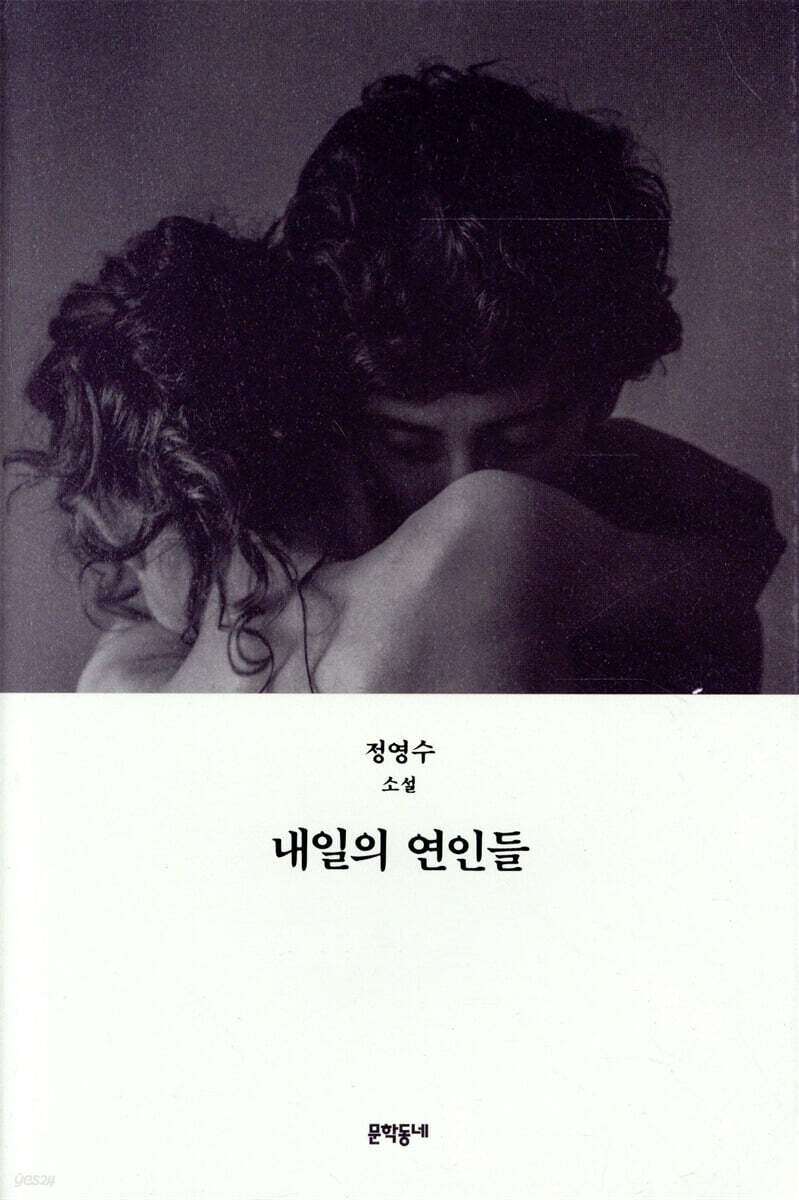 |
Description
Book Introduction
- A word from MD
-
Write the history of ordinary loveFeelings of love change inexorably over time, and before we know it, they become a part of our lives, a scene from our difficult lives.
The narrators of the book, both parties to the emotions and observers, look back on past relationships and use the time they have spent as clues to envision the future, standing at the scene of change.
With a grave and meticulous gaze, he writes the history of an ordinary love.
November 6, 2020. Novel/Poetry PD Park Hyung-wook
“Where those sentences end, we find the light created by broken things.
“It’s a bit sad and joyful to think that the light there will be eternal, because it’s no longer ours.”
― Kim Yeon-su (novelist)
“Isn’t it the writer’s job to create such moments of shining pause?
“Just like that night when those young lovers couldn’t sleep.”
― Shin Hyeong-cheol (literary critic)
A History of Love Read as a Novel: Lovers' Life
A new novel by Jeong Yeong-su, winner of the 9th and 10th Young Writer's Award
Novelist Jeong Young-su, who wittily portrayed the futility of existence and the (empty) meaning of life through his first collection of short stories, 『Lovers』, published in 2017, presents his second collection of short stories, 『Lovers of Tomorrow』, three years later.
This is a collection of eight short stories published consistently from the winter of 2017 to the winter of 2019.
“The type of novel I’m partial to (…) When I read the last page of this novel, I had to stop my thoughts and actions for a moment because I wanted to stay there for a while because I was much deeper than I expected” (Shin Hyeong-cheol), “It had the power to remind me of the old proposition that a novel is ultimately a style” (Shin Su-jeong), etc. Along with the judges’ comments, “More Human Words” which won the Young Writer’s Award in 2018 and was selected for Munhak-kwa-Jiseongsa’s “Novel of the Season” (Winter 2017), “Us” which was selected for “Novel of the Season” in the fall of 2018, the Problematic Novel of the Year in 2019, a nominee for the 2019 Contemporary Literature Award, and the Young Writer’s Award in 2019, and the title piece “Lovers of Tomorrow” which was selected for “Novel of the Season” in the summer of 2019 and was selected as the Problematic Novel of the Year in 2020, etc.
The lovers appear in the story.
These works can be said to be closer to 'novels about lovers' lives' than 'romance novels'.
The delicate emotional lines between the two men and women are certainly impressive, but the fact that the film mainly features lovers who have failed or are expected to fail, and the events they experience and the scenes closely related to their daily lives add to the realism.
Rather than a complex allegory, this work will appeal to readers because it focuses on the large and small incidents faced by a person in his or her thirties living in a modern city, and reveals them through the beginning, continuation, end, and aftermath of a romantic relationship.
The fast-paced, immersive first-person narration and intelligent, readable prose add to the pleasure of reading.
“It’s a bit sad and joyful to think that the light there will be eternal, because it’s no longer ours.”
― Kim Yeon-su (novelist)
“Isn’t it the writer’s job to create such moments of shining pause?
“Just like that night when those young lovers couldn’t sleep.”
― Shin Hyeong-cheol (literary critic)
A History of Love Read as a Novel: Lovers' Life
A new novel by Jeong Yeong-su, winner of the 9th and 10th Young Writer's Award
Novelist Jeong Young-su, who wittily portrayed the futility of existence and the (empty) meaning of life through his first collection of short stories, 『Lovers』, published in 2017, presents his second collection of short stories, 『Lovers of Tomorrow』, three years later.
This is a collection of eight short stories published consistently from the winter of 2017 to the winter of 2019.
“The type of novel I’m partial to (…) When I read the last page of this novel, I had to stop my thoughts and actions for a moment because I wanted to stay there for a while because I was much deeper than I expected” (Shin Hyeong-cheol), “It had the power to remind me of the old proposition that a novel is ultimately a style” (Shin Su-jeong), etc. Along with the judges’ comments, “More Human Words” which won the Young Writer’s Award in 2018 and was selected for Munhak-kwa-Jiseongsa’s “Novel of the Season” (Winter 2017), “Us” which was selected for “Novel of the Season” in the fall of 2018, the Problematic Novel of the Year in 2019, a nominee for the 2019 Contemporary Literature Award, and the Young Writer’s Award in 2019, and the title piece “Lovers of Tomorrow” which was selected for “Novel of the Season” in the summer of 2019 and was selected as the Problematic Novel of the Year in 2020, etc.
The lovers appear in the story.
These works can be said to be closer to 'novels about lovers' lives' than 'romance novels'.
The delicate emotional lines between the two men and women are certainly impressive, but the fact that the film mainly features lovers who have failed or are expected to fail, and the events they experience and the scenes closely related to their daily lives add to the realism.
Rather than a complex allegory, this work will appeal to readers because it focuses on the large and small incidents faced by a person in his or her thirties living in a modern city, and reveals them through the beginning, continuation, end, and aftermath of a romantic relationship.
The fast-paced, immersive first-person narration and intelligent, readable prose add to the pleasure of reading.
- You can preview some of the book's contents.
Preview
index
we
Lovers of Tomorrow
More human words
A safe and peaceful life in modern times
Age of Miracles
In each other's countries
Seoul people who are good at finding their way
The World of Two
Commentary│Shin Hyeong-cheol (literary critic)
A Lifetime Reading Trilogy for Night Lovers
Author's Note
Lovers of Tomorrow
More human words
A safe and peaceful life in modern times
Age of Miracles
In each other's countries
Seoul people who are good at finding their way
The World of Two
Commentary│Shin Hyeong-cheol (literary critic)
A Lifetime Reading Trilogy for Night Lovers
Author's Note
Into the book
But doesn't hope sometimes drive even the most sane people to despair? No, only hope can send people into the abyss.
Besides, hope has a way of making people a little tired, and we often get discouraged, see the bottom of our souls, and fall into a swamp of regret because of such seemingly tempting things.
---Among "us"
Every summer, this beautiful season, not once or twice, but countless times, was too distant and dazzling a word for us to bear.
---Among "us"
“Now, Haebangchon looks unfamiliar.
And Hyunsoo looks that unfamiliar too.
In just a few days.
“Isn’t it strange?”
"You know what we said the most there? I love you."
“Probably because I knew I would never be able to say those words again.”
“Then what does that mean?”
“Things I can never say again.”
“What does it mean to say that love can never be spoken of again?”
---Among "us"
I've often wondered what it takes for someone to become romantically involved with another person.
Could there be a compelling reason why Yeong-seon and Nam-young had to end up like that? They simply happened to be in the same space, a casual exchange of words led them to a casual outing together, and after a few encounters—perhaps a dozen at most—they came to feel a mutual love.
What if Namyeong wasn't Namyeong, but someone else? What if Yeongseon wasn't Yeongseon, but someone else entirely? Would the outcome still be the same? I can't help but wonder these things.
---From "The World of Two"
After hearing that story, I realized that I had finally completely left their lives, that I had disappeared from their world and that only each other, the people they had personally chosen, remained.
Even if it wasn't a choice made in complete freedom, with all its possibilities, and even if the result was to push her back into typical hardship and misery, who could laugh at her for not being able to choose a life she couldn't imagine?
Besides, hope has a way of making people a little tired, and we often get discouraged, see the bottom of our souls, and fall into a swamp of regret because of such seemingly tempting things.
---Among "us"
Every summer, this beautiful season, not once or twice, but countless times, was too distant and dazzling a word for us to bear.
---Among "us"
“Now, Haebangchon looks unfamiliar.
And Hyunsoo looks that unfamiliar too.
In just a few days.
“Isn’t it strange?”
"You know what we said the most there? I love you."
“Probably because I knew I would never be able to say those words again.”
“Then what does that mean?”
“Things I can never say again.”
“What does it mean to say that love can never be spoken of again?”
---Among "us"
I've often wondered what it takes for someone to become romantically involved with another person.
Could there be a compelling reason why Yeong-seon and Nam-young had to end up like that? They simply happened to be in the same space, a casual exchange of words led them to a casual outing together, and after a few encounters—perhaps a dozen at most—they came to feel a mutual love.
What if Namyeong wasn't Namyeong, but someone else? What if Yeongseon wasn't Yeongseon, but someone else entirely? Would the outcome still be the same? I can't help but wonder these things.
---From "The World of Two"
After hearing that story, I realized that I had finally completely left their lives, that I had disappeared from their world and that only each other, the people they had personally chosen, remained.
Even if it wasn't a choice made in complete freedom, with all its possibilities, and even if the result was to push her back into typical hardship and misery, who could laugh at her for not being able to choose a life she couldn't imagine?
---From "The World of Two"
Publisher's Review
Novelist Jeong Young-su, who wittily portrayed the futility of existence and the (empty) meaning of life through his first collection of short stories, 『Lovers』, published in 2017, presents his second collection of short stories, 『Lovers of Tomorrow』, three years later.
This is a collection of eight short stories published consistently from the winter of 2017 to the winter of 2019.
“The type of novel I’m partial to (…) When I read the last page of this novel, I had to stop my thoughts and actions for a moment because I wanted to stay there for a while because I was much deeper than I expected” (Shin Hyeong-cheol), “It had the power to remind me of the old proposition that a novel is ultimately a style” (Shin Su-jeong), etc. Along with the judges’ comments, “More Human Words” which won the Young Writer’s Award in 2018 and was selected for Munhak-kwa-Jiseongsa’s “Novel of the Season” (Winter 2017), “Us” which was selected for “Novel of the Season” in the fall of 2018, the Problematic Novel of the Year in 2019, a nominee for the 2019 Contemporary Literature Award, and the Young Writer’s Award in 2019, and the title piece “Lovers of Tomorrow” which was selected for “Novel of the Season” in the summer of 2019 and was selected as the Problematic Novel of the Year in 2020, etc.
The lovers appear in the story.
These works can be said to be closer to 'novels about lovers' lives' than 'romance novels'.
The delicate emotional lines between the two men and women are certainly impressive, but the fact that the film mainly features lovers who have failed or are expected to fail, and the events they experience and the scenes closely related to their daily lives, adds to the realism.
Rather than a complex allegory, this work will appeal to readers because it focuses on the large and small incidents faced by a person in his or her thirties living in a modern city, and reveals them through the beginning, continuation, end, and aftermath of a romantic relationship.
The fast-paced, immersive first-person narration and intelligent, readable prose add to the pleasure of reading.
“So I had to constantly revise my memories about myself, about her, about what we had been through.”
Few things satisfy our desire to connect with others as deeply as love, our willingness to discover ourselves through them.
For the narrator of Jeong Yeong-su's novel, who realizes his own immaturity and wants to live a better life and become a better person, 'my lover' is a close and special relationship that allows him to (re)interpret and understand himself and the times he has passed through, whether in the progressive or past tense.
Meanwhile, the 'other lover', who seems to be living a more mature and complete life than the speaker, is depicted as someone who makes the speaker realize how difficult it is to live a mature life, and as someone who illuminates the unfamiliar aspects of life.
A work that reveals the imperfection of human relationships by embracing even the ambiguous and tangled aspects of the emotion called love. In short, the process in which the narrator in the novel experiences and (re)interprets what the author experiences and (re)interprets, and the reader experiences and (re)interprets it again, could we not call the impressions that remain for each person a history of love with a new meaning?
A couple (Jeong-eun and Hyeon-su) appears in front of the narrator 'I' of 'Us'.
They wanted to write their stories and asked me, who had experience working as an editor, to help them.
I, who was living a life of self-pity, decided to help the couple who were “good at life” and living “real adult lives.”
Even after it was revealed that Jeong-eun and Hyun-soo each had spouses, the special bond between the three of them did not fade, and in fact, I wanted to imitate them and write about myself and my ex-lover Yeon-kyung and send it to Yeon-kyung.
One night, after the relationship between Jeong-eun and Hyun-soo broke down, I was lost in thought and looked back on 'us'.
We spent a shining time together.
The word that refers to Jeong-eun-Hyeon-su-na, the word that refers to the two people Na-Yeon-gyeong, and the word that refers to Jeong-eun-Hyeon-su/Na-Yeon-gyeong.
I was thinking of sending it to Yeonkyung, but now I'm not sure if that was a good idea.
Because those things have already gone very far away from Yeonkyung.
After everything is over, revisiting it is not about remembering or recording the past, but rather about reinterpreting and recreating it.
Because it's not about re-experiencing the past, it's about reliving the past.
_Page 41, from "Us"
In "Lovers of Tomorrow," 'I' moves into the newlywed home of 'Seon-ae', the daughter of my mother's friend, who is now divorced.
My lover, Jiwon, and I develop our love in that house.
The word 'salvation' often comes to mind.
"But can one person save another? Is that really possible?" Just as Seon-ae and her husband, who fell in an irresistible, intense love, faced divorce, will Na and Ji-won also face the moment of separation?
Will these precious feelings ever evaporate?
Somehow, that night felt like it would never pass, but it felt like a sign of countless happy and lonely times to come, or not to come.
I lay down, staring at the outline of Jiwon, who was still not asleep, for a long time.
We wonder if we might be their ghosts.
_Page 72, from “Lovers of Tomorrow”
In "More Human Words," the couple 'Na-Haewon' who have decided to divorce appear.
Because I'm tired of wasteful arguments.
My aunt, who is about to leave for Switzerland to undergo euthanasia, appears before these two people, and through her, the two learn what kind of practical courage it takes to make decisions while living.
This work delicately reveals the limitations of two immature lovers who believed that the reality they knew was everything, and the limitations of the world of ideas and words.
After going through this, could the conversation between the two people be 'more humane'?
In his commentary, critic Shin Hyeong-cheol called the three works mentioned above the “trilogy of life-changing books.”
A first-person narrator who has had a lover ("Us"), is having one ("Tomorrow's Lovers"), or is about to lose one ("More Human Words").
The story of how he recognizes his own immaturity and seeks out a mentor in life to become a better person.
“Why aren’t Jeong Yeong-su’s novels cold?
Because the heart that wants to mature cannot be cold.
So, even though he didn't try to teach us anything, how much did we learn?" (from the commentary)
“Who can laugh at her for not being able to choose a life she couldn’t imagine for herself?”
What if I said that the common feeling evoked in the remaining works was 'after time has passed'?
From hazy memories of a breakup to the surprise of forgetting something you shouldn't have forgotten, you'll encounter speakers who reminisce about or recall events after time has passed.
The first sentence of “Safe and Peaceful Modern Life” is “I often thought about unfortunate things that should not happen.”
But the real story unfolded in a way I never imagined: I dropped the 100-day-old baby of my longtime friend couple to the floor while trying to hold it.
After some time has passed, I feel a chill of self-evident truth: that this terrible and irreversible thing, however, did not happen to me.
Although it is not clear, it cannot be said that there was no reason for it, but 'I' and Yeonhee from 'Age of Miracles' gradually grew apart.
As time passes, I am playfully questioned by my wife, Eun-ju, about Yeon-hee, and I feel anew the “ambiguous and unclear shame that I cannot explain or convince” that was left behind by their breakup a dozen years ago.
The meeting between 'I' and Jo Ah-hyun in 'In Each Other's Country', who meet again in Bethlehem after ten years, is also interesting.
The 'two people' in 'The World of Two' are Lee Young-seon, a former factory worker in the 1970s, and Ha Nam-yeong, who works at a hardware store.
The story of the couple Lee Young-sun and Ha Nam-young, who are now in their later years, through a love affair between two people, the violence that permeated it, an unwanted pregnancy and marriage, and the subsequent discord and unhappiness that piled up over the years.
That story is reconstructed by the son, 'I', who was born out of necessity.
Becoming lovers means two lives becoming one.
When the moment of separation comes, people return to their separate lives, but for some people, this state lasts so long that they forget or lose their original lives.
_Page 185, from “The World of Two”
Lovers who live, relate, experience, and learn—even if it sometimes manifests itself as a vague premonition, or as learning that there are things that cannot be learned.
The events they face may not be spectacular, but that is precisely why they send gentle ripples through the reader's heart.
This is because the author depicts in detail the cross-sections of things we do from time to time as we live.
People who have become the past, what kind of person have I become after going through that relationship, what has my life been made of?
Even after you close the book, you will find yourself sitting there for a while, lost in thought.
This is a collection of eight short stories published consistently from the winter of 2017 to the winter of 2019.
“The type of novel I’m partial to (…) When I read the last page of this novel, I had to stop my thoughts and actions for a moment because I wanted to stay there for a while because I was much deeper than I expected” (Shin Hyeong-cheol), “It had the power to remind me of the old proposition that a novel is ultimately a style” (Shin Su-jeong), etc. Along with the judges’ comments, “More Human Words” which won the Young Writer’s Award in 2018 and was selected for Munhak-kwa-Jiseongsa’s “Novel of the Season” (Winter 2017), “Us” which was selected for “Novel of the Season” in the fall of 2018, the Problematic Novel of the Year in 2019, a nominee for the 2019 Contemporary Literature Award, and the Young Writer’s Award in 2019, and the title piece “Lovers of Tomorrow” which was selected for “Novel of the Season” in the summer of 2019 and was selected as the Problematic Novel of the Year in 2020, etc.
The lovers appear in the story.
These works can be said to be closer to 'novels about lovers' lives' than 'romance novels'.
The delicate emotional lines between the two men and women are certainly impressive, but the fact that the film mainly features lovers who have failed or are expected to fail, and the events they experience and the scenes closely related to their daily lives, adds to the realism.
Rather than a complex allegory, this work will appeal to readers because it focuses on the large and small incidents faced by a person in his or her thirties living in a modern city, and reveals them through the beginning, continuation, end, and aftermath of a romantic relationship.
The fast-paced, immersive first-person narration and intelligent, readable prose add to the pleasure of reading.
“So I had to constantly revise my memories about myself, about her, about what we had been through.”
Few things satisfy our desire to connect with others as deeply as love, our willingness to discover ourselves through them.
For the narrator of Jeong Yeong-su's novel, who realizes his own immaturity and wants to live a better life and become a better person, 'my lover' is a close and special relationship that allows him to (re)interpret and understand himself and the times he has passed through, whether in the progressive or past tense.
Meanwhile, the 'other lover', who seems to be living a more mature and complete life than the speaker, is depicted as someone who makes the speaker realize how difficult it is to live a mature life, and as someone who illuminates the unfamiliar aspects of life.
A work that reveals the imperfection of human relationships by embracing even the ambiguous and tangled aspects of the emotion called love. In short, the process in which the narrator in the novel experiences and (re)interprets what the author experiences and (re)interprets, and the reader experiences and (re)interprets it again, could we not call the impressions that remain for each person a history of love with a new meaning?
A couple (Jeong-eun and Hyeon-su) appears in front of the narrator 'I' of 'Us'.
They wanted to write their stories and asked me, who had experience working as an editor, to help them.
I, who was living a life of self-pity, decided to help the couple who were “good at life” and living “real adult lives.”
Even after it was revealed that Jeong-eun and Hyun-soo each had spouses, the special bond between the three of them did not fade, and in fact, I wanted to imitate them and write about myself and my ex-lover Yeon-kyung and send it to Yeon-kyung.
One night, after the relationship between Jeong-eun and Hyun-soo broke down, I was lost in thought and looked back on 'us'.
We spent a shining time together.
The word that refers to Jeong-eun-Hyeon-su-na, the word that refers to the two people Na-Yeon-gyeong, and the word that refers to Jeong-eun-Hyeon-su/Na-Yeon-gyeong.
I was thinking of sending it to Yeonkyung, but now I'm not sure if that was a good idea.
Because those things have already gone very far away from Yeonkyung.
After everything is over, revisiting it is not about remembering or recording the past, but rather about reinterpreting and recreating it.
Because it's not about re-experiencing the past, it's about reliving the past.
_Page 41, from "Us"
In "Lovers of Tomorrow," 'I' moves into the newlywed home of 'Seon-ae', the daughter of my mother's friend, who is now divorced.
My lover, Jiwon, and I develop our love in that house.
The word 'salvation' often comes to mind.
"But can one person save another? Is that really possible?" Just as Seon-ae and her husband, who fell in an irresistible, intense love, faced divorce, will Na and Ji-won also face the moment of separation?
Will these precious feelings ever evaporate?
Somehow, that night felt like it would never pass, but it felt like a sign of countless happy and lonely times to come, or not to come.
I lay down, staring at the outline of Jiwon, who was still not asleep, for a long time.
We wonder if we might be their ghosts.
_Page 72, from “Lovers of Tomorrow”
In "More Human Words," the couple 'Na-Haewon' who have decided to divorce appear.
Because I'm tired of wasteful arguments.
My aunt, who is about to leave for Switzerland to undergo euthanasia, appears before these two people, and through her, the two learn what kind of practical courage it takes to make decisions while living.
This work delicately reveals the limitations of two immature lovers who believed that the reality they knew was everything, and the limitations of the world of ideas and words.
After going through this, could the conversation between the two people be 'more humane'?
In his commentary, critic Shin Hyeong-cheol called the three works mentioned above the “trilogy of life-changing books.”
A first-person narrator who has had a lover ("Us"), is having one ("Tomorrow's Lovers"), or is about to lose one ("More Human Words").
The story of how he recognizes his own immaturity and seeks out a mentor in life to become a better person.
“Why aren’t Jeong Yeong-su’s novels cold?
Because the heart that wants to mature cannot be cold.
So, even though he didn't try to teach us anything, how much did we learn?" (from the commentary)
“Who can laugh at her for not being able to choose a life she couldn’t imagine for herself?”
What if I said that the common feeling evoked in the remaining works was 'after time has passed'?
From hazy memories of a breakup to the surprise of forgetting something you shouldn't have forgotten, you'll encounter speakers who reminisce about or recall events after time has passed.
The first sentence of “Safe and Peaceful Modern Life” is “I often thought about unfortunate things that should not happen.”
But the real story unfolded in a way I never imagined: I dropped the 100-day-old baby of my longtime friend couple to the floor while trying to hold it.
After some time has passed, I feel a chill of self-evident truth: that this terrible and irreversible thing, however, did not happen to me.
Although it is not clear, it cannot be said that there was no reason for it, but 'I' and Yeonhee from 'Age of Miracles' gradually grew apart.
As time passes, I am playfully questioned by my wife, Eun-ju, about Yeon-hee, and I feel anew the “ambiguous and unclear shame that I cannot explain or convince” that was left behind by their breakup a dozen years ago.
The meeting between 'I' and Jo Ah-hyun in 'In Each Other's Country', who meet again in Bethlehem after ten years, is also interesting.
The 'two people' in 'The World of Two' are Lee Young-seon, a former factory worker in the 1970s, and Ha Nam-yeong, who works at a hardware store.
The story of the couple Lee Young-sun and Ha Nam-young, who are now in their later years, through a love affair between two people, the violence that permeated it, an unwanted pregnancy and marriage, and the subsequent discord and unhappiness that piled up over the years.
That story is reconstructed by the son, 'I', who was born out of necessity.
Becoming lovers means two lives becoming one.
When the moment of separation comes, people return to their separate lives, but for some people, this state lasts so long that they forget or lose their original lives.
_Page 185, from “The World of Two”
Lovers who live, relate, experience, and learn—even if it sometimes manifests itself as a vague premonition, or as learning that there are things that cannot be learned.
The events they face may not be spectacular, but that is precisely why they send gentle ripples through the reader's heart.
This is because the author depicts in detail the cross-sections of things we do from time to time as we live.
People who have become the past, what kind of person have I become after going through that relationship, what has my life been made of?
Even after you close the book, you will find yourself sitting there for a while, lost in thought.
GOODS SPECIFICS
- Publication date: October 20, 2020
- Page count, weight, size: 236 pages | 280g | 133*200*20mm
- ISBN13: 9788954675376
- ISBN10: 8954675379
You may also like
카테고리
korean


korean

![GQ KOREA Mark (Monthly): December [2025]](http://librairie.coreenne.fr/cdn/shop/files/8ef265dbbfbf186523ed75ba7319009d.jpg?v=1765340328&width=3840)


