

Circe
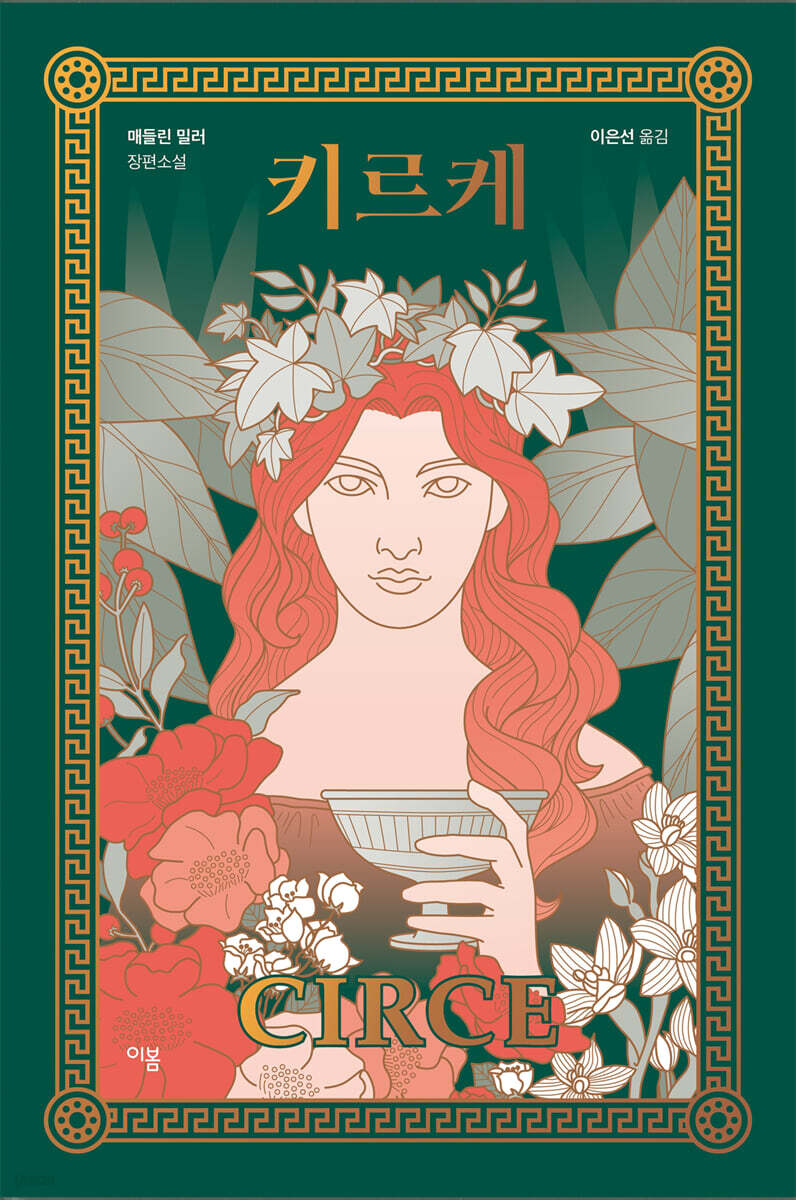 |
Description
Book Introduction
Classics are not to be read with a nod of respect, but to be rediscovered! The Witch Circe Begins a Women's Narrative Madeline Miller is considered to have the "most modern perspective" among writers who reinterpret classics in a modern way. The characters and narratives that Madeline Miller focuses on in Homer's epics, which form the foundation of Western literature, certainly resonate with readers today. By using Patroclus, a friend of Achilles who even the gods excluded from prophecy, as the narrator, and by reinventing the genre of 'epic poetry', which had been considered the exclusive domain of men for nearly 3,000 years, as a 'female epic' by empowering 'female voices', it breathes modern life into the classics. Madeline Miller focuses on Circe, the first witch to appear in Western literature. Circe, born to the sun god Helios and a nymph, has been considered the epitome of a witch skilled in magic in Greek mythology. A being who lives on the remote Mediterranean island of Aiaiye and weaves cloth on a large loom or uses magic to transform people into lions or wolves. Circe, the being who turned the hero Odysseus's men into pigs and held him captive for a year. In the Odyssey, Circe symbolizes a woman with powers that men fear. Madeline Miller, who was fascinated by Circe, the 'first witch', is said to have started writing the novel 'Circe' with the intention of creating a 'female epic' from the beginning. In Homer's Odyssey, Circe is already a character with her own narrative. He is a man with the power of foresight and magic, and uses his abilities to help Odysseus return to his hometown of Ithaca. He is a character who washes away the sins of his niece Medea, and later banishes Medea from his island when he finds out that she brutally murdered her half-brother. Epic poetry has been considered the exclusive domain of men. The absence of women's epics is not because women lack narratives. Women had no voice to tell their own stories. If Homer gave Odysseus a voice, Madeline Miller has chosen to give Circe a voice. Because the stories Circe has to tell us are already overflowing. Madeline Miller also uncovers narratives in all of Circe's symbols. Women's narratives can be created anywhere, when we ask them questions and listen to them. |
- You can preview some of the book's contents.
Preview
index
Circe
Acknowledgements
Character Commentary
Translator's Note
Acknowledgements
Character Commentary
Translator's Note
Detailed image
.jpg)
Publisher's Review
Classical scholar Kim Heon and [Cine21] reporter Da-hye Lee strongly recommend it!
Classics are not to be read with a nod of respect, but to be rediscovered!
Madeleine Miller, a novelist who combines classics and writing to achieve the highest level of popularity, has finally published her latest work, Circe, in Korea.
Madeline Miller, who studied classics at Brown University and classical adaptation at the Yale School of Drama and Film, taught Latin, ancient Greek, and Shakespeare in high school and wrote her first novel, The Song of Achilles, over a period of ten years, making a successful debut that sparked a worldwide boom in mythological novels.
This novel won the Women's Prize for Fiction, a prestigious British literary award, in 2012, and was the best-selling novel among the other nominated works.
If 『The Song of Achilles』 was a modern adaptation of 『The Iliad』, one of Homer's two epic poems, the first and greatest masterpiece in the history of Western literature, then the latest work, 『Circe』, was inspired by 『The Odyssey』, another masterpiece by Homer.
But why is the title 'Circe'?
Madeline Miller is considered to have the "most modern perspective" among writers who reinterpret classics in a modern way.
The characters and narratives that Madeline Miller focuses on in Homer's epics, which form the foundation of Western literature, certainly resonate with readers today.
By using Patroclus, a friend of Achilles who even the gods excluded from prophecy, as the narrator, and by reinventing the genre of 'epic poetry', which had been considered the exclusive domain of men for nearly 3,000 years, as a 'female epic' by empowering 'female voices', it breathes modern life into the classics.
Madeline Miller is a writer who, when faced with a great classic, asks not "Oh, that's right," but "Why is that so?" and seeks the answer.
The way the author finds the answer is by walking alongside the classics.
Rather than simply taking the names, personalities, and events of famous people and reconstructing them within one's own world, it is closer to the method of an archaeologist who unearths stories hidden between the lines that Homer did not explain.
What stories should we dig up from the classics today, and why?
The Witch Circe Begins a Women's Narrative
Madeline Miller focuses on Circe, the first witch to appear in Western literature.
Circe, born to the sun god Helios and a nymph, has been considered the epitome of a witch skilled in magic in Greek mythology.
A being who lives on the remote Mediterranean island of Aiaiye and weaves cloth on a large loom or uses magic to transform people into lions or wolves.
Circe, the being who turned the hero Odysseus's men into pigs and held him captive for a year.
In the Odyssey, Circe symbolizes a woman with powers that men fear.
Even today, the word 'witch' is used to describe a woman who possesses powers that can destabilize society.
For that reason, Madeline Miller, who was fascinated by Circe, the 'first witch', is said to have decided to create a 'female epic' from the beginning and began writing the novel 'Circe'.
In Homer's Odyssey, Circe is already a character with her own narrative.
He is a man with the power of foresight and magic, and uses his abilities to help Odysseus return to his hometown of Ithaca.
He is a character who washes away the sins of his niece Medea, and later banishes Medea from his island when he finds out that she brutally murdered her half-brother.
But why has Circe been consumed as a witch who makes men tremble in fear and holds them back without even giving them a chance to explain themselves?
Because the Odyssey is the epic of Odysseus.
The epic of a male hero.
There is no reason to tell the story of Circe or the Sirens in the place where they tell their own stories.
Epic poetry has been considered the exclusive domain of men.
The absence of women's epics is not because women lack narratives.
Women had no voice to tell their own stories.
If Homer gave Odysseus a voice, Madeline Miller has chosen to give Circe a voice.
Because the stories Circe has to tell us are already overflowing.
Madeline Miller also uncovers narratives in all of Circe's symbols.
The reason for the existence of lions and wolves prowling around Circe's house, the inevitable reason why people had to be turned into pigs, the meaning of Circe's loom, etc.
How could the author create such a long narrative with such small clues?
It's surprisingly simple.
Every action has a reason and motive, and the question of 'why' was asked of Circe's symbol, which was only described fragmentarily, and of Circe's actions, which had no specific explanation other than the assumption that she was a witch and therefore cruel.
And listen to Circe's story.
Women's narratives can be created anywhere, when we ask them questions and listen to them.
The female growth novel Circe
“When I was first born, I didn’t have a name that suited me.”
nymph Circe
Circe is voiced by Madeline Miller, but doesn't even have a name to begin with.
Although her father was the sun god Helios, the supreme god of the Titans, and her maternal grandfather was Oceanus, the god of the sea, from whom many languages, including English, derive their word for sea, she was only a nymph, the lowest of the lesser goddesses.
Circe is not in the genealogy of the fathers.
The only power a nymph possesses is her natural beauty.
The only way for a nymph to survive is to use her beauty to marry a male god and, through him, gain a place in the assembly of gods.
They are often exposed to the power of the male gods, and they accept this as their fate.
The nymph Circe is shunned by her mother because she is not her son, and ridiculed by her brothers because she has yellow eyes and a peculiar, thin voice.
Circe likes to avoid them and feel the breath of her father Helios in his temple.
I sit next to my father, admire his abilities, and listen to his stories.
Even so, Circe lacks the basic ability of her father Helios, who can turn firewood into ash just by looking at it.
No, I don't think I have that ability.
Witch Circe
Then, she meets a human man named Glaucus and realizes that she has some kind of 'ability'.
However, Circe's abilities are a 'disaster' from the perspective of the male gods, and lower-level goddesses with such abilities are not elevated to the level of gods, but are only called 'witches'.
The gods decide to exile Circe to the uninhabited island of Aeaea.
Circe, who has been forced to spend time completely alone on this island, uses it as an opportunity to hone her abilities.
Gods and humans visit this island.
And so begins the story of the witch Circe.
"Circe" is also a novel about women's growth.
Circe gradually grows through relationships with various characters.
Prometheus, who gave fire to humans, appears as the first person Circe meets and has a meaningful conversation with.
He gives us a very small glimpse of what story Circe will tell us.
“Not all gods need to be the same.”
Our lives won't change just by overturning the existing order; the "how" is what matters.
Circe talks about "how to turn things around"
The novel Circe features famous figures from Greek mythology.
Prometheus, who brought fire to humans, Hermes, the messenger god, Daedalus and his son Icarus, who created the labyrinth, Ariadne, who helped Theseus defeat the Minotaur, Medea, who was burning with revenge against Jason, and even the cunning Odysseus.
Major figures in mythology are deeply connected to Circe.
If you just follow Circe's genealogy, you will know most of Greek mythology, so it is surprising that Circe has been marginalized for so long.
Circe is the daughter of Helios, the sun god, and the granddaughter of Oceanus, the sea god.
Pasiphae, the wife of King Minos of Crete, who held Daedalus captive, was Circe's younger sister.
Ariadne, the daughter of Pasiphae, who was betrayed by Theseus and became the bride of Dionysus, is his niece.
Aeetes, the king of Colchis who possessed the Golden Fleece, is his younger brother.
Medea, the daughter of Aeetes and the niece who helps Jason obtain the Golden Fleece, is also his niece.
Depending on who you center your genealogy around, a completely different world unfolds.
This is a perspective often seen in ‘women’s narratives.’
It overturns existing perspectives.
Madeline Miller goes further here.
How to turn it around.
In the Odyssey, Circe is a witch who uses magic to seduce Odysseus and is a being that must be overcome, but Prometheus, Hermes, Daedalus, and Odysseus who appear in the novel Circe form a companion relationship with Circe.
This is a possible reversal for Circe.
Madeline Miller made her novel Circe a masterpiece by differentiating the way she relates to the world from the way the male world does.
God is a being who bestows grace upon humans and in return demands that they carry out missions.
Humans, too, are beings who willingly join the march of suffering and offer up the blood of others and their own sweat as sacrifices in order to be chosen by God.
The noble accomplishment of a mission, the inevitable hardships encountered along the way, the success achieved through blood and sweat, and the honor and immortality thus gained—this is the true life according to the existing order of the gods.
Circe, a goddess and witch, helps others without asking for anything in return.
Also, unlike other gods who do not need to grow through the process, he grows little by little.
Circe's growth isn't particularly dramatic, but it's incredibly beautiful.
It is deeply moving because it is the growth of God, a being that does not need to grow.
It even gives us hope that our lives can be this beautiful and moving.
In this way, the novel Circe overturns the definition of true life that Greek mythology has told us.
We may be able to change our lives by reading rewritten classics.
However, you have to choose whose story you will listen to.
Circe tells her younger brother, who asks her how magic comes about,
“Magic can’t be taught.
“You can’t do it unless you find it yourself.”
If you are a female reader, or if you have been quietly walking your own path like Circe, why not try finding a story that will become your own magic?
The novel Circe will be a magical story for those people.
Classics are not to be read with a nod of respect, but to be rediscovered!
Madeleine Miller, a novelist who combines classics and writing to achieve the highest level of popularity, has finally published her latest work, Circe, in Korea.
Madeline Miller, who studied classics at Brown University and classical adaptation at the Yale School of Drama and Film, taught Latin, ancient Greek, and Shakespeare in high school and wrote her first novel, The Song of Achilles, over a period of ten years, making a successful debut that sparked a worldwide boom in mythological novels.
This novel won the Women's Prize for Fiction, a prestigious British literary award, in 2012, and was the best-selling novel among the other nominated works.
If 『The Song of Achilles』 was a modern adaptation of 『The Iliad』, one of Homer's two epic poems, the first and greatest masterpiece in the history of Western literature, then the latest work, 『Circe』, was inspired by 『The Odyssey』, another masterpiece by Homer.
But why is the title 'Circe'?
Madeline Miller is considered to have the "most modern perspective" among writers who reinterpret classics in a modern way.
The characters and narratives that Madeline Miller focuses on in Homer's epics, which form the foundation of Western literature, certainly resonate with readers today.
By using Patroclus, a friend of Achilles who even the gods excluded from prophecy, as the narrator, and by reinventing the genre of 'epic poetry', which had been considered the exclusive domain of men for nearly 3,000 years, as a 'female epic' by empowering 'female voices', it breathes modern life into the classics.
Madeline Miller is a writer who, when faced with a great classic, asks not "Oh, that's right," but "Why is that so?" and seeks the answer.
The way the author finds the answer is by walking alongside the classics.
Rather than simply taking the names, personalities, and events of famous people and reconstructing them within one's own world, it is closer to the method of an archaeologist who unearths stories hidden between the lines that Homer did not explain.
What stories should we dig up from the classics today, and why?
The Witch Circe Begins a Women's Narrative
Madeline Miller focuses on Circe, the first witch to appear in Western literature.
Circe, born to the sun god Helios and a nymph, has been considered the epitome of a witch skilled in magic in Greek mythology.
A being who lives on the remote Mediterranean island of Aiaiye and weaves cloth on a large loom or uses magic to transform people into lions or wolves.
Circe, the being who turned the hero Odysseus's men into pigs and held him captive for a year.
In the Odyssey, Circe symbolizes a woman with powers that men fear.
Even today, the word 'witch' is used to describe a woman who possesses powers that can destabilize society.
For that reason, Madeline Miller, who was fascinated by Circe, the 'first witch', is said to have decided to create a 'female epic' from the beginning and began writing the novel 'Circe'.
In Homer's Odyssey, Circe is already a character with her own narrative.
He is a man with the power of foresight and magic, and uses his abilities to help Odysseus return to his hometown of Ithaca.
He is a character who washes away the sins of his niece Medea, and later banishes Medea from his island when he finds out that she brutally murdered her half-brother.
But why has Circe been consumed as a witch who makes men tremble in fear and holds them back without even giving them a chance to explain themselves?
Because the Odyssey is the epic of Odysseus.
The epic of a male hero.
There is no reason to tell the story of Circe or the Sirens in the place where they tell their own stories.
Epic poetry has been considered the exclusive domain of men.
The absence of women's epics is not because women lack narratives.
Women had no voice to tell their own stories.
If Homer gave Odysseus a voice, Madeline Miller has chosen to give Circe a voice.
Because the stories Circe has to tell us are already overflowing.
Madeline Miller also uncovers narratives in all of Circe's symbols.
The reason for the existence of lions and wolves prowling around Circe's house, the inevitable reason why people had to be turned into pigs, the meaning of Circe's loom, etc.
How could the author create such a long narrative with such small clues?
It's surprisingly simple.
Every action has a reason and motive, and the question of 'why' was asked of Circe's symbol, which was only described fragmentarily, and of Circe's actions, which had no specific explanation other than the assumption that she was a witch and therefore cruel.
And listen to Circe's story.
Women's narratives can be created anywhere, when we ask them questions and listen to them.
The female growth novel Circe
“When I was first born, I didn’t have a name that suited me.”
nymph Circe
Circe is voiced by Madeline Miller, but doesn't even have a name to begin with.
Although her father was the sun god Helios, the supreme god of the Titans, and her maternal grandfather was Oceanus, the god of the sea, from whom many languages, including English, derive their word for sea, she was only a nymph, the lowest of the lesser goddesses.
Circe is not in the genealogy of the fathers.
The only power a nymph possesses is her natural beauty.
The only way for a nymph to survive is to use her beauty to marry a male god and, through him, gain a place in the assembly of gods.
They are often exposed to the power of the male gods, and they accept this as their fate.
The nymph Circe is shunned by her mother because she is not her son, and ridiculed by her brothers because she has yellow eyes and a peculiar, thin voice.
Circe likes to avoid them and feel the breath of her father Helios in his temple.
I sit next to my father, admire his abilities, and listen to his stories.
Even so, Circe lacks the basic ability of her father Helios, who can turn firewood into ash just by looking at it.
No, I don't think I have that ability.
Witch Circe
Then, she meets a human man named Glaucus and realizes that she has some kind of 'ability'.
However, Circe's abilities are a 'disaster' from the perspective of the male gods, and lower-level goddesses with such abilities are not elevated to the level of gods, but are only called 'witches'.
The gods decide to exile Circe to the uninhabited island of Aeaea.
Circe, who has been forced to spend time completely alone on this island, uses it as an opportunity to hone her abilities.
Gods and humans visit this island.
And so begins the story of the witch Circe.
"Circe" is also a novel about women's growth.
Circe gradually grows through relationships with various characters.
Prometheus, who gave fire to humans, appears as the first person Circe meets and has a meaningful conversation with.
He gives us a very small glimpse of what story Circe will tell us.
“Not all gods need to be the same.”
Our lives won't change just by overturning the existing order; the "how" is what matters.
Circe talks about "how to turn things around"
The novel Circe features famous figures from Greek mythology.
Prometheus, who brought fire to humans, Hermes, the messenger god, Daedalus and his son Icarus, who created the labyrinth, Ariadne, who helped Theseus defeat the Minotaur, Medea, who was burning with revenge against Jason, and even the cunning Odysseus.
Major figures in mythology are deeply connected to Circe.
If you just follow Circe's genealogy, you will know most of Greek mythology, so it is surprising that Circe has been marginalized for so long.
Circe is the daughter of Helios, the sun god, and the granddaughter of Oceanus, the sea god.
Pasiphae, the wife of King Minos of Crete, who held Daedalus captive, was Circe's younger sister.
Ariadne, the daughter of Pasiphae, who was betrayed by Theseus and became the bride of Dionysus, is his niece.
Aeetes, the king of Colchis who possessed the Golden Fleece, is his younger brother.
Medea, the daughter of Aeetes and the niece who helps Jason obtain the Golden Fleece, is also his niece.
Depending on who you center your genealogy around, a completely different world unfolds.
This is a perspective often seen in ‘women’s narratives.’
It overturns existing perspectives.
Madeline Miller goes further here.
How to turn it around.
In the Odyssey, Circe is a witch who uses magic to seduce Odysseus and is a being that must be overcome, but Prometheus, Hermes, Daedalus, and Odysseus who appear in the novel Circe form a companion relationship with Circe.
This is a possible reversal for Circe.
Madeline Miller made her novel Circe a masterpiece by differentiating the way she relates to the world from the way the male world does.
God is a being who bestows grace upon humans and in return demands that they carry out missions.
Humans, too, are beings who willingly join the march of suffering and offer up the blood of others and their own sweat as sacrifices in order to be chosen by God.
The noble accomplishment of a mission, the inevitable hardships encountered along the way, the success achieved through blood and sweat, and the honor and immortality thus gained—this is the true life according to the existing order of the gods.
Circe, a goddess and witch, helps others without asking for anything in return.
Also, unlike other gods who do not need to grow through the process, he grows little by little.
Circe's growth isn't particularly dramatic, but it's incredibly beautiful.
It is deeply moving because it is the growth of God, a being that does not need to grow.
It even gives us hope that our lives can be this beautiful and moving.
In this way, the novel Circe overturns the definition of true life that Greek mythology has told us.
We may be able to change our lives by reading rewritten classics.
However, you have to choose whose story you will listen to.
Circe tells her younger brother, who asks her how magic comes about,
“Magic can’t be taught.
“You can’t do it unless you find it yourself.”
If you are a female reader, or if you have been quietly walking your own path like Circe, why not try finding a story that will become your own magic?
The novel Circe will be a magical story for those people.
GOODS SPECIFICS
- Date of issue: May 28, 2020
- Format: Hardcover book binding method guide
- Page count, weight, size: 524 pages | 758g | 150*218*30mm
- ISBN13: 9791190582308
- ISBN10: 1190582309
You may also like
카테고리
korean


korean

![GQ KOREA Mark (Monthly): December [2025]](http://librairie.coreenne.fr/cdn/shop/files/8ef265dbbfbf186523ed75ba7319009d.jpg?v=1765340328&width=3840)


