

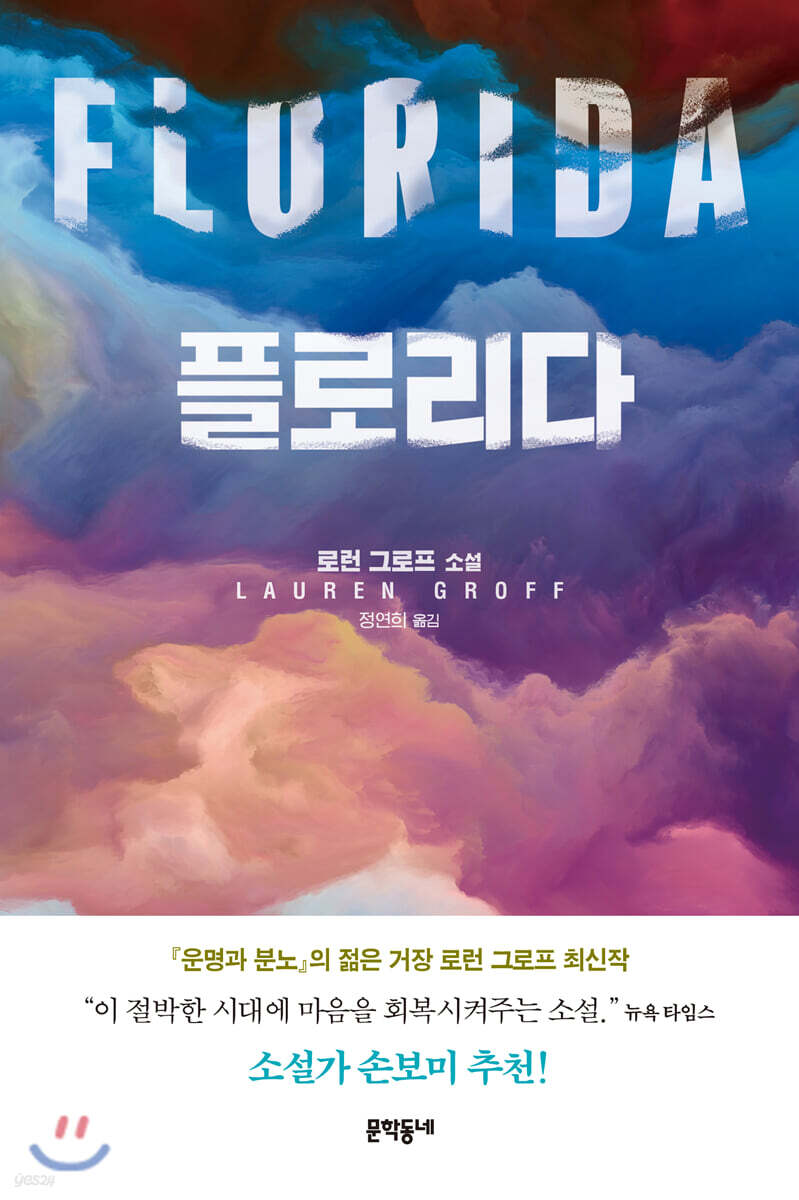
Florida
 |
Description
Book Introduction
- A word from MD
-
Fates and Furies, Lauren Groff's latest workLauren Groff once again creates her own unique world through eleven short stories written while living in Florida for twelve years.
The author's perspective extends beyond human understanding to encompass all of the universe, and his gaze extends to all small and imperfect beings, offering solace to our loneliness and anxiety at the end of it all.
Novel/Poetry PD Park Hyung-wook
Lauren Groff, the author who captivated readers around the world with her explosive narrative and dazzling prose, has published her new short story collection, Florida.
This is the latest work, published three years after 『Fates and Furies』, which was also greatly loved by Korean readers, and contains a total of 11 short stories.
These works, written while the author lived in Florida for twelve years, all have Florida as their background, either directly or indirectly.
The characters in the novels are either born and raised in Florida, born in other northern states and immigrated to Florida, or sometimes take short trips outside of Florida to exotic destinations, yet remain emotionally tied to the place.
Florida, also known as the 'Sunshine State', is located in the southern United States and is warm year-round, but its summers are hot and humid and it is also affected by hurricanes.
Palmetto palms dot the landscape, snakes can be encountered on the trails, alligators lurk in the swamps, and raccoons and armadillos scurry through the undergrowth as you venture into the forest.
Lauren Groff depicts the climate and natural environment of Florida in detail in her work, perfectly recreating the emotions and atmosphere of a place, and closely connecting this with the anxiety of the characters, injecting the entire work with a menacing and tense energy.
Even works not set in Florida are so thickly imbued with the heat and humidity of the place that the entire collection feels like a unique world, shaped by the emotions one harbors about a single place.
As the Atlantic puts it, “‘Florida’ is less a collection of stories and more an ecosystem,” and Lauren Groff builds a world that only she can create with poetic beauty and instinctive sharpness.
This is the latest work, published three years after 『Fates and Furies』, which was also greatly loved by Korean readers, and contains a total of 11 short stories.
These works, written while the author lived in Florida for twelve years, all have Florida as their background, either directly or indirectly.
The characters in the novels are either born and raised in Florida, born in other northern states and immigrated to Florida, or sometimes take short trips outside of Florida to exotic destinations, yet remain emotionally tied to the place.
Florida, also known as the 'Sunshine State', is located in the southern United States and is warm year-round, but its summers are hot and humid and it is also affected by hurricanes.
Palmetto palms dot the landscape, snakes can be encountered on the trails, alligators lurk in the swamps, and raccoons and armadillos scurry through the undergrowth as you venture into the forest.
Lauren Groff depicts the climate and natural environment of Florida in detail in her work, perfectly recreating the emotions and atmosphere of a place, and closely connecting this with the anxiety of the characters, injecting the entire work with a menacing and tense energy.
Even works not set in Florida are so thickly imbued with the heat and humidity of the place that the entire collection feels like a unique world, shaped by the emotions one harbors about a single place.
As the Atlantic puts it, “‘Florida’ is less a collection of stories and more an ecosystem,” and Lauren Groff builds a world that only she can create with poetic beauty and instinctive sharpness.
- You can preview some of the book's contents.
Preview
index
Ghosts and Void 009
Round Earth, in its imaginary corner 027
The Dog Who Became a Wolf 061
Midnight Zone 089
iWall 109
For the God of Love, For the Love of God 129
Salvador 165
Flower Hunter 193
211 above and below
Snake Story 251
Ipor 265
Acknowledgments 335
Translator's Note: Eggs and Oranges 337
Round Earth, in its imaginary corner 027
The Dog Who Became a Wolf 061
Midnight Zone 089
iWall 109
For the God of Love, For the Love of God 129
Salvador 165
Flower Hunter 193
211 above and below
Snake Story 251
Ipor 265
Acknowledgments 335
Translator's Note: Eggs and Oranges 337
Into the book
We lonely humans are too small, and our lives are too fleeting for the moon to notice us even a little.
--- p.26
Jude realized then.
That even the thing you love most can kill you.
He took that realization to heart and from then on he kept it in mind when making every decision.
--- p.43
He thought he was an island in the middle of the ocean.
An island with no hope of seeing other islands in the distance, or even of seeing passing ships.
--- p.43
He will never know her.
Knowing another person was something ungraspable, like a cloud.
He will never be able to accept someone else as something like an equal in his heart.
As something pure and complete.
--- p.47
What had seemed so solid over time became fragile when faced with time.
Because time is indifferent, and more animal than human.
Time doesn't care if you fall away.
It keeps flowing without you.
--- p.105
Home contains us.
But who can say what we're carrying? Outside, where the stairs once stood, on the side of a steep slope, an egg rested, balanced.
All the light of dawn was contained within its shell, completely silent.
--- p.128
Everything was beautiful.
Anything was possible.
The whole world was spread wide open like a split peach.
But these poor people, these utterly pitiful people.
Are they too old to see it? If they just reached out, picked it, and brought it to their lips, they too could taste it.
--- p.163
She was alone, and she acknowledged that she was alone.
She would always be alone, forever in this growing puddle even as she lay there.
For a very long time she lay there, and even though the wind blew and the rain poured down on her, she did not feel terrible.
It was just emptiness.
--- p.181
The dead have nothing to take from us.
The living take it and take it again.
--- p.200
say it.
Do you still believe there are good people in the world?
Well, of course, he said.
It must be several billion.
It's just that bad people make a lot more noise.
--- p.264
Palmerto bit his calf, and a strange substance from the swamp suddenly seeped into his leg.
Tiny creatures rustled wherever her feet touched, and she felt a pang of affection for them, for their small size and the terror they must have felt.
--- p.247
She was just a lost being, living among countless others.
There was nothing special about being human.
--- p.248
It's amazing to know a list of all the literary works someone else has read.
Their secret and personal
It's like knowing a language.
--- p.314
Loneliness is dangerous to a living heart.
You need to surround yourself with people who think and talk.
--- p.318
Now she feels hungry, but she can't pinpoint exactly where in her body she feels it.
A sense of longing.
About what? Perhaps about affection, about a clear, confident, and greater moral sense than her own, about something that could cover her like a blanket.
No, no, something where she could hide safely, even for a moment.
--- p.324
Truth may be moral, but it is not always right.
Well, she says.
The good thing is we don't know anything about it.
One moment you're basking in the sun, enjoying the sea, ice cream, naps, and love, but then you don't know what happens next.
--- p.26
Jude realized then.
That even the thing you love most can kill you.
He took that realization to heart and from then on he kept it in mind when making every decision.
--- p.43
He thought he was an island in the middle of the ocean.
An island with no hope of seeing other islands in the distance, or even of seeing passing ships.
--- p.43
He will never know her.
Knowing another person was something ungraspable, like a cloud.
He will never be able to accept someone else as something like an equal in his heart.
As something pure and complete.
--- p.47
What had seemed so solid over time became fragile when faced with time.
Because time is indifferent, and more animal than human.
Time doesn't care if you fall away.
It keeps flowing without you.
--- p.105
Home contains us.
But who can say what we're carrying? Outside, where the stairs once stood, on the side of a steep slope, an egg rested, balanced.
All the light of dawn was contained within its shell, completely silent.
--- p.128
Everything was beautiful.
Anything was possible.
The whole world was spread wide open like a split peach.
But these poor people, these utterly pitiful people.
Are they too old to see it? If they just reached out, picked it, and brought it to their lips, they too could taste it.
--- p.163
She was alone, and she acknowledged that she was alone.
She would always be alone, forever in this growing puddle even as she lay there.
For a very long time she lay there, and even though the wind blew and the rain poured down on her, she did not feel terrible.
It was just emptiness.
--- p.181
The dead have nothing to take from us.
The living take it and take it again.
--- p.200
say it.
Do you still believe there are good people in the world?
Well, of course, he said.
It must be several billion.
It's just that bad people make a lot more noise.
--- p.264
Palmerto bit his calf, and a strange substance from the swamp suddenly seeped into his leg.
Tiny creatures rustled wherever her feet touched, and she felt a pang of affection for them, for their small size and the terror they must have felt.
--- p.247
She was just a lost being, living among countless others.
There was nothing special about being human.
--- p.248
It's amazing to know a list of all the literary works someone else has read.
Their secret and personal
It's like knowing a language.
--- p.314
Loneliness is dangerous to a living heart.
You need to surround yourself with people who think and talk.
--- p.318
Now she feels hungry, but she can't pinpoint exactly where in her body she feels it.
A sense of longing.
About what? Perhaps about affection, about a clear, confident, and greater moral sense than her own, about something that could cover her like a blanket.
No, no, something where she could hide safely, even for a moment.
--- p.324
Truth may be moral, but it is not always right.
Well, she says.
The good thing is we don't know anything about it.
One moment you're basking in the sun, enjoying the sea, ice cream, naps, and love, but then you don't know what happens next.
--- p.332
Publisher's Review
"My special, dark, and prickly anxiety" that dominates my daily life
The author once said in an interview, “These short stories all arose from the fact that I have contradictory and uneasy feelings about the place called Florida,” and the characters’ feelings about Florida are also ambivalent.
Although he is “dazzled by the dazzling flora and fauna” (“The Flower Hunters”), he does not regret leaving Florida in the summer, where he feels “slowly drowning in hot water” (“Ipor”).
Florida, which evokes such conflicting emotions in them, is a place where storms, snakes, and sinkholes lurk on the edges of everyday life, and so they all share a sense of anxiety and fear.
In "The Flower Hunters," the protagonist, a mother of two, is terrified of a gaping sinkhole around the corner of her house.
As she crouched on the edge of the sinkhole and peered into it while the rain poured down, no raindrops gathered, and she thought, “That’s really bad.”
That means the water is trickling down through a small crack, that there is a passage for the water to drain, that there is a hole there, a huge hole right under her feet.” The protagonist of “Eye Wall” is left home alone to weather the hurricane’s maelstrom.
In the midst of a gust of wind and a storm that twists and shakes the house and slowly tears the roof off, the protagonist is accompanied only by ghosts—her husband who died of a heart attack after leaving her, her college sweetheart who committed suicide with a pistol, her father who died of cancer—and animals.
Two young sisters are left on a remote island without electricity, water, or proper food, struggling to survive in the wild ("The Dog Who Became a Wolf"), and the deaf protagonist is stranded in the middle of a lake inhabited by alligators, vipers, and pygmies, having lost his oar ("In an Imaginary Corner of the Round Earth").
But there are so many things in the world that make them more anxious than their fear of nature.
When Helena, the protagonist of "Salvador," stumbles while trying to make her way through a storm that makes it difficult to take even a single step, the person who saves her is the store owner who had been smiling wickedly at her.
Now she waits anxiously for “the moment when he will make a surprise attack.”
Sometimes I go for walks and jogs to soothe my "special, dark, prickly anxiety" ("Ghosts and Emptiness"), but there's been a recent rape near my house, and I actually find the victim lying on the ground ("Snake Story").
Some short stories feature a mother with two sons who appear to be the same person, and in these cases the fear is heightened by the fact that they are 'mothers'.
She is afraid because “she must stay here as long as she can, since the children have already come into this world, but she cannot outlive them” (“The Flower Hunters”), and she is afraid because she knows that the moment will surely come when her sons will suffer, because “she cannot help thinking that the children who are now being born will be the last generation of mankind” (“Ifor”).
Moreover, since the protagonists of all the works except for two (「In the Round Earth, in its Virtual Corner」 and 「For the God of Love, for the Love of God」) are women, their anxiety is also connected to the experiences of women.
The hardships women face in life today—family discord, career struggles, economic instability, dating violence—threaten their daily lives like a gaping sinkhole near their home or a Florida panther living in a thicket.
Anxiety that eats away at your soul, the loneliness of standing alone in a distant space and time.
Looking at the small and imperfect beings of this universe
The deep and expansive gaze of young master Lauren Groff
We can explain our perspective on the world with terms like human view, world view, and nature view, but for Lauren Groff's work, I wanted to use the word "cosmology," which encompasses all of those and includes something bigger than that.
“It’s a cosmic book.” If anyone asked me, I’d be happy to answer that way.
From the translator's note
In "Florida," Lauren Groff explores the world not just from a human perspective, but from the perspective of all living and non-living things, natural objects like the moon and the ocean.
The story is told from the perspective of a raccoon, an armadillo, an alligator, and a snake, from the perspective of a house weathering a storm, and from the perspective of the moon looking down on humans.
So this collection of short stories pulses with a vibrant life force, and Lauren Groff, with her sharp insights and sharper prose, brings this energy to life with unparalleled vividness.
And in his works, humans are nothing more or less than just another living being among countless other beings.
Because humans do not possess any special qualities that set them apart from other beings, the moon in the sky does not notice us no matter how hard we try, and the sea is indifferent to human desires.
So it is wonderful and admirable, but on the other hand, it makes people feel lonely, as if they are standing alone in a vast space and time.
When you carry around the loneliness of a “living creature” like a shadow, at some point you have to admit that you were alone, are alone, and will always be alone.
And when you acknowledge that fact, you begin to feel the fear and pity for the little creatures that rustle wherever your feet touch.
When endless loneliness threatens our lives and threatens the characters, it is none other than stories that offer comfort.
In "The Dog Who Became a Wolf," the older sister, who is left on a remote island, constantly tells stories to her younger brother, and in "Midnight Zone," the mother, who is left in the forest with her young sons with a head injury, keeps telling stories to her sons and reading Alice in Wonderland to keep herself conscious.
The graduate student in "Up and Down" carries around "Middlemarch" even as he becomes homeless, and the protagonist of "In an Imaginary Corner of the Round Earth" finds solace in the Shakespeare, Neruda, and Rilke his mother used to tell him about when he was a child, and in the books his mother sent him after running away from home with his father.
Likewise, readers of Florida will find solace in Lauren Groff's work, which depicts a life of anxiety and loneliness while also telling a story of vitality and compassion.
As the New York Times put it, the stories in Florida, “even in their most ominous final gestures, lean toward the promise and love of good people,” offer us, lonely and anxious beings, a little solace in these stories.
The author once said in an interview, “These short stories all arose from the fact that I have contradictory and uneasy feelings about the place called Florida,” and the characters’ feelings about Florida are also ambivalent.
Although he is “dazzled by the dazzling flora and fauna” (“The Flower Hunters”), he does not regret leaving Florida in the summer, where he feels “slowly drowning in hot water” (“Ipor”).
Florida, which evokes such conflicting emotions in them, is a place where storms, snakes, and sinkholes lurk on the edges of everyday life, and so they all share a sense of anxiety and fear.
In "The Flower Hunters," the protagonist, a mother of two, is terrified of a gaping sinkhole around the corner of her house.
As she crouched on the edge of the sinkhole and peered into it while the rain poured down, no raindrops gathered, and she thought, “That’s really bad.”
That means the water is trickling down through a small crack, that there is a passage for the water to drain, that there is a hole there, a huge hole right under her feet.” The protagonist of “Eye Wall” is left home alone to weather the hurricane’s maelstrom.
In the midst of a gust of wind and a storm that twists and shakes the house and slowly tears the roof off, the protagonist is accompanied only by ghosts—her husband who died of a heart attack after leaving her, her college sweetheart who committed suicide with a pistol, her father who died of cancer—and animals.
Two young sisters are left on a remote island without electricity, water, or proper food, struggling to survive in the wild ("The Dog Who Became a Wolf"), and the deaf protagonist is stranded in the middle of a lake inhabited by alligators, vipers, and pygmies, having lost his oar ("In an Imaginary Corner of the Round Earth").
But there are so many things in the world that make them more anxious than their fear of nature.
When Helena, the protagonist of "Salvador," stumbles while trying to make her way through a storm that makes it difficult to take even a single step, the person who saves her is the store owner who had been smiling wickedly at her.
Now she waits anxiously for “the moment when he will make a surprise attack.”
Sometimes I go for walks and jogs to soothe my "special, dark, prickly anxiety" ("Ghosts and Emptiness"), but there's been a recent rape near my house, and I actually find the victim lying on the ground ("Snake Story").
Some short stories feature a mother with two sons who appear to be the same person, and in these cases the fear is heightened by the fact that they are 'mothers'.
She is afraid because “she must stay here as long as she can, since the children have already come into this world, but she cannot outlive them” (“The Flower Hunters”), and she is afraid because she knows that the moment will surely come when her sons will suffer, because “she cannot help thinking that the children who are now being born will be the last generation of mankind” (“Ifor”).
Moreover, since the protagonists of all the works except for two (「In the Round Earth, in its Virtual Corner」 and 「For the God of Love, for the Love of God」) are women, their anxiety is also connected to the experiences of women.
The hardships women face in life today—family discord, career struggles, economic instability, dating violence—threaten their daily lives like a gaping sinkhole near their home or a Florida panther living in a thicket.
Anxiety that eats away at your soul, the loneliness of standing alone in a distant space and time.
Looking at the small and imperfect beings of this universe
The deep and expansive gaze of young master Lauren Groff
We can explain our perspective on the world with terms like human view, world view, and nature view, but for Lauren Groff's work, I wanted to use the word "cosmology," which encompasses all of those and includes something bigger than that.
“It’s a cosmic book.” If anyone asked me, I’d be happy to answer that way.
From the translator's note
In "Florida," Lauren Groff explores the world not just from a human perspective, but from the perspective of all living and non-living things, natural objects like the moon and the ocean.
The story is told from the perspective of a raccoon, an armadillo, an alligator, and a snake, from the perspective of a house weathering a storm, and from the perspective of the moon looking down on humans.
So this collection of short stories pulses with a vibrant life force, and Lauren Groff, with her sharp insights and sharper prose, brings this energy to life with unparalleled vividness.
And in his works, humans are nothing more or less than just another living being among countless other beings.
Because humans do not possess any special qualities that set them apart from other beings, the moon in the sky does not notice us no matter how hard we try, and the sea is indifferent to human desires.
So it is wonderful and admirable, but on the other hand, it makes people feel lonely, as if they are standing alone in a vast space and time.
When you carry around the loneliness of a “living creature” like a shadow, at some point you have to admit that you were alone, are alone, and will always be alone.
And when you acknowledge that fact, you begin to feel the fear and pity for the little creatures that rustle wherever your feet touch.
When endless loneliness threatens our lives and threatens the characters, it is none other than stories that offer comfort.
In "The Dog Who Became a Wolf," the older sister, who is left on a remote island, constantly tells stories to her younger brother, and in "Midnight Zone," the mother, who is left in the forest with her young sons with a head injury, keeps telling stories to her sons and reading Alice in Wonderland to keep herself conscious.
The graduate student in "Up and Down" carries around "Middlemarch" even as he becomes homeless, and the protagonist of "In an Imaginary Corner of the Round Earth" finds solace in the Shakespeare, Neruda, and Rilke his mother used to tell him about when he was a child, and in the books his mother sent him after running away from home with his father.
Likewise, readers of Florida will find solace in Lauren Groff's work, which depicts a life of anxiety and loneliness while also telling a story of vitality and compassion.
As the New York Times put it, the stories in Florida, “even in their most ominous final gestures, lean toward the promise and love of good people,” offer us, lonely and anxious beings, a little solace in these stories.
GOODS SPECIFICS
- Publication date: April 27, 2020
- Page count, weight, size: 348 pages | 456g | 140*210*23mm
- ISBN13: 9788954671415
- ISBN10: 8954671411
You may also like
카테고리
korean


korean

![GQ KOREA Mark (Monthly): December [2025]](http://librairie.coreenne.fr/cdn/shop/files/8ef265dbbfbf186523ed75ba7319009d.jpg?v=1765340328&width=3840)


