

People who hate jokes
 |
Description
Book Introduction
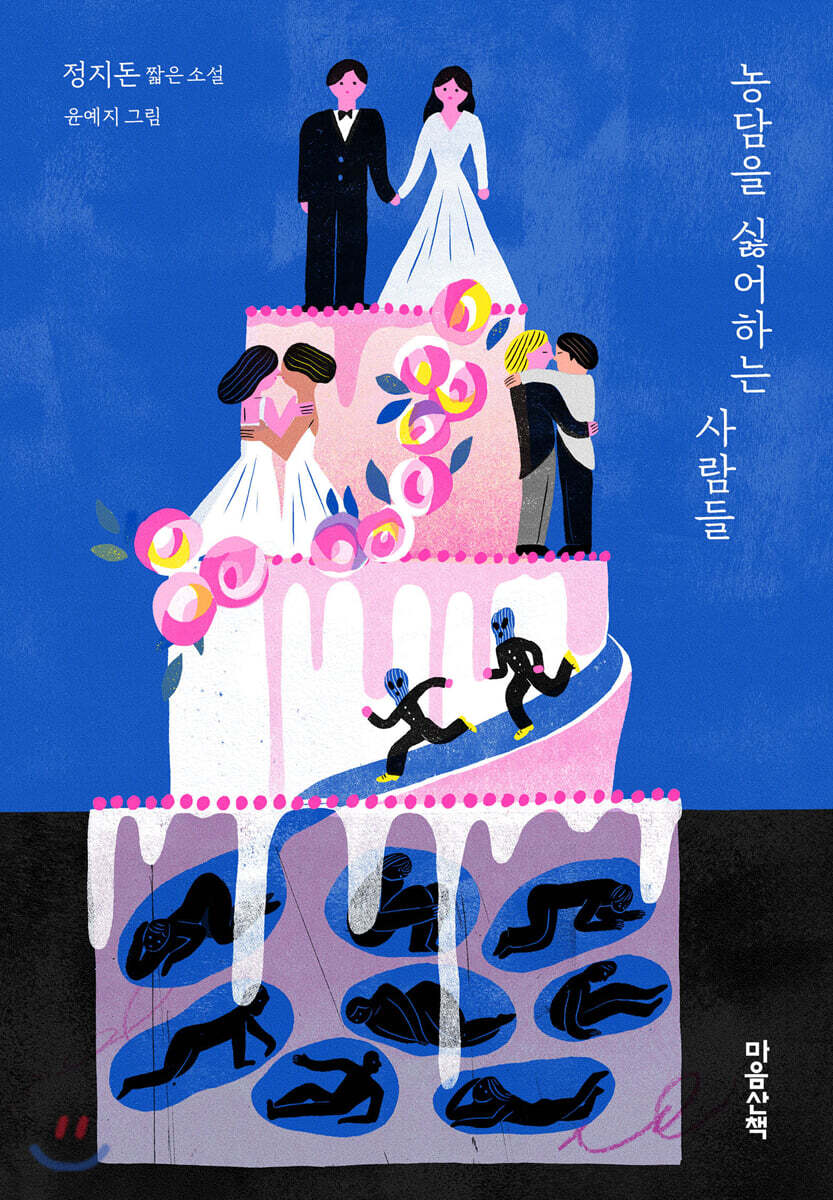
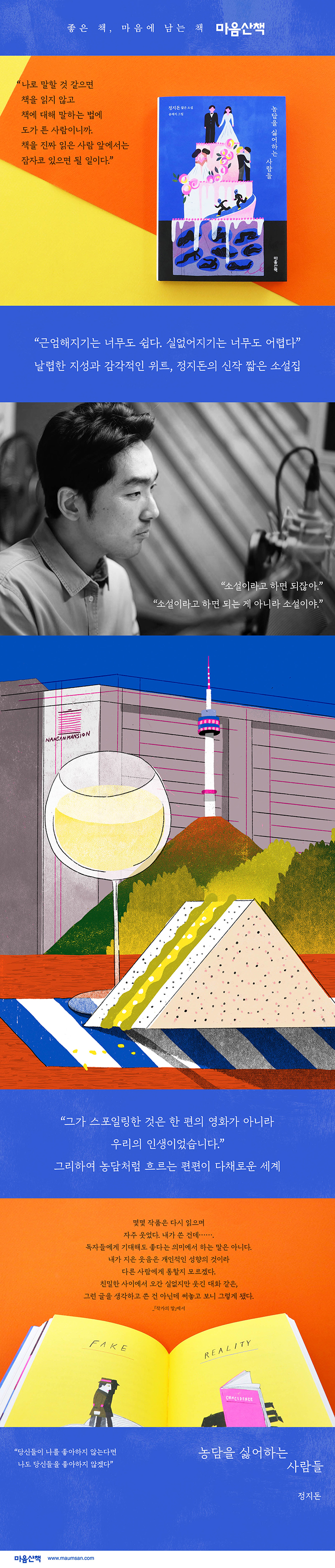
“It’s so easy to be serious. “It’s so hard to lose focus” A sharp intellect and sensuous wit: Jeong Ji-don's new collection of short stories. A collection of short stories by Jeong Ji-don, who has established himself as a notable writer in Korean literature by winning the Munji Literary Award and the Young Writer Award, has been published. Having steadily lived up to expectations with works such as “As I Fight,” “We Will Live in Other People’s Memories,” “Little Coward, Coward’s New Party,” and “Diary of a Night Watchman,” Jeong Ji-don demonstrates his talent in short stories as well through “People Who Hate Jokes.” Jeong Ji-don, who says of short stories, “I was hesitant because it was a format I had never written before, but as I wrote it, I enjoyed it,” adds, “I didn’t think of it as a silly but funny conversation between close friends, but as I wrote it, it turned out that way.” Jeong Ji-don invites readers into a world of unique and witty jokes through his short stories. By intertwining real-life figures Paul Auster, Edward Said, and Jean Genet, it exquisitely combines fact and imagination, and by featuring film director Jean Painlevé, it makes you wonder, 'How much is fiction and how much is fact?' The characters in the novel travel, read books, and at the same time constantly encounter strange things in their daily lives. All the jokes and unique, strange, and witty sentences in the novel touch the hearts of readers. |
- You can preview some of the book's contents.
Preview
index
Author's Note
And we talked
If you don't like me, I won't like you.
The Last of a Book Reviewer
Namsan Mansion
The King of the Sea is Jean Pinlevé
Frank Hensel
good neighbor
traveler
Night trip
bizarre love triangle
Third man
small world
Anxiety eats away at the soul
Walking Invader
Because our life is
This work is fictional and any place names or situations that resemble actual facts are coincidental.
viewless
Diary of a Single Person in the Underground
Along with the Gods
Self-development in your life
And the world became a movie
And we talked
If you don't like me, I won't like you.
The Last of a Book Reviewer
Namsan Mansion
The King of the Sea is Jean Pinlevé
Frank Hensel
good neighbor
traveler
Night trip
bizarre love triangle
Third man
small world
Anxiety eats away at the soul
Walking Invader
Because our life is
This work is fictional and any place names or situations that resemble actual facts are coincidental.
viewless
Diary of a Single Person in the Underground
Along with the Gods
Self-development in your life
And the world became a movie
Detailed image
Into the book
I've been getting a lot of requests for short stories for the past two or three years.
I was hesitant because it was a format I had never used before, but as I started using it, I started enjoying it.
I often laughed while rereading some of the pieces.
I wrote it… … .
I'm not saying this to give readers something to look forward to.
The laughter I create is a personal one, so I don't know if it will resonate with others.
I didn't write it with the intention of it being a silly but funny conversation between close friends, but that's how it turned out.
Not all are successful.
GK
Chesterton said.
It's so easy to become serious.
It's so hard to lose focus.
--- From the author's note
The first reported sighting of a ghost occurred in 1975.
That too, from someone who saw the ghost of Luchino Visconti.
What is strange is that Luchino Visconti died in 1976.
"How can you become a ghost before you even die?" I asked Martini jokingly, but he responded with a serious expression.
That's proof that he is a master.
Visconti is said to have often had out-of-body experiences.
It's like a smooth, tracking shot that moves between endless rooms.
Yes… … I nodded and thought.
This old man… …is not normal.
--- From "If you don't like me, I won't like you either"
The strange thing was this:
As the reviews became more bizarre, the number of fans began to grow.
People went crazy for his self-loathing and pessimistic reviews, and subscriptions to the magazines he contributed to soared exponentially.
--- From "The Last of a Book Reviewer"
Watching his films, I wondered what he was doing in the ocean, that passion doesn't guarantee anything, that we're just trying to not die until we die, or that we're wasting our time on something that has no meaning other than the fact that we've biologically joined the flow of time as time passes.
--- From "The King of the Sea is Jean Pinlevé"
Frank Hensel was a strange man.
Just as World War II was initially called "the strange war" by the French, Frank, a typical German and Nazi, was also strange.
--- From "Frank Hensel"
As for me, I'm a person who has mastered the art of talking about books without reading them.
It would be better to keep quiet in front of someone who has actually read the book.
--- From "Good Neighbor"
Where are you going?
The thought of leaving came to her mind, and then the image of a train being sucked into a deep, dark forest appeared in her mind.
A train running through a deserted mountain, an empty cabin, waking up the next morning in a quiet hotel with a view of the ocean, eating breakfast and thinking about the things I left off and the things I'm about to start anew.
--- From "Night Journey"
I couldn't think of anything to say.
How should I take it when someone meets a former lover right before marriage and tells them that they were beautiful?
Is it some kind of tradition?
Is it like a pre-event event?
I wonder if my married friends were like that too.
It's something I don't know.
--- From "The Strange Love Triangle"
She said there were three men Jaehee was destined to marry.
You have to make a good choice.
One will do well for you and one will be okay.
What about the other one?
I'm going to ruin you.
--- From "The Third Man"
Wherever you went, there were churches, aqueducts, and cemeteries.
Because of the complicated alleyways, I lost my sense of direction even when looking at a map.
Some places were deserted even in broad daylight.
People lock their windows and shops close.
The waterways smell of blood, and the centuries-old walls are painted with incomprehensible patterns.
The only people he occasionally encounters are lost tourists like himself.
They wander around like people who have lost their family and disappear somewhere.
--- From "Small World"
The Wi-Fi password for the Airbnb they were staying at was 'Fear eats soul.'
The owner watched some movies.
Sangmin said.
Huh? That's the title of a Rainer Werner Fassbinder movie.
Anxiety eats away at the soul.
--- From "Anxiety Eats Away the Soul"
Anyway, Airbnb is not a good idea.
Sangwoo's voice, speaking again, was heard as if it was cut off.
Why? In Japan, it's a rule not to use Airbnb.
I said I would think about it and just booked an Airbnb.
--- From "The Walking Invader"
Anyway, I only saw him a few times, but despite our few encounters, he left behind many episodes.
It was a great talent.
The problem is that the episode always centers around the fact that he is gay.
--- From "This work is a work of fiction and any place names or situations similar to facts are coincidental."
I'm always interested in what's going on in my head, and I don't want to write about what I've experienced firsthand, but no matter how much I think about it, I can't figure out why it's wrong or why it happened.
--- From "Invisible"
Single life was prohibited by law.
Countries experiencing a surge in single-person households and the worst demographic cliff in history have gone beyond actively encouraging marriage and childbirth to labeling people living alone as “evil.”
--- From "The Diary of a Single Person in the Underground"
Gyu-yeop was elevating shopping to the realm of religion.
He said, making the sign of the cross.
In the name of direct purchase, delivery, and returns, Amen to the god of shopping.
--- From "Along with the Gods"
Heejung used various references to spread her message of self-improvement.
Self-development of an unbearable being, self-development for a hundred years, self-development studying self-development, the temperature of self-development, heart-pounding self-development, unknown self-development and Zaytun pasta… … .
--- From "Self-Development in Your Life"
There was a strange pathos to his reviews.
The joys and sorrows of life, the irony and sadness and joy and a handful of hope… … .
If there was one thing missing, it was an interpretation of the film.
I was hesitant because it was a format I had never used before, but as I started using it, I started enjoying it.
I often laughed while rereading some of the pieces.
I wrote it… … .
I'm not saying this to give readers something to look forward to.
The laughter I create is a personal one, so I don't know if it will resonate with others.
I didn't write it with the intention of it being a silly but funny conversation between close friends, but that's how it turned out.
Not all are successful.
GK
Chesterton said.
It's so easy to become serious.
It's so hard to lose focus.
--- From the author's note
The first reported sighting of a ghost occurred in 1975.
That too, from someone who saw the ghost of Luchino Visconti.
What is strange is that Luchino Visconti died in 1976.
"How can you become a ghost before you even die?" I asked Martini jokingly, but he responded with a serious expression.
That's proof that he is a master.
Visconti is said to have often had out-of-body experiences.
It's like a smooth, tracking shot that moves between endless rooms.
Yes… … I nodded and thought.
This old man… …is not normal.
--- From "If you don't like me, I won't like you either"
The strange thing was this:
As the reviews became more bizarre, the number of fans began to grow.
People went crazy for his self-loathing and pessimistic reviews, and subscriptions to the magazines he contributed to soared exponentially.
--- From "The Last of a Book Reviewer"
Watching his films, I wondered what he was doing in the ocean, that passion doesn't guarantee anything, that we're just trying to not die until we die, or that we're wasting our time on something that has no meaning other than the fact that we've biologically joined the flow of time as time passes.
--- From "The King of the Sea is Jean Pinlevé"
Frank Hensel was a strange man.
Just as World War II was initially called "the strange war" by the French, Frank, a typical German and Nazi, was also strange.
--- From "Frank Hensel"
As for me, I'm a person who has mastered the art of talking about books without reading them.
It would be better to keep quiet in front of someone who has actually read the book.
--- From "Good Neighbor"
Where are you going?
The thought of leaving came to her mind, and then the image of a train being sucked into a deep, dark forest appeared in her mind.
A train running through a deserted mountain, an empty cabin, waking up the next morning in a quiet hotel with a view of the ocean, eating breakfast and thinking about the things I left off and the things I'm about to start anew.
--- From "Night Journey"
I couldn't think of anything to say.
How should I take it when someone meets a former lover right before marriage and tells them that they were beautiful?
Is it some kind of tradition?
Is it like a pre-event event?
I wonder if my married friends were like that too.
It's something I don't know.
--- From "The Strange Love Triangle"
She said there were three men Jaehee was destined to marry.
You have to make a good choice.
One will do well for you and one will be okay.
What about the other one?
I'm going to ruin you.
--- From "The Third Man"
Wherever you went, there were churches, aqueducts, and cemeteries.
Because of the complicated alleyways, I lost my sense of direction even when looking at a map.
Some places were deserted even in broad daylight.
People lock their windows and shops close.
The waterways smell of blood, and the centuries-old walls are painted with incomprehensible patterns.
The only people he occasionally encounters are lost tourists like himself.
They wander around like people who have lost their family and disappear somewhere.
--- From "Small World"
The Wi-Fi password for the Airbnb they were staying at was 'Fear eats soul.'
The owner watched some movies.
Sangmin said.
Huh? That's the title of a Rainer Werner Fassbinder movie.
Anxiety eats away at the soul.
--- From "Anxiety Eats Away the Soul"
Anyway, Airbnb is not a good idea.
Sangwoo's voice, speaking again, was heard as if it was cut off.
Why? In Japan, it's a rule not to use Airbnb.
I said I would think about it and just booked an Airbnb.
--- From "The Walking Invader"
Anyway, I only saw him a few times, but despite our few encounters, he left behind many episodes.
It was a great talent.
The problem is that the episode always centers around the fact that he is gay.
--- From "This work is a work of fiction and any place names or situations similar to facts are coincidental."
I'm always interested in what's going on in my head, and I don't want to write about what I've experienced firsthand, but no matter how much I think about it, I can't figure out why it's wrong or why it happened.
--- From "Invisible"
Single life was prohibited by law.
Countries experiencing a surge in single-person households and the worst demographic cliff in history have gone beyond actively encouraging marriage and childbirth to labeling people living alone as “evil.”
--- From "The Diary of a Single Person in the Underground"
Gyu-yeop was elevating shopping to the realm of religion.
He said, making the sign of the cross.
In the name of direct purchase, delivery, and returns, Amen to the god of shopping.
--- From "Along with the Gods"
Heejung used various references to spread her message of self-improvement.
Self-development of an unbearable being, self-development for a hundred years, self-development studying self-development, the temperature of self-development, heart-pounding self-development, unknown self-development and Zaytun pasta… … .
--- From "Self-Development in Your Life"
There was a strange pathos to his reviews.
The joys and sorrows of life, the irony and sadness and joy and a handful of hope… … .
If there was one thing missing, it was an interpretation of the film.
--- From "And the World Became a Movie"
Publisher's Review
“It’s so easy to be serious.
“It’s so hard to lose focus”
A sharp intellect and sensuous wit: Jeong Ji-don's new collection of short stories.
A collection of short stories by Jeong Ji-don, who has established himself as a notable writer in Korean literature by winning the Munji Literary Award and the Young Writer Award, has been published.
Having steadily lived up to expectations with works such as “As I Fight,” “We Will Live in Other People’s Memories,” “Little Coward, Coward’s New Party,” and “Diary of a Night Watchman,” Jeong Ji-don demonstrates his talent in short stories as well through “People Who Hate Jokes.”
Jeong Ji-don, who says of short stories, “I was hesitant because it was a format I had never written before, but as I wrote it, I enjoyed it,” adds, “I didn’t think of it as a silly but funny conversation between close friends, but as I wrote it, it turned out that way.”
Jeong Ji-don invites readers into a world of unique and witty jokes through his short stories.
By intertwining real-life figures Paul Auster, Edward Said, and Jean Genet, it exquisitely combines fact and imagination, and by featuring film director Jean Painlevé, it makes you wonder, 'How much is fiction and how much is fact?'
The characters in the novel travel, read books, and at the same time constantly encounter strange things in their daily lives.
All the jokes and unique, strange, and witty sentences in the novel touch the hearts of readers.
Jeong Ji-don's "People Who Hate Jokes" is the ninth published in the Mind Walk short story series.
Mind Walk has showcased its charm in various ways by weaving together short stories and illustrations through works such as Park Wan-seo's "Three Wishes," Jeong Yi-hyeon's "A Good Person, So to Speak," Lee Ki-ho's "It's Not a Big Deal," Kim Soom's "Are You Living as You?", Lee Seung-woo's "Tears Made, Tears Held Back," Kim Geum-hee's "I've Thought About It for a Very Long Time," Son Bo-mi's "Fireflies in Manhattan," and Baek Su-rin's "Don't Disappear Tonight."
In particular, 『People Who Hate Jokes』 features illustrations by illustrator Yeji Yoon, who is much loved for her unique colors and storytelling.
The beautiful illustrations that accompany each of the eighteen short stories are as full of wit as the novels themselves and will stimulate readers' imaginations.
“You can just call it a novel.”
“You can’t just call it a novel, it’s a novel.”
A variety of characters and stories bursting out like firecrackers
The novel's settings are diverse, including not only Korea but also Japan, Italy, and Germany.
The characters panic when they can't find their luggage at a German airport and have nightmares in a strangely unsettling Airbnb in Tokyo.
In a suspicious club in Venice, you also meet suspicious people and feel a chilling fear.
The characters in Jeong Ji-don's novels find themselves in bizarre situations in a variety of settings, infusing the works with fantastical colors.
Wherever you went, there were churches, aqueducts, and cemeteries.
Because of the complicated alleyways, I lost my sense of direction even when looking at a map.
Some places were deserted even in broad daylight.
People lock their windows and shops close.
The waterways smell of blood, and the centuries-old walls are painted with incomprehensible patterns.
The only people he occasionally encounters are lost tourists like himself.
They wander around like people who have lost their family and disappear somewhere.
_「Small World」
The way it deals with episodes of real people is also fascinating. In "If You Don't Like Me, I Won't Like You", it creates an atmosphere of mystery by dealing with the news of the demolition of the Hotel Baines, which actually existed, and the story of Professor Andrea Martini who opposed it.
The first reported sighting of a ghost occurred in 1975.
That too, from someone who saw the ghost of Luchino Visconti.
What is strange is that Luchino Visconti died in 1976.
"How can you become a ghost before you even die?" I asked Martini jokingly, but he responded with a serious expression.
That's proof that he is a master.
Visconti is said to have often had out-of-body experiences.
It's like a smooth, tracking shot that moves between endless rooms.
Yes… … I nodded and thought.
This old man… …is not normal.
_From "If you don't like me, I won't like you either"
The story of a book reviewer who, believing that no one reads his reviews, begins to pour his life into them, and how this leads to a surge in magazine subscriptions, is fascinating from the very beginning.
What will happen to the book reviewers who end up publishing their reviews in a book?
The strange thing was this:
As the reviews became more bizarre, the number of fans began to grow.
People went crazy for his self-loathing and pessimistic reviews, and subscriptions to the magazines he contributed to soared exponentially.
_「The Last of a Book Reviewer」
The novel "Notes of a Single Underground", which imagines a future where singlehood is prohibited by law, is also quite unique.
The main characters, Jang Da-reum and Pam, are on the run from the law that arrests single people.
Marriage, childbirth, parenting, sexual orientation, etc. are depicted in a light-hearted manner.
However, the emotions I feel after reading the novel are quite heavy.
This is a novel that makes us ask ourselves, at least once, what kind of family and future should we envision for ourselves?
The legally prescribed period of single life adjustment is six months.
Two grace periods of three months each are given, taking various factors into consideration.
Yes, except in very exceptional cases, such as the sudden death of a fiancé.
Anyone who exceeds the period will be detained and brought to trial.
A person who does not marry without a justifiable reason shall be punished by imprisonment for not more than three years.
_「Diary of a Single Person in the Underground」
“What he spoiled wasn’t a movie, it was our lives.”
And so, the colorful world flows like a joke
"People Who Hate Jokes" is a gift-like collection of short stories on a variety of topics, from fact and fiction, travel and daily life, to books and novels.
The stories are diverse, ranging from stories that seem to ask, "If this isn't a novel, then what is?" unique to Jeong Ji-don, to novels that allow you to enjoy the rhythm of sentences in a prose style, to stories with deep lyricism that emerge from long-term relationships.
It allows you to truly experience the 'fun of reading a short novel' in a more concise format than a short story.
The title of the collection of short stories is "People Who Hate Jokes."
So, what about author Jeong Ji-don? A quick read of the author's note reveals the truth behind the title.
The title of my next book is ‘Ice Cream and World Literature.’
It will be a story about literary works read while eating ice cream, and there will be three volumes totaling 500 pages each.
This is an unprecedentedly difficult task, so I'm worried about whether I'll be able to finish it.
Even if I don't finish the book, it won't be a great loss to world literature.
However, this may be disappointing news for ice cream lovers.
Because writers have been surprisingly silent about ice cream.
I hope that "Ice Cream and World Literature" can be an opportunity to put an end to such neglect.
_From the author's note
“It’s so hard to lose focus”
A sharp intellect and sensuous wit: Jeong Ji-don's new collection of short stories.
A collection of short stories by Jeong Ji-don, who has established himself as a notable writer in Korean literature by winning the Munji Literary Award and the Young Writer Award, has been published.
Having steadily lived up to expectations with works such as “As I Fight,” “We Will Live in Other People’s Memories,” “Little Coward, Coward’s New Party,” and “Diary of a Night Watchman,” Jeong Ji-don demonstrates his talent in short stories as well through “People Who Hate Jokes.”
Jeong Ji-don, who says of short stories, “I was hesitant because it was a format I had never written before, but as I wrote it, I enjoyed it,” adds, “I didn’t think of it as a silly but funny conversation between close friends, but as I wrote it, it turned out that way.”
Jeong Ji-don invites readers into a world of unique and witty jokes through his short stories.
By intertwining real-life figures Paul Auster, Edward Said, and Jean Genet, it exquisitely combines fact and imagination, and by featuring film director Jean Painlevé, it makes you wonder, 'How much is fiction and how much is fact?'
The characters in the novel travel, read books, and at the same time constantly encounter strange things in their daily lives.
All the jokes and unique, strange, and witty sentences in the novel touch the hearts of readers.
Jeong Ji-don's "People Who Hate Jokes" is the ninth published in the Mind Walk short story series.
Mind Walk has showcased its charm in various ways by weaving together short stories and illustrations through works such as Park Wan-seo's "Three Wishes," Jeong Yi-hyeon's "A Good Person, So to Speak," Lee Ki-ho's "It's Not a Big Deal," Kim Soom's "Are You Living as You?", Lee Seung-woo's "Tears Made, Tears Held Back," Kim Geum-hee's "I've Thought About It for a Very Long Time," Son Bo-mi's "Fireflies in Manhattan," and Baek Su-rin's "Don't Disappear Tonight."
In particular, 『People Who Hate Jokes』 features illustrations by illustrator Yeji Yoon, who is much loved for her unique colors and storytelling.
The beautiful illustrations that accompany each of the eighteen short stories are as full of wit as the novels themselves and will stimulate readers' imaginations.
“You can just call it a novel.”
“You can’t just call it a novel, it’s a novel.”
A variety of characters and stories bursting out like firecrackers
The novel's settings are diverse, including not only Korea but also Japan, Italy, and Germany.
The characters panic when they can't find their luggage at a German airport and have nightmares in a strangely unsettling Airbnb in Tokyo.
In a suspicious club in Venice, you also meet suspicious people and feel a chilling fear.
The characters in Jeong Ji-don's novels find themselves in bizarre situations in a variety of settings, infusing the works with fantastical colors.
Wherever you went, there were churches, aqueducts, and cemeteries.
Because of the complicated alleyways, I lost my sense of direction even when looking at a map.
Some places were deserted even in broad daylight.
People lock their windows and shops close.
The waterways smell of blood, and the centuries-old walls are painted with incomprehensible patterns.
The only people he occasionally encounters are lost tourists like himself.
They wander around like people who have lost their family and disappear somewhere.
_「Small World」
The way it deals with episodes of real people is also fascinating. In "If You Don't Like Me, I Won't Like You", it creates an atmosphere of mystery by dealing with the news of the demolition of the Hotel Baines, which actually existed, and the story of Professor Andrea Martini who opposed it.
The first reported sighting of a ghost occurred in 1975.
That too, from someone who saw the ghost of Luchino Visconti.
What is strange is that Luchino Visconti died in 1976.
"How can you become a ghost before you even die?" I asked Martini jokingly, but he responded with a serious expression.
That's proof that he is a master.
Visconti is said to have often had out-of-body experiences.
It's like a smooth, tracking shot that moves between endless rooms.
Yes… … I nodded and thought.
This old man… …is not normal.
_From "If you don't like me, I won't like you either"
The story of a book reviewer who, believing that no one reads his reviews, begins to pour his life into them, and how this leads to a surge in magazine subscriptions, is fascinating from the very beginning.
What will happen to the book reviewers who end up publishing their reviews in a book?
The strange thing was this:
As the reviews became more bizarre, the number of fans began to grow.
People went crazy for his self-loathing and pessimistic reviews, and subscriptions to the magazines he contributed to soared exponentially.
_「The Last of a Book Reviewer」
The novel "Notes of a Single Underground", which imagines a future where singlehood is prohibited by law, is also quite unique.
The main characters, Jang Da-reum and Pam, are on the run from the law that arrests single people.
Marriage, childbirth, parenting, sexual orientation, etc. are depicted in a light-hearted manner.
However, the emotions I feel after reading the novel are quite heavy.
This is a novel that makes us ask ourselves, at least once, what kind of family and future should we envision for ourselves?
The legally prescribed period of single life adjustment is six months.
Two grace periods of three months each are given, taking various factors into consideration.
Yes, except in very exceptional cases, such as the sudden death of a fiancé.
Anyone who exceeds the period will be detained and brought to trial.
A person who does not marry without a justifiable reason shall be punished by imprisonment for not more than three years.
_「Diary of a Single Person in the Underground」
“What he spoiled wasn’t a movie, it was our lives.”
And so, the colorful world flows like a joke
"People Who Hate Jokes" is a gift-like collection of short stories on a variety of topics, from fact and fiction, travel and daily life, to books and novels.
The stories are diverse, ranging from stories that seem to ask, "If this isn't a novel, then what is?" unique to Jeong Ji-don, to novels that allow you to enjoy the rhythm of sentences in a prose style, to stories with deep lyricism that emerge from long-term relationships.
It allows you to truly experience the 'fun of reading a short novel' in a more concise format than a short story.
The title of the collection of short stories is "People Who Hate Jokes."
So, what about author Jeong Ji-don? A quick read of the author's note reveals the truth behind the title.
The title of my next book is ‘Ice Cream and World Literature.’
It will be a story about literary works read while eating ice cream, and there will be three volumes totaling 500 pages each.
This is an unprecedentedly difficult task, so I'm worried about whether I'll be able to finish it.
Even if I don't finish the book, it won't be a great loss to world literature.
However, this may be disappointing news for ice cream lovers.
Because writers have been surprisingly silent about ice cream.
I hope that "Ice Cream and World Literature" can be an opportunity to put an end to such neglect.
_From the author's note
GOODS SPECIFICS
- Date of issue: April 25, 2020
- Format: Hardcover book binding method guide
- Page count, weight, size: 200 pages | 338g | 128*185*17mm
- ISBN13: 9788960906150
- ISBN10: 8960906158
You may also like
카테고리
korean


korean

![GQ KOREA Mark (Monthly): December [2025]](http://librairie.coreenne.fr/cdn/shop/files/8ef265dbbfbf186523ed75ba7319009d.jpg?v=1765340328&width=3840)


