

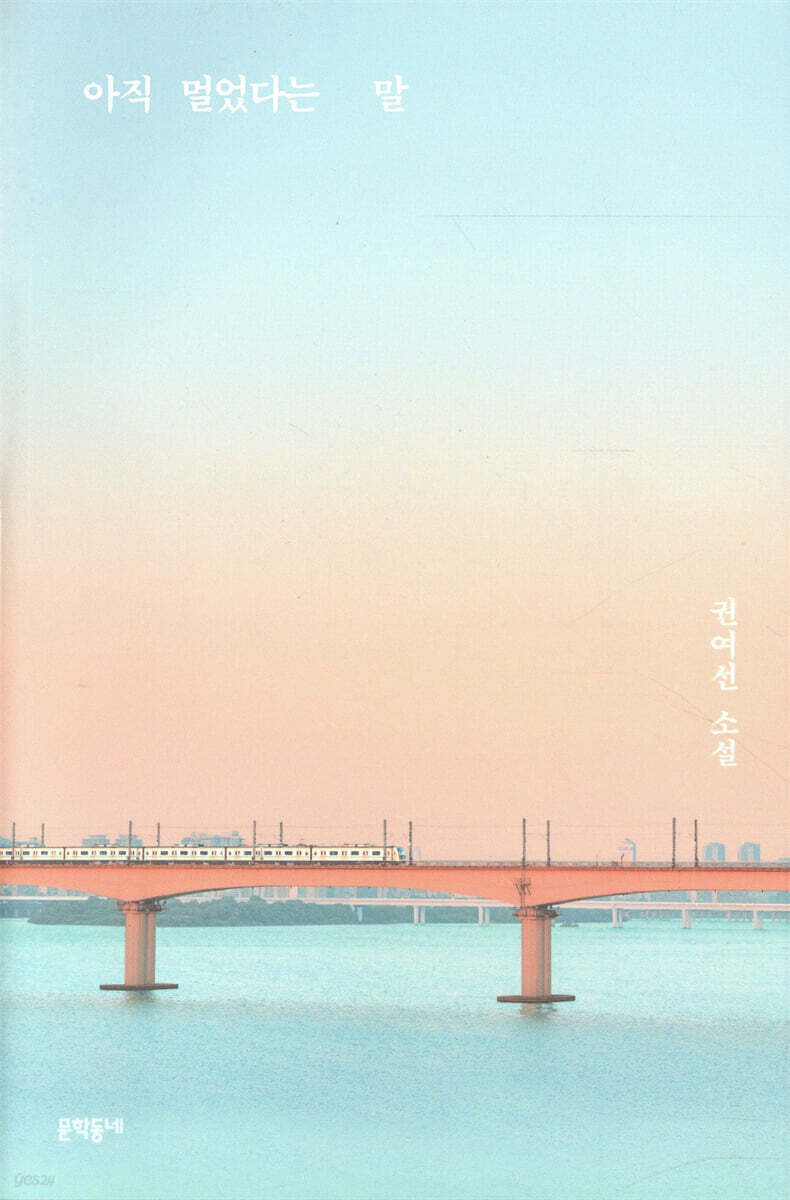
It's still a long way to go
 |
Description
Book Introduction
- A word from MD
- Sad yet Good Stories, Kwon Yeo-seon's New Short Story CollectionA collection of short stories by Kwon Yeo-seon that has been a hot topic every time it is published, and which even novel MDs have been eagerly awaiting.
The stories written by "stepping out of the 'familiar' and stepping into the 'unknown'" offer a unique 'taste of reading a novel.'
Everyone will feel differently about it, but it is definitely a "sad but good" novel.
February 14, 2020. Novel/Poetry PD Kim Do-hoon
“The comfort that a novel gives is not warmth,
I thought that maybe it came from accuracy.” _Kim Ae-ran (novelist)
Kwon Yeo-seon's new collection, her first in four years, showcases the quality and depth of her novels.
Includes the 19th Lee Hyo-seok Literary Award winner, "Unknown Territory"
Living up to the reputation of being “one of the representative writers who led the qualitative growth of Korean literature” (literary critic So Young-hyun), author Kwon Yeo-seon, who adds to the quality and depth of Korean literature by attracting extraordinary attention from fellow writers and critics with each work she publishes, has published her sixth collection of short stories, “Still Far to Go.”
This collection of short stories, published four years after 『Hello, Drunkard』 (Changbi, 2016), which won the 47th Dong-in Literary Award and was selected as the Novelist's Best Novel of the Year and is still much loved, contains eight stories, including 『Unknown Territory』, which won the 19th Lee Hyo-seok Literary Award and was praised for its "Kwon Yeo-seon's uniquely sensitive feelers, rhythm, and subtle power of writing style."
What can we expect from author Kwon Yeo-seon, who has achieved a new level of 'mainstream literature' with 'Hello, Drunkard'?
It would be natural to expect another mainstream literary work from him, who showed the dignity of humanity by making every effort even in situations where he had no choice but to drink.
But in this collection of short stories, he embarks on a new journey.
In a conversation held before the publication of the novel collection, “I decided not to give people alcohol, and I searched for people who didn’t drink like a hyena (…).
As she mentioned in “When you block one thing, it spreads out to the other side” (『Munhakdongne』 Fall 2019 issue), author Kwon Yeo-seon breaks away from the “familiar” that she is inevitably drawn to when writing a novel and takes one step at a time into the “unknown area.”
From the twenty-one-year-old sporting goods saleswoman 'So-hee' ("Nails") to the lesbian grandmothers 'Darren' and 'Dienne' ("Thin Heart"), this collection of short stories, which reaches out to a wider range of characters than ever before by banning the familiar, is a work that demonstrates a shift in Kwon Yeo-seon's novels and will present us with "a gentle surprise, like the taste of fish I've never tasted before" ("The Taste of Mackerel").
I thought that maybe it came from accuracy.” _Kim Ae-ran (novelist)
Kwon Yeo-seon's new collection, her first in four years, showcases the quality and depth of her novels.
Includes the 19th Lee Hyo-seok Literary Award winner, "Unknown Territory"
Living up to the reputation of being “one of the representative writers who led the qualitative growth of Korean literature” (literary critic So Young-hyun), author Kwon Yeo-seon, who adds to the quality and depth of Korean literature by attracting extraordinary attention from fellow writers and critics with each work she publishes, has published her sixth collection of short stories, “Still Far to Go.”
This collection of short stories, published four years after 『Hello, Drunkard』 (Changbi, 2016), which won the 47th Dong-in Literary Award and was selected as the Novelist's Best Novel of the Year and is still much loved, contains eight stories, including 『Unknown Territory』, which won the 19th Lee Hyo-seok Literary Award and was praised for its "Kwon Yeo-seon's uniquely sensitive feelers, rhythm, and subtle power of writing style."
What can we expect from author Kwon Yeo-seon, who has achieved a new level of 'mainstream literature' with 'Hello, Drunkard'?
It would be natural to expect another mainstream literary work from him, who showed the dignity of humanity by making every effort even in situations where he had no choice but to drink.
But in this collection of short stories, he embarks on a new journey.
In a conversation held before the publication of the novel collection, “I decided not to give people alcohol, and I searched for people who didn’t drink like a hyena (…).
As she mentioned in “When you block one thing, it spreads out to the other side” (『Munhakdongne』 Fall 2019 issue), author Kwon Yeo-seon breaks away from the “familiar” that she is inevitably drawn to when writing a novel and takes one step at a time into the “unknown area.”
From the twenty-one-year-old sporting goods saleswoman 'So-hee' ("Nails") to the lesbian grandmothers 'Darren' and 'Dienne' ("Thin Heart"), this collection of short stories, which reaches out to a wider range of characters than ever before by banning the familiar, is a work that demonstrates a shift in Kwon Yeo-seon's novels and will present us with "a gentle surprise, like the taste of fish I've never tasted before" ("The Taste of Mackerel").
index
unknown area
nail
thin heart
Beyond
friend
Autumn in Songchu
re
The taste of mackerel
Commentary│Baek Ji-eun (literary critic)
You know
Author's Note
nail
thin heart
Beyond
friend
Autumn in Songchu
re
The taste of mackerel
Commentary│Baek Ji-eun (literary critic)
You know
Author's Note
Into the book
“These people are not the kind of people who habitually rip people off.
"How about one more time? Just let it go this once."
“It’s okay since it’s just once…” Dayoung crossed her arms.
“It’s okay since it’s just once, let’s just let it go… Is that what you think, Father? Would you feel better if you let it go like that?
--- pp.26-27
Sohee sits pressed against the window of the commuter bus running along the river and looks at the river water sparkling in the morning sunlight.
The bus is nice, but Sohee is sad about the bus.
So, what's sad isn't the bus, but the sunlight, but Sohee doesn't know why there's something sad and good about it.
--- p.53
As Sohee smiled faintly, the wrinkles on her grandmother's face moved slightly to the side.
That's my grandmother laughing.
The person who said, "You can't talk, you have no idea, you're not happy, you have no thoughts, you should be careful instead of saying such things," laughed.
--- p.81
Darren thought he might not know Deen's heart, but when he thought that, Deen seemed so perfectly normal that she seemed like a stranger, a distant stranger.
--- p.90
Dien put on the hat attached to his outer garment and said he wanted to become a turtle.
Darren also wore a hat over his coat.
Dianne asked if he felt strangely at ease when he wore the hat, and Darren replied that he did, that it felt like he had a place to hide, like a turtle.
A little later, Dien said, "That's not good," but Darren didn't immediately understand what she meant.
Dien said that it was proof that he was always scared because it wasn't a good thing, and Darren said that it was because he was scared that he was a turtle.
--- pp.92-93
The term "indefinite contract" always evoked a sense of contradiction in N, perhaps because the word "indefinite," meaning without a time limit, was often associated with painful waiting or the absence of hope, like indefinite suspension or life imprisonment.
--- p.129
The more I try to understand, the more I wonder what I did wrong, am I a weird person, and I want to stop doubting myself like that.
--- p.208
He and Sebald were not yet insects, but beings who could and would find something even in the most desolate ruins.
They were still beings who held a faint meaning that could be inserted into the gray world.
--- pp.214-215
“I’ve been talking to someone nonstop, and I’ve actually been listening to them.
In that sense, the words were not just directed at others, but also at me.”
--- p.241
Everything disappears, but while it blinks, it lives.
For now, that vague meaning is enough.
"How about one more time? Just let it go this once."
“It’s okay since it’s just once…” Dayoung crossed her arms.
“It’s okay since it’s just once, let’s just let it go… Is that what you think, Father? Would you feel better if you let it go like that?
--- pp.26-27
Sohee sits pressed against the window of the commuter bus running along the river and looks at the river water sparkling in the morning sunlight.
The bus is nice, but Sohee is sad about the bus.
So, what's sad isn't the bus, but the sunlight, but Sohee doesn't know why there's something sad and good about it.
--- p.53
As Sohee smiled faintly, the wrinkles on her grandmother's face moved slightly to the side.
That's my grandmother laughing.
The person who said, "You can't talk, you have no idea, you're not happy, you have no thoughts, you should be careful instead of saying such things," laughed.
--- p.81
Darren thought he might not know Deen's heart, but when he thought that, Deen seemed so perfectly normal that she seemed like a stranger, a distant stranger.
--- p.90
Dien put on the hat attached to his outer garment and said he wanted to become a turtle.
Darren also wore a hat over his coat.
Dianne asked if he felt strangely at ease when he wore the hat, and Darren replied that he did, that it felt like he had a place to hide, like a turtle.
A little later, Dien said, "That's not good," but Darren didn't immediately understand what she meant.
Dien said that it was proof that he was always scared because it wasn't a good thing, and Darren said that it was because he was scared that he was a turtle.
--- pp.92-93
The term "indefinite contract" always evoked a sense of contradiction in N, perhaps because the word "indefinite," meaning without a time limit, was often associated with painful waiting or the absence of hope, like indefinite suspension or life imprisonment.
--- p.129
The more I try to understand, the more I wonder what I did wrong, am I a weird person, and I want to stop doubting myself like that.
--- p.208
He and Sebald were not yet insects, but beings who could and would find something even in the most desolate ruins.
They were still beings who held a faint meaning that could be inserted into the gray world.
--- pp.214-215
“I’ve been talking to someone nonstop, and I’ve actually been listening to them.
In that sense, the words were not just directed at others, but also at me.”
--- p.241
Everything disappears, but while it blinks, it lives.
For now, that vague meaning is enough.
--- p.250
Publisher's Review
“Sohee sat close to the window of the commuter bus running along the river.
I see the river sparkling in the morning sunlight.
“Sohee doesn’t know why there are things that are both sad and good.”
Like the merciless yet warm sunlight that seems to stab
Like a hand that finds something even in the desolate ruins
A saying that foreshadows a beginning as if it were the end, that nothing is over yet
The title of the collection of short stories, “Still a long way to go,” comes from the line in “Fingernails,” “Suddenly, Sohee stretches her neck like a bird and looks down at the street outside the window as if checking how far she has come.
Grandma yawns and makes an "ahhh" sound.
It's taken from the sentence, "It's still a long way to go, Sohee."
While lifting a box at the store where she works, Sohee's fingernail is pierced by a thick bolt protruding from underneath the box, snapping half of her fingernail back and tearing her flesh. However, she is unable to receive proper treatment because she is too busy thinking about her mortgage and the rent for her attic apartment.
“I can’t meet friends, I can’t make friends,” says Sohee, a 21-year-old who constantly calculates down to the last penny the amount of debt she has to pay and the amount of money she has to save.
For Sohee, the only luxury is the sunlight pouring in when she takes the morning commute bus.
Like the sunlight that is 'warm yet piercing, indifferent yet fair', Sohee's days are merciless and harsh, but in the end, warmth is conveyed.
That may be thanks to the presence of the grandmother who tells Sohee, who has injured her fingernail, “You have to be careful,” instead of saying, “I can’t talk, I have no idea, I’m so annoyed.”
It's not about giving hope or offering hasty consolation, but rather about leaving open the possibility by saying that we must be careful and that we still have a long way to go.
Therefore, the words 'still far away' seem to signal a new beginning for us by not definitively indicating the end.
N of "Beyond" is in a similar situation to Sohee.
N, who worked as a contract teacher at a high school for two months, is keenly aware of the intentions of teachers who secretly ignore contract workers in a world where “even seemingly complicated situations can be easily understood if you just know the boundaries between regular and non-regular workers.” He is disgusted by the “deadly and vicious contract splitting and contract extension tricks,” and plans to quit the school cleanly when the contract period ends.
However, N is also in a situation where his mother is in a nursing home.
Just as Sohee in "Nails" gives up on spicy jjamppong because it's 500 won more expensive than regular jjamppong, N in "Beyond" ends up sobbing as he weighs the one month's salary he'll receive by extending his contract and "how long he can last with that money."
“There are things you can’t throw away.
“In the world, N has no one but his mother, and his mother has no one but N.”
In this way, this collection of short stories is noteworthy in that it still displays Kwon Yeo-seon's specialty of pointing out the problems of Korean society without beating around the bush with detailed descriptions and vivid characters, while also allowing us to feel a new ending to Kwon Yeo-seon's novels since "Hello, Drunkard."
Darren, a lesbian grandmother in "Thin Heart," lives alone after her lover, Dianne, leaves her and meticulously traces her experiences with Dianne.
A few years ago, when I was living with Dien, I heard an eerie, mysterious sound coming from somewhere in the middle of the night.
The sound that sounded like a suffocating whoosh and a squealing scream was actually coming from the water meter next door.
Even now that Dien is gone, that eerie sound still repeats.
The sound that frightens a woman living alone is similar to the threat of a returning student who suddenly appeared and yelled at Darren and Deen to put out their cigarettes while they were sitting on a bench together smoking during their college days.
Yet, Darren keeps returning to the moment when he could only watch helplessly as the returning student beat up Dianne. This novel is notable not only for depicting a lesbian grandmother, a rarity in Korean literature, but also for going beyond describing external pressures on a lesbian couple and tenaciously staring at some unresolved feelings between them.
"no.
“That’s an area we don’t know about.”
Compared to previous works, the collection is filled with more humorous and refreshing pieces, such as “The Taste of Jeonmaeng,” which depicts a day in the life of a couple who reunited after three years, and “Autumn in Songchu,” which is a noisy drama about family members surrounding a family grave. It is significant that the collection begins with “Unknown Territory” and ends with the “Author’s Note” that “I hear people say ‘I don’t know’ a lot these days.”
In "Unknown Territory," Myeongdeok looks at something in a photograph and responds to his daughter's question about whether it is a daytime moon rather than a UFO.
“I don’t know about that.
(…) That is an area we do not know.”
Even after writing countless works over 20 years since her debut, Kwon Yeo-seon still seems to be unsure of some things, as if to say, “From the sun’s perspective, the moon rising at night is something we will never know.”
But the word "I don't know" also means that I won't judge something clearly.
With that power of ignorance, Kwon Yeo-seon closely examines the events surrounding the character and goes down to the very bottom to fully feel the character's emotions.
And thanks to that, wouldn't the scope of our understanding of events, characters, and novels also broaden?
It's like when Myeongdeok answers that he doesn't know, his daughter, who keeps bumping into him about everything, says, "I understand" (why his mother met someone like her father).
These days, people say they don't know a lot.
Sometimes I want to deviate, often I want to cross, and I want to run without looking back or to the side.
I can't do that,
I can't go to deep ignorance, steep ignorance, thick ignorance
In the midst of vague ignorance,
Like an old, sick bird that shivers in the slightest breeze and only sheds dirty, tough feathers,
Until I drop everything and expose my bare bones of ignorance
Are you going to use it only until then?
I don't know.
Still, reader, my tearful reader, when the day comes when I can no longer write anything, please let us meet again. Don't say that you don't know what the author is saying, or that it's still far away. On that day when I am cold and your hands are warm _from 'Author's Note'
Is this what it means to have a ruthless yet fair eye? Watching the author, who shows us not through simple light and shade, but by dividing light and darkness, I wondered if the comfort a novel offers might come not from warmth, but from precision.
The novel is a genre that examines the ‘after’, but it is also a form that ponders the ‘beyond’.
_Kim Ae-ran (novelist)
Even if we are caught in some profound pain, even if we are struggling with some absurd evil, perhaps even that is still a beautiful part of life, a part of the meaning of being alive.
(…) Whether we say that our lives are approaching death now or that we are walking the path of life prepared for us until the moment of death, it can only be said that ‘we still have a long way to go.’
Perhaps the paradox of being joyfully faithful to that hardship and uncertainty is the only way for me, as a living being, to express gratitude to the life that brought me into this world.
Baek Ji-eun (literary critic)
I see the river sparkling in the morning sunlight.
“Sohee doesn’t know why there are things that are both sad and good.”
Like the merciless yet warm sunlight that seems to stab
Like a hand that finds something even in the desolate ruins
A saying that foreshadows a beginning as if it were the end, that nothing is over yet
The title of the collection of short stories, “Still a long way to go,” comes from the line in “Fingernails,” “Suddenly, Sohee stretches her neck like a bird and looks down at the street outside the window as if checking how far she has come.
Grandma yawns and makes an "ahhh" sound.
It's taken from the sentence, "It's still a long way to go, Sohee."
While lifting a box at the store where she works, Sohee's fingernail is pierced by a thick bolt protruding from underneath the box, snapping half of her fingernail back and tearing her flesh. However, she is unable to receive proper treatment because she is too busy thinking about her mortgage and the rent for her attic apartment.
“I can’t meet friends, I can’t make friends,” says Sohee, a 21-year-old who constantly calculates down to the last penny the amount of debt she has to pay and the amount of money she has to save.
For Sohee, the only luxury is the sunlight pouring in when she takes the morning commute bus.
Like the sunlight that is 'warm yet piercing, indifferent yet fair', Sohee's days are merciless and harsh, but in the end, warmth is conveyed.
That may be thanks to the presence of the grandmother who tells Sohee, who has injured her fingernail, “You have to be careful,” instead of saying, “I can’t talk, I have no idea, I’m so annoyed.”
It's not about giving hope or offering hasty consolation, but rather about leaving open the possibility by saying that we must be careful and that we still have a long way to go.
Therefore, the words 'still far away' seem to signal a new beginning for us by not definitively indicating the end.
N of "Beyond" is in a similar situation to Sohee.
N, who worked as a contract teacher at a high school for two months, is keenly aware of the intentions of teachers who secretly ignore contract workers in a world where “even seemingly complicated situations can be easily understood if you just know the boundaries between regular and non-regular workers.” He is disgusted by the “deadly and vicious contract splitting and contract extension tricks,” and plans to quit the school cleanly when the contract period ends.
However, N is also in a situation where his mother is in a nursing home.
Just as Sohee in "Nails" gives up on spicy jjamppong because it's 500 won more expensive than regular jjamppong, N in "Beyond" ends up sobbing as he weighs the one month's salary he'll receive by extending his contract and "how long he can last with that money."
“There are things you can’t throw away.
“In the world, N has no one but his mother, and his mother has no one but N.”
In this way, this collection of short stories is noteworthy in that it still displays Kwon Yeo-seon's specialty of pointing out the problems of Korean society without beating around the bush with detailed descriptions and vivid characters, while also allowing us to feel a new ending to Kwon Yeo-seon's novels since "Hello, Drunkard."
Darren, a lesbian grandmother in "Thin Heart," lives alone after her lover, Dianne, leaves her and meticulously traces her experiences with Dianne.
A few years ago, when I was living with Dien, I heard an eerie, mysterious sound coming from somewhere in the middle of the night.
The sound that sounded like a suffocating whoosh and a squealing scream was actually coming from the water meter next door.
Even now that Dien is gone, that eerie sound still repeats.
The sound that frightens a woman living alone is similar to the threat of a returning student who suddenly appeared and yelled at Darren and Deen to put out their cigarettes while they were sitting on a bench together smoking during their college days.
Yet, Darren keeps returning to the moment when he could only watch helplessly as the returning student beat up Dianne. This novel is notable not only for depicting a lesbian grandmother, a rarity in Korean literature, but also for going beyond describing external pressures on a lesbian couple and tenaciously staring at some unresolved feelings between them.
"no.
“That’s an area we don’t know about.”
Compared to previous works, the collection is filled with more humorous and refreshing pieces, such as “The Taste of Jeonmaeng,” which depicts a day in the life of a couple who reunited after three years, and “Autumn in Songchu,” which is a noisy drama about family members surrounding a family grave. It is significant that the collection begins with “Unknown Territory” and ends with the “Author’s Note” that “I hear people say ‘I don’t know’ a lot these days.”
In "Unknown Territory," Myeongdeok looks at something in a photograph and responds to his daughter's question about whether it is a daytime moon rather than a UFO.
“I don’t know about that.
(…) That is an area we do not know.”
Even after writing countless works over 20 years since her debut, Kwon Yeo-seon still seems to be unsure of some things, as if to say, “From the sun’s perspective, the moon rising at night is something we will never know.”
But the word "I don't know" also means that I won't judge something clearly.
With that power of ignorance, Kwon Yeo-seon closely examines the events surrounding the character and goes down to the very bottom to fully feel the character's emotions.
And thanks to that, wouldn't the scope of our understanding of events, characters, and novels also broaden?
It's like when Myeongdeok answers that he doesn't know, his daughter, who keeps bumping into him about everything, says, "I understand" (why his mother met someone like her father).
These days, people say they don't know a lot.
Sometimes I want to deviate, often I want to cross, and I want to run without looking back or to the side.
I can't do that,
I can't go to deep ignorance, steep ignorance, thick ignorance
In the midst of vague ignorance,
Like an old, sick bird that shivers in the slightest breeze and only sheds dirty, tough feathers,
Until I drop everything and expose my bare bones of ignorance
Are you going to use it only until then?
I don't know.
Still, reader, my tearful reader, when the day comes when I can no longer write anything, please let us meet again. Don't say that you don't know what the author is saying, or that it's still far away. On that day when I am cold and your hands are warm _from 'Author's Note'
Is this what it means to have a ruthless yet fair eye? Watching the author, who shows us not through simple light and shade, but by dividing light and darkness, I wondered if the comfort a novel offers might come not from warmth, but from precision.
The novel is a genre that examines the ‘after’, but it is also a form that ponders the ‘beyond’.
_Kim Ae-ran (novelist)
Even if we are caught in some profound pain, even if we are struggling with some absurd evil, perhaps even that is still a beautiful part of life, a part of the meaning of being alive.
(…) Whether we say that our lives are approaching death now or that we are walking the path of life prepared for us until the moment of death, it can only be said that ‘we still have a long way to go.’
Perhaps the paradox of being joyfully faithful to that hardship and uncertainty is the only way for me, as a living being, to express gratitude to the life that brought me into this world.
Baek Ji-eun (literary critic)
GOODS SPECIFICS
- Publication date: February 14, 2020
- Page count, weight, size: 284 pages | 432g | 133*200*22mm
- ISBN13: 9788954670630
- ISBN10: 8954670636
You may also like
카테고리
korean


korean

![GQ KOREA Mark (Monthly): December [2025]](http://librairie.coreenne.fr/cdn/shop/files/8ef265dbbfbf186523ed75ba7319009d.jpg?v=1765340328&width=3840)


