

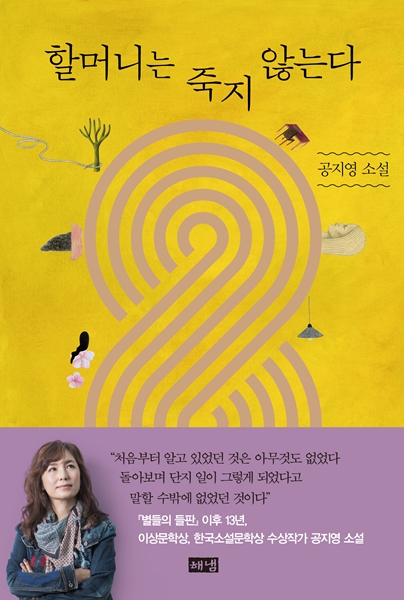
Grandma doesn't die
 |
Description
Book Introduction
“In any case, it is a human's destiny to grow.” Gong Ji-young, author of the best-selling books 『Silenced』 and 『Our Happy Time』 A collection of short stories published after 13 years Thirteen years after the publication of 『Courtesy to Humans』 (1994), 『Existence Sheds Tears』 (1999), and 『Field of Stars』 (2004), author Gong Ji-young publishes the short story collection 『Grandmothers Never Die』. This collection of works, including those written and published since 2000, winners of the 21st Century Literature Award, the Korean Novel Literature Award, and the Yi Sang Literature Award, as well as new prose, is comprised of works that stand out for the author's charming sentences and fast-paced plot development. It is a book that allows you to see at a glance the recent trends of the author, who has been evaluated as having consistently maintained the novelistic aesthetics that short stories should have while continuously writing full-length novels. "Resurrection Time" is about a woman named Pil-mi who leaves home early, goes to Seoul, works in a factory in the countryside, and returns to her hometown but is unable to escape the poverty of life. In this story, a sprout of hope sprouts again; "Grandma Doesn't Die" is a monologue of a girl who is shocked by the procession of deaths that unfolds among her family surrounding her grandmother who is facing death; and "Walking Barefoot Through the Writing Field" depicts the life of a translator who faces her fate only after giving up hope of escape and even her obsession with everything going as she had planned. These works prove once again that the author has played a unique role in Korean literature by addressing themes of forgiveness of sins, reconciliation, and human growth through pain and suffering. Not only the theme but also the technique is clear. The author uses a third-person point of view, a traditional novel technique, to draw readers into the story immediately, or utilizes a meta-novel technique by incorporating the author's personal reality into the novel, allowing readers to read the novel from a more multifaceted perspective, transcending the distinction between reality and fiction. These works, which employ a unique narrative development method not seen in the author's full-length novels, allow readers to connect with the protagonist and experience the author's experimental novel techniques more deeply. At this time, when new buds are sprouting on every tree, breaking through the chilly wind, just like the monologue of the protagonist of “Wolchun Janggu,” “I thought that spring is bound to come at any time in life, and when spring comes, it can be beautiful again,” author Gong Ji-young’s new short story collection will become a sprout of hope that announces a new spring to readers. |
- You can preview some of the book's contents.
Preview
index
Wolchun Janggu (越春裝具)|Grandmother does not die|Who are we, where do we come from, and where do we go|At the time of resurrection|Roaming the road barefoot|Afterword, or beyond the clouds|Commentary_ Her pain becomes a novel (Kang Yu-jeong)|Included pages
Into the book
At some point in our lives, we feel the wind changing.
A day in early autumn, a day in early spring… …or a hot summer day when the west wind blows and foretells rain.
At that moment, on that day, I felt a subtle change in the wind within my heart.
I couldn't tell yet if it was a west wind or an east wind, but something was slowly turning.
I soaked in the hot bath and just stayed still.
In my mind, I, who had been chattering for a long time, was speechless and silent, and I stammered and asked myself.
“Why did you write this book?”
Before I could even answer, my lips twisted and tears began to fall.
As always, when I was in such a confusing situation, my heart was torn in two.
The first feeling was one of bewilderment.
It had already been two years since the book was published.
In nearly a hundred interviews and conversations with readers, I've heard this question.
I had answered.
Life, communication, forgiveness… … and of course, I gave very author-like answers to those questions.
But here I am, naked, soaking in the bathtub, crying.
To that one question, why did you write this book?
---From "Walking the Road Barefoot"
“If you tell me to throw it away, who would throw away something they bought… Everyone who lives has to live.”
“That’s right, Mom.
“Mom is a player.”
The daughter spoke in a joyful tone, as if she had suddenly seen hope.
It wasn't just eggs, there was also an owl with a broken leg, and there was also an incident where a chicken that had been discarded from a chicken farm because it couldn't lay any more eggs was raised and an extra basket of eggs was obtained.
When the neighbors' plants were dying, they brought them to Pilgrimage.
Strangely, those who were dying when they came to Pilgrimage were given the same water and received the same sunlight, but they were given new life and were reborn.
People used to say, "Jisoo's mom is such a strange person."
But even that pilgrimage could not save her husband.
She couldn't save the cows that were dying of illness around the time her husband died, she couldn't revive the bright light that was fading from her children's faces, and so, crucially, she couldn't save even a single one of her days that were falling apart.
That was beyond her reach.
---From "At the Time of Resurrection"
My grandmother did not die even after a week and a month had passed, just as the doctors had predicted, using all the power of modern science.
Grandma was just gasping for breath with a face as pale as charcoal.
My grandmother's breathing was as loud as the quack of a mad goose, so the relatives who occasionally stopped by the house to check on her didn't bother to go to her room. Instead, they would leisurely drink whiskey with ham, cheese, and salmon as snacks and talk about golf in the living room.
All he said about his grandmother was, “That gentleman has held out for so long… For your sake, he should go now,” with a very kind-hearted expression on his face, as if he were thinking of everything for his grandmother.
Then one day, the incident begins.
Although she was making an unpleasant, squeaking sound, the sound of her breathing, which had been relatively regular like a percussion instrument, began to break up and continue irregularly throughout the night.
Relatives gathered and sat around grandmother.
However, the grandmother was found sitting up in bed the next morning.
The reason I say she was found is because her youngest maternal uncle, who had been taking turns guarding her in case she passed away at night, was found dead next to her that morning.
A day in early autumn, a day in early spring… …or a hot summer day when the west wind blows and foretells rain.
At that moment, on that day, I felt a subtle change in the wind within my heart.
I couldn't tell yet if it was a west wind or an east wind, but something was slowly turning.
I soaked in the hot bath and just stayed still.
In my mind, I, who had been chattering for a long time, was speechless and silent, and I stammered and asked myself.
“Why did you write this book?”
Before I could even answer, my lips twisted and tears began to fall.
As always, when I was in such a confusing situation, my heart was torn in two.
The first feeling was one of bewilderment.
It had already been two years since the book was published.
In nearly a hundred interviews and conversations with readers, I've heard this question.
I had answered.
Life, communication, forgiveness… … and of course, I gave very author-like answers to those questions.
But here I am, naked, soaking in the bathtub, crying.
To that one question, why did you write this book?
---From "Walking the Road Barefoot"
“If you tell me to throw it away, who would throw away something they bought… Everyone who lives has to live.”
“That’s right, Mom.
“Mom is a player.”
The daughter spoke in a joyful tone, as if she had suddenly seen hope.
It wasn't just eggs, there was also an owl with a broken leg, and there was also an incident where a chicken that had been discarded from a chicken farm because it couldn't lay any more eggs was raised and an extra basket of eggs was obtained.
When the neighbors' plants were dying, they brought them to Pilgrimage.
Strangely, those who were dying when they came to Pilgrimage were given the same water and received the same sunlight, but they were given new life and were reborn.
People used to say, "Jisoo's mom is such a strange person."
But even that pilgrimage could not save her husband.
She couldn't save the cows that were dying of illness around the time her husband died, she couldn't revive the bright light that was fading from her children's faces, and so, crucially, she couldn't save even a single one of her days that were falling apart.
That was beyond her reach.
---From "At the Time of Resurrection"
My grandmother did not die even after a week and a month had passed, just as the doctors had predicted, using all the power of modern science.
Grandma was just gasping for breath with a face as pale as charcoal.
My grandmother's breathing was as loud as the quack of a mad goose, so the relatives who occasionally stopped by the house to check on her didn't bother to go to her room. Instead, they would leisurely drink whiskey with ham, cheese, and salmon as snacks and talk about golf in the living room.
All he said about his grandmother was, “That gentleman has held out for so long… For your sake, he should go now,” with a very kind-hearted expression on his face, as if he were thinking of everything for his grandmother.
Then one day, the incident begins.
Although she was making an unpleasant, squeaking sound, the sound of her breathing, which had been relatively regular like a percussion instrument, began to break up and continue irregularly throughout the night.
Relatives gathered and sat around grandmother.
However, the grandmother was found sitting up in bed the next morning.
The reason I say she was found is because her youngest maternal uncle, who had been taking turns guarding her in case she passed away at night, was found dead next to her that morning.
---From "Grandma Never Dies"
GOODS SPECIFICS
- Date of issue: March 30, 2017
- Page count, weight, size: 272 pages | 356g | 136*200*20mm
- ISBN13: 9788965746126
- ISBN10: 8965746124
You may also like
카테고리
korean


korean

![GQ KOREA Mark (Monthly): December [2025]](http://librairie.coreenne.fr/cdn/shop/files/8ef265dbbfbf186523ed75ba7319009d.jpg?v=1765340328&width=3840)


