

In the vacant lot
 |
Description
Book Introduction
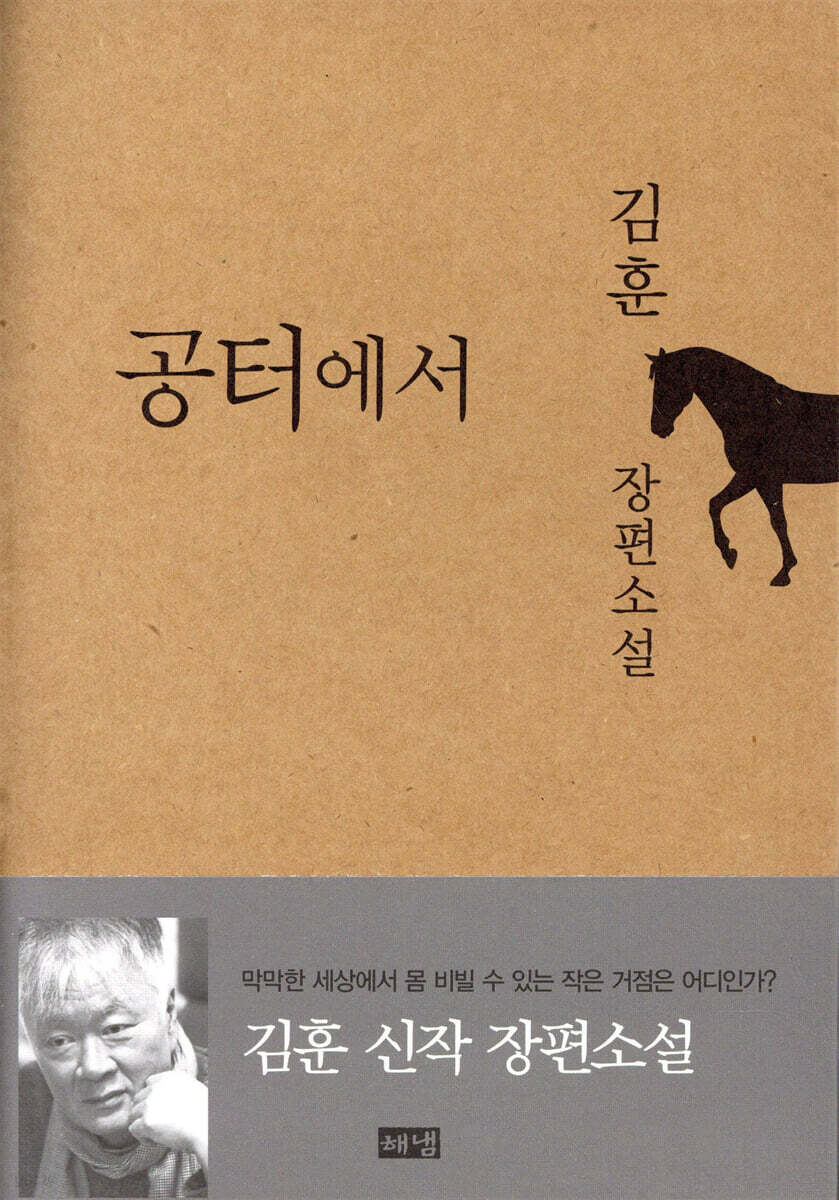
“The world was a scary place, and there was no escape.” The tragic lives of a father and his sons who experienced 20th century Korean modern history with their whole bodies! Times pass and the world changes. In the 20th century on the Korean Peninsula, just when we thought the oppressive situation was over, even stronger restraints came crashing in, and the dark intentions hidden behind the omnipotent power were suddenly revealed. At this point, when even the unimaginable is becoming reality, where are our lives truly headed? Kim Hoon, author of the million-selling novels “Song of the Sword” and “Namhansanseong,” will release a new novel in February 2017. Twenty years after publishing his first full-length novel, "Memories of Comb-Patterned Pottery," in 1996, author Kim Hoon, who writes novels with a blunt pencil and a handwriting that makes each and every letter seem like it might fall over, has released his ninth full-length novel, "In an Empty Lot." This work was written by an author who experienced the storms that swept across the Korean Peninsula after our people were liberated from Japanese imperialism, the Korean War, April 19, May 16, May 18, and June 10, and witnessed the transfer of national power through Syngman Rhee, Park Chung-hee, and others, and how our lives, with little glory and much shame and humiliation, were changing accordingly. This is based on his autobiographical experiences. The novel, written in 33 chapters and 869 manuscript pages, is filled with major events that cannot be left out of our modern history from the 1920s to the 1980s. These events are revealed through the lives of the father, Ma Dong-su, the head of the Ma family, and his sons who grew up watching his life. The author vividly portrays the fragmented lives of characters from Manchuria, Jilin, Shanghai, Seoul, Heungnam, Busan, Vietnam, and Micronesia, revealing a cold gaze upon their harsh lives. The turbulent times that the father endured during the Japanese colonial era, when he had no choice but to leave his home and wander around Manchuria, the chaotic times after liberation and the ensuing Korean War, the love and hate and conflict between men and women in the devastation of the post-war period, the oppressive atmosphere during the military dictatorship, the tragic fate of Koreans dispatched to the Vietnam War, the sudden death of the president and a military rebellion, the media merger to stop the chaotic words floating around the world, and even the wave of capital that came with rapid modernization are all events that encompass the times. These events are contained in the family history of the Ma family, who settled in Seoul, which had been devastated by the war, and tried to lay the foundation for their lives. Just as a horse that must run through the wilderness must return to the place where it was tied by the reins, the author asks desperately whether there exists a small base where one can find refuge in such a vast world through the miserable and sorrowful stories of those whose lives are tied by the reins of fate that cannot be escaped no matter how hard one tries. The novel "In the Vacant Lot" is a work that makes us reflect on what kind of lives we can lead in a reality that is fearful and terrifying but from which we cannot escape no matter how hard we try, and where we can find a small base where our souls can rest. |
- You can preview some of the book's contents.
Preview
index
Father|Eastern Front|“I’m Okay”|Seine Bar|Lowering the Coffin|Namsan Police Station|Shanghai|Air Raid|Yalnok River|Heungnam|Seoul|Busan|Nakdong River|Gills|Micronesia|Vietnam|Marriage|First Night|Dismissal|Your Hands|National Cemetery|Motorcycle|Mother|Trap|Letter|Brother|Message|Sister|Linda|Reeds|Words|Homecoming|Spring Author’s Note
Into the book
Ma Dong-su (馬東守) died on December 20, 1979 at 18 Sanoe-dong, Seodaemun-gu, Seoul.
Ma Dong-su was born in 1910, the year of the dog, in Seoul, spent his childhood there, wandered around Jilin, Changchun, and Shanghai in Manchuria, and returned to Seoul after liberation. He lived through the Korean War and the era of Presidents Syngman Rhee and Park Chung-hee, and died at the age of 69.
In the year that Ma Dong-su died, Kim Jae-gyu, the director of the Central Intelligence Agency, shot and killed President Park Chung-hee with a pistol.
Park Chung-hee served as the 5th, 6th, 7th, 8th, and 9th president.
Park Chung-hee was shot in the heart and fell to the ground, muttering, 'I'm okay, I'm okay... '
Ma Dong-su's death and Park Chung-hee's death have no relation other than the fact that they 'died.'
There is nothing special about Ma Dong-su's life.
Ma Dong-su died three years after being diagnosed with cancer.
The cancer, which started in the liver, spread to the stomach and intestines and even penetrated into the spine.
My bones were worn out and I sneezed, causing my joints to become dislocated.
Ma Dong-su's cancer was slow and long.
As the body deteriorated, the cancer's power proliferated, and even after Ma Dong-su died, the cancer remained alive in the body for three days and disappeared when the body was cremated.
Ma Dong-su's cancer was a separate life form that parasitized the human body but was independent of the human body.
---From "Father"
The carriage driver received a leave certificate from the administrative office at the battalion headquarters.
The senior sergeant said that since this is the first vacation since the suspension of vacation due to martial law was lifted, they should be aware of the gravity of the situation and strictly observe military discipline during the vacation period, be filial to their parents, familiarize themselves with the emergency contact network, and strictly adhere to the return time.
December 22nd… … .
The carriage driver repeated the date of his return three times in front of the senior sergeant and left the administrative office.
Private Oh Jang-chun ran out of the supply office.
Oh Jang-chun dragged Macha-se's arm and went into the break room.
There was no one in the break room.
Oh Jang-chun handed over a white envelope.
-Hey, you, go on vacation and have a drink.
-You, is this okay?
―Nimi… … .
Hey, who wants to see this?
Put it in quickly.
The envelope that Oh Jang-chun gave me contained 20,000 won.
It was more than six times the salary of a private.
Oh Jang-chun was working as an assistant to the non-commissioned officer in charge of fuel at the battalion headquarters supply department.
The difference between the logs submitted by drivers and the documents reported to their superiors was equivalent to the amount of fuel being leaked onto the black market.
---From "Eastern Front"
The inside of the tavern was filled with smoke from grilling tripe, and drunken horses clashed.
Everyone was talking, and the chatter was so loud that I couldn't hear anything.
Machase folded the letter and put it in his upper pocket.
I thought of the bird in the letter.
The people gathered in the tavern looked like a flock of restless birds, as if a single rustle would send thousands of them flying at once.
The birds in the letter were together but separate.
(……)
-Are you on vacation? It was cold.
Are you in Seoul?
He said.
Park Sang-hee's voice always had a nasal sound.
When I said, "Are you on vacation?", "Ni?" rang in my nose.
It sounded like a sound coming from a deep cave inside my body, not from inside my nose.
'You?' was soaked with moisture that had passed through the speaker's body.
If I were to draw Park Sang-hee's 'Ni?' in a picture, it would be concentric circles spreading out on the water.
The circular ripple came through the telephone line and entered Machase's body through his ears.
'Ni?' leaped over the distance between the mountainous highlands of the Eastern Front and Seoul in one breath and drove the carriage towards 'Ni?'.
---From "The Seine Bar"
-I was sad when I buried my father, but I was happy.
I thought that the world had been really difficult.
I stomped on the dirt, praying that this kind of life would never happen again.
My brother can't stand the pain of going through such a difficult time.
My brother is trying to avoid my father and is falling into another swamp. I'm going to live here.
Now that I'm married, I'll become a father.
-Are you tired? Should we lie down?
-No, it's okay.
Do you know who stole money at the restaurant earlier? He's a revolutionary.
My father's old comrade.
I don't know what the meaning was though.
I was scared because it seemed like that person came in place of my father.
It also seemed like my father wasn't dead yet.
-So that's why you looked tired today.
I guessed so too.
Park Sang-hee felt like the days she would have to live with this poor husband were far away.
I had to carry the weight of all the days I had lived and the burdens I had accumulated along the way, and cross the plains of time I had never lived through.
The edge of the field was not visible.
Ma Dong-su was born in 1910, the year of the dog, in Seoul, spent his childhood there, wandered around Jilin, Changchun, and Shanghai in Manchuria, and returned to Seoul after liberation. He lived through the Korean War and the era of Presidents Syngman Rhee and Park Chung-hee, and died at the age of 69.
In the year that Ma Dong-su died, Kim Jae-gyu, the director of the Central Intelligence Agency, shot and killed President Park Chung-hee with a pistol.
Park Chung-hee served as the 5th, 6th, 7th, 8th, and 9th president.
Park Chung-hee was shot in the heart and fell to the ground, muttering, 'I'm okay, I'm okay... '
Ma Dong-su's death and Park Chung-hee's death have no relation other than the fact that they 'died.'
There is nothing special about Ma Dong-su's life.
Ma Dong-su died three years after being diagnosed with cancer.
The cancer, which started in the liver, spread to the stomach and intestines and even penetrated into the spine.
My bones were worn out and I sneezed, causing my joints to become dislocated.
Ma Dong-su's cancer was slow and long.
As the body deteriorated, the cancer's power proliferated, and even after Ma Dong-su died, the cancer remained alive in the body for three days and disappeared when the body was cremated.
Ma Dong-su's cancer was a separate life form that parasitized the human body but was independent of the human body.
---From "Father"
The carriage driver received a leave certificate from the administrative office at the battalion headquarters.
The senior sergeant said that since this is the first vacation since the suspension of vacation due to martial law was lifted, they should be aware of the gravity of the situation and strictly observe military discipline during the vacation period, be filial to their parents, familiarize themselves with the emergency contact network, and strictly adhere to the return time.
December 22nd… … .
The carriage driver repeated the date of his return three times in front of the senior sergeant and left the administrative office.
Private Oh Jang-chun ran out of the supply office.
Oh Jang-chun dragged Macha-se's arm and went into the break room.
There was no one in the break room.
Oh Jang-chun handed over a white envelope.
-Hey, you, go on vacation and have a drink.
-You, is this okay?
―Nimi… … .
Hey, who wants to see this?
Put it in quickly.
The envelope that Oh Jang-chun gave me contained 20,000 won.
It was more than six times the salary of a private.
Oh Jang-chun was working as an assistant to the non-commissioned officer in charge of fuel at the battalion headquarters supply department.
The difference between the logs submitted by drivers and the documents reported to their superiors was equivalent to the amount of fuel being leaked onto the black market.
---From "Eastern Front"
The inside of the tavern was filled with smoke from grilling tripe, and drunken horses clashed.
Everyone was talking, and the chatter was so loud that I couldn't hear anything.
Machase folded the letter and put it in his upper pocket.
I thought of the bird in the letter.
The people gathered in the tavern looked like a flock of restless birds, as if a single rustle would send thousands of them flying at once.
The birds in the letter were together but separate.
(……)
-Are you on vacation? It was cold.
Are you in Seoul?
He said.
Park Sang-hee's voice always had a nasal sound.
When I said, "Are you on vacation?", "Ni?" rang in my nose.
It sounded like a sound coming from a deep cave inside my body, not from inside my nose.
'You?' was soaked with moisture that had passed through the speaker's body.
If I were to draw Park Sang-hee's 'Ni?' in a picture, it would be concentric circles spreading out on the water.
The circular ripple came through the telephone line and entered Machase's body through his ears.
'Ni?' leaped over the distance between the mountainous highlands of the Eastern Front and Seoul in one breath and drove the carriage towards 'Ni?'.
---From "The Seine Bar"
-I was sad when I buried my father, but I was happy.
I thought that the world had been really difficult.
I stomped on the dirt, praying that this kind of life would never happen again.
My brother can't stand the pain of going through such a difficult time.
My brother is trying to avoid my father and is falling into another swamp. I'm going to live here.
Now that I'm married, I'll become a father.
-Are you tired? Should we lie down?
-No, it's okay.
Do you know who stole money at the restaurant earlier? He's a revolutionary.
My father's old comrade.
I don't know what the meaning was though.
I was scared because it seemed like that person came in place of my father.
It also seemed like my father wasn't dead yet.
-So that's why you looked tired today.
I guessed so too.
Park Sang-hee felt like the days she would have to live with this poor husband were far away.
I had to carry the weight of all the days I had lived and the burdens I had accumulated along the way, and cross the plains of time I had never lived through.
The edge of the field was not visible.
---From "The First Night"
GOODS SPECIFICS
- Date of issue: February 1, 2017
- Page count, weight, size: 356 pages | 390g | 126*182*30mm
- ISBN13: 9788965745877
- ISBN10: 896574587X
You may also like
카테고리
korean


korean

![GQ KOREA Mark (Monthly): December [2025]](http://librairie.coreenne.fr/cdn/shop/files/8ef265dbbfbf186523ed75ba7319009d.jpg?v=1765340328&width=3840)


