

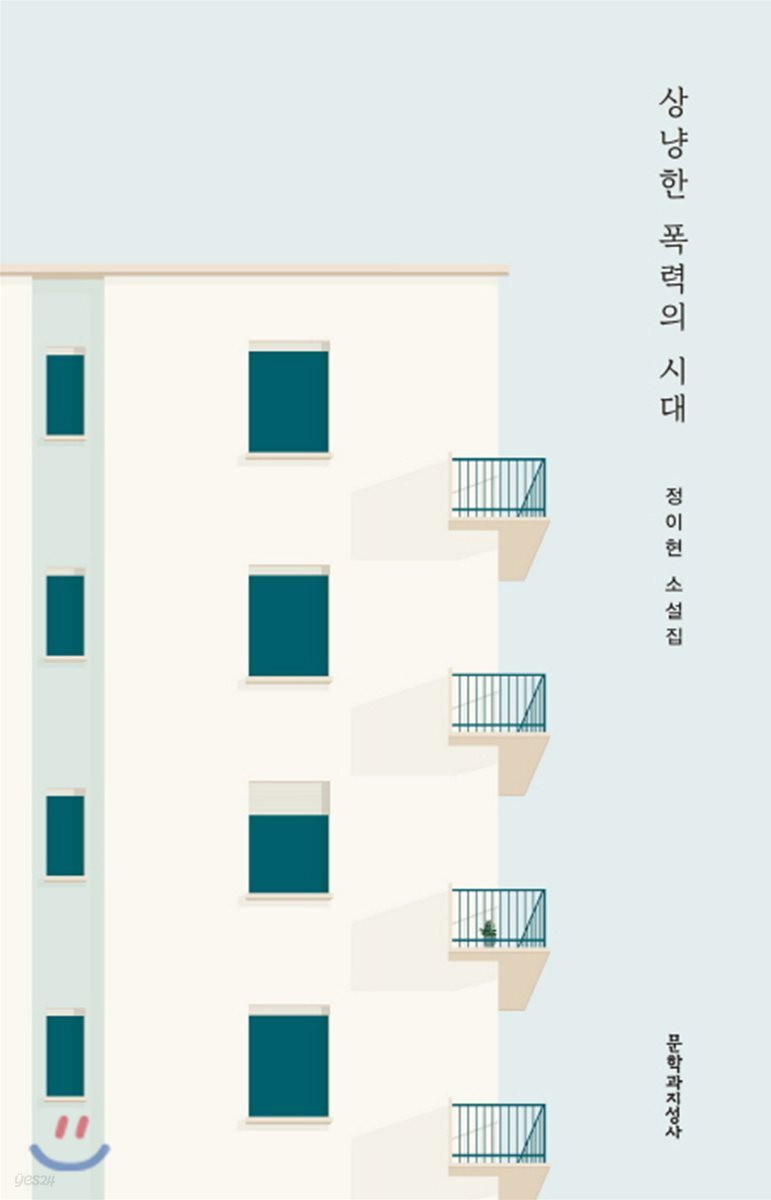
The Age of Gentle Violence
 |
Description
Book Introduction
We will live
It will slowly disappear
A world of polite hypocrisy, kind and cold, without a smile,
About these dull lives that are so tenaciously woven into life
Author Jeong I-hyeon, who records the 'todays' of us and here, presents her third collection of short stories.
This is her first collection of short stories in nine years, following the publication of her first collection of short stories, Romantic Love and Society (2003), which contains stories of women who cynically pursue practicality, believing that love is an invention, and Today's Lies (2007), which includes the 51st Contemporary Literature Award-winning work, "Sampoong Department Store," which depicts the pain and loss of an individual overshadowed by a huge incident.
In the meantime, Jeong I-hyeon has consistently published several novels and essay collections that testify to the lives and loves of her contemporaries, such as 『My Sweet City』 (2006), which caused a syndrome when it was made into a drama that twisted the absurdity of male-centered values, and 『The Foundation of Love - Lovers』 (2012), which she collaborated with Alain de Botton. She has also tried to stay true to 'today' by hosting a podcast (Romance Bookstore) and attempting collaborations with singer Yozoh.
"The Age of Gentle Violence" is a collection of seven novels published since the winter of 2013.
Half of the descriptions that followed Jeong I-hyeon's novels in the mid-2000s—"provocative, bold, sensual, and meticulous"—need to be replaced.
We have grown, times have changed, and Jeong I-hyeon has changed along with them.
His sentences are still sensuous and dense, but Jeong I-hyeon now reads a cool indifference of 'contempt' and 'inertia' instead of the sharp 'coolness' of the 2010s and his contemporaries.
It will slowly disappear
A world of polite hypocrisy, kind and cold, without a smile,
About these dull lives that are so tenaciously woven into life
Author Jeong I-hyeon, who records the 'todays' of us and here, presents her third collection of short stories.
This is her first collection of short stories in nine years, following the publication of her first collection of short stories, Romantic Love and Society (2003), which contains stories of women who cynically pursue practicality, believing that love is an invention, and Today's Lies (2007), which includes the 51st Contemporary Literature Award-winning work, "Sampoong Department Store," which depicts the pain and loss of an individual overshadowed by a huge incident.
In the meantime, Jeong I-hyeon has consistently published several novels and essay collections that testify to the lives and loves of her contemporaries, such as 『My Sweet City』 (2006), which caused a syndrome when it was made into a drama that twisted the absurdity of male-centered values, and 『The Foundation of Love - Lovers』 (2012), which she collaborated with Alain de Botton. She has also tried to stay true to 'today' by hosting a podcast (Romance Bookstore) and attempting collaborations with singer Yozoh.
"The Age of Gentle Violence" is a collection of seven novels published since the winter of 2013.
Half of the descriptions that followed Jeong I-hyeon's novels in the mid-2000s—"provocative, bold, sensual, and meticulous"—need to be replaced.
We have grown, times have changed, and Jeong I-hyeon has changed along with them.
His sentences are still sensuous and dense, but Jeong I-hyeon now reads a cool indifference of 'contempt' and 'inertia' instead of the sharp 'coolness' of the 2010s and his contemporaries.
- You can preview some of the book's contents.
Preview
index
Miss Jo, the Turtle, and Me
nothing
The angel within us
Forever, summer
Ferris wheel at night
House in a Drawer
Anna
Commentary_ Pushing forward with emptiness Baek Ji-eun
nothing
The angel within us
Forever, summer
Ferris wheel at night
House in a Drawer
Anna
Commentary_ Pushing forward with emptiness Baek Ji-eun
Publisher's Review
A society that encourages contempt without much malice or enthusiasm
There are six elevators for residents only, but employees cannot use them.
This was because it could make the residents feel uncomfortable if they encountered them.
One day, when the head of the headquarters reiterated that point in a general meeting, I tried replacing the word "disgust" with "disgust."
―From “Miss Jo, the Turtle, and Me”
The 'today' captured by Jeong I-hyeon is an era in which people exchange insults with kind expressions and indifferently exchange insults.
This 'refined violence' appears in the novel in slightly different forms.
Like the veteran politician 'Park' ("The Night Ferris Wheel") who "never belittles or mocks others" but rather "perfects his attitude by not showing any attitude toward others" and "always makes others uncomfortable", or the children from country K who never say a word to Rie, who has always been bullied as a "pig" but is not even the butt of jokes at her new school ("Forever, Summer"), these people of different generations and nationalities have one thing in common: they inadvertently and routinely humiliate others.
Even between lovers, ‘gentle violence’ occurs frequently.
Love sometimes makes us “silently endure the other person’s arbitrary invasion and manipulation of us.”
In "Miss Jo, the Turtle, and Me," the father has never introduced his lover, "Miss Jo," with whom he has lived for several years, to any relatives or friends outside the neighborhood.
The excessive tears of the man who said goodbye in “The Night Ferris Wheel” may have been a necessary hypocrisy to “perfectly convince and make the young lover accept the breakup without fail.”
The same goes for family members.
Jiwon, the mother of Bomi, who recently gave birth to a premature baby, believes that her high school daughter, Bomi, “needs to learn about duty and responsibility, and the value of what we do every day,” but she irresponsibly neglects the baby Bomi gave birth to.
Jiwon's heart races as the baby is in danger of death, and it is clear that he loves Bomi terribly, but it doesn't seem to be the way his daughter wants it to be ("Nothing").
Meanwhile, Anna's 'Kyung' continues to hurt the people around her (but without realizing it).
For her, a full-time housewife in her forties who lives without the need for anything and has a high-income husband, her biggest worry is her child who doesn't open his mouth because he can't adapt properly to the English kindergarten.
Although he briefly relies on Anna, whom he met again as a parent and English kindergarten assistant teacher after having been in a dance club together in the past, the reason he became close with Anna was because she was someone he didn't have to worry about, enough to "make him forget reality."
“Whenever I met Anna, Kyung didn’t have to spend hours in front of the mirror trying to match clothes and bags, and he didn’t have to worry about her being disappointed because the restaurant he suggested was out of style or tasteless.” Anna, who always said “it’s okay” on her lips, seemed to be an “easy” person to Kyung rather than a “good” person.
Even when Anna was shining in the dance club in the past, Kyung was busy twisting his inferiority complex to look down on others, saying, “You’re the only one who deserves applause because you’re old,” and “It’s too bad,” and could be said to be a living example of “gentle violence.”
At the same time, Gyeong is also a vulgar person who has frequently appeared in Jeong I-hyeon's novels.
However, if the hypocritical characters in Jeong I-hyeon's previous novels functioned as a mirror showing a distorted world, the 'twisted' people in this novel are mostly hypocritical rather than hypocritical.
This hypocrisy is also closer to “self-defense” than “camouflage.”
The scandals they reveal sometimes resemble the rust on my face, and they often bring about lamentation rather than refreshment.
They just want to “live as drama-free as possible” (Baek Ji-eun).
Inertia is a painkiller
It was a big game of dominoes, and they felt like unknowing domino chips stuck in the middle.
In the end, everyone will fall together, pushed by the shoulders of the person behind them and hitting the shoulders of the person in front.
It will slowly fall over and cover you.
―From “The House in the Drawer”
When the landlord threatens to raise the rent, Jin and Yu-won, a couple in their thirties, decide to buy another house that is being sold for a lower price after much thought.
I haven't been there in person, but I looked at apartments in the same line and signed a contract. When I visited the new house the day before moving in, there was an endless pile of stinking garbage being carried out.
After hearing the story from the apartment security guard, Jin thinks, “I should cover my ears instead of my nose.”
Because “when today passes and tomorrow comes,” “the mountain of garbage will be completely cleared away and they will live here” (“The House in the Drawer”).
“I’m getting by somehow.
I think it's not bad just to be able to live like this in these times.
If you can call it “getting by somehow” while avoiding the worst” (Miss Jo, the Turtle, and I).
In this novel, and in reality, the reason I don't feel overly indignant toward those who humiliate me and can't easily separate myself from them is because we are chips "unknowingly stuck in the middle" in the great domino game called life, exchanging humiliation without malice or enthusiasm in order to survive "somehow," and it seems as if we will eventually "fall down and collapse."
Inertia is necessary to push through a life that is 'so-so'.
No, if you endure it, you will naturally become indifferent and calm, I don't know if it is a blessing or a curse.
We do not know the expression on the face of 'Yang' who found the obituary of her ex-lover in a three-day-old newspaper, stared at it for a long time, and then finally got up from her seat.
Knowing that everyone dies, she simply reminds herself that “mourning is the duty of those who remain” and that “there is still a long afternoon ahead of us” (“The Night Ferris Wheel”).
“A life that has finally become so lonely, a life that has become so self-inflicted by making decisions in a way that makes no decisions at the moment of decision and living with those decisions for the rest of one’s life” (“The Night Ferris Wheel”).
Meanwhile, Jeong I-hyeon seems to be asking whether something new can begin only when we break the rigid inertia that “pushes us back.”
In "Miss Jo, the Turtle, and Me," the Aldabra tortoise "Rock", the legacy left behind by "Miss Jo," is a being that "eats, cries, dies, and survives," a being that will "continue life" and "take everything I have in its eyes and remember" even after I die.
One morning, while rolling around in bed, Heejun slowly strokes a rock and a shovel, and is able to think that “I don’t necessarily have to be connected to this purgatory-like world.”
He lived 'somehow' without feeling deeply sad or angry about anything, and he had forgotten to mourn due to inertia, but he finally sheds tears when he happens to embrace a living being, a being that will live.
In that way, “everyone wants to be brave while enduring something, only to become helpless again and again.” “The dilemma of an era that embraces emptiness,” “In order to understand and overcome the curse of life in that world, we open the storybook told by a worldly writer to meet ‘people in the world’ and go inside it again (Baek Ji-eun).”
“We will live and slowly perish.
“Shak-shak at the speed of shak-shak, I at my speed, the rock at the speed of the rock.” And so it goes.
Jeong I-hyeon at Jeong I-hyeon's speed.
There are six elevators for residents only, but employees cannot use them.
This was because it could make the residents feel uncomfortable if they encountered them.
One day, when the head of the headquarters reiterated that point in a general meeting, I tried replacing the word "disgust" with "disgust."
―From “Miss Jo, the Turtle, and Me”
The 'today' captured by Jeong I-hyeon is an era in which people exchange insults with kind expressions and indifferently exchange insults.
This 'refined violence' appears in the novel in slightly different forms.
Like the veteran politician 'Park' ("The Night Ferris Wheel") who "never belittles or mocks others" but rather "perfects his attitude by not showing any attitude toward others" and "always makes others uncomfortable", or the children from country K who never say a word to Rie, who has always been bullied as a "pig" but is not even the butt of jokes at her new school ("Forever, Summer"), these people of different generations and nationalities have one thing in common: they inadvertently and routinely humiliate others.
Even between lovers, ‘gentle violence’ occurs frequently.
Love sometimes makes us “silently endure the other person’s arbitrary invasion and manipulation of us.”
In "Miss Jo, the Turtle, and Me," the father has never introduced his lover, "Miss Jo," with whom he has lived for several years, to any relatives or friends outside the neighborhood.
The excessive tears of the man who said goodbye in “The Night Ferris Wheel” may have been a necessary hypocrisy to “perfectly convince and make the young lover accept the breakup without fail.”
The same goes for family members.
Jiwon, the mother of Bomi, who recently gave birth to a premature baby, believes that her high school daughter, Bomi, “needs to learn about duty and responsibility, and the value of what we do every day,” but she irresponsibly neglects the baby Bomi gave birth to.
Jiwon's heart races as the baby is in danger of death, and it is clear that he loves Bomi terribly, but it doesn't seem to be the way his daughter wants it to be ("Nothing").
Meanwhile, Anna's 'Kyung' continues to hurt the people around her (but without realizing it).
For her, a full-time housewife in her forties who lives without the need for anything and has a high-income husband, her biggest worry is her child who doesn't open his mouth because he can't adapt properly to the English kindergarten.
Although he briefly relies on Anna, whom he met again as a parent and English kindergarten assistant teacher after having been in a dance club together in the past, the reason he became close with Anna was because she was someone he didn't have to worry about, enough to "make him forget reality."
“Whenever I met Anna, Kyung didn’t have to spend hours in front of the mirror trying to match clothes and bags, and he didn’t have to worry about her being disappointed because the restaurant he suggested was out of style or tasteless.” Anna, who always said “it’s okay” on her lips, seemed to be an “easy” person to Kyung rather than a “good” person.
Even when Anna was shining in the dance club in the past, Kyung was busy twisting his inferiority complex to look down on others, saying, “You’re the only one who deserves applause because you’re old,” and “It’s too bad,” and could be said to be a living example of “gentle violence.”
At the same time, Gyeong is also a vulgar person who has frequently appeared in Jeong I-hyeon's novels.
However, if the hypocritical characters in Jeong I-hyeon's previous novels functioned as a mirror showing a distorted world, the 'twisted' people in this novel are mostly hypocritical rather than hypocritical.
This hypocrisy is also closer to “self-defense” than “camouflage.”
The scandals they reveal sometimes resemble the rust on my face, and they often bring about lamentation rather than refreshment.
They just want to “live as drama-free as possible” (Baek Ji-eun).
Inertia is a painkiller
It was a big game of dominoes, and they felt like unknowing domino chips stuck in the middle.
In the end, everyone will fall together, pushed by the shoulders of the person behind them and hitting the shoulders of the person in front.
It will slowly fall over and cover you.
―From “The House in the Drawer”
When the landlord threatens to raise the rent, Jin and Yu-won, a couple in their thirties, decide to buy another house that is being sold for a lower price after much thought.
I haven't been there in person, but I looked at apartments in the same line and signed a contract. When I visited the new house the day before moving in, there was an endless pile of stinking garbage being carried out.
After hearing the story from the apartment security guard, Jin thinks, “I should cover my ears instead of my nose.”
Because “when today passes and tomorrow comes,” “the mountain of garbage will be completely cleared away and they will live here” (“The House in the Drawer”).
“I’m getting by somehow.
I think it's not bad just to be able to live like this in these times.
If you can call it “getting by somehow” while avoiding the worst” (Miss Jo, the Turtle, and I).
In this novel, and in reality, the reason I don't feel overly indignant toward those who humiliate me and can't easily separate myself from them is because we are chips "unknowingly stuck in the middle" in the great domino game called life, exchanging humiliation without malice or enthusiasm in order to survive "somehow," and it seems as if we will eventually "fall down and collapse."
Inertia is necessary to push through a life that is 'so-so'.
No, if you endure it, you will naturally become indifferent and calm, I don't know if it is a blessing or a curse.
We do not know the expression on the face of 'Yang' who found the obituary of her ex-lover in a three-day-old newspaper, stared at it for a long time, and then finally got up from her seat.
Knowing that everyone dies, she simply reminds herself that “mourning is the duty of those who remain” and that “there is still a long afternoon ahead of us” (“The Night Ferris Wheel”).
“A life that has finally become so lonely, a life that has become so self-inflicted by making decisions in a way that makes no decisions at the moment of decision and living with those decisions for the rest of one’s life” (“The Night Ferris Wheel”).
Meanwhile, Jeong I-hyeon seems to be asking whether something new can begin only when we break the rigid inertia that “pushes us back.”
In "Miss Jo, the Turtle, and Me," the Aldabra tortoise "Rock", the legacy left behind by "Miss Jo," is a being that "eats, cries, dies, and survives," a being that will "continue life" and "take everything I have in its eyes and remember" even after I die.
One morning, while rolling around in bed, Heejun slowly strokes a rock and a shovel, and is able to think that “I don’t necessarily have to be connected to this purgatory-like world.”
He lived 'somehow' without feeling deeply sad or angry about anything, and he had forgotten to mourn due to inertia, but he finally sheds tears when he happens to embrace a living being, a being that will live.
In that way, “everyone wants to be brave while enduring something, only to become helpless again and again.” “The dilemma of an era that embraces emptiness,” “In order to understand and overcome the curse of life in that world, we open the storybook told by a worldly writer to meet ‘people in the world’ and go inside it again (Baek Ji-eun).”
“We will live and slowly perish.
“Shak-shak at the speed of shak-shak, I at my speed, the rock at the speed of the rock.” And so it goes.
Jeong I-hyeon at Jeong I-hyeon's speed.
GOODS SPECIFICS
- Date of issue: October 10, 2016
- Page count, weight, size: 252 pages | 322g | 135*210*20mm
- ISBN13: 9788932029092
- ISBN10: 8932029091
You may also like
카테고리
korean


korean

![GQ KOREA Mark (Monthly): December [2025]](http://librairie.coreenne.fr/cdn/shop/files/8ef265dbbfbf186523ed75ba7319009d.jpg?v=1765340328&width=3840)


