

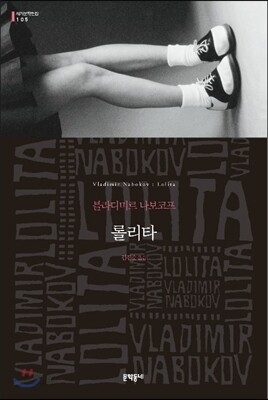
Lolita
 |
Description
Book Introduction
The most beautiful scandal in 20th-century literature
Vladimir Nabokov's masterpiece
Lolita, light of my life, fire of my body.
My sin, my soul.
Roll-lee-ta.
The tip of the tongue walks three steps along the roof of the mouth and on the third step lightly touches the front teeth.
Roll.
lee.
get on.
Lolita, the most beautiful scandal of 20th century literature, created by the magician of language Nabokov, which begins with the name 'Lolita' and ends with the name 'My Lolita' again.
It gave birth to the term 'Lolita complex' and was made into a movie twice, once by Stanley Kubrick in 1967 and once by Adrian Lyne in 1997, and had a great influence by providing material for various fields of culture and art, including popular songs.
This work established 'Lolita' as a symbol of a girl who fascinates older men, and the subject matter of the work remains controversial even today.
Lolita, which contains the love and desire of a middle-aged man for a twelve-year-old girl, was Nabokov's favorite work, and although it was initially famous for its sexual content, it was later re-evaluated as a literary classic as the numerous metaphors and symbols hidden in layers by the author were interpreted in various ways and new meanings were revealed one by one.
Munhakdongne's "Lolita" is the result of a year-long struggle by professional translator Jinjun Kim, who won the 2nd Yuyoung Translation Award for his translation of Salman Rushdie's "Rage," meticulously comparing over a dozen editions and annotations of "Lolita" published around the world.
As Nabokov's masterpiece is famous for its numerous metaphors, symbols, parodies, and wordplay, we put utmost effort into the translation and included a total of 223 rich annotations to ensure that not a single hidden meaning was missed.
In addition, literary critic Roja Lee Hyeon-woo has provided commentary and organized a 'chronology of 'Lolita' that clearly shows the process from the protagonist Humbert's birth to his downfall, helping readers to read the work in depth.
In addition, the map "Lolita and Humbert's American Journey," which shows Lolita and Humbert's extensive journey at a glance, reminiscent of a road movie, allows readers to read "Lolita" more vividly and three-dimensionally.
In particular, in response to the passionate interest of readers who have long awaited an accurate and fluent new translation, the translation manuscript was pre-released and a cover image contest was held, making it a recorded case where editing was completed in harmony with the readers.
Vladimir Nabokov's masterpiece
Lolita, light of my life, fire of my body.
My sin, my soul.
Roll-lee-ta.
The tip of the tongue walks three steps along the roof of the mouth and on the third step lightly touches the front teeth.
Roll.
lee.
get on.
Lolita, the most beautiful scandal of 20th century literature, created by the magician of language Nabokov, which begins with the name 'Lolita' and ends with the name 'My Lolita' again.
It gave birth to the term 'Lolita complex' and was made into a movie twice, once by Stanley Kubrick in 1967 and once by Adrian Lyne in 1997, and had a great influence by providing material for various fields of culture and art, including popular songs.
This work established 'Lolita' as a symbol of a girl who fascinates older men, and the subject matter of the work remains controversial even today.
Lolita, which contains the love and desire of a middle-aged man for a twelve-year-old girl, was Nabokov's favorite work, and although it was initially famous for its sexual content, it was later re-evaluated as a literary classic as the numerous metaphors and symbols hidden in layers by the author were interpreted in various ways and new meanings were revealed one by one.
Munhakdongne's "Lolita" is the result of a year-long struggle by professional translator Jinjun Kim, who won the 2nd Yuyoung Translation Award for his translation of Salman Rushdie's "Rage," meticulously comparing over a dozen editions and annotations of "Lolita" published around the world.
As Nabokov's masterpiece is famous for its numerous metaphors, symbols, parodies, and wordplay, we put utmost effort into the translation and included a total of 223 rich annotations to ensure that not a single hidden meaning was missed.
In addition, literary critic Roja Lee Hyeon-woo has provided commentary and organized a 'chronology of 'Lolita' that clearly shows the process from the protagonist Humbert's birth to his downfall, helping readers to read the work in depth.
In addition, the map "Lolita and Humbert's American Journey," which shows Lolita and Humbert's extensive journey at a glance, reminiscent of a road movie, allows readers to read "Lolita" more vividly and three-dimensionally.
In particular, in response to the passionate interest of readers who have long awaited an accurate and fluent new translation, the translation manuscript was pre-released and a cover image contest was held, making it a recorded case where editing was completed in harmony with the readers.
- You can preview some of the book's contents.
Preview
index
preface
Part 1
Part 2
Author's Note
main
Lolita and Humbert's Journey to America
Commentary | A World of Poetic Eroticism and Aesthetic Joy | Lee Hyun-woo
Translator's Note
Lolita Chronicles
Vladimir Nabokov Chronology
Part 1
Part 2
Author's Note
main
Lolita and Humbert's Journey to America
Commentary | A World of Poetic Eroticism and Aesthetic Joy | Lee Hyun-woo
Translator's Note
Lolita Chronicles
Vladimir Nabokov Chronology
Into the book
Lolita, light of my life, fire of my body.
My sin, my soul.
Roll-lee-ta.
The tip of the tongue walks three steps along the roof of the mouth and on the third step lightly touches the front teeth.
Roll.
lee.
get on.
--- p.17
We fell for each other suddenly, clumsily, passionately, painfully, madly.
I should also add that it is hopeless.
Because to fulfill the intense desire to possess one another, they must actually accept each other's soul and body completely and become one.
--- p.23
I go back over these miserable memories again and again and ask myself:
Was it from that time, in the light of that distant summer, that cracks began to appear in my life?
--- p.24
Looking back, my youth seems to have passed by in a whirlwind of pale, repetitive fragments, like scraps of paper fluttering before the eyes of train passengers, like a morning blizzard stirred up by a moving observation car.
--- p.27
Among girls between the ages of nine and fourteen, there are some who reveal their true nature to strangers who are twice or several times their age.
To the traveler who is fascinated by them, they show themselves not as humans but as nymphs (i.e., demons), and I would like to call these chosen girls 'nymphets'.
(…) A strange air, an unpredictable, ever-changing, soul-destroying charm, that is what separates the nymphets from the rabble among their peers.
While those like Lolita play in an enchanted island of time that others cannot enter, other children live much more subordinated to a spatial world dominated by the phenomena of the time.
--- p.29
I don't know how to properly describe the intensity of the image, the thrill, the shock that flashed through my mind the moment I recognized her.
(…) The vacuum in my soul sucked every last bit of her radiant beauty into it, comparing it one by one with the appearance of my dead bride.
Needless to say, after a while this new girl, this Lolita, my Lolita, completely covered her original form.
--- p.66
My Lolita had both a dreamy innocence and a creepy vulgarity.
She is as cute as a snub-nosed child in an advertisement or magazine photo, and has a vague sensuality like a young maid from the Old World (smelling of trampled daisies and sweat).
Sometimes she looks like a young prostitute disguised as a child in a country brothel, and sometimes, in the thick musk and mud, in the filth and death, a side of her that is pure, clean, and affectionate suddenly emerges. Oh, my God, oh, my God.
And most importantly, she, this Lolita, my Lolita, revived my long-held desire, and so Lolita became more precious than anything else in the world.
--- p.74
It was not she whom I possessed like mad, but my own creation, another Lolita, a Lolita perhaps more vivid than Lolita.
--- p.103
There is no joy on earth that can compare to the joy of caressing a nymphet.
It is a joy that cannot be compared at all because the level of feeling and dimension are different.
No matter how much we argued, no matter how much she lashed out, no matter how much she fussed and frowned and acted vulgarly, no matter how dangerous and desperate the whole situation seemed, I was so deeply immersed in the paradise I had chosen that I couldn't break free.
Even though the sky resembled the color of hellfire, paradise was still paradise.
--- pp.265-266
I loved you.
Even though I was a five-legged monster, I loved you.
Even though I was mean and cruel, even though I was wicked, even though I was a fool, even though I was a fool, I still loved you, I loved you! And sometimes, I could understand your heart, and each time, I tasted the torments of hell, my child.
Lolita, the spirited dolly skiller.
--- p.458
As we lived our bizarre and beastly cohabitation, my ordinary Lolita came to believe that, however unhappy her domestic life was, it was better than a parody of incest.
The life I had provided for this orphan girl was so insignificant.
--- p.462
Now I think of buffalo and angels, of the secrets of ageless paints, of prophetic sonnets, and of the refuge of art.
This is the only way for you and I to enjoy immortality together, my Lolita.
My sin, my soul.
Roll-lee-ta.
The tip of the tongue walks three steps along the roof of the mouth and on the third step lightly touches the front teeth.
Roll.
lee.
get on.
--- p.17
We fell for each other suddenly, clumsily, passionately, painfully, madly.
I should also add that it is hopeless.
Because to fulfill the intense desire to possess one another, they must actually accept each other's soul and body completely and become one.
--- p.23
I go back over these miserable memories again and again and ask myself:
Was it from that time, in the light of that distant summer, that cracks began to appear in my life?
--- p.24
Looking back, my youth seems to have passed by in a whirlwind of pale, repetitive fragments, like scraps of paper fluttering before the eyes of train passengers, like a morning blizzard stirred up by a moving observation car.
--- p.27
Among girls between the ages of nine and fourteen, there are some who reveal their true nature to strangers who are twice or several times their age.
To the traveler who is fascinated by them, they show themselves not as humans but as nymphs (i.e., demons), and I would like to call these chosen girls 'nymphets'.
(…) A strange air, an unpredictable, ever-changing, soul-destroying charm, that is what separates the nymphets from the rabble among their peers.
While those like Lolita play in an enchanted island of time that others cannot enter, other children live much more subordinated to a spatial world dominated by the phenomena of the time.
--- p.29
I don't know how to properly describe the intensity of the image, the thrill, the shock that flashed through my mind the moment I recognized her.
(…) The vacuum in my soul sucked every last bit of her radiant beauty into it, comparing it one by one with the appearance of my dead bride.
Needless to say, after a while this new girl, this Lolita, my Lolita, completely covered her original form.
--- p.66
My Lolita had both a dreamy innocence and a creepy vulgarity.
She is as cute as a snub-nosed child in an advertisement or magazine photo, and has a vague sensuality like a young maid from the Old World (smelling of trampled daisies and sweat).
Sometimes she looks like a young prostitute disguised as a child in a country brothel, and sometimes, in the thick musk and mud, in the filth and death, a side of her that is pure, clean, and affectionate suddenly emerges. Oh, my God, oh, my God.
And most importantly, she, this Lolita, my Lolita, revived my long-held desire, and so Lolita became more precious than anything else in the world.
--- p.74
It was not she whom I possessed like mad, but my own creation, another Lolita, a Lolita perhaps more vivid than Lolita.
--- p.103
There is no joy on earth that can compare to the joy of caressing a nymphet.
It is a joy that cannot be compared at all because the level of feeling and dimension are different.
No matter how much we argued, no matter how much she lashed out, no matter how much she fussed and frowned and acted vulgarly, no matter how dangerous and desperate the whole situation seemed, I was so deeply immersed in the paradise I had chosen that I couldn't break free.
Even though the sky resembled the color of hellfire, paradise was still paradise.
--- pp.265-266
I loved you.
Even though I was a five-legged monster, I loved you.
Even though I was mean and cruel, even though I was wicked, even though I was a fool, even though I was a fool, I still loved you, I loved you! And sometimes, I could understand your heart, and each time, I tasted the torments of hell, my child.
Lolita, the spirited dolly skiller.
--- p.458
As we lived our bizarre and beastly cohabitation, my ordinary Lolita came to believe that, however unhappy her domestic life was, it was better than a parody of incest.
The life I had provided for this orphan girl was so insignificant.
--- p.462
Now I think of buffalo and angels, of the secrets of ageless paints, of prophetic sonnets, and of the refuge of art.
This is the only way for you and I to enjoy immortality together, my Lolita.
--- p.497
Publisher's Review
“Lolita, light of my life, fire of my body.
“My sin, my soul.”
Love or madness, eroticism or pornography
The most beautiful scandal in 20th century literature!
Lolita, a masterpiece of world literature and a favorite of Nabokov, the magician of language, contains the love and desire of a middle-aged man for a twelve-year-old girl.
Nabokov completed the manuscript and sent it to four American publishers, but it was rejected by all of them.
He, too, initially considered publishing under a pseudonym out of concern for scandal, but eventually published under his real name through an unknown publisher in Paris, France.
As Nabokov had feared, Lolita caused a great stir and became the center of controversy as soon as it was published.
However, as word of mouth began to spread, it generated an explosive response, and when the English version was published in the United States, it became a huge success, selling 100,000 copies in the first three weeks and staying at the top of the bestseller list for 180 days.
Ultimately, the novel became the best-selling novel of the century, selling over 50 million copies in the 50 years since its first publication in 1955.
Although initially famous for its suggestive content, Lolita was later re-evaluated as a literary work and became a classic as the author's numerous hidden metaphors and symbols were interpreted in various ways and new meanings were revealed one by one.
On that fateful summer day, I met the nymphet of my dreams.
Lolita, my lover, my love, my life… …
Humbert Humbert, who had been carrying his first girlfriend in his heart for over twenty years after she passed away from an illness when he was thirteen.
As a result of his unrequited first love, he is attracted to and develops romantic desires for girls he calls nymphets, who are between the ages of nine and fourteen, either pre-pubescent or entering puberty.
Then one summer day, thirty-seven-year-old Humbert meets Lolita, a twelve-year-old girl with fatal charm and magic, and becomes completely captivated by her.
Humbert becomes irresistibly infatuated with Lolita and becomes her stepfather, traveling with her across America, sharing his love.
However, one day, Lolita suddenly disappears, and Humbert, who has been searching for her for a long time, goes to find the playwright Quilty, believing that he seduced and corrupted her, and takes revenge on him, after which he is arrested.
While in prison, Humbert writes about his secret desires, and this novel, subtitled "Confessions of a White Widower," is that account.
The novel "Lolita," which begins with the call of "Lolita," ends with the call of "my Lolita."
As a writer who writes prose as if he were writing poetry, with restrained expressions and refined sentences, Nabokov captured the essence of eroticism in a poetic style.
Fluent in several languages, he frequently uses witty wordplay and ironic expressions throughout his works, humorously conveying the different cultures of Europe and the United States, while mercilessly mocking and satirizing psychiatry and Freudian theory.
The greatest masterpiece of Nabokov, the magician of language
A breathtaking play on words, born of joy and despair
“I neither read nor write didactic novels.
“There is no moral lesson in ‘Lolita.’”
_Vladimir Nabokov
According to Nabokov's confession, he never looked at Lolita again after proofreading it in 1955.
However, when controversy arose over the obscenity of the work, he first revealed his uncomfortable feelings through an article titled “On ‘Lolita’” published in ‘Anchor Review.’
He rebukes the study of literary works to obtain information about a country, a social class, or an author, saying that the raison d'être of literature is the pursuit of 'aesthetic pleasure.'
Nabokov, through Humbert, says that even sex is merely a 'handmaiden of art.'
He says he is not interested in “so-called ‘sex’ stories” and wants to “hold onto the dangerous magic of nymphets forever.”
The last sentence of 'Lolita' reaffirms this 'Humbert-Nabokov' view of literature.
“Now I think of the buffalo and the angel, the secret of the unchanging paint, the prophetic sonnet, and the refuge of art.
“This is the only way for you and I to enjoy immortality together, my Lolita.”
Lolita, which gave rise to the term 'Lolita complex', was made into a film by director Stanley Kubrick in 1967 and again by director Adrian Lyne in 1997.
And it has also provided material for and had a great influence on various cultural and artistic fields, including popular music.
This work established 'Lolita' as a symbol of a girl who fascinates older men, and the subject matter of the work remains controversial even today.
Just as Lolita became the immortal lover of the protagonist Humbert, Nabokov's Lolita remains an immortal literary work, awaiting new readers in the 21st century.
Lolita comes to life in a new translation
『Lolita』, newly published by Munhakdongne, is the result of a year-long struggle by professional translator Jinjun Kim, who won the 2nd Yuyoung Translation Award for his translation of Salman Rushdie's 『Rage』, meticulously comparing and referencing over a dozen editions and annotations of 『Lolita』 published around the world.
As Nabokov's masterpiece is famous for its numerous metaphors, symbols, parodies, and wordplay, we put utmost effort into the translation and added a total of 223 rich annotations to ensure that not a single hidden meaning within the work was missed.
In this process, the translation notes by Tadashi Wakashima, the translator of the Japanese version published by Shinchosha, were also very helpful.
As a member of the steering committee of the Japan Nabokov Society, he is the highest authority on Nabokov in Japan and willingly allowed us to use his translation for the Korean edition.
The love and effort poured into this work, which a veteran translator with 20 years of experience calls “the most difficult assignment of my translation career,” is fully revealed in the “Translator’s Note.”
The process of translating “Lolita” into Korean felt like walking on thin ice.
I was extremely careful because I thought it would crack if I applied force.
Because it was such a volatile sentence, I was worried that if I opened it even a little, the scent would all disappear.
The difficulty of translation was, of course, due to the text itself being difficult, but the bigger problem was the difficulty of controlling the level of detail: how much to reveal and how much to conceal.
Would it make sense to say that the author wants to reveal something, while the protagonist wants to conceal it? Or perhaps it's the other way around? (…) I focused on finding sentences that were as clear as possible without compromising the ambiguity of the original text.
(Pages 541-542)
Kim Jin-jun's meticulous translation, which took painstaking effort to fully convey Nabokov's sentences, which are "as precise and logical as a textbook, even with beautiful and fantastic expressions," to Korean readers, has brought back to life approximately 300 pages of manuscript paper compared to existing translated editions.
In addition, literary critic Roja Lee Hyeon-woo, famous for his works such as 『Roja's Humanities Library』 and 『Roja's Rereading of World Literature』, has provided commentary and organized a 'chronology of 『Lolita』' that clearly shows the process from the birth of the protagonist Humbert to his downfall, helping readers read the work in depth.
Additionally, you will be able to read Lolita more vividly and three-dimensionally through the map "Lolita and Humbert's American Journey," which shows at a glance the extensive journey of Lolita and Humbert, reminiscent of a road movie.
Now our readers can appreciate the true face of Lolita in this definitive edition.
Time's "100 Greatest English Novels of the 20th Century"
Le Monde's "100 Best Books of the Century"
Modern Library's "100 Greatest English Literature of the 20th Century"
■ Related book reviews
A shining work that saves us.
It makes you laugh endlessly and stimulates your emotions without thinking about the consequences.
_John Updike
"Lolita" is, above all, an erotic novel.
However, it is a masterpiece with equally outstanding artistry.
Malcolm Bradbury (author)
Intensely beautiful, passionate and uncontrollably funny.
_time
A great novel that elevates the human spirit.
_Guardian
One of the masterpieces of our time.
Poor Humbert Humbert, born with misfortune, is the funniest monster in modern literature.
If it's a journey to hell with him, I should go with him no matter the reason.
_The Independent
A novel about art and language, it shows its perfection.
A novel in which a writer of exceptional talent demonstrates his abilities to the fullest.
Lydia Kissling (PEN American Center)
A true work of literature that elicits immediate response and leads to deep reflection.
_San Francisco Chronicle
The language of Lolita is amazing.
It's like Ulysses or A Clockwork Orange.
_The New York Times
A journey to hell in a luxury sedan.
_Salon Magazine
The only compelling love story of the century.
Vanity Fair
“My sin, my soul.”
Love or madness, eroticism or pornography
The most beautiful scandal in 20th century literature!
Lolita, a masterpiece of world literature and a favorite of Nabokov, the magician of language, contains the love and desire of a middle-aged man for a twelve-year-old girl.
Nabokov completed the manuscript and sent it to four American publishers, but it was rejected by all of them.
He, too, initially considered publishing under a pseudonym out of concern for scandal, but eventually published under his real name through an unknown publisher in Paris, France.
As Nabokov had feared, Lolita caused a great stir and became the center of controversy as soon as it was published.
However, as word of mouth began to spread, it generated an explosive response, and when the English version was published in the United States, it became a huge success, selling 100,000 copies in the first three weeks and staying at the top of the bestseller list for 180 days.
Ultimately, the novel became the best-selling novel of the century, selling over 50 million copies in the 50 years since its first publication in 1955.
Although initially famous for its suggestive content, Lolita was later re-evaluated as a literary work and became a classic as the author's numerous hidden metaphors and symbols were interpreted in various ways and new meanings were revealed one by one.
On that fateful summer day, I met the nymphet of my dreams.
Lolita, my lover, my love, my life… …
Humbert Humbert, who had been carrying his first girlfriend in his heart for over twenty years after she passed away from an illness when he was thirteen.
As a result of his unrequited first love, he is attracted to and develops romantic desires for girls he calls nymphets, who are between the ages of nine and fourteen, either pre-pubescent or entering puberty.
Then one summer day, thirty-seven-year-old Humbert meets Lolita, a twelve-year-old girl with fatal charm and magic, and becomes completely captivated by her.
Humbert becomes irresistibly infatuated with Lolita and becomes her stepfather, traveling with her across America, sharing his love.
However, one day, Lolita suddenly disappears, and Humbert, who has been searching for her for a long time, goes to find the playwright Quilty, believing that he seduced and corrupted her, and takes revenge on him, after which he is arrested.
While in prison, Humbert writes about his secret desires, and this novel, subtitled "Confessions of a White Widower," is that account.
The novel "Lolita," which begins with the call of "Lolita," ends with the call of "my Lolita."
As a writer who writes prose as if he were writing poetry, with restrained expressions and refined sentences, Nabokov captured the essence of eroticism in a poetic style.
Fluent in several languages, he frequently uses witty wordplay and ironic expressions throughout his works, humorously conveying the different cultures of Europe and the United States, while mercilessly mocking and satirizing psychiatry and Freudian theory.
The greatest masterpiece of Nabokov, the magician of language
A breathtaking play on words, born of joy and despair
“I neither read nor write didactic novels.
“There is no moral lesson in ‘Lolita.’”
_Vladimir Nabokov
According to Nabokov's confession, he never looked at Lolita again after proofreading it in 1955.
However, when controversy arose over the obscenity of the work, he first revealed his uncomfortable feelings through an article titled “On ‘Lolita’” published in ‘Anchor Review.’
He rebukes the study of literary works to obtain information about a country, a social class, or an author, saying that the raison d'être of literature is the pursuit of 'aesthetic pleasure.'
Nabokov, through Humbert, says that even sex is merely a 'handmaiden of art.'
He says he is not interested in “so-called ‘sex’ stories” and wants to “hold onto the dangerous magic of nymphets forever.”
The last sentence of 'Lolita' reaffirms this 'Humbert-Nabokov' view of literature.
“Now I think of the buffalo and the angel, the secret of the unchanging paint, the prophetic sonnet, and the refuge of art.
“This is the only way for you and I to enjoy immortality together, my Lolita.”
Lolita, which gave rise to the term 'Lolita complex', was made into a film by director Stanley Kubrick in 1967 and again by director Adrian Lyne in 1997.
And it has also provided material for and had a great influence on various cultural and artistic fields, including popular music.
This work established 'Lolita' as a symbol of a girl who fascinates older men, and the subject matter of the work remains controversial even today.
Just as Lolita became the immortal lover of the protagonist Humbert, Nabokov's Lolita remains an immortal literary work, awaiting new readers in the 21st century.
Lolita comes to life in a new translation
『Lolita』, newly published by Munhakdongne, is the result of a year-long struggle by professional translator Jinjun Kim, who won the 2nd Yuyoung Translation Award for his translation of Salman Rushdie's 『Rage』, meticulously comparing and referencing over a dozen editions and annotations of 『Lolita』 published around the world.
As Nabokov's masterpiece is famous for its numerous metaphors, symbols, parodies, and wordplay, we put utmost effort into the translation and added a total of 223 rich annotations to ensure that not a single hidden meaning within the work was missed.
In this process, the translation notes by Tadashi Wakashima, the translator of the Japanese version published by Shinchosha, were also very helpful.
As a member of the steering committee of the Japan Nabokov Society, he is the highest authority on Nabokov in Japan and willingly allowed us to use his translation for the Korean edition.
The love and effort poured into this work, which a veteran translator with 20 years of experience calls “the most difficult assignment of my translation career,” is fully revealed in the “Translator’s Note.”
The process of translating “Lolita” into Korean felt like walking on thin ice.
I was extremely careful because I thought it would crack if I applied force.
Because it was such a volatile sentence, I was worried that if I opened it even a little, the scent would all disappear.
The difficulty of translation was, of course, due to the text itself being difficult, but the bigger problem was the difficulty of controlling the level of detail: how much to reveal and how much to conceal.
Would it make sense to say that the author wants to reveal something, while the protagonist wants to conceal it? Or perhaps it's the other way around? (…) I focused on finding sentences that were as clear as possible without compromising the ambiguity of the original text.
(Pages 541-542)
Kim Jin-jun's meticulous translation, which took painstaking effort to fully convey Nabokov's sentences, which are "as precise and logical as a textbook, even with beautiful and fantastic expressions," to Korean readers, has brought back to life approximately 300 pages of manuscript paper compared to existing translated editions.
In addition, literary critic Roja Lee Hyeon-woo, famous for his works such as 『Roja's Humanities Library』 and 『Roja's Rereading of World Literature』, has provided commentary and organized a 'chronology of 『Lolita』' that clearly shows the process from the birth of the protagonist Humbert to his downfall, helping readers read the work in depth.
Additionally, you will be able to read Lolita more vividly and three-dimensionally through the map "Lolita and Humbert's American Journey," which shows at a glance the extensive journey of Lolita and Humbert, reminiscent of a road movie.
Now our readers can appreciate the true face of Lolita in this definitive edition.
Time's "100 Greatest English Novels of the 20th Century"
Le Monde's "100 Best Books of the Century"
Modern Library's "100 Greatest English Literature of the 20th Century"
■ Related book reviews
A shining work that saves us.
It makes you laugh endlessly and stimulates your emotions without thinking about the consequences.
_John Updike
"Lolita" is, above all, an erotic novel.
However, it is a masterpiece with equally outstanding artistry.
Malcolm Bradbury (author)
Intensely beautiful, passionate and uncontrollably funny.
_time
A great novel that elevates the human spirit.
_Guardian
One of the masterpieces of our time.
Poor Humbert Humbert, born with misfortune, is the funniest monster in modern literature.
If it's a journey to hell with him, I should go with him no matter the reason.
_The Independent
A novel about art and language, it shows its perfection.
A novel in which a writer of exceptional talent demonstrates his abilities to the fullest.
Lydia Kissling (PEN American Center)
A true work of literature that elicits immediate response and leads to deep reflection.
_San Francisco Chronicle
The language of Lolita is amazing.
It's like Ulysses or A Clockwork Orange.
_The New York Times
A journey to hell in a luxury sedan.
_Salon Magazine
The only compelling love story of the century.
Vanity Fair
GOODS SPECIFICS
- Date of issue: January 30, 2013
- Page count, weight, size: 560 pages | 714g | 140*210*35mm
- ISBN13: 9788954620437
- ISBN10: 8954620434
You may also like
카테고리
korean


korean

![GQ KOREA Mark (Monthly): December [2025]](http://librairie.coreenne.fr/cdn/shop/files/8ef265dbbfbf186523ed75ba7319009d.jpg?v=1765340328&width=3840)


