

contrails
 |
Description
Book Introduction
Kim Ae-ran is back.
'Flying Clouds' is a story about 'us' who long for a new life (飛行雲), but are caught up in a chain of bad luck (非幸運) that prevents them from escaping reality.
As literary critic Park Jun-seok said, “Kim Ae-ran’s novels are first and foremost stories that ask for and convey greetings, so to speak, hi-story.
This message conveys greetings to the survivors, revealing the existential concerns of their generation with “a certain ethics” that goes beyond personal well-being.
As if she had come to listen to my story like a friend, Kim Ae-ran fully displays her charm in this collection of short stories.
It also attempts to 'expand' by encompassing more generations and spaces, which will provide an opportunity to discover 'beyond' Kim Ae-ran.
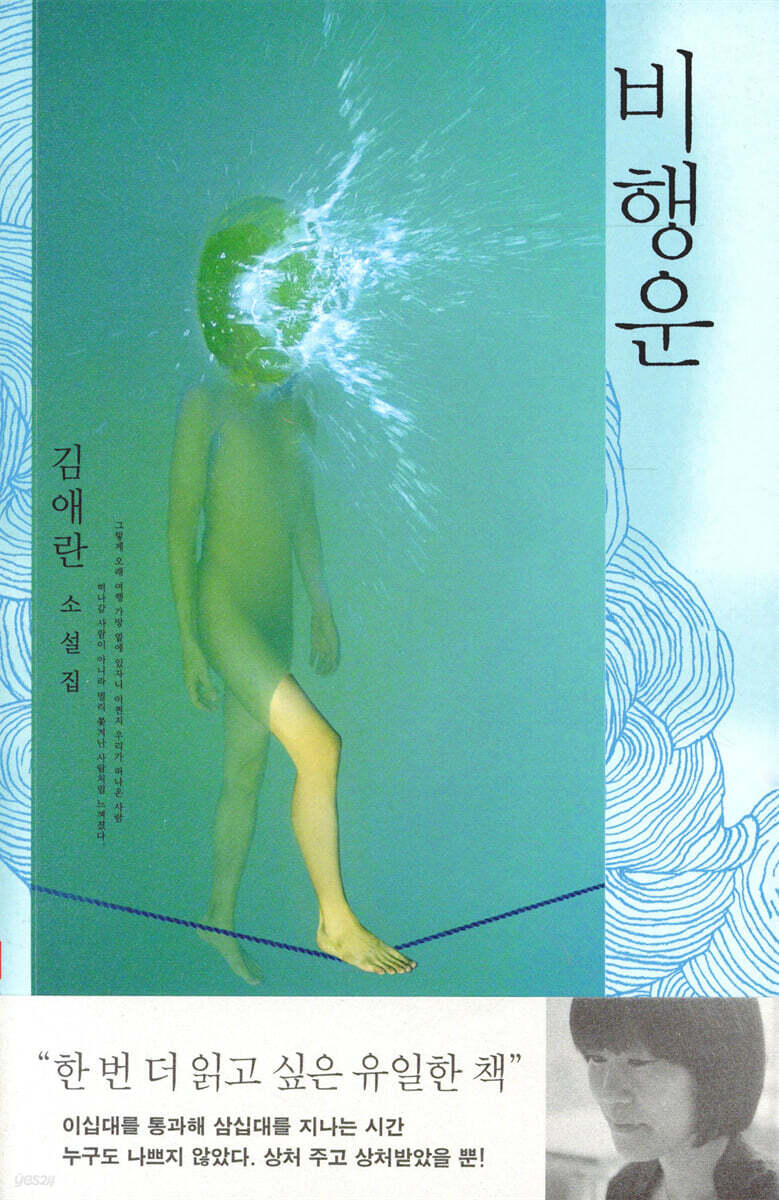
Looking at the main characters in the works included in 『Flight Luck』, they are people who are still on a tightrope, barely hanging on to their survival.
People who have graduated from college but have not been able to find a decent job, or who have found a job but are not satisfied with it, and have become 'debtors before, debtors now, and even worse debtors'.
A taxi driver in his late thirties who has never been welcomed by anyone and a toilet cleaner who is treated as if she were the same as the toilet.
And the grandmother who appears in the protagonist's dream, who is alive and "picks up boxes even after death."
Beyond one's own generation, Kim Ae-ran's shared suffering is expanding and deepening the protagonists' realm.
In our age of difficulty in genuine communication, he overcomes the depression and alienation in his own style, and broadens and deepens the field of true communication with the most moving and meaningful stories.
Meanwhile, Kim Ae-ran does not forget to wish good luck to her friends who were tired of waiting for happiness and had a hard time wrestling with bad luck.
This is where the virtue of Kim Ae-ran's novels comes into play again.
“In many cases, Kim Ae-ran constructs endings like a vast and distant abyss,” and “acquires a very dramatic compositional symbol of the horror or anxiety of the square of vastness,” and this is precisely “the common narrative grammar that runs through the short story collection ‘Flying Cloud.’” Now, we have a unique genre called ‘Kim Ae-ran-style tragedy.’
'Flying Clouds' is a story about 'us' who long for a new life (飛行雲), but are caught up in a chain of bad luck (非幸運) that prevents them from escaping reality.
As literary critic Park Jun-seok said, “Kim Ae-ran’s novels are first and foremost stories that ask for and convey greetings, so to speak, hi-story.
This message conveys greetings to the survivors, revealing the existential concerns of their generation with “a certain ethics” that goes beyond personal well-being.
As if she had come to listen to my story like a friend, Kim Ae-ran fully displays her charm in this collection of short stories.
It also attempts to 'expand' by encompassing more generations and spaces, which will provide an opportunity to discover 'beyond' Kim Ae-ran.
Looking at the main characters in the works included in 『Flight Luck』, they are people who are still on a tightrope, barely hanging on to their survival.
People who have graduated from college but have not been able to find a decent job, or who have found a job but are not satisfied with it, and have become 'debtors before, debtors now, and even worse debtors'.
A taxi driver in his late thirties who has never been welcomed by anyone and a toilet cleaner who is treated as if she were the same as the toilet.
And the grandmother who appears in the protagonist's dream, who is alive and "picks up boxes even after death."
Beyond one's own generation, Kim Ae-ran's shared suffering is expanding and deepening the protagonists' realm.
In our age of difficulty in genuine communication, he overcomes the depression and alienation in his own style, and broadens and deepens the field of true communication with the most moving and meaningful stories.
Meanwhile, Kim Ae-ran does not forget to wish good luck to her friends who were tired of waiting for happiness and had a hard time wrestling with bad luck.
This is where the virtue of Kim Ae-ran's novels comes into play again.
“In many cases, Kim Ae-ran constructs endings like a vast and distant abyss,” and “acquires a very dramatic compositional symbol of the horror or anxiety of the square of vastness,” and this is precisely “the common narrative grammar that runs through the short story collection ‘Flying Cloud.’” Now, we have a unique genre called ‘Kim Ae-ran-style tragedy.’
- You can preview some of the book's contents.
Preview
index
How is your summer?
bugs
Goliath in the water
There's a night there, a song here
celebration of the day
cuticle
Hotel Niyakta
Thirty
bugs
Goliath in the water
There's a night there, a song here
celebration of the day
cuticle
Hotel Niyakta
Thirty
Into the book
The isolation of knowing that no one knows I'm dying.
And then the frustration of not being able to tell anyone about it came over me.
The summer sunlight shimmered quietly above the water.
The thin, bright curtain of this shore, which rippled brightly as if tempting me, seemed within touching distance.
I wanted to catch that light.
But all I could get my hands on were handfuls of river water that would crumble as soon as I grabbed them.
A fear I had never experienced before came over me.
It was a distant and inexplicable fear.
I was sinking more and more.
I couldn't hold out any longer.
But then I felt someone grab my hand.
I grabbed that arm with all my might.
I couldn't figure out where that strength came from.
---p.41 From "How is your summer?"
Area A was like an abyss that swallowed everything in the world, its black mouth gaping open and it was acting like it was nothing.
It seemed infinitely deep and dark.
A black moth flew into the room.
I stood there with my mouth open in a daze.
Moths fluttered around the fluorescent lights.
---p.75 From "Bugs"
The tree stood there casting a black silhouette even in broad daylight.
With its arms outstretched like a foreign god, its eyes closed, it lay facing east and then turned west, repeating the cycle.
And every time the wind blew, they moved like a school of fish avoiding a predator.
A thousand leaves had a thousand directions.
A thousand directions had one will.
Surviving.
Reproducing like a tree and dying like a tree.
I don't know how to die in a tree-like way, but it's clear that it's something that's been engraved in the species for a long time.
The old tree twisted my body during the rainy season.
It was a gesture that made it unclear whether he was being dragged or trying to resist.
As if that were the way things should be, it danced a subtle dance between compliance and resistance.
---pp.85~86 From "Goliath in the Water"
“What the heck, Jjainal?”
“Where is my seat?”
The tape turns to the back by itself with a clanking sound.
A short time.
I hear the voice of the famous painting.
“Li Zheli Yuan Ma (里)?”
“How far is it from here?”
Yongdae mutters softly, “Lee Je-ri, comfort me?” and then steps on the accelerator.
Winter night.
Like a promise that no one cares about, a few ginkgo nuts cling to the branches, trembling, unable to fall or rot, as they look down at the taxi that has just passed.
---p.168 From "There, at Night, Here, a Song"
There was something strangely overwhelming, reassuring, or even beautiful about the airport, the peaceful operation of modern, complex, and massive systems.
People felt it in long stretches of high-speed rail, elegant suspension bridges, and transmission towers.
A cool autumn breeze whistled across the tarmac, marked by black tire marks.
All the parked planes had their chins resting on their front wheels, their eyes closed, feeling the wind.
It was a wind that blew from no one knew which country it was coming from and which world it would cross.
Some aircraft were quietly dozing or contemplating in the shade of the boarding gate, their heads buried in the sand.
Beyond the control tower, there was a guy who had just lifted his feet off the ground and was taking off.
On the outside, he must be using all his strength to overcome gravity, but on the outside, he looks calm and relaxed.
After a while, a long sigh of relief appeared where the guy had passed.
It was a cloud that people call contrails.
---p.176 From "The Celebration of the Day"
I tried soft domestic soybean tofu, which was a few hundred won more expensive, and out of curiosity, I tried organic pads, which were twice as expensive as regular sanitary pads.
At first, I felt a little guilty.
It's hard to save money if you don't save on necessities.
I thought that maybe my spending habits were too big and my standards were too high.
But every time I sat on the toilet and cut the toilet paper, every time the soft tissue of tofu touched my esophagus, I felt a thrill and satisfaction like never before.
And I thought that if I could buy that kind of 'feeling', I would want to 'continue' it.
---p.212 From "Cuticle"
“Are you unhappy that you met me?”
And then he immediately regretted his actions.
There was a long silence over there.
Just as Seo-yoon, who was growing anxious, was about to make an excuse, Kyung-min's soft voice was heard.
"no."
“……”
“It wasn’t like that.”
“……”
“It’s not the misfortune that’s hard… it’s the tedious waiting for happiness.”
---pp.276~277 From "Hotel Niyakta"
I've moved six times in the past ten years, worked a dozen part-time jobs, and dated a couple of men.
That's all there was to it.
That's really all there is to it.
I'm confused because it seems like my youth has gone by like this.
What have I changed in the meantime?
I'm also worried that I've become a petty adult who just spends too much, doesn't trust people, and only has a high standard for things.
In my twenties, it felt like everything I did was a process, but now it feels like everything is just a result, and I'm getting anxious.
My sister is five years older than me, so she's probably been through everything I've been through. Has she overcome some of them? Has there ever been a time when she became a memory? Nothing in this world is meaningless.
It seems like other friends have done something or are doing something.
I'm getting anxious that I'm the only one who's becoming nothing, neither here nor there.
No, maybe it's already worse than nothing.
---pp.293~294 From "Thirty"
Something passed me by, but I don't know what it was.
Did you see it too?
I raise my finger and point to the sky,
It's not there anymore.
Something passed me by but I don't know what it was
Name it.
Long sentences connected together
A name that no one can call out at once.
Even after calling them all out, I still don't know
A name that makes you call it again.
I wish that was one of the pretexts of the novel.
A scene from "Thirty" started from the diary of my family, Y.
I thank her.
And then the frustration of not being able to tell anyone about it came over me.
The summer sunlight shimmered quietly above the water.
The thin, bright curtain of this shore, which rippled brightly as if tempting me, seemed within touching distance.
I wanted to catch that light.
But all I could get my hands on were handfuls of river water that would crumble as soon as I grabbed them.
A fear I had never experienced before came over me.
It was a distant and inexplicable fear.
I was sinking more and more.
I couldn't hold out any longer.
But then I felt someone grab my hand.
I grabbed that arm with all my might.
I couldn't figure out where that strength came from.
---p.41 From "How is your summer?"
Area A was like an abyss that swallowed everything in the world, its black mouth gaping open and it was acting like it was nothing.
It seemed infinitely deep and dark.
A black moth flew into the room.
I stood there with my mouth open in a daze.
Moths fluttered around the fluorescent lights.
---p.75 From "Bugs"
The tree stood there casting a black silhouette even in broad daylight.
With its arms outstretched like a foreign god, its eyes closed, it lay facing east and then turned west, repeating the cycle.
And every time the wind blew, they moved like a school of fish avoiding a predator.
A thousand leaves had a thousand directions.
A thousand directions had one will.
Surviving.
Reproducing like a tree and dying like a tree.
I don't know how to die in a tree-like way, but it's clear that it's something that's been engraved in the species for a long time.
The old tree twisted my body during the rainy season.
It was a gesture that made it unclear whether he was being dragged or trying to resist.
As if that were the way things should be, it danced a subtle dance between compliance and resistance.
---pp.85~86 From "Goliath in the Water"
“What the heck, Jjainal?”
“Where is my seat?”
The tape turns to the back by itself with a clanking sound.
A short time.
I hear the voice of the famous painting.
“Li Zheli Yuan Ma (里)?”
“How far is it from here?”
Yongdae mutters softly, “Lee Je-ri, comfort me?” and then steps on the accelerator.
Winter night.
Like a promise that no one cares about, a few ginkgo nuts cling to the branches, trembling, unable to fall or rot, as they look down at the taxi that has just passed.
---p.168 From "There, at Night, Here, a Song"
There was something strangely overwhelming, reassuring, or even beautiful about the airport, the peaceful operation of modern, complex, and massive systems.
People felt it in long stretches of high-speed rail, elegant suspension bridges, and transmission towers.
A cool autumn breeze whistled across the tarmac, marked by black tire marks.
All the parked planes had their chins resting on their front wheels, their eyes closed, feeling the wind.
It was a wind that blew from no one knew which country it was coming from and which world it would cross.
Some aircraft were quietly dozing or contemplating in the shade of the boarding gate, their heads buried in the sand.
Beyond the control tower, there was a guy who had just lifted his feet off the ground and was taking off.
On the outside, he must be using all his strength to overcome gravity, but on the outside, he looks calm and relaxed.
After a while, a long sigh of relief appeared where the guy had passed.
It was a cloud that people call contrails.
---p.176 From "The Celebration of the Day"
I tried soft domestic soybean tofu, which was a few hundred won more expensive, and out of curiosity, I tried organic pads, which were twice as expensive as regular sanitary pads.
At first, I felt a little guilty.
It's hard to save money if you don't save on necessities.
I thought that maybe my spending habits were too big and my standards were too high.
But every time I sat on the toilet and cut the toilet paper, every time the soft tissue of tofu touched my esophagus, I felt a thrill and satisfaction like never before.
And I thought that if I could buy that kind of 'feeling', I would want to 'continue' it.
---p.212 From "Cuticle"
“Are you unhappy that you met me?”
And then he immediately regretted his actions.
There was a long silence over there.
Just as Seo-yoon, who was growing anxious, was about to make an excuse, Kyung-min's soft voice was heard.
"no."
“……”
“It wasn’t like that.”
“……”
“It’s not the misfortune that’s hard… it’s the tedious waiting for happiness.”
---pp.276~277 From "Hotel Niyakta"
I've moved six times in the past ten years, worked a dozen part-time jobs, and dated a couple of men.
That's all there was to it.
That's really all there is to it.
I'm confused because it seems like my youth has gone by like this.
What have I changed in the meantime?
I'm also worried that I've become a petty adult who just spends too much, doesn't trust people, and only has a high standard for things.
In my twenties, it felt like everything I did was a process, but now it feels like everything is just a result, and I'm getting anxious.
My sister is five years older than me, so she's probably been through everything I've been through. Has she overcome some of them? Has there ever been a time when she became a memory? Nothing in this world is meaningless.
It seems like other friends have done something or are doing something.
I'm getting anxious that I'm the only one who's becoming nothing, neither here nor there.
No, maybe it's already worse than nothing.
---pp.293~294 From "Thirty"
Something passed me by, but I don't know what it was.
Did you see it too?
I raise my finger and point to the sky,
It's not there anymore.
Something passed me by but I don't know what it was
Name it.
Long sentences connected together
A name that no one can call out at once.
Even after calling them all out, I still don't know
A name that makes you call it again.
I wish that was one of the pretexts of the novel.
A scene from "Thirty" started from the diary of my family, Y.
I thank her.
--- From the author's note
Publisher's Review
Kim Ae-ran, a writer who is like an older sister and friend to me
My greetings sent like a gift on a summer night!
A book that allows you to confirm your "face" and discover "beyond"! Kim Ae-ran's third short story collection, "Flying Luck."
Kim Ae-ran is back.
Although she has been publishing works without a break for 10 years since her debut, she has changed the title of "next-generation young writer" to a representative writer of the 2010s with her first full-length novel, "My Heart-Pounding Life," published last year.
I have come back with my third collection of short stories, 『Flight Luck』 (Munhak-kwa-Jiseong-sa, 2012), which is receiving much love and anticipation.
'Flying Clouds' is a story about 'us' who long for a new life (飛行雲), but are caught up in a chain of bad luck (非幸運) that prevents them from escaping reality.
As literary critic Park Jun-seok said, “Kim Ae-ran’s novels are first and foremost stories that ask for and convey greetings, so to speak, hi-story.
This message conveys greetings to the survivors, revealing the existential concerns of their generation with “a certain ethics” that goes beyond personal well-being.
As if she had come to listen to my story like a friend, Kim Ae-ran fully displays her charm in this collection of short stories.
It also attempts to 'expand' by encompassing more generations and spaces, which will provide an opportunity to discover 'beyond' Kim Ae-ran.
In Kim Ae-ran's novels, dreams of flying are often structured ironically.
The more you dream of bad luck, that is, the more you yearn for bad luck, the more you fall into a vicious cycle of bad luck.
In this helpless distance between good and bad luck, author Kim Ae-ran creates a meaningful narrative fault line for our times and weaves a moving web of stories.
Through this narrative trajectory, we have the good fortune to connect with the most genuine breath of 2010s novels.
Woo Chan-je (literary critic, professor of Korean literature at Sogang University)
When You're Hurt, I'm Hurt Too - Kim Ae-ran and My Common Sense
Kim Ae-ran is a writer who evokes great empathy, like a friend who seems to understand my pain without me having to explain it in words.
In some parts of her speech, it feels as if she were twins born with the same pain point.
The narrative attitude of caring for others, sharing their pain, and trying to heal their wounds through the life of a 'twenty-something' in a goshiwon and the birth, aging, illness, and death of a 'child-old man' is a 'growth' that the author himself undergoes through true self-reflection as he passes the age of thirty.
As time passed from his twenties to his thirties, his work and himself broadened.
This is clearly Kim Ae-ran's virtue and Kim Ae-ran's style of elegance.
Do you have the dignity of a thirty-year-old?
The result of this narrative effort to reflect on the vast abyss of such maturity is contained in the third collection of short stories.
But the growing pains experienced in this novel collection are more intense.
They say that the survivors are sad.
Did you say that you survived only because you were lucky?
Looking at the main characters in the works included in 『Flight Luck』, they are people who are still on a tightrope, barely hanging on to their survival.
People who have graduated from college but have not been able to find a decent job, or who have found a job but are not satisfied with it, and have become 'debtors before, debtors now, and even worse debtors'.
A taxi driver in his late thirties who has never been welcomed by anyone and a toilet cleaner who is treated as if she were the same as the toilet.
And the grandmother who appears in the protagonist's dream, who is alive and "picks up boxes even after death."
Beyond one's own generation, Kim Ae-ran's shared suffering is expanding and deepening the protagonists' realm.
Literary critic Woo Chan-je points out these characteristics, saying, “The attitude of trying to comprehensively re-examine the root of the problem through self-reflection is what allows us to see the depth of sincerity.
“The imagination and narrative ethics that seek to renew prose inquiry while comprehensively reflecting on both the human and social structures broadly and deeply remind us that we can have even greater expectations not only for this collection of short stories but also for future collections of short stories,” he said.
A Feast of Tragedy: The Blind and Blind Existences of Kim Ae-ran
The characters in 『Bad Luck』 seem to be somehow unhappy.
The author immerses himself in tragedy, dramatically depicting the increasingly worsening situations of existence, such as a pregnant woman whose water breaks at 1 a.m. on the rubble of a building in an empty redevelopment area, leaving her to collapse in a cairn; a boy who loses his mother to diabetic shock after his father fell to his death from a crane while demanding unpaid wages; and a protagonist who drags his academy students into a multi-level marketing scheme he joined because of his first love.
This immersion in tragedy, above all else, breaks down the gloom and alienation of our times, where true communication is difficult, in its own style, and broadens and deepens the field of true communication with the most moving and meaningful story.
Meanwhile, Kim Ae-ran does not forget to wish good luck to her friends who were tired of waiting for happiness and had a hard time wrestling with bad luck.
This is where the virtue of Kim Ae-ran's novels comes into play again.
“In many cases, Kim Ae-ran constructs endings like a vast and distant abyss,” and “acquires a very dramatic compositional symbol of the horror or anxiety of the square of vastness,” and this is precisely “the common narrative grammar that runs through the short story collection ‘Flying Cloud.’” Now, we have a unique genre called ‘Kim Ae-ran-style tragedy.’
My greetings sent like a gift on a summer night!
A book that allows you to confirm your "face" and discover "beyond"! Kim Ae-ran's third short story collection, "Flying Luck."
Kim Ae-ran is back.
Although she has been publishing works without a break for 10 years since her debut, she has changed the title of "next-generation young writer" to a representative writer of the 2010s with her first full-length novel, "My Heart-Pounding Life," published last year.
I have come back with my third collection of short stories, 『Flight Luck』 (Munhak-kwa-Jiseong-sa, 2012), which is receiving much love and anticipation.
'Flying Clouds' is a story about 'us' who long for a new life (飛行雲), but are caught up in a chain of bad luck (非幸運) that prevents them from escaping reality.
As literary critic Park Jun-seok said, “Kim Ae-ran’s novels are first and foremost stories that ask for and convey greetings, so to speak, hi-story.
This message conveys greetings to the survivors, revealing the existential concerns of their generation with “a certain ethics” that goes beyond personal well-being.
As if she had come to listen to my story like a friend, Kim Ae-ran fully displays her charm in this collection of short stories.
It also attempts to 'expand' by encompassing more generations and spaces, which will provide an opportunity to discover 'beyond' Kim Ae-ran.
In Kim Ae-ran's novels, dreams of flying are often structured ironically.
The more you dream of bad luck, that is, the more you yearn for bad luck, the more you fall into a vicious cycle of bad luck.
In this helpless distance between good and bad luck, author Kim Ae-ran creates a meaningful narrative fault line for our times and weaves a moving web of stories.
Through this narrative trajectory, we have the good fortune to connect with the most genuine breath of 2010s novels.
Woo Chan-je (literary critic, professor of Korean literature at Sogang University)
When You're Hurt, I'm Hurt Too - Kim Ae-ran and My Common Sense
Kim Ae-ran is a writer who evokes great empathy, like a friend who seems to understand my pain without me having to explain it in words.
In some parts of her speech, it feels as if she were twins born with the same pain point.
The narrative attitude of caring for others, sharing their pain, and trying to heal their wounds through the life of a 'twenty-something' in a goshiwon and the birth, aging, illness, and death of a 'child-old man' is a 'growth' that the author himself undergoes through true self-reflection as he passes the age of thirty.
As time passed from his twenties to his thirties, his work and himself broadened.
This is clearly Kim Ae-ran's virtue and Kim Ae-ran's style of elegance.
Do you have the dignity of a thirty-year-old?
The result of this narrative effort to reflect on the vast abyss of such maturity is contained in the third collection of short stories.
But the growing pains experienced in this novel collection are more intense.
They say that the survivors are sad.
Did you say that you survived only because you were lucky?
Looking at the main characters in the works included in 『Flight Luck』, they are people who are still on a tightrope, barely hanging on to their survival.
People who have graduated from college but have not been able to find a decent job, or who have found a job but are not satisfied with it, and have become 'debtors before, debtors now, and even worse debtors'.
A taxi driver in his late thirties who has never been welcomed by anyone and a toilet cleaner who is treated as if she were the same as the toilet.
And the grandmother who appears in the protagonist's dream, who is alive and "picks up boxes even after death."
Beyond one's own generation, Kim Ae-ran's shared suffering is expanding and deepening the protagonists' realm.
Literary critic Woo Chan-je points out these characteristics, saying, “The attitude of trying to comprehensively re-examine the root of the problem through self-reflection is what allows us to see the depth of sincerity.
“The imagination and narrative ethics that seek to renew prose inquiry while comprehensively reflecting on both the human and social structures broadly and deeply remind us that we can have even greater expectations not only for this collection of short stories but also for future collections of short stories,” he said.
A Feast of Tragedy: The Blind and Blind Existences of Kim Ae-ran
The characters in 『Bad Luck』 seem to be somehow unhappy.
The author immerses himself in tragedy, dramatically depicting the increasingly worsening situations of existence, such as a pregnant woman whose water breaks at 1 a.m. on the rubble of a building in an empty redevelopment area, leaving her to collapse in a cairn; a boy who loses his mother to diabetic shock after his father fell to his death from a crane while demanding unpaid wages; and a protagonist who drags his academy students into a multi-level marketing scheme he joined because of his first love.
This immersion in tragedy, above all else, breaks down the gloom and alienation of our times, where true communication is difficult, in its own style, and broadens and deepens the field of true communication with the most moving and meaningful story.
Meanwhile, Kim Ae-ran does not forget to wish good luck to her friends who were tired of waiting for happiness and had a hard time wrestling with bad luck.
This is where the virtue of Kim Ae-ran's novels comes into play again.
“In many cases, Kim Ae-ran constructs endings like a vast and distant abyss,” and “acquires a very dramatic compositional symbol of the horror or anxiety of the square of vastness,” and this is precisely “the common narrative grammar that runs through the short story collection ‘Flying Cloud.’” Now, we have a unique genre called ‘Kim Ae-ran-style tragedy.’
GOODS SPECIFICS
- Date of issue: July 5, 2012
- Page count, weight, size: 350 pages | 396g | 148*210*30mm
- ISBN13: 9788932023151
- ISBN10: 8932023158
You may also like
카테고리
korean


korean

![GQ KOREA Mark (Monthly): December [2025]](http://librairie.coreenne.fr/cdn/shop/files/8ef265dbbfbf186523ed75ba7319009d.jpg?v=1765340328&width=3840)


