

genocide
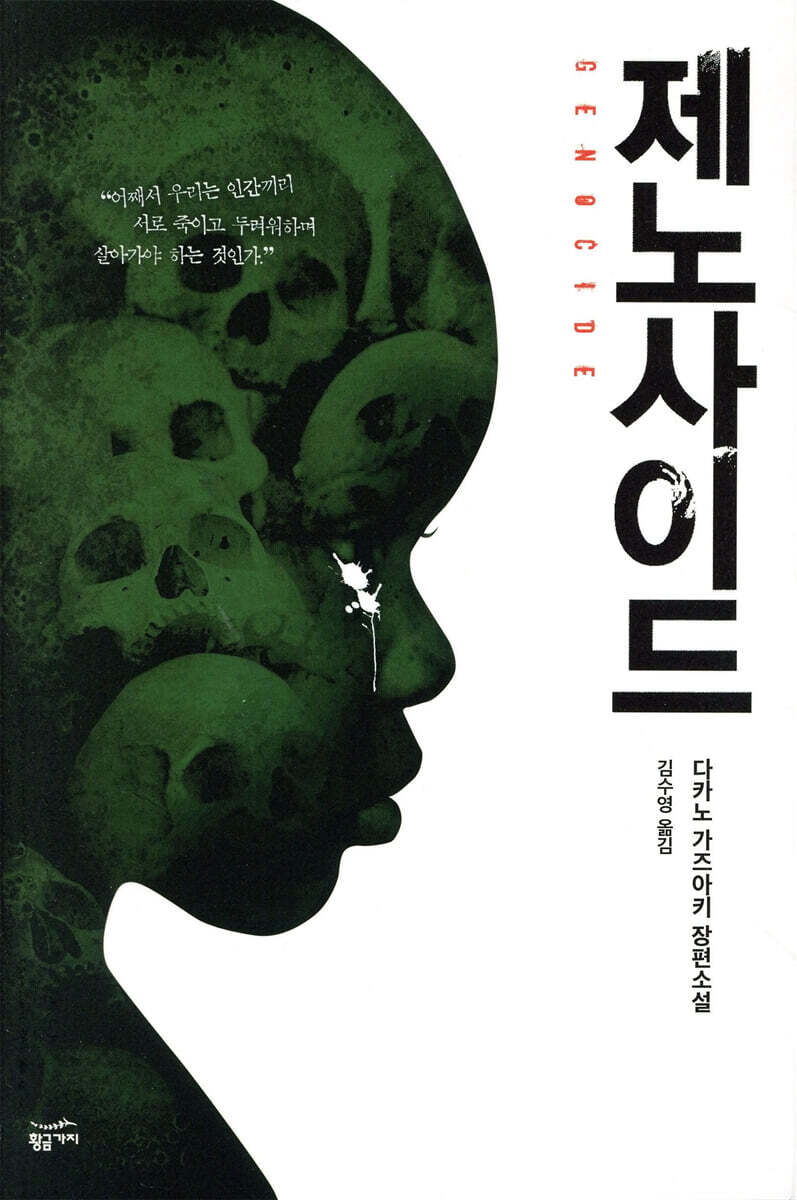 |
Description
Book Introduction
This is the latest work by Kazuaki Takano, the author of "13 Steps," released after six years.
This work, which unravels the threat of human extinction resulting from the emergence of a "new creature more evolved than humanity" and the surrounding conspiracy through mystery thriller and science fiction techniques, contains content that will be of interest to Korean readers, such as the activities of Korean exchange students and an introduction to Korean culture, including the Korean "jeong" (a Korean word for "Jeong").
In particular, it is a work that has sparked considerable controversy in Japan by critically portraying the Japanese right wing's erroneous thinking regarding the past history between Korea and Japan.
In fact, among the 200 or so reader reviews on Amazon Japan, Japan's largest online bookstore, a significant number of opinions express dissatisfaction with the author's view of history, such as, "It's interesting, but the anti-Japanese sentiment in the work is uncomfortable," and "I feel uncomfortable because of the mention of the Great Kanto Earthquake and the Nanjing Massacre."
However, the author, who had a special understanding of Korean culture while learning Taekwondo with a Korean friend while studying abroad in the United States, said in an interview with Kadogawa Publishing at the time of publication, “The thing I paid the most attention to while writing this story was ‘fairness.’
While depicting various genocides in my work, I could not turn a blind eye to the Japanese past.
“If that is the case, we must properly draw the relationship with Korea,” he said.
In a preview for readers, it was said, “The meticulous research, detailed descriptions, and thrilling plot development are top-notch.
“The scale and material that cannot be seen in recent Japanese mysteries overwhelm the reader.”, “The meticulousness unique to ‘Kazuaki Takano’ combined with the large scale created a surprise.
“It feels like watching a blockbuster movie,” “This work, with its grand theme of ‘What is true human evolution?’ and its action scenes set across the globe, including the United States, Japan, and the Congo, meshing together like cogs, is so well-made that it doesn’t even deserve the title of masterpiece,” were the rave reviews.
In "The Thirteen Steps," the author, who exposed the death penalty and the modern state's criminal management system through meticulous and extensive research, presents an upgraded intellectual play in "Genocide," crossing over a wide range of fields such as anthropology, evolution, international politics, and the military.
About the Author
たかの かずあき,高野和明
Kazuaki Takano was born in Tokyo in 1964 and has been working in film and television production since 1985.
At this time, he studied under the master of the Japanese film industry, director Kihachi Okamoto.
He moved to the United States in 1989 and majored in film directing, cinematography, and editing at LA City College, but dropped out in 1991 and returned to Korea.
After returning to Japan, he worked as a screenwriter for films and TV, and in 2001, he won the 47th Edogawa Ranpo Award, Japan's top mystery novel award, for his debut work, "The 13 Steps."
His books include Grave Digger, The Tragedy of KN, and Ghost Rescue Team.
His debut work, "The 13 Steps," offers a glimpse into the meticulous nature of the author, who meticulously researched a vast amount of material, including various legal reference books, to give the entire work an extremely realistic feel.
Since its appearance in the Japanese mystery literary world, this book has received such high praise that it became the first unanimous winner of the Edgar and Ranpo Awards and broke the record for selling over one million copies in the shortest period of time.
A breathtaking 24-hour chase drama unfolds, involving a villain trying to wash away his past and be reborn through good deeds, a mysterious organization blocking his path, and a serial killer and the police.
This work, which fiercely criticizes the contradictions of the death penalty and the loopholes in the crime control system, shows his side as a social writer.
This work was also made into a movie and dominated the Japanese box office at the time.
This work, which unravels the threat of human extinction resulting from the emergence of a "new creature more evolved than humanity" and the surrounding conspiracy through mystery thriller and science fiction techniques, contains content that will be of interest to Korean readers, such as the activities of Korean exchange students and an introduction to Korean culture, including the Korean "jeong" (a Korean word for "Jeong").
In particular, it is a work that has sparked considerable controversy in Japan by critically portraying the Japanese right wing's erroneous thinking regarding the past history between Korea and Japan.
In fact, among the 200 or so reader reviews on Amazon Japan, Japan's largest online bookstore, a significant number of opinions express dissatisfaction with the author's view of history, such as, "It's interesting, but the anti-Japanese sentiment in the work is uncomfortable," and "I feel uncomfortable because of the mention of the Great Kanto Earthquake and the Nanjing Massacre."
However, the author, who had a special understanding of Korean culture while learning Taekwondo with a Korean friend while studying abroad in the United States, said in an interview with Kadogawa Publishing at the time of publication, “The thing I paid the most attention to while writing this story was ‘fairness.’
While depicting various genocides in my work, I could not turn a blind eye to the Japanese past.
“If that is the case, we must properly draw the relationship with Korea,” he said.
In a preview for readers, it was said, “The meticulous research, detailed descriptions, and thrilling plot development are top-notch.
“The scale and material that cannot be seen in recent Japanese mysteries overwhelm the reader.”, “The meticulousness unique to ‘Kazuaki Takano’ combined with the large scale created a surprise.
“It feels like watching a blockbuster movie,” “This work, with its grand theme of ‘What is true human evolution?’ and its action scenes set across the globe, including the United States, Japan, and the Congo, meshing together like cogs, is so well-made that it doesn’t even deserve the title of masterpiece,” were the rave reviews.
In "The Thirteen Steps," the author, who exposed the death penalty and the modern state's criminal management system through meticulous and extensive research, presents an upgraded intellectual play in "Genocide," crossing over a wide range of fields such as anthropology, evolution, international politics, and the military.
About the Author
たかの かずあき,高野和明
Kazuaki Takano was born in Tokyo in 1964 and has been working in film and television production since 1985.
At this time, he studied under the master of the Japanese film industry, director Kihachi Okamoto.
He moved to the United States in 1989 and majored in film directing, cinematography, and editing at LA City College, but dropped out in 1991 and returned to Korea.
After returning to Japan, he worked as a screenwriter for films and TV, and in 2001, he won the 47th Edogawa Ranpo Award, Japan's top mystery novel award, for his debut work, "The 13 Steps."
His books include Grave Digger, The Tragedy of KN, and Ghost Rescue Team.
His debut work, "The 13 Steps," offers a glimpse into the meticulous nature of the author, who meticulously researched a vast amount of material, including various legal reference books, to give the entire work an extremely realistic feel.
Since its appearance in the Japanese mystery literary world, this book has received such high praise that it became the first unanimous winner of the Edgar and Ranpo Awards and broke the record for selling over one million copies in the shortest period of time.
A breathtaking 24-hour chase drama unfolds, involving a villain trying to wash away his past and be reborn through good deeds, a mysterious organization blocking his path, and a serial killer and the police.
This work, which fiercely criticizes the contradictions of the death penalty and the loopholes in the crime control system, shows his side as a social writer.
This work was also made into a movie and dominated the Japanese box office at the time.
- You can preview some of the book's contents.
Preview
Publisher's Review
2nd place in the Japan Bookstore Awards
#1 "This Mystery is Amazing"
Shukan Bunshun Mystery Best #1
Winner of the 65th Japan Mystery Writers Association Award
Winner of the 2nd Yamada Futaro Award
145th Naoki Prize nominee
Nominees for the 33rd Yoshikawa Eiji Literary Newcomer Award
A sensational work that shook up the Japanese bookstore world with its overwhelming power and grand scale.
Kazuaki Takano, author of the Edogawa Ranpo Award-winning "13 Steps," is back!
The best-selling novel "Genocide," which took Japanese bookstores by storm in 2012, has been published by Golden Bough.
This is the latest work by Kazuaki Takano, author of "The 13 Steps," a must-read Japanese mystery novel, released after six years.
This work, which unravels the threat of human extinction resulting from the emergence of a "new creature more evolved than humanity" and the surrounding conspiracy through mystery thriller and science fiction techniques, contains content that will be of interest to Korean readers, such as the activities of Korean exchange students and an introduction to Korean culture, including the Korean "jeong" (a Korean word for "Jeong").
In particular, it is a work that has sparked considerable controversy in Japan by critically portraying the Japanese right wing's erroneous thinking regarding the past history between Korea and Japan.
In fact, among the 200 or so reader reviews on Amazon Japan, Japan's largest online bookstore, a significant number of opinions express dissatisfaction with the author's view of history, such as, "It's interesting, but the anti-Japanese sentiment in the work is uncomfortable," and "I feel uncomfortable because of the mention of the Great Kanto Earthquake and the Nanjing Massacre."
However, the author, who had a special understanding of Korean culture while learning Taekwondo with a Korean friend while studying abroad in the United States, said in an interview with Kadogawa Publishing at the time of publication, “The thing I paid the most attention to while writing this story was ‘fairness.’
While depicting various genocides in my work, I could not turn a blind eye to the Japanese past.
“If that is the case, we must properly draw the relationship with Korea,” he said.
Despite the historical controversy in Japan, "Genocide" has sold hundreds of thousands of copies in a short period of time and has maintained its popularity to this day, sweeping major awards such as second place in the "Japan Bookstore Grand Prize," Japan's largest book award, first place in "This Mystery is Amazing," first place in the Shukan Bunshun Mystery Best, the Japan Mystery Writers Association Award, and the Yamada Futaro Award.
Gento changed the word 'Chosunjing' that his grandfather spoke of to 'people of the Korean Peninsula'.
The moment the word 'Joseonjing' came out of the old man's mouth, it was because the word referring to a specific ethnicity had a somewhat derogatory nuance mixed in.
Gento, who felt a bit of discrimination, did not want to be like them. _From the text
Not long after that, Gento was horrified to learn of the genocide committed by the Japanese.
Immediately after the Great Kanto Earthquake, rumors like "Chosun people are committing arson and poisoning wells" began to spread, prompting the government, officials, and even newspapers to spread these baseless rumors, inciting the Japanese to annihilate thousands of people from the Korean Peninsula.
(Omitted) What kind of demons are infesting their hearts? What kind of fear and pain must those who were murdered feel? The Japanese do not know the fear of the Japanese. - From the text
A blockbuster that explores the dark side of human history and human nature, crossing Congo, Japan, and the United States.
The story unfolds with the tension and excitement of a Hollywood film from the perspectives of Kento Koga, a pharmacy graduate student struggling to solve the mystery left behind by his deceased father, and Jonathan Yeager, a mercenary who must go on a mission to assassinate pygmies infected with a deadly virus in order to prolong the life of his terminally ill son.
At the same time, the work closely incorporates the recurring pattern of genocide throughout human history, sending a weighty message: "Are humans truly beings destined to live by killing one another?"
The Congo, where Jaeger is active, is a country that has suffered from ethnic conflict and the tyranny of warlords for a long time. The Congo Civil War, which lasted for over 10 years and resulted in the death toll of over 4 million people, is called the worst disaster since World War II.
Against this backdrop, the story of the Jaegers unfolds with urgency, while the tragic history and horrific realities of Africa are vividly revealed, including the Rwandan Civil War, colonial rule by powerful nations, resource conflicts, and the tyranny of armed groups.
It also depicts in detail the policies, military actions, and realities of the US regime, and in particular, through the depiction of the regime led by the character of President Burns, it strongly criticizes the hegemony and hypocrisy of powerful nations, including the pre- and post-war background of the Iraq War and the corruption of private military companies.
This is reminiscent of former President Bush, and indeed, the author has referenced many books that deal with the Bush administration.
In a preview for readers, it was said, “The meticulous research, detailed descriptions, and thrilling plot development are top-notch.
“The scale and material that cannot be seen in recent Japanese mysteries overwhelm the reader.”, “The meticulousness unique to ‘Kazuaki Takano’ combined with the large scale created a surprise.
“It feels like watching a blockbuster movie,” “This work, with its grand theme of ‘What is true human evolution?’ and its action scenes set across the globe, including the United States, Japan, and the Congo, meshing together like cogs, is so well-made that it doesn’t even deserve the title of masterpiece,” were the rave reviews.
For example, if the enemy is of a different race, language, religion, or ideology, the psychological distance between them increases, making them easier to kill.
People who normally maintain a psychological distance from other ethnic groups, that is, people who believe in the superiority of their own ethnic group and feel that other ethnic groups are inferior, are easily transformed in war.
If you look around you, you will probably be able to find one or two people like that.
And if you thoroughly teach them that the opponents you are fighting against are ethically inferior people, no better than beasts, then the slaughter for justice begins._From the text
An intellectual novel born from 25 years of long planning and meticulous research.
In "The Thirteen Steps," the author, who exposed the death penalty and the modern state's criminal management system through meticulous and extensive research, presents an upgraded intellectual play in "Genocide," crossing over a wide range of fields such as anthropology, evolution, international politics, and the military.
The author first got the idea for the work in 1984, when he was twenty years old, when he read a passage about the possibility of biological evolution in 『The Paradox of Civilization』 by Takashi Tachibana, a renowned journalist known as a "master of knowledge."
At the time, it was considered a far-fetched idea and was half-abandoned, but later, based on advanced molecular biology theories, it was incorporated into an interesting plot that set the possibility that humanity's position could be in danger if an "evolved being" with abilities superior to that of humans appeared.
In relation to this, the scenario of human destruction that appears as a key material, such as the 'Heisman Report' and the fatal incurable disease 'Alveolar Sclerosis', are also fictions that originated from imagination, but are depicted naturally as if they could really happen in reality through logical descriptions and solid explanations.
The process by which the protagonist, Gento, develops a new drug is also described in considerable detail, and the author has enhanced the level of detail through interviews with over a dozen current scholars and experts in the field and meticulous research.
I also put a lot of effort into creating the character of Lee Jeong-hoon, who helps Gento develop new drugs, with the help of Korean acquaintances.
In the preview, some readers said that this character reminded them of the late Lee Su-hyeon, who lost his life trying to save a Japanese person who fell onto the tracks.
When asked about this, the author emphasized that from the time he conceived the work, he had intended to capture Lee Su-hyeon's noble spirit, and that the characters in the novel and real people are different, and that he did not want to cause any inconvenience to Lee Su-hyeon's bereaved family.
In the book's 'Acknowledgements' section, he also expressed his gratitude by including the real name of a Korean friend who taught him a lot about Korean culture.
#1 "This Mystery is Amazing"
Shukan Bunshun Mystery Best #1
Winner of the 65th Japan Mystery Writers Association Award
Winner of the 2nd Yamada Futaro Award
145th Naoki Prize nominee
Nominees for the 33rd Yoshikawa Eiji Literary Newcomer Award
A sensational work that shook up the Japanese bookstore world with its overwhelming power and grand scale.
Kazuaki Takano, author of the Edogawa Ranpo Award-winning "13 Steps," is back!
The best-selling novel "Genocide," which took Japanese bookstores by storm in 2012, has been published by Golden Bough.
This is the latest work by Kazuaki Takano, author of "The 13 Steps," a must-read Japanese mystery novel, released after six years.
This work, which unravels the threat of human extinction resulting from the emergence of a "new creature more evolved than humanity" and the surrounding conspiracy through mystery thriller and science fiction techniques, contains content that will be of interest to Korean readers, such as the activities of Korean exchange students and an introduction to Korean culture, including the Korean "jeong" (a Korean word for "Jeong").
In particular, it is a work that has sparked considerable controversy in Japan by critically portraying the Japanese right wing's erroneous thinking regarding the past history between Korea and Japan.
In fact, among the 200 or so reader reviews on Amazon Japan, Japan's largest online bookstore, a significant number of opinions express dissatisfaction with the author's view of history, such as, "It's interesting, but the anti-Japanese sentiment in the work is uncomfortable," and "I feel uncomfortable because of the mention of the Great Kanto Earthquake and the Nanjing Massacre."
However, the author, who had a special understanding of Korean culture while learning Taekwondo with a Korean friend while studying abroad in the United States, said in an interview with Kadogawa Publishing at the time of publication, “The thing I paid the most attention to while writing this story was ‘fairness.’
While depicting various genocides in my work, I could not turn a blind eye to the Japanese past.
“If that is the case, we must properly draw the relationship with Korea,” he said.
Despite the historical controversy in Japan, "Genocide" has sold hundreds of thousands of copies in a short period of time and has maintained its popularity to this day, sweeping major awards such as second place in the "Japan Bookstore Grand Prize," Japan's largest book award, first place in "This Mystery is Amazing," first place in the Shukan Bunshun Mystery Best, the Japan Mystery Writers Association Award, and the Yamada Futaro Award.
Gento changed the word 'Chosunjing' that his grandfather spoke of to 'people of the Korean Peninsula'.
The moment the word 'Joseonjing' came out of the old man's mouth, it was because the word referring to a specific ethnicity had a somewhat derogatory nuance mixed in.
Gento, who felt a bit of discrimination, did not want to be like them. _From the text
Not long after that, Gento was horrified to learn of the genocide committed by the Japanese.
Immediately after the Great Kanto Earthquake, rumors like "Chosun people are committing arson and poisoning wells" began to spread, prompting the government, officials, and even newspapers to spread these baseless rumors, inciting the Japanese to annihilate thousands of people from the Korean Peninsula.
(Omitted) What kind of demons are infesting their hearts? What kind of fear and pain must those who were murdered feel? The Japanese do not know the fear of the Japanese. - From the text
A blockbuster that explores the dark side of human history and human nature, crossing Congo, Japan, and the United States.
The story unfolds with the tension and excitement of a Hollywood film from the perspectives of Kento Koga, a pharmacy graduate student struggling to solve the mystery left behind by his deceased father, and Jonathan Yeager, a mercenary who must go on a mission to assassinate pygmies infected with a deadly virus in order to prolong the life of his terminally ill son.
At the same time, the work closely incorporates the recurring pattern of genocide throughout human history, sending a weighty message: "Are humans truly beings destined to live by killing one another?"
The Congo, where Jaeger is active, is a country that has suffered from ethnic conflict and the tyranny of warlords for a long time. The Congo Civil War, which lasted for over 10 years and resulted in the death toll of over 4 million people, is called the worst disaster since World War II.
Against this backdrop, the story of the Jaegers unfolds with urgency, while the tragic history and horrific realities of Africa are vividly revealed, including the Rwandan Civil War, colonial rule by powerful nations, resource conflicts, and the tyranny of armed groups.
It also depicts in detail the policies, military actions, and realities of the US regime, and in particular, through the depiction of the regime led by the character of President Burns, it strongly criticizes the hegemony and hypocrisy of powerful nations, including the pre- and post-war background of the Iraq War and the corruption of private military companies.
This is reminiscent of former President Bush, and indeed, the author has referenced many books that deal with the Bush administration.
In a preview for readers, it was said, “The meticulous research, detailed descriptions, and thrilling plot development are top-notch.
“The scale and material that cannot be seen in recent Japanese mysteries overwhelm the reader.”, “The meticulousness unique to ‘Kazuaki Takano’ combined with the large scale created a surprise.
“It feels like watching a blockbuster movie,” “This work, with its grand theme of ‘What is true human evolution?’ and its action scenes set across the globe, including the United States, Japan, and the Congo, meshing together like cogs, is so well-made that it doesn’t even deserve the title of masterpiece,” were the rave reviews.
For example, if the enemy is of a different race, language, religion, or ideology, the psychological distance between them increases, making them easier to kill.
People who normally maintain a psychological distance from other ethnic groups, that is, people who believe in the superiority of their own ethnic group and feel that other ethnic groups are inferior, are easily transformed in war.
If you look around you, you will probably be able to find one or two people like that.
And if you thoroughly teach them that the opponents you are fighting against are ethically inferior people, no better than beasts, then the slaughter for justice begins._From the text
An intellectual novel born from 25 years of long planning and meticulous research.
In "The Thirteen Steps," the author, who exposed the death penalty and the modern state's criminal management system through meticulous and extensive research, presents an upgraded intellectual play in "Genocide," crossing over a wide range of fields such as anthropology, evolution, international politics, and the military.
The author first got the idea for the work in 1984, when he was twenty years old, when he read a passage about the possibility of biological evolution in 『The Paradox of Civilization』 by Takashi Tachibana, a renowned journalist known as a "master of knowledge."
At the time, it was considered a far-fetched idea and was half-abandoned, but later, based on advanced molecular biology theories, it was incorporated into an interesting plot that set the possibility that humanity's position could be in danger if an "evolved being" with abilities superior to that of humans appeared.
In relation to this, the scenario of human destruction that appears as a key material, such as the 'Heisman Report' and the fatal incurable disease 'Alveolar Sclerosis', are also fictions that originated from imagination, but are depicted naturally as if they could really happen in reality through logical descriptions and solid explanations.
The process by which the protagonist, Gento, develops a new drug is also described in considerable detail, and the author has enhanced the level of detail through interviews with over a dozen current scholars and experts in the field and meticulous research.
I also put a lot of effort into creating the character of Lee Jeong-hoon, who helps Gento develop new drugs, with the help of Korean acquaintances.
In the preview, some readers said that this character reminded them of the late Lee Su-hyeon, who lost his life trying to save a Japanese person who fell onto the tracks.
When asked about this, the author emphasized that from the time he conceived the work, he had intended to capture Lee Su-hyeon's noble spirit, and that the characters in the novel and real people are different, and that he did not want to cause any inconvenience to Lee Su-hyeon's bereaved family.
In the book's 'Acknowledgements' section, he also expressed his gratitude by including the real name of a Korean friend who taught him a lot about Korean culture.
GOODS SPECIFICS
- Date of publication: June 18, 2012
- Page count, weight, size: 688 pages | 840g | 153*224*35mm
- ISBN13: 9788960174191
- ISBN10: 896017419X
You may also like
카테고리
korean


korean

![GQ KOREA Mark (Monthly): December [2025]](http://librairie.coreenne.fr/cdn/shop/files/8ef265dbbfbf186523ed75ba7319009d.jpg?v=1765340328&width=3840)


