

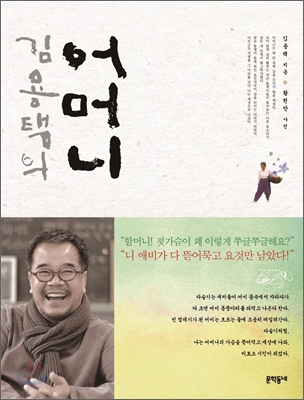
Kim Yong-taek's mother
 |
Description
Book Introduction
I came into the world by tearing at my mother's heart and became a poet.
The life and quotes of Yang Geul-i, the illiterate poet who raised poet Kim Yong-taek.
This is an essay written by Kim Yong-taek, a poet from Seomjingang who will celebrate the 30th anniversary of his literary debut in October, about his mother, the original owner and origin of his poetry.
Kim Yong-taek's mother, Yanggeul-i Yangban, is already well-known both inside and outside the literary world as a witty and illiterate poet with a keen eye for life and vitality.
Although Kim Yong-taek has occasionally written about his mother through poems, interviews, and anecdotes in his prose, this is the first time he has dedicated a book entirely to her story.
He began preparing this book with the earnest desire to restore the life of his mother, who was over eighty years old, from the beginning.
In this book, Kim Yong-taek captures the outstanding wit and traces of life of Yang Geul-i, the "Yong-taek's mother," who even poet Shin Kyeong-rim was moved to tears by, as well as poems written while thinking of his mother at every turning point in his life, as well as diary entries that can be considered "small records of events related to his mother."
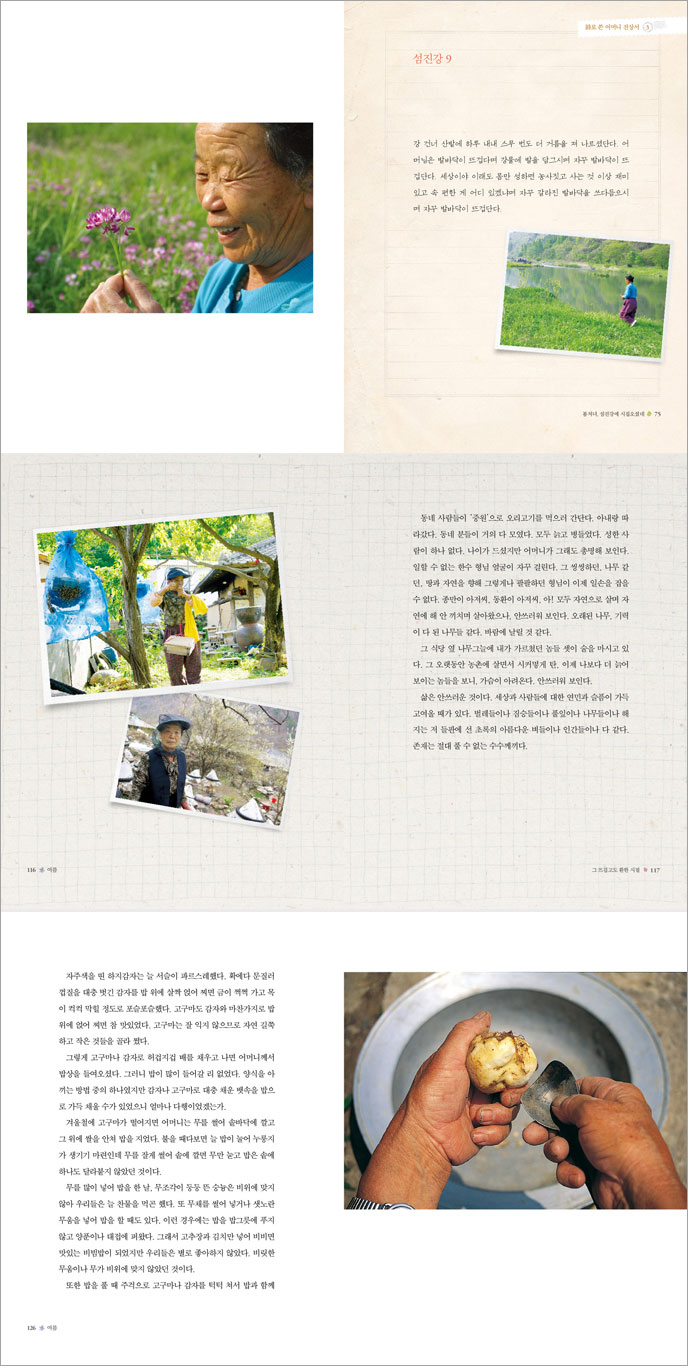
Additionally, photographer Hwang Heon-man included seasonal photos of his mother walking, working, and playing with neighbors in the dazzling four seasons of the Seomjin River village.
The journey of a beautiful young woman's life, from getting married to becoming a new bride in a family, mingling with the villagers, giving birth to children, harvesting crops, and growing old like a withered tree, is similar to the four seasons of nature.
This book follows the flow of the seasons, from 'Part 1 Spring - Spring Maiden, Married to the Seomjin River' to 'Part 4 Winter - Mother Grows Old Like a Dry Tree', following the mother's daily life and life.
"Kim Yong-taek's Mother," which traces the footsteps of his mother's life through poetry, writing, and photographs, is a poignant tribute to the disappearing scenery of our rural areas and to his aging mother.
The life and quotes of Yang Geul-i, the illiterate poet who raised poet Kim Yong-taek.
This is an essay written by Kim Yong-taek, a poet from Seomjingang who will celebrate the 30th anniversary of his literary debut in October, about his mother, the original owner and origin of his poetry.
Kim Yong-taek's mother, Yanggeul-i Yangban, is already well-known both inside and outside the literary world as a witty and illiterate poet with a keen eye for life and vitality.
Although Kim Yong-taek has occasionally written about his mother through poems, interviews, and anecdotes in his prose, this is the first time he has dedicated a book entirely to her story.
He began preparing this book with the earnest desire to restore the life of his mother, who was over eighty years old, from the beginning.
In this book, Kim Yong-taek captures the outstanding wit and traces of life of Yang Geul-i, the "Yong-taek's mother," who even poet Shin Kyeong-rim was moved to tears by, as well as poems written while thinking of his mother at every turning point in his life, as well as diary entries that can be considered "small records of events related to his mother."
Additionally, photographer Hwang Heon-man included seasonal photos of his mother walking, working, and playing with neighbors in the dazzling four seasons of the Seomjin River village.
The journey of a beautiful young woman's life, from getting married to becoming a new bride in a family, mingling with the villagers, giving birth to children, harvesting crops, and growing old like a withered tree, is similar to the four seasons of nature.
This book follows the flow of the seasons, from 'Part 1 Spring - Spring Maiden, Married to the Seomjin River' to 'Part 4 Winter - Mother Grows Old Like a Dry Tree', following the mother's daily life and life.
"Kim Yong-taek's Mother," which traces the footsteps of his mother's life through poetry, writing, and photographs, is a poignant tribute to the disappearing scenery of our rural areas and to his aging mother.
- You can preview some of the book's contents.
Preview
index
dictionary
Part 1: Spring_ Spring Maiden, Married to the Seomjin River
One spring day when I was about twenty years old
A Letter to Mother Written in Poetry 1■ Seomjin River 23 - Two Letters
maternal grandparents' house
Marriage, married life
conversation
Shinjak-ro
Chabi
A Poem Written by Mother 2■ Soya, Soya, Our House's Yellow Cow
Eat together, play together, work together
Diary entry about my mother 1 - April 28
mother
At least the flowers should bloom
A Mother's Letter Written in Poetry, Volume 3 ■ Seomjin River 9
Part 2: Summer_ That Hot and Bright Time
Interview with Mother
My mother who made dasulgi soup for 8 years
poet
Why Soybean Harvests Slow Each Year
give one's life
stepping stones
Mother's appearance
Diary entry about my mother 2 - July 2nd
Grandma is nature
rice
Yongtaek, go into hiding
Mother's friend
Part 3: Autumn_ Mother's Fruit
persimmon tree
One day in late autumn
A bowl of raw vegetables that makes your nose sweat
Break through the energy
The house where the full moon rises
education
Diary Entry for Mother 3 - September 27th and 28th
Mother's love in our neighborhood
Our mother's secret food hiding that pokes at our weaknesses
Diary entry about my mother 4 - October 24th
Ah, that barley field I miss
When barley is harvested
Mother who met water
Chuseok
Where did all the sparrows go?
A Mother's Letter Written in Poetry, Part 4■ Where Should I Bow My Head?
Part 4 Winter_ Like a dry tree, my mother is growing old.
mother's milk
Close your eyes, close your eyes
Lonely Mother's Yard
A Mother's Letter Written in Poetry, Volume 5■ The Grass in February
Mother who came to Jeonju
Diary Entry for Mother 5 - December 28
A Poem on Mother's Death, Volume 6, Donggu
Mother's ears
Diary of a Mother 6 - New Year's Morning, 2010
knowledgeable mother
Diary entry about my mother, 7 - February 15th
Early morning phone call
Part 1: Spring_ Spring Maiden, Married to the Seomjin River
One spring day when I was about twenty years old
A Letter to Mother Written in Poetry 1■ Seomjin River 23 - Two Letters
maternal grandparents' house
Marriage, married life
conversation
Shinjak-ro
Chabi
A Poem Written by Mother 2■ Soya, Soya, Our House's Yellow Cow
Eat together, play together, work together
Diary entry about my mother 1 - April 28
mother
At least the flowers should bloom
A Mother's Letter Written in Poetry, Volume 3 ■ Seomjin River 9
Part 2: Summer_ That Hot and Bright Time
Interview with Mother
My mother who made dasulgi soup for 8 years
poet
Why Soybean Harvests Slow Each Year
give one's life
stepping stones
Mother's appearance
Diary entry about my mother 2 - July 2nd
Grandma is nature
rice
Yongtaek, go into hiding
Mother's friend
Part 3: Autumn_ Mother's Fruit
persimmon tree
One day in late autumn
A bowl of raw vegetables that makes your nose sweat
Break through the energy
The house where the full moon rises
education
Diary Entry for Mother 3 - September 27th and 28th
Mother's love in our neighborhood
Our mother's secret food hiding that pokes at our weaknesses
Diary entry about my mother 4 - October 24th
Ah, that barley field I miss
When barley is harvested
Mother who met water
Chuseok
Where did all the sparrows go?
A Mother's Letter Written in Poetry, Part 4■ Where Should I Bow My Head?
Part 4 Winter_ Like a dry tree, my mother is growing old.
mother's milk
Close your eyes, close your eyes
Lonely Mother's Yard
A Mother's Letter Written in Poetry, Volume 5■ The Grass in February
Mother who came to Jeonju
Diary Entry for Mother 5 - December 28
A Poem on Mother's Death, Volume 6, Donggu
Mother's ears
Diary of a Mother 6 - New Year's Morning, 2010
knowledgeable mother
Diary entry about my mother, 7 - February 15th
Early morning phone call
Detailed image
Publisher's Review
“Grandma! Why are your breasts so wrinkled?”
“Your father ate everything and this is all that’s left!”
The chicks grow inside the mother's body.
It is said that when they grow up, they eat their mother's body and come out.
The mother, now an empty shell, is quietly carried away by the flowing water.
Like a strawberry,
I came into the world by tearing at my mother's heart,
He finally became a poet.
Kim Yong-taek, a poet from Seomjingang who will celebrate his 30th anniversary since his literary debut in October, confessed that he had copied poetry from someone else.
The person he considered the original owner and inspiration of his poetry was his mother.
In fact, Kim Yong-taek's mother, 'Yanggeul-i Yangban', was already known by word of mouth both inside and outside the literary world as an 'illiterate poet' with a good sense of humor and insight into life and living things.
Although Kim Yong-taek has occasionally spoken about his mother through poems, interviews, and anecdotes in his prose, this is the first time he has written a book that fully tells her story.
He began preparing this book with the earnest desire to restore the life of his mother, who was now in her eighties, from the beginning.
Thus, in this book, Kim Yong-taek captures the outstanding wit and traces of life of Yang Geul-i, the "Yong-taek's mother" who even poet Shin Kyeong-rim hit her knees with, while also collecting poems written while thinking of his mother at every turning point in his life, as well as diary entries that can be considered "small records of events related to his mother."
Additionally, photographer Hwang Heon-man included seasonal photos of his mother walking, working, and playing with neighbors in the dazzling four seasons of the Seomjin River village.
The journey of a beautiful young woman's life, from getting married to becoming a new bride in a family, mingling with the villagers, giving birth to children, harvesting crops, and growing old like a withered tree, is similar to the four seasons of nature.
This book follows the flow of the seasons, from 'Part 1 Spring - Spring Maiden, Married to the Seomjin River' to 'Part 4 Winter - Mother Grows Old Like a Dry Tree', following the mother's daily life and life.
The spring maiden who came to get married riding in a flower palanquin
To endure all the hardships of life and grow old like a withered tree?
The life and quotes of Yang Geul-i, the illiterate poet who raised poet Kim Yong-taek.
There was a girl who was called 'Yanggeul-i' more often than her real name because she was small and slender.
The young woman Yanggeul, who was chosen as a daughter-in-law right away by neatly bringing water to her future mother-in-law when she came to see him and then quietly stepping back.
After coming to Seomjin River in a flower palanquin at the age of 18, she lived a tearful life with her tiger mother-in-law and gave birth to a son who was as small as a rice cake. However, the son could not make up his mind and tried to raise ducks, but ended up ruining the household.
Then one day, the son suddenly became a teacher and a poet, drawing the world's attention to the Seomjin River. He was none other than poet Kim Yong-taek.
But even as Kim Yong-taek burned his mother's heart to the ground and the entire family struggled to survive day to day in poverty, the mother never lost faith in and support for her son for even a moment.
One day, high school student Kim Yong-taek was sent home for not paying his school's dues.
The mother, who saw her son, who had been unable to say anything, such as “I’ll definitely give it to you tomorrow, please just give it to me once,” come home limping in the middle of the day on a weekday, immediately catches the young chickens left in the chicken coop, puts them in a basket, and takes them to the market to sell.
But what should I do?
The money from selling chicken barely covers the cost of the school dues and Kim Yong-taek's transportation back to school, and there is no money for his mother to return home.
“What are you talking about, mother?”
“I will walk.”
My mother was standing there, sweating profusely, carrying an empty basket.
“The car is going.
“Go ahead.”
I shook my fist, which was clenched tightly with money.
My mother looked at me.
Tears clouded my vision.
The dusty window looked even cloudier.
I buried my face in the back of the chair in front of me and cried, heaving my shoulders.
The image of my father, who was just cutting barley without saying a word, flashed through my eyes in tears.
I wiped my tears away, raised my head, and looked at the back of the car.
My mother stumbled as if she had stepped on a pebble in the white dust.
Ah! Mother.
I held onto the money tightly.
My mother, who skipped lunch, has to walk again along the Shiori new road under the scorching sun.
(Pages 53-54)
Kim Yong-taek's mother always poured everything she had into her son's life, even the last thing she had left.
Because of this, I have deep regrets about my other children whom I could not take care of because I had nothing.
As a woman who had never even been to school in her life, she must have felt so sorry and sorry for her daughter, Bok-suk, who had to give up her studies just because she was her daughter.
Also, the sadness of his sister, who silently went out to the front lines of life, considering her mother's feelings and the family's circumstances, is captured in Kim Yong-taek's heart as a tearful scene.
Bok-suk-ah
You dropped out of school
Whether crossing a stepping stone or working in a field
Just standing there dumbly
The tip of the hoe got caught on the gravel
My hands are shaking
Tears are falling down
Soak all the bean leaves
(…)
You guys are gloomy
The sight of carrying a sack of rice and a jar of kimchi
When I look up from the edge of the field
Your heart must be so heavy
My heart is just torn apart.
Bok-suk-ah
If this body were to be worn out and torn
It would have been worn out and torn long ago.
(…)
Your ugly mother in the mountains.
(Page 23, from “Seomjin River 23 - Two Letters”)
How can this be the only sad thing?
He is amazed at his mother's life, which included overcoming countless sorrows and hardships in life, raising her children, and reaching old age.
In a world rife with anger, hatred, despair, and conflict, “What can we do?
Life is full of twists and turns, and as you live, worries pile up and concerns deepen. If something happens, you will live like this again.” The mother’s comfort and acceptance as she gently pats the back of her children who are caught up in the world is a clear poem to him.
He himself has become an old man in his sixties, but he still wonders.
How did our mother get to that point?
They say that our children's backs are patted by their mothers and their wounded hearts are comforted by their mothers, but who really patted their tired mothers' backs?
Who was my mother's friend?
Why didn't my mother ever feel a rotten feeling inside and a rage that pierced the heavens?
Why didn't I ever want to hit the ground and cry?
Every time that happened, where did my mother vent her anger, what did she grab onto to plead her case, and how did she overcome that moment?
One day, my mother went to the field and didn't come back until the sun went down.
The sound of a hoe was heard somewhere under the moonlight.
At the end of the field, my mother was diligently working the field.
The gestures seemed intense.
Mother must have vented her anger like that on the ground.
He must have been begging the ground, digging up the ground, and turning his thoughts upside down.
Ah! Mother.
Who was my mother's friend?
(Page 139)
In this book, the life of a mother who was so close to the land and organized her thoughts while tilling the soil unfolds like a painting, along with the flow of nature and the yearly life of a farmer.
In this book, the mother is busy working on the farm, making porridge to feed the cows, peeling persimmons, pickling soy sauce, preparing meals for a large family in a cauldron, and raising her children, all in the words and photos on every page.
But as the hot and bright days of summer pass, and the autumn harvest season passes, the cold winter comes, so too does my mother, who was so vibrant and strong, eventually grow old like a withered tree.
A mother who is deaf and can no longer hear even the stories her children are telling her.
Kim Yong-taek and his wife swallow their tears as they mourn their mother's aging, but even their cries no longer reach her properly.
However, the sight of such a mother is heartbreaking, and the mother shakes her head when her children offer to give her a hearing aid.
“No, when you get old, you don’t need to listen to everything the world says.” Kim Yong-taek suddenly asks his elderly mother.
Me_ What is your wish now?
Mother_ None.
I wish I could just leave like the wind without making my children suffer or getting sick.
(Page 83, “Interview with Mother”)
One day, Kim Yong-taek's mother, and all of our mothers, will leave like the wind, just as she wished.
And the remaining children will live out their remaining days longing for their mother, who, in an effort to ease the suffering of her children, became infinitely smaller and smaller until she finally disappeared like the wind.
"Kim Yong-taek's Mother," which traces the footsteps of his mother's life through poetry, writing, and photographs, is a poignant tribute to the disappearing scenery of our rural areas and to his aging mother.
Our mothers do not write poetry with a pen at their desks, but write poetry with their bodies, wearing a body suit and holding a hoe handle in their hands, in a hole in a soybean field, in the sky where clouds drift gently, in the desolate yard where their children have left.
How can it be only poet Kim Yong-taek?
In this way, we all came into the world by “crossing that painful yet clear bridge” called ‘mother.’
“Your father ate everything and this is all that’s left!”
The chicks grow inside the mother's body.
It is said that when they grow up, they eat their mother's body and come out.
The mother, now an empty shell, is quietly carried away by the flowing water.
Like a strawberry,
I came into the world by tearing at my mother's heart,
He finally became a poet.
Kim Yong-taek, a poet from Seomjingang who will celebrate his 30th anniversary since his literary debut in October, confessed that he had copied poetry from someone else.
The person he considered the original owner and inspiration of his poetry was his mother.
In fact, Kim Yong-taek's mother, 'Yanggeul-i Yangban', was already known by word of mouth both inside and outside the literary world as an 'illiterate poet' with a good sense of humor and insight into life and living things.
Although Kim Yong-taek has occasionally spoken about his mother through poems, interviews, and anecdotes in his prose, this is the first time he has written a book that fully tells her story.
He began preparing this book with the earnest desire to restore the life of his mother, who was now in her eighties, from the beginning.
Thus, in this book, Kim Yong-taek captures the outstanding wit and traces of life of Yang Geul-i, the "Yong-taek's mother" who even poet Shin Kyeong-rim hit her knees with, while also collecting poems written while thinking of his mother at every turning point in his life, as well as diary entries that can be considered "small records of events related to his mother."
Additionally, photographer Hwang Heon-man included seasonal photos of his mother walking, working, and playing with neighbors in the dazzling four seasons of the Seomjin River village.
The journey of a beautiful young woman's life, from getting married to becoming a new bride in a family, mingling with the villagers, giving birth to children, harvesting crops, and growing old like a withered tree, is similar to the four seasons of nature.
This book follows the flow of the seasons, from 'Part 1 Spring - Spring Maiden, Married to the Seomjin River' to 'Part 4 Winter - Mother Grows Old Like a Dry Tree', following the mother's daily life and life.
The spring maiden who came to get married riding in a flower palanquin
To endure all the hardships of life and grow old like a withered tree?
The life and quotes of Yang Geul-i, the illiterate poet who raised poet Kim Yong-taek.
There was a girl who was called 'Yanggeul-i' more often than her real name because she was small and slender.
The young woman Yanggeul, who was chosen as a daughter-in-law right away by neatly bringing water to her future mother-in-law when she came to see him and then quietly stepping back.
After coming to Seomjin River in a flower palanquin at the age of 18, she lived a tearful life with her tiger mother-in-law and gave birth to a son who was as small as a rice cake. However, the son could not make up his mind and tried to raise ducks, but ended up ruining the household.
Then one day, the son suddenly became a teacher and a poet, drawing the world's attention to the Seomjin River. He was none other than poet Kim Yong-taek.
But even as Kim Yong-taek burned his mother's heart to the ground and the entire family struggled to survive day to day in poverty, the mother never lost faith in and support for her son for even a moment.
One day, high school student Kim Yong-taek was sent home for not paying his school's dues.
The mother, who saw her son, who had been unable to say anything, such as “I’ll definitely give it to you tomorrow, please just give it to me once,” come home limping in the middle of the day on a weekday, immediately catches the young chickens left in the chicken coop, puts them in a basket, and takes them to the market to sell.
But what should I do?
The money from selling chicken barely covers the cost of the school dues and Kim Yong-taek's transportation back to school, and there is no money for his mother to return home.
“What are you talking about, mother?”
“I will walk.”
My mother was standing there, sweating profusely, carrying an empty basket.
“The car is going.
“Go ahead.”
I shook my fist, which was clenched tightly with money.
My mother looked at me.
Tears clouded my vision.
The dusty window looked even cloudier.
I buried my face in the back of the chair in front of me and cried, heaving my shoulders.
The image of my father, who was just cutting barley without saying a word, flashed through my eyes in tears.
I wiped my tears away, raised my head, and looked at the back of the car.
My mother stumbled as if she had stepped on a pebble in the white dust.
Ah! Mother.
I held onto the money tightly.
My mother, who skipped lunch, has to walk again along the Shiori new road under the scorching sun.
(Pages 53-54)
Kim Yong-taek's mother always poured everything she had into her son's life, even the last thing she had left.
Because of this, I have deep regrets about my other children whom I could not take care of because I had nothing.
As a woman who had never even been to school in her life, she must have felt so sorry and sorry for her daughter, Bok-suk, who had to give up her studies just because she was her daughter.
Also, the sadness of his sister, who silently went out to the front lines of life, considering her mother's feelings and the family's circumstances, is captured in Kim Yong-taek's heart as a tearful scene.
Bok-suk-ah
You dropped out of school
Whether crossing a stepping stone or working in a field
Just standing there dumbly
The tip of the hoe got caught on the gravel
My hands are shaking
Tears are falling down
Soak all the bean leaves
(…)
You guys are gloomy
The sight of carrying a sack of rice and a jar of kimchi
When I look up from the edge of the field
Your heart must be so heavy
My heart is just torn apart.
Bok-suk-ah
If this body were to be worn out and torn
It would have been worn out and torn long ago.
(…)
Your ugly mother in the mountains.
(Page 23, from “Seomjin River 23 - Two Letters”)
How can this be the only sad thing?
He is amazed at his mother's life, which included overcoming countless sorrows and hardships in life, raising her children, and reaching old age.
In a world rife with anger, hatred, despair, and conflict, “What can we do?
Life is full of twists and turns, and as you live, worries pile up and concerns deepen. If something happens, you will live like this again.” The mother’s comfort and acceptance as she gently pats the back of her children who are caught up in the world is a clear poem to him.
He himself has become an old man in his sixties, but he still wonders.
How did our mother get to that point?
They say that our children's backs are patted by their mothers and their wounded hearts are comforted by their mothers, but who really patted their tired mothers' backs?
Who was my mother's friend?
Why didn't my mother ever feel a rotten feeling inside and a rage that pierced the heavens?
Why didn't I ever want to hit the ground and cry?
Every time that happened, where did my mother vent her anger, what did she grab onto to plead her case, and how did she overcome that moment?
One day, my mother went to the field and didn't come back until the sun went down.
The sound of a hoe was heard somewhere under the moonlight.
At the end of the field, my mother was diligently working the field.
The gestures seemed intense.
Mother must have vented her anger like that on the ground.
He must have been begging the ground, digging up the ground, and turning his thoughts upside down.
Ah! Mother.
Who was my mother's friend?
(Page 139)
In this book, the life of a mother who was so close to the land and organized her thoughts while tilling the soil unfolds like a painting, along with the flow of nature and the yearly life of a farmer.
In this book, the mother is busy working on the farm, making porridge to feed the cows, peeling persimmons, pickling soy sauce, preparing meals for a large family in a cauldron, and raising her children, all in the words and photos on every page.
But as the hot and bright days of summer pass, and the autumn harvest season passes, the cold winter comes, so too does my mother, who was so vibrant and strong, eventually grow old like a withered tree.
A mother who is deaf and can no longer hear even the stories her children are telling her.
Kim Yong-taek and his wife swallow their tears as they mourn their mother's aging, but even their cries no longer reach her properly.
However, the sight of such a mother is heartbreaking, and the mother shakes her head when her children offer to give her a hearing aid.
“No, when you get old, you don’t need to listen to everything the world says.” Kim Yong-taek suddenly asks his elderly mother.
Me_ What is your wish now?
Mother_ None.
I wish I could just leave like the wind without making my children suffer or getting sick.
(Page 83, “Interview with Mother”)
One day, Kim Yong-taek's mother, and all of our mothers, will leave like the wind, just as she wished.
And the remaining children will live out their remaining days longing for their mother, who, in an effort to ease the suffering of her children, became infinitely smaller and smaller until she finally disappeared like the wind.
"Kim Yong-taek's Mother," which traces the footsteps of his mother's life through poetry, writing, and photographs, is a poignant tribute to the disappearing scenery of our rural areas and to his aging mother.
Our mothers do not write poetry with a pen at their desks, but write poetry with their bodies, wearing a body suit and holding a hoe handle in their hands, in a hole in a soybean field, in the sky where clouds drift gently, in the desolate yard where their children have left.
How can it be only poet Kim Yong-taek?
In this way, we all came into the world by “crossing that painful yet clear bridge” called ‘mother.’
GOODS SPECIFICS
- Date of publication: May 8, 2012
- Page count, weight, size: 256 pages | 500g | 164*212*20mm
- ISBN13: 9788954618151
- ISBN10: 8954618154
You may also like
카테고리
korean


korean

![ELLE 엘르 스페셜 에디션 A형 : 12월 [2025]](http://librairie.coreenne.fr/cdn/shop/files/b8e27a3de6c9538896439686c6b0e8fb.jpg?v=1766436872&width=3840)


