

majestic
 |
Description
Book Introduction
|
The true face of a witty, witty personality, the epitome of modern humor.
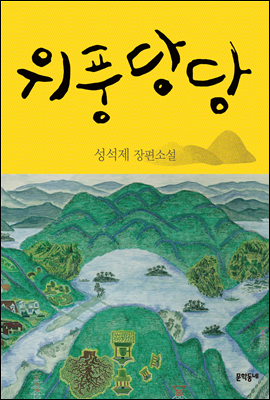
Seong Seok-je, the 'excellent storyteller', 'master of humor and satire', and 'the true face of wit and humor', has returned. Nine years after his 2003 novel “The Power of Humanity,” he invites us once again to the Seongseokje Festival of Laughter with his new novel “Majesty.” It borrows the format of a wild comedy set in a rural village to depict a world filled with wit, humor, satire, and humor. At the same time, it is a work in which the deepest part of the novel is a sharp critique of the moral collapse of our society hidden behind that laughter, and an impulse to resist unjust power and form a new community. The people of a remote river village engage in a battle with national gangsters who have come to take over the village. The city gangsters, who underestimated the rural village and entered it with pride, are helplessly taken advantage of by the unexpected surprise attack. On the other hand, as they gather their strength and overcome the crisis, the understanding and affection of the people of Gangmaeul deepens. We will laugh while reading 『Majesty』. You won't be able to hold back the laughter that will erupt irresistibly, giggling, and hooting throughout the pages. As you follow the majestic and confident path of the story led by Seong Seok-je, you will burst out in uncontrollable laughter, and in the festival of countless humor and wit hidden within, you will be thoroughly dominated by Seong Seok-je's signature laughter. However, there is one fact that should not be overlooked. Behind that laughter, after the laughter that would make you roll over in laughter has disappeared, we also cannot ignore the heartbreaking tear that will come afterward. We feel that this fact makes it impossible for us to put down Seong Seok-je's novels, keeps us up all night, and makes it difficult for us to escape the novelistic reality he presents. So we read the Seongseokje, laugh, and cry. Seong Seok-je is back. The true storyteller's sermon has begun! * Into the book The tablecloth that covered the dining table during my childhood was made of fabric of various colors like a mosaic.
When I lifted the tablecloth, rice and side dishes were gathered together in one place, containing various ingredients, times, and cooking methods. The people who shared it were called 'family'. After eating a good meal, the family members would point at each other and tease each other, saying, "You're the kid we picked up from under the bridge," perhaps to help digestion. As the finger-pointing and teasing circled around like a round song, and seemed to turn towards me and solidify into a fait accompli, I would think this. That would be fun, better than now. It's been a long time since I've thought of a novel in which seemingly disparate elements that don't fit together at all are woven together by the threads and needles of time, chance, pain, and joy to create a mosaic-like life. I also witnessed many such lives come together to form a mosaic. It was not chance that brought them together as a family, but choice. This novel is a story about people who became family members by choice, not by fate. May peace, like a river, be with those who fought against unfair external interference and prejudice, and who, through close association, eventually became one body, like a mingled branch, with their cells touching and their blood mixing. Spring 2012 Seong Seok-je --- From the author's note Hundreds of dump trucks and heavy equipment such as bulldozers and excavators are lined up along the dirt road along the river. The sound of the engine and the sound of the wheels pressing down on the ground vibrate the ground. The air above the train convoy is clouded with smoke from the exhaust pipes, like when an old steam locomotive passes by. They're pushing in like an army. Never since the town was founded, never since the river was formed, never before have so many internal combustion engines been brought into the country at once. Pushing in without any regard for anything. Birds cry and insects fly away. Snakes, frogs, toads, toads, raccoons, rabbits, pheasants, wildcats, wild cats, and deer all hold their breath and watch in horror what the mighty procession will do. The military doesn't care. A massive horde of mechanical monsters, who know nothing and don't need to know anything, are coming in as one. The machine's arms strike trees and rocks, tearing branches and creating cracks. A sharp sound symbolizing destruction and death shatters the silence, stirs the air, and foreshadows the hell of Abiguihwan. An army of death ready to annihilate anything that is alive or resembles life. The advance of the giant monster army has not yet had a decisive impact on the village. Now the final battle remains. The air surrounding the town seems to be swelling with tension that threatens to burst, enveloping the town like a giant balloon. ---pp.210~211
Publisher's Review The true face of a witty, witty personality, the epitome of modern humor.
The art of the world of speaking and the classic of wit, The absolute master Seong Seok-je is back with a bang! There were many words from critics to describe Seong Seok-je, such as ‘an excellent storyteller,’ ‘a master of humor and satire,’ and ‘the true face of wit and humor.’ Is there another novelist in the Korean literary world who juggles stories as much as he does? His novels always steer the world with Seong Seok-je's own unique rudder, and his equipped weapons of humor and wit are buried like landmines throughout the novels, so that bombs of laughter, bombs of tears, bombs of refreshing, cheerful, and lively relief explode in the novels at any given time. On days when I was so captivated by his fascinating stories, I would stay up all night and read the entire Seongseokje in one sitting. He, who is like that, invites us once again to the festival of laughter of Seong Seok-je's signature style with his new novel, "Pomp and Confidence," nine years after his 2003 novel, "The Power of Humanity." The recently published novel, "Majesty," borrows the format of a wild and tumultuous play set in a rural village to depict a world filled with wit, humor, satire, and humor. At the same time, it is a work in which the deepest part of the novel is a sharp critique of the moral collapse of our society hidden behind that laughter, and an impulse to resist unjust power and form a new community. A wild commotion in a rural village A brief summary of the narrative of 『Wi-pung-dang-dang』 is as follows. The people of a remote river village engage in a battle with national gangsters who have come to take over the village. The city gangsters, who underestimated the rural village and entered it with pride, are helplessly taken advantage of by the unexpected surprise attack. On the other hand, as they gather their strength and overcome the crisis, the understanding and affection of the people of Gangmaeul deepens. So then, why on earth are national gangsters trying to take over this rural village? “But it’s following me. Men in a black Benz. Humans are like wild beasts that have escaped from us, like mad dogs that have let go of their leashes. “Three people wearing sunglasses, behind dark tinted glass, following Sammy at five kilometers per hour.” A river village that I visited by chance. To the gangsters, the “wild” Sammy looked noticeably prettier. The prelude to this war begins when Sammy, who was being slowly pursued by a gang of gangsters, wounds one of them while trying to avoid them and target him as prey. That was the starting point of a war between the rural village and the gangsters. The story of the confrontation between the invading side and the one that must be defended is decided through a difficult process and begins to coalesce into one goal. But they are strangers whose blood does not mix with each other. The stories of each villager were like those of people in the dark corners of our society that we wanted to hide and conceal. They were abandoned from the cruel shackles of life and wounded, and settled in that river village. So the people of Gangmaeul understood each other, accepted each other as 'family', trusted each other, and built, cultivated, and established the village. But now, that belief is being shaken by a very embarrassing situation. Among them, “You must definitely turn in the opposite direction from where the gangsters are coming from. (……) There were people who said, “If you value your life, you should run away,” but they supported each other and highlighted the efforts that went into building that river village and the heartbreaking wounds of the members who came to that river village, saying, “Okay, let’s fight, let’s fight. I will fight with you until I die. He makes a firm resolution to ‘fight’, saying, “I will shed every last drop of blood.” If the attitude that non-blood relatives would have in the face of a dangerous situation is to 'run away', then this passage shows that family members must naturally fight 'together'. The power of 'family' unites the villagers and begins a final battle from which they can never retreat. But the fight is not just a fight between the people of Gangmaeul, nor is it just a fight against gangsters. Seong Seok-je recommends that we look at this fight from a different angle, viewing it as a proxy war for another fight. A prelude to another fight, a festival of laughter and the spirit of resistance “Hundreds of dump trucks and heavy equipment such as bulldozers and excavators are lined up along the dirt road along the river. The sound of the engine and the sound of the wheels pressing down on the ground vibrate the ground. (……) A group of giant mechanical monsters come rushing in as one. The machine's arms strike trees and rocks, tearing branches and creating cracks. A sharp sound symbolizing destruction and death shatters the silence, stirs the air, and foreshadows the hell of Abiguihwan. “An army of death, ready to annihilate anything that is alive, anything that resembles life.” Amidst the tense standoff between the two sides, another machine corps is advancing into the river village. The machine army smashes down rivers, trees, and rocks, cracking, destroying, trampling, and stirring up nature. The invasion of the life-destroying machine army is perceived by the people of Gangma Village as another enemy and disaster. So what is the countermeasure? How should the people of Gangma Village fight against the invasion of the Machine Army? For gangsters, being stuck in a remote countryside in sweltering heat without water is “maddening and dementing.” As they are suffering from a burning thirst, suddenly hungry "mosquitoes the size of sparrows" attack the gang. That's not all. They are also left helpless and defeated by the “elite hornet fighters” who recall the memories of the forest fires through “collective intelligence.” That's not all. What made the gangsters faint was the 'chili lye bomb' and the ten-year-old 'feces bomb', and the gangsters fell into a state of physical and psychological panic. All the offensive weapons prepared by the villagers were obtained from 'nature' and were 'natural objects' that nature gave back to humans. If the weapon that the villagers use to defend themselves against the artificial 'violence' of gangsters is 'natural objects', if they defend with nature and attack with nature, then we may get some hints from this episode presented by Seong Seok-je. It is the “giant mechanical monster” bowing down before the “laws of nature.” Moreover, nature is the master of nature. It could be said that nature attacks those who try to harm it. The power of nature is not something we have not experienced before. It may have already been given to you but you forgot it, or it may have been taken away from you before you even had it. Perhaps the invasion of those terrifying machine legions invaded our hearts before the river. This novel, by revealing the figures of machine corps and gangsters, reminds us of the moral ruin our society has faced as it has stood by indifferently in the face of the destruction of nature. Glory to all things “This novel is a story about people who became family not by fate but by choice. “May peace, like a river, be with those who fought against unjust external interference and prejudice, and who, through close association, eventually became one, like a mingled lily, with their cells touching and their blood mixing.” (From the Author’s Note) We will laugh while reading 『Majesty』. You won't be able to hold back the laughter that will erupt irresistibly, giggling, and hooting throughout every page. As you follow the majestic and confident path of the story led by Seong Seok-je, you will burst out in uncontrollable laughter, and in the festival of countless humor and wit hidden within, you will be thoroughly dominated by Seong Seok-je's signature laughter. However, there is one fact that should not be overlooked. Behind that laughter, after the laughter that would make you roll over in laughter has disappeared, we also cannot ignore the heartbreaking tear that will come afterward. We feel that this fact makes it impossible for us to put down Seong Seok-je's novels, keeps us up all night, and makes it difficult for us to escape the novelistic reality he presents. So we read the Seongseokje, laugh, and cry. Seong Seok-je is back. The true storyteller's sermon has begun! GOODS SPECIFICS
- Date of issue: April 4, 2012
- Page count, weight, size: 264 pages | 364g | 145*210*20mm
- ISBN13: 9788954617918
- ISBN10: 8954617913
|
You may also like
카테고리
korean


korean

![GQ KOREA Mark (Monthly): December [2025]](http://librairie.coreenne.fr/cdn/shop/files/8ef265dbbfbf186523ed75ba7319009d.jpg?v=1765340328&width=3840)


