

My Uncle Bruce Lee 1
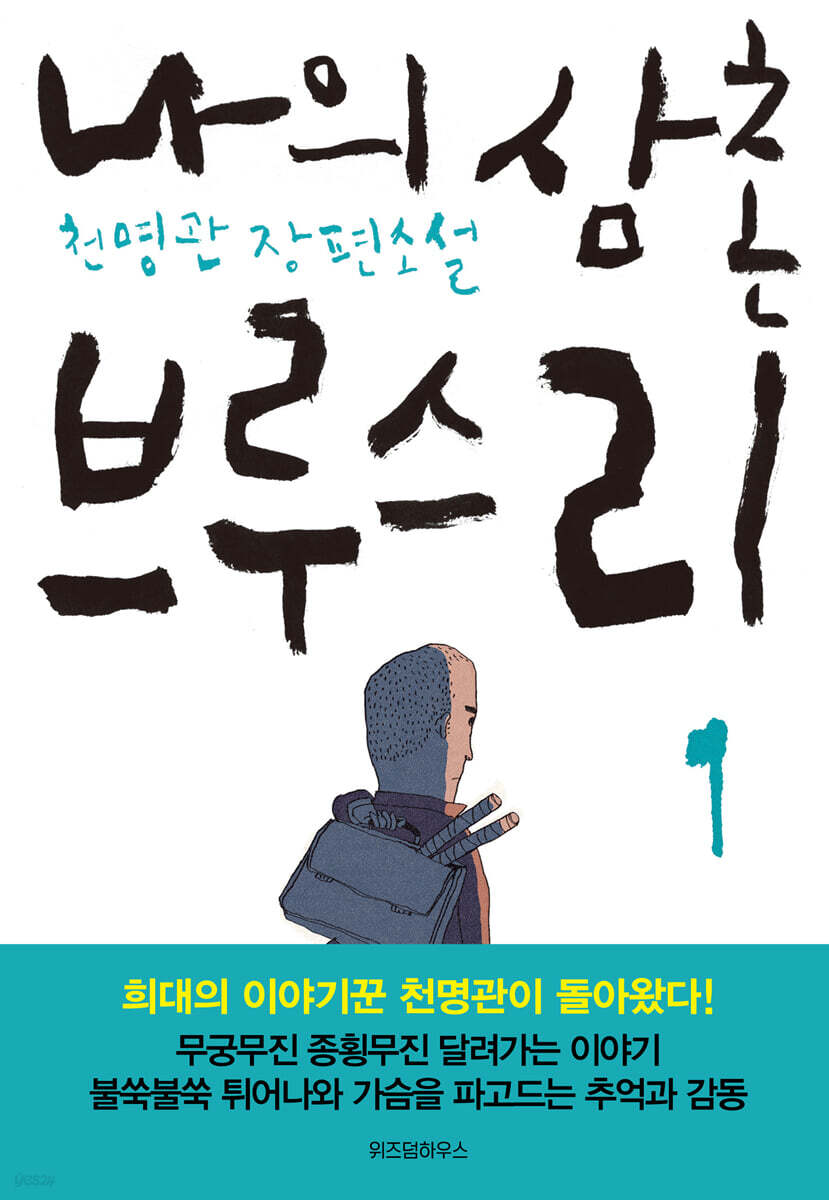 |
Description
Book Introduction
|
Cheon Myeong-gwan has returned.
This is a welcome development for readers who have been waiting for his bold, long narrative since "Whale," which shook up the Korean literary world with its explosive power of storytelling. He, who has gone far beyond the realm of conventional novels and unfolded a fantastical world of 'magical realism', has now drawn a portrait of a man who has engraved the meaning of life with his whole body within the space of Korean reality. This work depicts the process in which ordinary individuals, caught up in the whirlwind of the times against their will, lived turbulent lives amidst the compressed growth of Korean-style modernization from the 1970s to the 2000s. My uncle's life story, as seen from my perspective as the narrator, begins with a story about Bruce Lee, the symbol of heroism in the 70s. To my uncle, who grew up as an illegitimate child born to his grandfather and was treated poorly from a young age, Bruce Lee was something that would save his miserable life. However, the fate of my uncle, who was never able to become a founder or a main stream from birth, is difficult. The arduous life of a man who followed Bruce Lee but failed to reach the heights and ended up living a life of imitation, copycat, plagiarism, and counterfeiting unfolds against the backdrop of the industrialization of the 1970s, the military dictatorship and democratic revolution of the 1980s, and the era of full-fledged capitalism in the 1990s. * index Political Affairs 1
Political Affairs 2 Dragon and the River 1 Dragon and the River 2 Game of Death 1 Game of Death 2 Publisher's Review “To live is simply to live, not to live for anything!” (Bruce Lee)
Life is an absurd play that cannot be understood anyway. Whether it's a tragedy or a comedy, we must survive and leave our own history behind! A feast of epic narratives from the legendary storyteller Cheon Myeong-gwan, presented after a long absence! The life story of a man who survived tenaciously and purely in the turbulent modern history of Korea. Cheon Myeong-gwan returns with a powerful story. This is a welcome development for readers who have been waiting for his bold, long narrative since “Whale,” which stirred up the Korean literary world. He, who has gone far beyond the realm of conventional novels and unfolded a fantastical world of 'magical realism', has now depicted the life of a man who has carved the meaning of life into his whole being within the space of Korean reality. This work depicts the difficult lives of ordinary individuals as they endured the compressed growth of Korean-style modernization from the 1970s to the 2000s, using Cheon Myeong-gwan's characteristically captivating narrative style. My uncle's story, as seen from my perspective as the narrator, begins with memories of Bruce Lee, the symbol of heroism in the 70s. To my uncle, who grew up as an illegitimate child born to his grandfather and was treated poorly from a young age, Bruce Lee was something that would save his miserable life. However, the fate of my uncle, who was never able to become a founder or a main stream from birth, is difficult. The turbulent life of a man who followed Bruce Lee but failed to reach the heights and ended up living a life of imitation, copycat, plagiarism, and counterfeiting unfolds against the backdrop of the industrialization of the 1970s, the military dictatorship and democratic revolution of the 1980s, and the era of full-fledged capitalism in the 1990s. “Why on earth is this life so bitter and harsh?” A chronicle of life's harsh ironies, yet unwaveringly embraced failure and frustration. In his full-length debut, Whale, Cheon Myeong-gwan melted grotesque yet mythical imagination with sharp wit and witty banter, leaving a strong impression of 'storytelling' in Korean literature, which is centered on so-called inner literature and reflective sentences. The assessment that he 'owes nothing to traditional novel studies or contemporary novels' succinctly shows the literary world's shock at his novel writing style. However, Cheon Myeong-gwan confesses that he was greatly influenced by Korean literature of the 70s and 80s. It is a traditional novel style that depicts the joys and sorrows of human beings who struggle to live the lives that lie before them even in an absurd reality. In fact, after 『Whale』, the kitsch aura and the hint of bizarre imagination in his works have weakened, and instead, the emphasis is on the difficult lives of those who must live rooted in reality. Furthermore, this novel contains the author's serious and affectionate reflections on 'what it means to live.' The irony of life, the chronicle of failure and frustration experienced by characters who face a harsh fate disguised as truth, may seem to be filled with the energy of sadism and masochism, but the single thread of passion for life that silently grows within it is the ultimate narrative strategy pursued by Cheon Myeong-gwan. "My Uncle Bruce Lee" is a work that clearly demonstrates the strengths and popular aspects of Cheon Myeong-gwan's narrative. The vivid and powerful story, as if watching a movie, the meticulously and precisely refined genre conventions, and the well-structured and sharp sentences shown in "Whale" make one nod in agreement as to why he is called the best storyteller. While skillfully telling the refreshing stories of our lives that seem familiar, sometimes they mercilessly poke at the very core of those familiar things, satirizing customs and prejudices, or ridiculing petty desires and the power of power, they also provide a heartbreaking pleasure. Furthermore, by using the 30 years of political change in the Republic of Korea as a framework, it vividly depicts all sorts of social evils that occur within it and the human figures caught up in the whirlwind of the times, thereby adding a sense of social critique and realism. “Perhaps it was not ideology but complexes that moved us?” A story about the dreams and desires of people who wander the margins of life, waiting for salvation. A life of wandering and wandering, and a pathetic self-consciousness that leans in front of traces of shattered hopes are the characteristics of the characters in Cheon Myeong-gwan's novels. The protagonists of 'My Uncle Bruce Lee' also share the lonely sentiment of hovering on the margins of life. On the one hand, it is connected to the desire for salvation that cannot be given up. The love story of the uncle who tried to emulate Bruce Lee as an image of justice and perfection but failed, and who eventually completed his life with the power of love for his first love, Won-jeong, and the actress Won-jeong who found true love after going on a long and winding road is ultimately a story about salvation. Not only does the author's alter ego, the narrator 'Na'seum,' tell the story of his uncle, but he also conveys the difficult life stories and twists and turns of the people around him in a dense manner. Dongcheon-eup, where the uncle spent his childhood and youth and which later turns into a battleground for power in organized crime; the Beijing restaurant in Chungmuro where he first meets the gangsters after coming to Seoul; the Samcheong Training Corps where he encounters the gangsters of Dongcheon; and Chungmuro, which he uses as his base while working as an action stunt double, are the main stages of the novel, and the rise and fall of the human characters that unfold on them represent the desires and regrets of Koreans that blossomed during the process of modernization. Oh Soon, the queen of poison born from incest, Dochi, whose lifelong goal is to become a gangster who has been a traitor, the Chinese restaurant owner of Chinese descent who is extremely ill-tempered but infinitely lonely, the evil instructors of the Samcheong Training Corps, and even the strange perverts of the film industry born from the collusion of capital and power… … . The villains and supporting characters that are abundant throughout the work are what make this novel more three-dimensional and rich. A novel that is like a long farewell from the author to the film But the story isn't over yet! This novel was first published on the Yes24 blog for 10 months. It was quite a long journey compared to the typical 5-6 month serialization of novels, but readers' interest was heightened by the author's unique storytelling that stretches out endlessly. Additionally, the illustrations by illustrator Lee Kang-hoon, who appeared in each installment, amplified the fun of the novel and played a key role in the character of 'My Uncle Bruce Lee'. However, even after the serialization, the author's concerns about the novel's ending continued for a long time, and he eventually chose a changed ending for the book. Cheon Myeong-gwan's novels are always imbued with a love for film. However, it is said that 'My Uncle Bruce Lee' will be his long farewell to the cinema. The film that dominated the author's youth and continues to be an important source of inspiration for his works, and the story surrounding it, fulfill its mission in a more dramatic and poignant way in this novel. People always flock to theaters and TVs, dreaming of a wonderful life like in the movies. But why, despite all this, does he still find himself unable to put the novel down? The author explains: “Perhaps all novels are ultimately stories of failure. I still think that the reason many people read novels is because they have to keep living despite failure. Even if it doesn't bring great happiness or show the way to salvation, if it helps you realize that your misfortune isn't simply unjust and lonely, and if it helps you understand it a little better, wouldn't that be meaningful enough? I always hope my novels can mean that to someone. GOODS SPECIFICS
- Date of issue: January 30, 2012
- Page count, weight, size: 395 pages | 554g | 145*210*30mm
- ISBN13: 9788959136681
- ISBN10: 8959136689
|
You may also like
카테고리
korean


korean

![GQ KOREA Mark (Monthly): December [2025]](http://librairie.coreenne.fr/cdn/shop/files/8ef265dbbfbf186523ed75ba7319009d.jpg?v=1765340328&width=3840)


