

Summer in Gwimyeongsa Alley
 |
Description
Book Introduction
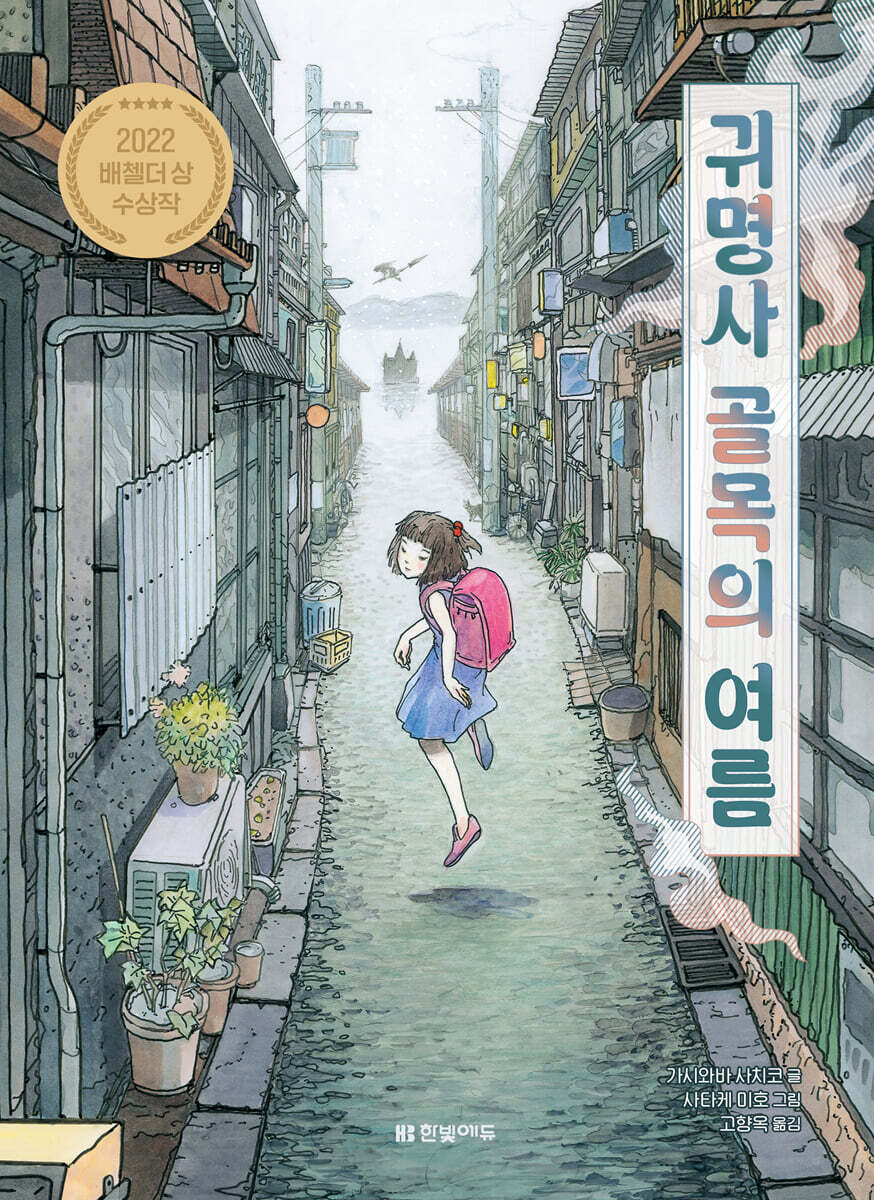
Winner of the 2022 American Library Association Batchelder Award A place where the wish of the dead coming back to life comes true, Mystery fantasy fairy tale surrounding the nobleman "Summer in the Alley of the Ghosts," a masterpiece by Sachiko Kashiwaba, a giant in the Japanese children's literature world, and winner of the 2022 Batchelder Award for the best non-English children's book selected by the American Library Association, has been published. This book is about the summer vacation of an ordinary and timid elementary school boy named Kazu and his classmate, a mysterious girl named Akari, and their mysterious adventures surrounding the "Gimeisha" temple, where wishes for the dead to come back to life are granted. Gazu wakes up in the middle of the night and sees a ghostly girl dressed in white emerge from the room where his deceased grandfather's memorial tablet is kept. The family scolds the terrified Kazu for seeing hallucinations, but the next day, they are left bewildered when they see the ghost girl hanging out with her friends in the same classroom, called by the name of Akari. While working on his summer vacation project, Kazu learns that there was a temple called Gwimyeongsa near his house a long time ago, and he begins to suspect that Akari might be connected to this temple… … . Although this story deals with death, a topic often avoided in children's books, it is a fast-paced read thanks to the vivid and three-dimensional character portrayals and captivating plot development. After reading it, it is a book that has the power to make us think about how we can live better in the one life we have been given. |
- You can preview some of the book's contents.
Preview
index
1.
There's a ghost in my house!
2.
Everyone is weird.
No, am I weird?
3.
Strange Old Men
4.
My house was a ghost town!
5.
The missing main Buddha
6.
Old magazine "Daisy"
7.
"The moon is on the left" 1
8.
"The Moon is on the Left" 2
9.
Go to the sea together
10.
Who is Mika Lee?
11.
"The Moon is on the Left" 3
12.
"The Moon is on the Left" 4
13.
End of summer vacation
There's a ghost in my house!
2.
Everyone is weird.
No, am I weird?
3.
Strange Old Men
4.
My house was a ghost town!
5.
The missing main Buddha
6.
Old magazine "Daisy"
7.
"The moon is on the left" 1
8.
"The Moon is on the Left" 2
9.
Go to the sea together
10.
Who is Mika Lee?
11.
"The Moon is on the Left" 3
12.
"The Moon is on the Left" 4
13.
End of summer vacation
Detailed image
.jpg)
Publisher's Review
A chilling mystery and heartbreaking fantasy,
The Birth of a Fairy Tale That Tells the Story of Life Through Death
In Korea, Sachiko Kashiwaba is known as the author of the children's book "The Village Beyond the Mist," which influenced Hayao Miyazaki's animation "Spirited Away."
However, in Japan, Sachiko Kashiwaba has long established herself as a master of writing children's literature for decades, winning numerous literary awards since her debut.
He has received numerous awards, including the Kodansha Children's Literature Newcomer Award, the Japan Children's Literature Writers Association Newcomer Award, the Sankei Children's Publishing Culture Award, the Shogakukan Children's Publishing Culture Award, and the Noma Children's Literature Award. In 2022, he became known worldwide when he won the Batchelder Award, given to the best non-English children's book published in the United States that year, for "Summer in the Alley of the Demonic Temple."
"Summer in the Alley of the Demonic Temple" can be said to be the true masterpiece of Sachiko Kashiwaba.
The first thing that catches your eye in this book is the unfamiliar name, ‘Gwimyeongsa.’
It is written with the characters for return (歸) and life (命), meaning ‘a temple where the dead return to life.’
The book's protagonist, Gaz, is overcome with an ominous feeling when he discovers the name "Gwimyeongsa" while looking at an old map of the area where he lives during class.
Could it be because the night before, I saw a barefoot ghost girl in white coming out of the room where my deceased grandfather's memorial tablet was kept?
Moreover, when Kazu is surprised to see a girl who looks exactly like the ghost girl in the classroom, his friends wonder why he is treating Akari like she is seeing him for the first time.
Moreover, after Gaz asks his father about the ghost, the village elders all come running and ask him why he is curious about such things, but he gets the impression that they are trying to hide the identity of the ghost.
Having a premonition that there is a connection between the ghost girl he can see and the ghost master, Kaz decides to uncover the mystery of the ghost master during his summer vacation.
The time of life that no one can decide at will,
So now it's more poignant and precious
The person that Kazu's father pointed out as an adult who would know about the ghost story was Grandma Minakami, who was a friend of his grandfather.
Even in her 80s, this grandmother, full of personality, is somehow suspicious in Gaz's eyes.
If he had never heard of a ghost, why would he ask Gaz if he had ever seen a zombie-like being that was either dead or alive?
Kazu notices that Grandma Minakami is asking about Akari, a being that is either a ghost or a person.
In a desperate attempt to save his life, Gaz emails his uncle abroad to ask about Gwimyeongsa Temple, and unexpectedly learns the secret that his family has been secretly hiding the main Buddha statue of Gwimyeongsa Temple for generations.
There were people who believed that if someone who had lost a family member unjustly in war or an accident prayed at Gwimyeongsa Temple, the dead would return to life, and that was why the Gaz family protected the main Buddha statue at Gwimyeongsa Temple.
However, it was said that if someone revealed the identity of the person who was brought back to life thanks to the ghost, the person who was revealed would disappear immediately.
While Gaz was checking the Buddhist altar in the house just in case, he discovered that the main Buddha statue of Gwimyeongsa Temple was missing.
Kazu, who believes that Grandma Minakami is the culprit, goes to see her and begs her to return the main Buddha statue.
As expected, Grandma Minakami pretends not to know anything about it, but clearly states her thoughts on the nobleman.
“Even if I have the chance after I die, I won’t come back.”
“But wouldn’t you be happy if you could come back and live again?”
“I might be happy.
But that won't do.
So that people don't need to be resurrected
You have to live hard and cherish each and every day.
“That’s how I live.” _ Page 100
As the head of the family that has protected the main Buddha statue of Gwimyeongsa Temple, Gaz embarks on another adventure for his friend Akari, who passed away from illness at a young age and was given a new life through Gwimyeongsa Temple.
The power of stories that save people and make them want to live,
A wonderful ending where reality and fantasy overlap.
One of the must-see attractions in this book is the fictional book "The Moon is on the Left" that appears in the story.
This story, which takes up 4 out of 13 chapters and is a whopping 1/3 of the entire story, is about a serial novel that the girl who unfortunately died before starting a new life as Akari loved while she was alive.
The story of a poor girl sold to a witch, the witch's long-held plan to bring her son, who has become a ghost on the execution ground, back to life and put him on the throne, and the girl jumping into a lake to find a pearl as large as the moon to complete this plan is a cruel, beautiful, and at the same time sad fairy tale.
Perhaps Akari saw herself in the witch's son, who was called the "Ghost of the Execution Ground" in the story, rejecting death and seeking to regain life.
After searching through countless channels to find the author of "The Moon is on the Left," which had been discontinued a long time ago, Kazu discovers that the author of this novel is none other than Grandma Minakami.
Grandma Minakami published "The Moon is on the Left" under the pen name "Mika Lee" when she was young, but soon gave up her dream of becoming a writer due to family circumstances.
Kaz persistently persuades Grandma Minakami, who no longer writes, to write the ending of "The Moon is on the Left."
And Grandma Minakami answers through her writing what her decision was regarding the nobleman and Akari.
At the end of the book, the real world where Kazu and Akari live and the fantasy world where the witch and the prince live overlap, leaving readers with a sense of overwhelming emotion.
This book provides a rich reading experience, as if you were reading two books in one.
★ Praise for "Summer in the Alley of the Ghostly House"
“Strong characterization, rich cultural detail, and cleverly layered stories within stories make this a compelling and suspenseful read.”
- [Batchelder Award Selection Committee]
“This work, which combines supernatural mystery with real-world friendship, deserves to be considered a classic.”
- [Kirkus Review]
“A must-read for fans of Studio Ghibli animation, filled with humorous yet thoughtful fantasy.”
- [School Library Journal]
“A fantastical adventure, a heartwarming story, and a beautifully captured tale of the magical moments that only childhood can offer.”
- [Booklist]
The Birth of a Fairy Tale That Tells the Story of Life Through Death
In Korea, Sachiko Kashiwaba is known as the author of the children's book "The Village Beyond the Mist," which influenced Hayao Miyazaki's animation "Spirited Away."
However, in Japan, Sachiko Kashiwaba has long established herself as a master of writing children's literature for decades, winning numerous literary awards since her debut.
He has received numerous awards, including the Kodansha Children's Literature Newcomer Award, the Japan Children's Literature Writers Association Newcomer Award, the Sankei Children's Publishing Culture Award, the Shogakukan Children's Publishing Culture Award, and the Noma Children's Literature Award. In 2022, he became known worldwide when he won the Batchelder Award, given to the best non-English children's book published in the United States that year, for "Summer in the Alley of the Demonic Temple."
"Summer in the Alley of the Demonic Temple" can be said to be the true masterpiece of Sachiko Kashiwaba.
The first thing that catches your eye in this book is the unfamiliar name, ‘Gwimyeongsa.’
It is written with the characters for return (歸) and life (命), meaning ‘a temple where the dead return to life.’
The book's protagonist, Gaz, is overcome with an ominous feeling when he discovers the name "Gwimyeongsa" while looking at an old map of the area where he lives during class.
Could it be because the night before, I saw a barefoot ghost girl in white coming out of the room where my deceased grandfather's memorial tablet was kept?
Moreover, when Kazu is surprised to see a girl who looks exactly like the ghost girl in the classroom, his friends wonder why he is treating Akari like she is seeing him for the first time.
Moreover, after Gaz asks his father about the ghost, the village elders all come running and ask him why he is curious about such things, but he gets the impression that they are trying to hide the identity of the ghost.
Having a premonition that there is a connection between the ghost girl he can see and the ghost master, Kaz decides to uncover the mystery of the ghost master during his summer vacation.
The time of life that no one can decide at will,
So now it's more poignant and precious
The person that Kazu's father pointed out as an adult who would know about the ghost story was Grandma Minakami, who was a friend of his grandfather.
Even in her 80s, this grandmother, full of personality, is somehow suspicious in Gaz's eyes.
If he had never heard of a ghost, why would he ask Gaz if he had ever seen a zombie-like being that was either dead or alive?
Kazu notices that Grandma Minakami is asking about Akari, a being that is either a ghost or a person.
In a desperate attempt to save his life, Gaz emails his uncle abroad to ask about Gwimyeongsa Temple, and unexpectedly learns the secret that his family has been secretly hiding the main Buddha statue of Gwimyeongsa Temple for generations.
There were people who believed that if someone who had lost a family member unjustly in war or an accident prayed at Gwimyeongsa Temple, the dead would return to life, and that was why the Gaz family protected the main Buddha statue at Gwimyeongsa Temple.
However, it was said that if someone revealed the identity of the person who was brought back to life thanks to the ghost, the person who was revealed would disappear immediately.
While Gaz was checking the Buddhist altar in the house just in case, he discovered that the main Buddha statue of Gwimyeongsa Temple was missing.
Kazu, who believes that Grandma Minakami is the culprit, goes to see her and begs her to return the main Buddha statue.
As expected, Grandma Minakami pretends not to know anything about it, but clearly states her thoughts on the nobleman.
“Even if I have the chance after I die, I won’t come back.”
“But wouldn’t you be happy if you could come back and live again?”
“I might be happy.
But that won't do.
So that people don't need to be resurrected
You have to live hard and cherish each and every day.
“That’s how I live.” _ Page 100
As the head of the family that has protected the main Buddha statue of Gwimyeongsa Temple, Gaz embarks on another adventure for his friend Akari, who passed away from illness at a young age and was given a new life through Gwimyeongsa Temple.
The power of stories that save people and make them want to live,
A wonderful ending where reality and fantasy overlap.
One of the must-see attractions in this book is the fictional book "The Moon is on the Left" that appears in the story.
This story, which takes up 4 out of 13 chapters and is a whopping 1/3 of the entire story, is about a serial novel that the girl who unfortunately died before starting a new life as Akari loved while she was alive.
The story of a poor girl sold to a witch, the witch's long-held plan to bring her son, who has become a ghost on the execution ground, back to life and put him on the throne, and the girl jumping into a lake to find a pearl as large as the moon to complete this plan is a cruel, beautiful, and at the same time sad fairy tale.
Perhaps Akari saw herself in the witch's son, who was called the "Ghost of the Execution Ground" in the story, rejecting death and seeking to regain life.
After searching through countless channels to find the author of "The Moon is on the Left," which had been discontinued a long time ago, Kazu discovers that the author of this novel is none other than Grandma Minakami.
Grandma Minakami published "The Moon is on the Left" under the pen name "Mika Lee" when she was young, but soon gave up her dream of becoming a writer due to family circumstances.
Kaz persistently persuades Grandma Minakami, who no longer writes, to write the ending of "The Moon is on the Left."
And Grandma Minakami answers through her writing what her decision was regarding the nobleman and Akari.
At the end of the book, the real world where Kazu and Akari live and the fantasy world where the witch and the prince live overlap, leaving readers with a sense of overwhelming emotion.
This book provides a rich reading experience, as if you were reading two books in one.
★ Praise for "Summer in the Alley of the Ghostly House"
“Strong characterization, rich cultural detail, and cleverly layered stories within stories make this a compelling and suspenseful read.”
- [Batchelder Award Selection Committee]
“This work, which combines supernatural mystery with real-world friendship, deserves to be considered a classic.”
- [Kirkus Review]
“A must-read for fans of Studio Ghibli animation, filled with humorous yet thoughtful fantasy.”
- [School Library Journal]
“A fantastical adventure, a heartwarming story, and a beautifully captured tale of the magical moments that only childhood can offer.”
- [Booklist]
GOODS SPECIFICS
- Date of issue: June 25, 2024
- Page count, weight, size: 304 pages | 420g | 148*203*19mm
- ISBN13: 9791169212465
- ISBN10: 1169212468
- KC Certification: Certification Type: Conformity Confirmation
You may also like
카테고리
korean


korean

![GQ KOREA Mark (Monthly): December [2025]](http://librairie.coreenne.fr/cdn/shop/files/8ef265dbbfbf186523ed75ba7319009d.jpg?v=1765340328&width=3840)


