

Freewater
 |
Description
Book Introduction
- A word from MD
-
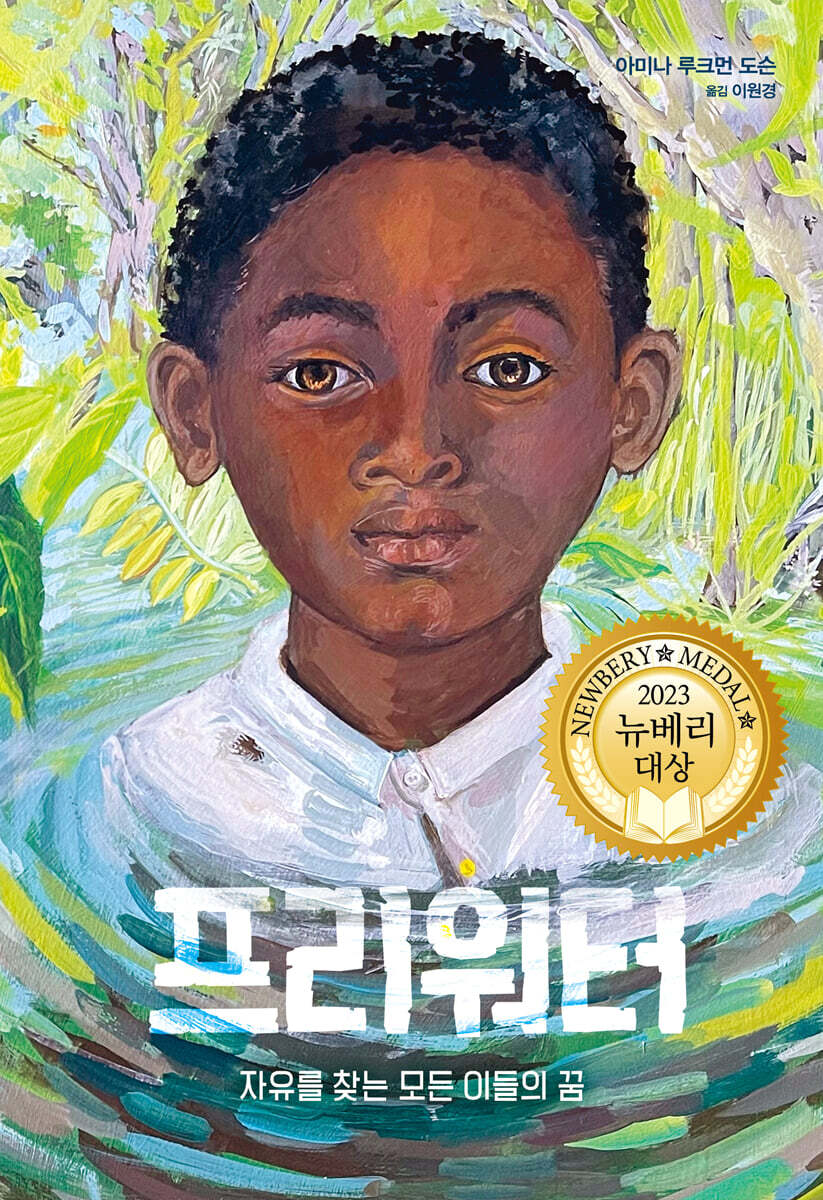
2023 Newbery Medal WinnerHomer, a twelve-year-old boy who escaped from a slave plantation with his younger sister.
After being chased and wandering around like crazy, they arrive at 'Freewater', a community of runaway slaves hidden deep in the swamps... A novel that makes you think about what true freedom is and whether we are truly living as masters of our own lives.
July 18, 2023. Children's PD Park Eun-young
2023 Newbery Medal Winner
A thrilling adventure story filled with true 'freedom'.
A story of courage, family love, and emotion based on true history!
The Newbery Medal, often called the Nobel Prize of children's literature, has selected "Freewater" as the 2023 winner.
The Newbery Medal has been awarded annually since 1922 to honor outstanding children's literature, and is the oldest and most credible children's literature award with a history of over 100 years.
Not only does it possess both literary quality and entertainment, but the themes it contains are also highly resonant, and the award-winning works are greatly loved in Korea whenever they are published.
This time, the award-winning 『Free Water』 is the author's debut work, and although it was not an easy challenge for a new author, it was highly evaluated for its quality and won the grand prize.
Additionally, "Freewater" had the honor of winning both the Newbery Medal and the Coretta Scott King Award.
"Free Water" is a novel based on actual history.
Set in the 18th century, it tells the story of 12-year-old Homer, a former slave who escapes from his plantation and ends up in Freewater, a community of runaway slaves hidden in the marshes.
But even if you don't understand the times, the story is so entertaining that it doesn't matter if you read it.
The story of a teenager struggling to escape and living in a fantasy-like community space(?) is fascinating in many ways, and the universal themes of love, friendship, and familial love resonate within it.
Although it is a considerable book with 488 pages, many people agree that "Free Water" is a book that turns the pages easily and is a quick read.
With well-crafted plots, fast-paced developments, engaging events, and skillful characterization, the author brings the joy of reading to not only children and teenagers but also adults.
In particular, it not only contains various themes such as friendship, courage, teenage growth, and family love, but also naturally makes you feel what true 'freedom' is.
A thrilling adventure story filled with true 'freedom'.
A story of courage, family love, and emotion based on true history!
The Newbery Medal, often called the Nobel Prize of children's literature, has selected "Freewater" as the 2023 winner.
The Newbery Medal has been awarded annually since 1922 to honor outstanding children's literature, and is the oldest and most credible children's literature award with a history of over 100 years.
Not only does it possess both literary quality and entertainment, but the themes it contains are also highly resonant, and the award-winning works are greatly loved in Korea whenever they are published.
This time, the award-winning 『Free Water』 is the author's debut work, and although it was not an easy challenge for a new author, it was highly evaluated for its quality and won the grand prize.
Additionally, "Freewater" had the honor of winning both the Newbery Medal and the Coretta Scott King Award.
"Free Water" is a novel based on actual history.
Set in the 18th century, it tells the story of 12-year-old Homer, a former slave who escapes from his plantation and ends up in Freewater, a community of runaway slaves hidden in the marshes.
But even if you don't understand the times, the story is so entertaining that it doesn't matter if you read it.
The story of a teenager struggling to escape and living in a fantasy-like community space(?) is fascinating in many ways, and the universal themes of love, friendship, and familial love resonate within it.
Although it is a considerable book with 488 pages, many people agree that "Free Water" is a book that turns the pages easily and is a quick read.
With well-crafted plots, fast-paced developments, engaging events, and skillful characterization, the author brings the joy of reading to not only children and teenagers but also adults.
In particular, it not only contains various themes such as friendship, courage, teenage growth, and family love, but also naturally makes you feel what true 'freedom' is.
- You can preview some of the book's contents.
Preview
Detailed image
.jpg)
Into the book
“Ada, you said you dreamed of flying?” I asked.
Even though she was being chased by dogs, Ada nodded with a happy face because I remembered her dream.
“Now, just like that dream, the opportunity has come.
“We’re going to jump off this riverbank,” Ada asked with a thoughtful expression.
“To that river?” I nodded.
The sound of dogs' footsteps kicking the soft ground grew closer.
“But, Oppa, I can’t swim.” Her words were not filled with fear, but with sadness.
"are you okay.
“You can do it.” “But you can’t swim either.” Before I could even consider that, I grabbed Ada’s hand and ran to the riverbank, jumping up and down.
--- p.14~15
“Brother’s legs,” Ada whispered.
I was confused.
“What are you talking about?” “Look at your legs, oppa.” Ada pointed.
I looked down at my legs, entangled in vines, but what I saw were not vines.
It was a snake as thick as two fists put together.
He lifted his head and stared at my thighs, wrapping his shiny, dark brown body around my calves and feet.
I opened my mouth to scream, but the air in my lungs was gone and no sound came out.
Ada screamed instead of me.
--- p.35
“You have to think of yourself as a non-existent being.
It's a being that's there but can't be seen.
I work hard at it.
“That’s why no one sees me normally,” Anna said, narrowing her eyes at Homer.
“Are you doing it now? I can still see you.” “No, not now.” Homer, perhaps hurt, turned his head to look at the river and gestured toward the field.
“Do it there.
I thought it would be nice if you did that when you were with your mistress.
“I thought it might help you.”
--- p.47
“Were there any pursuers?” the wooden woman asked, and Suleman answered.
"huh.
“You even brought dogs.” “More will come, I guess.” David commented on the woman’s words.
“Daria, we have a scout corps too.
“I’ll keep a close eye on you.” Daria looked dubious.
“They won’t give up on the two children who ran away.
Because it gives us hope that we can escape.
“With each escape, the pursuers come in deeper and deeper,” Daria said as Suleman nodded in agreement.
“I have to get out of here.”
--- p.85
“I’m flying!” was Ada’s scream.
Ada, who was tied to Ibra's back, looked around Ibra's shoulders with a bright and happy face, stretched out both arms and flapped them, shouting.
“Fly like a bird!” The moment my feet touched the tip of the bridge, I almost flapped my arms like Ada.
The point where the bridge ended was flat like a landing.
Above it, a man was sitting so naturally that he seemed to be floating in the air.
--- p.99
Oh my goodness.
Billy muttered to himself.
The appearance of this canoe meant that trouble was sure to come.
“Should I get on that boat, boat, boat? Can’t I just walk on it?” “It rained last night, so the water level is high.
"Besides, it'll take all day if we walk! Let's get on!" Sanji pushed the boat into the water, walked straight into the water, and jumped inside.
Billy carefully crossed the boat, his long, trembling legs lifting him.
--- p.120
Anna was sold several times.
The previous owners couldn't pinpoint the problem with this cat-eyed girl.
He did what he was told to do, but he wanted to kick her out because of the unpleasant feeling she gave off.
The more Anna was sold here and there, the more the owners found her strange and uncomfortable.
They had only kept Anna for a year or two, and when they sold her, they couldn't say anything good about her.
Nevertheless, he tried to get rid of her by telling lies about Anna being a good slave who served her master well.
Anna, who had no family to sell with, was always alone and had no connection to anyone or anything in this world.
--- p.135
“The problem is that both of them are still at large, and rumors are spreading through the slave quarters, encouraging escapes.
If two little black kids can run away, there will be more soon.
“Don’t take my words lightly,” Crum said, looking at the three men.
“Look at you guys.
As partners in the wetland business, we have suffered enormous losses due to wetland deserters.
If you send slaves there to work, there will be deserters, and there won't be any manpower to chase them.
Not to mention the niggers running away from the farm.
A runaway means immediate business failure and loss of property.
Now it's time for us to go there and finish them off." "That's right.
“We need to go into the swamp and settle this matter.”
Even though she was being chased by dogs, Ada nodded with a happy face because I remembered her dream.
“Now, just like that dream, the opportunity has come.
“We’re going to jump off this riverbank,” Ada asked with a thoughtful expression.
“To that river?” I nodded.
The sound of dogs' footsteps kicking the soft ground grew closer.
“But, Oppa, I can’t swim.” Her words were not filled with fear, but with sadness.
"are you okay.
“You can do it.” “But you can’t swim either.” Before I could even consider that, I grabbed Ada’s hand and ran to the riverbank, jumping up and down.
--- p.14~15
“Brother’s legs,” Ada whispered.
I was confused.
“What are you talking about?” “Look at your legs, oppa.” Ada pointed.
I looked down at my legs, entangled in vines, but what I saw were not vines.
It was a snake as thick as two fists put together.
He lifted his head and stared at my thighs, wrapping his shiny, dark brown body around my calves and feet.
I opened my mouth to scream, but the air in my lungs was gone and no sound came out.
Ada screamed instead of me.
--- p.35
“You have to think of yourself as a non-existent being.
It's a being that's there but can't be seen.
I work hard at it.
“That’s why no one sees me normally,” Anna said, narrowing her eyes at Homer.
“Are you doing it now? I can still see you.” “No, not now.” Homer, perhaps hurt, turned his head to look at the river and gestured toward the field.
“Do it there.
I thought it would be nice if you did that when you were with your mistress.
“I thought it might help you.”
--- p.47
“Were there any pursuers?” the wooden woman asked, and Suleman answered.
"huh.
“You even brought dogs.” “More will come, I guess.” David commented on the woman’s words.
“Daria, we have a scout corps too.
“I’ll keep a close eye on you.” Daria looked dubious.
“They won’t give up on the two children who ran away.
Because it gives us hope that we can escape.
“With each escape, the pursuers come in deeper and deeper,” Daria said as Suleman nodded in agreement.
“I have to get out of here.”
--- p.85
“I’m flying!” was Ada’s scream.
Ada, who was tied to Ibra's back, looked around Ibra's shoulders with a bright and happy face, stretched out both arms and flapped them, shouting.
“Fly like a bird!” The moment my feet touched the tip of the bridge, I almost flapped my arms like Ada.
The point where the bridge ended was flat like a landing.
Above it, a man was sitting so naturally that he seemed to be floating in the air.
--- p.99
Oh my goodness.
Billy muttered to himself.
The appearance of this canoe meant that trouble was sure to come.
“Should I get on that boat, boat, boat? Can’t I just walk on it?” “It rained last night, so the water level is high.
"Besides, it'll take all day if we walk! Let's get on!" Sanji pushed the boat into the water, walked straight into the water, and jumped inside.
Billy carefully crossed the boat, his long, trembling legs lifting him.
--- p.120
Anna was sold several times.
The previous owners couldn't pinpoint the problem with this cat-eyed girl.
He did what he was told to do, but he wanted to kick her out because of the unpleasant feeling she gave off.
The more Anna was sold here and there, the more the owners found her strange and uncomfortable.
They had only kept Anna for a year or two, and when they sold her, they couldn't say anything good about her.
Nevertheless, he tried to get rid of her by telling lies about Anna being a good slave who served her master well.
Anna, who had no family to sell with, was always alone and had no connection to anyone or anything in this world.
--- p.135
“The problem is that both of them are still at large, and rumors are spreading through the slave quarters, encouraging escapes.
If two little black kids can run away, there will be more soon.
“Don’t take my words lightly,” Crum said, looking at the three men.
“Look at you guys.
As partners in the wetland business, we have suffered enormous losses due to wetland deserters.
If you send slaves there to work, there will be deserters, and there won't be any manpower to chase them.
Not to mention the niggers running away from the farm.
A runaway means immediate business failure and loss of property.
Now it's time for us to go there and finish them off." "That's right.
“We need to go into the swamp and settle this matter.”
--- p.177
Publisher's Review
A major debut that garnered both the Newbery and Coretta Scott King awards.
Winning both the Newbery Medal and the Coretta Scott King Award is a great honor for both the author and the work.
The Coretta Scott King Award, which is awarded to an outstanding work of children's and young adult literature written by African Americans, was established in 1970 and has been awarded for over 50 years, and the Newbery Medal is a literary award called the Nobel Prize of children's books with a history of over 100 years.
Over the years, only two books have won both the Newbery Medal and the Coretta Scott King Award: I'm Not a Birdie, I'm a Bird! (2000) and New Kid (2020).
This time, 『Free Water』 became the third work of glory.
Amina Lukeman Dawson also won the Newbery Medal for her debut novel.
This is a rare occurrence in the 100-year history of the Newbery Medal.
In the 21st century, only one author has won the Grand Prize for his debut novel, Manifest's Blue Moonlight (Claire Vanderpool, 2011).
Despite being a new writer, the reason why 『Free Water』 has received so much attention is undoubtedly because of its outstanding quality.
The numerous characters, each with their own unique personality, are composed so that the work is neither lacking nor overflowing, and the events unfold quickly while the descriptions and background explanations are not missed, allowing for a rich and three-dimensional understanding of the story.
The Newbery Committee said in its review that the author had masterfully handled characters, “The committee, with its 101-year history, has chosen the incredible Freewater.”
The immersive story created by the variation between first-person and third-person perspectives
"Free Water" has an interesting composition.
The title at the beginning of each chapter is the name of the main character of each chapter.
In each chapter, the main characters appear and change, and both the characters and the events are portrayed in a three-dimensional way.
Additionally, since you can read by focusing on the main character of each chapter, it has the advantage of allowing readers to quickly become immersed.
What is most notable about the composition is that Homer and the other characters are written from different perspectives.
If I had to pick one main character from this book, it would be Homer.
This is because Homer is the central character in the larger story of escaping from the farm, coming to Freewater, and then returning to the farm to rescue his mother.
The chapter in which Homer is the main character is narrated from the first-person perspective, unlike the chapters of other main characters.
In the case of Jang, the main character of the remaining characters, it was written from a third-person omniscient author's point of view.
The chapters written in the first-person protagonist's point of view are a device that allows the reader to empathize more deeply with the protagonist, Homer.
The reader is encouraged to think more about freedom by identifying with Homer, who was a slave, became a free man, and then was recaptured and faced the threat of losing his freedom.
Also, Homer calls Crum, the owner of the slave plantation, "Master Crum," but then just calls him "Crum" upon entering Freewater, allowing the reader to feel Homer's changes in small details.
Other chapters written in third-person perspective also provide a unique level of enjoyment.
Each character has their own unique personality and many lovable aspects, so the composition allows for a deeper understanding of each character and a three-dimensional understanding of the various situations surrounding Freewater.
The joy of reading, along with the different emotions felt each time you read.
"Free Water" is a fairly long book, at 488 pages, but once you open the book and start reading, it's a very quick read.
Each chapter is short and the story unfolds quickly, helping you turn the pages quickly.
It often takes a while to get immersed in a story because you don't quite understand it in the beginning.
The longer the description of the time period and background, the more difficult it is to immerse yourself in the book in the beginning.
However, the story of "Freewater" begins with Homer escaping from the farm.
These events are quickly immersive, allowing readers to turn the pages simply by focusing on whether the protagonist will succeed in escaping, even if they initially lack a grasp of the setting or characters.
Afterwards, various events are organized in an easy-to-understand manner, making for an easy-to-read book.
That doesn't mean Freewater is a book that can be read quickly.
Even without considering that it is a novel based on historical facts, this book contains a variety of thematic concerns.
The better the literature, the more diverse the emotions and impressions each reader will receive. However, 『Free Water』 focuses on different points for each reader, and each time they read it, they are moved by something new.
For example, Homer, Billy, and Ferdinand in this book were slaves who became free men in Freewater.
However, Sanjina Juna was born in Freewater and lived as a free person from the beginning.
Their thoughts and actions are different, and comparing these aspects makes us think about freedom.
We also get to see how Billy's stuttering and timid behavior changes, and how Ferdinand's teasing of Sanji changes, which makes us pay attention to their stories.
The differences in perspective between Anna, a slave who constantly seeks to escape, and Nora, who was born as the daughter of a master and never thought about the issue of slavery, as well as the hero Suleman and the slave overseer Stokes, allow us to understand the situation at the time in a three-dimensional way.
While reading "Freewater," filled with diverse characters and events, some will focus on the thrilling adventure, others will feel the catharsis of friendship and cooperation, others will warmly contemplate the happiness of love and family, still others will be moved by the courage and heroism of the characters, and still others will be intrigued by the history of that time.
Freedom, living as the master of one's life
There are many themes in "Free Water" such as friendship, courage, love, growth, and family love, but the most notable theme is undoubtedly "freedom."
This book does not explicitly define what freedom is.
However, throughout the story, the readers can also feel and think about freedom through what the characters say, do, and feel.
The following scene describes Homer's first experience working in the cornfield when he arrived in Freewater.
There was no one here to give us orders, to whip us, to scare us.
It was the wetlands that directed us.
It meant that if it rains and the ground gets wet, go home.
It meant to get to work when the soil was dry and the fog cleared.
And Juna also says this to Homer about working:
“You are learning the job of a free water operator.
“I still sweat as before, but they say the sweat smells more fragrant.”
It is said that working as a slave or working as a free man may be the same in that you have to work to make a living, but they are different.
The reader naturally feels that this difference is 'freedom'.
When Homer was a slave, he talked about how important it was to live inconspicuously, to be invisible to others, and he lived that way.
But when he comes to Freewater, Homer changes.
Break the rules you used to follow.
Raising voices or taking the lead in ordering others to do things was something Homer did not do when he was a slave.
The scene where Homer returns to the Sutherland farm to rescue his mother also shows how his body feels free.
I pulled my straw hat down so that it covered my ears.
And gave orders to my body.
Walk.
Walk as usual before going to Freewater.
Walk around like you're working here, unnoticed.
That's what I did.
But this time my back hurt and my neck was sore.
It was so weird.
I felt like my body was suffering from the loss of my talent that was not noticeable to others.
In this way, the book compares people who live as slaves with people who have found freedom, and through this, it naturally makes us feel what freedom is.
What freedom does this book speak of? Each reader may define it differently, but it certainly seems to convey something like this.
Freedom is living as the master of your own life, not as the master of others.
The author says that being the master of one's own life, working, acting, and loving, isn't that freedom?
“Freewater” is a powerful and emotionally thrilling story of resistance.
Not only does the author masterfully handle his characters, but he also creates a remarkable story about a real-life community of runaway slaves, with a vivid and vivid setting.
The committee, with its 101-year history, selected the incredibly impressive “Freewater” as its target.
- Newbery Medal Judges' Comments
A debut novel with an explosive and cathartic ending - Honbuk
As you turn the pages, the story will captivate the reader and lead to a satisfying conclusion.
The characters are diverse, three-dimensional, and well-structured.
- Kirkus Review
The author skillfully creates memorable characters and delivers an exciting and heartwarming ending.
- Booklist
This vividly written novel about slavery and resistance at the time will inspire courage and overcome fear.
- Publisher's Weekly
Short chapters and expert rhythm capture the reader's attention, and the characters' charm draws them in immediately.
- Book page
Winning both the Newbery Medal and the Coretta Scott King Award is a great honor for both the author and the work.
The Coretta Scott King Award, which is awarded to an outstanding work of children's and young adult literature written by African Americans, was established in 1970 and has been awarded for over 50 years, and the Newbery Medal is a literary award called the Nobel Prize of children's books with a history of over 100 years.
Over the years, only two books have won both the Newbery Medal and the Coretta Scott King Award: I'm Not a Birdie, I'm a Bird! (2000) and New Kid (2020).
This time, 『Free Water』 became the third work of glory.
Amina Lukeman Dawson also won the Newbery Medal for her debut novel.
This is a rare occurrence in the 100-year history of the Newbery Medal.
In the 21st century, only one author has won the Grand Prize for his debut novel, Manifest's Blue Moonlight (Claire Vanderpool, 2011).
Despite being a new writer, the reason why 『Free Water』 has received so much attention is undoubtedly because of its outstanding quality.
The numerous characters, each with their own unique personality, are composed so that the work is neither lacking nor overflowing, and the events unfold quickly while the descriptions and background explanations are not missed, allowing for a rich and three-dimensional understanding of the story.
The Newbery Committee said in its review that the author had masterfully handled characters, “The committee, with its 101-year history, has chosen the incredible Freewater.”
The immersive story created by the variation between first-person and third-person perspectives
"Free Water" has an interesting composition.
The title at the beginning of each chapter is the name of the main character of each chapter.
In each chapter, the main characters appear and change, and both the characters and the events are portrayed in a three-dimensional way.
Additionally, since you can read by focusing on the main character of each chapter, it has the advantage of allowing readers to quickly become immersed.
What is most notable about the composition is that Homer and the other characters are written from different perspectives.
If I had to pick one main character from this book, it would be Homer.
This is because Homer is the central character in the larger story of escaping from the farm, coming to Freewater, and then returning to the farm to rescue his mother.
The chapter in which Homer is the main character is narrated from the first-person perspective, unlike the chapters of other main characters.
In the case of Jang, the main character of the remaining characters, it was written from a third-person omniscient author's point of view.
The chapters written in the first-person protagonist's point of view are a device that allows the reader to empathize more deeply with the protagonist, Homer.
The reader is encouraged to think more about freedom by identifying with Homer, who was a slave, became a free man, and then was recaptured and faced the threat of losing his freedom.
Also, Homer calls Crum, the owner of the slave plantation, "Master Crum," but then just calls him "Crum" upon entering Freewater, allowing the reader to feel Homer's changes in small details.
Other chapters written in third-person perspective also provide a unique level of enjoyment.
Each character has their own unique personality and many lovable aspects, so the composition allows for a deeper understanding of each character and a three-dimensional understanding of the various situations surrounding Freewater.
The joy of reading, along with the different emotions felt each time you read.
"Free Water" is a fairly long book, at 488 pages, but once you open the book and start reading, it's a very quick read.
Each chapter is short and the story unfolds quickly, helping you turn the pages quickly.
It often takes a while to get immersed in a story because you don't quite understand it in the beginning.
The longer the description of the time period and background, the more difficult it is to immerse yourself in the book in the beginning.
However, the story of "Freewater" begins with Homer escaping from the farm.
These events are quickly immersive, allowing readers to turn the pages simply by focusing on whether the protagonist will succeed in escaping, even if they initially lack a grasp of the setting or characters.
Afterwards, various events are organized in an easy-to-understand manner, making for an easy-to-read book.
That doesn't mean Freewater is a book that can be read quickly.
Even without considering that it is a novel based on historical facts, this book contains a variety of thematic concerns.
The better the literature, the more diverse the emotions and impressions each reader will receive. However, 『Free Water』 focuses on different points for each reader, and each time they read it, they are moved by something new.
For example, Homer, Billy, and Ferdinand in this book were slaves who became free men in Freewater.
However, Sanjina Juna was born in Freewater and lived as a free person from the beginning.
Their thoughts and actions are different, and comparing these aspects makes us think about freedom.
We also get to see how Billy's stuttering and timid behavior changes, and how Ferdinand's teasing of Sanji changes, which makes us pay attention to their stories.
The differences in perspective between Anna, a slave who constantly seeks to escape, and Nora, who was born as the daughter of a master and never thought about the issue of slavery, as well as the hero Suleman and the slave overseer Stokes, allow us to understand the situation at the time in a three-dimensional way.
While reading "Freewater," filled with diverse characters and events, some will focus on the thrilling adventure, others will feel the catharsis of friendship and cooperation, others will warmly contemplate the happiness of love and family, still others will be moved by the courage and heroism of the characters, and still others will be intrigued by the history of that time.
Freedom, living as the master of one's life
There are many themes in "Free Water" such as friendship, courage, love, growth, and family love, but the most notable theme is undoubtedly "freedom."
This book does not explicitly define what freedom is.
However, throughout the story, the readers can also feel and think about freedom through what the characters say, do, and feel.
The following scene describes Homer's first experience working in the cornfield when he arrived in Freewater.
There was no one here to give us orders, to whip us, to scare us.
It was the wetlands that directed us.
It meant that if it rains and the ground gets wet, go home.
It meant to get to work when the soil was dry and the fog cleared.
And Juna also says this to Homer about working:
“You are learning the job of a free water operator.
“I still sweat as before, but they say the sweat smells more fragrant.”
It is said that working as a slave or working as a free man may be the same in that you have to work to make a living, but they are different.
The reader naturally feels that this difference is 'freedom'.
When Homer was a slave, he talked about how important it was to live inconspicuously, to be invisible to others, and he lived that way.
But when he comes to Freewater, Homer changes.
Break the rules you used to follow.
Raising voices or taking the lead in ordering others to do things was something Homer did not do when he was a slave.
The scene where Homer returns to the Sutherland farm to rescue his mother also shows how his body feels free.
I pulled my straw hat down so that it covered my ears.
And gave orders to my body.
Walk.
Walk as usual before going to Freewater.
Walk around like you're working here, unnoticed.
That's what I did.
But this time my back hurt and my neck was sore.
It was so weird.
I felt like my body was suffering from the loss of my talent that was not noticeable to others.
In this way, the book compares people who live as slaves with people who have found freedom, and through this, it naturally makes us feel what freedom is.
What freedom does this book speak of? Each reader may define it differently, but it certainly seems to convey something like this.
Freedom is living as the master of your own life, not as the master of others.
The author says that being the master of one's own life, working, acting, and loving, isn't that freedom?
“Freewater” is a powerful and emotionally thrilling story of resistance.
Not only does the author masterfully handle his characters, but he also creates a remarkable story about a real-life community of runaway slaves, with a vivid and vivid setting.
The committee, with its 101-year history, selected the incredibly impressive “Freewater” as its target.
- Newbery Medal Judges' Comments
A debut novel with an explosive and cathartic ending - Honbuk
As you turn the pages, the story will captivate the reader and lead to a satisfying conclusion.
The characters are diverse, three-dimensional, and well-structured.
- Kirkus Review
The author skillfully creates memorable characters and delivers an exciting and heartwarming ending.
- Booklist
This vividly written novel about slavery and resistance at the time will inspire courage and overcome fear.
- Publisher's Weekly
Short chapters and expert rhythm capture the reader's attention, and the characters' charm draws them in immediately.
- Book page
GOODS SPECIFICS
- Date of issue: July 7, 2023
- Format: Hardcover book binding method guide
- Page count, weight, size: 488 pages | 568g | 141*202*32mm
- ISBN13: 9788965466642
- ISBN10: 8965466644
- KC Certification: Certification Type: Conformity Confirmation
You may also like
카테고리
korean


korean

![GQ KOREA Mark (Monthly): December [2025]](http://librairie.coreenne.fr/cdn/shop/files/8ef265dbbfbf186523ed75ba7319009d.jpg?v=1765340328&width=3840)


