

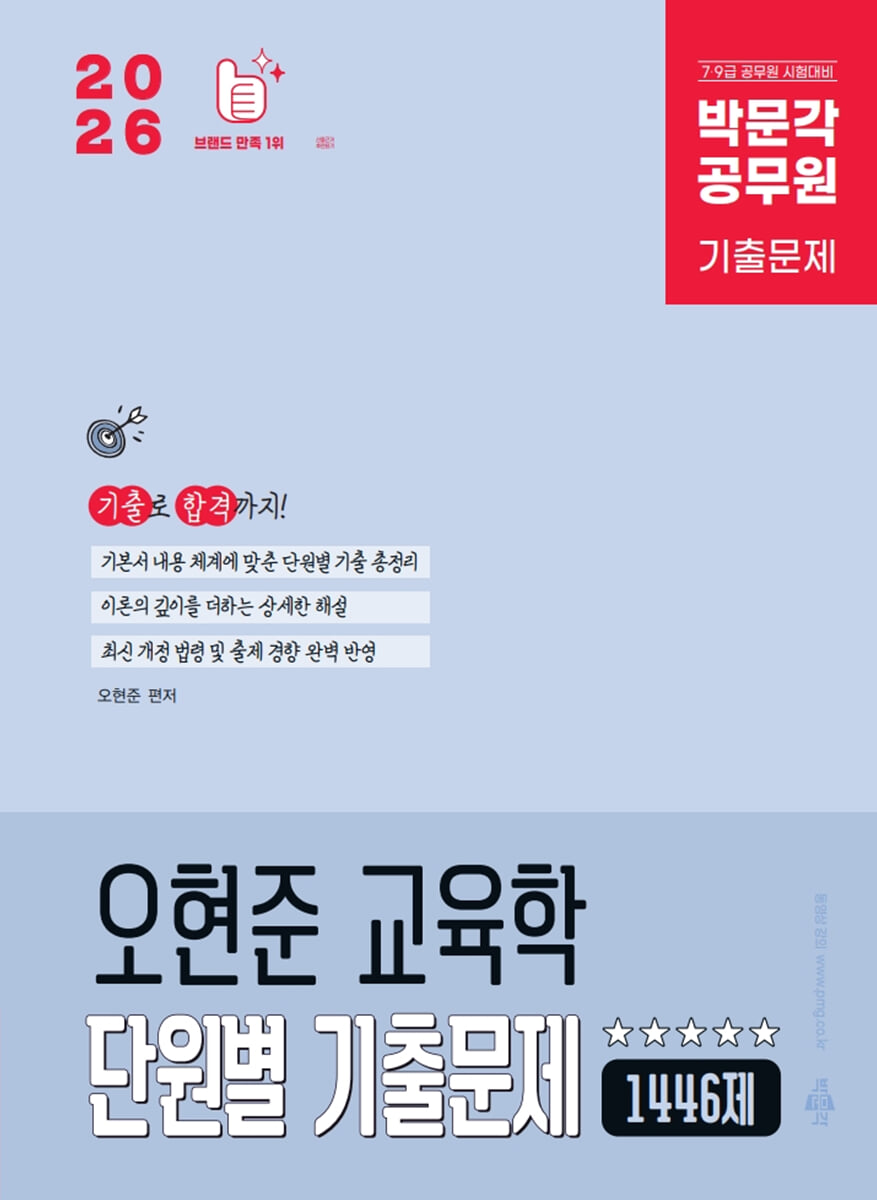
2026 Park Moon-gak Civil Servant Oh Hyeon-jun Education Unit-by-Unit Past Exam Questions 1,446
 |
Description
Book Introduction
"2026 Park Moon-gak Civil Servant Oh Hyeon-jun Education Unit-by-Unit 1446 Past Exam Questions" is a collection of past exam questions for test takers preparing for civil service exams related to education, such as the 7th and 9th grade educational administration and educational specialist exams, teacher appointment exams, and 5th grade educational administrative officer promotions. It is organized as follows.
1.
The test trends for each exam have been organized by unit in accordance with the content structure of the basic textbook, 『2026 Oh Hyun-jun's Orthodox Education』.
Students who have already studied the basic textbook will be able to refine the key concepts and theories of education through problems.
2.
We have provided as detailed annotations as possible to ensure that students can understand and internalize the content knowledge of education through the solutions to past exam questions.
3.
By organizing and presenting 'key check notes' at the beginning of each chapter, you can understand the key concepts (key words) of the unit in advance.
4.
Frequently asked questions are presented with related theories as [Tips] so that you can thoroughly study the main contents that appear on the exam.
5.
We have significantly supplemented the existing commentary with detailed and rich commentary reflecting the latest revised laws.
1.
The test trends for each exam have been organized by unit in accordance with the content structure of the basic textbook, 『2026 Oh Hyun-jun's Orthodox Education』.
Students who have already studied the basic textbook will be able to refine the key concepts and theories of education through problems.
2.
We have provided as detailed annotations as possible to ensure that students can understand and internalize the content knowledge of education through the solutions to past exam questions.
3.
By organizing and presenting 'key check notes' at the beginning of each chapter, you can understand the key concepts (key words) of the unit in advance.
4.
Frequently asked questions are presented with related theories as [Tips] so that you can thoroughly study the main contents that appear on the exam.
5.
We have significantly supplemented the existing commentary with detailed and rich commentary reflecting the latest revised laws.
- You can preview some of the book's contents.
Preview
index
Chapter 01 Understanding Education
Section 1: Concept of Education
Section 2 Purpose of Education
Section 3 Types (Forms) of Education
Section 4 Education System
Section 5: Theory of Teachers
Chapter 02 Korean Educational History
Section 1: Overview of Korean Educational History
Section 2 Education before the Joseon Dynasty (Three Kingdoms Period - Goryeo Dynasty)
Section 3 Education in the Joseon Dynasty I (Early Period; Neo-Confucian Education)
Section 4 Education in the Joseon Dynasty II (Late Period; Silhak Education)
Section 5: Modern Education (Enlightenment Period - 1905)
Section 6 Education under Japanese rule (1905–1945)
Section 7 Modern Education (After Liberation)
Chapter 03 History of Western Education
Section 1: Overview of Western Education History
Section 2: Ancient Education
Section 3: Education in the Middle Ages
Section 4: Modern Education I (Humanistic Education in the Renaissance Period of the 14th to 16th Centuries)
Section 5 Modern Education II (17th Century Silhak Education)
Section 6: Modern Education III (18th Century Enlightenment Education)
Section 7: Modern Education IV (Education in the 19th Century Romantic Era)
Chapter 04 Educational Philosophy
Section 1: Overview of Educational Philosophy
Section 2 Knowledge and Education
Section 3: Traditional Philosophy and Education
Section 4: Modern Educational Philosophy (First Half of the 20th Century)
Section 5: Modern Educational Philosophy (Late 20th Century)
Chapter 05 Curriculum
Section 1: Foundations of the Curriculum
Section 2 Curriculum Development Model
Section 3 Theoretical Approaches to Curriculum Research
Section 4 Curriculum Development Procedures
Section 5 Types of Curriculum I: Types of Formal School Curriculum
Section 6 Types of Curriculum II: Types of Curriculum Criticizing School Curriculum
Section 7 Our country's curriculum
Chapter 06 Educational Psychology
Section 1 Developmental Theory I: Overview of Development
Section 2 Developmental Theory II: Cognitive Development Theory
Section 3 Developmental Theory III: Personality Development Theory
Section 4 Developmental Theory IV: Moral Development Theory
Section 5 Individual Differences in Development I: Cognitive Characteristics and Education
Section 6: Individual Differences in Development II: Affective Characteristics and Education
Section 7 Learning Theory I: Behaviorist Learning Theory
Section 8 Learning Theory II: Cognitive Learning Theory
Section 9 Learning Theory III: Social Cognitive Learning Theory
Section 10: Individual Differences in Learning I: Cognitive Characteristics and Learning
Section 11 Individual Differences in Learning II: Affective Characteristics and Learning
Chapter 07 Teaching - Learning Theory
Section 1: Foundations of Teaching and Learning Theory
Section 2 Lesson Design
Section 3 Instructional Design Model
Section 4: Teaching and Learning Methods
Section 5: Teaching Theory
Chapter 08 Educational Technology
Section 1: Fundamentals of Educational Technology
Section 2 Theory of Educational Technology
Section 3 Teaching (Class) Media
Section 4 Computer-based education
Section 5 New Media and Distance Education
Chapter 09 Life Guidance and Counseling
Section 1: The Foundation of Life Guidance
Section 2 Counseling Activities
Section 3 Counseling Theory I: Overview of Counseling Theory
Section 4 Counseling Theory II: Cognitive Counseling Theory
Section 5 Counseling Theory III: Affective Counseling Theory
Section 6 Counseling Theory IV: Behavioral Counseling Theory
Section 7 Counseling Theory V: Solution-Focused Counseling Theory
Section 8: The Practice of Life Guidance
Chapter 10 Educational Evaluation
Section 1 Model of Educational Evaluation
Section 2 Types (Forms) of Educational Evaluation
Section 3 Procedures for educational evaluation
Section 4 Evaluation Tools
Section 5: Preparation of test questions
Statistical Analysis of Section 6 Questions
Chapter 11 Educational Statistics
Section 1: Fundamentals of Educational Statistics [Measurement Values (Scale)]
Section 2. Concentration Tendency Index (Representative Value)
Section 3: Byeonsando
Section 4 Correlation
Section 5 Raw scores and standard scores
Chapter 12 Educational Research
Section 1: Foundations of Educational Research
Section 2 Sampling Method
Section 3 Data Collection Methods (Research Tools)
Section 4 Methods of educational research
Section 5: Verification of Hypotheses
Chapter 13 Educational Administration
Section 1: Foundations of Educational Administration
Section 2 Educational Administration Theory
Section 3 Educational Administration Organization
Section 4 Education Planning
Section 5 Education Policy
Section 6 Scholarships
Section 7 Educational System and School Management, Class Management
Section 8: Educational Finance
Section 9: Educational Personnel Administration Theory and School Practice
Chapter 14 Sociology of Education
Section 1: Foundations of Educational Sociology
Section 2 Theories of Educational Sociology I: Early Educational Sociology
Section 3 Theory of Educational Sociology II: New Sociology of Education
Section 4 Society and Education
Section 5 Culture and Education
Section 6: Equal Opportunity in Education: The Development of a View of Equality in Education
Section 7: Theory of the Occurrence of the Educational Gap (Difference in Academic Achievement)
Section 8: Theory of Academic Achievement Increase: Theory of School Education Expansion
Section 1: Concept of Education
Section 2 Purpose of Education
Section 3 Types (Forms) of Education
Section 4 Education System
Section 5: Theory of Teachers
Chapter 02 Korean Educational History
Section 1: Overview of Korean Educational History
Section 2 Education before the Joseon Dynasty (Three Kingdoms Period - Goryeo Dynasty)
Section 3 Education in the Joseon Dynasty I (Early Period; Neo-Confucian Education)
Section 4 Education in the Joseon Dynasty II (Late Period; Silhak Education)
Section 5: Modern Education (Enlightenment Period - 1905)
Section 6 Education under Japanese rule (1905–1945)
Section 7 Modern Education (After Liberation)
Chapter 03 History of Western Education
Section 1: Overview of Western Education History
Section 2: Ancient Education
Section 3: Education in the Middle Ages
Section 4: Modern Education I (Humanistic Education in the Renaissance Period of the 14th to 16th Centuries)
Section 5 Modern Education II (17th Century Silhak Education)
Section 6: Modern Education III (18th Century Enlightenment Education)
Section 7: Modern Education IV (Education in the 19th Century Romantic Era)
Chapter 04 Educational Philosophy
Section 1: Overview of Educational Philosophy
Section 2 Knowledge and Education
Section 3: Traditional Philosophy and Education
Section 4: Modern Educational Philosophy (First Half of the 20th Century)
Section 5: Modern Educational Philosophy (Late 20th Century)
Chapter 05 Curriculum
Section 1: Foundations of the Curriculum
Section 2 Curriculum Development Model
Section 3 Theoretical Approaches to Curriculum Research
Section 4 Curriculum Development Procedures
Section 5 Types of Curriculum I: Types of Formal School Curriculum
Section 6 Types of Curriculum II: Types of Curriculum Criticizing School Curriculum
Section 7 Our country's curriculum
Chapter 06 Educational Psychology
Section 1 Developmental Theory I: Overview of Development
Section 2 Developmental Theory II: Cognitive Development Theory
Section 3 Developmental Theory III: Personality Development Theory
Section 4 Developmental Theory IV: Moral Development Theory
Section 5 Individual Differences in Development I: Cognitive Characteristics and Education
Section 6: Individual Differences in Development II: Affective Characteristics and Education
Section 7 Learning Theory I: Behaviorist Learning Theory
Section 8 Learning Theory II: Cognitive Learning Theory
Section 9 Learning Theory III: Social Cognitive Learning Theory
Section 10: Individual Differences in Learning I: Cognitive Characteristics and Learning
Section 11 Individual Differences in Learning II: Affective Characteristics and Learning
Chapter 07 Teaching - Learning Theory
Section 1: Foundations of Teaching and Learning Theory
Section 2 Lesson Design
Section 3 Instructional Design Model
Section 4: Teaching and Learning Methods
Section 5: Teaching Theory
Chapter 08 Educational Technology
Section 1: Fundamentals of Educational Technology
Section 2 Theory of Educational Technology
Section 3 Teaching (Class) Media
Section 4 Computer-based education
Section 5 New Media and Distance Education
Chapter 09 Life Guidance and Counseling
Section 1: The Foundation of Life Guidance
Section 2 Counseling Activities
Section 3 Counseling Theory I: Overview of Counseling Theory
Section 4 Counseling Theory II: Cognitive Counseling Theory
Section 5 Counseling Theory III: Affective Counseling Theory
Section 6 Counseling Theory IV: Behavioral Counseling Theory
Section 7 Counseling Theory V: Solution-Focused Counseling Theory
Section 8: The Practice of Life Guidance
Chapter 10 Educational Evaluation
Section 1 Model of Educational Evaluation
Section 2 Types (Forms) of Educational Evaluation
Section 3 Procedures for educational evaluation
Section 4 Evaluation Tools
Section 5: Preparation of test questions
Statistical Analysis of Section 6 Questions
Chapter 11 Educational Statistics
Section 1: Fundamentals of Educational Statistics [Measurement Values (Scale)]
Section 2. Concentration Tendency Index (Representative Value)
Section 3: Byeonsando
Section 4 Correlation
Section 5 Raw scores and standard scores
Chapter 12 Educational Research
Section 1: Foundations of Educational Research
Section 2 Sampling Method
Section 3 Data Collection Methods (Research Tools)
Section 4 Methods of educational research
Section 5: Verification of Hypotheses
Chapter 13 Educational Administration
Section 1: Foundations of Educational Administration
Section 2 Educational Administration Theory
Section 3 Educational Administration Organization
Section 4 Education Planning
Section 5 Education Policy
Section 6 Scholarships
Section 7 Educational System and School Management, Class Management
Section 8: Educational Finance
Section 9: Educational Personnel Administration Theory and School Practice
Chapter 14 Sociology of Education
Section 1: Foundations of Educational Sociology
Section 2 Theories of Educational Sociology I: Early Educational Sociology
Section 3 Theory of Educational Sociology II: New Sociology of Education
Section 4 Society and Education
Section 5 Culture and Education
Section 6: Equal Opportunity in Education: The Development of a View of Equality in Education
Section 7: Theory of the Occurrence of the Educational Gap (Difference in Academic Achievement)
Section 8: Theory of Academic Achievement Increase: Theory of School Education Expansion
Publisher's Review
"2026 Park Moon-gak Civil Servant Oh Hyeon-jun Education Unit-by-Unit 1446 Past Exam Questions" is a collection of past exam questions for test takers preparing for civil service exams related to education, such as grades 7.9 educational administration, educational specialist, teacher appointment, and promotion to grade 5 educational administrative officer.
It covers all civil service exams, and has been compiled by carefully selecting only the most essential questions for studying education from among recent and past exam questions, and adding new trends in past exam questions.
In addition, the content was organized by unit in accordance with the basic textbook's content structure, allowing for the major concepts and theories of education to be newly elaborated through problems.
In addition, the existing commentary has been significantly supplemented with detailed and rich commentary reflecting the latest revised laws.
I hope that through this book, you will be able to grasp the test format and the flow of the latest educational questions, and enjoy the joy of passing the exam.
It covers all civil service exams, and has been compiled by carefully selecting only the most essential questions for studying education from among recent and past exam questions, and adding new trends in past exam questions.
In addition, the content was organized by unit in accordance with the basic textbook's content structure, allowing for the major concepts and theories of education to be newly elaborated through problems.
In addition, the existing commentary has been significantly supplemented with detailed and rich commentary reflecting the latest revised laws.
I hope that through this book, you will be able to grasp the test format and the flow of the latest educational questions, and enjoy the joy of passing the exam.
GOODS SPECIFICS
- Date of issue: November 10, 2025
- Page count, weight, size: 800 pages | 190*260*40mm
- ISBN13: 9791175193147
- ISBN10: 1175193143
You may also like
카테고리
korean


korean

![ELLE 엘르 스페셜 에디션 A형 : 12월 [2025]](http://librairie.coreenne.fr/cdn/shop/files/b8e27a3de6c9538896439686c6b0e8fb.jpg?v=1766436872&width=3840)


