

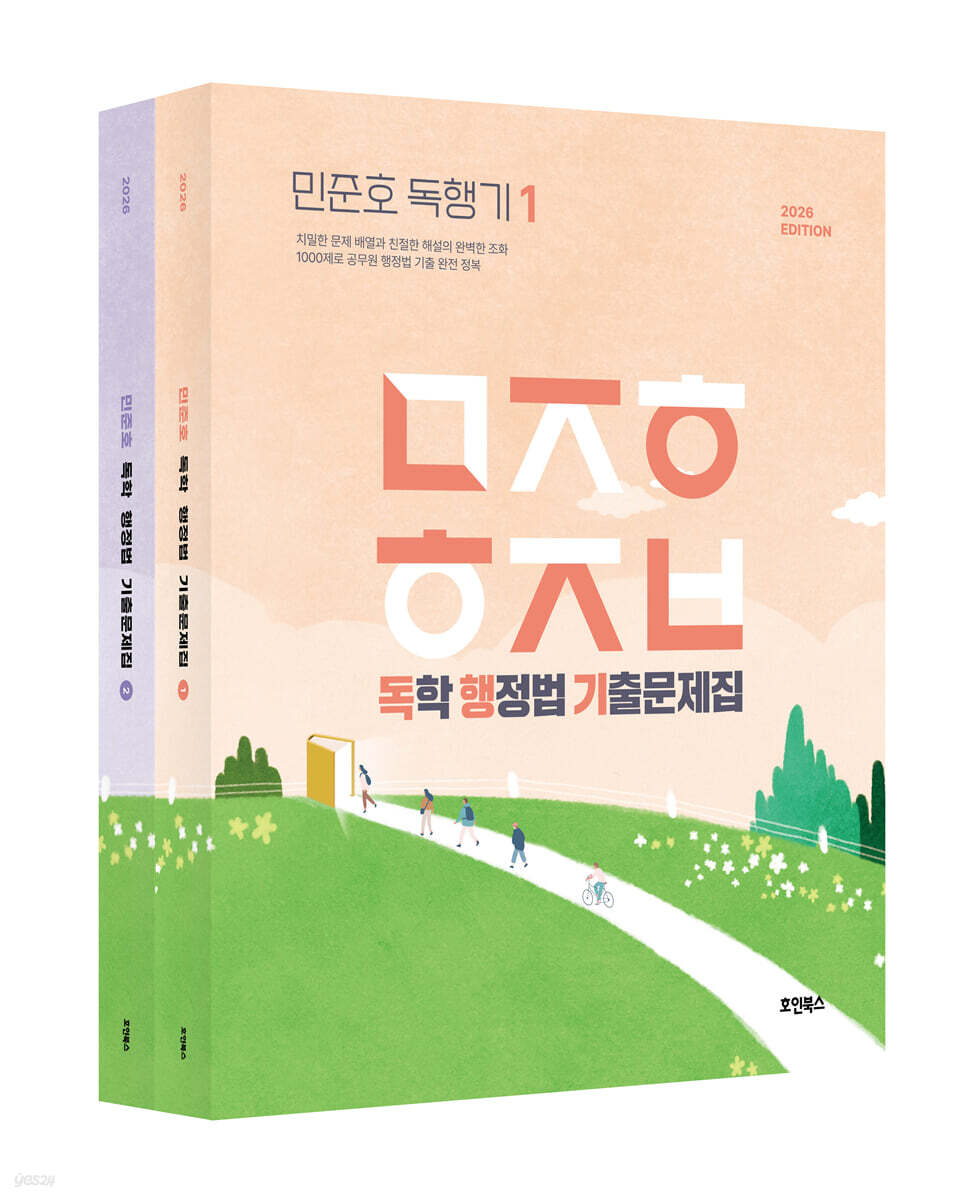
2026 Min Jun-ho's Self-Study Administrative Law Exam Questions
 |
Description
Book Introduction
"2026 Min Jun-ho Self-Study Administrative Law Past Exam Questions" is a collection of past exam questions organized by progress, condensing the theories centered on key issues by analyzing the types and trends of questions from the 9th and 7th level national/local government, National Assembly, fire department, military, and bar exams administered from 2013 to 2025, and selecting 1,000 essential past exam questions and meticulously and systematically arranging them.
Additionally, by including a large number of [Additional True or False Questions], you can fill in important content that may be omitted from the previous exam options, and by accessing detailed and rich explanations, you can see the effect of going through the lectures at a faster pace.
Additionally, by including a large number of [Additional True or False Questions], you can fill in important content that may be omitted from the previous exam options, and by accessing detailed and rich explanations, you can see the effect of going through the lectures at a faster pace.
- You can preview some of the book's contents.
Preview
index
[Volume 1]
Part 01 Introduction to Administrative Law
01 Basic Understanding of Administrative Law
02 Principle of rule of law in administration (principle of legal conformity of administration)
03 Acts of Governance
04 General Principles of Law
05 Source of Administrative Law
06 Effect of Administrative Law
07 Administrative Legal Relationships
08 Parties to administrative law relationships (administrative subjects and administrative objects)
09 Personal public rights and duties, right to claim the exercise of discretion without fault, right to claim administrative intervention
10 Special Power Relationships
11 Administrative Law Cases
12. Administrative management and unjust enrichment under public law
13. Legal acts of the sign
Part 02 Administrative Actions and Procedures
01 Administrative action form
02 Administrative Legislation
03 Administrative Act
04 Bound and Discretionary Acts
05 Uncertainty and room for judgment
06 Permit
07 Patent
08 approval
09 Succession of Sanction Effects and Reasons
10 Quasi-legal administrative acts
11. Personnel and Permit System
12. Administrative Acts
13 Requirements for the establishment and effectiveness of administrative acts
14. Effect of administrative actions
15 Fairness and Prerequisites
16 Defects in administrative actions
17. Cancellation and withdrawal of administrative actions
18. Effectiveness of administrative actions
19 Step-by-step administrative decisions
20. Automatic decision of administration
21 Administrative Plan
22 Contracts under public law
23 Administrative Facts
24 Administrative Map
25 Administrative Procedure Act
26 Defects in administrative procedures
Part 03 Means of Ensuring Administrative Effectiveness
01 Administrative enforcement
02 Immediate administrative enforcement
03 Administrative penalties
04 Other means of ensuring the effectiveness of administration
[Volume 2]
Part 04 Administrative Litigation Act
01 Opening an administrative lawsuit
02 Cancellation lawsuit
03 Invalidity Confirmation Suit
04 Lawsuit for Confirmation of Illegal Inaction
05 Litigation between parties
06 People's Lawsuit and Institutional Lawsuit
Part 05 Administrative Appeals Act
01 Administrative Appeal
02 Administrative Appeal vs. Administrative Litigation
Part 06 Administrative Damages
01 Establishment of administrative damages
02 Compensation for damages caused by illegal official acts
03 Compensation for damages due to defects in the installation or management of the structure
Part 07 Compensation for Administrative Losses
01 Establishment of administrative loss compensation
02 Act on Acquisition and Compensation of Land, etc. for Public Projects
Part 08: Disclosure of Administrative Information? Personal Information Protection? Administrative Investigation
01 Act on Disclosure of Information by Public Institutions
02 Personal Information Protection Act
03 Administrative Investigation
Part 01 Introduction to Administrative Law
01 Basic Understanding of Administrative Law
02 Principle of rule of law in administration (principle of legal conformity of administration)
03 Acts of Governance
04 General Principles of Law
05 Source of Administrative Law
06 Effect of Administrative Law
07 Administrative Legal Relationships
08 Parties to administrative law relationships (administrative subjects and administrative objects)
09 Personal public rights and duties, right to claim the exercise of discretion without fault, right to claim administrative intervention
10 Special Power Relationships
11 Administrative Law Cases
12. Administrative management and unjust enrichment under public law
13. Legal acts of the sign
Part 02 Administrative Actions and Procedures
01 Administrative action form
02 Administrative Legislation
03 Administrative Act
04 Bound and Discretionary Acts
05 Uncertainty and room for judgment
06 Permit
07 Patent
08 approval
09 Succession of Sanction Effects and Reasons
10 Quasi-legal administrative acts
11. Personnel and Permit System
12. Administrative Acts
13 Requirements for the establishment and effectiveness of administrative acts
14. Effect of administrative actions
15 Fairness and Prerequisites
16 Defects in administrative actions
17. Cancellation and withdrawal of administrative actions
18. Effectiveness of administrative actions
19 Step-by-step administrative decisions
20. Automatic decision of administration
21 Administrative Plan
22 Contracts under public law
23 Administrative Facts
24 Administrative Map
25 Administrative Procedure Act
26 Defects in administrative procedures
Part 03 Means of Ensuring Administrative Effectiveness
01 Administrative enforcement
02 Immediate administrative enforcement
03 Administrative penalties
04 Other means of ensuring the effectiveness of administration
[Volume 2]
Part 04 Administrative Litigation Act
01 Opening an administrative lawsuit
02 Cancellation lawsuit
03 Invalidity Confirmation Suit
04 Lawsuit for Confirmation of Illegal Inaction
05 Litigation between parties
06 People's Lawsuit and Institutional Lawsuit
Part 05 Administrative Appeals Act
01 Administrative Appeal
02 Administrative Appeal vs. Administrative Litigation
Part 06 Administrative Damages
01 Establishment of administrative damages
02 Compensation for damages caused by illegal official acts
03 Compensation for damages due to defects in the installation or management of the structure
Part 07 Compensation for Administrative Losses
01 Establishment of administrative loss compensation
02 Act on Acquisition and Compensation of Land, etc. for Public Projects
Part 08: Disclosure of Administrative Information? Personal Information Protection? Administrative Investigation
01 Act on Disclosure of Information by Public Institutions
02 Personal Information Protection Act
03 Administrative Investigation
Publisher's Review
A condensed summary of key issues that don't require a textbook.
"2026 Min Jun-ho's Self-Study Administrative Law Past Exam Questions Collection" analyzes the question types and trends of past exam questions from the national civil service, local civil service, National Assembly, fire service, military service, and bar exams administered from 2013 to 2025, selects key issues likely to appear on the exam, and then condenses and compiles them into a single, comprehensive list.
Although the content is compressed, it contains all the information necessary for problem solving, so you can quickly refresh your concepts and organize the main content on the test in a short period of time through [Key Theory Summary].
Includes 1,000 essential past exam questions, meticulously organized and planned.
It is no exaggeration to say that the quality of a past exam question book is determined not by the explanations but by the arrangement of the questions.
If you organize the problems well, it will be of great help to the students' studies.
"2026 Min Jun-ho Self-Study Administrative Law Past Exam Questions" covers every single question and avoids unnecessary repetition, selecting 1,000 essential past exam questions and organizing them in a meticulous and systematic manner.
Additionally, by providing detailed explanations for each question along with [source of question/difficulty level/area of question], we have structured the problem so that you can analyze it from a more objective perspective.
Additional OX questions to prevent duplication and omission
Among the past exam questions, those with similar choices were broken down into multiple choice questions and only the necessary passages were converted into true or false questions to prevent increased study time and unnecessary waste of space due to duplicate content.
This will also serve to fill in any gaps in existing exam questions.
Explanations that make the theory easy to understand even when studying alone
Beyond simply being able to judge the right time of the prophet, the basic content is thoroughly explained so that reading the commentary can lead to organizing the theory, and it is explained in an easy-to-understand way so that even studying on your own does not pose a problem.
Reduced study time with a three-step question classification system
The "2026 Min Jun-ho Self-Study Administrative Law Past Exam Questions" offers a three-stage solution course (Full / Half / Speed course) to allow test takers to adjust their study time according to their individual circumstances.
If you want to review the entire content with past exam questions but are short on time, you can develop a more flexible and efficient study plan by following the Half Course (500 questions) or Speed Course (300 questions) notations.
This is not simply a reduction in the number of problems, but is designed to be a complete workbook for each course.
"2026 Min Jun-ho's Self-Study Administrative Law Past Exam Questions Collection" analyzes the question types and trends of past exam questions from the national civil service, local civil service, National Assembly, fire service, military service, and bar exams administered from 2013 to 2025, selects key issues likely to appear on the exam, and then condenses and compiles them into a single, comprehensive list.
Although the content is compressed, it contains all the information necessary for problem solving, so you can quickly refresh your concepts and organize the main content on the test in a short period of time through [Key Theory Summary].
Includes 1,000 essential past exam questions, meticulously organized and planned.
It is no exaggeration to say that the quality of a past exam question book is determined not by the explanations but by the arrangement of the questions.
If you organize the problems well, it will be of great help to the students' studies.
"2026 Min Jun-ho Self-Study Administrative Law Past Exam Questions" covers every single question and avoids unnecessary repetition, selecting 1,000 essential past exam questions and organizing them in a meticulous and systematic manner.
Additionally, by providing detailed explanations for each question along with [source of question/difficulty level/area of question], we have structured the problem so that you can analyze it from a more objective perspective.
Additional OX questions to prevent duplication and omission
Among the past exam questions, those with similar choices were broken down into multiple choice questions and only the necessary passages were converted into true or false questions to prevent increased study time and unnecessary waste of space due to duplicate content.
This will also serve to fill in any gaps in existing exam questions.
Explanations that make the theory easy to understand even when studying alone
Beyond simply being able to judge the right time of the prophet, the basic content is thoroughly explained so that reading the commentary can lead to organizing the theory, and it is explained in an easy-to-understand way so that even studying on your own does not pose a problem.
Reduced study time with a three-step question classification system
The "2026 Min Jun-ho Self-Study Administrative Law Past Exam Questions" offers a three-stage solution course (Full / Half / Speed course) to allow test takers to adjust their study time according to their individual circumstances.
If you want to review the entire content with past exam questions but are short on time, you can develop a more flexible and efficient study plan by following the Half Course (500 questions) or Speed Course (300 questions) notations.
This is not simply a reduction in the number of problems, but is designed to be a complete workbook for each course.
GOODS SPECIFICS
- Date of issue: October 24, 2025
- Page count, weight, size: 1,372 pages | 205*260*80mm
- ISBN13: 9791190680905
- ISBN10: 1190680904
You may also like
카테고리
korean


korean

![ELLE 엘르 스페셜 에디션 A형 : 12월 [2025]](http://librairie.coreenne.fr/cdn/shop/files/b8e27a3de6c9538896439686c6b0e8fb.jpg?v=1766436872&width=3840)


