

Children who pay taxes
 |
Description
Book Introduction
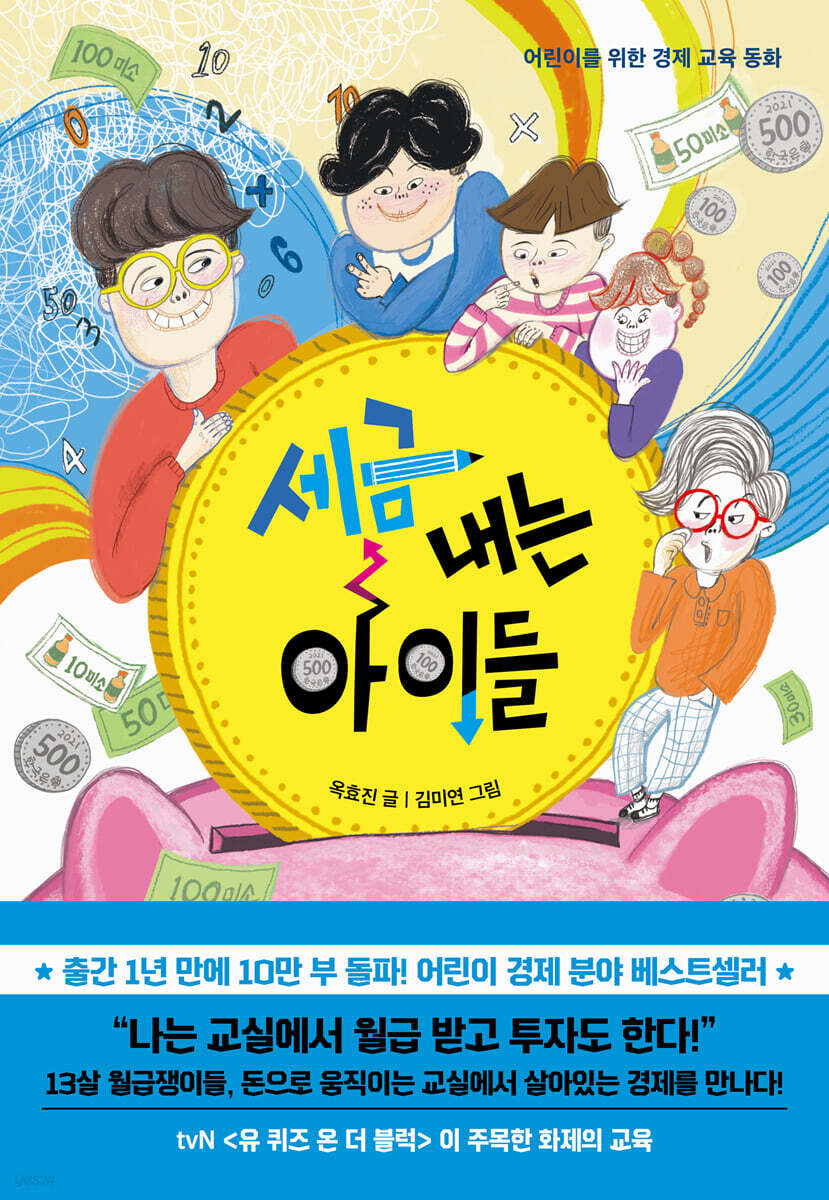
Earn, spend, save and invest your own money The Story of a Small Economic Nation in the Classroom Siwoo, 13, would buy whatever he wanted, and when he was short on money, he'd beg his mom for allowance. On his first day of sixth grade, his new homeroom teacher suggested a special activity for the class to pursue for the year. The students of Class 1, Grade 6, become citizens of the country of 'Hwalmyeongsu', use the currency called 'Smile', and begin their economic activities by each having a job... Siwoo, who chose the highest paying job among many other jobs, is shocked when he checks his salary on his first payday. "Why is my salary only this much?" Siwoo's chosen profession, a cleaning lady, earns 250 micrograms a month, yet only 190 micrograms are deposited into his bank account! Take-home pay? Income tax? Deposits? Savings? What the heck is this? Siwoo, who is only interested in spending money, Hajin, who only saves money, and Wonhee, who sometimes spends money and sometimes saves money, each use their salary in the way they want. Some people open a Siwon Mart and go bankrupt because they sell things too cheaply, some despair when they see teachers succeed in losing weight after investing in teacher weight stocks, and some worry about their bank accounts being emptied by sudden unemployment. As time goes by, children begin to feel the need to manage money. Every time that happens, the show-off Demon King Sewan passes by, leaving behind a single word that seems like a monologue. "That lucky guy! I'll manage my money better than you!" But Siwoo, taking a hint from Sewan's words, succeeds in creating a new career and begins to devise a new plan to get the autographed ball that will be up for auction at the end of the year... |
- You can preview some of the book's contents.
Preview
index
Author's Note / We invite you to a classroom powered by money.
Chapter 1: Children Who Pay Taxes
Elementary school students get paid?
The occupations of the citizens of Hwalmyeongsu are determined
The country is taking my money!
Chapter 2 What should I do with my salary?
Welcome to Hwalmyeongsu Bank
Congratulations on your grand opening! Siwon Mart
Where did all the money I earned from business go?
Chapter 3: You will become rich through investment!
The Two Faces of Savings
Invest in your teacher's weight
Please make our teacher gain weight!
Chapter 4: Siwoo's Unexpected Crisis
Joo Si-woo, the king of investment in Hwalmyeongsu?!
My job suddenly disappeared!
You're rating my faith in you?
Chapter 5 I Won't Make the Same Mistake
How about creating a new job?
Write a job offer
Protect yourself from risks with insurance
Chapter 6: Hello, cheerful and cheerful chatterboxes.
Signed ball! I'll have you.
700 Smiles Project
Waggle Waggle Hwalmyeongsu Auction
Chapter 1: Children Who Pay Taxes
Elementary school students get paid?
The occupations of the citizens of Hwalmyeongsu are determined
The country is taking my money!
Chapter 2 What should I do with my salary?
Welcome to Hwalmyeongsu Bank
Congratulations on your grand opening! Siwon Mart
Where did all the money I earned from business go?
Chapter 3: You will become rich through investment!
The Two Faces of Savings
Invest in your teacher's weight
Please make our teacher gain weight!
Chapter 4: Siwoo's Unexpected Crisis
Joo Si-woo, the king of investment in Hwalmyeongsu?!
My job suddenly disappeared!
You're rating my faith in you?
Chapter 5 I Won't Make the Same Mistake
How about creating a new job?
Write a job offer
Protect yourself from risks with insurance
Chapter 6: Hello, cheerful and cheerful chatterboxes.
Signed ball! I'll have you.
700 Smiles Project
Waggle Waggle Hwalmyeongsu Auction
Detailed image

Into the book
“Okay, everyone, this year our class is going to do a fun activity.
If you choose one of the jobs listed on the board and work there, you will receive a salary once a month.”
The children began to murmur at the teacher's unexpected explanation.
“Teacher! Are you really giving me money?”
Sujeong, who couldn't stand being curious, asked the teacher.
“It’s not like I’m giving you real money.
We will use a currency called 'Smile' that can only be used in our class.
“You can think of our class as a nation that uses that ‘smile.’”
---p.17
"190 smiles? Why is this all I can get? My salary is 250 smiles!"
“I guess it’s taxes.”
Someone said the word 'tax' between the children.
“What about taxes….”
Siwoo grumbled and checked his payslip.
"What the heck! Isn't this a bit much? I earned this money from my own hard work, so why is so much tax being taken out of it? Sixty micrograms are gone.
“I mean, 60 smiles.”
---p.35
"70 smiles? Are you guys really going to live boring lives? Money is there to be spent.
Look at me, I bought a weather exemption ticket and just skipped today's weather report.
You can eat your lunch quickly and play longer during lunch time.
"What about saving? I'll get my paycheck next month anyway."
---p.55
“Guys, investing isn’t like saving, where you invest in a product with a fixed rate of return.
Investing is different from saving in that the rate of return is not fixed.
There is no maturity date.”
“You’re saying the rate of return isn’t fixed?”
Hajin asked, scratching her head.
"huh.
When you invest, the value of the investment changes every day.
So, you get a profit as the value goes up.”
“So if there is no maturity date, when can I get the money?”
“That’s the mind of a candy seller.”
---p.88
"What happens if you lose your job?"
"If I don't work, won't I not get paid? I'll be unemployed."
Siwoo froze in shock.
---pp.114~115
“Teacher, if you pay money and get it back later, isn’t that similar to saving?”
Hajin asked the teacher a question.
“That’s a very good question. Insurance and savings are different.
Savings pay out the principal and a fixed amount of interest after a set period of time, but insurance pays out only when you get sick or injured.
So, even if you pay the insurance premium, you may not receive the insurance money if you don't get hurt or sick."
---p.152
“I’ve already saved almost all the money I had.
“Then what should I do?”
Sewan thought for a moment and then asked Siwoo.
“Are you confident you can do what I tell you?”
“Okay, I’ll do as you say.
“I want to be good at managing money like you.”
"good.
“Then, Siwoo, let’s aim to collect 700 smiles.”
If you choose one of the jobs listed on the board and work there, you will receive a salary once a month.”
The children began to murmur at the teacher's unexpected explanation.
“Teacher! Are you really giving me money?”
Sujeong, who couldn't stand being curious, asked the teacher.
“It’s not like I’m giving you real money.
We will use a currency called 'Smile' that can only be used in our class.
“You can think of our class as a nation that uses that ‘smile.’”
---p.17
"190 smiles? Why is this all I can get? My salary is 250 smiles!"
“I guess it’s taxes.”
Someone said the word 'tax' between the children.
“What about taxes….”
Siwoo grumbled and checked his payslip.
"What the heck! Isn't this a bit much? I earned this money from my own hard work, so why is so much tax being taken out of it? Sixty micrograms are gone.
“I mean, 60 smiles.”
---p.35
"70 smiles? Are you guys really going to live boring lives? Money is there to be spent.
Look at me, I bought a weather exemption ticket and just skipped today's weather report.
You can eat your lunch quickly and play longer during lunch time.
"What about saving? I'll get my paycheck next month anyway."
---p.55
“Guys, investing isn’t like saving, where you invest in a product with a fixed rate of return.
Investing is different from saving in that the rate of return is not fixed.
There is no maturity date.”
“You’re saying the rate of return isn’t fixed?”
Hajin asked, scratching her head.
"huh.
When you invest, the value of the investment changes every day.
So, you get a profit as the value goes up.”
“So if there is no maturity date, when can I get the money?”
“That’s the mind of a candy seller.”
---p.88
"What happens if you lose your job?"
"If I don't work, won't I not get paid? I'll be unemployed."
Siwoo froze in shock.
---pp.114~115
“Teacher, if you pay money and get it back later, isn’t that similar to saving?”
Hajin asked the teacher a question.
“That’s a very good question. Insurance and savings are different.
Savings pay out the principal and a fixed amount of interest after a set period of time, but insurance pays out only when you get sick or injured.
So, even if you pay the insurance premium, you may not receive the insurance money if you don't get hurt or sick."
---p.152
“I’ve already saved almost all the money I had.
“Then what should I do?”
Sewan thought for a moment and then asked Siwoo.
“Are you confident you can do what I tell you?”
“Okay, I’ll do as you say.
“I want to be good at managing money like you.”
"good.
“Then, Siwoo, let’s aim to collect 700 smiles.”
---p.173
Publisher's Review
10 million cumulative views!
A children's economic education story based on the popular YouTube show "Children Who Pay Taxes."
Whether it's eating delicious food, getting treatment when sick, or buying something we like... everything in our daily lives is related to 'money', but strangely enough, our education system is reluctant to talk directly about money to children.
In this kind of social atmosphere, children grow up to be adults who are inexperienced with money, without a clear understanding of the flow and concept of money.
This is because there is no opportunity to learn such important and basic knowledge for life, such as how to manage money, what taxes are, and why you need to manage your credit rating.
The idea of 'classroom currency management' in the YouTube channel 'Children Who Pay Taxes' started with the desire to teach economic knowledge that is 'really' necessary in real life in schools.
After much thought and long preparation by the author, an elementary school teacher, the 'Classroom where children earn money, pay taxes, save, and invest' was born in 2019.
Students become citizens of the country of 'Hwalmyeongsu' (lively and cheerful chatterboxes) for a year, choose a job based on their aptitude, salary, and qualifications, and do the work assigned to them, receive a salary, and pay taxes.
To save money, they also save and invest in stocks in hopes of hitting the jackpot.
You can register a business, open a store, and work hard to save money to buy the items you want at auction.
All of these activities are carried out with the class currency, "Smile," and children learn economic education through hands-on experience by earning, spending, saving, and investing money on their own throughout the year.
This activity completely changed the school life of the children in my class.
Rather than just learning economic theory in a one-time session, children learn proper money habits and economic concepts on their own through hands-on experience over the course of a year.
The author created a YouTube channel called “Children Who Pay Taxes” to share this economic education process, and the video generated reactions such as, “I wish I had received this kind of economic education when I was in school,” and “I want to enter elementary school again with this class,” becoming a huge topic of conversation not only among current teachers and parents, but also among adults in general.
The fairy tale "Children Who Pay Taxes" is an economic fairy tale reconstructed to suit children's level based on the story of "class currency" experienced with students in the class.
By reading about the ups and downs of economic life in the classroom of the main character Siwoo and his friends in an easy and fun way, children will naturally develop concepts and understanding of the economy, as well as the ability to read the flow of money.
As social interest in financial technology, stocks, and investments grows, so does the need for parental interest in and education about children's economics. The education children need is not simply about how to save money and become rich, but rather about developing lifestyle habits that allow them to plan and proactively manage their lives and prepare for the future.
Through this book, children will learn about employment, taxes, business, unemployment, savings, investments, and insurance, and why they are necessary in our lives. They will also be able to develop a correct understanding of money and prepare for the future.
*Main Activities and Awards*
-2020 Korea Economic Education Award (President's Award from the Economic Education Association)
-2019 Korea Economic Education Award, Chamber of Commerce and Industry President Award
- Lecture on the "Children Who Pay Taxes" training program for teachers at the "EBS Distance Education Training Center with Teachers"
*Linked to elementary school curriculum*
Social Studies 4-2
Why the problem of choice arises
How to Make Wise Choices
Social Studies 6-1
What the government does
What households and businesses do
A rational choice method for households
A rational choice method for companies
A market where households and businesses meet
desirable economic activity
Practical Arts 5-2
Managing my limited allowance rationally
There are many different jobs in the world.
Explore the career that's right for you
Math 4-2
What can we learn from a broken line graph?
Math 6-1
Let's find out the percentage
A children's economic education story based on the popular YouTube show "Children Who Pay Taxes."
Whether it's eating delicious food, getting treatment when sick, or buying something we like... everything in our daily lives is related to 'money', but strangely enough, our education system is reluctant to talk directly about money to children.
In this kind of social atmosphere, children grow up to be adults who are inexperienced with money, without a clear understanding of the flow and concept of money.
This is because there is no opportunity to learn such important and basic knowledge for life, such as how to manage money, what taxes are, and why you need to manage your credit rating.
The idea of 'classroom currency management' in the YouTube channel 'Children Who Pay Taxes' started with the desire to teach economic knowledge that is 'really' necessary in real life in schools.
After much thought and long preparation by the author, an elementary school teacher, the 'Classroom where children earn money, pay taxes, save, and invest' was born in 2019.
Students become citizens of the country of 'Hwalmyeongsu' (lively and cheerful chatterboxes) for a year, choose a job based on their aptitude, salary, and qualifications, and do the work assigned to them, receive a salary, and pay taxes.
To save money, they also save and invest in stocks in hopes of hitting the jackpot.
You can register a business, open a store, and work hard to save money to buy the items you want at auction.
All of these activities are carried out with the class currency, "Smile," and children learn economic education through hands-on experience by earning, spending, saving, and investing money on their own throughout the year.
This activity completely changed the school life of the children in my class.
Rather than just learning economic theory in a one-time session, children learn proper money habits and economic concepts on their own through hands-on experience over the course of a year.
The author created a YouTube channel called “Children Who Pay Taxes” to share this economic education process, and the video generated reactions such as, “I wish I had received this kind of economic education when I was in school,” and “I want to enter elementary school again with this class,” becoming a huge topic of conversation not only among current teachers and parents, but also among adults in general.
The fairy tale "Children Who Pay Taxes" is an economic fairy tale reconstructed to suit children's level based on the story of "class currency" experienced with students in the class.
By reading about the ups and downs of economic life in the classroom of the main character Siwoo and his friends in an easy and fun way, children will naturally develop concepts and understanding of the economy, as well as the ability to read the flow of money.
As social interest in financial technology, stocks, and investments grows, so does the need for parental interest in and education about children's economics. The education children need is not simply about how to save money and become rich, but rather about developing lifestyle habits that allow them to plan and proactively manage their lives and prepare for the future.
Through this book, children will learn about employment, taxes, business, unemployment, savings, investments, and insurance, and why they are necessary in our lives. They will also be able to develop a correct understanding of money and prepare for the future.
*Main Activities and Awards*
-2020 Korea Economic Education Award (President's Award from the Economic Education Association)
-2019 Korea Economic Education Award, Chamber of Commerce and Industry President Award
- Lecture on the "Children Who Pay Taxes" training program for teachers at the "EBS Distance Education Training Center with Teachers"
*Linked to elementary school curriculum*
Social Studies 4-2
Why the problem of choice arises
How to Make Wise Choices
Social Studies 6-1
What the government does
What households and businesses do
A rational choice method for households
A rational choice method for companies
A market where households and businesses meet
desirable economic activity
Practical Arts 5-2
Managing my limited allowance rationally
There are many different jobs in the world.
Explore the career that's right for you
Math 4-2
What can we learn from a broken line graph?
Math 6-1
Let's find out the percentage
GOODS SPECIFICS
- Publication date: June 15, 2021
- Page count, weight, size: 194 pages | 374g | 152*220*12mm
- ISBN13: 9788947547260
- ISBN10: 8947547263
You may also like
카테고리
korean


korean

![ELLE 엘르 스페셜 에디션 A형 : 12월 [2025]](http://librairie.coreenne.fr/cdn/shop/files/b8e27a3de6c9538896439686c6b0e8fb.jpg?v=1766436872&width=3840)


