

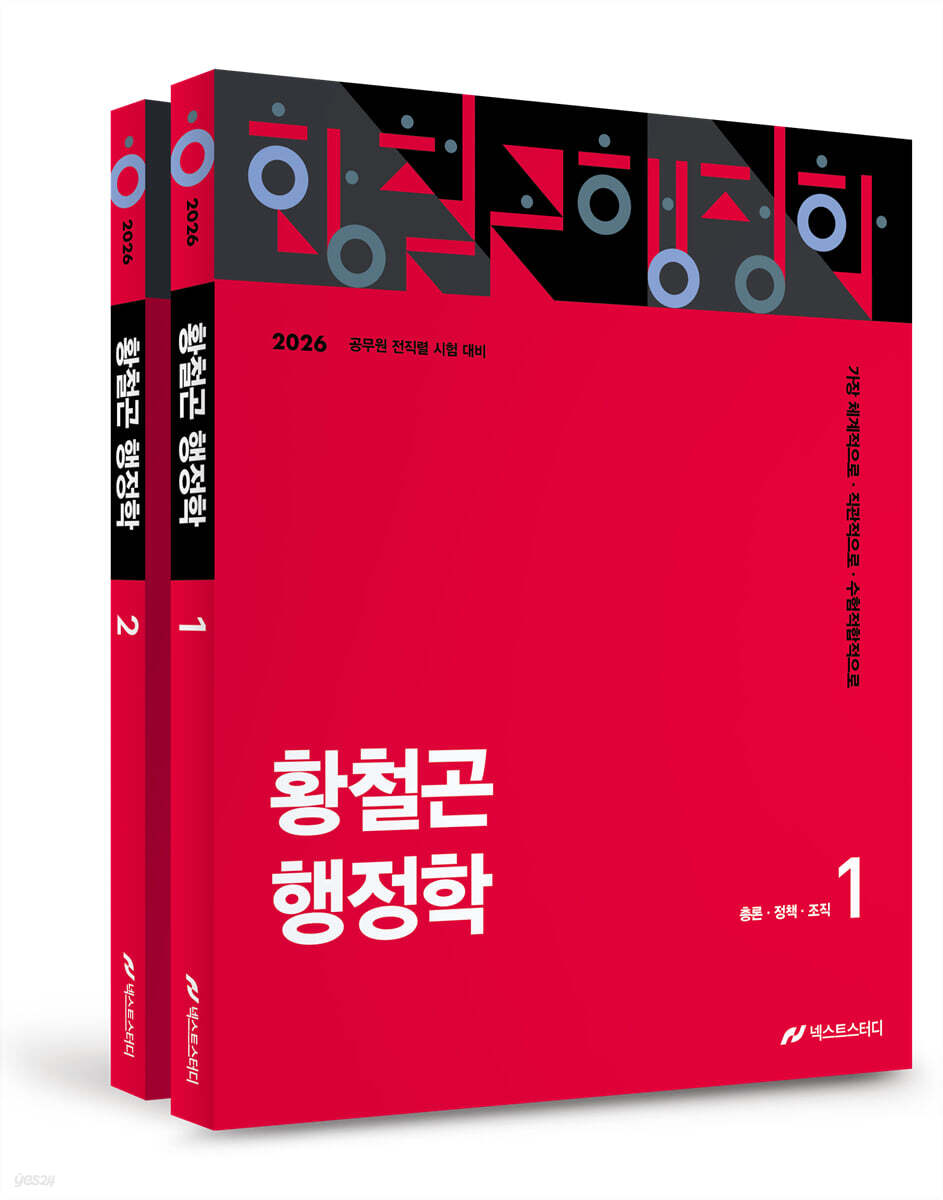
2026 Hwang Cheol-gon, Public Administration
 |
Description
Book Introduction
1.
Classification of topics suitable for the exam
It is structured to be suitable for studying public administration as an exam subject, not as an academic discipline.
By analyzing past exam questions from the past 15 years, we have compiled a comprehensive list of topics that have appeared in the exam and topics expected to appear in the future. We have also indicated the main sources and importance of each topic to aid your learning.
2.
Show frequency of questions
To help you determine the priority and importance of each major topic, we analyzed past exam questions from the past 15 years and categorized them into SABCs according to their importance.
This will help test takers who have to study a large amount of material within a given time frame to assess the importance of their studies.
3.
Highlighting key words
The text is organized so that important content can be highlighted in color to help readers naturally grasp the important content when reading the sentences.
This part will become more valuable the more you read it.
4.
Check the incorrect answer options
We have included the incorrect answer choices from previous exams in the supplementary section, so that you can point out the key points from previous exams that you must check.
If you first understand what types of incorrect answers are presented in the text, it will be helpful in determining the direction of your studies.
5.
Pictures to help understanding
The concepts of public administration are presented in a diagrammatic form.
This will be easier to understand and remember than just reading the text.
6.
Includes key past exam questions
We have included important past exam questions and detailed explanations that you must check after studying the main text by major topic.
By solving representative types of problems, you will be able to review the text and simultaneously understand the types of questions in past exams, thereby building your fundamentals.
Classification of topics suitable for the exam
It is structured to be suitable for studying public administration as an exam subject, not as an academic discipline.
By analyzing past exam questions from the past 15 years, we have compiled a comprehensive list of topics that have appeared in the exam and topics expected to appear in the future. We have also indicated the main sources and importance of each topic to aid your learning.
2.
Show frequency of questions
To help you determine the priority and importance of each major topic, we analyzed past exam questions from the past 15 years and categorized them into SABCs according to their importance.
This will help test takers who have to study a large amount of material within a given time frame to assess the importance of their studies.
3.
Highlighting key words
The text is organized so that important content can be highlighted in color to help readers naturally grasp the important content when reading the sentences.
This part will become more valuable the more you read it.
4.
Check the incorrect answer options
We have included the incorrect answer choices from previous exams in the supplementary section, so that you can point out the key points from previous exams that you must check.
If you first understand what types of incorrect answers are presented in the text, it will be helpful in determining the direction of your studies.
5.
Pictures to help understanding
The concepts of public administration are presented in a diagrammatic form.
This will be easier to understand and remember than just reading the text.
6.
Includes key past exam questions
We have included important past exam questions and detailed explanations that you must check after studying the main text by major topic.
By solving representative types of problems, you will be able to review the text and simultaneously understand the types of questions in past exams, thereby building your fundamentals.
- You can preview some of the book's contents.
Preview
index
Volume 1: General Theory, Policy, and Organization
PART 1 General Introduction
CHAPTER 1 Administrative Activities
CHAPTER 2 Administrative Values
CHAPTER 3 Administrative Theory
CHAPTER 4 Administration and Administrative Reform
PART 2 POLICY
CHAPTER 1 Policy Types and Participants
CHAPTER 2 Policy Agenda Setting
CHAPTER 3 POLICY DECISIONS
CHAPTER 4 POLICY EXECUTIVE
CHAPTER 5 POLICY EVALUATION
CHAPTER 6 POLICY CHANGES
PART 3 ORGANIZATION
CHAPTER 1 ORGANIZATIONAL STRUCTURE
CHAPTER 2 Organization and People Management
CHAPTER 3 Our country's government organization
Search
Volume 2: Personnel, Finance, and Local Government
PART 4 Greetings
CHAPTER 1 Civil Service Classification
CHAPTER 2 Civil Service Appointment
CHAPTER 3 Civil Service Management
CHAPTER 4 Controlling Civil Servants
PART 5 FINANCE
CHAPTER 1 BUDGET SYSTEM
CHAPTER 2 BUDGET THEORY
PART 6 Fat
CHAPTER 1: Overview of Local Autonomy
CHAPTER 2 LOCAL GOVERNMENT DISTRICT
CHAPTER 3 Autonomy
CHAPTER 4: RESIDENT PARTICIPATION
Appendix - In-depth Article
Search
PART 1 General Introduction
CHAPTER 1 Administrative Activities
CHAPTER 2 Administrative Values
CHAPTER 3 Administrative Theory
CHAPTER 4 Administration and Administrative Reform
PART 2 POLICY
CHAPTER 1 Policy Types and Participants
CHAPTER 2 Policy Agenda Setting
CHAPTER 3 POLICY DECISIONS
CHAPTER 4 POLICY EXECUTIVE
CHAPTER 5 POLICY EVALUATION
CHAPTER 6 POLICY CHANGES
PART 3 ORGANIZATION
CHAPTER 1 ORGANIZATIONAL STRUCTURE
CHAPTER 2 Organization and People Management
CHAPTER 3 Our country's government organization
Search
Volume 2: Personnel, Finance, and Local Government
PART 4 Greetings
CHAPTER 1 Civil Service Classification
CHAPTER 2 Civil Service Appointment
CHAPTER 3 Civil Service Management
CHAPTER 4 Controlling Civil Servants
PART 5 FINANCE
CHAPTER 1 BUDGET SYSTEM
CHAPTER 2 BUDGET THEORY
PART 6 Fat
CHAPTER 1: Overview of Local Autonomy
CHAPTER 2 LOCAL GOVERNMENT DISTRICT
CHAPTER 3 Autonomy
CHAPTER 4: RESIDENT PARTICIPATION
Appendix - In-depth Article
Search
Publisher's Review
Features of this book
As we enter the era of specialized subjects, public administration has become a crucial subject that determines whether one passes or fails the civil service examination.
Nowadays, in public administration, simple knowledge-based or acronym-based problems are rarely asked as they used to be.
Now, public administration requires the ability to judge and infer unfamiliar expressions presented in the exam based on a precise understanding of the concepts.
This direction, demanded by the changing civil service examination, is emphasized in all my lectures and textbooks.
To achieve a high score in public administration, you must keep these three things in mind: understand the concepts, analyze past exam questions, and engage in sufficient practical training.
When studying the concepts of public administration, it is important to understand the unique perspectives and logic of public administration.
The abstract characteristics of the concept A alone become relatively certain and clear when compared to its rival concept B.
In addition, in public administration, the logic applied may vary depending on the given conditions, and the correct answer may also vary.
These are parts that are difficult to approach by simply memorizing them.
Above all, it is important to fully understand and be convinced of the key concepts that will be tested on the exam.
When studying past exam questions, you should accurately analyze and internalize the points being discussed rather than simply reading or memorizing the passages.
Even on the same topic, new expressions are sometimes presented, and topics and legal provisions that have never been seen in previous exams are often presented in public administration.
It's not that the previous exam questions are repeated, but the points that the examiners want to check are repeated.
Discovering and internalizing the argument through analysis of past exam questions is the most important part of studying past exam questions.
It is also essential to practice reading comprehension skills in public administration through high-quality mock exams.
If you diligently practice with me how to read, judge, infer, and expand on the expressions presented in the exam based on your understanding of the concepts and past exam questions, you will be able to achieve a high score that sets you apart.
"2026 Hwang Cheol-gon's Basic Public Administration Textbook" was created as a textbook that provides the most fundamental and important foundation for students to faithfully pursue these courses.
Through thorough analysis of past exam questions and reflection of recent exam trends, we have included essential topics in the field of administrative studies for the exam, and have adjusted the intensity of each topic by level to ensure efficient learning.
In addition, key past exam questions are also included for each topic, allowing for an organic connection between theoretical knowledge and practical problems.
If you study this textbook and the concept lectures that utilize it, it will be of great help in studying past exam questions and practicing practical problem-solving skills that will be centered on the topics that will be tested later.
We also put a lot of effort into reasonably setting the scope of examination administration.
I also think that this is an important role that instructors must play.
If you study the major topics in this textbook systematically and logically, you will be able to consistently achieve a high score on the exam, no matter what the test is like.
This has been sufficiently proven in recent exams where the difficulty of public administration has increased due to the reorganization of the exam to focus on specialized subjects.
I sincerely hope that 『2026 Hwang Cheol-gon's Basic Public Administration Textbook』 will serve as an excellent tool for efficiently studying the unfamiliar subject of public administration, and that your exams will be successful.
We always support all test takers.
This book is structured as follows:
1.
Classification of topics suitable for the exam
It is structured to be suitable for studying public administration as an exam subject, not as an academic discipline.
By analyzing past exam questions from the past 15 years, we have compiled a comprehensive list of topics that have appeared in the exam and topics expected to appear in the future. We have also indicated the main sources and importance of each topic to aid your learning.
2.
Show frequency of questions
To help you determine the priority and importance of each major topic, we analyzed past exam questions from the past 15 years and categorized them into SABCs according to their importance.
This will help test takers who have to study a large amount of material within a given time frame to assess the importance of their studies.
3.
Highlighting key words
The text is organized so that important content can be highlighted in color to help readers naturally grasp the important content when reading the sentences.
This part will become more valuable the more you read it.
4.
Check the incorrect answer options
We have included the incorrect answer choices from previous exams in the supplementary section, so that you can point out the key points from previous exams that you must check.
If you first understand what types of incorrect answers are presented in the text, it will be helpful in determining the direction of your studies.
5.
Pictures to help understanding
The concepts of public administration are presented in a diagrammatic form.
This will be easier to understand and remember than just reading the text.
6.
Includes key past exam questions
We have included important past exam questions and detailed explanations that you must check after studying the main text by major topic.
By solving representative types of problems, you will be able to review the text and simultaneously understand the types of questions in past exams, thereby building your fundamentals.
As we enter the era of specialized subjects, public administration has become a crucial subject that determines whether one passes or fails the civil service examination.
Nowadays, in public administration, simple knowledge-based or acronym-based problems are rarely asked as they used to be.
Now, public administration requires the ability to judge and infer unfamiliar expressions presented in the exam based on a precise understanding of the concepts.
This direction, demanded by the changing civil service examination, is emphasized in all my lectures and textbooks.
To achieve a high score in public administration, you must keep these three things in mind: understand the concepts, analyze past exam questions, and engage in sufficient practical training.
When studying the concepts of public administration, it is important to understand the unique perspectives and logic of public administration.
The abstract characteristics of the concept A alone become relatively certain and clear when compared to its rival concept B.
In addition, in public administration, the logic applied may vary depending on the given conditions, and the correct answer may also vary.
These are parts that are difficult to approach by simply memorizing them.
Above all, it is important to fully understand and be convinced of the key concepts that will be tested on the exam.
When studying past exam questions, you should accurately analyze and internalize the points being discussed rather than simply reading or memorizing the passages.
Even on the same topic, new expressions are sometimes presented, and topics and legal provisions that have never been seen in previous exams are often presented in public administration.
It's not that the previous exam questions are repeated, but the points that the examiners want to check are repeated.
Discovering and internalizing the argument through analysis of past exam questions is the most important part of studying past exam questions.
It is also essential to practice reading comprehension skills in public administration through high-quality mock exams.
If you diligently practice with me how to read, judge, infer, and expand on the expressions presented in the exam based on your understanding of the concepts and past exam questions, you will be able to achieve a high score that sets you apart.
"2026 Hwang Cheol-gon's Basic Public Administration Textbook" was created as a textbook that provides the most fundamental and important foundation for students to faithfully pursue these courses.
Through thorough analysis of past exam questions and reflection of recent exam trends, we have included essential topics in the field of administrative studies for the exam, and have adjusted the intensity of each topic by level to ensure efficient learning.
In addition, key past exam questions are also included for each topic, allowing for an organic connection between theoretical knowledge and practical problems.
If you study this textbook and the concept lectures that utilize it, it will be of great help in studying past exam questions and practicing practical problem-solving skills that will be centered on the topics that will be tested later.
We also put a lot of effort into reasonably setting the scope of examination administration.
I also think that this is an important role that instructors must play.
If you study the major topics in this textbook systematically and logically, you will be able to consistently achieve a high score on the exam, no matter what the test is like.
This has been sufficiently proven in recent exams where the difficulty of public administration has increased due to the reorganization of the exam to focus on specialized subjects.
I sincerely hope that 『2026 Hwang Cheol-gon's Basic Public Administration Textbook』 will serve as an excellent tool for efficiently studying the unfamiliar subject of public administration, and that your exams will be successful.
We always support all test takers.
This book is structured as follows:
1.
Classification of topics suitable for the exam
It is structured to be suitable for studying public administration as an exam subject, not as an academic discipline.
By analyzing past exam questions from the past 15 years, we have compiled a comprehensive list of topics that have appeared in the exam and topics expected to appear in the future. We have also indicated the main sources and importance of each topic to aid your learning.
2.
Show frequency of questions
To help you determine the priority and importance of each major topic, we analyzed past exam questions from the past 15 years and categorized them into SABCs according to their importance.
This will help test takers who have to study a large amount of material within a given time frame to assess the importance of their studies.
3.
Highlighting key words
The text is organized so that important content can be highlighted in color to help readers naturally grasp the important content when reading the sentences.
This part will become more valuable the more you read it.
4.
Check the incorrect answer options
We have included the incorrect answer choices from previous exams in the supplementary section, so that you can point out the key points from previous exams that you must check.
If you first understand what types of incorrect answers are presented in the text, it will be helpful in determining the direction of your studies.
5.
Pictures to help understanding
The concepts of public administration are presented in a diagrammatic form.
This will be easier to understand and remember than just reading the text.
6.
Includes key past exam questions
We have included important past exam questions and detailed explanations that you must check after studying the main text by major topic.
By solving representative types of problems, you will be able to review the text and simultaneously understand the types of questions in past exams, thereby building your fundamentals.
GOODS SPECIFICS
- Date of issue: July 10, 2025
- Page count, weight, size: 696 pages | 205*260*35mm
- ISBN13: 9791173601736
- ISBN10: 1173601732
You may also like
카테고리
korean


korean

![GQ KOREA Mark (Monthly): December [2025]](http://librairie.coreenne.fr/cdn/shop/files/8ef265dbbfbf186523ed75ba7319009d.jpg?v=1765340328&width=3840)


