

white bird
 |
Description
Book Introduction
2018 Bologna Ragazzi Award Grand Prize Winner
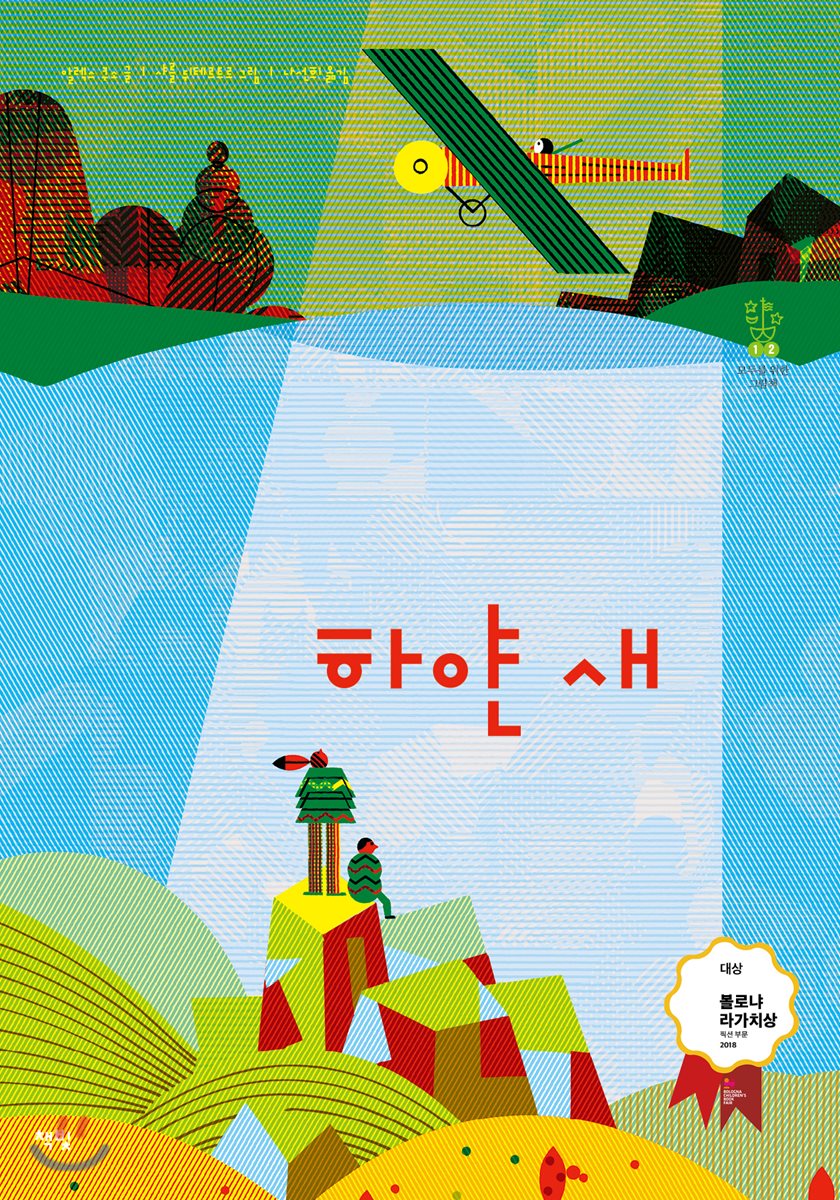
We must listen to the voice of our dreams and follow them. In 1927, French aviator Charles Nangeuse attempted the first non-stop flight from Paris to New York. This book is a picture book written by French author Alex Couseau, inspired by the real story of Nangusese, and written with a new narrative. 'White Bird' is the name of the airplane and the name of the Indian who is the main character of the book. The dream and friendship of two people, a pilot and an Indian, transcending time and space are beautifully captured in the geometric imagery of the Bauhaus. A white bird meets a whirlwind. The white bird is an Indian living in the Americas, and the whirlwind is an aviator living in Europe. Two people living in different worlds separated by the vast Atlantic Ocean become friends. Both men have experienced the pain of war, yearn for the unknown, and share the same dream of flying in the sky. The whirlwind takes a white bird on its plane and makes a long-held dream come true. It also talks about the hope that dreams will come true someday through challenges that push the boundaries. The white bird, who lives in a primitive world but is wiser than anyone else, conveys a profound message about the mistakes made by humans in the name of civilization, and the meeting between the two makes us reflect on the importance of human relationships and the value of life. |
- You can preview some of the book's contents.
Preview
Detailed image
Into the book
“White people came from all sides.
They came into our land like spiders building their own homes.
I don't want to say that this land is only ours.
This land belongs to no one.
That's why we belong to this land.
At the border, white people pointed guns at us and told us to go back.
A bullet grazed my cheek.
“The scar still remains.”
“What is a border?” asked the golden pebble.
“That’s a scar.
“It’s like a wound that splits the land in two.”
Our journey continued through eight changing seasons.
My father sang to me the songs of birds and the names of the stars.
He also taught them how to make bows and arrows and how to hunt game.
It also taught me that sadness is the taste of the sea.
Above all, dreams are what truly makes humans happy.
We must listen to the voice of our dreams and follow the path our dreams lead us to.
It made me realize.
They came into our land like spiders building their own homes.
I don't want to say that this land is only ours.
This land belongs to no one.
That's why we belong to this land.
At the border, white people pointed guns at us and told us to go back.
A bullet grazed my cheek.
“The scar still remains.”
“What is a border?” asked the golden pebble.
“That’s a scar.
“It’s like a wound that splits the land in two.”
Our journey continued through eight changing seasons.
My father sang to me the songs of birds and the names of the stars.
He also taught them how to make bows and arrows and how to hunt game.
It also taught me that sadness is the taste of the sea.
Above all, dreams are what truly makes humans happy.
We must listen to the voice of our dreams and follow the path our dreams lead us to.
It made me realize.
---From the text
Publisher's Review
2018 Bologna Ragazzi Award Grand Prize Winner
In 1927, French aviator Charles Nangeuse attempted the first non-stop flight from Paris to New York.
This book is a new narrative written by French author Alex Couseau, inspired by the real story of Nanguse.
'White Bird' is the name of the plane and also the name of the Indian who is the main character of this book.
The dream and friendship of two people, a pilot and an Indian, that transcend time and space are beautifully captured in the geometric imagery of the Bauhaus.
It is the winner of the 2018 Bologna Ragazzi Award.
A white bird meets a whirlwind.
The white bird is an Indian living in the Americas, and the whirlwind is a pilot living in Europe.
Two people who live in different worlds separated by the vast Atlantic Ocean become friends.
Both men have experienced the pain of war, yearn for the unknown, and share the same dream of flying in the sky.
The whirlwind brings a white bird on its plane to fulfill a long-held dream.
It also talks about the hope that dreams will come true someday through challenges that push the boundaries.
The white bird, who lives in a primitive world but is wiser than anyone else, conveys a heavy message about the mistakes made by humans in the name of civilization, and the meeting between the two makes us reflect on the importance of human relationships and the value of life.
You must listen to the voice of your dreams and follow them.
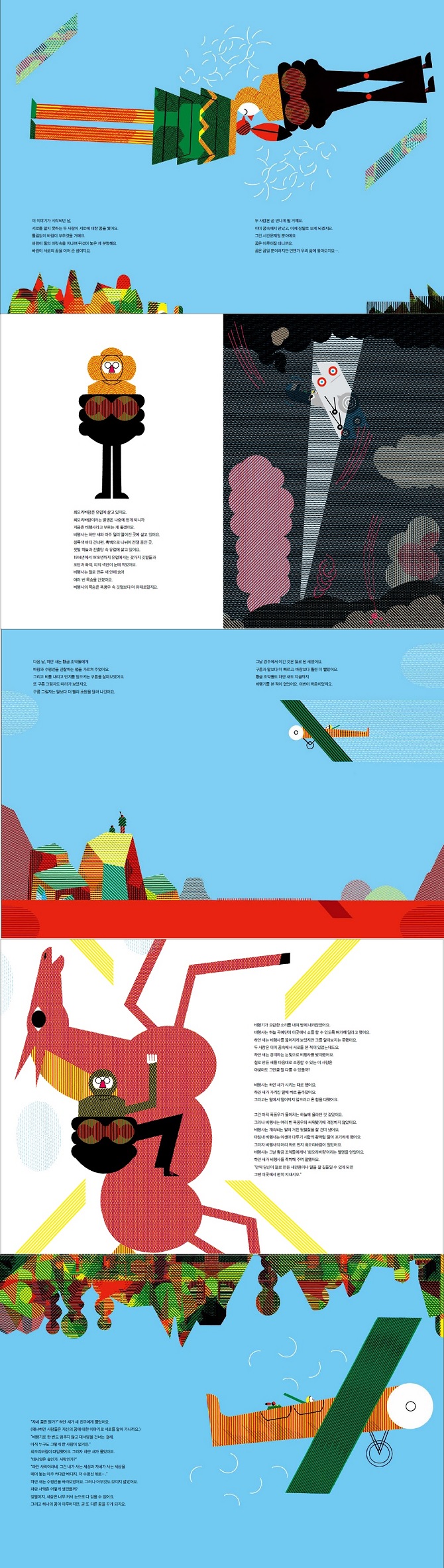
When you open the book, there is a world map drawn on the first page.
A yellow and red circle flies over the vast Atlantic Ocean between Europe and America.
A pilot living in civilized Europe, where airplanes fly high in the sky, meets an Indian living in primitive America, where wild horses run wild.
Europe was dyed in the dark light of war, and even the peaceful lands of the Indians were left with scarred borders from the invasion of white people.
However, the white bird befriends a pilot who comes to her land and gives him the nickname 'Whirlwind'.
The blue desert-like Atlantic Ocean and the blue sky show their common dream.
The white bird dreams of flying in the sky and seeing the wide world, and the whirlwind dreams of crossing the Atlantic Ocean without stopping by airplane.
The whirlwind brings a white bird on its plane to fulfill a long-held dream.
And to make his dream come true, he crosses the Atlantic Ocean on a plane he named 'White Bird' and flies to New York.
The white bird also sets off for the sea with her son.
Neither the whirlwind nor the white bird return from their journey.
But the two speak with the same voice: "Dreams are what truly make people happy, so we must listen to the voice of our dreams and follow their lead."
The White Bird (L'Oiseau Blanc)
'Flight', a theme that frequently appears in children's literature, shows the challenge and beautiful dream of humans wanting to fly in this book.
Inspired by the story of French aviator Charles Nangeuse, author Alex Cusso took liberties with the story and created another moving narrative.
Nangeuset, a hero of World War I, was the first person to attempt a non-stop transatlantic flight with his comrade François Colli.
The plane, the White Bird (L'Oiseau Blanc), took off from Paris on May 8, 1927, and flew towards New York before disappearing without a trace.
And the white bird was not seen again after it was spotted passing over Ireland.
The next day, many people gathered in New York to see the success of the white bird, but the white bird never appeared.
In France, false reports that a white bird had landed safely at its destination caused many citizens to take to the streets to protest.
The disappearance of the white bird remains one of the greatest mysteries in aviation history, and monuments and museums commemorating the adventure of Nangeuse and Collie stand at Paris-Le Bourget Airport and the cliffs of Étretat, the last known sightings of the white bird.
Two weeks later, American aviator Charles Lindbergh successfully completed a non-stop flight from New York to Paris in a plane he named the "Spirit of St. Louis."
A picture book that inspires artistic inspiration through a new visual world.
Painter Charles Dutertre presents a new visual world where figuration and abstraction, reality and dream, time and space are mixed with surprising color combinations and geometric images.
The simplified images of geometric lines and surfaces and the concise composition of space and margins maximize the reader's imagination.
The story alternates between the past and dreams of the pilot and the Indian.
The author perfectly conveys the two people's completely different worlds through the contrast of color and shape.
Europe, engulfed in war, is cast in black, while the American continent is depicted in beautiful, primitive colors.
The blue desert-like Atlantic Ocean and the blue sky represent their shared dreams, and the airplane and wild horses are a world where they meet and recognize each other's dreams.
It shows the limits that humans have always tried to overcome, like a wound sewn across a line or border.
This picture book allows you to experience various forms of artistic inspiration, such as raster images that digitally demonstrate the principles of pointillism and optical art that uses optical illusions to create rhythmic, three-dimensional spatial effects.
In 1927, French aviator Charles Nangeuse attempted the first non-stop flight from Paris to New York.
This book is a new narrative written by French author Alex Couseau, inspired by the real story of Nanguse.
'White Bird' is the name of the plane and also the name of the Indian who is the main character of this book.
The dream and friendship of two people, a pilot and an Indian, that transcend time and space are beautifully captured in the geometric imagery of the Bauhaus.
It is the winner of the 2018 Bologna Ragazzi Award.
A white bird meets a whirlwind.
The white bird is an Indian living in the Americas, and the whirlwind is a pilot living in Europe.
Two people who live in different worlds separated by the vast Atlantic Ocean become friends.
Both men have experienced the pain of war, yearn for the unknown, and share the same dream of flying in the sky.
The whirlwind brings a white bird on its plane to fulfill a long-held dream.
It also talks about the hope that dreams will come true someday through challenges that push the boundaries.
The white bird, who lives in a primitive world but is wiser than anyone else, conveys a heavy message about the mistakes made by humans in the name of civilization, and the meeting between the two makes us reflect on the importance of human relationships and the value of life.
You must listen to the voice of your dreams and follow them.
When you open the book, there is a world map drawn on the first page.
A yellow and red circle flies over the vast Atlantic Ocean between Europe and America.
A pilot living in civilized Europe, where airplanes fly high in the sky, meets an Indian living in primitive America, where wild horses run wild.
Europe was dyed in the dark light of war, and even the peaceful lands of the Indians were left with scarred borders from the invasion of white people.
However, the white bird befriends a pilot who comes to her land and gives him the nickname 'Whirlwind'.
The blue desert-like Atlantic Ocean and the blue sky show their common dream.
The white bird dreams of flying in the sky and seeing the wide world, and the whirlwind dreams of crossing the Atlantic Ocean without stopping by airplane.
The whirlwind brings a white bird on its plane to fulfill a long-held dream.
And to make his dream come true, he crosses the Atlantic Ocean on a plane he named 'White Bird' and flies to New York.
The white bird also sets off for the sea with her son.
Neither the whirlwind nor the white bird return from their journey.
But the two speak with the same voice: "Dreams are what truly make people happy, so we must listen to the voice of our dreams and follow their lead."
The White Bird (L'Oiseau Blanc)
'Flight', a theme that frequently appears in children's literature, shows the challenge and beautiful dream of humans wanting to fly in this book.
Inspired by the story of French aviator Charles Nangeuse, author Alex Cusso took liberties with the story and created another moving narrative.
Nangeuset, a hero of World War I, was the first person to attempt a non-stop transatlantic flight with his comrade François Colli.
The plane, the White Bird (L'Oiseau Blanc), took off from Paris on May 8, 1927, and flew towards New York before disappearing without a trace.
And the white bird was not seen again after it was spotted passing over Ireland.
The next day, many people gathered in New York to see the success of the white bird, but the white bird never appeared.
In France, false reports that a white bird had landed safely at its destination caused many citizens to take to the streets to protest.
The disappearance of the white bird remains one of the greatest mysteries in aviation history, and monuments and museums commemorating the adventure of Nangeuse and Collie stand at Paris-Le Bourget Airport and the cliffs of Étretat, the last known sightings of the white bird.
Two weeks later, American aviator Charles Lindbergh successfully completed a non-stop flight from New York to Paris in a plane he named the "Spirit of St. Louis."
A picture book that inspires artistic inspiration through a new visual world.
Painter Charles Dutertre presents a new visual world where figuration and abstraction, reality and dream, time and space are mixed with surprising color combinations and geometric images.
The simplified images of geometric lines and surfaces and the concise composition of space and margins maximize the reader's imagination.
The story alternates between the past and dreams of the pilot and the Indian.
The author perfectly conveys the two people's completely different worlds through the contrast of color and shape.
Europe, engulfed in war, is cast in black, while the American continent is depicted in beautiful, primitive colors.
The blue desert-like Atlantic Ocean and the blue sky represent their shared dreams, and the airplane and wild horses are a world where they meet and recognize each other's dreams.
It shows the limits that humans have always tried to overcome, like a wound sewn across a line or border.
This picture book allows you to experience various forms of artistic inspiration, such as raster images that digitally demonstrate the principles of pointillism and optical art that uses optical illusions to create rhythmic, three-dimensional spatial effects.
GOODS SPECIFICS
- Date of issue: September 30, 2018
- Format: Hardcover book binding method guide
- Page count, weight, size: 56 pages | 391g | 210*297*19mm
- ISBN13: 9788962192698
- ISBN10: 8962192691
- KC Certification: Certification Type: Confirming Certification Number: -
You may also like
카테고리
korean


korean

![GQ KOREA Mark (Monthly): December [2025]](http://librairie.coreenne.fr/cdn/shop/files/8ef265dbbfbf186523ed75ba7319009d.jpg?v=1765340328&width=3840)


