

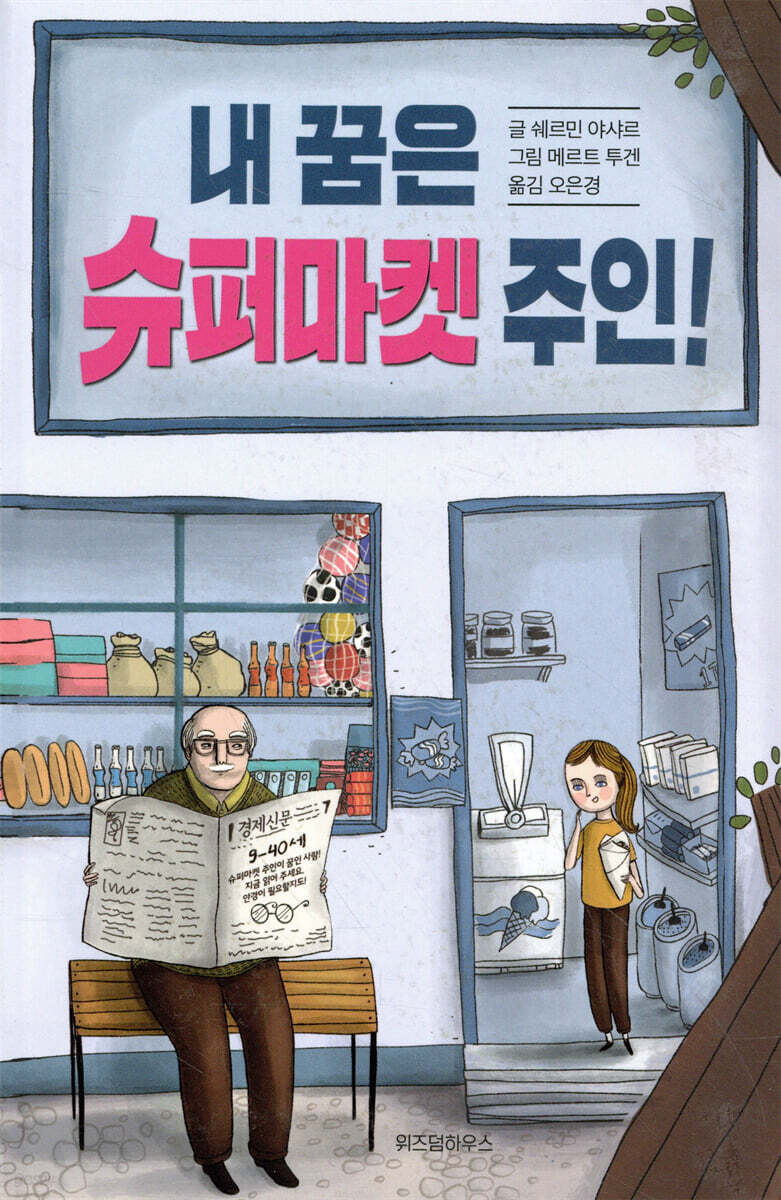
My dream is to own a supermarket!
 |
Description
Book Introduction
The coolest grandpa's supermarket in the world! Life Lessons Learned at the Supermarket This children's book became a bestseller immediately after its publication in Turkey, selling 140,000 copies in two years. This compelling and immersive story teaches readers about the world of adults and their lives through the stories of the adults who frequent the supermarket. It also teaches readers the proper standards and methods for making money through supermarket management. Set in a rural supermarket, this is the story of a girl's dreams, growth, and the village elders, all sparked by a business idea! A masterful work that skillfully handles a wealth of events and emotions, this Turkish bestseller delves into the intricate interplay of dreams, growing pains, economics, and the adult world. |
- You can preview some of the book's contents.
Preview
index
What do you want to be when you grow up?
The coolest and most exciting thing in the world
My grandfather is the owner of a supermarket
My working hours
Cherry Soda
Poor Mustafa
Murat the Crook
sneak
local food
Grandma Shukriye, sparkling clean
I love you
White beans and postcards
Help African children
The Lonely Man in the Village
The coolest and most exciting thing in the world
My grandfather is the owner of a supermarket
My working hours
Cherry Soda
Poor Mustafa
Murat the Crook
sneak
local food
Grandma Shukriye, sparkling clean
I love you
White beans and postcards
Help African children
The Lonely Man in the Village
Detailed image

Into the book
“Hahahahahaha.
“Let’s have a drink or two.”
Grandpa Cafe seemed to believe that Oralette could solve all the world's problems.
Well, it definitely helped.
One sip, two sips, as I drank the Oralette, the anger inside me gradually disappeared.
After that, I was able to calm down again and head to the supermarket, but soon after, I got really angry again and ran to the cafe.
Could this be the way I'd spend my life? I was terrified.
- From page 26 of the text -
“If Mustafa comes and asks for 50 grams of something, give him 100 grams.
And please share some Helva.
“Don’t take the money, just pay for the other items,” said the grandfather.
"Well, if we're going to help you anyway, why not do it even more? How about giving away free olives and cheese?"
“No, that won’t work.
Then Mustafa will feel sorry for us and never come to the store again.
So just let Mustafa do the math.”
- From page 49 of the text -
Fifth thing to note
Adults are always bothered by children
Change the subject.
Don't make a fuss.
You can't beat adults anyway.
- From page 56 of the text -
“Are you lost?”
“No,” the woman answered.
“Of course not!”
Seriously, he was like a teenager! This type of person usually makes me angry or tense for no reason.
I regretted asking the question.
I know it's bad, but I almost said, "I really hope you get lost."
If my mom knew what I was thinking, she would have been furious.
“Don’t pray for someone to get sick.
“It all comes back to you.”
I wasn't praying for anyone to get sick.
Although it was a prayer mixed with a slightly evil intention.
- From pages 86-87 of the text
Every time the bald old man came to the supermarket, I would double the price of the items and sell them.
If you have any complaints, I was thinking of telling you to go to another supermarket.
But there were no other supermarkets in town, and the man had no choice.
The man had no idea I was secretly raising the price.
I set aside the remaining money.
I was planning to use it for my sister Shikran's wedding expenses.
- From page 113 of the text -
“Let’s have a drink or two.”
Grandpa Cafe seemed to believe that Oralette could solve all the world's problems.
Well, it definitely helped.
One sip, two sips, as I drank the Oralette, the anger inside me gradually disappeared.
After that, I was able to calm down again and head to the supermarket, but soon after, I got really angry again and ran to the cafe.
Could this be the way I'd spend my life? I was terrified.
- From page 26 of the text -
“If Mustafa comes and asks for 50 grams of something, give him 100 grams.
And please share some Helva.
“Don’t take the money, just pay for the other items,” said the grandfather.
"Well, if we're going to help you anyway, why not do it even more? How about giving away free olives and cheese?"
“No, that won’t work.
Then Mustafa will feel sorry for us and never come to the store again.
So just let Mustafa do the math.”
- From page 49 of the text -
Fifth thing to note
Adults are always bothered by children
Change the subject.
Don't make a fuss.
You can't beat adults anyway.
- From page 56 of the text -
“Are you lost?”
“No,” the woman answered.
“Of course not!”
Seriously, he was like a teenager! This type of person usually makes me angry or tense for no reason.
I regretted asking the question.
I know it's bad, but I almost said, "I really hope you get lost."
If my mom knew what I was thinking, she would have been furious.
“Don’t pray for someone to get sick.
“It all comes back to you.”
I wasn't praying for anyone to get sick.
Although it was a prayer mixed with a slightly evil intention.
- From pages 86-87 of the text
Every time the bald old man came to the supermarket, I would double the price of the items and sell them.
If you have any complaints, I was thinking of telling you to go to another supermarket.
But there were no other supermarkets in town, and the man had no choice.
The man had no idea I was secretly raising the price.
I set aside the remaining money.
I was planning to use it for my sister Shikran's wedding expenses.
- From page 113 of the text -
--- From the text
Publisher's Review
What do you want to be when you grow up?
I want to be a supermarket owner!
If you're a child, you've probably heard this question countless times.
The protagonist has been asked the same question by most of the adults he has met so far.
So I started to observe the adults around me closely.
What are adults' jobs and whether they are boring, whether they truly enjoy and love their work, how much money do they make…?
My mother always said she hated housework, and my father, a working man, complained that his work was terribly hard.
My uncle, who was a teacher, taught the students the same thing every year, so there was nothing new, and Mr. Pikret, who was a police officer, was very dangerous and hated wearing a uniform.
The old man, who was the owner of the cafe, didn't seem to enjoy the work, as he saw his employees doing all the work.
On the other hand, the grandfather who owned the supermarket was not bored at all.
It was always bustling with people, you could eat whatever you wanted whenever you wanted, and you could rest whenever you wanted.
Above all, my grandfather loved this work so much that he opened the door at the crack of dawn.
Of course, it seemed like he was making a lot of money too.
The protagonist decides to become a supermarket owner.
And then I started working as a clerk right away.
Let's start from the bottom!
What I have to do is become the owner of the town's supermarket.
Five minutes later, I went to see the old man who owned the supermarket.
There was no point in waiting to become an adult.
Because becoming the owner of a local supermarket when you're young is a true success, rather than becoming the owner of a local supermarket when you're an adult.
"I want to be the owner of a supermarket, Grandpa! Do you need any clerks?"
- From page 18 of the text -
This is the autobiographical story of author Shermin Yashar.
The various incidents that unfold in the supermarket for me, the main character, are vivid and realistic.
It makes you laugh a lot, makes you angry a lot, and makes you think a lot.
What do you want to be when you grow up? Aren't you, like the main character, pre-determining a fake answer that adults will like? If you haven't yet decided what you truly want to be, read this story.
How can we sell more items in our supermarkets?
A fairy tale that fosters economic sensitivity!
Grandpa's Supermarket is a small shop in a rural village.
As soon as the protagonist became a supermarket clerk, he immediately planned to expand the store to two floors.
And I thought about ways to increase sales day and night, and when a brilliant idea came to me, I put it into action right away.
A flood of novel, innovative, and practical ideas abounded. (Of course, if adults were reading this, they might worry that the protagonist might come up with new ideas as the story progressed.)
This is a country store.
It's called a supermarket, but it's not one of those big supermarkets where city people pull carts.
It was just a small hole-in-the-wall shop the size of a room.
I've already made plans for the interior renovation of the store.
If all goes according to plan, we plan to expand the store by adding another floor within a few years.
- From page 20 of the text
Selling things cheaply to poor customers, selling things expensively to rich customers, developing new products to satisfy customers, preparing performances to attract customers, and taking advantage of a crisis to double the price of goods??.
Doesn't something seem very strange? Yes, it is.
All of the protagonist's business endeavors and ideas were always criticized by adults and treated as foolish.
The protagonist told his grandfathers that he didn't even know the meaning of business, but the grandfathers got angry and asked, "Who do you take after to keep doing things like this?"
To the adults, the protagonist's business ideas were ridiculous and absurd, and they were angry at the protagonist for constantly doing such things. However, as time passed, some of the protagonist's ideas became actual products and sold like hotcakes.
As you read this story, the main character and children will think about the moral standards and methods of making money.
Because we know that the protagonist must have realized this standard through many trials and errors, we can't help but root for the protagonist, a brash young entrepreneur.
This story is set in a rural village in Turkey in the early 1990s, but it is not much different from our country in the 1980s and 1990s, so we can relate to it as if it were our own story.
How much do you know about adults?
10 Things to Keep in Mind When Children Interact with Adults
A fairy tale about learning how to communicate and relate to adults.
While working at the supermarket, the supermarket is a place for the protagonist to work and also a place where he learns about life.
The protagonist learns about adult life, love, and moral codes through his grandfather, the owner of the supermarket, and through the adults who visit the supermarket.
The main character is a 4th grader.
The protagonist is a smart and precocious child, perhaps going through a slightly early puberty.
It is the time when children are just taking their first steps from the world of children to the world of adults.
It is a time when curiosity about the adult world explodes and rebellion against adults rises.
Based on my experience with various adults, I have written down '10 things to be especially careful about when children interact with adults.'
It is full of sharp criticism of adults.
Adults who read it feel a pang of regret, reflect on it, and find the child's perspective cute and mature.
Children who read it will likely empathize, find it refreshing, and become curious about sensitive information about the adult world.
However, since it was written from a child's perspective, it may differ from the truth.
What is clear is that it is a lively and delicate observation.
It also serves as an excellent guide to relationships and communication between adults and children.
Adults often don't know how to communicate with children.
Adults think they are very smart while treating them like poor children who don't know anything.
Adults don't tell children what their problems are, what their dreams are, what worries them, what they want to do, and how they succeeded.
Ironically, I don't think children would be able to have such conversations.
They only ask countless questions that they think are appropriate for our level based on their own judgment as adults.
Children have long since figured out what answers adults want.
-From page 12 of the text
I want to be a supermarket owner!
If you're a child, you've probably heard this question countless times.
The protagonist has been asked the same question by most of the adults he has met so far.
So I started to observe the adults around me closely.
What are adults' jobs and whether they are boring, whether they truly enjoy and love their work, how much money do they make…?
My mother always said she hated housework, and my father, a working man, complained that his work was terribly hard.
My uncle, who was a teacher, taught the students the same thing every year, so there was nothing new, and Mr. Pikret, who was a police officer, was very dangerous and hated wearing a uniform.
The old man, who was the owner of the cafe, didn't seem to enjoy the work, as he saw his employees doing all the work.
On the other hand, the grandfather who owned the supermarket was not bored at all.
It was always bustling with people, you could eat whatever you wanted whenever you wanted, and you could rest whenever you wanted.
Above all, my grandfather loved this work so much that he opened the door at the crack of dawn.
Of course, it seemed like he was making a lot of money too.
The protagonist decides to become a supermarket owner.
And then I started working as a clerk right away.
Let's start from the bottom!
What I have to do is become the owner of the town's supermarket.
Five minutes later, I went to see the old man who owned the supermarket.
There was no point in waiting to become an adult.
Because becoming the owner of a local supermarket when you're young is a true success, rather than becoming the owner of a local supermarket when you're an adult.
"I want to be the owner of a supermarket, Grandpa! Do you need any clerks?"
- From page 18 of the text -
This is the autobiographical story of author Shermin Yashar.
The various incidents that unfold in the supermarket for me, the main character, are vivid and realistic.
It makes you laugh a lot, makes you angry a lot, and makes you think a lot.
What do you want to be when you grow up? Aren't you, like the main character, pre-determining a fake answer that adults will like? If you haven't yet decided what you truly want to be, read this story.
How can we sell more items in our supermarkets?
A fairy tale that fosters economic sensitivity!
Grandpa's Supermarket is a small shop in a rural village.
As soon as the protagonist became a supermarket clerk, he immediately planned to expand the store to two floors.
And I thought about ways to increase sales day and night, and when a brilliant idea came to me, I put it into action right away.
A flood of novel, innovative, and practical ideas abounded. (Of course, if adults were reading this, they might worry that the protagonist might come up with new ideas as the story progressed.)
This is a country store.
It's called a supermarket, but it's not one of those big supermarkets where city people pull carts.
It was just a small hole-in-the-wall shop the size of a room.
I've already made plans for the interior renovation of the store.
If all goes according to plan, we plan to expand the store by adding another floor within a few years.
- From page 20 of the text
Selling things cheaply to poor customers, selling things expensively to rich customers, developing new products to satisfy customers, preparing performances to attract customers, and taking advantage of a crisis to double the price of goods??.
Doesn't something seem very strange? Yes, it is.
All of the protagonist's business endeavors and ideas were always criticized by adults and treated as foolish.
The protagonist told his grandfathers that he didn't even know the meaning of business, but the grandfathers got angry and asked, "Who do you take after to keep doing things like this?"
To the adults, the protagonist's business ideas were ridiculous and absurd, and they were angry at the protagonist for constantly doing such things. However, as time passed, some of the protagonist's ideas became actual products and sold like hotcakes.
As you read this story, the main character and children will think about the moral standards and methods of making money.
Because we know that the protagonist must have realized this standard through many trials and errors, we can't help but root for the protagonist, a brash young entrepreneur.
This story is set in a rural village in Turkey in the early 1990s, but it is not much different from our country in the 1980s and 1990s, so we can relate to it as if it were our own story.
How much do you know about adults?
10 Things to Keep in Mind When Children Interact with Adults
A fairy tale about learning how to communicate and relate to adults.
While working at the supermarket, the supermarket is a place for the protagonist to work and also a place where he learns about life.
The protagonist learns about adult life, love, and moral codes through his grandfather, the owner of the supermarket, and through the adults who visit the supermarket.
The main character is a 4th grader.
The protagonist is a smart and precocious child, perhaps going through a slightly early puberty.
It is the time when children are just taking their first steps from the world of children to the world of adults.
It is a time when curiosity about the adult world explodes and rebellion against adults rises.
Based on my experience with various adults, I have written down '10 things to be especially careful about when children interact with adults.'
It is full of sharp criticism of adults.
Adults who read it feel a pang of regret, reflect on it, and find the child's perspective cute and mature.
Children who read it will likely empathize, find it refreshing, and become curious about sensitive information about the adult world.
However, since it was written from a child's perspective, it may differ from the truth.
What is clear is that it is a lively and delicate observation.
It also serves as an excellent guide to relationships and communication between adults and children.
Adults often don't know how to communicate with children.
Adults think they are very smart while treating them like poor children who don't know anything.
Adults don't tell children what their problems are, what their dreams are, what worries them, what they want to do, and how they succeeded.
Ironically, I don't think children would be able to have such conversations.
They only ask countless questions that they think are appropriate for our level based on their own judgment as adults.
Children have long since figured out what answers adults want.
-From page 12 of the text
GOODS SPECIFICS
- Date of issue: May 30, 2018
- Format: Hardcover book binding method guide
- Page count, weight, size: 220 pages | 427g | 143*215*20mm
- ISBN13: 9788962479157
- ISBN10: 896247915X
- KC Certification: Certification Type: Conformity Confirmation
You may also like
카테고리
korean


korean

![GQ KOREA Mark (Monthly): December [2025]](http://librairie.coreenne.fr/cdn/shop/files/8ef265dbbfbf186523ed75ba7319009d.jpg?v=1765340328&width=3840)


