

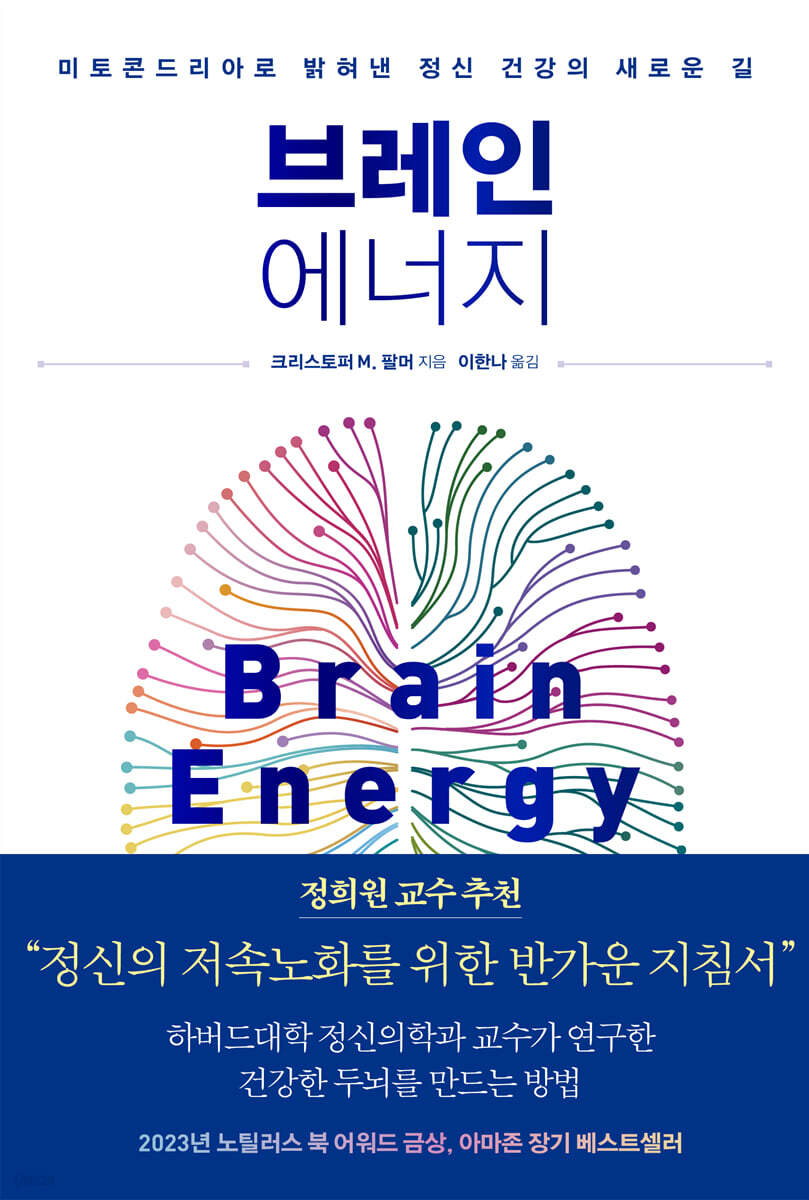
Brain energy
 |
Description
Book Introduction
“It makes a compelling case for how a regular routine, including sleep and sunlight, diet, exercise, medication, and purpose in life, can help people with mental illness by normalizing mitochondrial function.” Professor Kwon Jun-soo of the Department of Psychiatry, Seoul National University Hospital “The moment you open the book, you will learn the know-how to restore the energy of your tired mind. The moment you close the book, you will gain the power to design a happy life.” Kim Dae-soo, Professor of Brain and Cognitive Sciences at KAIST “Lifestyle habits and mental health are all connected through energy metabolism, which is the currency in my body. “A welcome guide to slow mental aging.” Jeong Hee-won, Professor of Geriatrics at Seoul Asan Medical Center Why do we suffer from depression? What are the clear reasons for the onset of various mental illnesses like anxiety disorder, obsessive-compulsive disorder, and ADHD? A book has been published that reveals the root causes of mental illness, which were once thought to be simply a consequence of a specific event or an innate condition, and presents a new paradigm for treating them. 《Brain Energy》 published by Simsim (original title: Brain Energy, Simsim Publishing) is written by Christopher M., a professor of psychiatry at Harvard University. It contains innovative methods discovered by Palmer through observing, treating, and researching mentally ill patients for over 20 years. The book is divided into three parts, the first of which introduces readers to the fresh theory that all mental illnesses are interconnected. Starting with the reasons why symptoms of various mental illnesses, such as depression and anxiety disorders, overlap, it identifies countless intersections between each mental illness and explains, through specific reasons and research, how these can lead to physical illness. Part 2 reveals that it is the mitochondria, the first cellular organelles, that link mental and physical illness. He named this the 'brain energy theory', explaining how mitochondrial dysfunction causes metabolic problems and how it leads to mental illness. Finally, in Part 3, we present a method for treating metabolic problems and various mental illnesses through the 'brain energy theory', which will bring about new changes in the field of psychiatry. In this way, the brain energy theory, based on the concept that 'mental disorders are metabolic disorders of the brain,' offers a fresh perspective on mental illness and suggests effective treatments that can be actively utilized in real life. The issue of linking mitochondrial dysfunction and mental illness is currently being actively researched in the field of psychiatry. Therefore, this book, which presents the innovative concept of brain energy theory, will help patients who have not responded to existing treatments to not only alleviate their symptoms but also move toward complete recovery. |
- You can preview some of the book's contents.
Preview
index
Introduction: All Mental Illnesses Have One Root Cause 7
Part 1: All Mental Illnesses Are Connected
Chapter 1: To Change Your Way, You Must Understand the Reality of Mental Health 21
Mental illness is steadily increasing 23 | Other problems caused by mental health issues 32 | Are current treatments adequate? 35
Chapter 2: What Causes Mental Illness? 43
What's the Real Cause of Depression? 47 | Treatment Differences Based on Signs and Symptoms 58 | The Reality of Treating Every Ailment with Tylenol 63
Chapter 3: Mental Illnesses Always Have Common Pathways 74
78 Mental Illnesses: Similar Yet Different | 84 Things You See When You Look Deeper | 88 The Countless Intersections of Mental Illness
Chapter 4: Are Physical Illnesses Also Linked to Mental Illness? 96
Metabolic Disorders 98 | Neurological Disorders 103 | Darkness Under the Lamp 108
Part 2: The Link Revealed: Brain Energy Theory
Chapter 5: Mental Illness Comes from Metabolic Problems 115
The Ripple Effect of Metabolism 118 | What is Metabolism 122 | Metabolism and Energy Imbalances 124 | Metabolism is Like Traffic Flow 129
Chapter 6: Mental State and Mental Illness 133
The Relationship Between Stress and Metabolism 134 | The Impact of Stress on Body Cells 140 | A New Definition of Mental Illness 144 | Three Cars 147 | What Pain Can Tell Us 150 | Redefining Mental Illness 154 | Three Situations in Which Mental Illness Symptoms Occur 158 | Brain Energy Theory: Solving the Puzzle of Mental Illness 167
Chapter 7: Common Pathways to Hope, Mitochondria 169
The Origins of Mitochondria 171 | Modern Mitochondria 174 | Mitochondria: Turning Cells On and Off 179 | Mitochondria: The Workhorses of Cells 194
Chapter 8 Mitochondria and Brain Energy Imbalance 197
Mitochondrial Dysfunction and Mental Health 200 | What is Mitochondrial Dysfunction? 204 | Mitochondrial Dysfunction and Mental Illness 211 | Brain Energy Theory in Reality 221 | Evidence Linking Mitochondrial Dysfunction and Mental Illness 227 | Diagnosis: Metabolic Brain Dysfunction 235 | Mental Illnesses Are Metabolic Disorders of the Brain 237
Part 3: The Revolution That Brain Energy Theory Will Bring
Chapter 9: Finding the Cause of the Problem and How to Deal with It 241
Why Symptoms and Disabilities Vary Individually 245 | Treatments and Success Stories 249
Chapter 10: How Much Does Family History Affect Mental Illness? 251
Heredity 252 | Epigenetics 257 | Causes and Treatments of Mental Illness as Understood by Genetics and Epigenetics 263
Chapter 11: Neurotransmitters and the Effects of Psychiatric Drugs 267
Psychiatric Drugs, Metabolism, and Mitochondria 273 | Summary 280 | Jane Suffering from Anxiety 281
Chapter 12: Hormones and Metabolic Regulators 285
Cortisol 287 | Insulin 288 | Estrogen 294 | Thyroid Hormone 298 | Summary 300 | James: It Was All 'Because of Thyroid Hormone' 300
Chapter 13: Inflammation: Helping Us Survive 302
The Impact of Inflammation on Metabolism and Mental Health 303 | The Relationship Between Inflammation and Mitochondria 306 | The Role of Inflammation in Healing 309 | Summary 311
Chapter 14: Sleep and Circadian Rhythms 313
The Impact of Sleep, Light, and Circadian Rhythms on Mental Illness 320 | Sleep, Light Exposure, and Improving Circadian Rhythms 322 | Summary 324 | Caleb Struggling at School 325
Chapter 15: How Eating Habits Affect Brain Energy 328
Vitamins and Nutrients 330 | Food Quality 331 | Obesity 336 | The Minnesota Starvation Experiment 341 | The Role of Gut Microbiota 346 | Improving Mental Health Through Diet 348 | Summary 358 | Mildred Regains Mental Health Through Treatment at Age 70 359
Chapter 16: How Drugs and Alcohol Cause Mental Illness 361
Alcohol 364 | Marijuana 367 | Drug and Alcohol Dependence Treatment 370 | Summary 371
Chapter 17: Exercise Can't Solve Everything 372
Benefits of Exercise 379 | Summary 380
Chapter 18: The Power of a Clear Purpose in Life 381
The Impact of Everyday Stress on Your Health 386 | Why a Sense of Purpose Matters 388 | The Effectiveness of Purpose-Focused Therapy 391 | Summary 400 | Sarah Overcame Mental Illness with Pilates 401
Chapter 19: Brain Energy Theory: Examining Conventional Treatments 403
Electroconvulsive Therapy and Transcranial Magnetic Stimulation 404 | Brain Surgery and Electrical Stimulation 406 | Summary 407
Chapter 20: Approaches to Metabolic Treatment Planning 408
Getting Help from a Clinician 410 | Starting a Treatment Plan 411 | Inpatient and Rehabilitation Programs 415 | Creating a Treatment Plan That's Right for You 416 | Beth, Who Didn't Get Better Despite Intensive Medication 417
Chapter 21: A New Beginning for Ambassadorial Health and Mental Health 421
Acknowledgements 425
Later Zhou 427
Search 462
Part 1: All Mental Illnesses Are Connected
Chapter 1: To Change Your Way, You Must Understand the Reality of Mental Health 21
Mental illness is steadily increasing 23 | Other problems caused by mental health issues 32 | Are current treatments adequate? 35
Chapter 2: What Causes Mental Illness? 43
What's the Real Cause of Depression? 47 | Treatment Differences Based on Signs and Symptoms 58 | The Reality of Treating Every Ailment with Tylenol 63
Chapter 3: Mental Illnesses Always Have Common Pathways 74
78 Mental Illnesses: Similar Yet Different | 84 Things You See When You Look Deeper | 88 The Countless Intersections of Mental Illness
Chapter 4: Are Physical Illnesses Also Linked to Mental Illness? 96
Metabolic Disorders 98 | Neurological Disorders 103 | Darkness Under the Lamp 108
Part 2: The Link Revealed: Brain Energy Theory
Chapter 5: Mental Illness Comes from Metabolic Problems 115
The Ripple Effect of Metabolism 118 | What is Metabolism 122 | Metabolism and Energy Imbalances 124 | Metabolism is Like Traffic Flow 129
Chapter 6: Mental State and Mental Illness 133
The Relationship Between Stress and Metabolism 134 | The Impact of Stress on Body Cells 140 | A New Definition of Mental Illness 144 | Three Cars 147 | What Pain Can Tell Us 150 | Redefining Mental Illness 154 | Three Situations in Which Mental Illness Symptoms Occur 158 | Brain Energy Theory: Solving the Puzzle of Mental Illness 167
Chapter 7: Common Pathways to Hope, Mitochondria 169
The Origins of Mitochondria 171 | Modern Mitochondria 174 | Mitochondria: Turning Cells On and Off 179 | Mitochondria: The Workhorses of Cells 194
Chapter 8 Mitochondria and Brain Energy Imbalance 197
Mitochondrial Dysfunction and Mental Health 200 | What is Mitochondrial Dysfunction? 204 | Mitochondrial Dysfunction and Mental Illness 211 | Brain Energy Theory in Reality 221 | Evidence Linking Mitochondrial Dysfunction and Mental Illness 227 | Diagnosis: Metabolic Brain Dysfunction 235 | Mental Illnesses Are Metabolic Disorders of the Brain 237
Part 3: The Revolution That Brain Energy Theory Will Bring
Chapter 9: Finding the Cause of the Problem and How to Deal with It 241
Why Symptoms and Disabilities Vary Individually 245 | Treatments and Success Stories 249
Chapter 10: How Much Does Family History Affect Mental Illness? 251
Heredity 252 | Epigenetics 257 | Causes and Treatments of Mental Illness as Understood by Genetics and Epigenetics 263
Chapter 11: Neurotransmitters and the Effects of Psychiatric Drugs 267
Psychiatric Drugs, Metabolism, and Mitochondria 273 | Summary 280 | Jane Suffering from Anxiety 281
Chapter 12: Hormones and Metabolic Regulators 285
Cortisol 287 | Insulin 288 | Estrogen 294 | Thyroid Hormone 298 | Summary 300 | James: It Was All 'Because of Thyroid Hormone' 300
Chapter 13: Inflammation: Helping Us Survive 302
The Impact of Inflammation on Metabolism and Mental Health 303 | The Relationship Between Inflammation and Mitochondria 306 | The Role of Inflammation in Healing 309 | Summary 311
Chapter 14: Sleep and Circadian Rhythms 313
The Impact of Sleep, Light, and Circadian Rhythms on Mental Illness 320 | Sleep, Light Exposure, and Improving Circadian Rhythms 322 | Summary 324 | Caleb Struggling at School 325
Chapter 15: How Eating Habits Affect Brain Energy 328
Vitamins and Nutrients 330 | Food Quality 331 | Obesity 336 | The Minnesota Starvation Experiment 341 | The Role of Gut Microbiota 346 | Improving Mental Health Through Diet 348 | Summary 358 | Mildred Regains Mental Health Through Treatment at Age 70 359
Chapter 16: How Drugs and Alcohol Cause Mental Illness 361
Alcohol 364 | Marijuana 367 | Drug and Alcohol Dependence Treatment 370 | Summary 371
Chapter 17: Exercise Can't Solve Everything 372
Benefits of Exercise 379 | Summary 380
Chapter 18: The Power of a Clear Purpose in Life 381
The Impact of Everyday Stress on Your Health 386 | Why a Sense of Purpose Matters 388 | The Effectiveness of Purpose-Focused Therapy 391 | Summary 400 | Sarah Overcame Mental Illness with Pilates 401
Chapter 19: Brain Energy Theory: Examining Conventional Treatments 403
Electroconvulsive Therapy and Transcranial Magnetic Stimulation 404 | Brain Surgery and Electrical Stimulation 406 | Summary 407
Chapter 20: Approaches to Metabolic Treatment Planning 408
Getting Help from a Clinician 410 | Starting a Treatment Plan 411 | Inpatient and Rehabilitation Programs 415 | Creating a Treatment Plan That's Right for You 416 | Beth, Who Didn't Get Better Despite Intensive Medication 417
Chapter 21: A New Beginning for Ambassadorial Health and Mental Health 421
Acknowledgements 425
Later Zhou 427
Search 462
Detailed image

Into the book
This question forced me to uncover the links between different diseases and integrate this new knowledge with everything I already knew as a neuroscientist and psychiatrist.
When I finally put all the pieces together, I realized that I had accidentally accomplished something incredible, something I never dreamed possible.
He created a unified theory that explains the root causes of all mental illnesses.
It is called the brain energy theory.
--- p.10
Another alternative is to develop a scientific theory of what happens in the body and brain from beginning to end, and to unravel the chain of events that lead to mental illness, much like the chain of events that led to myocardial infarction discussed earlier.
Then, naturally, research can proceed by looking for evidence that these chains of events are occurring in people exposed to various risk factors.
As I will explain in detail later, all of these types of studies have already been conducted and all the necessary evidence has been gathered.
As of yet, no one has been able to piece together all of this evidence.
That's exactly what this book does.
--- p.73
Simply put, if you have been diagnosed with any mental illness, you are two to thirty times more likely to develop another mental illness later than those who have not.
Which mental illnesses are affected? All of them! While some mental illnesses exhibit overlapping symptoms, resulting in very high odds ratios, the key point here is that the odds ratio increases in all directions for all combinations of mental illnesses.
--- p.92
It's hard to believe that all these disorders share a common path.
If such a common pathway truly exists, it should influence a wide variety of aspects of how the body functions.
And it should be able to tie together all the elements known about these disorders, including risk factors, symptoms, and effective treatments.
It is a truly enormous role for any single bodily process or function to fulfill.
/ As we will soon see in Part 2, the ambassador fills this role just fine.
/ Yes.
Finally, we have arrived at a common path, a root cause, that can answer this tangled web of questions about causes, treatments, symptoms, and overlaps.
/ All mental disorders are metabolic disorders of the brain.
--- p.112
Metabolic problems lead to problems with cellular function.
This applies to all cells that make up the human body.
For example, if there is a problem with the metabolism of heart cells, their ability to pump blood is not as good as before.
Brain cells also require precise control.
You must start your activity at the right time and stop at the right time.
If there is a problem with the metabolism of brain cells, this process of initiating and stopping activity is disrupted.
Because brain function is all about precision, as we will see, problems like this can quickly lead to conditions that are often considered symptoms of mental illness.
--- p.124
These stress responses are perfectly normal, but they are a burden on the metabolism.
This is because as our bodies draw energy to create these changes, the amount of energy available for other functions decreases.
Many of these reactions result in a state of high arousal.
In some situations, they feel threatened and become ready to fight or argue.
In other situations, you may feel hurt, defenseless, or helpless, and want to hide from the world.
In some cases, even metabolic resources are mobilized, resulting in the heart pumping faster.
Blood pressure rises and blood sugar levels increase.
Hormones flood the bloodstream and inflammatory cytokines are secreted.
It is about equipping the body with resources and energy that can be used at any time to defend itself.
--- p.137~138
If you ever took a biology class in school, you'll remember that mitochondria are the "energy powerhouses of the cell."
Mitochondria generate energy for cells by converting nutrients and oxygen into ATP.
We all know that mitochondria play a crucial role in energy production, but their role goes beyond simply being a power plant.
Without mitochondria, life as we know it would not even exist.
--- p.171
As you will soon understand, there is something new about this theory.
No, it's not just new, it's revolutionary.
Researchers like these are so overwhelmed by the complexity inherent in how metabolism and the brain work that they lose track of what causes certain brain regions to be overactivated and others to be underactivated, and so they miss the bigger picture of metabolism.
Moreover, the role that mitochondria play in all of this is overlooked.
Only by taking a step back and looking at the bigger picture can we find new ways to understand what's really going on in our ambassadorial and mental health contexts, allowing us to look at the issue of mental illness from a different perspective.
--- p.199~200
Mitochondrial dysfunction or dysregulation connects everything we know about mental and metabolic disorders in a coherent way.
Mitochondria are their common pathway.
Scientists and purists might consider the term metabolic and mitochondrial theory of mental illness more accurate, as it encompasses everything from the diverse roles mitochondria play to the consequences of various factors influencing metabolism.
But considering that most mental illness symptoms can ultimately be explained by energy dysregulation, the shorter and more memorable term "brain energy theory" makes more sense to me.
--- p.210~211
At this point, you might be wondering what on earth causes metabolic and mitochondrial dysfunction or dysregulation.
There are a ton of answers.
The good news is that many of these are things you already know.
Let's talk about these in the last three parts.
Fortunately, most of them have already been identified and countermeasures are available.
--- p.238
There is hope for improvement even for people who carry the APOE4 genotype, which causes defects in mitochondrial function.
Not everyone who carries this genotype will develop Alzheimer's disease.
As mentioned earlier, some research suggests that promoting autophagy can help reduce the problem.
We'll delve into more specific treatments, including ways to specifically promote autophagy, later, but for now, let's just remember that mental illness, even extreme forms like bipolar disorder or schizophrenia, are unlikely to be caused by permanent, irreversible genetic defects.
The ambassadorial issue can be brought back to normal.
--- p.266
But inflammation isn't always a bad thing.
Inflammation happens all the time.
For the most part, it is a normal process that provides countless benefits to our bodies.
Inflammation is involved in fighting infections and healing injuries.
It also performs a very important signaling function.
It is also involved in normal stress responses.
Inflammatory cytokines are nothing other than a means of transmitting stress signals throughout the body and brain.
Microglia, which act as immune cells in the brain, also influence brain development, learning, and memory.
Without inflammation, we would not survive.
--- p.303
The ketogenic diet has established itself as one of the most studied and effective diets for the brain.
Neurologists, neuroscientists, and pharmaceutical companies have been conducting extensive research for decades to understand the anticonvulsant effects of the ketogenic diet.
As it turns out, the ketogenic diet provides an alternative energy source that serves as a lifeline for insulin-resistant brain cells.
It also alters neurotransmitter concentrations, modulates calcium channels, reduces inflammation, improves gut microbiota, increases overall metabolic rate, reduces insulin resistance itself, and, most importantly, induces mitophagy and mitochondrial biogenesis.
After following a ketogenic diet for several months or years, your cells will have more healthy mitochondria than before.
This can lead to long-term healing.
Even if you stop dieting after 2 to 5 years, you can still live a healthy life.
--- p.355
Once you experience the effects of using a certain substance, you become addicted to it.
But in a way, isn't it not entirely these people's fault? They simply wanted their symptoms to improve.
Sometimes, what they experience after using a particular substance is not necessarily a 'better' state of symptoms, but rather simply a 'different' state than before.
It's a kind of paralysis.
Some may find this condition much better than experiencing the full range of negative symptoms.
In any case, the high incidence of substance use disorder in all mental illnesses, regardless of type, is likely due to attempts to find a way to escape symptoms through the use of specific substances.
--- p.363~364
Should everyone exercise? Yes.
However, it is important to keep in mind that exercise can be more challenging for people with chronic mental illness and may not produce immediate results.
It is also important to be aware of all factors that can impair metabolism and mitochondrial function, as reducing or eliminating their influence is essential to reaping the benefits of exercise.
--- p.379
Brain energy theory offers a significant breakthrough that finally connects the dots and paints a clearer picture of mental illness.
Based on scientific research results, it provides a unified framework by integrating the biological, psychological, and social theories surrounding mental illness.
Once we accept the concept that mental illness is not a syndrome but a metabolic disorder of the brain, new solutions become clear.
In other words, brain energy must be restored by normalizing metabolism and mitochondrial function.
Then the symptoms of mental illness will also begin to disappear.
When I finally put all the pieces together, I realized that I had accidentally accomplished something incredible, something I never dreamed possible.
He created a unified theory that explains the root causes of all mental illnesses.
It is called the brain energy theory.
--- p.10
Another alternative is to develop a scientific theory of what happens in the body and brain from beginning to end, and to unravel the chain of events that lead to mental illness, much like the chain of events that led to myocardial infarction discussed earlier.
Then, naturally, research can proceed by looking for evidence that these chains of events are occurring in people exposed to various risk factors.
As I will explain in detail later, all of these types of studies have already been conducted and all the necessary evidence has been gathered.
As of yet, no one has been able to piece together all of this evidence.
That's exactly what this book does.
--- p.73
Simply put, if you have been diagnosed with any mental illness, you are two to thirty times more likely to develop another mental illness later than those who have not.
Which mental illnesses are affected? All of them! While some mental illnesses exhibit overlapping symptoms, resulting in very high odds ratios, the key point here is that the odds ratio increases in all directions for all combinations of mental illnesses.
--- p.92
It's hard to believe that all these disorders share a common path.
If such a common pathway truly exists, it should influence a wide variety of aspects of how the body functions.
And it should be able to tie together all the elements known about these disorders, including risk factors, symptoms, and effective treatments.
It is a truly enormous role for any single bodily process or function to fulfill.
/ As we will soon see in Part 2, the ambassador fills this role just fine.
/ Yes.
Finally, we have arrived at a common path, a root cause, that can answer this tangled web of questions about causes, treatments, symptoms, and overlaps.
/ All mental disorders are metabolic disorders of the brain.
--- p.112
Metabolic problems lead to problems with cellular function.
This applies to all cells that make up the human body.
For example, if there is a problem with the metabolism of heart cells, their ability to pump blood is not as good as before.
Brain cells also require precise control.
You must start your activity at the right time and stop at the right time.
If there is a problem with the metabolism of brain cells, this process of initiating and stopping activity is disrupted.
Because brain function is all about precision, as we will see, problems like this can quickly lead to conditions that are often considered symptoms of mental illness.
--- p.124
These stress responses are perfectly normal, but they are a burden on the metabolism.
This is because as our bodies draw energy to create these changes, the amount of energy available for other functions decreases.
Many of these reactions result in a state of high arousal.
In some situations, they feel threatened and become ready to fight or argue.
In other situations, you may feel hurt, defenseless, or helpless, and want to hide from the world.
In some cases, even metabolic resources are mobilized, resulting in the heart pumping faster.
Blood pressure rises and blood sugar levels increase.
Hormones flood the bloodstream and inflammatory cytokines are secreted.
It is about equipping the body with resources and energy that can be used at any time to defend itself.
--- p.137~138
If you ever took a biology class in school, you'll remember that mitochondria are the "energy powerhouses of the cell."
Mitochondria generate energy for cells by converting nutrients and oxygen into ATP.
We all know that mitochondria play a crucial role in energy production, but their role goes beyond simply being a power plant.
Without mitochondria, life as we know it would not even exist.
--- p.171
As you will soon understand, there is something new about this theory.
No, it's not just new, it's revolutionary.
Researchers like these are so overwhelmed by the complexity inherent in how metabolism and the brain work that they lose track of what causes certain brain regions to be overactivated and others to be underactivated, and so they miss the bigger picture of metabolism.
Moreover, the role that mitochondria play in all of this is overlooked.
Only by taking a step back and looking at the bigger picture can we find new ways to understand what's really going on in our ambassadorial and mental health contexts, allowing us to look at the issue of mental illness from a different perspective.
--- p.199~200
Mitochondrial dysfunction or dysregulation connects everything we know about mental and metabolic disorders in a coherent way.
Mitochondria are their common pathway.
Scientists and purists might consider the term metabolic and mitochondrial theory of mental illness more accurate, as it encompasses everything from the diverse roles mitochondria play to the consequences of various factors influencing metabolism.
But considering that most mental illness symptoms can ultimately be explained by energy dysregulation, the shorter and more memorable term "brain energy theory" makes more sense to me.
--- p.210~211
At this point, you might be wondering what on earth causes metabolic and mitochondrial dysfunction or dysregulation.
There are a ton of answers.
The good news is that many of these are things you already know.
Let's talk about these in the last three parts.
Fortunately, most of them have already been identified and countermeasures are available.
--- p.238
There is hope for improvement even for people who carry the APOE4 genotype, which causes defects in mitochondrial function.
Not everyone who carries this genotype will develop Alzheimer's disease.
As mentioned earlier, some research suggests that promoting autophagy can help reduce the problem.
We'll delve into more specific treatments, including ways to specifically promote autophagy, later, but for now, let's just remember that mental illness, even extreme forms like bipolar disorder or schizophrenia, are unlikely to be caused by permanent, irreversible genetic defects.
The ambassadorial issue can be brought back to normal.
--- p.266
But inflammation isn't always a bad thing.
Inflammation happens all the time.
For the most part, it is a normal process that provides countless benefits to our bodies.
Inflammation is involved in fighting infections and healing injuries.
It also performs a very important signaling function.
It is also involved in normal stress responses.
Inflammatory cytokines are nothing other than a means of transmitting stress signals throughout the body and brain.
Microglia, which act as immune cells in the brain, also influence brain development, learning, and memory.
Without inflammation, we would not survive.
--- p.303
The ketogenic diet has established itself as one of the most studied and effective diets for the brain.
Neurologists, neuroscientists, and pharmaceutical companies have been conducting extensive research for decades to understand the anticonvulsant effects of the ketogenic diet.
As it turns out, the ketogenic diet provides an alternative energy source that serves as a lifeline for insulin-resistant brain cells.
It also alters neurotransmitter concentrations, modulates calcium channels, reduces inflammation, improves gut microbiota, increases overall metabolic rate, reduces insulin resistance itself, and, most importantly, induces mitophagy and mitochondrial biogenesis.
After following a ketogenic diet for several months or years, your cells will have more healthy mitochondria than before.
This can lead to long-term healing.
Even if you stop dieting after 2 to 5 years, you can still live a healthy life.
--- p.355
Once you experience the effects of using a certain substance, you become addicted to it.
But in a way, isn't it not entirely these people's fault? They simply wanted their symptoms to improve.
Sometimes, what they experience after using a particular substance is not necessarily a 'better' state of symptoms, but rather simply a 'different' state than before.
It's a kind of paralysis.
Some may find this condition much better than experiencing the full range of negative symptoms.
In any case, the high incidence of substance use disorder in all mental illnesses, regardless of type, is likely due to attempts to find a way to escape symptoms through the use of specific substances.
--- p.363~364
Should everyone exercise? Yes.
However, it is important to keep in mind that exercise can be more challenging for people with chronic mental illness and may not produce immediate results.
It is also important to be aware of all factors that can impair metabolism and mitochondrial function, as reducing or eliminating their influence is essential to reaping the benefits of exercise.
--- p.379
Brain energy theory offers a significant breakthrough that finally connects the dots and paints a clearer picture of mental illness.
Based on scientific research results, it provides a unified framework by integrating the biological, psychological, and social theories surrounding mental illness.
Once we accept the concept that mental illness is not a syndrome but a metabolic disorder of the brain, new solutions become clear.
In other words, brain energy must be restored by normalizing metabolism and mitochondrial function.
Then the symptoms of mental illness will also begin to disappear.
--- p.422
Publisher's Review
Depression, anxiety, nervousness, insomnia… …
The cause of these diseases is ‘brain energy deficiency’!
“A Harvard University psychiatry professor has revealed this through research over 20 years.
“A revolutionary theory on body and mind health”
The World Health Organization reported that as of 2017, nearly 800 million people worldwide suffered from mental health problems.
According to the National Center for Mental Health under the Ministry of Health and Welfare of Korea, the lifetime prevalence of mental illness is 27.8%, meaning that the probability of suffering from a mental illness during one's lifetime is higher than expected.
The need for mental illness treatment is increasing day by day, but the utilization rate of mental health services is only 4.5 percent.
There are many reasons, but one of them is the unclear treatment method.
This is because the fundamental causes of mental illnesses such as depression, obsessive-compulsive disorder, anxiety, and agitation are not clear, so treatment is administered based on symptoms or relies solely on medication.
Current treatment for mental illness is limited to taking measures based on the patient's subjective symptoms, such as feeling like their heart is beating fast, feeling depressed, or feeling like something scary is about to happen. Therefore, it is difficult to say that there is an effective treatment that identifies and resolves the root cause.
In this regard, Christopher M., author of Brain Energy,
Palmer says that maintaining current treatment methods in mental health is like trying to cure every illness with one Tylenol, and that we need to find a fundamental solution.
Through over 20 years of research, he established the 'brain energy theory', discovered one cause of mental illness, and organized the corresponding treatment method in this book.
This three-part book explains why people with mental illness and mental health professionals often miss the root causes and how mental illness is linked to metabolic disorders, a physical illness.
Next, we delve into the key role that mitochondria play.
The author also included in the book cases where he cured illnesses or alleviated symptoms through his 'brain energy theory'.
"Brain Energy" offers new and surprising insights, uncovered through over 20 years of research, and will open new horizons in psychiatry that transcend the limitations of conventional mental illness treatment.
Why Mental and Physical Illnesses Occur Simultaneously
“Revealed by the ‘brain energy theory’
“A New Perspective on Health”
Many people diagnosed with a mental illness suffer from more than one mental illness at the same time.
For example, a person diagnosed with ADHD may also be diagnosed with bipolar disorder.
Besides these examples, many people with mental illness experience specific 'symptoms' of other mental illnesses.
It is said that it even causes metabolic disorders such as high blood pressure, diabetes, and cardiovascular disease.
Is there a specific reason for this? Why do mental and physical illnesses often coexist? The author traced back the overlapping symptoms and determined that there was a common pathway that triggered all these disorders, and discovered what it was.
We tend to label people who say they are tired and lack energy as lazy.
If you have the will, you can do it, but you think you're making excuses.
But what if feeling tired and listless really meant feeling "tired" and "out of energy"? Studies of people with mental illness and metabolic disorders who frequently report feeling tired and listless have found that they have a lack of brain energy.
In other words, brain energy deficiency causes mental illness and even metabolic disorders.
The author has conducted research on this for over 20 years and established the 'brain energy theory', which states that the cause of mental illness and metabolic disorders in the body is metabolic disorders in the brain.
Brain energy theory offers a significant breakthrough that finally connects the dots and paints a clearer picture of mental illness.
Based on scientific research results, it provides a unified framework by integrating the biological, psychological, and social theories surrounding mental illness.
Once we accept the concept that mental illness is not a syndrome but a metabolic disorder of the brain, new solutions become clear.
In other words, brain energy must be restored by normalizing metabolism and mitochondrial function.
Then the symptoms of mental illness will also begin to disappear (p. 422).
So what's the single cause that affects both mind and body? What causes brain metabolic disorders? Brain Energy argues that mitochondria are the cause of all these metabolic processes.
Mitochondrial dysfunction is a common pathway that causes both mental and physical illness.
The key to mental and physical health is
It's mitochondria!
“Mitochondrial dysfunction
How does it eat away at our bodies?
Mitochondria are organelles that are believed to have evolved into their current form from independent organisms approximately 1 to 4 billion years ago.
When they were bacteria in the past, they combined with unicellular organisms to form the first eukaryotic cells, and as the first cellular organelle, they influenced the cellular organelles that developed later.
Even today, mitochondria not only generate energy within cells, but also control cellular activity and lead metabolism.
Mitochondrial function affects every cell in the human body.
Because they are involved in all aspects of cellular function, neurotransmitters, hormones, inflammation, immune system function, gene expression regulation, cell development and maintenance, and health management, mitochondria have a wide-ranging influence on the body and brain.
Mitochondria are the drivers that control cells and metabolism.
It is the worker that makes the factory called the human body function properly (p. 197).
To explain the 'brain energy theory' more precisely, it is a theory that not only metabolic disorders but also mental illnesses are caused by energy imbalances resulting from metabolic and mitochondrial dysfunction and dysregulation.
Mental illness is directly related to brain function and can be divided into three categories: overactivation of brain function, underactivation of brain function, and absence of specific brain functions.
And all of these actions are manifested by mitochondrial dysfunction.
Mitochondria do everything that allows us to live.
It has a major impact on overall brain activity, including not only energy production but also the development of brain cells, the expression of various genes, and the formation and pruning of new synapses.
Therefore, if there is a malfunction in the mitochondria, structural and functional problems in the brain will occur.
Mitochondria facilitate the maintenance and repair functions of the body through interaction with other cellular organelles. If mitochondria do not move smoothly or function properly within a cell, problems will inevitably arise in the function of that cell.
A representative example of this type of mitochondrial dysfunction is delirium.
Delirium indicates that mitochondrial dysfunction has occurred in the brain.
In some cases, mitochondrial function is restored and symptoms completely resolve.
But that's not always the case.
Data such as the above suggest that mitochondrial dysfunction may persist or even worsen.
When mitochondria are damaged, the number of mitochondria in a cell that can function properly decreases.
This leaves those cells much more vulnerable to continued dysfunction.
In this way, some cells may actually die and not be replaced by new cells.
All of this results in a decrease in the reserve capacity of various brain regions.
When the activity of brain regions is impaired in this way, it eventually leads to mental illness, Alzheimer's disease, seizures, etc. (p. 233).
So what causes metabolic and mitochondrial dysfunction and dysregulation? The author surprisingly says most of them are already known factors.
And by carefully examining the relevant research conducted to date, we demonstrate how persuasively the 'brain energy theory' embraces all research results.
It also presents successful treatment cases and shows a new way to treat mental illness.
Ambassadors and mental health issues
It can be treated with brain energy theory.
"A revolutionary paradigm that will transform the future of mental illness treatment."
If we look at treatments that previously relied solely on symptoms through the lens of mitochondrial dysfunction, will it make a real-world difference? And now that we've identified the single cause of mental illness and metabolic disorders, can we achieve health without going to the hospital? The author explains how to alleviate mitochondrial dysfunction based on contributing factors—genetics, neurotransmitters, psychiatric medications, hormones, inflammation, lifestyle habits, etc.—and offers suggestions for self-improvement and recommendations for those already seeing a doctor.
For example, sleep, light, and circadian rhythms are interconnected.
Sleep helps the body use metabolic resources for functions such as growth, maintenance, and repair.
Light is an important factor that influences circadian rhythms, and signals generated during the process of detecting light affect cellular activity.
Therefore, whether you sleep too much, too little, or have poor quality sleep, it all puts a strain on your metabolism and, if it gets worse, can negatively impact your mental health.
Eating habits also have a major impact on metabolism and mitochondria.
If you are deficient in certain nutrients or frequently eat foods that are detrimental to your metabolism, you need to review your eating habits and fill in what you lack and remove what is not good for you.
Obese people, in particular, are often insulin resistant, and because insulin directly affects how mitochondria in the brain respond to stress, when insulin is less efficient, mitochondria are less efficient as well.
The author actually included a case in the book where a student suffering from ADHD and depression was encouraged to reduce the amount of sugary foods he ate to relieve stress and to expose himself to light for at least 30 minutes every morning to improve his circadian rhythm and sleep patterns. This quickly led to improvement in his condition, which had been worsening for years.
Within a month of making some changes to his lifestyle and eating habits, his depression symptoms had eased, his concentration had improved, and his behavior and school grades had noticeably improved.
Most of the time, it is the environment that is 'flawed', not the people.
To 'cure' mental illness, these problems must be identified and corrected.
In this case, the cause is clearly the ‘environment’.
The environment we're talking about here includes all factors that affect metabolism and mitochondria, including diet, exercise, stress, light, sleep, hormones, inflammation, intimate relationships, love, and meaning and purpose in life.
Of course, some people inherit epigenetic factors like microRNAs that contribute to mental illness, but these too can be changed.
Ambassadors are easily changed by various factors, and there are endless ways to improve them (pp. 408-409).
In this book, the author argues that identifying the root causes of mental illness is the most important task, and that based on this awareness, the current treatment methods for mental illness must be changed.
"Brain Energy" is a book that contains a revolutionary theory that clearly explains the causes of mental illness, which have not been properly understood until now, and it will provide hope to the countless patients with mental illness and metabolic disorders who continue to suffer today.
The cause of these diseases is ‘brain energy deficiency’!
“A Harvard University psychiatry professor has revealed this through research over 20 years.
“A revolutionary theory on body and mind health”
The World Health Organization reported that as of 2017, nearly 800 million people worldwide suffered from mental health problems.
According to the National Center for Mental Health under the Ministry of Health and Welfare of Korea, the lifetime prevalence of mental illness is 27.8%, meaning that the probability of suffering from a mental illness during one's lifetime is higher than expected.
The need for mental illness treatment is increasing day by day, but the utilization rate of mental health services is only 4.5 percent.
There are many reasons, but one of them is the unclear treatment method.
This is because the fundamental causes of mental illnesses such as depression, obsessive-compulsive disorder, anxiety, and agitation are not clear, so treatment is administered based on symptoms or relies solely on medication.
Current treatment for mental illness is limited to taking measures based on the patient's subjective symptoms, such as feeling like their heart is beating fast, feeling depressed, or feeling like something scary is about to happen. Therefore, it is difficult to say that there is an effective treatment that identifies and resolves the root cause.
In this regard, Christopher M., author of Brain Energy,
Palmer says that maintaining current treatment methods in mental health is like trying to cure every illness with one Tylenol, and that we need to find a fundamental solution.
Through over 20 years of research, he established the 'brain energy theory', discovered one cause of mental illness, and organized the corresponding treatment method in this book.
This three-part book explains why people with mental illness and mental health professionals often miss the root causes and how mental illness is linked to metabolic disorders, a physical illness.
Next, we delve into the key role that mitochondria play.
The author also included in the book cases where he cured illnesses or alleviated symptoms through his 'brain energy theory'.
"Brain Energy" offers new and surprising insights, uncovered through over 20 years of research, and will open new horizons in psychiatry that transcend the limitations of conventional mental illness treatment.
Why Mental and Physical Illnesses Occur Simultaneously
“Revealed by the ‘brain energy theory’
“A New Perspective on Health”
Many people diagnosed with a mental illness suffer from more than one mental illness at the same time.
For example, a person diagnosed with ADHD may also be diagnosed with bipolar disorder.
Besides these examples, many people with mental illness experience specific 'symptoms' of other mental illnesses.
It is said that it even causes metabolic disorders such as high blood pressure, diabetes, and cardiovascular disease.
Is there a specific reason for this? Why do mental and physical illnesses often coexist? The author traced back the overlapping symptoms and determined that there was a common pathway that triggered all these disorders, and discovered what it was.
We tend to label people who say they are tired and lack energy as lazy.
If you have the will, you can do it, but you think you're making excuses.
But what if feeling tired and listless really meant feeling "tired" and "out of energy"? Studies of people with mental illness and metabolic disorders who frequently report feeling tired and listless have found that they have a lack of brain energy.
In other words, brain energy deficiency causes mental illness and even metabolic disorders.
The author has conducted research on this for over 20 years and established the 'brain energy theory', which states that the cause of mental illness and metabolic disorders in the body is metabolic disorders in the brain.
Brain energy theory offers a significant breakthrough that finally connects the dots and paints a clearer picture of mental illness.
Based on scientific research results, it provides a unified framework by integrating the biological, psychological, and social theories surrounding mental illness.
Once we accept the concept that mental illness is not a syndrome but a metabolic disorder of the brain, new solutions become clear.
In other words, brain energy must be restored by normalizing metabolism and mitochondrial function.
Then the symptoms of mental illness will also begin to disappear (p. 422).
So what's the single cause that affects both mind and body? What causes brain metabolic disorders? Brain Energy argues that mitochondria are the cause of all these metabolic processes.
Mitochondrial dysfunction is a common pathway that causes both mental and physical illness.
The key to mental and physical health is
It's mitochondria!
“Mitochondrial dysfunction
How does it eat away at our bodies?
Mitochondria are organelles that are believed to have evolved into their current form from independent organisms approximately 1 to 4 billion years ago.
When they were bacteria in the past, they combined with unicellular organisms to form the first eukaryotic cells, and as the first cellular organelle, they influenced the cellular organelles that developed later.
Even today, mitochondria not only generate energy within cells, but also control cellular activity and lead metabolism.
Mitochondrial function affects every cell in the human body.
Because they are involved in all aspects of cellular function, neurotransmitters, hormones, inflammation, immune system function, gene expression regulation, cell development and maintenance, and health management, mitochondria have a wide-ranging influence on the body and brain.
Mitochondria are the drivers that control cells and metabolism.
It is the worker that makes the factory called the human body function properly (p. 197).
To explain the 'brain energy theory' more precisely, it is a theory that not only metabolic disorders but also mental illnesses are caused by energy imbalances resulting from metabolic and mitochondrial dysfunction and dysregulation.
Mental illness is directly related to brain function and can be divided into three categories: overactivation of brain function, underactivation of brain function, and absence of specific brain functions.
And all of these actions are manifested by mitochondrial dysfunction.
Mitochondria do everything that allows us to live.
It has a major impact on overall brain activity, including not only energy production but also the development of brain cells, the expression of various genes, and the formation and pruning of new synapses.
Therefore, if there is a malfunction in the mitochondria, structural and functional problems in the brain will occur.
Mitochondria facilitate the maintenance and repair functions of the body through interaction with other cellular organelles. If mitochondria do not move smoothly or function properly within a cell, problems will inevitably arise in the function of that cell.
A representative example of this type of mitochondrial dysfunction is delirium.
Delirium indicates that mitochondrial dysfunction has occurred in the brain.
In some cases, mitochondrial function is restored and symptoms completely resolve.
But that's not always the case.
Data such as the above suggest that mitochondrial dysfunction may persist or even worsen.
When mitochondria are damaged, the number of mitochondria in a cell that can function properly decreases.
This leaves those cells much more vulnerable to continued dysfunction.
In this way, some cells may actually die and not be replaced by new cells.
All of this results in a decrease in the reserve capacity of various brain regions.
When the activity of brain regions is impaired in this way, it eventually leads to mental illness, Alzheimer's disease, seizures, etc. (p. 233).
So what causes metabolic and mitochondrial dysfunction and dysregulation? The author surprisingly says most of them are already known factors.
And by carefully examining the relevant research conducted to date, we demonstrate how persuasively the 'brain energy theory' embraces all research results.
It also presents successful treatment cases and shows a new way to treat mental illness.
Ambassadors and mental health issues
It can be treated with brain energy theory.
"A revolutionary paradigm that will transform the future of mental illness treatment."
If we look at treatments that previously relied solely on symptoms through the lens of mitochondrial dysfunction, will it make a real-world difference? And now that we've identified the single cause of mental illness and metabolic disorders, can we achieve health without going to the hospital? The author explains how to alleviate mitochondrial dysfunction based on contributing factors—genetics, neurotransmitters, psychiatric medications, hormones, inflammation, lifestyle habits, etc.—and offers suggestions for self-improvement and recommendations for those already seeing a doctor.
For example, sleep, light, and circadian rhythms are interconnected.
Sleep helps the body use metabolic resources for functions such as growth, maintenance, and repair.
Light is an important factor that influences circadian rhythms, and signals generated during the process of detecting light affect cellular activity.
Therefore, whether you sleep too much, too little, or have poor quality sleep, it all puts a strain on your metabolism and, if it gets worse, can negatively impact your mental health.
Eating habits also have a major impact on metabolism and mitochondria.
If you are deficient in certain nutrients or frequently eat foods that are detrimental to your metabolism, you need to review your eating habits and fill in what you lack and remove what is not good for you.
Obese people, in particular, are often insulin resistant, and because insulin directly affects how mitochondria in the brain respond to stress, when insulin is less efficient, mitochondria are less efficient as well.
The author actually included a case in the book where a student suffering from ADHD and depression was encouraged to reduce the amount of sugary foods he ate to relieve stress and to expose himself to light for at least 30 minutes every morning to improve his circadian rhythm and sleep patterns. This quickly led to improvement in his condition, which had been worsening for years.
Within a month of making some changes to his lifestyle and eating habits, his depression symptoms had eased, his concentration had improved, and his behavior and school grades had noticeably improved.
Most of the time, it is the environment that is 'flawed', not the people.
To 'cure' mental illness, these problems must be identified and corrected.
In this case, the cause is clearly the ‘environment’.
The environment we're talking about here includes all factors that affect metabolism and mitochondria, including diet, exercise, stress, light, sleep, hormones, inflammation, intimate relationships, love, and meaning and purpose in life.
Of course, some people inherit epigenetic factors like microRNAs that contribute to mental illness, but these too can be changed.
Ambassadors are easily changed by various factors, and there are endless ways to improve them (pp. 408-409).
In this book, the author argues that identifying the root causes of mental illness is the most important task, and that based on this awareness, the current treatment methods for mental illness must be changed.
"Brain Energy" is a book that contains a revolutionary theory that clearly explains the causes of mental illness, which have not been properly understood until now, and it will provide hope to the countless patients with mental illness and metabolic disorders who continue to suffer today.
GOODS SPECIFICS
- Date of issue: September 20, 2024
- Page count, weight, size: 468 pages | 630g | 145*215*30mm
- ISBN13: 9791172540203
You may also like
카테고리
korean


korean

![GQ KOREA Mark (Monthly): December [2025]](http://librairie.coreenne.fr/cdn/shop/files/8ef265dbbfbf186523ed75ba7319009d.jpg?v=1765340328&width=3840)


