

scientific mind
 |
Description
Book Introduction
“My lab is right here now.”
The mindset of filling out a questionnaire together, not an answer sheet
The story of 10 scientists begins right there.
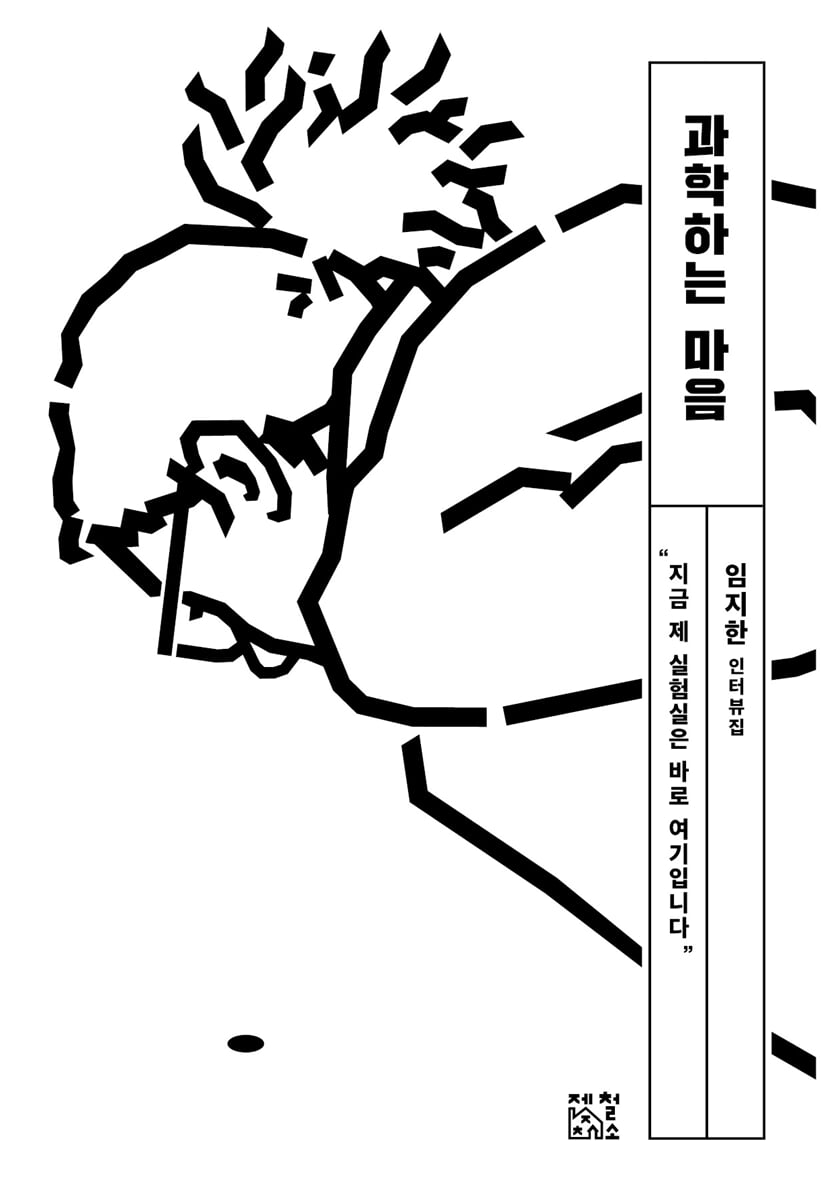
The protagonist of the seventh book in the steel mill interview series, “Working Mind,” is a scientist.
Author Lim Ji-han, who majored in nuclear engineering at university and completed his doctoral studies in philosophy of science and science and technology studies, vividly captured the expressions of domestic scientists he met in the laboratory.
The ten scientists you'll meet in this book are all individuals with their own questions, though their subjects may be different.
And there is always a question mark in their hearts.
The author takes us into the labs of scientists through interviews grounded in his love of science.
Above all, it is also excellent as a science textbook in that it easily explains unfamiliar scientific theories.
The author says:
“Science is often seen as an academic discipline that pursues objective, rational, and absolute truth, but if you look closely, objectivity, rationality, and absoluteness are quite complex and controversial concepts,” he said. “If understanding scientists leads to trust in science, this is also socially meaningful.”
Therefore, the stories of scientists engrossed in research in diverse fields such as glaciers, flora and fauna, lunar orbit, and artificial intelligence will provide insights beyond science into our lives and environment.
Moreover, I believe that this will provide us with a meaningful questionnaire about the future, as we live in an era where questions are more important than answers.
The mindset of filling out a questionnaire together, not an answer sheet
The story of 10 scientists begins right there.
The protagonist of the seventh book in the steel mill interview series, “Working Mind,” is a scientist.
Author Lim Ji-han, who majored in nuclear engineering at university and completed his doctoral studies in philosophy of science and science and technology studies, vividly captured the expressions of domestic scientists he met in the laboratory.
The ten scientists you'll meet in this book are all individuals with their own questions, though their subjects may be different.
And there is always a question mark in their hearts.
The author takes us into the labs of scientists through interviews grounded in his love of science.
Above all, it is also excellent as a science textbook in that it easily explains unfamiliar scientific theories.
The author says:
“Science is often seen as an academic discipline that pursues objective, rational, and absolute truth, but if you look closely, objectivity, rationality, and absoluteness are quite complex and controversial concepts,” he said. “If understanding scientists leads to trust in science, this is also socially meaningful.”
Therefore, the stories of scientists engrossed in research in diverse fields such as glaciers, flora and fauna, lunar orbit, and artificial intelligence will provide insights beyond science into our lives and environment.
Moreover, I believe that this will provide us with a meaningful questionnaire about the future, as we live in an era where questions are more important than answers.
- You can preview some of the book's contents.
Preview
index
introduction
Shin Jin-hwa, the mind that studies glaciers
Yang Jin-hwa, the study of boiling water
Kim Jun, a man of passion for studying the genome
Jang Su-jin, a dolphin researcher
Lee Won-ryeong, a researcher of biosensors
Heo Tae-im, a mind to study plants
Jeongseong, a heart that studies secondary batteries
Bae Sang-soo, the mind behind researching genetic scissors
Bae Jong-hee, a mind to study the lunar orbit
Hwang Won-seok, a researcher of artificial intelligence
Shin Jin-hwa, the mind that studies glaciers
Yang Jin-hwa, the study of boiling water
Kim Jun, a man of passion for studying the genome
Jang Su-jin, a dolphin researcher
Lee Won-ryeong, a researcher of biosensors
Heo Tae-im, a mind to study plants
Jeongseong, a heart that studies secondary batteries
Bae Sang-soo, the mind behind researching genetic scissors
Bae Jong-hee, a mind to study the lunar orbit
Hwang Won-seok, a researcher of artificial intelligence
Detailed image

Into the book
Science is often seen as a discipline that pursues objective, rational, and absolute truth, but objectivity, rationality, and absoluteness are actually quite complex and controversial concepts.
Understanding scientists is intertwined with understanding science, which in turn provides insight into our lives and the environment.
If understanding scientists leads to trust in science, this is also socially meaningful.
The debate surrounding science and technology today, such as the Fukushima contaminated water issue, is partly due to anxiety about science and technology and partly to distrust of experts, including scientists.
Trust begins with empathy and understanding.
And above all, we need new 'science kids'.
I hope there will be more 'so-and-so' who want to become scientists, not great men or villains.
--- p.10~11, from the “Preface”
I brought up the subject of movies to Shin Jin-hwa and asked him a brief question about the reality of climate change.
But, like in the movies, if you drill into an iceberg in Antarctica and the bottom splits open, it won't happen, stupid questions like that.
He laughed, saying, "It's just a movie, after all," but said that traces of climate change could easily be found in Greenland.
Even if you don't bother looking up photos from 10 years ago and comparing them to the clearly shrunken glaciers, you can feel the changes firsthand when living there.
For example, there was a ridiculous story about a bathroom tent that was set up outdoors, and people piled up snow around it to make supports, but unlike previous years, the temperature was higher, so the accumulated snow sublimated, and the bathroom tent was blown away by the wind.
--- p.42~43, from “New Evolution, the Mind of Studying Glaciers”
While listening to Yang Jin-hwa's story about the laboratory, Francis Bacon's 'Solomon's House' suddenly came to mind.
Bacon's fictional scientific laboratory features a diverse group of people gathering information, designing experiments, and interpreting the results.
The collaborative structure seemed to foreshadow today's large-scale scientific projects.
Yang Jin-hwa's work also involves forming a team of about ten people and planning a schedule for several months for a single experiment.
Researchers who design experiments and technicians who assemble and operate the equipment each demonstrate their expertise and share their roles, and all results are created together.
Although represented by only one name, the experiment is truly a collaborative effort.
--- p.87, from “Yang Jin-hwa, The Mind that Study Boiling Water”
When I asked Kim Jun if he had a dream goal like Gon and Killua, he told me the most ultimate question in biology.
Finding out the differences between different organisms, what makes them similar and different, and why.
This is the age-old question in biology, Kim Jun said, and he says people in each era are trying to find the answer in the best way possible.
I, too, am in the process of finding answers to the same questions using current technology and methods. Ultimately, this question is related to the well-being of humanity, so studying mutations related to disease and aging is meaningful.
--- p.121, from “Kim Jun, The Mind of Studying Genomes”
As the saying goes, “Calling someone by name is the first way humans embrace others,” the act of giving a name comes from the desire to understand the object.
To researchers, a dolphin is not just one individual among many, but an 'arrow' with a specific dorsal fin, a 'nao' that was once caught in a net, and a 'siwol' that lost its calf.
Naming is something that would be impossible without a love for dolphins.
--- p.135~136, from “Jang Su-jin, The Mind of Studying Dolphins”
For him, the lab is not simply a space for experiments and papers.
He hoped that the research process itself would be an enjoyable and meaningful experience for the junior researchers who would be working in the lab with him.
Just as I have found my own path at every moment of choice, I hope that those in the lab will also find their own direction.
He knew better than anyone that the experience gained through research and problem solving in a lab was more valuable than the research results themselves.
--- p.185~186, from “Lee Won-ryeong, The Mind of Researching Biosensors”
A sentence from the preface to his book, “My Green List by Plant Taxonomist Heo Tae-im,” came to mind.
“To you who know that the most natural thing is the most scientific thing.” I thought I finally understood the meaning of that sentence.
Plant taxonomy is one of the oldest ways of looking at the world, the quietest yet most fundamental science.
Learning to see, learning to understand, and finally getting to know the world little by little.
--- p.201, from “Heo Tae-im, The Mind of Studying Plants”
For Jeong Seong-eun, the zero-energy house is not simply a technological innovation.
It is a symbol that shows how humans and the environment can coexist in harmony.
He said that when he shares this concept with his students and envisions the future together, he feels that the meaning of his research becomes clearer.
Jeong Seong-eun's research has been a journey beyond energy systems, seeking ways for humans and the planet to move forward together in a sustainable way.
In that context, the zero-energy house may not be a simple building, but rather a starting point that provides the inspiration needed to design the future.
--- p.238~239, from “Jeong Seong-eun, the heart of researching secondary batteries”
He described himself as a "tool sharpener," but that wasn't just a humble remark.
In fact, the process of deciding where and how the tools he created would be used was always done through discussion with others.
A precisely sharpened knife, when held in the right hands, can make the impossible possible.
But the job of designing that sword is clearly Baesangsu's.
How can this invisible tool be so precisely drawn and crafted? He unhesitatingly pointed to "ideas" as the starting point.
--- p.261, from “Bae Sang-soo, The Mind of Researching Gene Scissors”
Bae Jong-hee was the person who most deeply understood the detailed structure of trajectory design.
The lack of hierarchy within an organization means that there is a lot of responsibility for each person.
He knew better than anyone that if his calculations were wrong, the entire system based on those calculations could be shaken, so he checked each and every number every day.
Even in the midst of an urgent project, Bae Jong-hee did not feel impatient.
What was more important than position or hierarchy within the team was 'how accurately the calculations were made.'
--- p.297, from “Bae Jong-hee, The Mind That Researches the Moon’s Orbit”
The joy of artificial intelligence research, as Hwang Won-seok put it, goes beyond technical achievements.
The first is a creative process that starts from failure.
For example, when the artificial neural network he designed fails to perform as expected, he does not remain disappointed.
Rather, we analyze the cause, redesign the model structure, or repeat the experiment by supplementing the necessary data.
So when the neural network finally works properly, he feels a deep sense of satisfaction as he sees his system responding in a meaningful way.
It is not simply a matter of getting the right answer; the process of finding the answer through understanding and analysis itself is what gives scientists a sense of accomplishment.
Understanding scientists is intertwined with understanding science, which in turn provides insight into our lives and the environment.
If understanding scientists leads to trust in science, this is also socially meaningful.
The debate surrounding science and technology today, such as the Fukushima contaminated water issue, is partly due to anxiety about science and technology and partly to distrust of experts, including scientists.
Trust begins with empathy and understanding.
And above all, we need new 'science kids'.
I hope there will be more 'so-and-so' who want to become scientists, not great men or villains.
--- p.10~11, from the “Preface”
I brought up the subject of movies to Shin Jin-hwa and asked him a brief question about the reality of climate change.
But, like in the movies, if you drill into an iceberg in Antarctica and the bottom splits open, it won't happen, stupid questions like that.
He laughed, saying, "It's just a movie, after all," but said that traces of climate change could easily be found in Greenland.
Even if you don't bother looking up photos from 10 years ago and comparing them to the clearly shrunken glaciers, you can feel the changes firsthand when living there.
For example, there was a ridiculous story about a bathroom tent that was set up outdoors, and people piled up snow around it to make supports, but unlike previous years, the temperature was higher, so the accumulated snow sublimated, and the bathroom tent was blown away by the wind.
--- p.42~43, from “New Evolution, the Mind of Studying Glaciers”
While listening to Yang Jin-hwa's story about the laboratory, Francis Bacon's 'Solomon's House' suddenly came to mind.
Bacon's fictional scientific laboratory features a diverse group of people gathering information, designing experiments, and interpreting the results.
The collaborative structure seemed to foreshadow today's large-scale scientific projects.
Yang Jin-hwa's work also involves forming a team of about ten people and planning a schedule for several months for a single experiment.
Researchers who design experiments and technicians who assemble and operate the equipment each demonstrate their expertise and share their roles, and all results are created together.
Although represented by only one name, the experiment is truly a collaborative effort.
--- p.87, from “Yang Jin-hwa, The Mind that Study Boiling Water”
When I asked Kim Jun if he had a dream goal like Gon and Killua, he told me the most ultimate question in biology.
Finding out the differences between different organisms, what makes them similar and different, and why.
This is the age-old question in biology, Kim Jun said, and he says people in each era are trying to find the answer in the best way possible.
I, too, am in the process of finding answers to the same questions using current technology and methods. Ultimately, this question is related to the well-being of humanity, so studying mutations related to disease and aging is meaningful.
--- p.121, from “Kim Jun, The Mind of Studying Genomes”
As the saying goes, “Calling someone by name is the first way humans embrace others,” the act of giving a name comes from the desire to understand the object.
To researchers, a dolphin is not just one individual among many, but an 'arrow' with a specific dorsal fin, a 'nao' that was once caught in a net, and a 'siwol' that lost its calf.
Naming is something that would be impossible without a love for dolphins.
--- p.135~136, from “Jang Su-jin, The Mind of Studying Dolphins”
For him, the lab is not simply a space for experiments and papers.
He hoped that the research process itself would be an enjoyable and meaningful experience for the junior researchers who would be working in the lab with him.
Just as I have found my own path at every moment of choice, I hope that those in the lab will also find their own direction.
He knew better than anyone that the experience gained through research and problem solving in a lab was more valuable than the research results themselves.
--- p.185~186, from “Lee Won-ryeong, The Mind of Researching Biosensors”
A sentence from the preface to his book, “My Green List by Plant Taxonomist Heo Tae-im,” came to mind.
“To you who know that the most natural thing is the most scientific thing.” I thought I finally understood the meaning of that sentence.
Plant taxonomy is one of the oldest ways of looking at the world, the quietest yet most fundamental science.
Learning to see, learning to understand, and finally getting to know the world little by little.
--- p.201, from “Heo Tae-im, The Mind of Studying Plants”
For Jeong Seong-eun, the zero-energy house is not simply a technological innovation.
It is a symbol that shows how humans and the environment can coexist in harmony.
He said that when he shares this concept with his students and envisions the future together, he feels that the meaning of his research becomes clearer.
Jeong Seong-eun's research has been a journey beyond energy systems, seeking ways for humans and the planet to move forward together in a sustainable way.
In that context, the zero-energy house may not be a simple building, but rather a starting point that provides the inspiration needed to design the future.
--- p.238~239, from “Jeong Seong-eun, the heart of researching secondary batteries”
He described himself as a "tool sharpener," but that wasn't just a humble remark.
In fact, the process of deciding where and how the tools he created would be used was always done through discussion with others.
A precisely sharpened knife, when held in the right hands, can make the impossible possible.
But the job of designing that sword is clearly Baesangsu's.
How can this invisible tool be so precisely drawn and crafted? He unhesitatingly pointed to "ideas" as the starting point.
--- p.261, from “Bae Sang-soo, The Mind of Researching Gene Scissors”
Bae Jong-hee was the person who most deeply understood the detailed structure of trajectory design.
The lack of hierarchy within an organization means that there is a lot of responsibility for each person.
He knew better than anyone that if his calculations were wrong, the entire system based on those calculations could be shaken, so he checked each and every number every day.
Even in the midst of an urgent project, Bae Jong-hee did not feel impatient.
What was more important than position or hierarchy within the team was 'how accurately the calculations were made.'
--- p.297, from “Bae Jong-hee, The Mind That Researches the Moon’s Orbit”
The joy of artificial intelligence research, as Hwang Won-seok put it, goes beyond technical achievements.
The first is a creative process that starts from failure.
For example, when the artificial neural network he designed fails to perform as expected, he does not remain disappointed.
Rather, we analyze the cause, redesign the model structure, or repeat the experiment by supplementing the necessary data.
So when the neural network finally works properly, he feels a deep sense of satisfaction as he sees his system responding in a meaningful way.
It is not simply a matter of getting the right answer; the process of finding the answer through understanding and analysis itself is what gives scientists a sense of accomplishment.
--- p.330~331, from “Hwang Won-seok, The Mind of Researching Artificial Intelligence”
GOODS SPECIFICS
- Date of issue: September 29, 2025
- Page count, weight, size: 344 pages | 338g | 131*190*20mm
- ISBN13: 9791188343874
- ISBN10: 1188343874
You may also like
카테고리
korean


korean

![GQ KOREA Mark (Monthly): December [2025]](http://librairie.coreenne.fr/cdn/shop/files/8ef265dbbfbf186523ed75ba7319009d.jpg?v=1765340328&width=3840)


