

How a Botanist Walks
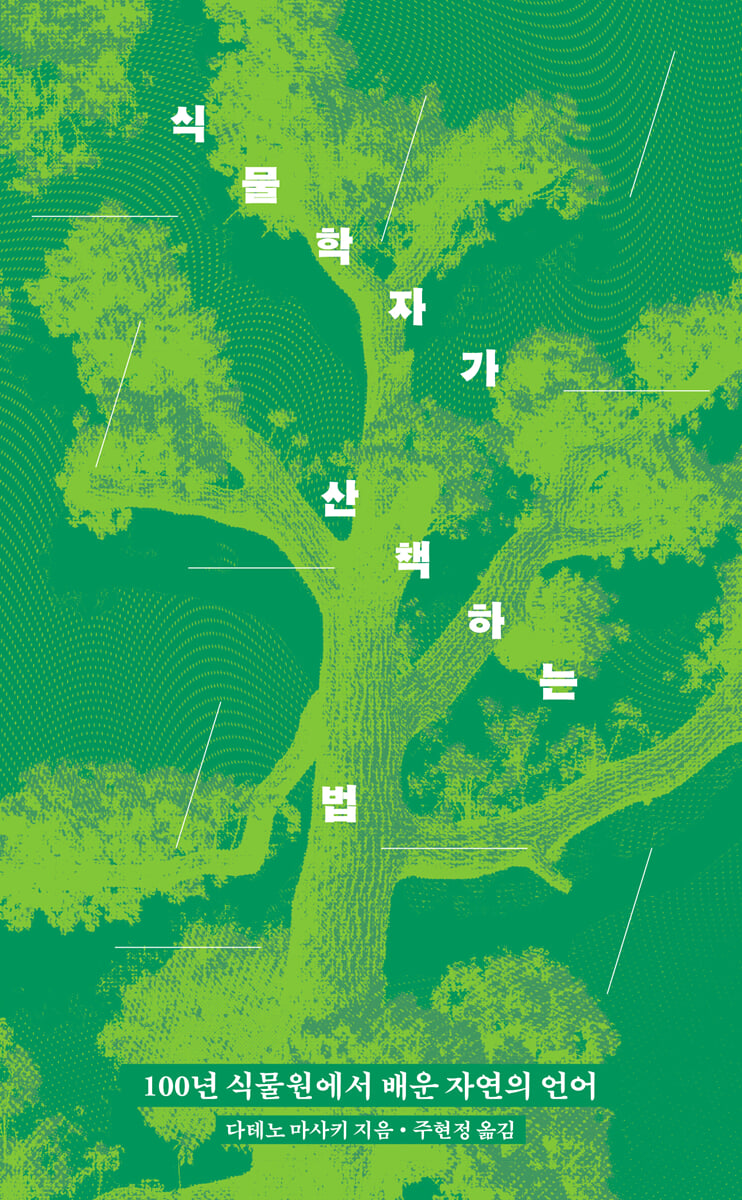 |
Description
Book Introduction
- A word from MD
- From a distance they look similar, but when you look closely, the trees and grass are all different.
Thick leaves and thin leaves, trees that grow tall quickly and trees that don't.
Colorful berries and green leaves.
Plant life is as colorful and mysterious as animal life.
A story about plants in each season, seen through the eyes of a botanical garden director for 26 years.
- Son Min-gyu, natural science producer
“Slow but steady, the way plants do.”
A textbook on living nature through the eyes of a botanist
The Nikko Botanical Garden, affiliated with the University of Tokyo, has been a treasure trove of plant ecology for over 100 years since its establishment in 1902, recording the diverse plants and their lives from around the world.
The author of this book is a leading Japanese plant ecologist who has served as the director of this botanical garden for 25 years, and a walker who has lived with plants for a long time.
"How a Botanist Walks" is a book that compiles 60 stories about plants that he personally observed and thought about throughout the four seasons.
The symbiosis with birds that eat mistletoe berries, the strategy of vines that survive by killing their hosts, the mysterious structure of redwoods that draw water 100 meters into the air, the philosophy of bamboo that endures through flexibility by hollowing out its interior rather than stopping its growth… Each plant has responded to nature’s questions in its own unique way.
Through this book, the author wants to show how wonderful the life of plants is.
And slowly but surely, it tells us how plants live, saying:
“To get to know plants is ultimately to get to know myself.”
A textbook on living nature through the eyes of a botanist
The Nikko Botanical Garden, affiliated with the University of Tokyo, has been a treasure trove of plant ecology for over 100 years since its establishment in 1902, recording the diverse plants and their lives from around the world.
The author of this book is a leading Japanese plant ecologist who has served as the director of this botanical garden for 25 years, and a walker who has lived with plants for a long time.
"How a Botanist Walks" is a book that compiles 60 stories about plants that he personally observed and thought about throughout the four seasons.
The symbiosis with birds that eat mistletoe berries, the strategy of vines that survive by killing their hosts, the mysterious structure of redwoods that draw water 100 meters into the air, the philosophy of bamboo that endures through flexibility by hollowing out its interior rather than stopping its growth… Each plant has responded to nature’s questions in its own unique way.
Through this book, the author wants to show how wonderful the life of plants is.
And slowly but surely, it tells us how plants live, saying:
“To get to know plants is ultimately to get to know myself.”
- You can preview some of the book's contents.
Preview
index
Prologue: How I Became the Director of Nikko Botanical Garden
Part 1 Winter
The fir tree fell | fir tree |
Put your hands together and call out to the spirit | Attention |
Forest Cycle | Evergreens |
The story of the life of a leaf | Nahanbaek |
What about water, Jack and the Beanstalk | Redwood |
Deciduous tree that never changes color | Four-sided duck |
Flexible wood, solid bamboo | Bamboo |
Life blooming on the branch | Mistletoe |
Frostbite growing sideways | Shimobashira |
Part 2 Spring
Rapeseed flowers are in bloom | Rapeseed |
Incense and wine cannot surpass prose | Wild garlic |
Hasty water parsley | Water parsley |
The posture of flower petals waiting for spring | Rosette |
Double cherry blossoms, single cherry blossoms | Cherry blossoms |
The Atavism of the Mountain Ash Tree | The New Ash Tree |
The Rise and Fall of Nitrogen Fixing Plants | Water Alder |
The parasite with moderation | Shokiran |
Living in the air without roots | Air plants 1 |
Air Plant, After | Air Plant 2 |
Part 3 Summer
Lightning strike marks | Pine tree |
The Secret of the Name of the Irritable | Impatiens |
The sweet temptation of red berries | Spotted chrysanthemum |
From a distant island whose name I don't even know | Mangrove |
Tarzan's Vines | Vines |
Floating Plant | Duckweed |
Rediscovering Yarigatake | Colored Dancho |
Uvayuri and Gongchi's Survival Strategy | Uvayuri |
On a ship called the Indian Subcontinent | Tokutsugi |
Preservation of Gosincho | Gosincho |
Part 4 Fall
Persimmon War | Persimmon Tree |
Bloody Laughter | Blood |
Tree Roots and Gulliver's Hair | Water Oak |
Independence of the Branch | Maple Tree |
The Future of the Beech Tree | Beech Tree 1 |
Crooked Root | Beech 2 |
Fourth Year Beech Tree | Beech Tree 3 |
Asians Meet the Beech Tree Again | Beech Tree 4 |
Healing wounds | Japanese larch |
One-Winged Helicopter | Maple Tree |
The accusation of being a villain | Yang Mi-yeok-chwi |
The meaning of 'Seed is summer' | Helichrysum |
Part 5: A Story Outside the Seasons
Vegetation identified by wood
Savannah and Ranch
Hunter-gatherers and wild flora and fauna
Home of grass
Lifespan of animals, lifespan of plants
Aspiration for perfection and museum studies
Even without a brain
Plant eyes
Erosion cannot be stopped
young mountain
How to make eggplant
Chungyeong and IPS cells
Enemies below the eyes, threats above the head
The miscellaneous talents of the Asiatic black bear
Luxurious worries
Ogre cells
Solar power and plant leaves
Barren Sea, Sea of Plenty, Sea of Death
Emperor's Chestnut Tree
A story without an epilogue
Part 1 Winter
The fir tree fell | fir tree |
Put your hands together and call out to the spirit | Attention |
Forest Cycle | Evergreens |
The story of the life of a leaf | Nahanbaek |
What about water, Jack and the Beanstalk | Redwood |
Deciduous tree that never changes color | Four-sided duck |
Flexible wood, solid bamboo | Bamboo |
Life blooming on the branch | Mistletoe |
Frostbite growing sideways | Shimobashira |
Part 2 Spring
Rapeseed flowers are in bloom | Rapeseed |
Incense and wine cannot surpass prose | Wild garlic |
Hasty water parsley | Water parsley |
The posture of flower petals waiting for spring | Rosette |
Double cherry blossoms, single cherry blossoms | Cherry blossoms |
The Atavism of the Mountain Ash Tree | The New Ash Tree |
The Rise and Fall of Nitrogen Fixing Plants | Water Alder |
The parasite with moderation | Shokiran |
Living in the air without roots | Air plants 1 |
Air Plant, After | Air Plant 2 |
Part 3 Summer
Lightning strike marks | Pine tree |
The Secret of the Name of the Irritable | Impatiens |
The sweet temptation of red berries | Spotted chrysanthemum |
From a distant island whose name I don't even know | Mangrove |
Tarzan's Vines | Vines |
Floating Plant | Duckweed |
Rediscovering Yarigatake | Colored Dancho |
Uvayuri and Gongchi's Survival Strategy | Uvayuri |
On a ship called the Indian Subcontinent | Tokutsugi |
Preservation of Gosincho | Gosincho |
Part 4 Fall
Persimmon War | Persimmon Tree |
Bloody Laughter | Blood |
Tree Roots and Gulliver's Hair | Water Oak |
Independence of the Branch | Maple Tree |
The Future of the Beech Tree | Beech Tree 1 |
Crooked Root | Beech 2 |
Fourth Year Beech Tree | Beech Tree 3 |
Asians Meet the Beech Tree Again | Beech Tree 4 |
Healing wounds | Japanese larch |
One-Winged Helicopter | Maple Tree |
The accusation of being a villain | Yang Mi-yeok-chwi |
The meaning of 'Seed is summer' | Helichrysum |
Part 5: A Story Outside the Seasons
Vegetation identified by wood
Savannah and Ranch
Hunter-gatherers and wild flora and fauna
Home of grass
Lifespan of animals, lifespan of plants
Aspiration for perfection and museum studies
Even without a brain
Plant eyes
Erosion cannot be stopped
young mountain
How to make eggplant
Chungyeong and IPS cells
Enemies below the eyes, threats above the head
The miscellaneous talents of the Asiatic black bear
Luxurious worries
Ogre cells
Solar power and plant leaves
Barren Sea, Sea of Plenty, Sea of Death
Emperor's Chestnut Tree
A story without an epilogue
Detailed image

Into the book
When the fir tree fell, the dark area beneath the tree became brighter and various plants began to grow in its place.
What kind of forest will be created in the future? Right now, the fields are filled with the first strawberries to grow, but young fir trees are also thriving nearby.
For a while, I plan to eat as many strawberries as I want and quietly watch the changes in the forest.
--- p.16
The Buddhist saying, “Those who prosper must decline” also applies in the forest.
Prosperity ultimately means decline.
Even the evergreen tree that became the main character will wither someday.
The forest floor where evergreen trees have fallen becomes brighter all year round, and deciduous trees then grow vigorously in their place.
In this way, the forest cycle of deciduous trees → evergreen trees → deciduous trees is completed.
--- p.23
When winter comes, a beautiful bird called the red-crowned crane comes to visit the winter grove.
The berries of the mistletoe are a particularly favorite food of the red-crowned crane.
After the bird eats the fruit, the seeds are mixed in with its droppings and end up on another tree, where they reach a new host and begin the life of the winter squirrel again.
--- p.44
Summer in Tochigi is inseparable from lightning.
During the day, the warm air from the Kanto Plain rises and cools as it meets the mountains of Nikko.
In this process, thunderclouds filled with positive and negative electricity are created.
Towards evening, thunderclouds drift southeast, carried by the wind, and reach the plains.
The thunder is frightening, but the showers that follow it provide relief from the scorching heat inland.
--- p.93
Impatiens textorii has an unpleasant scientific name.
The scientific name is composed of the genus name and the specific name, and the genus name for the Impatiens family is Impatiens.
In florists it is often called by its common name, 'Impatience'.
In English, it is impatient, meaning an impatient and irritable person.
In fact, if you gently touch the fruit of the water lily, it bursts open and the seeds fly everywhere.
Its hasty nature is reflected in its scientific name.
The balsam flower we are familiar with also has the same common name.
--- p.97
Organic matter does not move from branch to branch, but branches send organic matter to the stems and roots below them.
Because if the stem and roots are not strong, the plant itself cannot survive.
This is like a tax.
The branches may seem selfish, but they are properly fulfilling their duties of labor (photosynthesis) and tax payment (downstream supply of organic matter).
--- p.147
In that respect, plants are surprisingly efficient.
Given a bright environment, plants will recoup the energy (cost) they expended to produce leaves in just a few days, and then continue to produce profits.
The secret lies in its thin leaves.
The cost of making thin leaves is very low.
Because of this advantage, plants can grow up to 30 percent per day.
What kind of forest will be created in the future? Right now, the fields are filled with the first strawberries to grow, but young fir trees are also thriving nearby.
For a while, I plan to eat as many strawberries as I want and quietly watch the changes in the forest.
--- p.16
The Buddhist saying, “Those who prosper must decline” also applies in the forest.
Prosperity ultimately means decline.
Even the evergreen tree that became the main character will wither someday.
The forest floor where evergreen trees have fallen becomes brighter all year round, and deciduous trees then grow vigorously in their place.
In this way, the forest cycle of deciduous trees → evergreen trees → deciduous trees is completed.
--- p.23
When winter comes, a beautiful bird called the red-crowned crane comes to visit the winter grove.
The berries of the mistletoe are a particularly favorite food of the red-crowned crane.
After the bird eats the fruit, the seeds are mixed in with its droppings and end up on another tree, where they reach a new host and begin the life of the winter squirrel again.
--- p.44
Summer in Tochigi is inseparable from lightning.
During the day, the warm air from the Kanto Plain rises and cools as it meets the mountains of Nikko.
In this process, thunderclouds filled with positive and negative electricity are created.
Towards evening, thunderclouds drift southeast, carried by the wind, and reach the plains.
The thunder is frightening, but the showers that follow it provide relief from the scorching heat inland.
--- p.93
Impatiens textorii has an unpleasant scientific name.
The scientific name is composed of the genus name and the specific name, and the genus name for the Impatiens family is Impatiens.
In florists it is often called by its common name, 'Impatience'.
In English, it is impatient, meaning an impatient and irritable person.
In fact, if you gently touch the fruit of the water lily, it bursts open and the seeds fly everywhere.
Its hasty nature is reflected in its scientific name.
The balsam flower we are familiar with also has the same common name.
--- p.97
Organic matter does not move from branch to branch, but branches send organic matter to the stems and roots below them.
Because if the stem and roots are not strong, the plant itself cannot survive.
This is like a tax.
The branches may seem selfish, but they are properly fulfilling their duties of labor (photosynthesis) and tax payment (downstream supply of organic matter).
--- p.147
In that respect, plants are surprisingly efficient.
Given a bright environment, plants will recoup the energy (cost) they expended to produce leaves in just a few days, and then continue to produce profits.
The secret lies in its thin leaves.
The cost of making thin leaves is very low.
Because of this advantage, plants can grow up to 30 percent per day.
--- p.241
Publisher's Review
■ A 'Textbook of Living Nature' Seen Through the Eyes of a Botanist
The Nikko Botanical Garden, affiliated with the University of Tokyo, has been a treasure trove of plant ecology for over 100 years since its establishment in 1902, recording the diverse plants and their lives from around the world.
The author of this book is a leading Japanese plant ecologist who has served as the director of this botanical garden for 25 years, and a walker who has lived with plants for a long time.
"How a Botanist Walks" is a book that compiles 60 stories about plants that he personally observed and thought about throughout the four seasons.
In winter, the story unfolds of fir, yew, and evergreen trees; in spring, of rapeseed, wild garlic, and water parsley; in summer, of pine, water balsam, and chrysanthemum; and in fall, of persimmon, pine, water oak, and maple.
In addition, as an expert in plant research, he conveys scientific facts about the characteristics of each plant and various phenomena.
But this book is not just a simple nature observation diary.
From plants and ecology, the interaction between life and the environment, to the impact of human actions on nature, through the perspective of a botanist, we encounter the way life exists and the order of life again.
The author says, “The amount of knowledge is equal to the area of a shape.
"As the area gets larger, the outline—the unknown—gets longer," he says, adding that learning about plants is similar.
■ Slow but strong, how do plants live?
The symbiosis with birds that eat mistletoe berries, the strategy of vines that survive by killing their hosts, the mysterious structure of redwoods that draw water 100 meters into the air, the philosophy of bamboo that endures through flexibility by hollowing out its interior rather than stopping its growth… Each plant has responded to nature’s questions in its own unique way.
Plants don't have brains.
It doesn't speak and doesn't move on its own.
Despite this, it survived on Earth for hundreds of millions of years.
Plants have evolved in a simple, yet never simple, way, adapting to nature, and they continue to live today.
Through this book, the author wants to show how wonderful the life of plants is.
And slowly but surely, it tells us how plants live, saying:
“To get to know plants is ultimately to get to know myself.”
■ Why do we need the perspective of plants now?
We, living today, often lose our way in our busy and complex daily lives.
Even though we ponder what is important and how we should live, we cannot easily find the answers.
Reading "How a Botanist Walks" gives us a glimpse into the simple yet powerful life of plants.
The way of plants shows that coexistence is not competition, that growth is accompanied by maturity, and that repetition is not regression but part of the cycle of life.
Reading this book will be an experience of walking through nature through the four seasons through the eyes of a botanist, and reflecting on the pace and direction of life through it.
The Nikko Botanical Garden, affiliated with the University of Tokyo, has been a treasure trove of plant ecology for over 100 years since its establishment in 1902, recording the diverse plants and their lives from around the world.
The author of this book is a leading Japanese plant ecologist who has served as the director of this botanical garden for 25 years, and a walker who has lived with plants for a long time.
"How a Botanist Walks" is a book that compiles 60 stories about plants that he personally observed and thought about throughout the four seasons.
In winter, the story unfolds of fir, yew, and evergreen trees; in spring, of rapeseed, wild garlic, and water parsley; in summer, of pine, water balsam, and chrysanthemum; and in fall, of persimmon, pine, water oak, and maple.
In addition, as an expert in plant research, he conveys scientific facts about the characteristics of each plant and various phenomena.
But this book is not just a simple nature observation diary.
From plants and ecology, the interaction between life and the environment, to the impact of human actions on nature, through the perspective of a botanist, we encounter the way life exists and the order of life again.
The author says, “The amount of knowledge is equal to the area of a shape.
"As the area gets larger, the outline—the unknown—gets longer," he says, adding that learning about plants is similar.
■ Slow but strong, how do plants live?
The symbiosis with birds that eat mistletoe berries, the strategy of vines that survive by killing their hosts, the mysterious structure of redwoods that draw water 100 meters into the air, the philosophy of bamboo that endures through flexibility by hollowing out its interior rather than stopping its growth… Each plant has responded to nature’s questions in its own unique way.
Plants don't have brains.
It doesn't speak and doesn't move on its own.
Despite this, it survived on Earth for hundreds of millions of years.
Plants have evolved in a simple, yet never simple, way, adapting to nature, and they continue to live today.
Through this book, the author wants to show how wonderful the life of plants is.
And slowly but surely, it tells us how plants live, saying:
“To get to know plants is ultimately to get to know myself.”
■ Why do we need the perspective of plants now?
We, living today, often lose our way in our busy and complex daily lives.
Even though we ponder what is important and how we should live, we cannot easily find the answers.
Reading "How a Botanist Walks" gives us a glimpse into the simple yet powerful life of plants.
The way of plants shows that coexistence is not competition, that growth is accompanied by maturity, and that repetition is not regression but part of the cycle of life.
Reading this book will be an experience of walking through nature through the four seasons through the eyes of a botanist, and reflecting on the pace and direction of life through it.
GOODS SPECIFICS
- Date of issue: August 13, 2025
- Page count, weight, size: 256 pages | 324g | 130*210*16mm
- ISBN13: 9791198545381
- ISBN10: 1198545380
You may also like
카테고리
korean


korean

![GQ KOREA Mark (Monthly): December [2025]](http://librairie.coreenne.fr/cdn/shop/files/8ef265dbbfbf186523ed75ba7319009d.jpg?v=1765340328&width=3840)


