

immortal genes
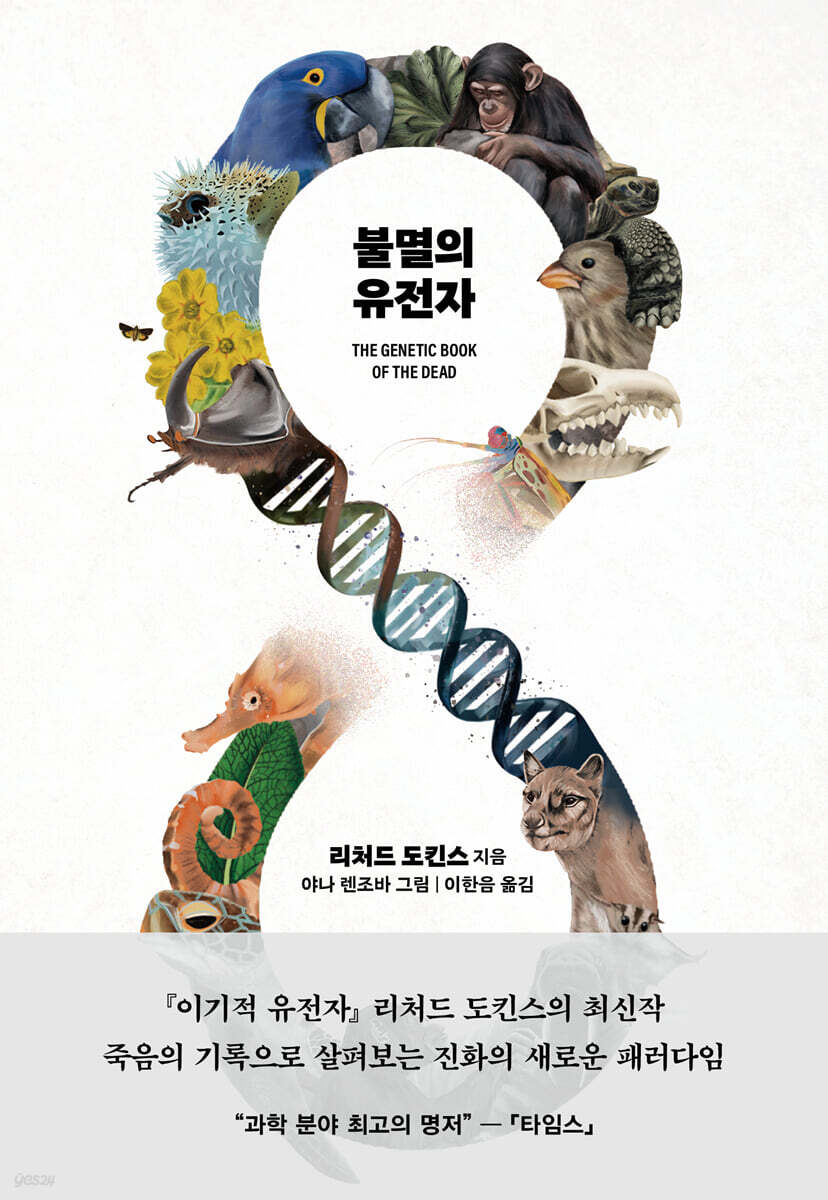 |
Description
Book Introduction
- A word from MD
-
The object is a record of deathsRichard Dawkins' latest work, "The Selfish Gene," which shocked people's perspectives on life.
This book says that life is an unfinished work engraved with traces of death.
We examined the evolutionary processes of various life forms and analyzed the process by which each event was engraved into the genes.
An epic created by the intersection of life and death.
June 4, 2025. Natural Science PD Son Min-gyu
The Selfish Gene, Richard Dawkins' latest work
A New Paradigm of Evolution Through the Records of Death
"The greatest science book ever written" - The Times
Richard Dawkins, a world-renowned intellectual who has had a profound influence on academia, culture, and society through numerous scientific and humanities books, has published his new book, The Immortal Gene, by Eulyoo Publishing.
This book, which highlights Dawkins's brilliant and profound perspective and is accompanied by Jana Renjova's gorgeous illustrations, provides a delightful viewing experience and guides readers through the fascinating topics of birth and death, evolution and immortality.
"The Immortal Gene" is Dawkins's masterpiece that clearly shows why he has been the greatest scientist and writer for nearly half a century.
A New Paradigm of Evolution Through the Records of Death
"The greatest science book ever written" - The Times
Richard Dawkins, a world-renowned intellectual who has had a profound influence on academia, culture, and society through numerous scientific and humanities books, has published his new book, The Immortal Gene, by Eulyoo Publishing.
This book, which highlights Dawkins's brilliant and profound perspective and is accompanied by Jana Renjova's gorgeous illustrations, provides a delightful viewing experience and guides readers through the fascinating topics of birth and death, evolution and immortality.
"The Immortal Gene" is Dawkins's masterpiece that clearly shows why he has been the greatest scientist and writer for nearly half a century.
- You can preview some of the book's contents.
Preview
index
1.
Animal Reading
2.
'Painting' and 'Sculpture'
3.
In the depths of the palimpsest
4.
reverse engineering
5.
Common problems, common solutions
6.
Variations on the theme
7.
Living memory
8.
immortal genes
9.
Beyond our walls
10.
A genetic perspective
11.
More reflections in the rearview mirror
12.
Good colleagues, bad colleagues
13.
A common exit to the future
main
Acknowledgements
About the Author and Illustrator
Translator's Note
References
Image source
Search
Animal Reading
2.
'Painting' and 'Sculpture'
3.
In the depths of the palimpsest
4.
reverse engineering
5.
Common problems, common solutions
6.
Variations on the theme
7.
Living memory
8.
immortal genes
9.
Beyond our walls
10.
A genetic perspective
11.
More reflections in the rearview mirror
12.
Good colleagues, bad colleagues
13.
A common exit to the future
main
Acknowledgements
About the Author and Illustrator
Translator's Note
References
Image source
Search
Detailed image

Into the book
This highly camouflaged snake, found in Iran, has a fake spider attached to the end of its tail.
Looking at the photo, you might wonder if it really is true.
But this snake moves its tail in a way that is strikingly similar to a scurrying spider.
It really seems real.
This is especially true when a snake hides in its burrow with only the tip of its tail sticking out.
When a bird swoops down to catch this spider, the bird is caught by the snake.
It's worth revisiting how remarkable it is that such techniques evolved through natural selection.
--- p.34~35
The sex life of a devil is incredibly strange.
Everything said in the previous section applies only to female devils.
The male is 'little'.
Hundreds of times smaller than females.
The female secretes chemicals to attract the young male.
The male uses his jaws to dig into the female's body.
Afterwards, it digests and destroys the front part of its body and becomes buried in the female's body.
It is a shape in which only the rear part protrudes slightly outside the female's body, and it is similar to a gonad that collects sperm when the female needs it.
--- p.170~171
The information contained in an individual's DNA is unique, irreplaceable, and potentially immortal.
The phrase "carved in granite" is a dramatic expression of this.
It's not a realistic way.
Under normal circumstances, DNA information achieves immortality by being replicated.
It is copied and copied again.
It is replicated indefinitely, potentially forever, and continues to be passed on to future generations.
--- p.249
When genes on the elephant seal's Y chromosome look back in time, it's not just the long, stretched-out bodies of males that are visible.
I see the very large, fleshy bodies of the few alpha males who occupy the harem, burping loudly.
They are highly aggressive males who secrete excessive amounts of testosterone and use their dangling noses as living trumpets to shout and intimidate other males.
--- p.330
The flukes manipulate the snails' behavior, forcing them to move around during the day.
But that action is just the beginning of the snail's troubles.
The flukes invade the snail's eye stalks during one of its life stages.
Then the eye stalks become grotesquely large and seem to pulse noticeably along their entire length.
As a result, the eye stalks are said to look like small crawling caterpillars.
I don't know if that's actually the case, but it definitely makes the eye stalks stand out.
As a result, birds easily peck at them and eat them.
Looking at the photo, you might wonder if it really is true.
But this snake moves its tail in a way that is strikingly similar to a scurrying spider.
It really seems real.
This is especially true when a snake hides in its burrow with only the tip of its tail sticking out.
When a bird swoops down to catch this spider, the bird is caught by the snake.
It's worth revisiting how remarkable it is that such techniques evolved through natural selection.
--- p.34~35
The sex life of a devil is incredibly strange.
Everything said in the previous section applies only to female devils.
The male is 'little'.
Hundreds of times smaller than females.
The female secretes chemicals to attract the young male.
The male uses his jaws to dig into the female's body.
Afterwards, it digests and destroys the front part of its body and becomes buried in the female's body.
It is a shape in which only the rear part protrudes slightly outside the female's body, and it is similar to a gonad that collects sperm when the female needs it.
--- p.170~171
The information contained in an individual's DNA is unique, irreplaceable, and potentially immortal.
The phrase "carved in granite" is a dramatic expression of this.
It's not a realistic way.
Under normal circumstances, DNA information achieves immortality by being replicated.
It is copied and copied again.
It is replicated indefinitely, potentially forever, and continues to be passed on to future generations.
--- p.249
When genes on the elephant seal's Y chromosome look back in time, it's not just the long, stretched-out bodies of males that are visible.
I see the very large, fleshy bodies of the few alpha males who occupy the harem, burping loudly.
They are highly aggressive males who secrete excessive amounts of testosterone and use their dangling noses as living trumpets to shout and intimidate other males.
--- p.330
The flukes manipulate the snails' behavior, forcing them to move around during the day.
But that action is just the beginning of the snail's troubles.
The flukes invade the snail's eye stalks during one of its life stages.
Then the eye stalks become grotesquely large and seem to pulse noticeably along their entire length.
As a result, the eye stalks are said to look like small crawling caterpillars.
I don't know if that's actually the case, but it definitely makes the eye stalks stand out.
As a result, birds easily peck at them and eat them.
--- p.390
Publisher's Review
Evolution is an immortal record written in our genes.
Richard Dawkins's later masterpiece
This book is the latest work by Richard Dawkins, a world-renowned scholar who is considered to have changed the paradigm of evolution and genetics. The author's cool-headed insight and uniquely witty writing style stand out.
Dawkins goes a step further than the gene-centric view presented in The Selfish Gene by viewing evolution as a chronicle of the past, a book written and edited by Darwinian natural selection.
Dawkins argues that each individual is a kind of book, an unfinished literary work, and an archive of history.
The body and genome of an individual contain information that allows us to infer a colorful world that was long gone but continued.
In other words, we can say that in a sense, we are the 'genetic book of the dead'.
At the same time, the lion's genealogy is also a book of predictions for the future.
Each genome selects genes that are advantageous for survival and reproduction under the reasonable assumption that the future will not be much different from the past, and this selection is generally successful.
From this perspective, Dawkins goes beyond the gene-centric perspective to 'look back' at the past and 'reflect' it in a kind of rearview mirror through a phenomenon called biological imprinting.
In addition to this, Dawkins uses various animals, plants, fungi, bacteria, and even archaea to explain his interesting perspectives to readers in an easy-to-understand way.
The illustrations included in the book's text stimulate further intellectual curiosity in readers.
The colorful illustrations and photographs that complement the book's content aid the reader's understanding, while providing the pleasure of reading as a general science book rather than a rigid theoretical text.
Another feature is that it introduces a fictional female scientist, Soap, into the story from time to time, making academic content, which could easily become stiff and difficult, more interesting.
Throughout the book, the author meticulously explains how the environment surrounding an organism and the processes and decisions of natural selection involved in it are engraved into its genes.
In this process, he weaves together concepts discussed in detail in his previous works, such as The Selfish Gene and The Extended Phenotype, which can be considered his masterpieces, into a single story, as if weaving a net.
This book, which seems to be a collection of various arguments that Dawkins has made in many of his famous works, is also filled with the author's unique perspectives and metaphors, allowing readers to view the nature surrounding them from a new perspective.
Looking at the records of death
A new paradigm of evolution
This book deals with somewhat unfamiliar and difficult topics such as evolution, natural selection, and genes, but it also develops the story by introducing interesting yet familiar cases such as camouflage, mimicry, and convergent evolution.
Dawkins delves into the many meanings contained in the bizarre appearances of living things we often see in science documentaries.
Through this, it is explained in detail that the reason why living things appear strange in some ways and difficult to understand in others is because it is all the influence of genes that record past records and a kind of prediction.
For example, the distinctive skin color and patterns seen in the Mojave Desert's horned lizards are the result of genetic predictions that these individuals would be born in the desert.
The desert horned lizard's genes predict that the individual it passes on to its offspring will be born in a sandy, rocky desert, and they adjust the lizard's skin and patterns to suit the desert environment.
In other words, if it were technically possible, we could analyze the genes of a desert horned lizard to not only predict its skin color, but also find out what kind of environment it would live in.
Genes can be read as a single document containing the ancestral world.
In the case of the desert horned lizard, not only the skin color and pattern, but also all the organs, cells, and biochemical processes are meticulously structured to suit the desert environment in which their ancestors lived.
Dawkins says that the records of the present changing environment and mutations are overlaid on these records of genes.
This process can be seen as similar to the parchment (palimpsest) used in the West long ago, where old writing was erased and new writing was written on top.
In addition, the book explains death and the power of heredity to overcome it, using examples of various rare creatures.
This clearly shows why Dawkins is loved by readers as a top scientist and writer.
This book is a masterpiece that is on par with his representative works, The Selfish Gene and The Extended Phenotype.
“Adding depth to the natural world through original developments.”
- "Kirkus Review"
“A colorful journey through nature from the perspective of genes.
Why Dawkins is still the best
“It reminds me again that I am a scientist.”
- The Times
Richard Dawkins's later masterpiece
This book is the latest work by Richard Dawkins, a world-renowned scholar who is considered to have changed the paradigm of evolution and genetics. The author's cool-headed insight and uniquely witty writing style stand out.
Dawkins goes a step further than the gene-centric view presented in The Selfish Gene by viewing evolution as a chronicle of the past, a book written and edited by Darwinian natural selection.
Dawkins argues that each individual is a kind of book, an unfinished literary work, and an archive of history.
The body and genome of an individual contain information that allows us to infer a colorful world that was long gone but continued.
In other words, we can say that in a sense, we are the 'genetic book of the dead'.
At the same time, the lion's genealogy is also a book of predictions for the future.
Each genome selects genes that are advantageous for survival and reproduction under the reasonable assumption that the future will not be much different from the past, and this selection is generally successful.
From this perspective, Dawkins goes beyond the gene-centric perspective to 'look back' at the past and 'reflect' it in a kind of rearview mirror through a phenomenon called biological imprinting.
In addition to this, Dawkins uses various animals, plants, fungi, bacteria, and even archaea to explain his interesting perspectives to readers in an easy-to-understand way.
The illustrations included in the book's text stimulate further intellectual curiosity in readers.
The colorful illustrations and photographs that complement the book's content aid the reader's understanding, while providing the pleasure of reading as a general science book rather than a rigid theoretical text.
Another feature is that it introduces a fictional female scientist, Soap, into the story from time to time, making academic content, which could easily become stiff and difficult, more interesting.
Throughout the book, the author meticulously explains how the environment surrounding an organism and the processes and decisions of natural selection involved in it are engraved into its genes.
In this process, he weaves together concepts discussed in detail in his previous works, such as The Selfish Gene and The Extended Phenotype, which can be considered his masterpieces, into a single story, as if weaving a net.
This book, which seems to be a collection of various arguments that Dawkins has made in many of his famous works, is also filled with the author's unique perspectives and metaphors, allowing readers to view the nature surrounding them from a new perspective.
Looking at the records of death
A new paradigm of evolution
This book deals with somewhat unfamiliar and difficult topics such as evolution, natural selection, and genes, but it also develops the story by introducing interesting yet familiar cases such as camouflage, mimicry, and convergent evolution.
Dawkins delves into the many meanings contained in the bizarre appearances of living things we often see in science documentaries.
Through this, it is explained in detail that the reason why living things appear strange in some ways and difficult to understand in others is because it is all the influence of genes that record past records and a kind of prediction.
For example, the distinctive skin color and patterns seen in the Mojave Desert's horned lizards are the result of genetic predictions that these individuals would be born in the desert.
The desert horned lizard's genes predict that the individual it passes on to its offspring will be born in a sandy, rocky desert, and they adjust the lizard's skin and patterns to suit the desert environment.
In other words, if it were technically possible, we could analyze the genes of a desert horned lizard to not only predict its skin color, but also find out what kind of environment it would live in.
Genes can be read as a single document containing the ancestral world.
In the case of the desert horned lizard, not only the skin color and pattern, but also all the organs, cells, and biochemical processes are meticulously structured to suit the desert environment in which their ancestors lived.
Dawkins says that the records of the present changing environment and mutations are overlaid on these records of genes.
This process can be seen as similar to the parchment (palimpsest) used in the West long ago, where old writing was erased and new writing was written on top.
In addition, the book explains death and the power of heredity to overcome it, using examples of various rare creatures.
This clearly shows why Dawkins is loved by readers as a top scientist and writer.
This book is a masterpiece that is on par with his representative works, The Selfish Gene and The Extended Phenotype.
“Adding depth to the natural world through original developments.”
- "Kirkus Review"
“A colorful journey through nature from the perspective of genes.
Why Dawkins is still the best
“It reminds me again that I am a scientist.”
- The Times
GOODS SPECIFICS
- Date of issue: May 30, 2025
- Page count, weight, size: 496 pages | 678g | 145*210*29mm
- ISBN13: 9788932475578
- ISBN10: 8932475571
You may also like
카테고리
korean


korean

![GQ KOREA Mark (Monthly): December [2025]](http://librairie.coreenne.fr/cdn/shop/files/8ef265dbbfbf186523ed75ba7319009d.jpg?v=1765340328&width=3840)


