

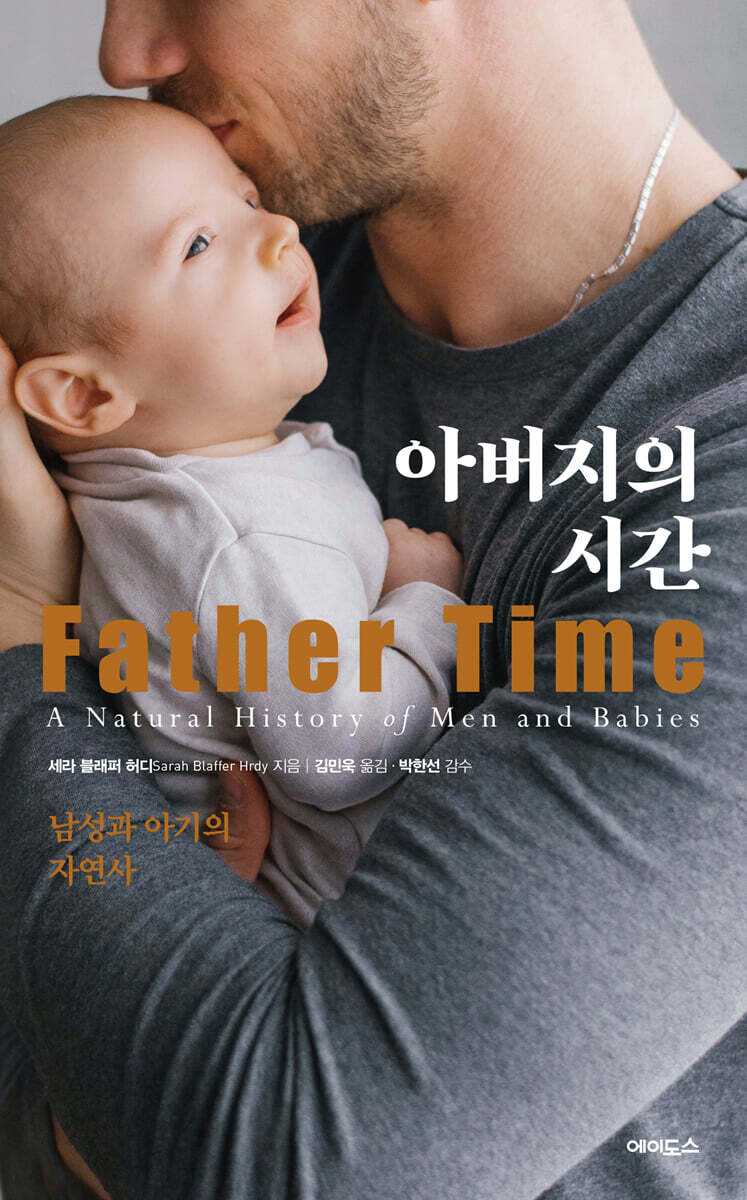
Father's Time
 |
Description
Book Introduction
The latest work by Sarah Blaffer Hrdy, considered one of the most influential thinkers in evolutionary biology since Darwin.
The topic that Hurdy, a leading researcher on maternal development who caused a stir in the field of evolutionary biology by overturning the existing interpretation that the infant killing behavior of male primates was a stress response to increased colony density and revealing that it was a reproductive strategy of females, is the 'male parenting instinct' that he focused on while organizing his intellectual journey.
This book focuses on the significance of the father's role, which has been largely neglected in evolutionary biology due to the narrow and biased paradigm of the "hunter male," and the impact of male nurturing and caregiving on the evolution of Homo sapiens.
Hurdy argues that in this era where 'toxic masculinity' is sprouting up like a poisonous mushroom and patriarchal culture and conservatism are combining, what is needed is a new definition of 'masculinity' and a rediscovery of the value of care.
The topic that Hurdy, a leading researcher on maternal development who caused a stir in the field of evolutionary biology by overturning the existing interpretation that the infant killing behavior of male primates was a stress response to increased colony density and revealing that it was a reproductive strategy of females, is the 'male parenting instinct' that he focused on while organizing his intellectual journey.
This book focuses on the significance of the father's role, which has been largely neglected in evolutionary biology due to the narrow and biased paradigm of the "hunter male," and the impact of male nurturing and caregiving on the evolution of Homo sapiens.
Hurdy argues that in this era where 'toxic masculinity' is sprouting up like a poisonous mushroom and patriarchal culture and conservatism are combining, what is needed is a new definition of 'masculinity' and a rediscovery of the value of care.
index
Introduction 008
1.
Father Then and Father Now 017
2.
Man's Unfortunate Instinct 042
3.
Open the floodgates 077
4.
Dad's Brain 089
5.
Darwin and the Incubating Rooster 114
6.
150 Mysterious Powers of Babies
7.
Caregiving by Male Primates 179
8.
Amazing Evolution in the Pleistocene 221
9.
Mental Change 262
10.
Cultural Construction of the Father's Role 295
11.
Changing Perceptions 344
12.
The 21st-Century Encounter Between Man and Baby 382
Outgoing Words 413
Acknowledgements 420
Sensitivity Release 423
Americas 436
Reference 477
Search 535
1.
Father Then and Father Now 017
2.
Man's Unfortunate Instinct 042
3.
Open the floodgates 077
4.
Dad's Brain 089
5.
Darwin and the Incubating Rooster 114
6.
150 Mysterious Powers of Babies
7.
Caregiving by Male Primates 179
8.
Amazing Evolution in the Pleistocene 221
9.
Mental Change 262
10.
Cultural Construction of the Father's Role 295
11.
Changing Perceptions 344
12.
The 21st-Century Encounter Between Man and Baby 382
Outgoing Words 413
Acknowledgements 420
Sensitivity Release 423
Americas 436
Reference 477
Search 535
Into the book
When the American Psychological Association released a new definition of "masculinity" in 2018, it sparked significant controversy.
People argued that the new definition created by the society demonized masculinity and "feminized" men.
Some authors have even received death threats.
In a Wall Street Journal editorial that year, the mother of three sons asked, “Why should we pretend to believe that men and women are the same? And why should we pretend to believe that masculinity is the problem?”
He said that it is essential for boys to grow up to be men, and that “the world needs strong men.
“Without them, who would protect the ‘village’ from enemies?” he asked.
Consciously or not, this argument reflected the evolutionary consensus that men should serve as warriors who defend the group.
Even Margaret Mead agreed with this opinion.
“It could be dangerous for men in Western societies to enjoy parenting like their mothers,” Mead warned.
The reason was that “fathers may lose their creativity or become less innovative because they are so focused on looking after their children.”
--- pp.39~40
By the mid-20th century, anthropologists had actually calculated that more than 70 percent of the world's cultures followed a patrilineal pattern of residence.
The universality of patriarchal residential patterns has reinforced the belief that patriarchal systems are natural to humans.
Thus, the textbook value that “in traditional societies, it is common for sons to stay close to their families and for daughters to leave” was established.
But of course, that wasn't always or everywhere true.
Yet, the patriarchal social system came to be seen as 'natural' and a characteristic of the human species.
--- p.337
That same year, American rapper Kendrick Lamar criticized the imposition of traditional masculinity, echoing Kimmel and Jablonka's analysis of what happens when men "cut themselves off from women and their own maternal feelings."
Rama talks about how the stereotype of strong, dominant masculinity keeps men like himself trapped in fear of losing their "manhood" or being disapproved by their fathers.
He recalls his childhood growing up on the dangerous streets of gang-ridden Compton, California, and details the reality of men being forced to hide their weaknesses and suppress their emotions.
He laments that this oppression ultimately drives men into a state of “instability” and not only causes “self-atrophy,” but also ultimately results in a reduction in average life expectancy.
Rama laments his childhood, when he could not shed tears even when his knees were scraped.
Because his father, who had been through a lot in the rough neighborhood, would tell him, “Don’t be weak.”
Millions of people heard and sympathized with his cries.
Kendrick Lamar talked about how he had to learn to be sensitive, empathetic, and caring for others.
The people he cared for also included his lover and children.
The rap title was 'Father Time'.
--- p.365
It is becoming increasingly clear that not only breastfeeding mothers, but also men already have the capacity to prioritize the values of care.
But to get there, the stars must align at just the right time for social norms and self-image to nudge in the direction we need.
Even if these conditions are met, it is too fragile and can easily break.
If we miss this ripe opportunity now, who knows when the next opportunity will come?
It is time to put aside the misconception that caregiving is the exclusive domain of mothers.
Within every man there remains a trace of what was once upon a time in males.
Before men were breadwinners or patriarchs, they were caregivers, and before they were caregivers, they were protectors.
Men had bodies and brains that could respond to the transformative power that babies emanated.
People argued that the new definition created by the society demonized masculinity and "feminized" men.
Some authors have even received death threats.
In a Wall Street Journal editorial that year, the mother of three sons asked, “Why should we pretend to believe that men and women are the same? And why should we pretend to believe that masculinity is the problem?”
He said that it is essential for boys to grow up to be men, and that “the world needs strong men.
“Without them, who would protect the ‘village’ from enemies?” he asked.
Consciously or not, this argument reflected the evolutionary consensus that men should serve as warriors who defend the group.
Even Margaret Mead agreed with this opinion.
“It could be dangerous for men in Western societies to enjoy parenting like their mothers,” Mead warned.
The reason was that “fathers may lose their creativity or become less innovative because they are so focused on looking after their children.”
--- pp.39~40
By the mid-20th century, anthropologists had actually calculated that more than 70 percent of the world's cultures followed a patrilineal pattern of residence.
The universality of patriarchal residential patterns has reinforced the belief that patriarchal systems are natural to humans.
Thus, the textbook value that “in traditional societies, it is common for sons to stay close to their families and for daughters to leave” was established.
But of course, that wasn't always or everywhere true.
Yet, the patriarchal social system came to be seen as 'natural' and a characteristic of the human species.
--- p.337
That same year, American rapper Kendrick Lamar criticized the imposition of traditional masculinity, echoing Kimmel and Jablonka's analysis of what happens when men "cut themselves off from women and their own maternal feelings."
Rama talks about how the stereotype of strong, dominant masculinity keeps men like himself trapped in fear of losing their "manhood" or being disapproved by their fathers.
He recalls his childhood growing up on the dangerous streets of gang-ridden Compton, California, and details the reality of men being forced to hide their weaknesses and suppress their emotions.
He laments that this oppression ultimately drives men into a state of “instability” and not only causes “self-atrophy,” but also ultimately results in a reduction in average life expectancy.
Rama laments his childhood, when he could not shed tears even when his knees were scraped.
Because his father, who had been through a lot in the rough neighborhood, would tell him, “Don’t be weak.”
Millions of people heard and sympathized with his cries.
Kendrick Lamar talked about how he had to learn to be sensitive, empathetic, and caring for others.
The people he cared for also included his lover and children.
The rap title was 'Father Time'.
--- p.365
It is becoming increasingly clear that not only breastfeeding mothers, but also men already have the capacity to prioritize the values of care.
But to get there, the stars must align at just the right time for social norms and self-image to nudge in the direction we need.
Even if these conditions are met, it is too fragile and can easily break.
If we miss this ripe opportunity now, who knows when the next opportunity will come?
It is time to put aside the misconception that caregiving is the exclusive domain of mothers.
Within every man there remains a trace of what was once upon a time in males.
Before men were breadwinners or patriarchs, they were caregivers, and before they were caregivers, they were protectors.
Men had bodies and brains that could respond to the transformative power that babies emanated.
--- pp.418~419
Publisher's Review
“This time it’s father’s turn.”
The latest work by Hurdy, a leading figure in maternal research and considered one of the most important thinkers in evolutionary biology since Darwin.
· Selected as one of the New Statesman's Best Books of the Year 2024
· The Telegraph's "Must-Read Summer Books" of 2024
· Selected as one of the Daily Express' Best Books of the Year 2024
· 2025 'PEN/EO
Wilson Science Writing Award nominee
· 2024 PROSE Award Winner
“Why have biologists neglected the role of fathers so much?” The Telegraph begins its review of Hurdy’s book with this question.
It is a challenging message to the discussion of men and fatherhood in evolutionary biology, which has been largely neglected and trapped in the impoverished and biased paradigm of the "hunter male."
A kind of 'contract' between hunter men who go out to hunt and provide meat and food and women who stay home to raise children has been the basic assumption of the so-called evolutionary theory of sexual selection.
So what is the role of fathers, a role that biologists have neglected? This book begins with this very question and embarks on a long journey through the history of human evolution.
The topic that Hurdy, a leading figure in maternal research and considered one of the most important thinkers in evolutionary biology since Darwin, focused on while organizing his life's intellectual journey was 'male parenting instinct.'
Rediscovering the lost 'parenting instinct' of men.
Hurdy narrates her own autobiographical story, including her upbringing, life as a researcher, and subsequent pregnancy and childbirth, along with various scientific research findings that support the idea that a "nurturing instinct" has been deeply engraved in the male body and mind during human evolution.
To show how entrenched the gender role dichotomy between men and women is in academia and life.
In the lives of the white middle class in the 1950s and 1970s, and in Darwinian biology, it was taken for granted that 'childcare was the mother's job.'
“While studying science and growing up, there was nothing that made me question whether mother-centered childcare was really natural.” (p. 20) Given that almost all mammals have mothers raising their children, and that women are “mammals” who bear the entire burden of internal fertilization, pregnancy, childbirth, and breastfeeding, the evolutionary biology assumption that “childcare is the woman’s responsibility” seemed natural.
As the author points out, a mother's brain and body are already designed to respond to child rearing.
So what about men? Are they closer to killing and threatening than caring for their children, as seen in male primates? (Studies suggest that only 5 percent of males care for their young.) How can we explain the emergence of the new nurturing male in the 21st century? Hurdy shows that the prominent male nurturing in the 21st century is not simply cultural but deeply biological, drawing on neuroscientific and endocrinological findings, as well as various anthropological evidence, such as hormonal changes (such as oxytocin and prolactin) found in nurturing men and their parenting responses when caring for children.
Simply put, this means that a man's body and mind already have a nurturing nature built into them.
The author argues that child rearing is not solely the mother's responsibility, that cooperative child rearing was essential in the evolution of Homo sapiens, the origin of modern humans, and that male care and nurturing are 'natures' that evolved a long time ago, neurologically and endocrinologically, beyond the cultural dimension.
Are men fighting and competing for status and mates? Are women natural nurturers?
Unlike other primates, Homo sapiens offspring are expensive to raise, wean quickly, have enormous brains, and are capable of reading and acting on the minds of others, allowing them to understand one another.
To explain this unique trait of Homo sapiens, Hurdy focuses on the Pleistocene.
The rapid climate changes of the Pleistocene epoch pushed Homo apes to the brink of extinction.
“Our ancestors came from a humble population of Homo erectus, which is estimated to have once numbered fewer than 20,000 reproductive adults.” (p. 225) Faced with a crisis due to harsh environmental changes, humans cooperated with each other, fostered communal childrearing, shared food, learned to read others’ minds, evolved men who valued fame and reputation, and social punishment, and men and women became mutually dependent on each other to overcome the crisis and survive.
According to Hurdy, social selection, as well as sexual selection by males competing for mates and status, has been an important driver of natural selection.
“Over the long Pleistocene epoch, human males began to support and care for diverse group members, including non-relatives, and children grew up accepting not only their parents but also various caregivers as family members.” (p. 360) This means that the survival and evolution of Homo sapiens are closely related to ‘cooperative parenting.’
Is it only possible for men to invest in their children when 'paternity certainty' is guaranteed?
Darwin's sexual selection operates on the principle of natural selection through a contract between males competing for mates and status and females needing the resources and support to raise children.
In order to raise children, which is expensive, a man's presence is essential for the child's survival, and women elicit male support by ensuring 'paternity certainty'.
But Hurdy says there are countless examples, both in primates and in human societies, of women confusing paternity certainty as a survival and reproductive strategy.
The study convincingly presents various ethnographic evidences (such as matrilineal societies and shared paternal cultures) along with research results showing that women's instinct to reproduce and raise offspring leads to strategic choices to secure childcare by providing multiple second and third fathers.
It also points out that for men, ‘certainty of paternity’ is not an absolute standard for parenting.
This is supported by various ethnographic examples of childcare provided by both gay couples and villagers, regardless of genetic parentage.
Hurdy ultimately says that a man's nurturing nature and "how much time and intimacy he spends with his baby" play a more important role in parenting than genetic paternity.
Perhaps there is an intention to break the myth of the post-industrial nuclear family, which has become a nearly universal pattern of human settlement and agriculture (according to anthropological studies in the mid-20th century, it is as high as 70% worldwide).
Families extend in many ways, not just in specific types of genetic relationships.
“The most important thing is emotional care.
“For a child, everyone who lives together and provides care is ‘family.’” (p. 361)
Now is the time to awaken men's 'caring instinct' rather than 'more toxic masculinity'.
The rapidly changing culture of modern society, including the increase in women's economic activity, the development of new reproductive techniques such as pregnancy, contraception, and breastfeeding, women's reproductive autonomy, and the spread of the women's movement, has sparked a backlash against patriarchal masculinity, conservatism, and calls for "more vicious masculinity."
It combines political conservatism, patriarchal ideology, and a far-right worldview.
On the one hand, “a man who has never changed a baby’s diaper, who brags that raising the baby is his wife’s job, and that he ‘pays’ enough… is elected President of the United States, saying that we are human and that ‘men are the most ferocious animals’, beings who ‘win or lose in an endless battle’” (p. 35). Once again, the author’s 21st-century situation is clouded by the rise of binary gender roles and the unprecedented encounter between men and babies.
In his book, Hurdy goes beyond simply rediscovering the biological meaning of nurturing men and describing today's child-rearing landscape.
We explore ways to navigate the global crisis with a new definition of 'masculinity.'
The clue lies in the male nurturing instinct and the value of ‘care’ found there.
Recommendation
"Why have biologists neglected the role of fathers so much? This is where Hurdy, considered one of the most important thinkers in evolutionary biology since Darwin, begins his in-depth study.
“With fluidity and authority, Hurdy shatters the old notion that there is an essential difference between men and women and shows how social change is liberating men from the need to care for children. … His beautifully written work is as surprising and instructive as ever.” (The Telegraph)
“Herdy’s writing is a pleasure to read.
…this book will be invaluable reading for anyone interested in men caring for children.
The book's broad writing, accessible to non-scientists, is not only appealing but will also be of great help to fellow scientists, as it encompasses the latest research on the hormonal and neurobiological aspects of male care.” (Nature)
“Evolutionary anthropologist Hurdy challenges the still-prevalent notion that women are better suited than men to care for babies and raise infants.
The author uses cultural and scientific arguments about mammalian evolution to show that men's biological responses to baby care are nearly identical to women's." (Financial Times)
“Herdy argues that more egalitarian parenting norms could not only change society but also alter men’s biochemistry,” The New Yorker
“Herdy has long argued, through extensive research, that to understand how our species emerged, we must understand what happened between infants, mothers, and the other people who helped care for them in the dim past of history.
…By moving beyond the standard Darwinian perspective focused on male competition in terms of sexual selection and finding the levers of evolution, Hurdy offers a new story about what ‘nature’ is and how we, as humans, came to be.” (Times Literary Supplement)
“A rare science writer who combines profound insight into his field with warm, readable prose.” The Sunday Times
"A compelling argument is made that male Homo sapiens are just as capable of parenting as females." Psychology Today
“Both cultural norms and evolutionary theory have long argued that childcare is primarily a female role.
But Hurdy, noting that the role of fathers is changing, uncovers profound biological and social implications for men caring for children in her research. (New Statesman)
“A brilliant examination of the history and science of fatherhood.” Publisher's Weekly
“It’s full of thought-provoking questions.
…a fascinating book.” Daily Mail
“A remarkable book, full of rich scientific information, expert insights, and a brilliant narrative.” Harvard Magazine
"Who else could delve as deeply into fatherhood as Hurdy, renowned for his research on motherhood? Men are just as capable of nurturing babies as women, and caring for a child transforms their brains in a way that mirrors the mother's.
Hurdy points out that trying to balance gender roles within the family is in no way against human nature.” Frans de Waal
The latest work by Hurdy, a leading figure in maternal research and considered one of the most important thinkers in evolutionary biology since Darwin.
· Selected as one of the New Statesman's Best Books of the Year 2024
· The Telegraph's "Must-Read Summer Books" of 2024
· Selected as one of the Daily Express' Best Books of the Year 2024
· 2025 'PEN/EO
Wilson Science Writing Award nominee
· 2024 PROSE Award Winner
“Why have biologists neglected the role of fathers so much?” The Telegraph begins its review of Hurdy’s book with this question.
It is a challenging message to the discussion of men and fatherhood in evolutionary biology, which has been largely neglected and trapped in the impoverished and biased paradigm of the "hunter male."
A kind of 'contract' between hunter men who go out to hunt and provide meat and food and women who stay home to raise children has been the basic assumption of the so-called evolutionary theory of sexual selection.
So what is the role of fathers, a role that biologists have neglected? This book begins with this very question and embarks on a long journey through the history of human evolution.
The topic that Hurdy, a leading figure in maternal research and considered one of the most important thinkers in evolutionary biology since Darwin, focused on while organizing his life's intellectual journey was 'male parenting instinct.'
Rediscovering the lost 'parenting instinct' of men.
Hurdy narrates her own autobiographical story, including her upbringing, life as a researcher, and subsequent pregnancy and childbirth, along with various scientific research findings that support the idea that a "nurturing instinct" has been deeply engraved in the male body and mind during human evolution.
To show how entrenched the gender role dichotomy between men and women is in academia and life.
In the lives of the white middle class in the 1950s and 1970s, and in Darwinian biology, it was taken for granted that 'childcare was the mother's job.'
“While studying science and growing up, there was nothing that made me question whether mother-centered childcare was really natural.” (p. 20) Given that almost all mammals have mothers raising their children, and that women are “mammals” who bear the entire burden of internal fertilization, pregnancy, childbirth, and breastfeeding, the evolutionary biology assumption that “childcare is the woman’s responsibility” seemed natural.
As the author points out, a mother's brain and body are already designed to respond to child rearing.
So what about men? Are they closer to killing and threatening than caring for their children, as seen in male primates? (Studies suggest that only 5 percent of males care for their young.) How can we explain the emergence of the new nurturing male in the 21st century? Hurdy shows that the prominent male nurturing in the 21st century is not simply cultural but deeply biological, drawing on neuroscientific and endocrinological findings, as well as various anthropological evidence, such as hormonal changes (such as oxytocin and prolactin) found in nurturing men and their parenting responses when caring for children.
Simply put, this means that a man's body and mind already have a nurturing nature built into them.
The author argues that child rearing is not solely the mother's responsibility, that cooperative child rearing was essential in the evolution of Homo sapiens, the origin of modern humans, and that male care and nurturing are 'natures' that evolved a long time ago, neurologically and endocrinologically, beyond the cultural dimension.
Are men fighting and competing for status and mates? Are women natural nurturers?
Unlike other primates, Homo sapiens offspring are expensive to raise, wean quickly, have enormous brains, and are capable of reading and acting on the minds of others, allowing them to understand one another.
To explain this unique trait of Homo sapiens, Hurdy focuses on the Pleistocene.
The rapid climate changes of the Pleistocene epoch pushed Homo apes to the brink of extinction.
“Our ancestors came from a humble population of Homo erectus, which is estimated to have once numbered fewer than 20,000 reproductive adults.” (p. 225) Faced with a crisis due to harsh environmental changes, humans cooperated with each other, fostered communal childrearing, shared food, learned to read others’ minds, evolved men who valued fame and reputation, and social punishment, and men and women became mutually dependent on each other to overcome the crisis and survive.
According to Hurdy, social selection, as well as sexual selection by males competing for mates and status, has been an important driver of natural selection.
“Over the long Pleistocene epoch, human males began to support and care for diverse group members, including non-relatives, and children grew up accepting not only their parents but also various caregivers as family members.” (p. 360) This means that the survival and evolution of Homo sapiens are closely related to ‘cooperative parenting.’
Is it only possible for men to invest in their children when 'paternity certainty' is guaranteed?
Darwin's sexual selection operates on the principle of natural selection through a contract between males competing for mates and status and females needing the resources and support to raise children.
In order to raise children, which is expensive, a man's presence is essential for the child's survival, and women elicit male support by ensuring 'paternity certainty'.
But Hurdy says there are countless examples, both in primates and in human societies, of women confusing paternity certainty as a survival and reproductive strategy.
The study convincingly presents various ethnographic evidences (such as matrilineal societies and shared paternal cultures) along with research results showing that women's instinct to reproduce and raise offspring leads to strategic choices to secure childcare by providing multiple second and third fathers.
It also points out that for men, ‘certainty of paternity’ is not an absolute standard for parenting.
This is supported by various ethnographic examples of childcare provided by both gay couples and villagers, regardless of genetic parentage.
Hurdy ultimately says that a man's nurturing nature and "how much time and intimacy he spends with his baby" play a more important role in parenting than genetic paternity.
Perhaps there is an intention to break the myth of the post-industrial nuclear family, which has become a nearly universal pattern of human settlement and agriculture (according to anthropological studies in the mid-20th century, it is as high as 70% worldwide).
Families extend in many ways, not just in specific types of genetic relationships.
“The most important thing is emotional care.
“For a child, everyone who lives together and provides care is ‘family.’” (p. 361)
Now is the time to awaken men's 'caring instinct' rather than 'more toxic masculinity'.
The rapidly changing culture of modern society, including the increase in women's economic activity, the development of new reproductive techniques such as pregnancy, contraception, and breastfeeding, women's reproductive autonomy, and the spread of the women's movement, has sparked a backlash against patriarchal masculinity, conservatism, and calls for "more vicious masculinity."
It combines political conservatism, patriarchal ideology, and a far-right worldview.
On the one hand, “a man who has never changed a baby’s diaper, who brags that raising the baby is his wife’s job, and that he ‘pays’ enough… is elected President of the United States, saying that we are human and that ‘men are the most ferocious animals’, beings who ‘win or lose in an endless battle’” (p. 35). Once again, the author’s 21st-century situation is clouded by the rise of binary gender roles and the unprecedented encounter between men and babies.
In his book, Hurdy goes beyond simply rediscovering the biological meaning of nurturing men and describing today's child-rearing landscape.
We explore ways to navigate the global crisis with a new definition of 'masculinity.'
The clue lies in the male nurturing instinct and the value of ‘care’ found there.
Recommendation
"Why have biologists neglected the role of fathers so much? This is where Hurdy, considered one of the most important thinkers in evolutionary biology since Darwin, begins his in-depth study.
“With fluidity and authority, Hurdy shatters the old notion that there is an essential difference between men and women and shows how social change is liberating men from the need to care for children. … His beautifully written work is as surprising and instructive as ever.” (The Telegraph)
“Herdy’s writing is a pleasure to read.
…this book will be invaluable reading for anyone interested in men caring for children.
The book's broad writing, accessible to non-scientists, is not only appealing but will also be of great help to fellow scientists, as it encompasses the latest research on the hormonal and neurobiological aspects of male care.” (Nature)
“Evolutionary anthropologist Hurdy challenges the still-prevalent notion that women are better suited than men to care for babies and raise infants.
The author uses cultural and scientific arguments about mammalian evolution to show that men's biological responses to baby care are nearly identical to women's." (Financial Times)
“Herdy argues that more egalitarian parenting norms could not only change society but also alter men’s biochemistry,” The New Yorker
“Herdy has long argued, through extensive research, that to understand how our species emerged, we must understand what happened between infants, mothers, and the other people who helped care for them in the dim past of history.
…By moving beyond the standard Darwinian perspective focused on male competition in terms of sexual selection and finding the levers of evolution, Hurdy offers a new story about what ‘nature’ is and how we, as humans, came to be.” (Times Literary Supplement)
“A rare science writer who combines profound insight into his field with warm, readable prose.” The Sunday Times
"A compelling argument is made that male Homo sapiens are just as capable of parenting as females." Psychology Today
“Both cultural norms and evolutionary theory have long argued that childcare is primarily a female role.
But Hurdy, noting that the role of fathers is changing, uncovers profound biological and social implications for men caring for children in her research. (New Statesman)
“A brilliant examination of the history and science of fatherhood.” Publisher's Weekly
“It’s full of thought-provoking questions.
…a fascinating book.” Daily Mail
“A remarkable book, full of rich scientific information, expert insights, and a brilliant narrative.” Harvard Magazine
"Who else could delve as deeply into fatherhood as Hurdy, renowned for his research on motherhood? Men are just as capable of nurturing babies as women, and caring for a child transforms their brains in a way that mirrors the mother's.
Hurdy points out that trying to balance gender roles within the family is in no way against human nature.” Frans de Waal
GOODS SPECIFICS
- Date of issue: April 25, 2025
- Format: Paperback book binding method guide
- Page count, weight, size: 542 pages | 135*217*35mm
- ISBN13: 9791185415789
- ISBN10: 1185415785
You may also like
카테고리
korean


korean

![GQ KOREA Mark (Monthly): December [2025]](http://librairie.coreenne.fr/cdn/shop/files/8ef265dbbfbf186523ed75ba7319009d.jpg?v=1765340328&width=3840)


