

mental training
 |
Description
Book Introduction
- A word from MD
-
The secret of people who eventually succeedIn unscripted dramas and sports, the performances of athletes are moving.
We are excited about winners.
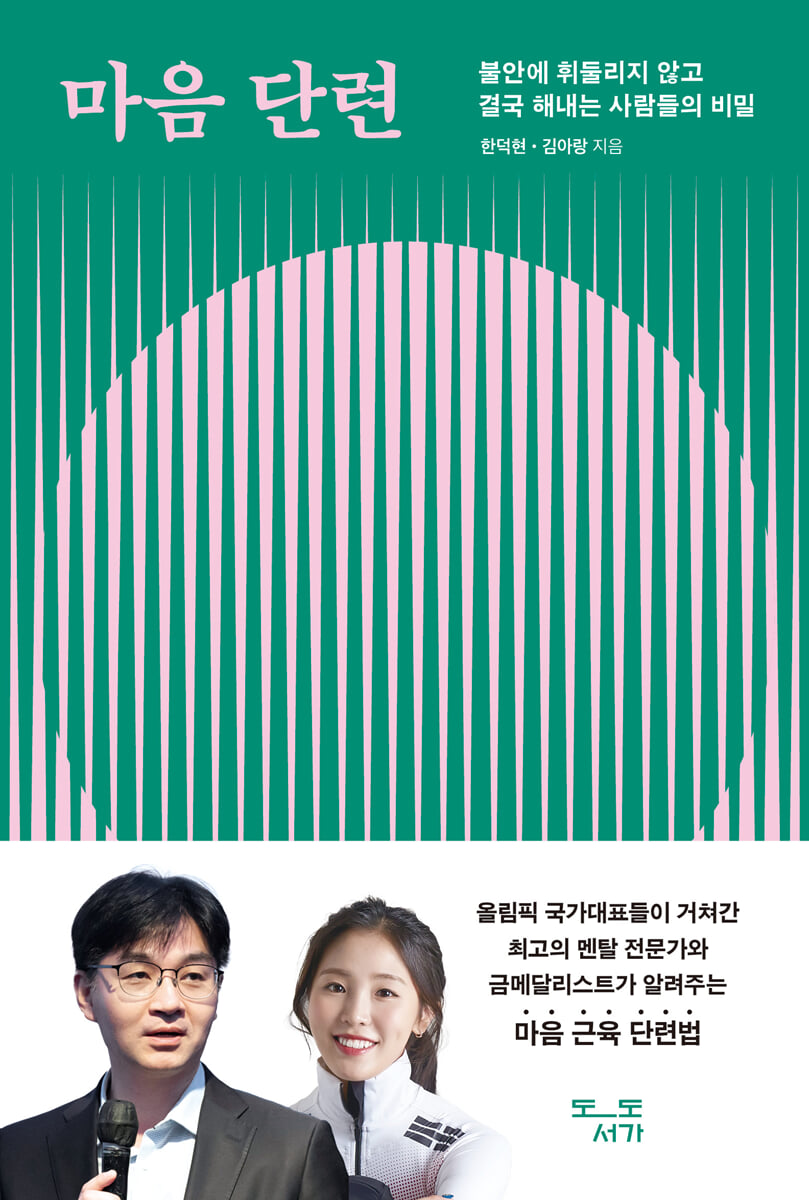
What sets world-class athletes apart? Professor Han Deok-hyeon, a sports psychiatrist, and author Kim A-rang, Korea's first three-time Olympic medalist, reveal the secrets to beating yesterday's self and today's competitors.
September 10, 2024. Humanities PD Son Min-gyu
Ultimately, what sets apart people who achieve outstanding results?
The answer lies in your mentality!
How to train your mental muscles through sports athletes
“I think I have a weak mentality.” “I feel like I’m going to die from anxiety.” “I keep breaking down over small things.
“Is it because I lack perseverance?” There is no one who is not anxious.
In this world where every day is fierce, many people feel anxious.
But why do some people feel more anxious and others less so, even in the same situations? Are there people with truly strong mentality? The key to achieving peak performance with a steady mind in critical moments ultimately lies in how you manage your anxiety.
We often find people with what is called a 'mental steel' among sports players.
In particular, national team players are like models of healthy mentality and mindset.
So, wouldn't it be possible to learn the secrets of mental toughness from athletes?
You can learn the secret through this book, “Mind Training.”
Professor Han Deok-hyeon, a leading mental expert who has served national team members, and gold medalist Kim A-rang introduce mental muscle training methods based on extensive research and field experience.
This book begins by examining the complexes that block us at crucial moments, then gradually teaches us how to understand the true nature of fear and terror, enhance our self-identity, and ultimately achieve what we desire.
According to the author, Professor Han Deok-hyeon, “being mentally strong ultimately means having a strong self-identity.”
It can also be explained by saying that you have high self-esteem.” People often think that when they become anxious, they lose themselves.
According to the authors, the opposite is true.
It is more common for people to feel anxious because they don't know what kind of person they are.
As long as desires are not resolved, humans cannot escape anxiety.
If you are destined to be unable to escape anxiety, you have no choice but to live by believing in yourself and choosing the best life possible.
The authors unanimously agree that if we live by holding on to the thread of identity, we can reduce physical and mental exhaustion to some extent.
The authors point out that suppressing or ignoring anxiety can have negative consequences, and suggest ways to soothe and calm anxiety and move toward your goals.
In particular, it helps to correctly diagnose burnout and slumps that perfectionists are prone to in a fiercely competitive society, and to turn unavoidable competition into an opportunity for self-development.
The answer lies in your mentality!
How to train your mental muscles through sports athletes
“I think I have a weak mentality.” “I feel like I’m going to die from anxiety.” “I keep breaking down over small things.
“Is it because I lack perseverance?” There is no one who is not anxious.
In this world where every day is fierce, many people feel anxious.
But why do some people feel more anxious and others less so, even in the same situations? Are there people with truly strong mentality? The key to achieving peak performance with a steady mind in critical moments ultimately lies in how you manage your anxiety.
We often find people with what is called a 'mental steel' among sports players.
In particular, national team players are like models of healthy mentality and mindset.
So, wouldn't it be possible to learn the secrets of mental toughness from athletes?
You can learn the secret through this book, “Mind Training.”
Professor Han Deok-hyeon, a leading mental expert who has served national team members, and gold medalist Kim A-rang introduce mental muscle training methods based on extensive research and field experience.
This book begins by examining the complexes that block us at crucial moments, then gradually teaches us how to understand the true nature of fear and terror, enhance our self-identity, and ultimately achieve what we desire.
According to the author, Professor Han Deok-hyeon, “being mentally strong ultimately means having a strong self-identity.”
It can also be explained by saying that you have high self-esteem.” People often think that when they become anxious, they lose themselves.
According to the authors, the opposite is true.
It is more common for people to feel anxious because they don't know what kind of person they are.
As long as desires are not resolved, humans cannot escape anxiety.
If you are destined to be unable to escape anxiety, you have no choice but to live by believing in yourself and choosing the best life possible.
The authors unanimously agree that if we live by holding on to the thread of identity, we can reduce physical and mental exhaustion to some extent.
The authors point out that suppressing or ignoring anxiety can have negative consequences, and suggest ways to soothe and calm anxiety and move toward your goals.
In particular, it helps to correctly diagnose burnout and slumps that perfectionists are prone to in a fiercely competitive society, and to turn unavoidable competition into an opportunity for self-development.
- You can preview some of the book's contents.
Preview
index
Prologue: No one is free from anxiety_ Han Deok-hyeon
Prologue: How to Transcend Anxiety and Tension and Become Mentally Stronger_ Kim A-rang
Chapter 1: The Reason for Shaking and Falling
Understand your inner complexes first.
The process of creating a negative complex | People who fall into self-deprecation | How to escape from a complex
People in burnout and slump
Burnout Syndrome | The Perfectionist Trap | Obsession and the "Sudvi" Complex | The Dangers of Process-Ignoring Thinking | Avoiding Hasty Conclusions and Rationalization | A Step-by-Step Approach to Breaking Out of a Slump | Practice Responding to Opportunities and Crises | Acknowledging Anxiety and Tension
A monster created by anxiety and fear
Understanding the Reality of Fear | Building Self-Confidence | Anticipatory Anxiety and Preparedness | How to Shake Off Trauma | People Who Self-Abuse | What to Remember When You're Anxious
Chapter 2: The Secret of Those Who Finally Get It Done
People with strong roots
Understand Your Identity First | Role Conflict and Identity
When you're afraid of making mistakes
Excessive worry is just a rehearsal for failure | The trap of "everything will be okay" | Characteristics of truly positive people | False optimism breeds obsession | How to overcome anxiety and nervousness
When the burden weighs you down
People Trapped by Evaluation | If You're Constantly Swayed by the Opinions and Evaluations of Those Around You | The Need for Objective Self-Review | Why a Correct Perception of Reality Is Crucial
If you work hard but don't see results
The Correlation Between Performance and Focus | Boost Self-Efficacy | Create Your Own Routine | Routines of Highly Successful People
If you are nervous and cannot perform well,
Divide preparation and success into small chunks | The importance of successful experiences | Beware of self-underestimation | Your opponents are as fearful as you are - How to overcome anxiety in real-life situations
Chapter 3: Preparing for a Better Tomorrow
Great players don't strive for perfection.
Debunking Myths About Success | The Importance of Letting Go | Stop Ruminating on Negative Thoughts
Why you shouldn't rely on others when things are tough
Dependency and Anxiety | Watch Your Relationships for Signs | People Who Feel Lonelier Than Others | The Difference Between Security and Dependency | The Importance of Psychological Independence | Taking Back Control of Your Life
Between competition and comparison
People Who Can't Stop Comparing | Competition Is Inevitable | Use Healthy Comparison | What We Can Learn from Inevitable Competition - If You're a Pro, Manage Your Own Data
Break free from the past
Everyone Had Their Prime | Why You Feel Empty and Deprived in Middle Age | Accepting Yourself as You Used to Be | If You've Lost Your Goals and Feel Apathetic | Giving Your Goals Meaning
There are still many opportunities
After crisis comes opportunity, and after opportunity comes crisis | Without difficulties, there is no success | Preparing for the coming opportunity
How to enjoy work without stress
The Real Meaning of Enjoying Your Work | Balancing External and Self-Evaluation | Freeing Yourself from Results
Accumulated tension and fatigue, what you need now
Creating a Balanced Life | Sometimes Relaxation is More Important Than Stress | Slowing Down Time | The Importance of Rest *5 Habits of Star Athletes*
Appendix: Some Advice for Individuals and Organizations
Distinguish between common goals and individual goals.
Techniques for Transforming Team Problem Solvers | Encourage Active Participation
How to identify a good leader
If You're Being Swayed by a Fake Chow Yun-fat | Evaluate Yourself Objectively | How True Leaders Act
Effective Communication Skills for Leaders
Pay attention to what the other person needs | Persuade, not coerce or brainwash | Listen first and then state the main points in order | Distinguish between scolding and feedback | Don't express emotions, but speak specifically about how to do something | Over-ordering breeds anxiety | The secret to being a leader that everyone, both organizations and people, likes
Epilogue: Anxiety sometimes heralds evolution_Han Deok-hyeon
main
Prologue: How to Transcend Anxiety and Tension and Become Mentally Stronger_ Kim A-rang
Chapter 1: The Reason for Shaking and Falling
Understand your inner complexes first.
The process of creating a negative complex | People who fall into self-deprecation | How to escape from a complex
People in burnout and slump
Burnout Syndrome | The Perfectionist Trap | Obsession and the "Sudvi" Complex | The Dangers of Process-Ignoring Thinking | Avoiding Hasty Conclusions and Rationalization | A Step-by-Step Approach to Breaking Out of a Slump | Practice Responding to Opportunities and Crises | Acknowledging Anxiety and Tension
A monster created by anxiety and fear
Understanding the Reality of Fear | Building Self-Confidence | Anticipatory Anxiety and Preparedness | How to Shake Off Trauma | People Who Self-Abuse | What to Remember When You're Anxious
Chapter 2: The Secret of Those Who Finally Get It Done
People with strong roots
Understand Your Identity First | Role Conflict and Identity
When you're afraid of making mistakes
Excessive worry is just a rehearsal for failure | The trap of "everything will be okay" | Characteristics of truly positive people | False optimism breeds obsession | How to overcome anxiety and nervousness
When the burden weighs you down
People Trapped by Evaluation | If You're Constantly Swayed by the Opinions and Evaluations of Those Around You | The Need for Objective Self-Review | Why a Correct Perception of Reality Is Crucial
If you work hard but don't see results
The Correlation Between Performance and Focus | Boost Self-Efficacy | Create Your Own Routine | Routines of Highly Successful People
If you are nervous and cannot perform well,
Divide preparation and success into small chunks | The importance of successful experiences | Beware of self-underestimation | Your opponents are as fearful as you are - How to overcome anxiety in real-life situations
Chapter 3: Preparing for a Better Tomorrow
Great players don't strive for perfection.
Debunking Myths About Success | The Importance of Letting Go | Stop Ruminating on Negative Thoughts
Why you shouldn't rely on others when things are tough
Dependency and Anxiety | Watch Your Relationships for Signs | People Who Feel Lonelier Than Others | The Difference Between Security and Dependency | The Importance of Psychological Independence | Taking Back Control of Your Life
Between competition and comparison
People Who Can't Stop Comparing | Competition Is Inevitable | Use Healthy Comparison | What We Can Learn from Inevitable Competition - If You're a Pro, Manage Your Own Data
Break free from the past
Everyone Had Their Prime | Why You Feel Empty and Deprived in Middle Age | Accepting Yourself as You Used to Be | If You've Lost Your Goals and Feel Apathetic | Giving Your Goals Meaning
There are still many opportunities
After crisis comes opportunity, and after opportunity comes crisis | Without difficulties, there is no success | Preparing for the coming opportunity
How to enjoy work without stress
The Real Meaning of Enjoying Your Work | Balancing External and Self-Evaluation | Freeing Yourself from Results
Accumulated tension and fatigue, what you need now
Creating a Balanced Life | Sometimes Relaxation is More Important Than Stress | Slowing Down Time | The Importance of Rest *5 Habits of Star Athletes*
Appendix: Some Advice for Individuals and Organizations
Distinguish between common goals and individual goals.
Techniques for Transforming Team Problem Solvers | Encourage Active Participation
How to identify a good leader
If You're Being Swayed by a Fake Chow Yun-fat | Evaluate Yourself Objectively | How True Leaders Act
Effective Communication Skills for Leaders
Pay attention to what the other person needs | Persuade, not coerce or brainwash | Listen first and then state the main points in order | Distinguish between scolding and feedback | Don't express emotions, but speak specifically about how to do something | Over-ordering breeds anxiety | The secret to being a leader that everyone, both organizations and people, likes
Epilogue: Anxiety sometimes heralds evolution_Han Deok-hyeon
main
Detailed image
.jpg)
Into the book
To overcome a complex, you must first change your negative self-thoughts into positive self-thoughts.
It may seem easy at first glance, but it's actually not that simple.
Because we know ourselves best and listen to our inner voice the loudest.
In other words, no matter how loudly I shout out that I can do it and that I'm fine, I keep hearing negative cries in my head disguised as truth: "But that's not true, is it? The truth is, I can't do it."
So, one of the most necessary tasks when overcoming a complex is a very dry 'narration technique'.
That is, to list the facts as they are.
--- p.28
Medically, fear is expressed as 'phobia'.
Most fears manifest as monsters when faced with a specific object or situation.
However, fear has the characteristic of increasing terror regardless of the magnitude of the incident that occurred.
Fear makes people small.
Of course, it gets in the way of having confidence.
To gain confidence, you must analyze the nature of your fears.
When you know the truth, fear is like a conman.
It is usually much more distorted than reality.
Even though we can overcome difficulties, we often create monsters in our heads that hinder us from doing so.
To be free from fear, you must be able to distinguish between the real fears and terrors that plague you and the monsters created by your own distortions.
--- p.55~56
Anxiety is an emotion that everyone experiences.
The first step to managing anxiety is acceptance.
Only by accepting that you are anxious can you accurately assess your situation.
Let's say you have an important competitive presentation coming up.
If you don't get nervous in a presentation where the odds are 20 to 1, you're out of luck.
It will be five times more stressful than when you are presenting with a 4 to 1 competition ratio.
Still, if you want to do well in a presentation where the odds are 20 to 1, you can't afford to lose.
Rather than worrying about the results, you should focus on how well you can demonstrate your own or your organization's capabilities in a short period of time and put all your effort into concentrating.
--- p.70~71
Academically, the mental strength of athletes can be explained as the ability to overcome performance anxiety and perfectly display one's skills with incredible concentration.
A strong mentality depends on both 'qualities' and 'situations', which means that to some extent it is innate, and to some extent it is developed through systematic training.
So, what can we do to overcome anxiety and build mental strength? First, a consistent environment is crucial.
--- p.92
Excessive tension can cause illness, but mild tension can have a positive effect.
According to a research paper published in the psychology journal Emotion, a tolerable level of threat enhances the regulatory function of executive function, and the accompanying anxiety reinforces the threat, helping to improve concentration.
This supports the hypothesis that appropriately increasing situational anxiety improves performance in competitive situations.
--- p.93
There are many players who are sufficiently skilled but are unable to perform to their full potential due to tension and anxiety.
I would like to encourage them to try to overcome their anxiety with small successes.
It's not that many players don't perform well because they lack skill or know-how.
It is important to have opportunities to relieve anxiety and experience trust in yourself.
First, you need to start mind control by saying, “I can do it too” and “It’s worth a try” through small successes.
Sharing success and experiencing small successes early on gives us the gift of 'reward' or 'satisfaction'.
And this reward reinforces 'positivity'.
--- p.125~126
When negative thoughts come flooding in, how can you organize them? Try taking notes.
This is actually how Kim A-rang does it.
Kim usually takes a lot of notes, but he takes notes especially when his mind is complicated.
Then, divide what you can and cannot solve right now, figure out what you need to do first, and figure out how to do it.
--- p.146
Through competition, we humans learn negotiation, acceptance, integrative perspective, tolerance and avoidance.
In competition, it is also important to set boundaries.
To define the scope of your competition, you must know your limits.
It's difficult for me to consciously know my limitations.
It is difficult to identify one's own limitations and 'potential abilities' hidden in the subconscious.
American sports psychologist Tom Hanson said that if you subtract the burden from your potential ability, that is your current performance ability.
--- p.170~171
Positive people know how to focus on the present, not the past.
I don't want to advise you to "become a positive person unconditionally."
However, you need to know the mindset of a positive person and why such mindset produces good results.
If you've lived a certain amount of life, you'll know that you can get opportunities quickly by letting go when it's time to let go and holding on when it's time to hold on.
The habit of being stuck in the past runs counter to the nature of evolution.
It may seem easy at first glance, but it's actually not that simple.
Because we know ourselves best and listen to our inner voice the loudest.
In other words, no matter how loudly I shout out that I can do it and that I'm fine, I keep hearing negative cries in my head disguised as truth: "But that's not true, is it? The truth is, I can't do it."
So, one of the most necessary tasks when overcoming a complex is a very dry 'narration technique'.
That is, to list the facts as they are.
--- p.28
Medically, fear is expressed as 'phobia'.
Most fears manifest as monsters when faced with a specific object or situation.
However, fear has the characteristic of increasing terror regardless of the magnitude of the incident that occurred.
Fear makes people small.
Of course, it gets in the way of having confidence.
To gain confidence, you must analyze the nature of your fears.
When you know the truth, fear is like a conman.
It is usually much more distorted than reality.
Even though we can overcome difficulties, we often create monsters in our heads that hinder us from doing so.
To be free from fear, you must be able to distinguish between the real fears and terrors that plague you and the monsters created by your own distortions.
--- p.55~56
Anxiety is an emotion that everyone experiences.
The first step to managing anxiety is acceptance.
Only by accepting that you are anxious can you accurately assess your situation.
Let's say you have an important competitive presentation coming up.
If you don't get nervous in a presentation where the odds are 20 to 1, you're out of luck.
It will be five times more stressful than when you are presenting with a 4 to 1 competition ratio.
Still, if you want to do well in a presentation where the odds are 20 to 1, you can't afford to lose.
Rather than worrying about the results, you should focus on how well you can demonstrate your own or your organization's capabilities in a short period of time and put all your effort into concentrating.
--- p.70~71
Academically, the mental strength of athletes can be explained as the ability to overcome performance anxiety and perfectly display one's skills with incredible concentration.
A strong mentality depends on both 'qualities' and 'situations', which means that to some extent it is innate, and to some extent it is developed through systematic training.
So, what can we do to overcome anxiety and build mental strength? First, a consistent environment is crucial.
--- p.92
Excessive tension can cause illness, but mild tension can have a positive effect.
According to a research paper published in the psychology journal Emotion, a tolerable level of threat enhances the regulatory function of executive function, and the accompanying anxiety reinforces the threat, helping to improve concentration.
This supports the hypothesis that appropriately increasing situational anxiety improves performance in competitive situations.
--- p.93
There are many players who are sufficiently skilled but are unable to perform to their full potential due to tension and anxiety.
I would like to encourage them to try to overcome their anxiety with small successes.
It's not that many players don't perform well because they lack skill or know-how.
It is important to have opportunities to relieve anxiety and experience trust in yourself.
First, you need to start mind control by saying, “I can do it too” and “It’s worth a try” through small successes.
Sharing success and experiencing small successes early on gives us the gift of 'reward' or 'satisfaction'.
And this reward reinforces 'positivity'.
--- p.125~126
When negative thoughts come flooding in, how can you organize them? Try taking notes.
This is actually how Kim A-rang does it.
Kim usually takes a lot of notes, but he takes notes especially when his mind is complicated.
Then, divide what you can and cannot solve right now, figure out what you need to do first, and figure out how to do it.
--- p.146
Through competition, we humans learn negotiation, acceptance, integrative perspective, tolerance and avoidance.
In competition, it is also important to set boundaries.
To define the scope of your competition, you must know your limits.
It's difficult for me to consciously know my limitations.
It is difficult to identify one's own limitations and 'potential abilities' hidden in the subconscious.
American sports psychologist Tom Hanson said that if you subtract the burden from your potential ability, that is your current performance ability.
--- p.170~171
Positive people know how to focus on the present, not the past.
I don't want to advise you to "become a positive person unconditionally."
However, you need to know the mindset of a positive person and why such mindset produces good results.
If you've lived a certain amount of life, you'll know that you can get opportunities quickly by letting go when it's time to let go and holding on when it's time to hold on.
The habit of being stuck in the past runs counter to the nature of evolution.
--- p.183~184
Publisher's Review
Beyond anxiety and nervousness, hardship and adversity
Focus at the crucial moment
An effective way to achieve what you want
Anxiety, tension, nervousness… .
It's an emotion we all face.
These emotions are especially amplified at crucial moments.
Life doesn't always go as planned.
There are times when things don't work out even though you've done your best.
There are very few things in this world where if I put in 10 efforts, I will do 10 things well, and if I invest 50, I will reap 50 things.
But that doesn't mean you can give up or give up.
We must get up again and move forward.
In times like these, what ultimately holds me together is a ‘strong mind.’
As it is written in the book, “Kim A-rang always says, ‘I am a skater who is always at risk of falling.’”
But I don't think about falling, I think about skating well.
The moment a skater starts thinking like that, he or she can't focus on the game." The same goes for our lives.
Excessive worry about failure or mistakes is tantamount to casting a spell for failure.
The important thing is a change in thinking.
It is said that ice skaters avoid slippery foods like bananas and seaweed soup, even though they know it is a common saying.
Regarding this, Kim A-rang said this:
“If you think about it differently, wouldn’t it be better to slip and run faster?
Our skaters eventually have to slide on the ice.
“Attributing meaning to each and every thing can be stressful, but if you change your perspective, you can think of it as an element that can help you solve something better.”
Above all, the greatest strength of this book is that it presents reliable, practical methods based on Professor Han Deok-hyeon's research and field experience of over 30 years and Kim A-rang's career of over 20 years.
This book differs from other books in that it provides practical, proven methods for managing anxiety, based on a wealth of data.
When I'm nervous about something important, my body doesn't move the way I want it to.
What should we do in such situations? Here are some simple tips from the book.
First, take a slow, controlled breath.
Second, decide on your own point of view.
Third, use short words that serve as signals.
Fourth, create specific behaviors that provide psychological stability.
“All problems are simpler than you think, so once you learn how to solve the first one, you can easily solve other problems that follow,” adds Kim A-rang.
If you're working hard but not seeing results, if you're experiencing burnout or a slump, if anxiety and stress are preventing you from performing to your full potential, if you can't or don't want to crumble in this competitive world, follow the authors' advice.
Anxiety is sometimes a precursor to evolution, and it can certainly be managed.
With this book, that is.
Focus at the crucial moment
An effective way to achieve what you want
Anxiety, tension, nervousness… .
It's an emotion we all face.
These emotions are especially amplified at crucial moments.
Life doesn't always go as planned.
There are times when things don't work out even though you've done your best.
There are very few things in this world where if I put in 10 efforts, I will do 10 things well, and if I invest 50, I will reap 50 things.
But that doesn't mean you can give up or give up.
We must get up again and move forward.
In times like these, what ultimately holds me together is a ‘strong mind.’
As it is written in the book, “Kim A-rang always says, ‘I am a skater who is always at risk of falling.’”
But I don't think about falling, I think about skating well.
The moment a skater starts thinking like that, he or she can't focus on the game." The same goes for our lives.
Excessive worry about failure or mistakes is tantamount to casting a spell for failure.
The important thing is a change in thinking.
It is said that ice skaters avoid slippery foods like bananas and seaweed soup, even though they know it is a common saying.
Regarding this, Kim A-rang said this:
“If you think about it differently, wouldn’t it be better to slip and run faster?
Our skaters eventually have to slide on the ice.
“Attributing meaning to each and every thing can be stressful, but if you change your perspective, you can think of it as an element that can help you solve something better.”
Above all, the greatest strength of this book is that it presents reliable, practical methods based on Professor Han Deok-hyeon's research and field experience of over 30 years and Kim A-rang's career of over 20 years.
This book differs from other books in that it provides practical, proven methods for managing anxiety, based on a wealth of data.
When I'm nervous about something important, my body doesn't move the way I want it to.
What should we do in such situations? Here are some simple tips from the book.
First, take a slow, controlled breath.
Second, decide on your own point of view.
Third, use short words that serve as signals.
Fourth, create specific behaviors that provide psychological stability.
“All problems are simpler than you think, so once you learn how to solve the first one, you can easily solve other problems that follow,” adds Kim A-rang.
If you're working hard but not seeing results, if you're experiencing burnout or a slump, if anxiety and stress are preventing you from performing to your full potential, if you can't or don't want to crumble in this competitive world, follow the authors' advice.
Anxiety is sometimes a precursor to evolution, and it can certainly be managed.
With this book, that is.
GOODS SPECIFICS
- Date of issue: September 9, 2024
- Page count, weight, size: 268 pages | 408g | 135*200*18mm
- ISBN13: 9791198312129
- ISBN10: 1198312122
You may also like
카테고리
korean


korean

![ELLE 엘르 스페셜 에디션 A형 : 12월 [2025]](http://librairie.coreenne.fr/cdn/shop/files/b8e27a3de6c9538896439686c6b0e8fb.jpg?v=1766436872&width=3840)


