

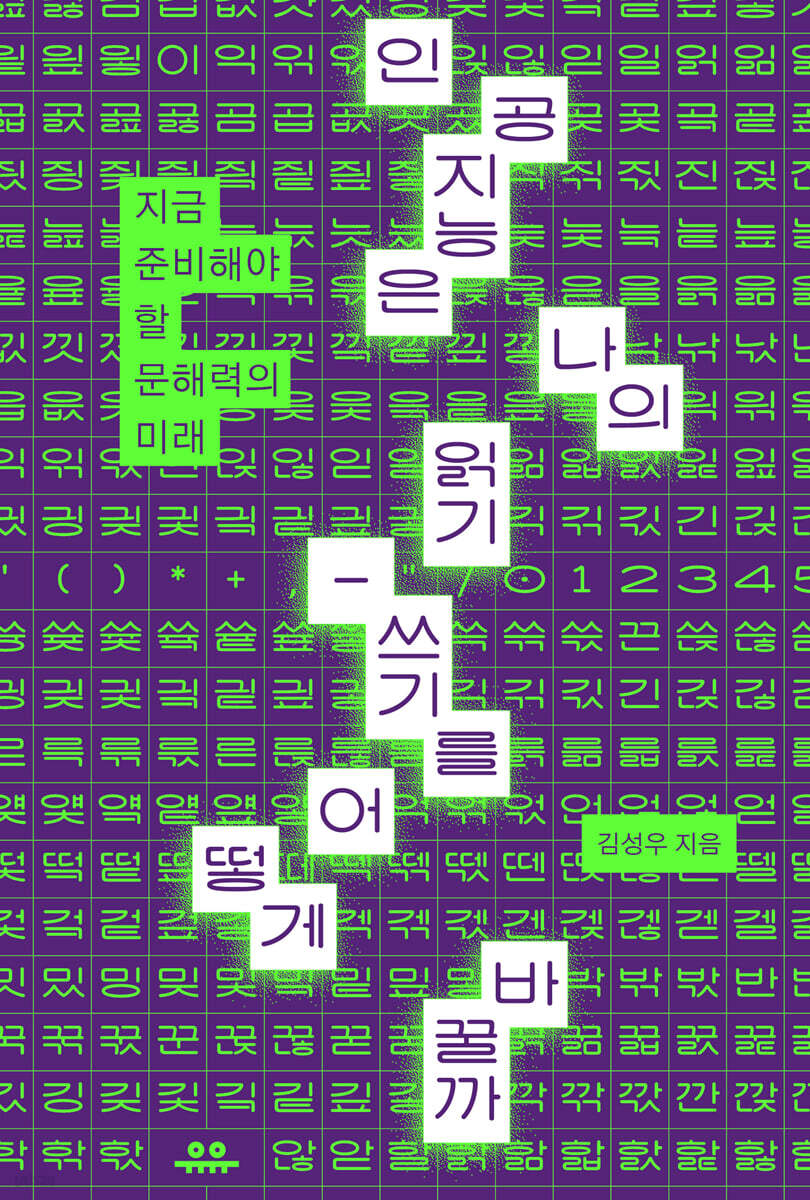
How AI Will Change My Reading and Writing
 |
Description
Book Introduction
Public interest in AI has grown significantly since OpenAI released ChatGPT in December 2022, but the discussion so far has centered on what AI can do and how to utilize it.
This book shifts the focus of the discussion and proposes a different perspective on generative artificial intelligence, which aims to read and write like humans.
Instead of productivity and efficiency, we focus on words like "I," "we," "human," and "life," and consider how we can relate to and coexist with artificial intelligence in a way that is most humane and pursues benefits to our lives beyond efficiency.
Meanwhile, the emergence of artificial intelligence that can read and write is creating waves of change in the concept of literacy and the discourse on literacy in our society.
As an applied linguist who has long studied the intertwining of individuals, society, technology, and literacy, the author, drawing on recent domestic and international research, examines what distinguishes humans despite the emergence of artificial intelligence that can learn, understand, and solve problems like humans, and what ethics must be established before such technology permeates every aspect of society.
It compares and contrasts human reading and writing with artificial intelligence reading and writing, and explains the structural and inherent differences between texts read and written by humans and texts read and written by artificial intelligence.
Can AI, capable of reading and writing like humans, replace human reading and writing? Amidst fundamental shifts in the literacy ecosystem, how can we better care for ourselves as readers and writers? This book goes beyond simply how to utilize AI and helps establish a proper perspective and attitude toward new technologies.
This book shifts the focus of the discussion and proposes a different perspective on generative artificial intelligence, which aims to read and write like humans.
Instead of productivity and efficiency, we focus on words like "I," "we," "human," and "life," and consider how we can relate to and coexist with artificial intelligence in a way that is most humane and pursues benefits to our lives beyond efficiency.
Meanwhile, the emergence of artificial intelligence that can read and write is creating waves of change in the concept of literacy and the discourse on literacy in our society.
As an applied linguist who has long studied the intertwining of individuals, society, technology, and literacy, the author, drawing on recent domestic and international research, examines what distinguishes humans despite the emergence of artificial intelligence that can learn, understand, and solve problems like humans, and what ethics must be established before such technology permeates every aspect of society.
It compares and contrasts human reading and writing with artificial intelligence reading and writing, and explains the structural and inherent differences between texts read and written by humans and texts read and written by artificial intelligence.
Can AI, capable of reading and writing like humans, replace human reading and writing? Amidst fundamental shifts in the literacy ecosystem, how can we better care for ourselves as readers and writers? This book goes beyond simply how to utilize AI and helps establish a proper perspective and attitude toward new technologies.
- You can preview some of the book's contents.
Preview
index
Recommendation
Introduction: The Rise of Generative AI and the New Imagination of Reading and Writing
1 Questions Raised by Reading and Writing AI
2 Human Reading and Writing, Artificial Intelligence Reading and Writing: A Conceptual Exploration
3 How the Literacy Ecosystem Will Change: Mediation, Transmission, Speed, Authorship, and Ethics
4 The Illusion of 'Questions Are Everything' Created by Prompt Engineering
5 People create technology, and technology creates people.
6 Critical Meta-Literacy or the Future of Reading and Writing
The words that come out: Literacy, connecting with the wider world.
Living as a smaller me
main
References
Introduction: The Rise of Generative AI and the New Imagination of Reading and Writing
1 Questions Raised by Reading and Writing AI
2 Human Reading and Writing, Artificial Intelligence Reading and Writing: A Conceptual Exploration
3 How the Literacy Ecosystem Will Change: Mediation, Transmission, Speed, Authorship, and Ethics
4 The Illusion of 'Questions Are Everything' Created by Prompt Engineering
5 People create technology, and technology creates people.
6 Critical Meta-Literacy or the Future of Reading and Writing
The words that come out: Literacy, connecting with the wider world.
Living as a smaller me
main
References
Publisher's Review
Generative AI: Beyond Productivity and Efficiency: A Perspective on Me, Humans, and Life
Public interest in artificial intelligence has grown significantly since OpenAI released ChatGPT in December 2022.
We often hear talk of the "age of artificial intelligence," and many people talk as if artificial intelligence with the ability to read and write will soon change the text ecosystem.
The book market has also been flooded with books on generative artificial intelligence.
ChatGPT also appeared as an author.
Most of these books deal with what artificial intelligence can do and how to utilize it.
The discussion was mainly focused on productivity and efficiency.
"How will AI change my reading and writing?" shifts the focus of this discussion.
I propose to look at generative artificial intelligence, which reads and writes like a human, from a different perspective than before.
In place of productivity and efficiency, I place words like "I," "we," "human," and "life," and consider how we can utilize and coexist in the most humane way, pursuing the benefits of our lives beyond efficiency.
Furthermore, despite the emergence of artificial intelligence capable of learning, understanding, and solving problems like humans, we examine what distinguishes humans from others, and what ethics must be established before this technology permeates society.
By comparing and contrasting human reading and writing with artificial intelligence reading and writing, we also explain the structural and inherent differences between texts read and written by humans and texts read and written by artificial intelligence.
Given the near-infinite data available to AI, we explore the flaws hidden within the illusion that "if you just ask the right questions, you can get all the information and knowledge you need."
Technology always advances faster than we can imagine.
The room to reject or exclude artificial intelligence will become increasingly narrow.
However, we cannot blindly follow technology as it leads us, nor can we rely on it without fully understanding what it is.
As an applied linguist who has long studied the intertwining of individuals, society, technology, and literacy, the author poses a fundamental question: should we view artificial intelligence not as a tool but as a subject of relationships?
How should we understand AI, now that it can read and write? What values and limitations will reading and writing with these new beings have? Amidst this fundamental shift in the literacy ecosystem, how can we better care for ourselves as readers and writers?
The concept of literacy and the literacy ecosystem are changing.
How to Read and Write with AI
The reason ChatGPT spread and became a hot topic more quickly than previous artificial intelligence is because it is an artificial intelligence that can read and write on its own, tasks that were previously considered entirely human.
No one is exempt from reading and writing.
Still, it's not easy to do well.
Moreover, as the realm of text begins to be filled with images, people find it more difficult to read and write long texts than before, and there is a constant debate about literacy in society.
When artificial intelligence was developed to perform reading and writing, which are usually difficult to do, everyone thought that this technology would make everyone's life more convenient.
But is today's generative AI truly helping everyone? Can AI, which reads and writes like humans, truly replace human reading and writing? These discussions surrounding AI are creating waves of change in the concept of literacy and the discourse on literacy in our society.
What are the similarities and differences between human reading and writing and AI reading and writing? What processes do humans go through to read and write, and how does AI read and write?
Based on recent domestic and international research, the author describes in detail the process by which AI generates text. He points out that while AI can generate text, it cannot produce the various values that the act of reading creates.
The joy of reading, the brain activated while reading, the moment of enlightenment experienced while reading, the lingering emotions and impressions that arise without reason, thoughts that are only organized while writing, and one's own emotions that become clear only after writing - these are things that cannot be realized through artificial intelligence reading and writing.
Therefore, the idea that artificial intelligence can 'replace' human reading and writing is a fantasy, and various examples show that there are aspects of human reading and writing that cannot be replaced by technology.
So, rather than pointing out that artificial intelligence has limitations, the author's message is to acknowledge that artificial intelligence is changing the literacy ecosystem and to discuss 'how' this new technology is changing our reading and writing, and what attitude and perspective we should have toward that change.
In fact, the concept of literacy has been constantly changing.
As society changes, concepts like media literacy and digital literacy emerge, and their meanings also change and expand.
Therefore, to properly utilize the technologies that are transforming the literacy ecosystem and to peacefully coexist with them, we need to go beyond learning how to utilize them and study to help establish the right perspective and attitude.
This book will help you get started.
Public interest in artificial intelligence has grown significantly since OpenAI released ChatGPT in December 2022.
We often hear talk of the "age of artificial intelligence," and many people talk as if artificial intelligence with the ability to read and write will soon change the text ecosystem.
The book market has also been flooded with books on generative artificial intelligence.
ChatGPT also appeared as an author.
Most of these books deal with what artificial intelligence can do and how to utilize it.
The discussion was mainly focused on productivity and efficiency.
"How will AI change my reading and writing?" shifts the focus of this discussion.
I propose to look at generative artificial intelligence, which reads and writes like a human, from a different perspective than before.
In place of productivity and efficiency, I place words like "I," "we," "human," and "life," and consider how we can utilize and coexist in the most humane way, pursuing the benefits of our lives beyond efficiency.
Furthermore, despite the emergence of artificial intelligence capable of learning, understanding, and solving problems like humans, we examine what distinguishes humans from others, and what ethics must be established before this technology permeates society.
By comparing and contrasting human reading and writing with artificial intelligence reading and writing, we also explain the structural and inherent differences between texts read and written by humans and texts read and written by artificial intelligence.
Given the near-infinite data available to AI, we explore the flaws hidden within the illusion that "if you just ask the right questions, you can get all the information and knowledge you need."
Technology always advances faster than we can imagine.
The room to reject or exclude artificial intelligence will become increasingly narrow.
However, we cannot blindly follow technology as it leads us, nor can we rely on it without fully understanding what it is.
As an applied linguist who has long studied the intertwining of individuals, society, technology, and literacy, the author poses a fundamental question: should we view artificial intelligence not as a tool but as a subject of relationships?
How should we understand AI, now that it can read and write? What values and limitations will reading and writing with these new beings have? Amidst this fundamental shift in the literacy ecosystem, how can we better care for ourselves as readers and writers?
The concept of literacy and the literacy ecosystem are changing.
How to Read and Write with AI
The reason ChatGPT spread and became a hot topic more quickly than previous artificial intelligence is because it is an artificial intelligence that can read and write on its own, tasks that were previously considered entirely human.
No one is exempt from reading and writing.
Still, it's not easy to do well.
Moreover, as the realm of text begins to be filled with images, people find it more difficult to read and write long texts than before, and there is a constant debate about literacy in society.
When artificial intelligence was developed to perform reading and writing, which are usually difficult to do, everyone thought that this technology would make everyone's life more convenient.
But is today's generative AI truly helping everyone? Can AI, which reads and writes like humans, truly replace human reading and writing? These discussions surrounding AI are creating waves of change in the concept of literacy and the discourse on literacy in our society.
What are the similarities and differences between human reading and writing and AI reading and writing? What processes do humans go through to read and write, and how does AI read and write?
Based on recent domestic and international research, the author describes in detail the process by which AI generates text. He points out that while AI can generate text, it cannot produce the various values that the act of reading creates.
The joy of reading, the brain activated while reading, the moment of enlightenment experienced while reading, the lingering emotions and impressions that arise without reason, thoughts that are only organized while writing, and one's own emotions that become clear only after writing - these are things that cannot be realized through artificial intelligence reading and writing.
Therefore, the idea that artificial intelligence can 'replace' human reading and writing is a fantasy, and various examples show that there are aspects of human reading and writing that cannot be replaced by technology.
So, rather than pointing out that artificial intelligence has limitations, the author's message is to acknowledge that artificial intelligence is changing the literacy ecosystem and to discuss 'how' this new technology is changing our reading and writing, and what attitude and perspective we should have toward that change.
In fact, the concept of literacy has been constantly changing.
As society changes, concepts like media literacy and digital literacy emerge, and their meanings also change and expand.
Therefore, to properly utilize the technologies that are transforming the literacy ecosystem and to peacefully coexist with them, we need to go beyond learning how to utilize them and study to help establish the right perspective and attitude.
This book will help you get started.
GOODS SPECIFICS
- Date of issue: August 4, 2024
- Page count, weight, size: 516 pages | 468g | 127*188*26mm
- ISBN13: 9791167700988
- ISBN10: 1167700988
You may also like
카테고리
korean


korean

![GQ KOREA Mark (Monthly): December [2025]](http://librairie.coreenne.fr/cdn/shop/files/8ef265dbbfbf186523ed75ba7319009d.jpg?v=1765340328&width=3840)


