

Thinking Art Museum
 |
Description
Book Introduction
- A word from MD
-
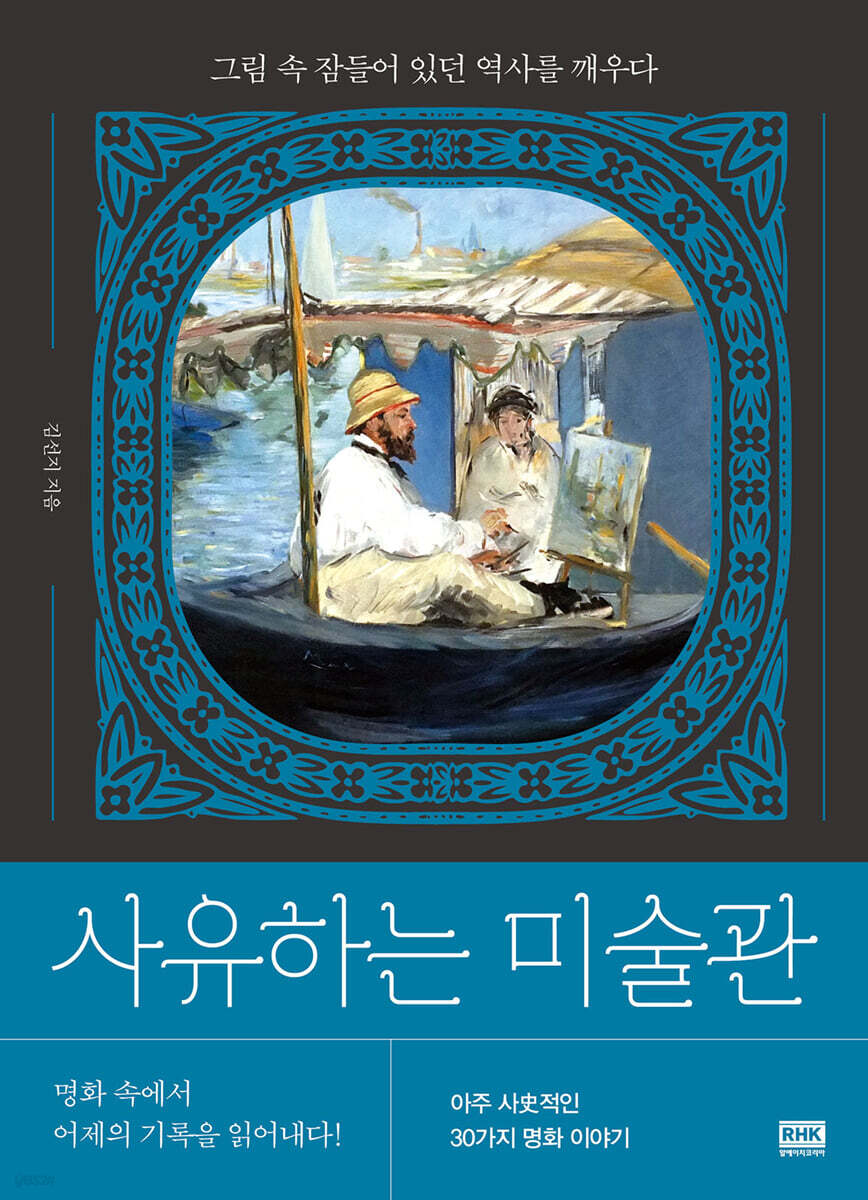
Life becomes history, recorded as art.A book that explores the history hidden in works of art.
The records of yesterday captured by the painters invite readers to the era in which the paintings were created, and the stories hidden within the paintings connect the era and the paintings.
The author's friendly explanations not only broaden my perspective on art appreciation, but also expand my appreciation into the realm of the humanities, awakening my inner thoughts.
July 30, 2024. Art PD Ahn Hyun-jae
Reading yesterday's records in famous paintings!
Reading from a famous painting that was sleeping in an art museum
30 Very Historical and Fascinating Stories
Louis XIV, who has been regarded as a symbol of absolute power, actually focused on fashion to hide his complexes, and as a result, made France a mecca for high fashion.
The political pornography that plagued Marie Antoinette eventually became the catalyst that led to the French Revolution.
The origins of the "fasting girls" who appeared in the Victorian era and lived without eating can be traced back to the medieval nuns who starved to death, who had to undergo even harsher and more severe ascetic practices than men to become saints.
Even in the 17th century, there was a foodstagram, and these were even made into paintings to be recreated as famous paintings.
Van Gogh, who was considered 'abnormal', was confined to a mental hospital and painted the scenery he saw from the window at dawn, capturing his dreams, anxiety, hope and pain in 'Starry Night'.
We can also learn about the form of sugar, once called "white gold," in paintings, how the day of humanity's destruction was depicted in Michelangelo's work, why he painted his own face in "The Last Judgment," and how Disney repackaged the myth of the Indian princess as a fantastic lie, all through famous paintings that have been recorded in history.
This book is a pictorial history book that examines the history that was dormant or overlooked in works of art through six keywords.
We read the history, the records of yesterday, that the painters of the past vividly depicted in their paintings, as if they were living and breathing their own times.
It shows how famous kings and queens, who were the center of pre-modern history, and sex and love, which can be said to be the core of life along with food, clothing, and shelter, are remembered in paintings.
In addition, we can read about the history of food left in the paintings, how the history of faith and religion recorded in the paintings, the history of power and authority are imprinted in the paintings, and what thoughts and values humans have had and how they have lived through the paintings that contain the appearance of modern society.
The moment you see a famous painting, you will clearly see the era and scenes that you had not been able to see before.
Reading from a famous painting that was sleeping in an art museum
30 Very Historical and Fascinating Stories
Louis XIV, who has been regarded as a symbol of absolute power, actually focused on fashion to hide his complexes, and as a result, made France a mecca for high fashion.
The political pornography that plagued Marie Antoinette eventually became the catalyst that led to the French Revolution.
The origins of the "fasting girls" who appeared in the Victorian era and lived without eating can be traced back to the medieval nuns who starved to death, who had to undergo even harsher and more severe ascetic practices than men to become saints.
Even in the 17th century, there was a foodstagram, and these were even made into paintings to be recreated as famous paintings.
Van Gogh, who was considered 'abnormal', was confined to a mental hospital and painted the scenery he saw from the window at dawn, capturing his dreams, anxiety, hope and pain in 'Starry Night'.
We can also learn about the form of sugar, once called "white gold," in paintings, how the day of humanity's destruction was depicted in Michelangelo's work, why he painted his own face in "The Last Judgment," and how Disney repackaged the myth of the Indian princess as a fantastic lie, all through famous paintings that have been recorded in history.
This book is a pictorial history book that examines the history that was dormant or overlooked in works of art through six keywords.
We read the history, the records of yesterday, that the painters of the past vividly depicted in their paintings, as if they were living and breathing their own times.
It shows how famous kings and queens, who were the center of pre-modern history, and sex and love, which can be said to be the core of life along with food, clothing, and shelter, are remembered in paintings.
In addition, we can read about the history of food left in the paintings, how the history of faith and religion recorded in the paintings, the history of power and authority are imprinted in the paintings, and what thoughts and values humans have had and how they have lived through the paintings that contain the appearance of modern society.
The moment you see a famous painting, you will clearly see the era and scenes that you had not been able to see before.
- You can preview some of the book's contents.
Preview
index
introduction
Chapter 1.
The king and queen in the painting
1.
Roxelana, the harem slave who stole the Sultan's heart
- The era of female sultans in the Ottoman Empire
2.
Theodora of the Byzantine Empire, a prostitute who became empress
- From Hippodrome actress to the court of Constantinople
3.
Tudor's rival princess
- A story of royal sisters entangled in love and hate
4.
Louis XIV, the pioneer of French high fashion
- The Great Narcissist Monarch
5.
Propaganda portrait of Napoleon crossing the Alps
- Collaboration between art and politics
Chapter 2.
The history of scandals left behind in paintings
6.
Cleopatra, victim of the femme fatale myth
- Misconceptions and Truths About the Legendary Seducer
7.
Christianity, Sex, and Sin
- Lovers in Hell
8.
Women's Duel!
- History of duels
9.
The Political Pornography That Tormented Marie Antoinette - A Caricature of the Sex Scandal That Rocked Europe
10.
The Countess of Castiglione, the pioneer of the selfie
- The woman who thought she was the most beautiful in the world
Chapter 3.
Food served in the picture
11.
Catherine de Medici, the pioneer of French culinary culture
- The beginning of French gastronomy
12.
Coffee that moved world history
- A masterpiece with coffee
13.
Pepper, the spice, and its tempting history
- A taste of heaven from the East
14.
The temptation of sugar in a painting
- The sweet yet cruel world history of 'white gold'
15.
17th-century foodstagram recreated through famous paintings
- “How is it? I’m eating well and living like this!”
Chapter 4.
The Age of Faith Recorded in Painting
16.
The Dance of Death and the Triumph of Death
- Art in the Black Death
17.
Plate of Sin
- Beware of earthly gluttony!
18.
The Holy Fast of a Medieval Saint
Girls who live without eating
19.
Doomsday, the day of humanity's destruction
- The shadow of apocalyptic eschatology
20.
Where do witches come from?
- The history of witches is the history of misogyny.
Chapter 5.
The history of power and authority remembered in paintings
21.
Lucretia, the ideal woman of ancient Rome
- How do we view women?
22.
Exotic Luxury Black Slaves
- Slaves were commodities.
23.
No Fairy Tale: A Real-Life Beauty and the Beast
- The tragedy of a werewolf family
24.
Pocahontas, the myth of the Indian princess
- Disney's Lies
25.
Mental Illness and Its Violent History
- The boundary between normal and abnormal
Chapter 6.
The light and shadow of modern society captured in the painting
26.
Exciting train travel and modern life
- 19th century Parisian leisure life
27.
'Les Misérables': The Shadow of Prosperity
- A self-portrait of the urban poor in the industrial age
28.
Monet's painting of smog on the Thames
The 'pea soup fog' that engulfed London
29.
Why are these animals rectangular in shape?
- The cow that swallowed the refrigerator!
30.
Bloody Sunday
- The prelude to the Russian Revolution
Chapter 1.
The king and queen in the painting
1.
Roxelana, the harem slave who stole the Sultan's heart
- The era of female sultans in the Ottoman Empire
2.
Theodora of the Byzantine Empire, a prostitute who became empress
- From Hippodrome actress to the court of Constantinople
3.
Tudor's rival princess
- A story of royal sisters entangled in love and hate
4.
Louis XIV, the pioneer of French high fashion
- The Great Narcissist Monarch
5.
Propaganda portrait of Napoleon crossing the Alps
- Collaboration between art and politics
Chapter 2.
The history of scandals left behind in paintings
6.
Cleopatra, victim of the femme fatale myth
- Misconceptions and Truths About the Legendary Seducer
7.
Christianity, Sex, and Sin
- Lovers in Hell
8.
Women's Duel!
- History of duels
9.
The Political Pornography That Tormented Marie Antoinette - A Caricature of the Sex Scandal That Rocked Europe
10.
The Countess of Castiglione, the pioneer of the selfie
- The woman who thought she was the most beautiful in the world
Chapter 3.
Food served in the picture
11.
Catherine de Medici, the pioneer of French culinary culture
- The beginning of French gastronomy
12.
Coffee that moved world history
- A masterpiece with coffee
13.
Pepper, the spice, and its tempting history
- A taste of heaven from the East
14.
The temptation of sugar in a painting
- The sweet yet cruel world history of 'white gold'
15.
17th-century foodstagram recreated through famous paintings
- “How is it? I’m eating well and living like this!”
Chapter 4.
The Age of Faith Recorded in Painting
16.
The Dance of Death and the Triumph of Death
- Art in the Black Death
17.
Plate of Sin
- Beware of earthly gluttony!
18.
The Holy Fast of a Medieval Saint
Girls who live without eating
19.
Doomsday, the day of humanity's destruction
- The shadow of apocalyptic eschatology
20.
Where do witches come from?
- The history of witches is the history of misogyny.
Chapter 5.
The history of power and authority remembered in paintings
21.
Lucretia, the ideal woman of ancient Rome
- How do we view women?
22.
Exotic Luxury Black Slaves
- Slaves were commodities.
23.
No Fairy Tale: A Real-Life Beauty and the Beast
- The tragedy of a werewolf family
24.
Pocahontas, the myth of the Indian princess
- Disney's Lies
25.
Mental Illness and Its Violent History
- The boundary between normal and abnormal
Chapter 6.
The light and shadow of modern society captured in the painting
26.
Exciting train travel and modern life
- 19th century Parisian leisure life
27.
'Les Misérables': The Shadow of Prosperity
- A self-portrait of the urban poor in the industrial age
28.
Monet's painting of smog on the Thames
The 'pea soup fog' that engulfed London
29.
Why are these animals rectangular in shape?
- The cow that swallowed the refrigerator!
30.
Bloody Sunday
- The prelude to the Russian Revolution
Detailed image

Into the book
It is very interesting that only the king, Jane Seymour, and the prince are placed within the space of the pillars, while the princesses are pushed out of the pillars.
It gives the impression that the king's only real family is the prince and his deceased mother, Jane Seymour.
The positions of the two princesses in the portrait still make them appear as illegitimate children, reserves for the throne.
Additionally, the necklaces of the two princesses reveal the cold conflict within this family.
Mary, a Catholic, wears a crucifix necklace, while Elizabeth wears an emerald and pearl necklace with the initial A, which she inherited from Anne Boleyn.
Sometimes a picture speaks a thousand words.
Although it is a portrait of a family gathered together, it tells a complex story of love and hate for this royal family.
--- p.56
Jean-Léon Gérôme depicts the romantic first meeting between Caesar and Cleopatra, based on Plutarch's account.
In the painting, Cleopatra has just emerged from the carpet and is standing before Caesar in a seductive pose.
Her breasts are revealed beneath a gorgeous and elaborate Egyptian necklace, and her legs are voluptuous, visible through a transparent veil-like skirt beneath her belt.
Next to her, a slave, painted as a prop to create an exotic atmosphere, crouched fearfully behind the queen.
Caesar, sitting at his desk, looks up at Cleopatra, waving his hands in the air in confusion.
The artist portrayed a young and alluring Egyptian queen in a typically Orientalist light, imagining ancient events.
--- p.95
Oranges and lemons hanging from the branches of the tree symbolize new hope.
Winter carries a double meaning: it is not death and extinction, but it holds another life, and the Emperor's power and authority will never disappear.
The nose was drawn with spices such as cinnamon sticks, eyes with cloves, lips with ginger, ears with nutmeg, and forehead with white pepper.
These are spices with warm properties and are often used in winter dishes.
In this way, spices in Arcimboldo's works were used as elements that express a sense of the seasons.
--- p.189
What is even more amazing is that Michelangelo included his own image in the painting.
The face painted on the skin held by Saint Bartholomew is his self-portrait.
Why did Michelangelo portray himself as an empty shell, suspended precariously between heaven and hell? He often lamented his younger years, when he focused more on the beauty of art than on the salvation of the soul.
In this mural, painted in the mid-60s, he may have been repenting for his artistic arrogance by impersonating himself as St. Bartholomew and wishing that Christ would show mercy and allow him to join the flock of the chosen ones.
--- p.261~262
Nimue dominates the center of the canvas, crushing masculine authority.
The book Nimue holds indicates that she is a woman of knowledge.
Her hair, entangled with snakes, is reminiscent of Medusa, the goddess of ancient Greek mythology who turned people to stone.
This symbolizes that Nimue is a witch.
The painting uses myth to suggest that intelligent women can become a threatening force that destroys men.
This is a projection of patriarchal Victorian values that oppose female education, and reveals men's anxiety and rejection of educated women.
--- p.274
In 17th-century still lifes, it was common for slaves to be depicted alongside other objects as belongings to their masters.
Even when the client did not own slaves, he would sometimes request that they be painted to add a touch of luxury to the painting.
Van Stryk created paintings that satisfied the vanity of his clients by placing black servants among still lifes.
This is why the black boy is painted with still life.
--- p.292
In her portrait, young Antonietta holds a piece of paper with her tragic family history written on it.
A letter explaining who she is and what happened to her.
'Petrus Gonsalvus, discovered in the Canary Islands, was presented to King Henry II of France and then sold to the Duke of Farnese.
It is written, 'I am Antonietta, his descendant, and I now live at the court of Madame Isabella Pallavicina.'
The girl, dressed up in extravagant attire, smiles kindly, seemingly oblivious to the letter's meaning.
The artist wanted to show the girl's lineage and history, like a breed certificate for an animal.
How could the Gonsalvus couple be happy in a life where they had to send their children away like giving away puppies?
--- p.308
A small figure is seen entering a door in the middle of a hallway painted in bright, warm yellow and orange tones.
This is the most impressive painting of the hospital ward where Van Gogh stayed for a year from May 1889 until May 1890, just before his death.
The perspective, which recedes sharply while producing repetitive vibrations, creates a feeling of tightening.
Why do artists often gravitate toward what society calls disease or abnormality? Because creativity often stems from the irrational voyages of the mind.
--- p.328
But what really captured Monet's heart was not the majestic modern architecture, but the London fog that seemed to melt everything away.
Monet loved the mysterious fog that gripped the city so much that he wrote in a letter to his second wife, Alice, “London would not be beautiful without the fog.”
The city and its buildings, shrouded in fog, seem as if they will disappear in an instant, like the fleeting and precarious nature of human life.
Did Monet like that subtle feeling?
It gives the impression that the king's only real family is the prince and his deceased mother, Jane Seymour.
The positions of the two princesses in the portrait still make them appear as illegitimate children, reserves for the throne.
Additionally, the necklaces of the two princesses reveal the cold conflict within this family.
Mary, a Catholic, wears a crucifix necklace, while Elizabeth wears an emerald and pearl necklace with the initial A, which she inherited from Anne Boleyn.
Sometimes a picture speaks a thousand words.
Although it is a portrait of a family gathered together, it tells a complex story of love and hate for this royal family.
--- p.56
Jean-Léon Gérôme depicts the romantic first meeting between Caesar and Cleopatra, based on Plutarch's account.
In the painting, Cleopatra has just emerged from the carpet and is standing before Caesar in a seductive pose.
Her breasts are revealed beneath a gorgeous and elaborate Egyptian necklace, and her legs are voluptuous, visible through a transparent veil-like skirt beneath her belt.
Next to her, a slave, painted as a prop to create an exotic atmosphere, crouched fearfully behind the queen.
Caesar, sitting at his desk, looks up at Cleopatra, waving his hands in the air in confusion.
The artist portrayed a young and alluring Egyptian queen in a typically Orientalist light, imagining ancient events.
--- p.95
Oranges and lemons hanging from the branches of the tree symbolize new hope.
Winter carries a double meaning: it is not death and extinction, but it holds another life, and the Emperor's power and authority will never disappear.
The nose was drawn with spices such as cinnamon sticks, eyes with cloves, lips with ginger, ears with nutmeg, and forehead with white pepper.
These are spices with warm properties and are often used in winter dishes.
In this way, spices in Arcimboldo's works were used as elements that express a sense of the seasons.
--- p.189
What is even more amazing is that Michelangelo included his own image in the painting.
The face painted on the skin held by Saint Bartholomew is his self-portrait.
Why did Michelangelo portray himself as an empty shell, suspended precariously between heaven and hell? He often lamented his younger years, when he focused more on the beauty of art than on the salvation of the soul.
In this mural, painted in the mid-60s, he may have been repenting for his artistic arrogance by impersonating himself as St. Bartholomew and wishing that Christ would show mercy and allow him to join the flock of the chosen ones.
--- p.261~262
Nimue dominates the center of the canvas, crushing masculine authority.
The book Nimue holds indicates that she is a woman of knowledge.
Her hair, entangled with snakes, is reminiscent of Medusa, the goddess of ancient Greek mythology who turned people to stone.
This symbolizes that Nimue is a witch.
The painting uses myth to suggest that intelligent women can become a threatening force that destroys men.
This is a projection of patriarchal Victorian values that oppose female education, and reveals men's anxiety and rejection of educated women.
--- p.274
In 17th-century still lifes, it was common for slaves to be depicted alongside other objects as belongings to their masters.
Even when the client did not own slaves, he would sometimes request that they be painted to add a touch of luxury to the painting.
Van Stryk created paintings that satisfied the vanity of his clients by placing black servants among still lifes.
This is why the black boy is painted with still life.
--- p.292
In her portrait, young Antonietta holds a piece of paper with her tragic family history written on it.
A letter explaining who she is and what happened to her.
'Petrus Gonsalvus, discovered in the Canary Islands, was presented to King Henry II of France and then sold to the Duke of Farnese.
It is written, 'I am Antonietta, his descendant, and I now live at the court of Madame Isabella Pallavicina.'
The girl, dressed up in extravagant attire, smiles kindly, seemingly oblivious to the letter's meaning.
The artist wanted to show the girl's lineage and history, like a breed certificate for an animal.
How could the Gonsalvus couple be happy in a life where they had to send their children away like giving away puppies?
--- p.308
A small figure is seen entering a door in the middle of a hallway painted in bright, warm yellow and orange tones.
This is the most impressive painting of the hospital ward where Van Gogh stayed for a year from May 1889 until May 1890, just before his death.
The perspective, which recedes sharply while producing repetitive vibrations, creates a feeling of tightening.
Why do artists often gravitate toward what society calls disease or abnormality? Because creativity often stems from the irrational voyages of the mind.
--- p.328
But what really captured Monet's heart was not the majestic modern architecture, but the London fog that seemed to melt everything away.
Monet loved the mysterious fog that gripped the city so much that he wrote in a letter to his second wife, Alice, “London would not be beautiful without the fog.”
The city and its buildings, shrouded in fog, seem as if they will disappear in an instant, like the fleeting and precarious nature of human life.
Did Monet like that subtle feeling?
--- p.360~361
Publisher's Review
A masterpiece that reveals a life story that has been hidden for a long time.
“There is no painting without history.”
Our lives become history, and ultimately are recorded as art.
In addition to their aesthetic purpose and artistic value, paintings contain information about the people who lived in that era and society.
A work of art is a record that reflects an era, society, and history, and is a mirror that reflects human life.
If we look at the actions of past figures and historical events with free and open eyes, rather than the familiar perspective revealed in textbook-style historical accounts, a new world we had not seen before will open up.
In this respect, the purpose of this book is to expand into the realm of humanities through art.
And if we look at how the leisurely flow of history was captured in a famous painting, we will see clearly the lives of the people who lived in that era and their forgotten history.
As with all of our lives, all lives become history and are ultimately recorded as art.
What do these paintings want to tell us? How should we view them, what thoughts and emotions should we feel, and how should we hold them in our hearts? How we view and interpret past history and society determines the shape of our lives.
Let us think about the day in the future when our lives will also become history through these paintings that contain the history of that time, as if they were metaphors for life.
The shadows behind the brilliantly shining masterpiece
Awakening the story hidden in the painting
An invitation to an art museum that awakens the thoughts within me!
Whether it is a message to a large audience or a secret code of metaphors and allusions, a painting always contains the artist's intention.
The artist did not paint simply to convey a single, brilliant masterpiece.
Representative examples include 'still lifes' depicting 'human luxury goods' such as expensive Chinese porcelain, rare fruits imported from overseas, expensive flowers, and black slaves who were treated as the property of their owners, like cute parrots or dogs.
The 17th-century Dutch painter Julien van Stryk produced many paintings that included black servants among still lifes to satisfy the vanity of his clients.
Or what about the smog that emitted from the Thames River in the late 19th century, when air pollutants absorbed and scattered light, making distant objects appear hazy and cloudy?
Smog, a byproduct of Britain's Industrial Revolution, created cityscapes of a spectrum of colorful fog, including yellow, brown, and black, and captivated many writers and artists.
Claude Monet loved the mysterious fog that took over the city and the enchanting light effects in the fog so much that he said, “London would not be beautiful without the fog.” He was so captivated by the magic of the Thames fog that covered and dissolved everything in the city that he created a series of paintings of around 100, including “Waterloo Bridge,” “Houses of Parliament,” and “Chatting Cross.”
In this way, the author breathed new life into the narrative recorded in the famous painting and brought it back to life before our eyes.
It illuminates the shadows hidden behind the brilliantly shining masterpiece.
The lives of the people of that era, the stories they carry, and the shadows behind them that we had not been able to read from the paintings until now have made themselves transparent to us living in the present.
If you come to know the story contained in the painting more thoroughly, you will not only receive the pleasure conveyed by the masterpiece, but also gain new eyes to see the world.
And I hope you will explore and think about the wider world that will unfold before your eyes.
“There is no painting without history.”
Our lives become history, and ultimately are recorded as art.
In addition to their aesthetic purpose and artistic value, paintings contain information about the people who lived in that era and society.
A work of art is a record that reflects an era, society, and history, and is a mirror that reflects human life.
If we look at the actions of past figures and historical events with free and open eyes, rather than the familiar perspective revealed in textbook-style historical accounts, a new world we had not seen before will open up.
In this respect, the purpose of this book is to expand into the realm of humanities through art.
And if we look at how the leisurely flow of history was captured in a famous painting, we will see clearly the lives of the people who lived in that era and their forgotten history.
As with all of our lives, all lives become history and are ultimately recorded as art.
What do these paintings want to tell us? How should we view them, what thoughts and emotions should we feel, and how should we hold them in our hearts? How we view and interpret past history and society determines the shape of our lives.
Let us think about the day in the future when our lives will also become history through these paintings that contain the history of that time, as if they were metaphors for life.
The shadows behind the brilliantly shining masterpiece
Awakening the story hidden in the painting
An invitation to an art museum that awakens the thoughts within me!
Whether it is a message to a large audience or a secret code of metaphors and allusions, a painting always contains the artist's intention.
The artist did not paint simply to convey a single, brilliant masterpiece.
Representative examples include 'still lifes' depicting 'human luxury goods' such as expensive Chinese porcelain, rare fruits imported from overseas, expensive flowers, and black slaves who were treated as the property of their owners, like cute parrots or dogs.
The 17th-century Dutch painter Julien van Stryk produced many paintings that included black servants among still lifes to satisfy the vanity of his clients.
Or what about the smog that emitted from the Thames River in the late 19th century, when air pollutants absorbed and scattered light, making distant objects appear hazy and cloudy?
Smog, a byproduct of Britain's Industrial Revolution, created cityscapes of a spectrum of colorful fog, including yellow, brown, and black, and captivated many writers and artists.
Claude Monet loved the mysterious fog that took over the city and the enchanting light effects in the fog so much that he said, “London would not be beautiful without the fog.” He was so captivated by the magic of the Thames fog that covered and dissolved everything in the city that he created a series of paintings of around 100, including “Waterloo Bridge,” “Houses of Parliament,” and “Chatting Cross.”
In this way, the author breathed new life into the narrative recorded in the famous painting and brought it back to life before our eyes.
It illuminates the shadows hidden behind the brilliantly shining masterpiece.
The lives of the people of that era, the stories they carry, and the shadows behind them that we had not been able to read from the paintings until now have made themselves transparent to us living in the present.
If you come to know the story contained in the painting more thoroughly, you will not only receive the pleasure conveyed by the masterpiece, but also gain new eyes to see the world.
And I hope you will explore and think about the wider world that will unfold before your eyes.
GOODS SPECIFICS
- Date of issue: July 29, 2024
- Page count, weight, size: 382 pages | 658g | 152*210*21mm
- ISBN13: 9788925574776
- ISBN10: 8925574772
You may also like
카테고리
korean


korean

![GQ KOREA Mark (Monthly): December [2025]](http://librairie.coreenne.fr/cdn/shop/files/8ef265dbbfbf186523ed75ba7319009d.jpg?v=1765340328&width=3840)


