

Finding my brain
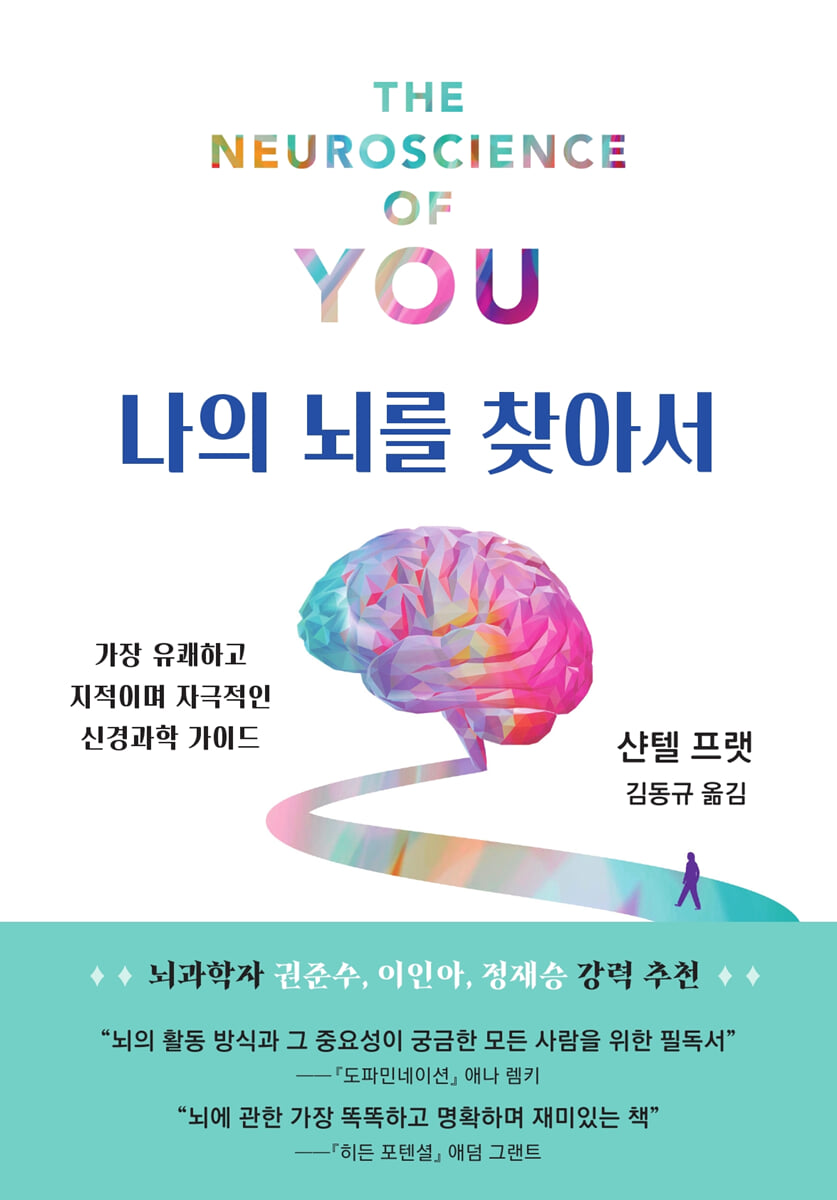 |
Description
Book Introduction
There is no two brains in this world that are the same!
The mysterious and beautiful secrets of my brain are revealed!
“A game that all of us who are curious about ‘me’ can enjoy,
“The most delightful guide to neuroscience”
- Neuroscientist Jaeseung Jeong
* Overwhelming praise from neuroscientists Jaeseung Jeong, Junsu Kwon, and Ina Lee
* Highly recommended by Adam Grant (author of "Hidden Potential") and Anna Lemke (author of "Dopamine Nation")
Did you know that our brains work differently depending on our personalities? Studies show that people who are bold, enthusiastic, and extroverted have brains that respond more strongly to unexpected rewards, releasing more dopamine! Conversely, quiet, introverted people have less of a brain response to unexpected rewards.
As such, our brains do not operate using the same mechanisms.
It varies greatly depending on things like whether you are right-handed or left-handed, your personality, how strong your concentration is, and how curious you are.
This book focuses on how each of our brains is different, helping anyone easily understand neuroscience and, by extension, better understand themselves.
In this book, Dr. Shantel Pratt, a professor of psychology and neurolinguistics at the University of Washington, presents a novel approach that explores the unique and fascinating characteristics of each individual brain, rather than focusing on general brain characteristics.
The surprising truth is that the brain has a different structure and function for each person, enabling us to prioritize our actions based on our environment and to effectively utilize past memories and experiences to achieve the best possible outcome.
This book contains interesting and simple tests that readers can try themselves to discover the uniqueness of their own brains, and the light and humorous sentences help beginners easily understand the theories of neuroscience that can be difficult.
As you read this book and gradually build up your neuroscientific knowledge to explore why you cannot help but be who you are, you will also have the surprising experience of gaining a deeper understanding of others.
The mysterious and beautiful secrets of my brain are revealed!
“A game that all of us who are curious about ‘me’ can enjoy,
“The most delightful guide to neuroscience”
- Neuroscientist Jaeseung Jeong
* Overwhelming praise from neuroscientists Jaeseung Jeong, Junsu Kwon, and Ina Lee
* Highly recommended by Adam Grant (author of "Hidden Potential") and Anna Lemke (author of "Dopamine Nation")
Did you know that our brains work differently depending on our personalities? Studies show that people who are bold, enthusiastic, and extroverted have brains that respond more strongly to unexpected rewards, releasing more dopamine! Conversely, quiet, introverted people have less of a brain response to unexpected rewards.
As such, our brains do not operate using the same mechanisms.
It varies greatly depending on things like whether you are right-handed or left-handed, your personality, how strong your concentration is, and how curious you are.
This book focuses on how each of our brains is different, helping anyone easily understand neuroscience and, by extension, better understand themselves.
In this book, Dr. Shantel Pratt, a professor of psychology and neurolinguistics at the University of Washington, presents a novel approach that explores the unique and fascinating characteristics of each individual brain, rather than focusing on general brain characteristics.
The surprising truth is that the brain has a different structure and function for each person, enabling us to prioritize our actions based on our environment and to effectively utilize past memories and experiences to achieve the best possible outcome.
This book contains interesting and simple tests that readers can try themselves to discover the uniqueness of their own brains, and the light and humorous sentences help beginners easily understand the theories of neuroscience that can be difficult.
As you read this book and gradually build up your neuroscientific knowledge to explore why you cannot help but be who you are, you will also have the surprising experience of gaining a deeper understanding of others.
- You can preview some of the book's contents.
Preview
index
Introduction: To Your Brain
Introduction: First Steps in Neuroscience
Part 1: Brain Structure
1 Bias: A Tale of Two Brains
2 Cocktail Skills: The Chemical Language of the Brain
3 Synchronization: Neural Rhythms Coordinating Flexible Behavior
Part 2 Brain Function
4 Focus: The competition between signals trying to control the mind.
5 Adaptation: How the brain learns to understand its surroundings
6 Finding Your Way: The Process of Turning Knowledge into a Map, and Why That Map Isn't Enough for Decision-Making
7 Exploration: The Frontier of Cognition Where Curiosity and Fear Compete to Determine Action
8 Relationships: How to Make Your Brains Match in Frequency
Acknowledgements
main
Translator's Note
Biographical Index
Introduction: First Steps in Neuroscience
Part 1: Brain Structure
1 Bias: A Tale of Two Brains
2 Cocktail Skills: The Chemical Language of the Brain
3 Synchronization: Neural Rhythms Coordinating Flexible Behavior
Part 2 Brain Function
4 Focus: The competition between signals trying to control the mind.
5 Adaptation: How the brain learns to understand its surroundings
6 Finding Your Way: The Process of Turning Knowledge into a Map, and Why That Map Isn't Enough for Decision-Making
7 Exploration: The Frontier of Cognition Where Curiosity and Fear Compete to Determine Action
8 Relationships: How to Make Your Brains Match in Frequency
Acknowledgements
main
Translator's Note
Biographical Index
Detailed image

Publisher's Review
Our brains are different from each other
Every brain is truly unique and one of a kind!
Dr. Pratt, who wrote this book, has been working in the field of neuroscience for over 30 years, studying how brain activity determines behavior.
After meeting countless people and studying their brains, Dr. Pratt discovered one surprising (and obvious) fact.
That's right, everyone's behavior is different.
Traditional books on neuroscience have focused on principles that apply universally to everyone, and this approach has dominated the field for the past century.
But Dr. Pratt realized that a one-size-fits-all approach doesn't work for everyone, so he wrote this book to explain how each individual's brain works specifically.
Have you ever wondered what on earth was going through someone's head that led them to act this way? Perhaps you were even confused when a friend who went through the same experience remembered it differently than you did.
Even when people look at a picture of the same dress, they sometimes disagree about whether it is a white and gold dress or a blue and black dress.
These things happen because each person's brain perceives and interprets the reality around them differently.
Dr. Pratt tells the fascinating story of how no two brains in this world are alike and that every human brain is unique.
We will explain the principles by which each brain operates and also look at ways to better understand your own unique brain.
From the amazing secrets of my brain that I didn't even know about
An exciting adventure that will help you understand other people's minds.
Although it weighs only 1.4 kilograms, interest in the brain, the central organ of the human body, is high.
But at the same time, there are many people who want to understand the brain, the organ that makes humans most human, more deeply, but are hesitant to approach neuroscience because they feel burdened by difficult technical terms or in-depth scientific knowledge.
This book is written in an easy and pleasant tone, toning down the seriousness and solemnity of existing neuroscience books so that anyone can better understand their own brain.
Dr. Pratt explains the basics of the brain in a way that makes it easy to understand the unique organ.
At the same time, it stimulates intellectual curiosity by introducing recent studies and surprising experimental results.
He also included interesting anecdotes from his own experiences throughout the book.
Above all, its greatest feature is that each chapter includes simple games, quizzes, and tests that readers can try themselves.
This allows readers to actively explore and understand the characteristics of their own brains, rather than passively accepting neuroscience knowledge.
Moreover, the footnotes, which are rich in all kinds of jokes and stories, add to the fun of reading.
International bestselling author Adam Grant praised Dr. Pratt's book, calling it "the smartest, clearest, and most entertaining book on the brain ever written."
This book will be a refreshing stimulus for those who have been consistently reading books on neuroscience, and a friendly guide that will provide a good opportunity to learn about the brain for those who have previously found neuroscience difficult.
And the more I accept myself, the more others will understand.
Starting with a solid foundation in brain knowledge
Even neuroscientific answers to the question, “Who am I?”
Dr. Pratt begins the book by explaining the basics of neuroscience.
The introduction briefly touches on the shape and size of the brain, its basic operating principles, and its evolutionary history, while also stimulating interest by introducing examples of research on the brains of London taxi drivers and experiments with twins.
Part 1, consisting of three chapters, examines the brain's biological features, which can be identified by its structure—that is, the process by which the brain creates meaningful stories to make sense of reality.
Chapter 1, “Bias,” discusses how the left and right brains perceive the world slightly differently.
Differences between people arise from whether the left or right brain primarily receives and interprets information about reality.
Chapter 2, “Cocktail Techniques,” covers the roles that various neurotransmitters, such as dopamine and serotonin, play in the brain’s communication system.
It includes a test that allows readers to personally determine whether they have an extroverted or introverted personality, and it also introduces how the behaviors and decision-making processes of different personalities differ.
Chapter 3, “Synchronization,” explores how the brain orchestrates all the signals flowing through the mind.
Depending on which signals, or neural rhythms, the brain focuses on, it changes how it perceives the outside world and creates its own narrative.
After understanding the structure of the brain, Part 2 covers five chapters on brain function, examining how each unique brain structure performs important tasks in daily life.
Chapter 4, “Focus,” explores how the brain determines what is most important among the thousands of pieces of information it encounters every moment, and how this varies depending on brain structure.
Chapter 5, “Adaptation,” introduces the various ways the brain learns.
In other words, it deals with how the brain adapts to the environment through various learning methods for each person.
Through the experiences our brain learns, we form our perspective on the world and even come to understand people and situations we have never experienced before.
Chapter 6, “Finding Your Way,” covers the brain’s journey to making the right choices.
It's fascinating to see the brain's amazing ability to connect the experiences we have in meaningful ways and create stories.
But how does the brain react in situations where we have no idea what will happen? Chapter 7, "Exploration," explores how the brain, in unfamiliar situations, bridges the gap between existing knowledge and new situations through curiosity.
We also learn that our brains vary in their willingness to take risks and explore unknown territory, and that our environments can also influence this.
Finally, we look into an important area we can never know: the minds of others.
Chapter 8, “Relationships,” discusses how our brains understand each other in completely different ways.
If we understand how our brain structures differ in how we perceive the world, we can understand our instinct to associate with like-minded people.
Hailed by neuroscientist Jaeseung Jeong as “an excellent guide to unleashing your potential” and by international bestselling author Anna Lemke as “a must-read for anyone curious about how the brain works and its importance,” this book will instantly pique the reader’s intellectual curiosity with its engaging case studies and insights from the latest neuroscience research.
Every brain is truly unique and one of a kind!
Dr. Pratt, who wrote this book, has been working in the field of neuroscience for over 30 years, studying how brain activity determines behavior.
After meeting countless people and studying their brains, Dr. Pratt discovered one surprising (and obvious) fact.
That's right, everyone's behavior is different.
Traditional books on neuroscience have focused on principles that apply universally to everyone, and this approach has dominated the field for the past century.
But Dr. Pratt realized that a one-size-fits-all approach doesn't work for everyone, so he wrote this book to explain how each individual's brain works specifically.
Have you ever wondered what on earth was going through someone's head that led them to act this way? Perhaps you were even confused when a friend who went through the same experience remembered it differently than you did.
Even when people look at a picture of the same dress, they sometimes disagree about whether it is a white and gold dress or a blue and black dress.
These things happen because each person's brain perceives and interprets the reality around them differently.
Dr. Pratt tells the fascinating story of how no two brains in this world are alike and that every human brain is unique.
We will explain the principles by which each brain operates and also look at ways to better understand your own unique brain.
From the amazing secrets of my brain that I didn't even know about
An exciting adventure that will help you understand other people's minds.
Although it weighs only 1.4 kilograms, interest in the brain, the central organ of the human body, is high.
But at the same time, there are many people who want to understand the brain, the organ that makes humans most human, more deeply, but are hesitant to approach neuroscience because they feel burdened by difficult technical terms or in-depth scientific knowledge.
This book is written in an easy and pleasant tone, toning down the seriousness and solemnity of existing neuroscience books so that anyone can better understand their own brain.
Dr. Pratt explains the basics of the brain in a way that makes it easy to understand the unique organ.
At the same time, it stimulates intellectual curiosity by introducing recent studies and surprising experimental results.
He also included interesting anecdotes from his own experiences throughout the book.
Above all, its greatest feature is that each chapter includes simple games, quizzes, and tests that readers can try themselves.
This allows readers to actively explore and understand the characteristics of their own brains, rather than passively accepting neuroscience knowledge.
Moreover, the footnotes, which are rich in all kinds of jokes and stories, add to the fun of reading.
International bestselling author Adam Grant praised Dr. Pratt's book, calling it "the smartest, clearest, and most entertaining book on the brain ever written."
This book will be a refreshing stimulus for those who have been consistently reading books on neuroscience, and a friendly guide that will provide a good opportunity to learn about the brain for those who have previously found neuroscience difficult.
And the more I accept myself, the more others will understand.
Starting with a solid foundation in brain knowledge
Even neuroscientific answers to the question, “Who am I?”
Dr. Pratt begins the book by explaining the basics of neuroscience.
The introduction briefly touches on the shape and size of the brain, its basic operating principles, and its evolutionary history, while also stimulating interest by introducing examples of research on the brains of London taxi drivers and experiments with twins.
Part 1, consisting of three chapters, examines the brain's biological features, which can be identified by its structure—that is, the process by which the brain creates meaningful stories to make sense of reality.
Chapter 1, “Bias,” discusses how the left and right brains perceive the world slightly differently.
Differences between people arise from whether the left or right brain primarily receives and interprets information about reality.
Chapter 2, “Cocktail Techniques,” covers the roles that various neurotransmitters, such as dopamine and serotonin, play in the brain’s communication system.
It includes a test that allows readers to personally determine whether they have an extroverted or introverted personality, and it also introduces how the behaviors and decision-making processes of different personalities differ.
Chapter 3, “Synchronization,” explores how the brain orchestrates all the signals flowing through the mind.
Depending on which signals, or neural rhythms, the brain focuses on, it changes how it perceives the outside world and creates its own narrative.
After understanding the structure of the brain, Part 2 covers five chapters on brain function, examining how each unique brain structure performs important tasks in daily life.
Chapter 4, “Focus,” explores how the brain determines what is most important among the thousands of pieces of information it encounters every moment, and how this varies depending on brain structure.
Chapter 5, “Adaptation,” introduces the various ways the brain learns.
In other words, it deals with how the brain adapts to the environment through various learning methods for each person.
Through the experiences our brain learns, we form our perspective on the world and even come to understand people and situations we have never experienced before.
Chapter 6, “Finding Your Way,” covers the brain’s journey to making the right choices.
It's fascinating to see the brain's amazing ability to connect the experiences we have in meaningful ways and create stories.
But how does the brain react in situations where we have no idea what will happen? Chapter 7, "Exploration," explores how the brain, in unfamiliar situations, bridges the gap between existing knowledge and new situations through curiosity.
We also learn that our brains vary in their willingness to take risks and explore unknown territory, and that our environments can also influence this.
Finally, we look into an important area we can never know: the minds of others.
Chapter 8, “Relationships,” discusses how our brains understand each other in completely different ways.
If we understand how our brain structures differ in how we perceive the world, we can understand our instinct to associate with like-minded people.
Hailed by neuroscientist Jaeseung Jeong as “an excellent guide to unleashing your potential” and by international bestselling author Anna Lemke as “a must-read for anyone curious about how the brain works and its importance,” this book will instantly pique the reader’s intellectual curiosity with its engaging case studies and insights from the latest neuroscience research.
GOODS SPECIFICS
- Date of issue: April 30, 2024
- Page count, weight, size: 384 pages | 544g | 150*215*25mm
- ISBN13: 9788972918325
- ISBN10: 8972918326
You may also like
카테고리
korean


korean

![GQ KOREA Mark (Monthly): December [2025]](http://librairie.coreenne.fr/cdn/shop/files/8ef265dbbfbf186523ed75ba7319009d.jpg?v=1765340328&width=3840)


