

Knowing people
 |
Description
Book Introduction
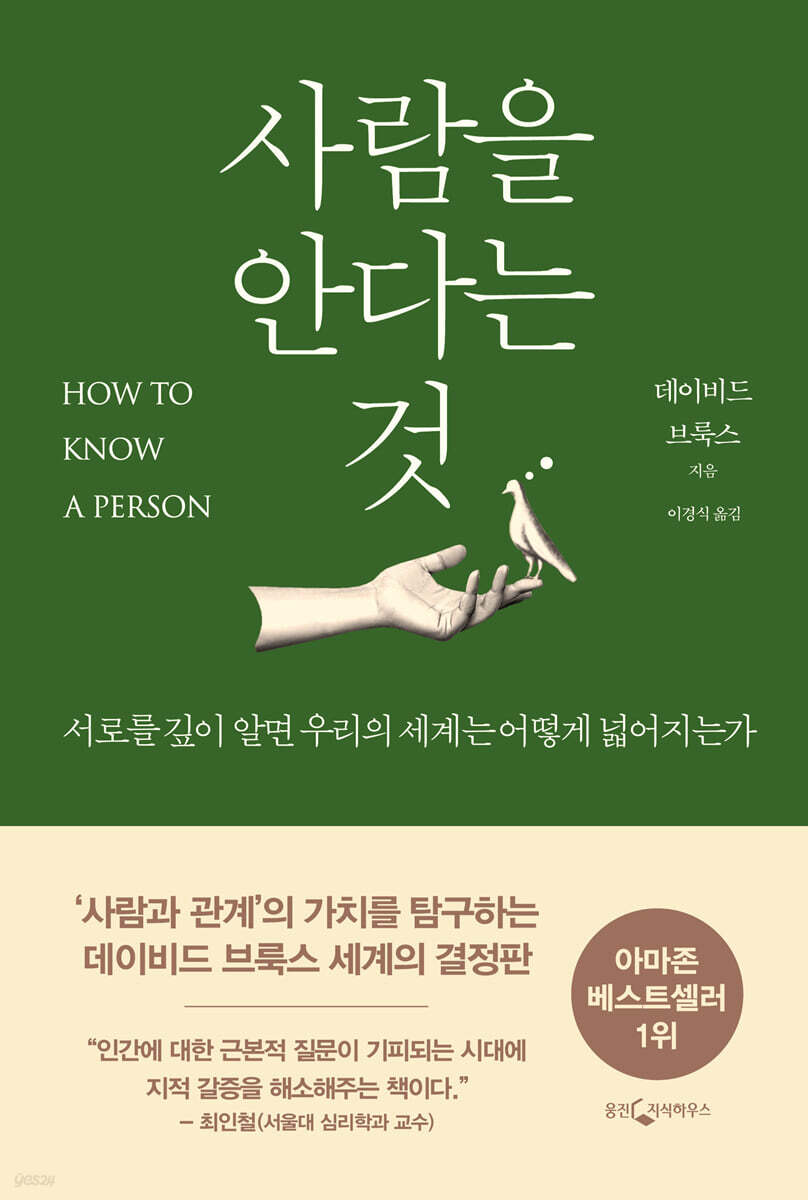
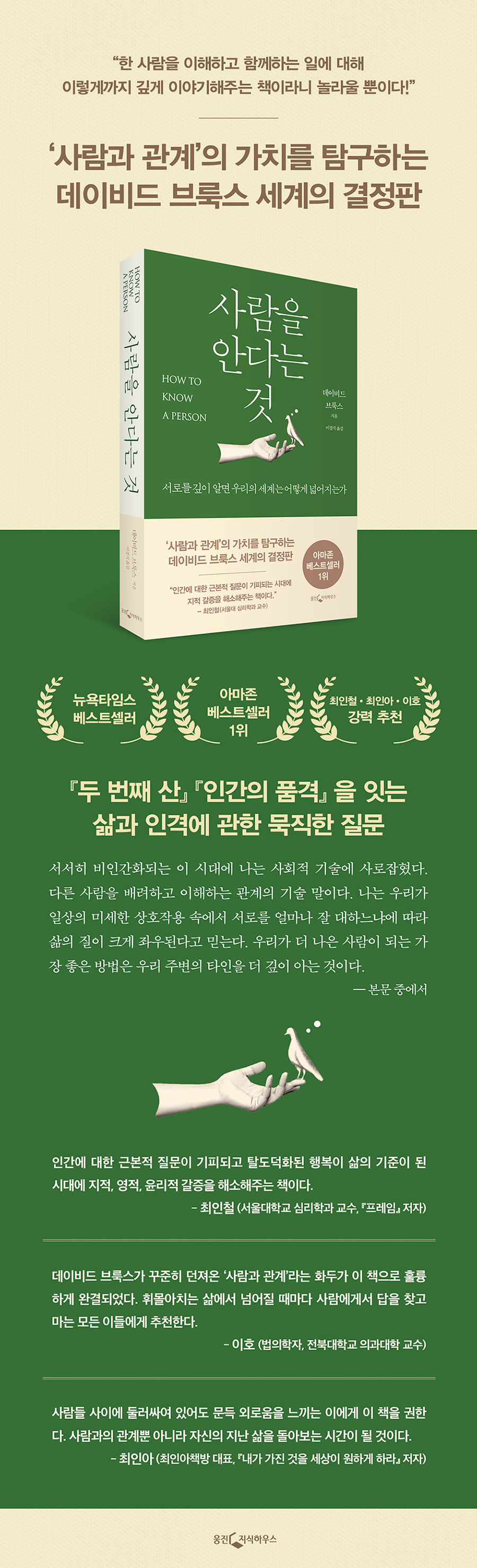
★ Amazon's #1 Overall Bestseller ★ ★ Amazon Bestseller for 25 Consecutive Weeks ★ ★ New York Times Bestseller ★ ★ Highly recommended by Professor Choi In-cheol, CEO Choi In-ah, and Professor Lee Ho ★ “In an age when fundamental questions about humanity are often avoided, this book quenches intellectual thirst.” - Choi In-cheol (Professor of Psychology, Seoul National University) A new work after 3 years since 『Second Mountain』! The definitive edition of David Brooks' world, exploring the value of 'people and relationships'. David Brooks, a leading American journalist who provides an important voice when needed, has published his book, "Knowing People." This is a new work published three years after the worldwide bestseller, “The Second Mountain.” Brooks' writing, which sharply captured the flow of the times through humor and satire in 『Bobos』 and 『Social Animals』, which made him known as a writer, began to change at some point. We began to talk about the restoration of humanity and community, about living a life connected to others and living together. "Knowing People" is also a book that allows us to reflect on spiritual joy in a society that overemphasizes material values. The author's ongoing exploration of 'people and relationships' has been beautifully concluded in this book. This book offers concrete ways to experience the joy of relationships in our lives. Brooks, who was extremely passive and defensive when dealing with people, gradually changes through the experience of getting to know others deeply. A variety of experiences, studies, and cases are presented to show how getting to know someone deeply expands the world of the other person and oneself. The insights drawn from psychology, philosophy, literature, and neuroscience demonstrate the author's ability to delve deeply into a single topic. For anyone who wants to be a better person and be a better person to someone else, this book will be the perfect guide. |
- You can preview some of the book's contents.
Preview
index
Part 1.
How can I become a better person?
Chapter 1.
Looking at a person with sincerity
Chapter 2.
What do you know about your loved one?
Chapter 3.
How I treat others defines me.
Chapter 4.
About the joy of a moment of deep connection with someone
Chapter 5.
Everyone creates their own world.
Chapter 6.
Be someone people want to talk to
Chapter 7.
Only good questions give answers.
Part 2.
The world of others
Chapter 8.
In an Age of Disconnection, Why Relationship Skills Are Necessary
Chapter 9.
Difficult conversations build strong bonds.
Chapter 10.
When depression strikes someone close to you
Chapter 11.
Entering someone else's life
Chapter 12.
The meaning of life after suffering
Part 3.
People who expand their world within relationships
Chapter 13.
How to read someone else's energy
Chapter 14.
Everyone faces their own challenges.
Chapter 15.
Things that change when you share your life story
Chapter 16.
We always seek answers from people.
Chapter 17.
Where does wisdom come from?
How can I become a better person?
Chapter 1.
Looking at a person with sincerity
Chapter 2.
What do you know about your loved one?
Chapter 3.
How I treat others defines me.
Chapter 4.
About the joy of a moment of deep connection with someone
Chapter 5.
Everyone creates their own world.
Chapter 6.
Be someone people want to talk to
Chapter 7.
Only good questions give answers.
Part 2.
The world of others
Chapter 8.
In an Age of Disconnection, Why Relationship Skills Are Necessary
Chapter 9.
Difficult conversations build strong bonds.
Chapter 10.
When depression strikes someone close to you
Chapter 11.
Entering someone else's life
Chapter 12.
The meaning of life after suffering
Part 3.
People who expand their world within relationships
Chapter 13.
How to read someone else's energy
Chapter 14.
Everyone faces their own challenges.
Chapter 15.
Things that change when you share your life story
Chapter 16.
We always seek answers from people.
Chapter 17.
Where does wisdom come from?
Detailed image
Into the book
It was one day about 15 years ago.
There was a game at the Baltimore Orioles' home stadium, and a batter's bat broke, spinning like a helicopter blade except for the handle, and fell over the players' bench, landing right at my feet in the stands.
I reached out and grabbed the bat.
Picking up a bat while watching a game was a thousand times rarer than a foul ball! I should have jumped up and down, waving my trophy, high-fiving everyone around me, and savored the fleeting joy of being a celebrity.
I should have done that, but I didn't.
Even though everyone was watching, I just put the bat down at my feet and sat there looking straight ahead without any particular expression on my face.
Thinking back on that time, I want to scream at myself, “If you like it, show it!”
--- p.16~17
I was changing little by little.
I chose to be more open with people, risking getting hurt, and express my feelings more formally.
I've tried to be someone people can openly talk to about divorce, the grief they feel after the death of a spouse, and the worries they have about their children.
As a result, a change occurred within me.
It was a new experience: 'What is this thing that stabs deep into my heart? Ah, this is emotion!'
(Omitted) My life goals have also changed.
When I was young, I wanted to be a knowledgeable person, but as I got older, I wanted to be a wise person.
A wise person not only possesses information, but also understands others with compassion.
A wise man knows what life is.
--- p.19
Opening your heart is essential to becoming a fulfilling, kind, and wise human being.
But this is not enough.
We need social skills.
We talk about the importance of relationships, community, friendship, and social connection, but these words are abstract.
Real action, that is, building friendships or creating community, requires small, concrete social actions.
Examples of such social behavior include:
Disagreeing with others without ruining the relationship, revealing your vulnerability at the right time, listening to others, ending a conversation politely, asking for and offering forgiveness, saying no without hurting others, being there for someone who is suffering, creating a group where everyone feels welcome, seeing things from another's perspective...
--- p.20
When you enter a crowded space, some people have a warm expression on their face, as if they would hug anyone, while others have an expression on their face, as if the door to their heart is coldly closed.
Some people look at others with generous and affectionate eyes, while others maintain a formal but consistently cold gaze.
That look, that first glance, reveals a person's attitude toward the world.
Those who seek beauty are more likely to discover wonder, and those who seek threat are more likely to discover danger.
People who spread warmth around them bring out the beautiful and warm side of those they meet, while people who are only formal will only see the hard and cold side of those people they meet.
“Attention is a moral act,” says psychiatrist Ian McGilchrist.
“It creates certain aspects of things and makes them exist in this world,” he wrote.
The quality of our lives depends significantly on the quality of the attention we project onto the world.
--- p.51~52
Simply put, generations of people, myself included, have not properly learned the skills necessary to see, understand, and respect the depth and dignity of others.
As basic moral skills disappeared, isolation and disconnection emerged, and a culture emerged in which cruelty was tolerated.
I believe that the accumulation of poor behavior in everyday encounters has led to the terrible social breakdown we so readily see around us.
This is a colossal failure of civilization.
We need to rediscover how we teach moral and social skills.
This crisis is what motivated me to write this book.
--- p.157
There is no way to make difficult conversations easy.
You can never fully understand someone whose life experiences are completely different from yours.
I will never know what it's like to be Black, to be a woman, to be part of Generation Z, to be born with a disability, to be a working-class man, to be an immigrant, and to live through so many other life experiences.
There is a mysterious depth to the individual.
There are enormous differences between different cultures, so we must be respectful and awed when faced with unfamiliar cultures.
Nevertheless, I have found that if you work hard to hone your skills in looking at others and listening to them, you can certainly understand their perspectives.
We also confirmed that it is entirely possible to turn distrust into trust and build a relationship of mutual respect.
--- p.176~177
I know much more about humanity than I used to.
Knowing about personality traits, we also know how a person's existence is shaped by the tasks they are currently performing in life and the moments they are suffering.
I also know how to talk to someone who is depressed, and I understand that people from different cultures have different perspectives.
Thanks to this knowledge, I have a certain level of expertise about people in general, and I feel more confident when approaching strangers or walking alongside friends.
You also know what to look for in the other person when you are having a conversation.
I'm better at asking people critical questions, I'm much more perceptive of conversational dynamics, and I'm more emboldened when talking to people whose lives are very different from mine.
Even if the other person's vulnerability is completely exposed in front of me, I no longer do stupid things like freeze in place.
I learned to enjoy the joy and pleasure of having someone trust me.
There was a game at the Baltimore Orioles' home stadium, and a batter's bat broke, spinning like a helicopter blade except for the handle, and fell over the players' bench, landing right at my feet in the stands.
I reached out and grabbed the bat.
Picking up a bat while watching a game was a thousand times rarer than a foul ball! I should have jumped up and down, waving my trophy, high-fiving everyone around me, and savored the fleeting joy of being a celebrity.
I should have done that, but I didn't.
Even though everyone was watching, I just put the bat down at my feet and sat there looking straight ahead without any particular expression on my face.
Thinking back on that time, I want to scream at myself, “If you like it, show it!”
--- p.16~17
I was changing little by little.
I chose to be more open with people, risking getting hurt, and express my feelings more formally.
I've tried to be someone people can openly talk to about divorce, the grief they feel after the death of a spouse, and the worries they have about their children.
As a result, a change occurred within me.
It was a new experience: 'What is this thing that stabs deep into my heart? Ah, this is emotion!'
(Omitted) My life goals have also changed.
When I was young, I wanted to be a knowledgeable person, but as I got older, I wanted to be a wise person.
A wise person not only possesses information, but also understands others with compassion.
A wise man knows what life is.
--- p.19
Opening your heart is essential to becoming a fulfilling, kind, and wise human being.
But this is not enough.
We need social skills.
We talk about the importance of relationships, community, friendship, and social connection, but these words are abstract.
Real action, that is, building friendships or creating community, requires small, concrete social actions.
Examples of such social behavior include:
Disagreeing with others without ruining the relationship, revealing your vulnerability at the right time, listening to others, ending a conversation politely, asking for and offering forgiveness, saying no without hurting others, being there for someone who is suffering, creating a group where everyone feels welcome, seeing things from another's perspective...
--- p.20
When you enter a crowded space, some people have a warm expression on their face, as if they would hug anyone, while others have an expression on their face, as if the door to their heart is coldly closed.
Some people look at others with generous and affectionate eyes, while others maintain a formal but consistently cold gaze.
That look, that first glance, reveals a person's attitude toward the world.
Those who seek beauty are more likely to discover wonder, and those who seek threat are more likely to discover danger.
People who spread warmth around them bring out the beautiful and warm side of those they meet, while people who are only formal will only see the hard and cold side of those people they meet.
“Attention is a moral act,” says psychiatrist Ian McGilchrist.
“It creates certain aspects of things and makes them exist in this world,” he wrote.
The quality of our lives depends significantly on the quality of the attention we project onto the world.
--- p.51~52
Simply put, generations of people, myself included, have not properly learned the skills necessary to see, understand, and respect the depth and dignity of others.
As basic moral skills disappeared, isolation and disconnection emerged, and a culture emerged in which cruelty was tolerated.
I believe that the accumulation of poor behavior in everyday encounters has led to the terrible social breakdown we so readily see around us.
This is a colossal failure of civilization.
We need to rediscover how we teach moral and social skills.
This crisis is what motivated me to write this book.
--- p.157
There is no way to make difficult conversations easy.
You can never fully understand someone whose life experiences are completely different from yours.
I will never know what it's like to be Black, to be a woman, to be part of Generation Z, to be born with a disability, to be a working-class man, to be an immigrant, and to live through so many other life experiences.
There is a mysterious depth to the individual.
There are enormous differences between different cultures, so we must be respectful and awed when faced with unfamiliar cultures.
Nevertheless, I have found that if you work hard to hone your skills in looking at others and listening to them, you can certainly understand their perspectives.
We also confirmed that it is entirely possible to turn distrust into trust and build a relationship of mutual respect.
--- p.176~177
I know much more about humanity than I used to.
Knowing about personality traits, we also know how a person's existence is shaped by the tasks they are currently performing in life and the moments they are suffering.
I also know how to talk to someone who is depressed, and I understand that people from different cultures have different perspectives.
Thanks to this knowledge, I have a certain level of expertise about people in general, and I feel more confident when approaching strangers or walking alongside friends.
You also know what to look for in the other person when you are having a conversation.
I'm better at asking people critical questions, I'm much more perceptive of conversational dynamics, and I'm more emboldened when talking to people whose lives are very different from mine.
Even if the other person's vulnerability is completely exposed in front of me, I no longer do stupid things like freeze in place.
I learned to enjoy the joy and pleasure of having someone trust me.
--- p.376~377
Publisher's Review
Mental growth, restoration of relationships, and rediscovery of morality
A story that helped me find new joy and purpose in my life.
"Knowing People" is a book containing new discoveries by author David Brooks, who has consistently talked about the importance of community, the restoration of humanity, and connection and bonding through the international bestsellers "The Second Mountain" and "The Dignity of Man" and his New York Times column.
Brooks, who was extremely passive and defensive when meeting people, decides to open up and approach others, and realizes the importance of 'looking' at someone accurately.
And I decide to try to fit in with people even if it means getting hurt.
This book is a record of Brooks's four years of deep exploration into the tentatively titled "Knowing People," after he decided to go among the people.
A diverse range of quotations and research cases spanning psychology, literature, philosophy, and neuroscience are densely presented on a single topic.
“When I was young, I wanted to be a person who knew a lot,
“As I got older, I wanted to become a wise person.”
A Guide for Those Who Want to Become a Better Person
We don't know other people's minds very well.
According to "Knowing People," only about 20 percent of conversations between strangers are accurately read, and even among close friends or family, the rate is only 35 percent.
The longer a couple has been married, the less accurately they can read each other's minds, and the more ignorant they become of what's going on in the other's mind.
In fact, even without digging into numbers or research, everyone has personally felt and experienced the difficulties of interpersonal relationships.
How many people have never experienced being the target of stereotypes and prejudice in their lives?
Have you ever felt misunderstood or treated as invisible by others? Conversely, can you guarantee that you won't be treated that way by others? This book will prompt you to reflect on your interpersonal relationships, experiences you may have neglected or avoided, and the attitudes that shaped those experiences.
“Have you ever truly tried to know someone?” Brooks asks this question throughout the book, allowing us to take a deeper look at how we relate to and live with others.
“There are few things more satisfying than feeling completely understood by someone.”
In an Age of Disconnection, Why Relationship Skills Are Necessary
So then why do we need to ‘know people’?
The first is largely a practical reason.
Only by getting to know others properly can you make important and big decisions in life.
It is a virtue that is absolutely necessary not only for important life tasks such as marriage, but also when dealing with people you work with.
When you ask office workers why they change jobs, many of them say it's because of interpersonal relationships within the company.
They left because they felt unappreciated by their superiors and the organization—that is, because they felt others did not see them as they truly were.
The second reason why we must know people is that the experience itself is a very intense mental joy.
There are few things more satisfying than feeling completely understood by someone.
If a person cannot see himself reflected in the minds of others, he cannot fully recognize the beauty and strength within himself.
When you recognize someone's potential, they begin to recognize their own potential.
Just knowing that people who matter to them are watching over them and listening to them gives people a sense of peace and security.
I often ask people when and how they felt that someone else was looking at them.
Then people, their eyes sparkling, talk about the most important moments in their lives.
A time when someone recognized a talent you didn't even know you had, a time when someone recognized what you desperately needed when you were extremely tired and immediately reached out to help you lift a heavy burden in the right way.
(Page 22)
Third is the resolution of national problems.
Brooks points out that the social and relational crisis of our age, overflowing with lonely individuals, is essentially a moral problem.
As members of a society, we have failed to cultivate the skills and disposition to treat one another kindly and generously.
Social breakdown is caused by the accumulation of poor behavior in everyday encounters.
People at opposite ends of the political spectrum hate and don't understand each other.
Young people feel that the older generation misunderstands them, and the privileged class is oblivious to other members of society.
This is a failure of civilization.
We need to rediscover how we teach moral and social skills.
This crisis is what prompted Brooks to write this book.
To repair this massive rift, we must first learn how to deal well with small problems.
Building friendships and creating community requires small, concrete social actions.
Disagreeing with others without ruining the relationship, revealing your vulnerability at the right time, listening to others, ending a conversation politely, asking for and offering forgiveness, saying no without hurting others, being there for someone who is suffering, creating a group where everyone feels welcome, seeing things from another's perspective...
(Page 20)
“Knowing another person deeply is itself a moral act.”
Restoring morality through the accumulation of small acts
In this book, Brooks redefines the meaning of morality.
Philosopher Iris Murdoch argues that “morality is not about following abstract universal principles.”
A moral act is one in which one person shows a 'just and loving concern' for another, while an immoral act is one in which one fails to see another accurately.
This interest gradually grows into greatness through the accumulation of small acts.
Welcoming a new employee at work, noticing anxiety in a friend's voice and asking if they are okay, etc...
Morality can be defined as the skill of being considerate of others in the complex situations of life.
Those who seek beauty are more likely to discover wonder, and those who seek threat are more likely to discover danger.
A person who radiates warmth brings out the beautiful and warm side of those they meet, while a person who is only formal sees only the hard side of the same person even when they meet him or her.
Psychiatrist Ian McGilchrist says, “Attention is a moral act.
“It creates an aspect of things and makes them exist in this world,” he wrote.
The quality of our lives depends significantly on the quality of the attention we project onto the world.
(Page 52)
“David Brooks has created a practical book full of philosophy, a practical book full of philosophy.”
David Brooks' masterpiece, offering both philosophical reflection and practical solutions.
What sets this book apart from Brooks' previous works is that it presents very specific methods for 'knowing people.'
Through numerous materials and interviews on relationships, Brooks creates his own way of relating to others.
What do you need to know to understand someone accurately? How do you communicate with someone who has different political leanings and opinions? How do you ask questions to hear someone's life story?
The ultimate goal of this book is to help you master the art of seeing others correctly and making them feel valued.
Brooks's deep insights and thoughtful approach to life are not simply a matter of mastering a skill, but a way of living.
This book will change the way you treat others and the way you have important conversations with them.
If you could improve the way you interact with others, you would surely enjoy special joys in life.
A story that helped me find new joy and purpose in my life.
"Knowing People" is a book containing new discoveries by author David Brooks, who has consistently talked about the importance of community, the restoration of humanity, and connection and bonding through the international bestsellers "The Second Mountain" and "The Dignity of Man" and his New York Times column.
Brooks, who was extremely passive and defensive when meeting people, decides to open up and approach others, and realizes the importance of 'looking' at someone accurately.
And I decide to try to fit in with people even if it means getting hurt.
This book is a record of Brooks's four years of deep exploration into the tentatively titled "Knowing People," after he decided to go among the people.
A diverse range of quotations and research cases spanning psychology, literature, philosophy, and neuroscience are densely presented on a single topic.
“When I was young, I wanted to be a person who knew a lot,
“As I got older, I wanted to become a wise person.”
A Guide for Those Who Want to Become a Better Person
We don't know other people's minds very well.
According to "Knowing People," only about 20 percent of conversations between strangers are accurately read, and even among close friends or family, the rate is only 35 percent.
The longer a couple has been married, the less accurately they can read each other's minds, and the more ignorant they become of what's going on in the other's mind.
In fact, even without digging into numbers or research, everyone has personally felt and experienced the difficulties of interpersonal relationships.
How many people have never experienced being the target of stereotypes and prejudice in their lives?
Have you ever felt misunderstood or treated as invisible by others? Conversely, can you guarantee that you won't be treated that way by others? This book will prompt you to reflect on your interpersonal relationships, experiences you may have neglected or avoided, and the attitudes that shaped those experiences.
“Have you ever truly tried to know someone?” Brooks asks this question throughout the book, allowing us to take a deeper look at how we relate to and live with others.
“There are few things more satisfying than feeling completely understood by someone.”
In an Age of Disconnection, Why Relationship Skills Are Necessary
So then why do we need to ‘know people’?
The first is largely a practical reason.
Only by getting to know others properly can you make important and big decisions in life.
It is a virtue that is absolutely necessary not only for important life tasks such as marriage, but also when dealing with people you work with.
When you ask office workers why they change jobs, many of them say it's because of interpersonal relationships within the company.
They left because they felt unappreciated by their superiors and the organization—that is, because they felt others did not see them as they truly were.
The second reason why we must know people is that the experience itself is a very intense mental joy.
There are few things more satisfying than feeling completely understood by someone.
If a person cannot see himself reflected in the minds of others, he cannot fully recognize the beauty and strength within himself.
When you recognize someone's potential, they begin to recognize their own potential.
Just knowing that people who matter to them are watching over them and listening to them gives people a sense of peace and security.
I often ask people when and how they felt that someone else was looking at them.
Then people, their eyes sparkling, talk about the most important moments in their lives.
A time when someone recognized a talent you didn't even know you had, a time when someone recognized what you desperately needed when you were extremely tired and immediately reached out to help you lift a heavy burden in the right way.
(Page 22)
Third is the resolution of national problems.
Brooks points out that the social and relational crisis of our age, overflowing with lonely individuals, is essentially a moral problem.
As members of a society, we have failed to cultivate the skills and disposition to treat one another kindly and generously.
Social breakdown is caused by the accumulation of poor behavior in everyday encounters.
People at opposite ends of the political spectrum hate and don't understand each other.
Young people feel that the older generation misunderstands them, and the privileged class is oblivious to other members of society.
This is a failure of civilization.
We need to rediscover how we teach moral and social skills.
This crisis is what prompted Brooks to write this book.
To repair this massive rift, we must first learn how to deal well with small problems.
Building friendships and creating community requires small, concrete social actions.
Disagreeing with others without ruining the relationship, revealing your vulnerability at the right time, listening to others, ending a conversation politely, asking for and offering forgiveness, saying no without hurting others, being there for someone who is suffering, creating a group where everyone feels welcome, seeing things from another's perspective...
(Page 20)
“Knowing another person deeply is itself a moral act.”
Restoring morality through the accumulation of small acts
In this book, Brooks redefines the meaning of morality.
Philosopher Iris Murdoch argues that “morality is not about following abstract universal principles.”
A moral act is one in which one person shows a 'just and loving concern' for another, while an immoral act is one in which one fails to see another accurately.
This interest gradually grows into greatness through the accumulation of small acts.
Welcoming a new employee at work, noticing anxiety in a friend's voice and asking if they are okay, etc...
Morality can be defined as the skill of being considerate of others in the complex situations of life.
Those who seek beauty are more likely to discover wonder, and those who seek threat are more likely to discover danger.
A person who radiates warmth brings out the beautiful and warm side of those they meet, while a person who is only formal sees only the hard side of the same person even when they meet him or her.
Psychiatrist Ian McGilchrist says, “Attention is a moral act.
“It creates an aspect of things and makes them exist in this world,” he wrote.
The quality of our lives depends significantly on the quality of the attention we project onto the world.
(Page 52)
“David Brooks has created a practical book full of philosophy, a practical book full of philosophy.”
David Brooks' masterpiece, offering both philosophical reflection and practical solutions.
What sets this book apart from Brooks' previous works is that it presents very specific methods for 'knowing people.'
Through numerous materials and interviews on relationships, Brooks creates his own way of relating to others.
What do you need to know to understand someone accurately? How do you communicate with someone who has different political leanings and opinions? How do you ask questions to hear someone's life story?
The ultimate goal of this book is to help you master the art of seeing others correctly and making them feel valued.
Brooks's deep insights and thoughtful approach to life are not simply a matter of mastering a skill, but a way of living.
This book will change the way you treat others and the way you have important conversations with them.
If you could improve the way you interact with others, you would surely enjoy special joys in life.
GOODS SPECIFICS
- Date of issue: April 1, 2024
- Page count, weight, size: 396 pages | 678g | 147*218*25mm
- ISBN13: 9788901280776
- ISBN10: 8901280779
You may also like
카테고리
korean


korean

![GQ KOREA Mark (Monthly): December [2025]](http://librairie.coreenne.fr/cdn/shop/files/8ef265dbbfbf186523ed75ba7319009d.jpg?v=1765340328&width=3840)


