

Story Museum
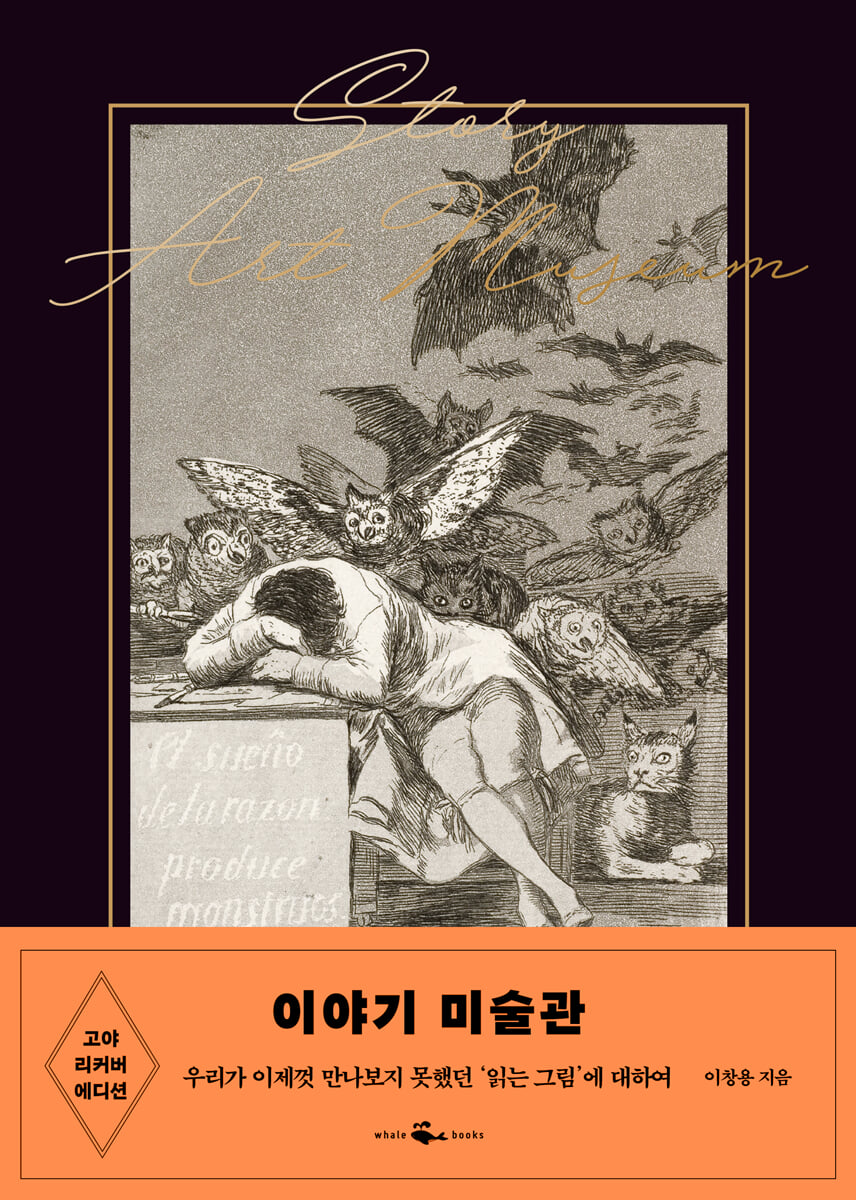 |
Description
Book Introduction
Picasso, who was jealous of Henri Matisse and painted “Les Demoiselles d’Avignon,” Munch, who embraced “The Sun” rather than “The Scream” Van Gogh expressed his feelings for his nephew with “Almond Blossoms”… Immortal works encountered in the rooms of 'Inspiration,' 'Solitude,' 'Love,' and 'Eternity.' Stroll through the picture room, encounter narratives, and learn about life. A new book has been published by author Lee Chang-yong, who has appeared on tvN's "Naked World History" and JTBC's "Talker 25 Hours" and is currently working as a docent at the Louvre Museum and the Musee d'Orsay. In "Story Museum," Lee Chang-yong, a peerless art world storyteller, examines the immortal works that still inspire us today, one by one, and unravels the various stories hidden within the paintings. If you are someone who feels like you are wandering around alone even after visiting an art museum that every cultured person should visit at least once, or if you are someone who can only say something like “it’s pretty” when seeing a famous piece of art, talking about art can be burdensome. You may also wonder, 'Is art really necessary for living?' To such a question, Docent Lee Chang-yong answers firmly, “Yes.” Understanding one's own artistic taste not only enriches life, but also broadens our horizons, as knowing about paintings is like knowing the life, culture, and history of that era. “Every painter summarizes the history of painting in his own way.” - Gilles Deleuze Through 'Reading Painting (Classicism),' docent Lee Chang-yong reveals the artist's life, the background of his work, and the behind-the-scenes stories of his paintings, telling us about the lives behind his works that we have never heard before. In "The Scream," which Munch claims to have depicted himself in, the man is not screaming, but is covering his ears to the "scream" that pierces through nature. Klimt's "The Kiss," which we are familiar with, does not depict love between lovers, but rather a man desperately courting a woman. There are four rooms in the Story Museum. In the rooms of 'Inspiration', 'Solitude', 'Love', and 'Eternity', we explore masterpieces created centuries ago and then enter a world of beautiful and wondrous paintings. Even just reading a picture story for a short time can make the works appear different and more vivid. Through this book, which is an introductory and essential reading for liberal arts, you will encounter 'readable paintings.' |
- You can preview some of the book's contents.
Preview
index
Introduction: A time to understand art through 'reading pictures'
The Room of Inspiration: A Place Overflowing with Emotions
This room is full of vibrant colors and stories.
Let's enter this room, where waves of passionate emotion constantly surge through us. First, we see a long-loved work by Van Gogh.
If you follow this, a special story in colorful pictures awaits you.
How about experiencing the diverse lives hidden beyond the intense colors?
* The meaning of life that would wither without the sun (Sunflower)
* A mother's face filled with countless emotions, "Cradle"
* Other women created by the green lady, “The Women of Avignon”
* The beautiful yet secretive “Kiss”
* I will not turn away from the world (May 2, 1808)
The Room of Solitude: When the World Becomes Drenched in Loneliness
An artist's life can become his work.
Silence reigns in this dark and lonely room, but the works that seek to break this silence are alive and moving.
They say that behind loneliness there is 'one's own path'.
Like Munch's 'Sun', which escaped from 'The Scream', I think a ray of hope will seep into this room.
* The moment when pain becomes comfort (Scream)
* Birds Are Not Lonely (The Moon and the Crow)
* Humility Eliminates Pride (David with Goliath's Head)
* The Pieta is more sacred because it was created by humans, not by God.
* The moment of death is always dramatic. 〈Laocoon and the Group〉
The Love Room: The Power to Rekindle My Life
Gratitude for one another can become love, and a yearning and earnest heart can become love.
We invite you to a special space where you can enjoy happy moments by the side of someone you want to open your heart to.
A time of deep emotion, everything we feel and experience in this room will enter our inner selves.
* With the hope that it will withstand the wind, the "Blooming Almond Tree"
* My love is more desperate at the cliff (Kiss)
* Even if my father abandons me, “The Sacrifice of Isaac”
* What is the saddest thing in the world? (Waiting)
The Room of Eternity: When longing reaches the heart
There are immortal works of art that have inspired us continuously since the moment they were created.
Through the framed paintings, we can understand historical moments, the meaning of life, and even the artist's beliefs.
The passage of time is meaningless.
The process of finding meaning in infinity sometimes seems never-ending.
I hope you can truly experience art in 'Eternity'.
* Fighting Unbearable Cruelty (Guernica)
* The Flower in Eternal Sleep, Ophelia
* The Execution of Lady Jane Grey with a gesture of strong will
* Speaking of endless beauty, "The Women of Amphisa"
* O king, remember death 〈Ambassadors〉
List of illustrations
Detailed image

Into the book
Art can spring from sadness and pain, or from joy and longing.
Art is born from all our emotions.
As Marc Chagall said, “The love of art is the essence of life itself,” I hope that there will come a time when art naturally permeates our lives.
This book is not a real-life 'story' museum.
In this space, where inspiration, solitude, love, and eternity reside, we present a diverse range of works, from ancient Greek classicism to contemporary art that lives and breathes with us today.
I hope that this museum will provide an opportunity to read the stories behind the beautiful and wondrous masterpieces and become closer to art.
---From "Entering"
When I look at 19th-century Impressionist works, I often think, 'Is there another movement that suits women so well?'
This is because the work contains many images of women's everyday and natural appearances.
This is a time when the activities of female painters are greater than ever before, and it is also the first time in art history that works by female painters are beginning to receive attention.
Even if we look only at female painters who followed the Impressionist style and directly participated in Impressionist exhibitions, there are Mary Cassatt, a friend of Degas and a naturalized American citizen of France; Marie Bracquemont, the wife of copperplate artist Felix Bracquemont; and Berthe Morisot, commonly called the Violet Woman and muse of Édouard Manet.
---From "A Mother's Face Filled with Countless Emotions, 〈Cradle〉"
Caravaggio often included himself in various works, not just self-portraits.
His face can still be easily found in his works today.
Immediately after the painting was completed, both figures appearing in the work were interpreted as self-portraits of Caravaggio.
It seems that the face of David is the face of his younger self, who lived a glamorous life as an artist and was loved by the Pope and cardinals in Rome, and the face of Goliath is the face of his later self, who committed murder and became an ugly criminal.
By cutting off the head of his innocent self (Goliath), who had become a criminal, David tells us that he is breaking away from his mistakes and reflecting on them.
---From "Humility Eliminates Pride: David with Goliath's Head"
Millet was from a small rural village called Greville in Normandy, France.
Born as the eldest of eight children in a harmonious but not always leisurely farming family, he lived a life of farming with his father from a young age.
For Millet, the profession of farmer was his father, his family, and himself.
Perhaps it was only natural that he would later capture the daily lives of farmers on canvas.
---From "What is the saddest thing in the world? Waiting"
Hands are a great tool for expressing a person's emotions, so writers sometimes tell various stories through the hands of characters in their works.
So, I attach great significance to hands, to the point that I have developed the habit of looking at the hands of the characters in a work of art first when appreciating it.
And the hand that resonated with me the most was the hand that appears in Paul Delaroche's The Execution of Lady Jane Grey.
---From "The Execution of Lady Jane Grey" with a gesture of strong will
Publisher's Review
A room of paintings curated by Lee Chang-yong, a docent loved by 1 million people.
“Every artist, in his or her own way, conveys a ‘narrative’ in his or her paintings.”
Author Lee Chang-yong is active in various fields, including being the top choice for broadcasting companies and art history lectures, giving an average of 400 lectures annually, serving as a docent at the Louvre Museum and the Musee d'Orsay in France for 10 years, and participating in art concerts that introduce art works combined with music.
He wants to convey the joy that art gives us through 'reading pictures'.
We can learn about 'life' by reading the characters and narratives in paintings that we have never encountered before.
The Story Museum has four rooms displaying paintings with narratives.
In the first room you see, the 'Inspiration' room, you first encounter the still life series 'Sunflowers' by Van Gogh, which he painted to express his feelings for Gauguin.
As you slowly walk through the room, you will encounter works by Berthe Morisot, a representative female Impressionist artist; Picasso, who was jealous of Henri Matisse; and Goya, who tried to fight against the world.
As we cross that room, the room of 'solitude' welcomes us alone in the darkness.
You can vividly see the works of Munch, who never lost hope even in his battle against loneliness, Caravaggio, who realized that only humility could eliminate pride, and Michelangelo's sculpture, "Pieta," which was even more splendid because it was created by a human, not a god.
A brief glimpse into the "Story of Paintings Not in the Museum"
“An artist's work is the flower of his life.”
“There are immortal works of art that have inspired us continuously since the moment they were born.
Through the framed paintings, we can understand historical moments, the meaning of life, and even the artist's beliefs.”
What awaits us in the ‘Love’ room is ‘Kiss’, which depicts lovers facing each other.
But there are many different types of love.
How can we express the feelings of parents waiting for their children, and the feelings of children missing their parents?
In this room, we can see works by familiar artists such as Jean-François Millet and Marc Chagall that express their thoughts about someone.
Finally, as we enter the room of 'Eternity' that greets us, we cannot take our eyes off the works that vividly capture the fleeting moments and images of that era, to the point where we feel as if time has stopped.
“Guernica,” which was created to protest the cruelty of war, and “Ophelia,” which depicts the moment of eternal death with flowers, quietly shine before our eyes.
If you know your own taste in art, you can create your own room, like the rooms of inspiration, solitude, love, and eternity in the Story Museum.
As Marc Chagall said, “The love of art is the essence of life itself,” Docent Lee Chang-yong hopes that art will naturally permeate our lives.
“If there is no art in our lives, it is as good as dead.”
GOODS SPECIFICS
- Date of issue: April 5, 2024
- Page count, weight, size: 244 pages | 510g | 150*210*18mm
- ISBN13: 9791192097770
- ISBN10: 1192097777
You may also like
카테고리
korean


korean


