

Self-portrait: Drawing My Heart
 |
Description
Book Introduction
- A word from MD
-
Examining My Mind Through Self-Portrait“To heal wounds, you must go through a process of encountering your inner self.” A new book by Professor Kim Seon-hyeon, a leading authority on art therapy.
We introduce a method to find your 'true self' by reading the voices and emotions of 57 artists, including Frida Kahlo, Andy Warhol, and Gustav Klimt, in their self-portraits.
February 29, 2024. Art PD Ahn Hyun-jae
A leading authority on art therapy and trauma expert
Professor Kim Seon-hyeon, best-selling author of "The Power of Drawing" with 300,000 copies sold
104 self-portraits carefully selected from the field!
“To heal the wounds
“You have to go through a process of meeting your inner self.”
『Self-Portrait, Drawing My Heart』 is a gift-like book that helps you find your true self through famous paintings, just as an artist expresses his emotions through self-portraits.
Professor Kim Seon-hyeon, the leading authority on Korean art therapy, says that art therapy is like finding hidden pictures.
Because it accurately reveals the hidden feelings of people who cannot express them in words through drawings.
Author Kim Seon-hyeon, who majored in art and psychology, has been at the forefront of both theory and practice.
He is a trauma specialist who has taken the lead in caring for victims and their families at domestic and international disaster sites, including the Jeju April 3 Incident and the Sewol Ferry Disaster.
A self-portrait is a photograph that captures the heart, a powerful nonverbal tool of expression that honestly reveals one's inner self.
In that sense, the biggest purpose of appreciating self-portraits is to indirectly experience the life of a third party.
This book will be a time for me to peel off the persona of my heart, the mask, and meet the true 'me' hidden within me.
Professor Kim Seon-hyeon, best-selling author of "The Power of Drawing" with 300,000 copies sold
104 self-portraits carefully selected from the field!
“To heal the wounds
“You have to go through a process of meeting your inner self.”
『Self-Portrait, Drawing My Heart』 is a gift-like book that helps you find your true self through famous paintings, just as an artist expresses his emotions through self-portraits.
Professor Kim Seon-hyeon, the leading authority on Korean art therapy, says that art therapy is like finding hidden pictures.
Because it accurately reveals the hidden feelings of people who cannot express them in words through drawings.
Author Kim Seon-hyeon, who majored in art and psychology, has been at the forefront of both theory and practice.
He is a trauma specialist who has taken the lead in caring for victims and their families at domestic and international disaster sites, including the Jeju April 3 Incident and the Sewol Ferry Disaster.
A self-portrait is a photograph that captures the heart, a powerful nonverbal tool of expression that honestly reveals one's inner self.
In that sense, the biggest purpose of appreciating self-portraits is to indirectly experience the life of a third party.
This book will be a time for me to peel off the persona of my heart, the mask, and meet the true 'me' hidden within me.
- You can preview some of the book's contents.
Preview
index
Finding a New Self in Self-Portrait·Prologue 4
1.
Loneliness
Life is a continual struggle Frida Kahlo 14
The Unhealed Wound, Egon Schiele 20
I locked the door of my heart Fernand Khnopf 26
Confronting the Cold Reality Karl Schmidt-Rotluff 32
Lost in Freedom and Youth Kiki de Montparnasse 36
Dreaming of a Free Spirit Bev Doolittle 40
The Last Question to Me, Edouard Manet 44
Solitude in a Crowd, Paul Gauguin, 48
What do you want to hide from? Edvard Munch 54
Are you happy because you are a genius? Gian Lorenzo Bernini 60
2.
Desire
Hide Myself Tightly Andy Warhol 66
Adolf Hitler, the monster created by depression, 72
Dreaming of a Silent Revolution Max Ernst 78
I am a scapegoat. Fujita Tsuguharu 82
If you want to build a stronger you, Frederick Leighton 86
Jean-Marc Nattier, 90, wants to demonstrate his abilities.
The Tendency of Perfectionists Jean-Auguste-Dominique Ingres 98
Leonardo da Vinci 102: A Wish Trapped in the Unconscious
When Struggling with Emptiness, Elisabeth Louise Vigée Lebrun 108
3.
Love Love
The Equation of Love and Health by Gustav Klimt 116
A Rich and Leisurely Life, Berthe Morisot 120
I Want to Be Like My Loved One Amedeo Modigliani 126
Love is my strength Marc Chagall 132
Love never cools Natalia Goncharova 138
Love Song by Edward Burne-Jones 142
Love is a feeling that is realized too late. Jean-François Millet 148
4.
Healing
Traces of Hope René Magritte 156
Sublimating Trauma Edvard Munch 160
How Others See Me and How I See Me Marianne von Werefkin 164
Father's Love Pierre Bonnard 170
Jean-Michel Basquiat 176: Overcoming the Fear of Death
Do as you please, Johannes Gump 182
To endure the unstable situation, Henri de Toulouse-Lautrec 188
Colors that Comfort Sorrow Marie Laurencin 194
Pain Made Beautiful by Vincent van Gogh 200
5.
Relaxation
Pablo Picasso 210, a bold and unstoppable reality
If you want to stand out with your own color, try John White Alexander 218
Peter Paul Rubens 224 When Life Changes
Mystery stimulates the imagination. Jan Vermeer 230
I don't want to miss out on happiness. Carl Larsson 236
Pierre-Auguste Renoir 240, leisurely as time goes by
I take pride in my work. Henri Rousseau 248
The Truth About False Personas by James Ensor 252
When you are immersed in the joys of life, Raoul Dufy 258
I want to be like an umbrella. Gustave Caillebotte 262
Jean-Marc Nattier 268, modest yet noble and dignified
Never Lose Your Composure Rembrandt Harmans van Rijn 274
6.
Perfection
Confidence and Dignity Tamara de Lempicka 282
The Strength That Never Fails Lionel Fineger 288
Salvador Dali's 294 Surrealist World
A Beautiful and Fervent Wish Alphonse Mucha 298
Yellow is confidence František Kupka 304
Sad but I Love You Elisabeth Louise Vigée Lebrun 310
Beautiful, confident, and dignified charm Sanzio Raphael 320
A Day of Narcissism Gustave Courbet 326
When you want to be the star of the world, Sandro Botticelli 332
Falling into Narcissism Albrecht Dürer 338
Ferdinand Victor Eugène Delacroix, the proud perfectionist 342
Illustration material 348
1.
Loneliness
Life is a continual struggle Frida Kahlo 14
The Unhealed Wound, Egon Schiele 20
I locked the door of my heart Fernand Khnopf 26
Confronting the Cold Reality Karl Schmidt-Rotluff 32
Lost in Freedom and Youth Kiki de Montparnasse 36
Dreaming of a Free Spirit Bev Doolittle 40
The Last Question to Me, Edouard Manet 44
Solitude in a Crowd, Paul Gauguin, 48
What do you want to hide from? Edvard Munch 54
Are you happy because you are a genius? Gian Lorenzo Bernini 60
2.
Desire
Hide Myself Tightly Andy Warhol 66
Adolf Hitler, the monster created by depression, 72
Dreaming of a Silent Revolution Max Ernst 78
I am a scapegoat. Fujita Tsuguharu 82
If you want to build a stronger you, Frederick Leighton 86
Jean-Marc Nattier, 90, wants to demonstrate his abilities.
The Tendency of Perfectionists Jean-Auguste-Dominique Ingres 98
Leonardo da Vinci 102: A Wish Trapped in the Unconscious
When Struggling with Emptiness, Elisabeth Louise Vigée Lebrun 108
3.
Love Love
The Equation of Love and Health by Gustav Klimt 116
A Rich and Leisurely Life, Berthe Morisot 120
I Want to Be Like My Loved One Amedeo Modigliani 126
Love is my strength Marc Chagall 132
Love never cools Natalia Goncharova 138
Love Song by Edward Burne-Jones 142
Love is a feeling that is realized too late. Jean-François Millet 148
4.
Healing
Traces of Hope René Magritte 156
Sublimating Trauma Edvard Munch 160
How Others See Me and How I See Me Marianne von Werefkin 164
Father's Love Pierre Bonnard 170
Jean-Michel Basquiat 176: Overcoming the Fear of Death
Do as you please, Johannes Gump 182
To endure the unstable situation, Henri de Toulouse-Lautrec 188
Colors that Comfort Sorrow Marie Laurencin 194
Pain Made Beautiful by Vincent van Gogh 200
5.
Relaxation
Pablo Picasso 210, a bold and unstoppable reality
If you want to stand out with your own color, try John White Alexander 218
Peter Paul Rubens 224 When Life Changes
Mystery stimulates the imagination. Jan Vermeer 230
I don't want to miss out on happiness. Carl Larsson 236
Pierre-Auguste Renoir 240, leisurely as time goes by
I take pride in my work. Henri Rousseau 248
The Truth About False Personas by James Ensor 252
When you are immersed in the joys of life, Raoul Dufy 258
I want to be like an umbrella. Gustave Caillebotte 262
Jean-Marc Nattier 268, modest yet noble and dignified
Never Lose Your Composure Rembrandt Harmans van Rijn 274
6.
Perfection
Confidence and Dignity Tamara de Lempicka 282
The Strength That Never Fails Lionel Fineger 288
Salvador Dali's 294 Surrealist World
A Beautiful and Fervent Wish Alphonse Mucha 298
Yellow is confidence František Kupka 304
Sad but I Love You Elisabeth Louise Vigée Lebrun 310
Beautiful, confident, and dignified charm Sanzio Raphael 320
A Day of Narcissism Gustave Courbet 326
When you want to be the star of the world, Sandro Botticelli 332
Falling into Narcissism Albrecht Dürer 338
Ferdinand Victor Eugène Delacroix, the proud perfectionist 342
Illustration material 348
Detailed image

Into the book
Color blindness can be detected by looking at the colors used, and the direction in which a rehabilitation patient's drawings are tilted can be used to guess which side of the brain is damaged.
Portraits that emphasize the tip of the nose are often of alcoholics.
--- p.21
The eyes are the 'windows to the soul' that reveal the inner self of a person and are the most important organ through which we come into contact with the world.
In art therapy, the omission of the eyes symbolizes avoidance and rejection of the outside world.
--- p.33
It is said that when people asked Warhol what kind of person he was, he answered like this.
“If you want to know me, just look at the surface of my work.
There is nothing on the back.”
--- p.68
In Hitler's paintings, people are often alone.
It's also because I can't reveal my deepest feelings to anyone.
In nature, people are depicted as small or in small groups, usually one or two.
This is when you don't trust people or don't place much importance on them.
--- p.75
As we live, we fall into a swamp of countless relationships and evaluations.
There's no need to be so quickly discouraged if someone doesn't smile at you and seems to avoid you.
Start by boldly organizing your emotions, like women carefully unwinding a tangled thread.
--- p.89
Laurencin was born to a father of noble birth and a mother who worked as a maid.
Born out of wedlock, born of forbidden love, her mother's excessive interference and control, two divorces due to her husband's infidelity, and two wars must have made her life unstable and difficult.
--- p.197
Bugatti is a luxury French automobile known as a sports car legend.
By symbolically depicting a Bugatti in her self-portrait, Lempicka expressed her pride in her fame and her confidence and dignity as a woman living independently.
--- p.287
Not only the intense colors but also the obliquely lying figure staring straight ahead intimidates the viewer.
It's like the mentality of looking away when someone stares at me.
What on earth could have made such an arrogant self-portrait possible?
Portraits that emphasize the tip of the nose are often of alcoholics.
--- p.21
The eyes are the 'windows to the soul' that reveal the inner self of a person and are the most important organ through which we come into contact with the world.
In art therapy, the omission of the eyes symbolizes avoidance and rejection of the outside world.
--- p.33
It is said that when people asked Warhol what kind of person he was, he answered like this.
“If you want to know me, just look at the surface of my work.
There is nothing on the back.”
--- p.68
In Hitler's paintings, people are often alone.
It's also because I can't reveal my deepest feelings to anyone.
In nature, people are depicted as small or in small groups, usually one or two.
This is when you don't trust people or don't place much importance on them.
--- p.75
As we live, we fall into a swamp of countless relationships and evaluations.
There's no need to be so quickly discouraged if someone doesn't smile at you and seems to avoid you.
Start by boldly organizing your emotions, like women carefully unwinding a tangled thread.
--- p.89
Laurencin was born to a father of noble birth and a mother who worked as a maid.
Born out of wedlock, born of forbidden love, her mother's excessive interference and control, two divorces due to her husband's infidelity, and two wars must have made her life unstable and difficult.
--- p.197
Bugatti is a luxury French automobile known as a sports car legend.
By symbolically depicting a Bugatti in her self-portrait, Lempicka expressed her pride in her fame and her confidence and dignity as a woman living independently.
--- p.287
Not only the intense colors but also the obliquely lying figure staring straight ahead intimidates the viewer.
It's like the mentality of looking away when someone stares at me.
What on earth could have made such an arrogant self-portrait possible?
--- p.306
Publisher's Review
A leading authority on art therapy and trauma expert
Professor Kim Seon-hyeon, best-selling author of "The Power of Drawing" with 300,000 copies sold
104 self-portraits carefully selected from the field!
“To heal the wounds
“You have to go through a process of meeting your inner self.”
『Self-Portrait, Drawing My Heart』 is a gift-like book that helps you find your true self through famous paintings, just as an artist expresses his emotions through self-portraits.
Professor Kim Seon-hyeon, the leading authority on Korean art therapy, says that art therapy is like finding hidden pictures.
Because it accurately reveals the hidden feelings of people who cannot express them in words through drawings.
Author Kim Seon-hyeon, who majored in art and psychology, has been at the forefront of both theory and practice.
He is a trauma specialist who has taken the lead in caring for victims and their families at domestic and international disaster sites, including the Jeju April 3 Incident and the Sewol Ferry Disaster.
A self-portrait is a photograph that captures the heart, a powerful nonverbal expression tool that honestly reveals one's inner self.
In that sense, the biggest purpose of appreciating self-portraits is to indirectly experience the life of a third party.
This book will be a time for me to peel off the persona of my heart, the mask, and meet the true 'me' hidden within me.
■Hear the artist's voice, woven into his self-portrait.
“The word ‘self-portrait’ is a combination of ‘self’ meaning self and ‘portray’ meaning to draw self-consciousness, and can be understood to mean ‘to bring out’ or ‘to reveal’ oneself.
Therefore, a self-portrait is a totality of images rich in the artist's conscious and unconscious elements, and through a self-portrait, we can read the artist's own style.” _Page 331
When painting, the artist must take his eyes off the model for a moment and turn his gaze to the canvas.
Moreover, the painter's brush covers the shape he is painting, so the shape cannot be seen until the brush strokes are finished.
The moment you draw something you cannot see, what the artist is drawing is a model in his mind.
In self-portraits, you can read about your inner state, such as past and present, anxiety, loneliness, love, and confidence.
『Self-Portrait, Drawing My Heart』 analyzes the inner voice of the artist remaining on his self-portrait through psychology.
A self-portrait is a repository of emotions, containing everything from the artist's trauma, social status and financial power, to the impulses that have built up within him.
Looking at self-portraits, we can see how artists faced and dealt with painful realities, swirling desires, and overflowing joy.
■104 famous paintings unraveled by theme
『Self-Portrait: Drawing My Heart』 is composed of six chapters based on the meaning that the self-portrait reveals.
You can read them in order, from Chapter 1, "Solitude," to Chapter 6, "Perfection," but it's also a good idea to pick and choose chapters and subheadings that appeal to your mood each day.
Chapter 1, “Solitude,” presents ten painters who had to endure suffering alone.
Fernand Khnopf's self-portrait, "I Locked My Heart," reveals his disillusionment with life, with his unfocused eyes and gloomy expression, showing his disconnection from the world.
The unnaturally bent body in Egon Schiele's self-portraits is the result of his sublimation of aggressive impulsiveness and the frustration of social isolation into his works.
Chapter 2, “Desire,” shows the true faces of nine people who whipped themselves in pursuit of their desires for art, love, and fame.
Andy Warhol pursued fame, but he also tried to hide his inner self by covering his face with colorful patterns and shadows.
In "Mona Lisa," Leonardo da Vinci portrayed his repressed desire to be cared for and loved by his biological mother and stepmother.
Chapter 3, ‘Love’, contains self-portraits of seven painters in love.
Klimt's "The Kiss," considered one of the most popular paintings among Koreans, stimulates the release of endorphins and serotonin, increasing happiness and sociability.
Amedeo Modigliani's last self-portrait, which resembles his wife's portrait, shows his longing to be with his beloved.
Chapter 4, 'Healing', is the story of nine painters who sublimate their own wounds through painting.
Toulouse-Lautrec, who suffered from a rare disease that stopped the growth of both legs, overcame his inferiority complex by humorously depicting his physical weakness in his paintings.
Van Gogh, who used painting as a means of self-realization and self-therapy, lived a painful life, but he expressed his wounds beautifully.
Chapter 5, ‘Leisure,’ shows the figures of seven mature painters who have been trained over time.
Carl Larsson, who overcame misfortune and built a happy family, is holding a doll tightly in his self-portrait, “Self-Analysis,” as if he does not want to lose his happiness.
Rembrandt, who was old, lost his reputation, and became bankrupt, painted self-portraits brimming with pride, curiosity, and joy, even in loneliness and pain.
The final six chapters, "Perfection," feature self-portraits by eleven confident artists.
Renaissance painter Sandro Botticelli painted himself in the most prominent position in his religious painting "Adoration of the Magi," looking straight at the viewer.
Alphonse Mucha, a representative painter of Art Nouveau, overwhelms the audience with his tightly closed lips and intense gaze filled with determination.
■I live confidently, as myself.
“Even an ordinary-looking painting has hidden meanings if you look at it closely with affectionate eyes.
Art therapy is a method of helping people who are unable to express the difficulties they are experiencing in words to express their inner stories through drawings.” _Page 139
① Tamara de Lempicka
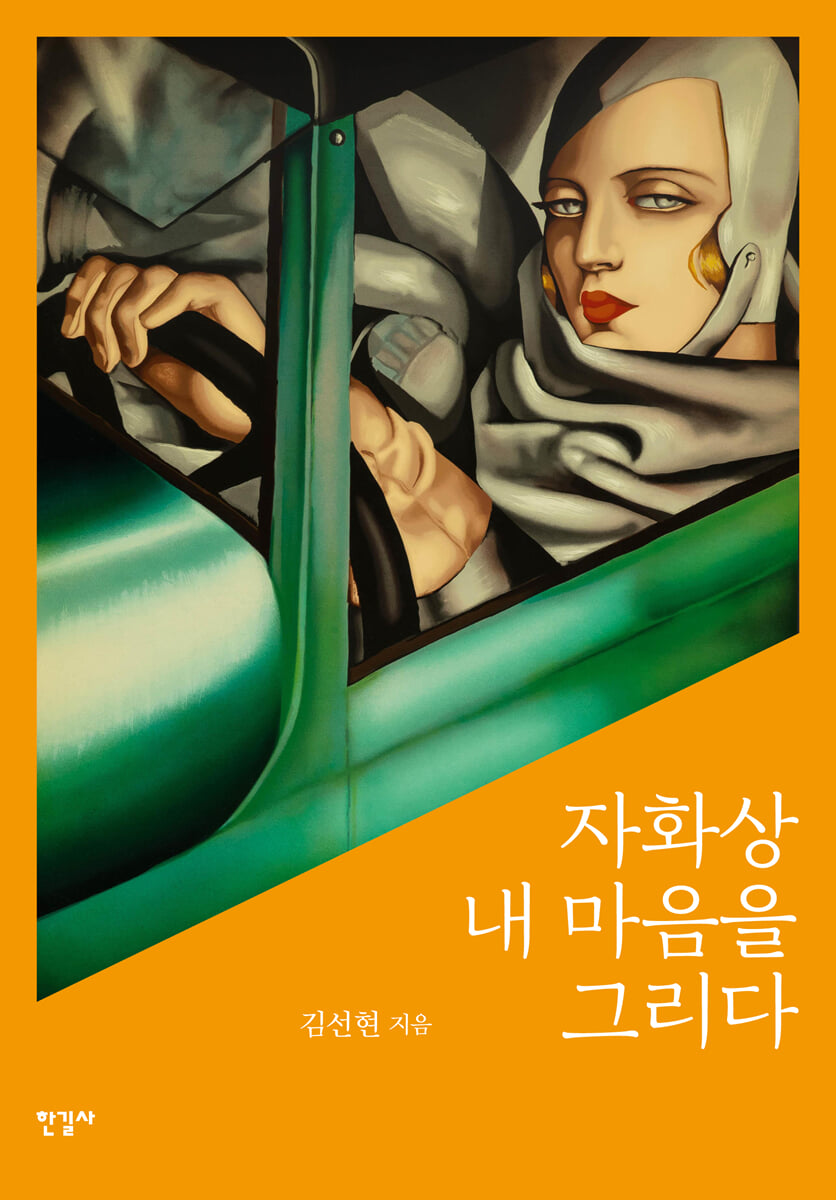
Let's take a look at Tamara de Lempicka's "Tamara in a Green Bugatti" that adorns the cover.
You can feel the confidence of an independent woman in the bold outfit, the indifferent gaze, and the bright green sports car drawn together.
Surprisingly, this self-portrait was painted in the 1920s.
Born in Poland in 1898, Lempicka grew up with the teachings of his mother, grandmother, and aunt that "you can do anything."
After gaining fame at the Paris International Exhibition, the painting "Tamara in a Green Bugatti" strongly conveys an attitude of rejection of male-centered customs and traditions.
② Marianne von Werefkin
Marianne von Werefkin, a female painter who became famous a generation before Lampika.
The dark background, bright red irises, and raised eyebrows show the anger he harbors.
He rose to fame at a young age.
Berepkin lived with his poor lover, Yavlensky, and patronized him as an unknown painter.
However, a son is born between Yavlensky and his housekeeper Helena, and Yavlensky leaves Berevkin and marries Helena.
Even the betrayal of his lover of 27 years could not stop Berepkin's brush.
Rather, he expressed the sense of loss and betrayal of losing a lover in his paintings.
In that appearance, where even pain is revealed with confidence and freedom, we can feel the will to acknowledge and love the existence of the country.
③ Adolf Hitler
What about Adolf Hitler, the man of power who ruled Germany with overwhelming charisma and the mad dictator who even orchestrated death with his own hands?
Hitler was an aspiring painter in his youth.
Hitler, who failed the art school entrance exam twice, suffered from despair and poverty.
During World War I, he volunteered for the German army and achieved military merit.
Hitler, who was twenty-one years old and living in a homeless shelter in Vienna after his mother's death, appears shabby even in "Self-Portrait."
The blurred expression of the face in the self-portrait reflects his ambiguous mental world, and the X above his head signifies self-denial.
Hitler drew people small or alone.
It shows that you do not trust people and do not consider them important.
"The Wall of Battle" is a self-portrait painted in 1918, revealing that although Germany was defeated in World War I, it was an important period for Hitler as a person, as he was born as a politician.
This is a self-portrait of Hitler, a soldier strengthening his resolve while looking at the German battlefield. Compared to his 1910 self-portrait, the figure is drawn larger, suggesting that he has gained confidence.
④ Pablo Picasso
Pablo Picasso is an artist who left behind around 30 self-portraits during his not-so-short life.
Whenever he faced a crisis in his life, he used self-portraits as a tool for self-reflection.
If you look at Picasso's "Self-Portrait" painted when he was fifteen, you can see that he showed off his talent by creating texture using only brown colors.
Although her fresh face is full of aspiration, the vagueness revealed by her blurred shoulders and dark background color shows a lack of confidence.
"Self-Portrait" from 1901 is a self-portrait from the so-called "Blue Period", and for Picasso, blue was the color of despair.
After his best friend Casagemas committed suicide, Picasso took despair and suffering people as the subject of his work, and blue represents the frame through which he viewed the world.
"Self-Portrait Facing Death" is a self-portrait painted by Picasso a year before he passed away.
Although he seems to be terrified, we can feel the author's will to face death with dignity and without shrinking.
Finding Your True Self in Self-Portrait
Author Kim Seon-hyeon adds to the immersion by telling the story behind 104 self-portraits and also sharing his personal history.
While practicing art therapy, he honestly reveals his feelings of pity for his clients, the stress of balancing work and family life, his impatience as a scholar, and his gratitude towards his family who supports him through difficult times.
Professor Kim Seon-hyeon advises people who ask, "Will you become happy when your trauma is healed?" to keep practicing becoming happy, saying, "If you become happy, the trauma will disappear."
Let's use the psychologist's empathy method and the art therapist's art appreciation method as clues to find the reason why I am lonely, happy, and in love in my self-portrait.
If you pause for a moment at the captivating self-portraits and peer into the inner world of the artists, you will discover your true self as you soothe the emotions that exist within you, one by one.
Professor Kim Seon-hyeon, best-selling author of "The Power of Drawing" with 300,000 copies sold
104 self-portraits carefully selected from the field!
“To heal the wounds
“You have to go through a process of meeting your inner self.”
『Self-Portrait, Drawing My Heart』 is a gift-like book that helps you find your true self through famous paintings, just as an artist expresses his emotions through self-portraits.
Professor Kim Seon-hyeon, the leading authority on Korean art therapy, says that art therapy is like finding hidden pictures.
Because it accurately reveals the hidden feelings of people who cannot express them in words through drawings.
Author Kim Seon-hyeon, who majored in art and psychology, has been at the forefront of both theory and practice.
He is a trauma specialist who has taken the lead in caring for victims and their families at domestic and international disaster sites, including the Jeju April 3 Incident and the Sewol Ferry Disaster.
A self-portrait is a photograph that captures the heart, a powerful nonverbal expression tool that honestly reveals one's inner self.
In that sense, the biggest purpose of appreciating self-portraits is to indirectly experience the life of a third party.
This book will be a time for me to peel off the persona of my heart, the mask, and meet the true 'me' hidden within me.
■Hear the artist's voice, woven into his self-portrait.
“The word ‘self-portrait’ is a combination of ‘self’ meaning self and ‘portray’ meaning to draw self-consciousness, and can be understood to mean ‘to bring out’ or ‘to reveal’ oneself.
Therefore, a self-portrait is a totality of images rich in the artist's conscious and unconscious elements, and through a self-portrait, we can read the artist's own style.” _Page 331
When painting, the artist must take his eyes off the model for a moment and turn his gaze to the canvas.
Moreover, the painter's brush covers the shape he is painting, so the shape cannot be seen until the brush strokes are finished.
The moment you draw something you cannot see, what the artist is drawing is a model in his mind.
In self-portraits, you can read about your inner state, such as past and present, anxiety, loneliness, love, and confidence.
『Self-Portrait, Drawing My Heart』 analyzes the inner voice of the artist remaining on his self-portrait through psychology.
A self-portrait is a repository of emotions, containing everything from the artist's trauma, social status and financial power, to the impulses that have built up within him.
Looking at self-portraits, we can see how artists faced and dealt with painful realities, swirling desires, and overflowing joy.
■104 famous paintings unraveled by theme
『Self-Portrait: Drawing My Heart』 is composed of six chapters based on the meaning that the self-portrait reveals.
You can read them in order, from Chapter 1, "Solitude," to Chapter 6, "Perfection," but it's also a good idea to pick and choose chapters and subheadings that appeal to your mood each day.
Chapter 1, “Solitude,” presents ten painters who had to endure suffering alone.
Fernand Khnopf's self-portrait, "I Locked My Heart," reveals his disillusionment with life, with his unfocused eyes and gloomy expression, showing his disconnection from the world.
The unnaturally bent body in Egon Schiele's self-portraits is the result of his sublimation of aggressive impulsiveness and the frustration of social isolation into his works.
Chapter 2, “Desire,” shows the true faces of nine people who whipped themselves in pursuit of their desires for art, love, and fame.
Andy Warhol pursued fame, but he also tried to hide his inner self by covering his face with colorful patterns and shadows.
In "Mona Lisa," Leonardo da Vinci portrayed his repressed desire to be cared for and loved by his biological mother and stepmother.
Chapter 3, ‘Love’, contains self-portraits of seven painters in love.
Klimt's "The Kiss," considered one of the most popular paintings among Koreans, stimulates the release of endorphins and serotonin, increasing happiness and sociability.
Amedeo Modigliani's last self-portrait, which resembles his wife's portrait, shows his longing to be with his beloved.
Chapter 4, 'Healing', is the story of nine painters who sublimate their own wounds through painting.
Toulouse-Lautrec, who suffered from a rare disease that stopped the growth of both legs, overcame his inferiority complex by humorously depicting his physical weakness in his paintings.
Van Gogh, who used painting as a means of self-realization and self-therapy, lived a painful life, but he expressed his wounds beautifully.
Chapter 5, ‘Leisure,’ shows the figures of seven mature painters who have been trained over time.
Carl Larsson, who overcame misfortune and built a happy family, is holding a doll tightly in his self-portrait, “Self-Analysis,” as if he does not want to lose his happiness.
Rembrandt, who was old, lost his reputation, and became bankrupt, painted self-portraits brimming with pride, curiosity, and joy, even in loneliness and pain.
The final six chapters, "Perfection," feature self-portraits by eleven confident artists.
Renaissance painter Sandro Botticelli painted himself in the most prominent position in his religious painting "Adoration of the Magi," looking straight at the viewer.
Alphonse Mucha, a representative painter of Art Nouveau, overwhelms the audience with his tightly closed lips and intense gaze filled with determination.
■I live confidently, as myself.
“Even an ordinary-looking painting has hidden meanings if you look at it closely with affectionate eyes.
Art therapy is a method of helping people who are unable to express the difficulties they are experiencing in words to express their inner stories through drawings.” _Page 139
① Tamara de Lempicka
Let's take a look at Tamara de Lempicka's "Tamara in a Green Bugatti" that adorns the cover.
You can feel the confidence of an independent woman in the bold outfit, the indifferent gaze, and the bright green sports car drawn together.
Surprisingly, this self-portrait was painted in the 1920s.
Born in Poland in 1898, Lempicka grew up with the teachings of his mother, grandmother, and aunt that "you can do anything."
After gaining fame at the Paris International Exhibition, the painting "Tamara in a Green Bugatti" strongly conveys an attitude of rejection of male-centered customs and traditions.
② Marianne von Werefkin
Marianne von Werefkin, a female painter who became famous a generation before Lampika.
The dark background, bright red irises, and raised eyebrows show the anger he harbors.
He rose to fame at a young age.
Berepkin lived with his poor lover, Yavlensky, and patronized him as an unknown painter.
However, a son is born between Yavlensky and his housekeeper Helena, and Yavlensky leaves Berevkin and marries Helena.
Even the betrayal of his lover of 27 years could not stop Berepkin's brush.
Rather, he expressed the sense of loss and betrayal of losing a lover in his paintings.
In that appearance, where even pain is revealed with confidence and freedom, we can feel the will to acknowledge and love the existence of the country.
③ Adolf Hitler
What about Adolf Hitler, the man of power who ruled Germany with overwhelming charisma and the mad dictator who even orchestrated death with his own hands?
Hitler was an aspiring painter in his youth.
Hitler, who failed the art school entrance exam twice, suffered from despair and poverty.
During World War I, he volunteered for the German army and achieved military merit.
Hitler, who was twenty-one years old and living in a homeless shelter in Vienna after his mother's death, appears shabby even in "Self-Portrait."
The blurred expression of the face in the self-portrait reflects his ambiguous mental world, and the X above his head signifies self-denial.
Hitler drew people small or alone.
It shows that you do not trust people and do not consider them important.
"The Wall of Battle" is a self-portrait painted in 1918, revealing that although Germany was defeated in World War I, it was an important period for Hitler as a person, as he was born as a politician.
This is a self-portrait of Hitler, a soldier strengthening his resolve while looking at the German battlefield. Compared to his 1910 self-portrait, the figure is drawn larger, suggesting that he has gained confidence.
④ Pablo Picasso
Pablo Picasso is an artist who left behind around 30 self-portraits during his not-so-short life.
Whenever he faced a crisis in his life, he used self-portraits as a tool for self-reflection.
If you look at Picasso's "Self-Portrait" painted when he was fifteen, you can see that he showed off his talent by creating texture using only brown colors.
Although her fresh face is full of aspiration, the vagueness revealed by her blurred shoulders and dark background color shows a lack of confidence.
"Self-Portrait" from 1901 is a self-portrait from the so-called "Blue Period", and for Picasso, blue was the color of despair.
After his best friend Casagemas committed suicide, Picasso took despair and suffering people as the subject of his work, and blue represents the frame through which he viewed the world.
"Self-Portrait Facing Death" is a self-portrait painted by Picasso a year before he passed away.
Although he seems to be terrified, we can feel the author's will to face death with dignity and without shrinking.
Finding Your True Self in Self-Portrait
Author Kim Seon-hyeon adds to the immersion by telling the story behind 104 self-portraits and also sharing his personal history.
While practicing art therapy, he honestly reveals his feelings of pity for his clients, the stress of balancing work and family life, his impatience as a scholar, and his gratitude towards his family who supports him through difficult times.
Professor Kim Seon-hyeon advises people who ask, "Will you become happy when your trauma is healed?" to keep practicing becoming happy, saying, "If you become happy, the trauma will disappear."
Let's use the psychologist's empathy method and the art therapist's art appreciation method as clues to find the reason why I am lonely, happy, and in love in my self-portrait.
If you pause for a moment at the captivating self-portraits and peer into the inner world of the artists, you will discover your true self as you soothe the emotions that exist within you, one by one.
GOODS SPECIFICS
- Date of issue: March 4, 2024
- Format: Hardcover book binding method guide
- Page count, weight, size: 360 pages | 702g | 148*210*30mm
- ISBN13: 9788935678563
- ISBN10: 8935678562
You may also like
카테고리
korean


korean

![GQ KOREA Mark (Monthly): December [2025]](http://librairie.coreenne.fr/cdn/shop/files/8ef265dbbfbf186523ed75ba7319009d.jpg?v=1765340328&width=3840)


