

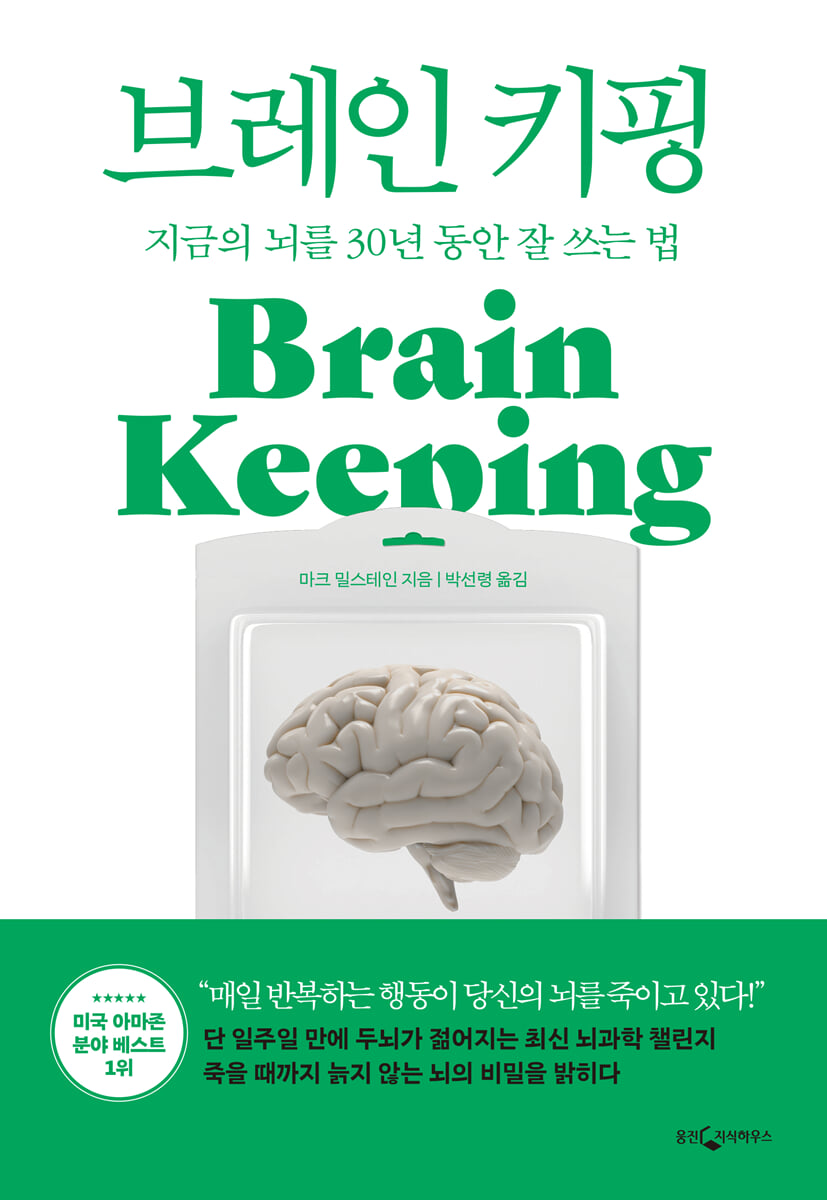
Brain keeping
 |
Description
Book Introduction
Amazon reader rating: 4.7 #1 bestseller on Amazon immediately after publication Includes the latest Brain Health Week Challenge Do you often forget things and your memory isn't what it used to be? Do you feel like your head is foggy and you have trouble concentrating on your studies or work? We introduce how to maintain the "optimal brain" as revealed by the latest brain science. Things that change with just 10 minutes a day and a little change in your daily routine! Have you ever felt like your concentration isn't what it used to be, or that you keep forgetting things you need to remember? Have you ever opened an internet search engine with a clear purpose, only to forget what you were searching for, only to find yourself retracing your steps a few minutes earlier, only to suddenly remember and exclaim, "Ah, that's right!" If this happens frequently, your brain health may be in trouble. Dr. Mark Milstein wrote Brain Keeping to introduce the latest brain science research and specific methods to address this "brain health problem" that has recently spread to young people. The author, an American brain health researcher and lecturer on 'How to Maintain an Optimal Brain', explains in this book that what ruins our brains are the 'habits' we repeat every day, and introduces '7 lifestyle habits' that can fundamentally improve them, and provides specific methods for putting them into practice. There is no magic pill that will give you an ageless brain. But if you invest just 10 minutes a day to develop the good lifestyle habits outlined in this book, your brain can remain in peak condition for 30 years. By making small changes to your diet, exercise, and sleep, you will experience the amazing experience of regaining clarity of mind and sharp focus. |
- You can preview some of the book's contents.
Preview
index
Prologue: We Can Use Our Brains Well
Part 1: The Beginning of Brain Keeping
“You can only use your brain for a long time if you know it well.”
How old is your brain?
When your immune system is weakened, your brain becomes filled with garbage.
The heart sends a warning to the brain
Bacteria save the brain
How does the brain 'remember'?
Part 2: The Secret of Brain Keeping
“Your brain doesn’t age.”
The brain ages when new memories are lost.
Eating sweets ages your brain
Inflammation rapidly destroys the brain.
A depressed brain ages quickly
Part 3: Brain Keeping Habits
“Changing your habits can give you 30 more years of healthy brain life.”
Sleep · Sleep heals the brain
Mindfulness: Installing Positive Circuits in Your Brain
Exercise: What happens when you walk 7,500 steps a day?
Emotions · Ask about others' well-being every day
Eating Habits · Eat Rainbow-Colored Foods
How to stay away from the toxins in your environment and surroundings
How to focus, remember more, and learn faster
Epilogue · The 10 Commandments of Brain Keeping
Appendix · Challenge! A Week-Long Brain Rejuvenation Health Challenge
Acknowledgements
Part 1: The Beginning of Brain Keeping
“You can only use your brain for a long time if you know it well.”
How old is your brain?
When your immune system is weakened, your brain becomes filled with garbage.
The heart sends a warning to the brain
Bacteria save the brain
How does the brain 'remember'?
Part 2: The Secret of Brain Keeping
“Your brain doesn’t age.”
The brain ages when new memories are lost.
Eating sweets ages your brain
Inflammation rapidly destroys the brain.
A depressed brain ages quickly
Part 3: Brain Keeping Habits
“Changing your habits can give you 30 more years of healthy brain life.”
Sleep · Sleep heals the brain
Mindfulness: Installing Positive Circuits in Your Brain
Exercise: What happens when you walk 7,500 steps a day?
Emotions · Ask about others' well-being every day
Eating Habits · Eat Rainbow-Colored Foods
How to stay away from the toxins in your environment and surroundings
How to focus, remember more, and learn faster
Epilogue · The 10 Commandments of Brain Keeping
Appendix · Challenge! A Week-Long Brain Rejuvenation Health Challenge
Acknowledgements
Detailed image

Into the book
Many people tend to describe aging as what happens when we reach a certain age and our minds (especially our memory) stop functioning as they used to.
“It’s part of the aging process, so there’s nothing we can do about it,” some say.
But that's not the case.
The brain can keep pace with bodily functions as we age, as long as we take proper care of it.
If you want to maintain a sharp mind as you age, you need to take immediate action and not leave it to chance.
Changing your lifestyle habits is one of the most immediate steps you can take.
One study supporting this involved having participants scan their brains with magnetic resonance imaging (MRI), then having them change their lifestyle habits. The participants then had their brains scanned again about six months to a year later to see if any changes had occurred.
Then, surprisingly, the brain appeared to have become younger than before.
(The lifestyle habits they adopted are detailed in the back of the book.) It's as if they were put into a time machine.
--- From "Part 1 | How Old Is Your Brain?"
Dr. Nedergaard wanted to know how the injured brain heals itself.
And we investigated what role sleep plays in the recovery process.
The subjects who participated in the experiment were encouraged to sleep, and while they were sleeping, they experienced a surprising phenomenon that made them feel as if they were watching a horror movie.
While the subjects slept, their brains shrank to a whopping 65 percent of their normal size! As they shrank, their brains began vibrating vigorously in a dynamic rhythm.
Additional research has shown that as the brain shrinks, waste, toxins, and other toxins that are stored within brain cells are compressed and expelled, creating more space for them to escape.
As the brain continues to shrink, the compressed waste collects in the empty spaces created by this process, and fluid from the spinal cord flows into the brain and washes it clean.
--- From "Part 1 | When your immune system is weakened, your brain becomes filled with garbage"
One interesting fact is that the heart has about 40,000 sensory neurons that transmit information to the brain.
Some researchers call these cells the "little brains" of the heart.
While more research is needed to elucidate the full extent of the information being conveyed, one thing is clear: heart health is one of the most important aspects of brain health.
(Omitted) Because the heart and brain are connected in this way, it is said that ‘a young heart helps the brain stay young.’
What happens in your heart can affect a range of conditions that put your brain at risk, from dementia to depression to anxiety.
Therefore, it is impossible to have a healthy, young brain without a healthy heart.
--- From "Part 1 | The Heart Sends a Warning to the Brain"
Surrounding yourself with optimistic people can lower your risk of Alzheimer's disease, dementia, and cognitive decline.
And if you are optimistic, it has a positive effect on your overall health.
Optimists tend to live longer, being 50 to 70 percent more likely to reach age 85 than non-optimists.
Research shows that optimism can be learned, and that it's easier to change if you think positively about your learning abilities.
In other words, if you are optimistic about learning to be optimistic, you are more likely to actually become optimistic.
So if you're a pessimistic person and think it's impossible to learn optimism, you probably never will.
When we believe we can do something, we become better at it.
--- From "Part 1 | The Heart Sends a Warning to the Brain"
Alzheimer's disease is intertwined with various factors, including inflammation, metabolic dysfunction, and vascular problems.
As these problems become complexly intertwined, brain cells age and become damaged, resulting in brain shrinkage.
When brain shrinkage occurs, memory declines significantly, and in patients with Alzheimer's disease and dementia, the hippocampus is particularly often damaged.
This is why dementia patients can remember events that happened decades ago but cannot remember new information.
--- From "Part 2 | The Brain Ages When There Are No New Memories"
An interesting fact is that not only what you eat, but also when you eat it can affect your risk of developing diabetes.
According to research presented at the 2021 Endocrine Society Annual Meeting, people who started eating before 8:30 a.m. had lower insulin resistance and blood sugar levels than those who ate their first meal of the day later.
A 2021 analysis published in Endocrine Reviews also found that restricting daily eating to less than 12 hours improved metabolic health.
However, the effectiveness of intermittent fasting is unclear.
Intermittent fasting is the practice of voluntarily alternating periods of fasting and eating throughout the day.
For example, some intermittent fasting methods involve eating all meals during an eight-hour window and not eating for the remaining 16 hours.
While some studies have shown that intermittent fasting can help manage and lower the risk of diabetes, another study presented at the European Society of Endocrinology found that fasting every other day could actually increase the risk of diabetes by causing problems with insulin regulation.
Because drastic changes in calorie intake and eating schedule can be dangerous, it's best to consult your doctor before attempting any form of fasting.
--- From "Part 2 | Eating Sweets Makes Your Brain Old"
Research results are often published that surprise scientists.
The study we will examine from now on is one of them.
Researchers followed 1.7 million people for 30 years to see if there was a link between the development of dementia and mental health disorders such as depression, anxiety, and bipolar disorder.
A study published in 2022 found that people with mental disorders develop dementia on average five years earlier than those without.
The researchers also analyzed cases of chronic diseases such as cardiovascular disease, stroke, diabetes, gout, chronic obstructive pulmonary disease, traumatic brain injury, and cancer.
As a result, they found that the risk of developing dementia was more strongly associated with mental disorders than with chronic diseases.
--- From "Part 2 | A Depressed Brain Ages Quickly"
Pete Sampras, one of the greatest tennis players of all time, holds the Grand Slam record, has won Wimbledon seven times, and is known for his powerful serve.
As for the tennis aspect, I'm not sure what made him such an elite player, but there's one thing that definitely contributed to his success.
Sampras always carried black masking tape with him as he traveled the world, crossing time zones.
The tape wasn't for the racket or to prevent injuries.
Every time Sampras entered a new hotel room, he covered all the electronic lights in the room with tape.
Everything that emits light is covered with black tape.
(Omitted) Why did I do that? Because I discovered that on days when I slept in complete darkness and woke up, I played better, was more focused, and felt more energetic.
At the time, people thought Sampras's actions were excessive.
But he knew that even the slightest light could wake him up.
I instinctively recognized what scientists had discovered through repeated research.
Artificial light disrupts our natural sleep cycle.
And sleep disturbances mess with the brain.
In other words, it's not just the amount of sleep you get, but how effective that sleep is.
--- From "Part 3 | Sleep ◇ Sleep heals the brain"
A 2022 study looked at whether even small amounts of light in the bedroom could affect your health.
The amount of light used in the study was so dim that it was impossible to read the book.
Participants reported that they did not notice the small light while they slept and felt that it did not disturb their sleep.
However, the results of these tests were different.
People who slept with a small light on had increased heart rate and insulin resistance throughout the night and into the next day.
Their nervous systems were activated overnight, which had negative effects on their cardiovascular and metabolic health.
The lesson here is that even if we don't notice the light, our bodies do.
--- From "Part 3 | Sleep ◇ Sleep heals the brain"
In other words, there's nothing wrong with walking more than 7,500 steps a day, but there aren't many additional health benefits.
Tracking your steps can be a great motivator, but taking a 40-minute walk three times a week is also a good idea.
One study found that people who followed this routine had larger hippocampi.
Not only did these walkers have improved memories, their brains also appeared one to two years younger than their actual age.
--- From "Part 3 | Exercise ◇ What Changes When You Walk 7,500 Steps a Day"
We need to accept loneliness as if it were a physical illness.
Physical pain is like our body sending us a warning that it needs to be cared for and healed.
In this way, loneliness is also a signal from the body that social interaction is necessary for brain health.
“It’s part of the aging process, so there’s nothing we can do about it,” some say.
But that's not the case.
The brain can keep pace with bodily functions as we age, as long as we take proper care of it.
If you want to maintain a sharp mind as you age, you need to take immediate action and not leave it to chance.
Changing your lifestyle habits is one of the most immediate steps you can take.
One study supporting this involved having participants scan their brains with magnetic resonance imaging (MRI), then having them change their lifestyle habits. The participants then had their brains scanned again about six months to a year later to see if any changes had occurred.
Then, surprisingly, the brain appeared to have become younger than before.
(The lifestyle habits they adopted are detailed in the back of the book.) It's as if they were put into a time machine.
--- From "Part 1 | How Old Is Your Brain?"
Dr. Nedergaard wanted to know how the injured brain heals itself.
And we investigated what role sleep plays in the recovery process.
The subjects who participated in the experiment were encouraged to sleep, and while they were sleeping, they experienced a surprising phenomenon that made them feel as if they were watching a horror movie.
While the subjects slept, their brains shrank to a whopping 65 percent of their normal size! As they shrank, their brains began vibrating vigorously in a dynamic rhythm.
Additional research has shown that as the brain shrinks, waste, toxins, and other toxins that are stored within brain cells are compressed and expelled, creating more space for them to escape.
As the brain continues to shrink, the compressed waste collects in the empty spaces created by this process, and fluid from the spinal cord flows into the brain and washes it clean.
--- From "Part 1 | When your immune system is weakened, your brain becomes filled with garbage"
One interesting fact is that the heart has about 40,000 sensory neurons that transmit information to the brain.
Some researchers call these cells the "little brains" of the heart.
While more research is needed to elucidate the full extent of the information being conveyed, one thing is clear: heart health is one of the most important aspects of brain health.
(Omitted) Because the heart and brain are connected in this way, it is said that ‘a young heart helps the brain stay young.’
What happens in your heart can affect a range of conditions that put your brain at risk, from dementia to depression to anxiety.
Therefore, it is impossible to have a healthy, young brain without a healthy heart.
--- From "Part 1 | The Heart Sends a Warning to the Brain"
Surrounding yourself with optimistic people can lower your risk of Alzheimer's disease, dementia, and cognitive decline.
And if you are optimistic, it has a positive effect on your overall health.
Optimists tend to live longer, being 50 to 70 percent more likely to reach age 85 than non-optimists.
Research shows that optimism can be learned, and that it's easier to change if you think positively about your learning abilities.
In other words, if you are optimistic about learning to be optimistic, you are more likely to actually become optimistic.
So if you're a pessimistic person and think it's impossible to learn optimism, you probably never will.
When we believe we can do something, we become better at it.
--- From "Part 1 | The Heart Sends a Warning to the Brain"
Alzheimer's disease is intertwined with various factors, including inflammation, metabolic dysfunction, and vascular problems.
As these problems become complexly intertwined, brain cells age and become damaged, resulting in brain shrinkage.
When brain shrinkage occurs, memory declines significantly, and in patients with Alzheimer's disease and dementia, the hippocampus is particularly often damaged.
This is why dementia patients can remember events that happened decades ago but cannot remember new information.
--- From "Part 2 | The Brain Ages When There Are No New Memories"
An interesting fact is that not only what you eat, but also when you eat it can affect your risk of developing diabetes.
According to research presented at the 2021 Endocrine Society Annual Meeting, people who started eating before 8:30 a.m. had lower insulin resistance and blood sugar levels than those who ate their first meal of the day later.
A 2021 analysis published in Endocrine Reviews also found that restricting daily eating to less than 12 hours improved metabolic health.
However, the effectiveness of intermittent fasting is unclear.
Intermittent fasting is the practice of voluntarily alternating periods of fasting and eating throughout the day.
For example, some intermittent fasting methods involve eating all meals during an eight-hour window and not eating for the remaining 16 hours.
While some studies have shown that intermittent fasting can help manage and lower the risk of diabetes, another study presented at the European Society of Endocrinology found that fasting every other day could actually increase the risk of diabetes by causing problems with insulin regulation.
Because drastic changes in calorie intake and eating schedule can be dangerous, it's best to consult your doctor before attempting any form of fasting.
--- From "Part 2 | Eating Sweets Makes Your Brain Old"
Research results are often published that surprise scientists.
The study we will examine from now on is one of them.
Researchers followed 1.7 million people for 30 years to see if there was a link between the development of dementia and mental health disorders such as depression, anxiety, and bipolar disorder.
A study published in 2022 found that people with mental disorders develop dementia on average five years earlier than those without.
The researchers also analyzed cases of chronic diseases such as cardiovascular disease, stroke, diabetes, gout, chronic obstructive pulmonary disease, traumatic brain injury, and cancer.
As a result, they found that the risk of developing dementia was more strongly associated with mental disorders than with chronic diseases.
--- From "Part 2 | A Depressed Brain Ages Quickly"
Pete Sampras, one of the greatest tennis players of all time, holds the Grand Slam record, has won Wimbledon seven times, and is known for his powerful serve.
As for the tennis aspect, I'm not sure what made him such an elite player, but there's one thing that definitely contributed to his success.
Sampras always carried black masking tape with him as he traveled the world, crossing time zones.
The tape wasn't for the racket or to prevent injuries.
Every time Sampras entered a new hotel room, he covered all the electronic lights in the room with tape.
Everything that emits light is covered with black tape.
(Omitted) Why did I do that? Because I discovered that on days when I slept in complete darkness and woke up, I played better, was more focused, and felt more energetic.
At the time, people thought Sampras's actions were excessive.
But he knew that even the slightest light could wake him up.
I instinctively recognized what scientists had discovered through repeated research.
Artificial light disrupts our natural sleep cycle.
And sleep disturbances mess with the brain.
In other words, it's not just the amount of sleep you get, but how effective that sleep is.
--- From "Part 3 | Sleep ◇ Sleep heals the brain"
A 2022 study looked at whether even small amounts of light in the bedroom could affect your health.
The amount of light used in the study was so dim that it was impossible to read the book.
Participants reported that they did not notice the small light while they slept and felt that it did not disturb their sleep.
However, the results of these tests were different.
People who slept with a small light on had increased heart rate and insulin resistance throughout the night and into the next day.
Their nervous systems were activated overnight, which had negative effects on their cardiovascular and metabolic health.
The lesson here is that even if we don't notice the light, our bodies do.
--- From "Part 3 | Sleep ◇ Sleep heals the brain"
In other words, there's nothing wrong with walking more than 7,500 steps a day, but there aren't many additional health benefits.
Tracking your steps can be a great motivator, but taking a 40-minute walk three times a week is also a good idea.
One study found that people who followed this routine had larger hippocampi.
Not only did these walkers have improved memories, their brains also appeared one to two years younger than their actual age.
--- From "Part 3 | Exercise ◇ What Changes When You Walk 7,500 Steps a Day"
We need to accept loneliness as if it were a physical illness.
Physical pain is like our body sending us a warning that it needs to be cared for and healed.
In this way, loneliness is also a signal from the body that social interaction is necessary for brain health.
--- From "Part 3 | Emotions ◇ Ask About Others' Well-Being Every Day"
Publisher's Review
“Daily repetitive actions are killing your brain.”
At the link between brain and body
Find the key to unlocking the secret of the 'ageless brain' until death!
Not only are there people who blink frequently, but the number of people who lose concentration due to the advent of smartphones is increasing year by year.
In an age where we're surrounded by digital devices and our memory and focus are stolen, we often encounter people around us who worry about their productivity declining.
You who picked up this book are probably having the same concerns.
The term 'brain fog' has even emerged to describe a persistent state of being in a daze, as if one's head is covered in fog, suggesting that brain health problems are worsening faster than expected.
"Brain Keeping" is a book that contains methods to restore our brains to their peak state and maintain them, for modern people who face such problems.
Dr. Mark Milstein, who has studied 'How to Maintain a Healthy Brain Throughout Life' based on the latest brain science, says that in order to maintain brain health, we must first pay attention to how the brain and the entire body are connected.
The heart has about 40,000 sensory neurons that exchange various information with the brain, and the intestines have about 500 million neurons that communicate so closely with the brain that they are called the 'second brain'.
Therefore, restoring brain health is only possible when our body is healthy overall.
But this is not that difficult.
This book tells us that we can experience amazing changes just by changing one habit.
If you can easily restore your brain's health and live life to the fullest, why not?
“There is a way to keep your brain functioning the way it did when it was at its peak for the rest of your life!”
Purely a 'brain-friendly lifestyle'
'Super Agers' who maintain the brain of a 20-year-old for the rest of their lives
Uncover the secrets of 'brain keeping' in their lives!
As we age, our physical functions gradually decline, and our brains also change.
Accordingly, cognitive and mental functions also change little by little.
According to several studies, on average, the human brain shrinks by about 5 percent every decade after the age of 40.
As the brain gets smaller, it can have a devastating impact on memory, concentration, and productivity, and in severe cases, it can even lead to brain diseases such as Alzheimer's disease and various mental health problems such as depression.
However, contrary to these statistics, there are some people who maintain the brain of a twenty-year-old throughout their lives, no matter how old they become.
This is a group called 'Super Agers'.
The author focused on the lives of these super-agers and discovered the secret of 'brain keeping' that allows them to use their current brains well for 30 more years in their lives.
The secret was very simple.
It was ‘maintaining a lifestyle that is good for the brain.’
There is a group of people classified as "super-agers" who are actually over 80 years old but have cognitive functions that are decades younger.
(Omitted) The research team followed 330 super-agers over 100 years old for 18 months.
During the study period, their memory and cognitive abilities did not decline at all for nearly two years.
The secret of these elderly people with healthy brains is that they all 'maintained a lifestyle that was good for the brain.'
(p.30)
What does it mean to "maintain a brain-healthy lifestyle"? It's quite simple.
Wake up when the sun rises and go to bed when the sun sets.
Always eat vegetables with your favorite foods, check in with your neighbors, and exercise regularly.
And one more thing, read or learn something new every day.
Just by living in accordance with the flow of nature like this, the brain is able to maintain its youthfulness.
In fact, in one experiment, participants were asked to change their lifestyle habits, and when their brains were scanned about six months later, significant changes were found before and after the change.
Among the experimental participants, the group that changed their habits had brains that became younger and plumper than before, as if they had been put into a time machine.
This shows that improving your habits is the most immediate step you can take to protect your brain health.
Only when we understand healthy living and develop habits for it, one by one, can we truly have a 'brain that never ages.'
What if just getting a good night's sleep could clear out the garbage in your brain?
What if just asking someone how they're doing every day could heal your mental illness?
What if just eating fried chicken with salad could improve your brain health?
What if you could beat brain fog just by spending 10 minutes a day reading or learning something new?
What if eating breakfast before 8:30 a.m. could help prevent dementia?
What if just 30 minutes a day of split-up exercise was enough?
“Brain health is directly related to quality of life!”
Through the best diet, sleep, and exercise
How to Build an "Optimal Brain" That's Stress-Resilient, Memory-Better, and Engaging
"Brain Keeping" introduces methods that can be put into practice right now to maintain brain health, focusing on seven key words: sleep, mindfulness, exercise, emotions, eating habits, environment, and concentration.
The habit improvement discussed in this book is not just easy advice.
Most of these are very easy and small things you can try today, like taking a brisk 10-minute walk before lunch or eating your favorite meal but adding a handful of vegetables or nuts.
The author emphasizes that if you start to develop the habit of moving your body according to nature's clock, your brain will recover much faster than you think.
This is the power of recovery possessed by the brain, the most mysterious organ in our body.
At the end of the book, he includes his 'Brain Health Week Challenge', which he has developed based on the latest scientific research.
If you follow this as is or slightly modify it to fit your life, you will be able to live with an optimized brain for at least 30 more years.
‘Brain health’ is an issue directly related to our quality of life.
I recommend this book to those of you who think that a glass of alcohol now or a chocolate bar when your blood sugar level drops is okay.
If you start building habits into your life now that will help you regain your lost focus, remember more, and revitalize your brain, remember that there's so much you can maintain.
At the link between brain and body
Find the key to unlocking the secret of the 'ageless brain' until death!
Not only are there people who blink frequently, but the number of people who lose concentration due to the advent of smartphones is increasing year by year.
In an age where we're surrounded by digital devices and our memory and focus are stolen, we often encounter people around us who worry about their productivity declining.
You who picked up this book are probably having the same concerns.
The term 'brain fog' has even emerged to describe a persistent state of being in a daze, as if one's head is covered in fog, suggesting that brain health problems are worsening faster than expected.
"Brain Keeping" is a book that contains methods to restore our brains to their peak state and maintain them, for modern people who face such problems.
Dr. Mark Milstein, who has studied 'How to Maintain a Healthy Brain Throughout Life' based on the latest brain science, says that in order to maintain brain health, we must first pay attention to how the brain and the entire body are connected.
The heart has about 40,000 sensory neurons that exchange various information with the brain, and the intestines have about 500 million neurons that communicate so closely with the brain that they are called the 'second brain'.
Therefore, restoring brain health is only possible when our body is healthy overall.
But this is not that difficult.
This book tells us that we can experience amazing changes just by changing one habit.
If you can easily restore your brain's health and live life to the fullest, why not?
“There is a way to keep your brain functioning the way it did when it was at its peak for the rest of your life!”
Purely a 'brain-friendly lifestyle'
'Super Agers' who maintain the brain of a 20-year-old for the rest of their lives
Uncover the secrets of 'brain keeping' in their lives!
As we age, our physical functions gradually decline, and our brains also change.
Accordingly, cognitive and mental functions also change little by little.
According to several studies, on average, the human brain shrinks by about 5 percent every decade after the age of 40.
As the brain gets smaller, it can have a devastating impact on memory, concentration, and productivity, and in severe cases, it can even lead to brain diseases such as Alzheimer's disease and various mental health problems such as depression.
However, contrary to these statistics, there are some people who maintain the brain of a twenty-year-old throughout their lives, no matter how old they become.
This is a group called 'Super Agers'.
The author focused on the lives of these super-agers and discovered the secret of 'brain keeping' that allows them to use their current brains well for 30 more years in their lives.
The secret was very simple.
It was ‘maintaining a lifestyle that is good for the brain.’
There is a group of people classified as "super-agers" who are actually over 80 years old but have cognitive functions that are decades younger.
(Omitted) The research team followed 330 super-agers over 100 years old for 18 months.
During the study period, their memory and cognitive abilities did not decline at all for nearly two years.
The secret of these elderly people with healthy brains is that they all 'maintained a lifestyle that was good for the brain.'
(p.30)
What does it mean to "maintain a brain-healthy lifestyle"? It's quite simple.
Wake up when the sun rises and go to bed when the sun sets.
Always eat vegetables with your favorite foods, check in with your neighbors, and exercise regularly.
And one more thing, read or learn something new every day.
Just by living in accordance with the flow of nature like this, the brain is able to maintain its youthfulness.
In fact, in one experiment, participants were asked to change their lifestyle habits, and when their brains were scanned about six months later, significant changes were found before and after the change.
Among the experimental participants, the group that changed their habits had brains that became younger and plumper than before, as if they had been put into a time machine.
This shows that improving your habits is the most immediate step you can take to protect your brain health.
Only when we understand healthy living and develop habits for it, one by one, can we truly have a 'brain that never ages.'
What if just getting a good night's sleep could clear out the garbage in your brain?
What if just asking someone how they're doing every day could heal your mental illness?
What if just eating fried chicken with salad could improve your brain health?
What if you could beat brain fog just by spending 10 minutes a day reading or learning something new?
What if eating breakfast before 8:30 a.m. could help prevent dementia?
What if just 30 minutes a day of split-up exercise was enough?
“Brain health is directly related to quality of life!”
Through the best diet, sleep, and exercise
How to Build an "Optimal Brain" That's Stress-Resilient, Memory-Better, and Engaging
"Brain Keeping" introduces methods that can be put into practice right now to maintain brain health, focusing on seven key words: sleep, mindfulness, exercise, emotions, eating habits, environment, and concentration.
The habit improvement discussed in this book is not just easy advice.
Most of these are very easy and small things you can try today, like taking a brisk 10-minute walk before lunch or eating your favorite meal but adding a handful of vegetables or nuts.
The author emphasizes that if you start to develop the habit of moving your body according to nature's clock, your brain will recover much faster than you think.
This is the power of recovery possessed by the brain, the most mysterious organ in our body.
At the end of the book, he includes his 'Brain Health Week Challenge', which he has developed based on the latest scientific research.
If you follow this as is or slightly modify it to fit your life, you will be able to live with an optimized brain for at least 30 more years.
‘Brain health’ is an issue directly related to our quality of life.
I recommend this book to those of you who think that a glass of alcohol now or a chocolate bar when your blood sugar level drops is okay.
If you start building habits into your life now that will help you regain your lost focus, remember more, and revitalize your brain, remember that there's so much you can maintain.
GOODS SPECIFICS
- Date of issue: November 20, 2023
- Page count, weight, size: 320 pages | 520g | 145*210*20mm
- ISBN13: 9788901277141
- ISBN10: 890127714X
You may also like
카테고리
korean


korean

![GQ KOREA Mark (Monthly): December [2025]](http://librairie.coreenne.fr/cdn/shop/files/8ef265dbbfbf186523ed75ba7319009d.jpg?v=1765340328&width=3840)


