

The obsessive brain
 |
Description
Book Introduction
- A word from MD
-
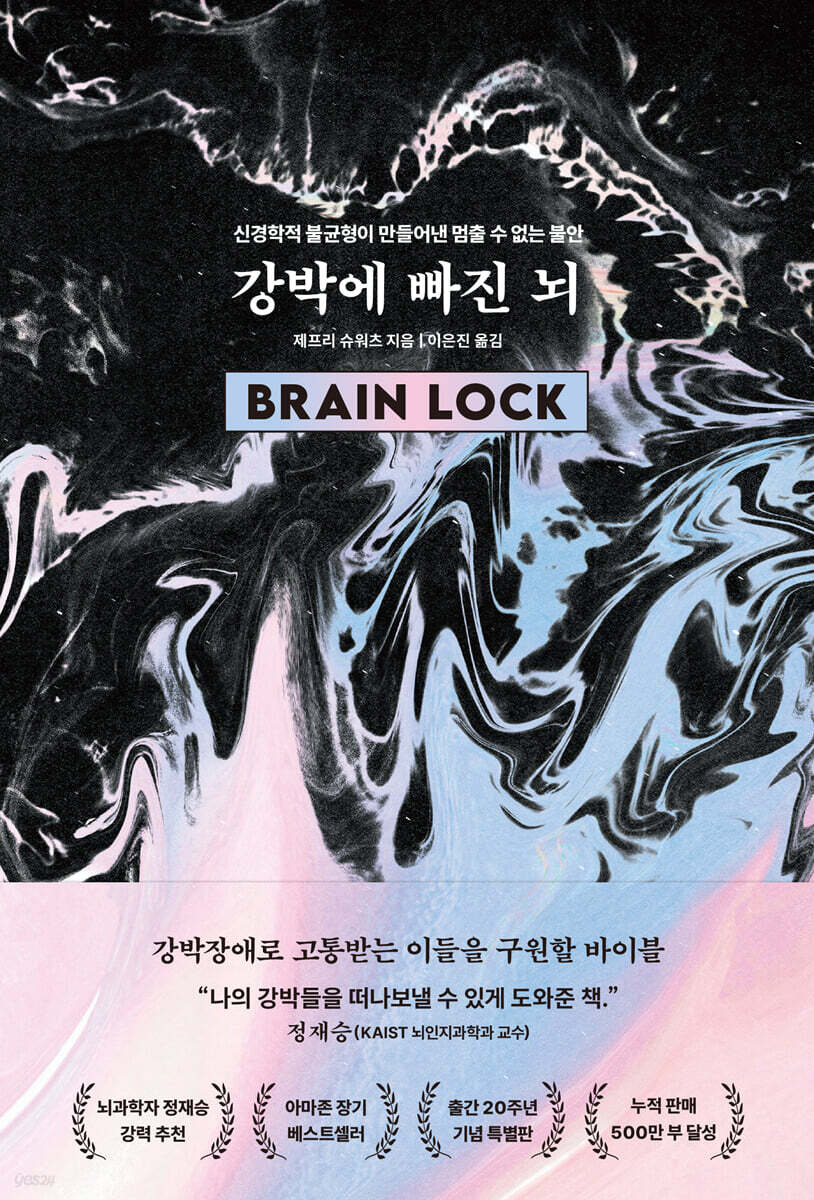
The problem isn't me, it's my brainThe bible for obsessive-compulsive disorder.
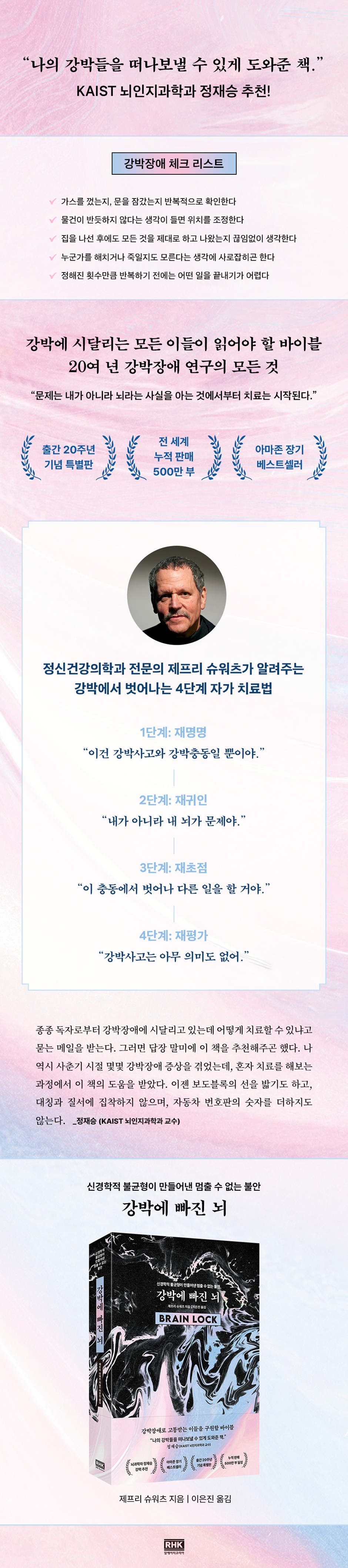
The author, who has studied it for over 20 years, clearly states that obsessive-compulsive disorder is a common illness that affects one in 40 people, and that it is a brain-related disease, not an individual problem.
The four-step self-behavioral therapy called 'Renaming, Reattributing, Refocusing, and Reappraising' shows you the path to freedom from obsession.
July 18, 2023. Natural Science PD Ahn Hyun-jae
The Bible to Save Those Suffering from Obsessive-Compulsive Disorder
"A book that helped me let go of my obsessions." Recommended by Professor Jaeseung Jeong of the Department of Brain and Cognitive Sciences at KAIST!
Everyone has probably been caught up in this thought at least once.
The feeling of having to wash your hands again even though you've already washed them, the constant need to check if you've turned off the stove, the unfounded delusion that your spouse is cheating, the urge to pick up unnecessary items and pile them up at home... ... These are all diagnosed with Obsessive Compulsive Disorder (OCD).
Since the coronavirus pandemic swept the globe, the number of people complaining of obsessive-compulsive disorder due to heightened anxiety and an obsession with cleanliness has increased.
Obsession with hygiene not only affects interpersonal relationships but also causes depression, disrupting many people's daily lives and bringing the issue of obsession back into our society.
Since its first publication in 1996, the medical classic bestseller, The Obsessed Brain, which has helped 400,000 patients suffering from obsessive-compulsive disorder, has been translated and published in Korean in a special edition commemorating its 20th anniversary.
Jeffrey Schwartz, a UCLA psychiatrist and obsessive-compulsive disorder expert, has dedicated over 20 years to studying obsessive-compulsive disorder, finding that the cause of obsessions and compulsions lies in a neurological imbalance in the brain.
This condition is called a 'brain lock', where the brain continues to send wrong messages through the voice of anxiety, trapping you in the compulsion to repeat certain behaviors.
As stated in the preface to the 20th anniversary edition, the book's core concept—that people with obsessive-compulsive disorder can overcome it through self-directed behavioral therapy—has stood the test of time and remains powerful.
This treatment remains the standard for outpatient care today.
This 20th anniversary edition builds on existing research, but includes additional case studies and new data from research conducted over the years.
In short, the message of this book is that to escape from obsession, you must not passively wait for it to go away by relying solely on medication, but must actively fight the demons of obsession and anxiety.
This book will be a practical manual for those with obsessive-compulsive disorder and their families, and an opportunity for self-examination and learning for those who suffer from obsessive-compulsive personality disorder or wonder, "Could I also have obsessive-compulsive disorder?"
"A book that helped me let go of my obsessions." Recommended by Professor Jaeseung Jeong of the Department of Brain and Cognitive Sciences at KAIST!
Everyone has probably been caught up in this thought at least once.
The feeling of having to wash your hands again even though you've already washed them, the constant need to check if you've turned off the stove, the unfounded delusion that your spouse is cheating, the urge to pick up unnecessary items and pile them up at home... ... These are all diagnosed with Obsessive Compulsive Disorder (OCD).
Since the coronavirus pandemic swept the globe, the number of people complaining of obsessive-compulsive disorder due to heightened anxiety and an obsession with cleanliness has increased.
Obsession with hygiene not only affects interpersonal relationships but also causes depression, disrupting many people's daily lives and bringing the issue of obsession back into our society.
Since its first publication in 1996, the medical classic bestseller, The Obsessed Brain, which has helped 400,000 patients suffering from obsessive-compulsive disorder, has been translated and published in Korean in a special edition commemorating its 20th anniversary.
Jeffrey Schwartz, a UCLA psychiatrist and obsessive-compulsive disorder expert, has dedicated over 20 years to studying obsessive-compulsive disorder, finding that the cause of obsessions and compulsions lies in a neurological imbalance in the brain.
This condition is called a 'brain lock', where the brain continues to send wrong messages through the voice of anxiety, trapping you in the compulsion to repeat certain behaviors.
As stated in the preface to the 20th anniversary edition, the book's core concept—that people with obsessive-compulsive disorder can overcome it through self-directed behavioral therapy—has stood the test of time and remains powerful.
This treatment remains the standard for outpatient care today.
This 20th anniversary edition builds on existing research, but includes additional case studies and new data from research conducted over the years.
In short, the message of this book is that to escape from obsession, you must not passively wait for it to go away by relying solely on medication, but must actively fight the demons of obsession and anxiety.
This book will be a practical manual for those with obsessive-compulsive disorder and their families, and an opportunity for self-examination and learning for those who suffer from obsessive-compulsive personality disorder or wonder, "Could I also have obsessive-compulsive disorder?"
- You can preview some of the book's contents.
Preview
index
Preface | Preface to the 20th Anniversary Edition
Introduction: Obsessions and Compulsions
A Correct Definition of Obsessive-Compulsive Disorder│What are Obsessions│The Wrong Message│What are Compulsions│The Four-Step Treatment│What is OCD and What is Not│Obsessions, the Devilish Disorder│The Past: Six Case Studies│The Brain That Stops and Frozen│Worries About Worries│Taking Control│It's How You Act That Matters
Part 1, Step 4 Behavioral Therapy
Chapter 1: It's Not Me, It's Just OCD × Step 1: Renaming
You're not crazy, you're in a 'brain lock' │ Confronting OCD │ It's just chemistry │ The impartial observer │ Who's in charge here │ Prescription: Take action │ Stand firm │ Use a recorder │ Keep a journal │ Hughes, beyond the bizarre │ Flying clips │ Compulsive saving, compulsive cleaning │ Should we blame our genes? │ Rebrand decisively │ OCD is a tumbleweed
Chapter 2 Unlock Your Brain × Second Step: Reinvention
"It's not me, it's my brain" │ False alarm! │ This is war │ It's all in your head │ When the gears don't work │ Practical primates │ Unlock your brain │ Don't lose faith │ Finding answers without Freud
Chapter 3: Wishing for something doesn't make it happen × Step 3: Refocusing
One step at a time│If you are doing something different, you are winning│Recording your successes│The relationship between the mind and the brain│Continue to respond proactively│It means nothing│Shake off anxiety│Face the enemy head-on│The power of distraction│Don't worry, I won't│Is obsessive-compulsive disorder an aphrodisiac?
Chapter 4 Lessons Learned from Obsessive-Compulsive Disorder × Step Four: Reevaluation
“God loves me”│Escaping the trap set by obsessive-compulsive disorder│A battle of will│Easy to say, but hard to do│Like losing an ‘old friend’│A lost opportunity│“A little light in my soul”│Words of encouragement for yourself
Part 2: Applying it Deeply in Life
Chapter 5: Bringing Freedom to Life
Behavioral Therapy and Life Afterward
Chapter 6: Obsessive-Compulsive Disorder as a Family Problem
Saying 'No'│When OCD is Used as a Weapon│Who the Heck is This Stranger?│Emotional Exhaustion│To Open Up or Not to Open Up│When Compulsions Are Used to Control Someone│Finding Love│Sharing Within the Family│Understanding, Not Saying Yes│Forgiving Together│Don't Push or Rushing│Jill and Her Two Daughters│Brian and His Wife│Joel and His Parents│Anna and Her Boyfriend
Chapter 7 Obsessive-Compulsive Disorder and Other Conditions
Hidden Intentions│Calling an Impulse an Impulse│Looking Inward
Chapter 8: Four-Step Behavioral Therapy and Traditional Approaches
Applying Exposure Prevention Therapy (EPT) to Obsessive-Compulsive Disorder: A Classic Approach | Applying the Four-Step Treatment
Chapter 9 Appropriate Drug Therapy
Chapter 10: Obsessions and Compulsions Checklist
Chapter 11: Treatment Diary of a Patient with Obsessive-Compulsive Disorder
Part 3: A Guide to Obsessive-Compulsive Disorder Treatment
Step 1: Renaming | Step 2: Reattribution | Step 3: Refocus | Step 4: Reevaluation | Conclusion
Acknowledgements
Introduction: Obsessions and Compulsions
A Correct Definition of Obsessive-Compulsive Disorder│What are Obsessions│The Wrong Message│What are Compulsions│The Four-Step Treatment│What is OCD and What is Not│Obsessions, the Devilish Disorder│The Past: Six Case Studies│The Brain That Stops and Frozen│Worries About Worries│Taking Control│It's How You Act That Matters
Part 1, Step 4 Behavioral Therapy
Chapter 1: It's Not Me, It's Just OCD × Step 1: Renaming
You're not crazy, you're in a 'brain lock' │ Confronting OCD │ It's just chemistry │ The impartial observer │ Who's in charge here │ Prescription: Take action │ Stand firm │ Use a recorder │ Keep a journal │ Hughes, beyond the bizarre │ Flying clips │ Compulsive saving, compulsive cleaning │ Should we blame our genes? │ Rebrand decisively │ OCD is a tumbleweed
Chapter 2 Unlock Your Brain × Second Step: Reinvention
"It's not me, it's my brain" │ False alarm! │ This is war │ It's all in your head │ When the gears don't work │ Practical primates │ Unlock your brain │ Don't lose faith │ Finding answers without Freud
Chapter 3: Wishing for something doesn't make it happen × Step 3: Refocusing
One step at a time│If you are doing something different, you are winning│Recording your successes│The relationship between the mind and the brain│Continue to respond proactively│It means nothing│Shake off anxiety│Face the enemy head-on│The power of distraction│Don't worry, I won't│Is obsessive-compulsive disorder an aphrodisiac?
Chapter 4 Lessons Learned from Obsessive-Compulsive Disorder × Step Four: Reevaluation
“God loves me”│Escaping the trap set by obsessive-compulsive disorder│A battle of will│Easy to say, but hard to do│Like losing an ‘old friend’│A lost opportunity│“A little light in my soul”│Words of encouragement for yourself
Part 2: Applying it Deeply in Life
Chapter 5: Bringing Freedom to Life
Behavioral Therapy and Life Afterward
Chapter 6: Obsessive-Compulsive Disorder as a Family Problem
Saying 'No'│When OCD is Used as a Weapon│Who the Heck is This Stranger?│Emotional Exhaustion│To Open Up or Not to Open Up│When Compulsions Are Used to Control Someone│Finding Love│Sharing Within the Family│Understanding, Not Saying Yes│Forgiving Together│Don't Push or Rushing│Jill and Her Two Daughters│Brian and His Wife│Joel and His Parents│Anna and Her Boyfriend
Chapter 7 Obsessive-Compulsive Disorder and Other Conditions
Hidden Intentions│Calling an Impulse an Impulse│Looking Inward
Chapter 8: Four-Step Behavioral Therapy and Traditional Approaches
Applying Exposure Prevention Therapy (EPT) to Obsessive-Compulsive Disorder: A Classic Approach | Applying the Four-Step Treatment
Chapter 9 Appropriate Drug Therapy
Chapter 10: Obsessions and Compulsions Checklist
Chapter 11: Treatment Diary of a Patient with Obsessive-Compulsive Disorder
Part 3: A Guide to Obsessive-Compulsive Disorder Treatment
Step 1: Renaming | Step 2: Reattribution | Step 3: Refocus | Step 4: Reevaluation | Conclusion
Acknowledgements
Detailed image
Into the book
Obsessive-compulsive disorder is like a devil with a trident behind your back.
This devil knows full well that he has the upper hand.
If people with OCD listen to the devil, they will truly go to hell.
In the end, life becomes a living hell.
However, if you ignore the terrifying urges of obsessive-compulsive disorder and refuse to perform the compulsive behavior right away, the devil will not miss the opportunity to stab you in the back with his trident, causing you tremendous pain.
--- pp.51~52
Brain surgery is not necessary.
Just use your mind.
The 'self-directed behavioral therapy' discussed in this book refers to an active response to the symptoms of obsessive-compulsive disorder.
In other words, it means figuring out what this intruder really is and fighting back with a four-step treatment to shift the gears in your brain that aren't working properly.
--- p.134
Just because obsessions or compulsions are severe and pervasive, it doesn't mean that the person is weak or psychologically ill.
This is just a false alarm caused by a short circuit in the brain circuit.
--- p.137
Early in behavioral therapy, people often ask, “Will I ever get better?”
As I've explained with the stories of these brave patients, if "getting better" means never having OCD symptoms again, then that's not guaranteed.
But if it means 'freedom'—never being afraid of the plague called 'obsessive-compulsive disorder symptoms' and never letting the tyrant called obsessive-compulsive disorder dictate the direction of one's life—then that goal is achievable by anyone suffering from obsessive-compulsive disorder.
--- pp.256-257
Having OCD is a curse, but the ability to use an impartial observer and practice mindfulness is a blessing.
If having OCD allows you to develop healthy mental abilities that you might not otherwise have, then it's truly a ray of hope.
This devil knows full well that he has the upper hand.
If people with OCD listen to the devil, they will truly go to hell.
In the end, life becomes a living hell.
However, if you ignore the terrifying urges of obsessive-compulsive disorder and refuse to perform the compulsive behavior right away, the devil will not miss the opportunity to stab you in the back with his trident, causing you tremendous pain.
--- pp.51~52
Brain surgery is not necessary.
Just use your mind.
The 'self-directed behavioral therapy' discussed in this book refers to an active response to the symptoms of obsessive-compulsive disorder.
In other words, it means figuring out what this intruder really is and fighting back with a four-step treatment to shift the gears in your brain that aren't working properly.
--- p.134
Just because obsessions or compulsions are severe and pervasive, it doesn't mean that the person is weak or psychologically ill.
This is just a false alarm caused by a short circuit in the brain circuit.
--- p.137
Early in behavioral therapy, people often ask, “Will I ever get better?”
As I've explained with the stories of these brave patients, if "getting better" means never having OCD symptoms again, then that's not guaranteed.
But if it means 'freedom'—never being afraid of the plague called 'obsessive-compulsive disorder symptoms' and never letting the tyrant called obsessive-compulsive disorder dictate the direction of one's life—then that goal is achievable by anyone suffering from obsessive-compulsive disorder.
--- pp.256-257
Having OCD is a curse, but the ability to use an impartial observer and practice mindfulness is a blessing.
If having OCD allows you to develop healthy mental abilities that you might not otherwise have, then it's truly a ray of hope.
--- pp.262~263
Publisher's Review
“Don’t listen to the voice of anxiety.”
A 4-Step Manual for Overcoming Obsessive Compulsions from a UCLA Psychiatrist
Everyone has moments when they wonder if they are being too sensitive.
Usually, we live with our own obsessions.
However, if you cannot control it with willpower alone and have strong thoughts that do not stop even though you do not want them to, or if you perform strange habits that others do not do as if they were a kind of ritual, then this is a disease diagnosed as obsessive-compulsive disorder.
They often engage in bizarre behavior to avoid imaginary disasters, such as taking 30 showers to prevent the deaths of their family members or cleaning 13 times to prevent a plane crash.
People with obsessive-compulsive disorder do not feel pleasure from performing these rituals, but rather feel embarrassed and ashamed.
Jeffrey Schwartz, a professor of psychiatry at UCLA School of Medicine, has treated more than 1,000 patients with obsessive-compulsive disorder over the past decade.
Obsessive-compulsive disorder is a surprisingly common condition that affects about one in 40 people, and for most people, it is a symptom they commonly see around them.
A man who washes his hands over 100 times a day and makes foam just by getting water on his hands, a woman who constantly checks to see if they are unplugged and ends up putting the coffee machine and iron in her bag before going to work, a woman who hasn't seen her family for 16 years and couldn't even go to her mother's funeral because she thought everything was contaminated, a man who cleans up traffic accident scenes every dawn because he has a pathological fear of battery fluid leaking...
Through one-on-one counseling and group therapy, and by applying the four-step self-help method to these individuals, numerous success stories have proven that the majority of individuals are able to manage their daily lives much better and feel more at ease.
People with OCD often find relief when they see brain scans (showing overheating in the lower frontal lobe) and realize that their OCD isn't a personal problem, but rather a result of faulty messages from their brain.
Treatment begins with realizing that the problem is not me, but my brain.
Breaking the lies of anxiety and becoming mindful,
4-Step Self-Behavioral Therapy
In a concrete way, Jeffrey Schwartz introduces a four-step self-behavioral therapy.
The first step, renaming, is to give the unwanted thoughts and impulses an accurate name.
“This is an obsession, this is a compulsion.” You have to say this firmly and repeatedly to keep it in mind.
The goal of this stage is not to control obsessions and compulsions, but to control your reactions to those thoughts and compulsions.
The second stage of recurrence is the answer to the question, “Why do these thoughts and impulses persist and bother me?”
The answer is that the brain's gears are stiff and brain areas are not functioning properly.
The goal of this step is to carefully examine and clearly recognize that the thoughts and impulses that keep coming back to you are due to your unruly brain.
The third step, refocusing, involves shifting your attention away from the bothersome thought and engaging in other behaviors.
Even just a few minutes is fine.
Anything is fine: walking, exercising, reading, listening to music, playing games, knitting.
It can also be helpful to keep a journal of what you accomplished.
This allows you to repair your brain's broken gear shifting mechanisms, and with practice, your brain will begin to function more efficiently.
The fourth step, reevaluation, is a natural consequence of the previous three steps. It involves reassessing OCD as something worthless and distracting, rather than taking it at face value.
Having suffered from OCD can also lead to a positive self-evaluation, such as becoming a more attentive and compassionate person or realizing that God loves me.
This treatment is not a magic formula.
Giving an impulse a precise name doesn't mean it will disappear.
Excessive expectations for immediate improvement are the biggest factor leading to early treatment failure.
Obsessive thoughts never go away overnight.
The goal of this treatment is to control your reactions to obsessions.
It's about gaining control and changing your brain by using new knowledge to regulate your behavioral responses and learning to say, "This isn't me, it's OCD."
If necessary, you may be able to get help with appropriate medication.
When you change your behavior, your brain, which was previously dormant, will start working.
Wanting to escape from the swamp of obsession
A book for everyone
Chapter 6, which deals with obsessive-compulsive disorder as a family problem, is also worth noting.
Obsessive-compulsive disorder is truly a family problem.
If obsessive compulsive disorder is left untreated, people tend to become increasingly distant and isolated.
Because I can't tell anyone this terrible secret.
In most cases, the impact is passed on to the family.
The first thing families of people with OCD need to practice is saying "no."
Family members who have become part of the OCD patient's condition may become facilitators who perform or turn a blind eye to the compulsive behaviors requested by the patient in order to maintain peace in the home.
The author advises families of patients with OCD to seek behavioral therapy rather than help with the OCD.
Additionally, people who have not been diagnosed with OCD but who have compulsive habits that are bothersome and annoying, even if not severe, may also likely benefit from this treatment.
The four-step self-behavioral therapy that Jeffrey Schwartz talks about is ultimately about mastering and controlling myself to change my problematic brain.
There is one thing you must remember at this time.
You have to work hard on your own.
Nothing gets better if you rely only on drugs and doctors.
You need to analyze your choices and actions, accept and evaluate your thoughts, and then decide what to do.
By distancing ourselves from our brains and practicing mindfulness, we allow our inner guide, an impartial observer and wise advocate, to guide us along the way.
If you want to let go of your obsessions and find freedom in life, I hope you will find the answer in this book.
A 4-Step Manual for Overcoming Obsessive Compulsions from a UCLA Psychiatrist
Everyone has moments when they wonder if they are being too sensitive.
Usually, we live with our own obsessions.
However, if you cannot control it with willpower alone and have strong thoughts that do not stop even though you do not want them to, or if you perform strange habits that others do not do as if they were a kind of ritual, then this is a disease diagnosed as obsessive-compulsive disorder.
They often engage in bizarre behavior to avoid imaginary disasters, such as taking 30 showers to prevent the deaths of their family members or cleaning 13 times to prevent a plane crash.
People with obsessive-compulsive disorder do not feel pleasure from performing these rituals, but rather feel embarrassed and ashamed.
Jeffrey Schwartz, a professor of psychiatry at UCLA School of Medicine, has treated more than 1,000 patients with obsessive-compulsive disorder over the past decade.
Obsessive-compulsive disorder is a surprisingly common condition that affects about one in 40 people, and for most people, it is a symptom they commonly see around them.
A man who washes his hands over 100 times a day and makes foam just by getting water on his hands, a woman who constantly checks to see if they are unplugged and ends up putting the coffee machine and iron in her bag before going to work, a woman who hasn't seen her family for 16 years and couldn't even go to her mother's funeral because she thought everything was contaminated, a man who cleans up traffic accident scenes every dawn because he has a pathological fear of battery fluid leaking...
Through one-on-one counseling and group therapy, and by applying the four-step self-help method to these individuals, numerous success stories have proven that the majority of individuals are able to manage their daily lives much better and feel more at ease.
People with OCD often find relief when they see brain scans (showing overheating in the lower frontal lobe) and realize that their OCD isn't a personal problem, but rather a result of faulty messages from their brain.
Treatment begins with realizing that the problem is not me, but my brain.
Breaking the lies of anxiety and becoming mindful,
4-Step Self-Behavioral Therapy
In a concrete way, Jeffrey Schwartz introduces a four-step self-behavioral therapy.
The first step, renaming, is to give the unwanted thoughts and impulses an accurate name.
“This is an obsession, this is a compulsion.” You have to say this firmly and repeatedly to keep it in mind.
The goal of this stage is not to control obsessions and compulsions, but to control your reactions to those thoughts and compulsions.
The second stage of recurrence is the answer to the question, “Why do these thoughts and impulses persist and bother me?”
The answer is that the brain's gears are stiff and brain areas are not functioning properly.
The goal of this step is to carefully examine and clearly recognize that the thoughts and impulses that keep coming back to you are due to your unruly brain.
The third step, refocusing, involves shifting your attention away from the bothersome thought and engaging in other behaviors.
Even just a few minutes is fine.
Anything is fine: walking, exercising, reading, listening to music, playing games, knitting.
It can also be helpful to keep a journal of what you accomplished.
This allows you to repair your brain's broken gear shifting mechanisms, and with practice, your brain will begin to function more efficiently.
The fourth step, reevaluation, is a natural consequence of the previous three steps. It involves reassessing OCD as something worthless and distracting, rather than taking it at face value.
Having suffered from OCD can also lead to a positive self-evaluation, such as becoming a more attentive and compassionate person or realizing that God loves me.
This treatment is not a magic formula.
Giving an impulse a precise name doesn't mean it will disappear.
Excessive expectations for immediate improvement are the biggest factor leading to early treatment failure.
Obsessive thoughts never go away overnight.
The goal of this treatment is to control your reactions to obsessions.
It's about gaining control and changing your brain by using new knowledge to regulate your behavioral responses and learning to say, "This isn't me, it's OCD."
If necessary, you may be able to get help with appropriate medication.
When you change your behavior, your brain, which was previously dormant, will start working.
Wanting to escape from the swamp of obsession
A book for everyone
Chapter 6, which deals with obsessive-compulsive disorder as a family problem, is also worth noting.
Obsessive-compulsive disorder is truly a family problem.
If obsessive compulsive disorder is left untreated, people tend to become increasingly distant and isolated.
Because I can't tell anyone this terrible secret.
In most cases, the impact is passed on to the family.
The first thing families of people with OCD need to practice is saying "no."
Family members who have become part of the OCD patient's condition may become facilitators who perform or turn a blind eye to the compulsive behaviors requested by the patient in order to maintain peace in the home.
The author advises families of patients with OCD to seek behavioral therapy rather than help with the OCD.
Additionally, people who have not been diagnosed with OCD but who have compulsive habits that are bothersome and annoying, even if not severe, may also likely benefit from this treatment.
The four-step self-behavioral therapy that Jeffrey Schwartz talks about is ultimately about mastering and controlling myself to change my problematic brain.
There is one thing you must remember at this time.
You have to work hard on your own.
Nothing gets better if you rely only on drugs and doctors.
You need to analyze your choices and actions, accept and evaluate your thoughts, and then decide what to do.
By distancing ourselves from our brains and practicing mindfulness, we allow our inner guide, an impartial observer and wise advocate, to guide us along the way.
If you want to let go of your obsessions and find freedom in life, I hope you will find the answer in this book.
GOODS SPECIFICS
- Date of issue: July 7, 2023
- Page count, weight, size: 416 pages | 566g | 142*210*25mm
- ISBN13: 9788925576374
- ISBN10: 8925576376
You may also like
카테고리
korean


korean

![GQ KOREA Mark (Monthly): December [2025]](http://librairie.coreenne.fr/cdn/shop/files/8ef265dbbfbf186523ed75ba7319009d.jpg?v=1765340328&width=3840)


