

City of Plants
 |
Description
Book Introduction
- A word from MD
-
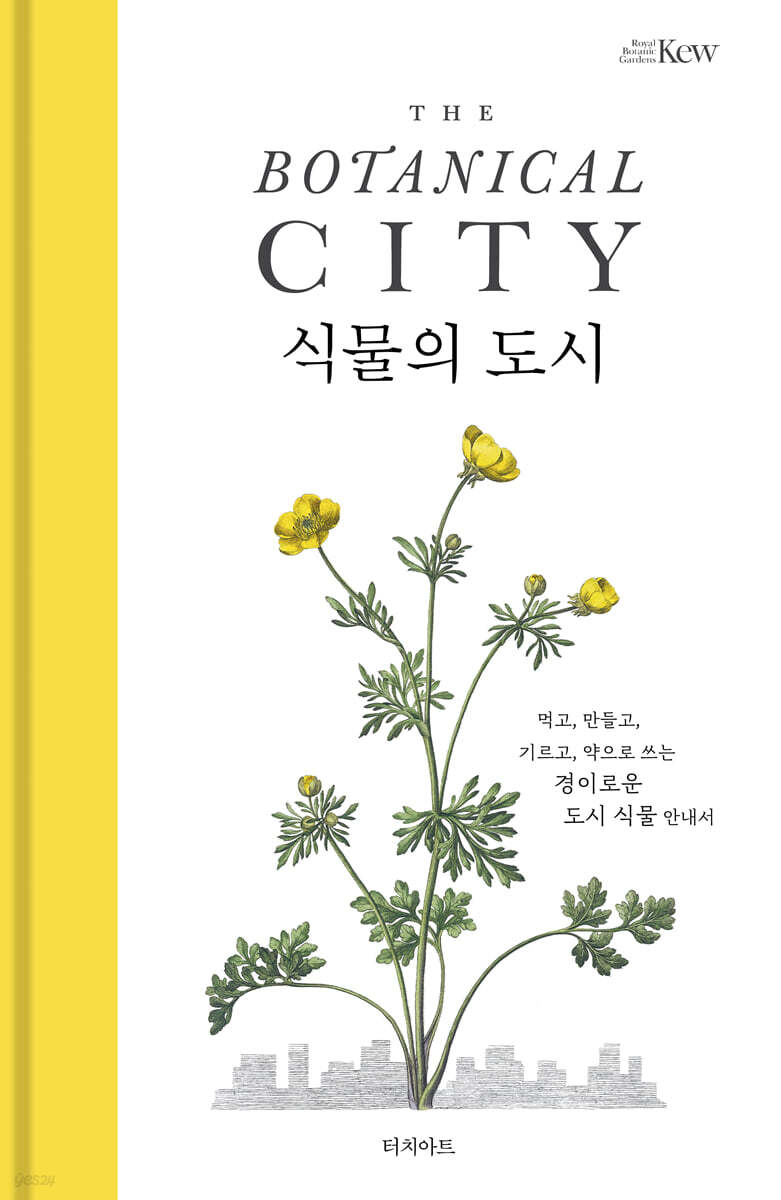
A Guide to Amazing City PlantsThe Flora of London, which covers over 430 species of plants centered around 18th-century London and is considered a pioneer in detailed botanical illustration, has been reborn in collaboration with the Royal Botanic Gardens, Kew.
We've selected beautiful illustrations to give you a true glimpse into the city's flora, and added the latest botanical research to give it a more professional feel.
June 7, 2023. Natural Science PD Ahn Hyun-jae
The great botanist William Curtis dedicated his entire life to perfecting
A masterpiece of botanical research, 『The Flora of London』!
The pioneer of botanical detailing, reborn in collaboration with the Royal Botanic Gardens, Kew!
Botanist William Curtis devoted his life to producing useful and beautiful botanical treatises.
His Flora Londinensis, published continuously from 1775 to 1798, covers over 430 species of plants found within a ten-mile radius of London, each described in detail with beautiful hand-painted copperplate illustrations by the best botanical artists of the time.
It can be said to be the original and masterpiece of detailed botanical illustration books.
This book, "The City of Plants," is a beautiful revival of Curtis's groundbreaking book, created in collaboration with the Royal Botanic Gardens, Kew.
The book also reproduces some particularly beautiful illustrations from the Flora of London, includes content that provides a glimpse into Curtis's insights, and adds the latest information uncovered through botanical research.
The plants featured in the book can be found on roadsides and paths not only in London but also in many temperate cities around the world.
If you pass by them without knowing, they are just weeds, but if you get to know them, they are all interesting, beautiful, and useful.
Let's take a look at the true nature of urban plants that have lived alongside us for a long time in "City of Plants."
A masterpiece of botanical research, 『The Flora of London』!
The pioneer of botanical detailing, reborn in collaboration with the Royal Botanic Gardens, Kew!
Botanist William Curtis devoted his life to producing useful and beautiful botanical treatises.
His Flora Londinensis, published continuously from 1775 to 1798, covers over 430 species of plants found within a ten-mile radius of London, each described in detail with beautiful hand-painted copperplate illustrations by the best botanical artists of the time.
It can be said to be the original and masterpiece of detailed botanical illustration books.
This book, "The City of Plants," is a beautiful revival of Curtis's groundbreaking book, created in collaboration with the Royal Botanic Gardens, Kew.
The book also reproduces some particularly beautiful illustrations from the Flora of London, includes content that provides a glimpse into Curtis's insights, and adds the latest information uncovered through botanical research.
The plants featured in the book can be found on roadsides and paths not only in London but also in many temperate cities around the world.
If you pass by them without knowing, they are just weeds, but if you get to know them, they are all interesting, beautiful, and useful.
Let's take a look at the true nature of urban plants that have lived alongside us for a long time in "City of Plants."
- You can preview some of the book's contents.
Preview
index
William Curtis and the Flora of London
Introduction
How to use this book
Fundamentals of Plant Anatomy
[EAT] Nutritious Plants
Western dandelion / flower shepherd's purse / common daisy / wild chrysanthemum / large cap mushroom / Henry's spinach / earthnut / wild rocket / oyster mushroom / baby sorrel / pine greens / western nettle / dongui namul / salvia verbena / oyster mushroom / bitter vetch / garlic shepherd's purse / poppy / oregano / mallow / elm
[MAKE] Plants for Crafts
Large-leaf vinca / yellow iris / western thyme / large crocus / soapwort / clematis vitale / wild rose
[GROW] Easy-to-Grow Plants
Sedum spp. / Jeonho / Gosari / Yellow rattle / Water violet / Bastard balm / Honey bee orchid / Dutch honeysuckle / Sempervivum tectorum / Narrow-leaved sea orchid / Dipsaccus pullonum / Purple pheasant's mantle / Cap starflower / Buttomus umbellatus / Ivy / Swan moss
[KILL] Poisonous Plant
Wildflower / Lily of the valley / Ranunculus bulbousus / Atropa belladonna / Pheasant's-foot / Datura / Helleborus viridis / Black locust / Arum maculatum / Forest anemone / European hemlock
[HEAL] Healing Plants
Primula veris / Knautia arvensis / Aster japonica / Corydalis japonica / Knotweed / Daisy / German chamomile / White thistle / Valerian / Pink fireweed / Small ground bedbug / Comfrey / Western pepper plant / Geranium robertianum / Plantain / Yarrow / Honeysuckle
People who made this book
Major patrons of the 18th century
21st Century Sponsors
Search
Introduction
How to use this book
Fundamentals of Plant Anatomy
[EAT] Nutritious Plants
Western dandelion / flower shepherd's purse / common daisy / wild chrysanthemum / large cap mushroom / Henry's spinach / earthnut / wild rocket / oyster mushroom / baby sorrel / pine greens / western nettle / dongui namul / salvia verbena / oyster mushroom / bitter vetch / garlic shepherd's purse / poppy / oregano / mallow / elm
[MAKE] Plants for Crafts
Large-leaf vinca / yellow iris / western thyme / large crocus / soapwort / clematis vitale / wild rose
[GROW] Easy-to-Grow Plants
Sedum spp. / Jeonho / Gosari / Yellow rattle / Water violet / Bastard balm / Honey bee orchid / Dutch honeysuckle / Sempervivum tectorum / Narrow-leaved sea orchid / Dipsaccus pullonum / Purple pheasant's mantle / Cap starflower / Buttomus umbellatus / Ivy / Swan moss
[KILL] Poisonous Plant
Wildflower / Lily of the valley / Ranunculus bulbousus / Atropa belladonna / Pheasant's-foot / Datura / Helleborus viridis / Black locust / Arum maculatum / Forest anemone / European hemlock
[HEAL] Healing Plants
Primula veris / Knautia arvensis / Aster japonica / Corydalis japonica / Knotweed / Daisy / German chamomile / White thistle / Valerian / Pink fireweed / Small ground bedbug / Comfrey / Western pepper plant / Geranium robertianum / Plantain / Yarrow / Honeysuckle
People who made this book
Major patrons of the 18th century
21st Century Sponsors
Search
Detailed image

Into the book
As the grass grows beautifully lush and the cuckoo's first call can be heard, the lavender-veined primroses bloom elegantly.
Around this time, spring is in full bloom.
The time when the flower buds appear almost coincides with the time when cuckoos fly in from Africa in spring.
That's why it got the nickname "cuckoo flower."
An attractive wildflower of the meadows and a favorite on our dinner tables, dandelion has edible shoots, leaves, and flowers.
It has a spicy mustard flavor, which is stronger in mature plants.
Young leaves are eaten in salads.
Mild-tasting flowers beautifully decorate a simple spring table.
---From "p.18, 〈Flower Nettle〉"
This blatantly obscene mushroom, shaped like a penis, can grow anywhere, provided there is rotting wood.
The specific name, impudicus, is Latin for obscene.
Their appearance is so shocking that devout Victorians probably swept them from their forest trails before the sight of them could corrupt the sensibilities of the savage.
People these days are more likely to be offended by the sight of a mushroom that emits a foul odor similar to that of rotten meat and sewage to attract flies.
In short, it is a mushroom that will ruin your appetite.
But before the stakes emerge, they present an uncommon delicacy when they are in an egg-like, pupa-like state.
---From "p.32, 〈Mushrooms〉"
You might think dandelions are common, but their larger cousins, the longer-limbed dandelions, are also found everywhere.
The dung beetle can fit into even the narrowest of spaces, even under street signs at the busiest intersections in the heart of a city.
One of the typical weeds, this plant protects itself with thorny leaves.
The young leaves are surprisingly appetizing.
It has a sweet lettuce flavor and contains twice as much vitamin C as spinach.
If you peel the stems, they can be used as a substitute for asparagus.
However, you must carefully observe where this plant grows.
Dog poop grows well under lampposts, which are good places for dogs to urinate.
---From "p.50, 〈Banggajiddong〉"
A plant that is a weed to one person may be a wildflower to another.
But almost everyone agrees that the great crocus is a weed.
Notoriously difficult to root in gardens, this plant can be propagated with just a small piece of its root, and seeds can wait 30 years without sprouting.
It quickly climbs over other plants, taking up light and eventually suffocating them.
But while the large flowers may be a source of worry for gardeners, the pure white, trumpet-shaped flowers provide a rich food source for insects.
You can make a nice cord out of the sturdy stems of a large rose, which is a small reward for the time spent untangling the stems from the roses.
---From "p.68, "Big Flower"
There is something truly special about coming across the honeybee orchid, one of the most beautiful native orchids of Britain, by chance on a grassy roadside or railway line.
Could it be said that I met the queen of deception?
The velvety flowers of the honeybee orchid mimic a particular female bee with remarkable perfection.
They even mimic the smell of female bees to lure unlucky male bees.
Hopeful drones fly in to bring pollen, but they leave empty-handed, unable to find a mate or get any honey.
The last one to laugh is this orchid.
However, the bees imitated by the honeybee orchid are no longer found in Britain.
Therefore, no drone bees come to transfer pollen.
So why not help this clever and beautiful orchid grow in your garden?
---From "p.90, "Honeybee Orchid"
If you describe yourself as a butterfinger (someone who drops things) rather than a greenfinger (someone who is good at growing plants), I recommend Sempervivum tectorum.
The common name Sempervivum means everlasting, and this plant is difficult to kill.
Originally grown in harsh mountain environments, Sempervivum tectorum will find a sunny spot in a crack in an old wall in a very dry city garden to be its paradise.
Without the Butterfinger plant butler lifting a finger, this plant produces dainty pink flowers and grows rosettes of succulent new leaves in any space provided by humans.
According to ancient legend, Sempervivum tectorum, when grown on a roof, was believed to protect the house from fire, lightning, and disease.
It's a win-win situation for both parties.
---From "p.94, Sempervivum Tectorum"
Helleborus viridis literally prepares a warm alcoholic beverage inside its perfectly heated flowers to attract pollinators in the winter cold.
As the yeast ferments in the honey, a small amount of alcohol is produced, and the temperature of the flower rises by about 6℃.
A warm alcoholic beverage for the bees, prepared inside a green helleborus bar!
---From "p.124, Helleborus Viridis"
The marble-like white veins of the white thistle's leaves are reminiscent of a macchiato, an espresso topped with milk foam for a unique pattern.
It might sound unpalatable to baristas, but after a wild night out, I recommend a hot cup of milk thistle tea over a strong coffee.
It is a herbal prescription that improves liver function in people who frequently drink excessively.
Rich in antioxidants, this savory tea helps prevent liver diseases ranging from cirrhosis to jaundice, and promotes circulation in the digestive system, helping the body recover quickly.
Not only that, it's also very good for your intestines.
However, when harvesting, you must be careful not to get your hands pricked by the thorns.
---From "p.150, "White Thistle"
From the roots to the tips of the plant, plantain is rich in vitamins and compounds that can treat various diseases. It is used as an antioxidant, antiviral, antidiabetic, and antidiarrheal agent, and it has been found to have the effect of revitalizing the body and even fighting cancer.
Would there still be people who call this weed?
Around this time, spring is in full bloom.
The time when the flower buds appear almost coincides with the time when cuckoos fly in from Africa in spring.
That's why it got the nickname "cuckoo flower."
An attractive wildflower of the meadows and a favorite on our dinner tables, dandelion has edible shoots, leaves, and flowers.
It has a spicy mustard flavor, which is stronger in mature plants.
Young leaves are eaten in salads.
Mild-tasting flowers beautifully decorate a simple spring table.
---From "p.18, 〈Flower Nettle〉"
This blatantly obscene mushroom, shaped like a penis, can grow anywhere, provided there is rotting wood.
The specific name, impudicus, is Latin for obscene.
Their appearance is so shocking that devout Victorians probably swept them from their forest trails before the sight of them could corrupt the sensibilities of the savage.
People these days are more likely to be offended by the sight of a mushroom that emits a foul odor similar to that of rotten meat and sewage to attract flies.
In short, it is a mushroom that will ruin your appetite.
But before the stakes emerge, they present an uncommon delicacy when they are in an egg-like, pupa-like state.
---From "p.32, 〈Mushrooms〉"
You might think dandelions are common, but their larger cousins, the longer-limbed dandelions, are also found everywhere.
The dung beetle can fit into even the narrowest of spaces, even under street signs at the busiest intersections in the heart of a city.
One of the typical weeds, this plant protects itself with thorny leaves.
The young leaves are surprisingly appetizing.
It has a sweet lettuce flavor and contains twice as much vitamin C as spinach.
If you peel the stems, they can be used as a substitute for asparagus.
However, you must carefully observe where this plant grows.
Dog poop grows well under lampposts, which are good places for dogs to urinate.
---From "p.50, 〈Banggajiddong〉"
A plant that is a weed to one person may be a wildflower to another.
But almost everyone agrees that the great crocus is a weed.
Notoriously difficult to root in gardens, this plant can be propagated with just a small piece of its root, and seeds can wait 30 years without sprouting.
It quickly climbs over other plants, taking up light and eventually suffocating them.
But while the large flowers may be a source of worry for gardeners, the pure white, trumpet-shaped flowers provide a rich food source for insects.
You can make a nice cord out of the sturdy stems of a large rose, which is a small reward for the time spent untangling the stems from the roses.
---From "p.68, "Big Flower"
There is something truly special about coming across the honeybee orchid, one of the most beautiful native orchids of Britain, by chance on a grassy roadside or railway line.
Could it be said that I met the queen of deception?
The velvety flowers of the honeybee orchid mimic a particular female bee with remarkable perfection.
They even mimic the smell of female bees to lure unlucky male bees.
Hopeful drones fly in to bring pollen, but they leave empty-handed, unable to find a mate or get any honey.
The last one to laugh is this orchid.
However, the bees imitated by the honeybee orchid are no longer found in Britain.
Therefore, no drone bees come to transfer pollen.
So why not help this clever and beautiful orchid grow in your garden?
---From "p.90, "Honeybee Orchid"
If you describe yourself as a butterfinger (someone who drops things) rather than a greenfinger (someone who is good at growing plants), I recommend Sempervivum tectorum.
The common name Sempervivum means everlasting, and this plant is difficult to kill.
Originally grown in harsh mountain environments, Sempervivum tectorum will find a sunny spot in a crack in an old wall in a very dry city garden to be its paradise.
Without the Butterfinger plant butler lifting a finger, this plant produces dainty pink flowers and grows rosettes of succulent new leaves in any space provided by humans.
According to ancient legend, Sempervivum tectorum, when grown on a roof, was believed to protect the house from fire, lightning, and disease.
It's a win-win situation for both parties.
---From "p.94, Sempervivum Tectorum"
Helleborus viridis literally prepares a warm alcoholic beverage inside its perfectly heated flowers to attract pollinators in the winter cold.
As the yeast ferments in the honey, a small amount of alcohol is produced, and the temperature of the flower rises by about 6℃.
A warm alcoholic beverage for the bees, prepared inside a green helleborus bar!
---From "p.124, Helleborus Viridis"
The marble-like white veins of the white thistle's leaves are reminiscent of a macchiato, an espresso topped with milk foam for a unique pattern.
It might sound unpalatable to baristas, but after a wild night out, I recommend a hot cup of milk thistle tea over a strong coffee.
It is a herbal prescription that improves liver function in people who frequently drink excessively.
Rich in antioxidants, this savory tea helps prevent liver diseases ranging from cirrhosis to jaundice, and promotes circulation in the digestive system, helping the body recover quickly.
Not only that, it's also very good for your intestines.
However, when harvesting, you must be careful not to get your hands pricked by the thorns.
---From "p.150, "White Thistle"
From the roots to the tips of the plant, plantain is rich in vitamins and compounds that can treat various diseases. It is used as an antioxidant, antiviral, antidiabetic, and antidiarrheal agent, and it has been found to have the effect of revitalizing the body and even fighting cancer.
Would there still be people who call this weed?
---From "p.164, "Jilkyungi"
Publisher's Review
Interesting plants you can find on city streets,
A guide to the wondrous city plants we eat, grow, grow, and use as medicine!
If you think the city is a dry place covered in concrete and asphalt, you are wrong.
We may not have noticed it because we were busy passing by, but there are countless plants living alongside us in the city.
Plants take root and survive vigorously in the well-kept flower beds of apartment complexes, in the various Ssamji parks, in parks of a decent size, in botanical gardens, and even in the gaps between old sidewalk blocks or in flower pots left abandoned in alleyways.
Just slow down a bit and look around, and you'll find countless urban plants! Encountering plants will reveal that the city is much greener than you might think.
《Plant City》 is a book that introduces 73 particularly interesting species of herbaceous plants that live in cities.
Many people simply pass by plants that they think are weeds, but some are actually delicacies that are more delicious than the vegetables on the supermarket shelves, and some even have surprising medicinal properties.
Once you know it, there is no plant that is not precious.
The plants introduced in this book are categorized into nutritious plants, plants for crafts, plants that are easy to grow, poisonous plants, and healing plants according to how they are used, so that readers can refer to them with interest.
An 18th-century botanical study book that was the original of a detailed plant book.
A useful and beautiful book reinterpreted with a modern sensibility
The illustrations in "City of Plants" are original hand-painted copperplate engravings by the best botanical miniature painters of the 18th century.
British botanist William Curtis published his botanical study Flora of London, which included colored copperplate illustrations of over 430 plant species.
The Flora of London, to which he devoted his entire life and fortune, is a masterpiece of botanical research and the original detailed botanical illustration book.
Curtis wanted his book to be an engaging, educational resource that would be "not only useful to the general public, but also informative and entertaining," and The City of Plants, a modern reinterpretation of his book, fits perfectly into that mold, set over 200 years ago.
This book, a fascinating and useful blend of information on urban plants and vivid, beautifully detailed illustrations, is a botany book that transcends 18th-century London and remains even more compelling today.
Let's also enjoy the pleasure of owning a book that is both useful and beautiful.
The importance of plants that we just took for granted
A book that helps you rediscover essential beauty
While everything around them changed beyond recognition, plants continued to grow, spread seeds, and sprout with amazing resilience.
Nature doesn't stop at the city's gateway.
Nature finds its way through the tiny, unique habitats that only the city can provide.
The fact that urban flora is so diverse and has so many functions, past and present, means that plant life is extremely important to humanity.
Aside from the gratitude they receive for their role as natural air conditioners, absorbing pollutants and releasing oxygen daily in our artificial environments and moderating the urban heat island effect, plants also provide invisible benefits that sustain all life on Earth.
We easily forget that we live alongside countless plants that calm and soothe the chaos of noise and busyness.
Whether you call it a wildflower or a weed, each and every plant has something special to say, even at this very moment.
For those curious about the stories of these plants, this book allows us to slow down, pause, and truly see them as they have lived alongside us all this time.
A guide to the wondrous city plants we eat, grow, grow, and use as medicine!
If you think the city is a dry place covered in concrete and asphalt, you are wrong.
We may not have noticed it because we were busy passing by, but there are countless plants living alongside us in the city.
Plants take root and survive vigorously in the well-kept flower beds of apartment complexes, in the various Ssamji parks, in parks of a decent size, in botanical gardens, and even in the gaps between old sidewalk blocks or in flower pots left abandoned in alleyways.
Just slow down a bit and look around, and you'll find countless urban plants! Encountering plants will reveal that the city is much greener than you might think.
《Plant City》 is a book that introduces 73 particularly interesting species of herbaceous plants that live in cities.
Many people simply pass by plants that they think are weeds, but some are actually delicacies that are more delicious than the vegetables on the supermarket shelves, and some even have surprising medicinal properties.
Once you know it, there is no plant that is not precious.
The plants introduced in this book are categorized into nutritious plants, plants for crafts, plants that are easy to grow, poisonous plants, and healing plants according to how they are used, so that readers can refer to them with interest.
An 18th-century botanical study book that was the original of a detailed plant book.
A useful and beautiful book reinterpreted with a modern sensibility
The illustrations in "City of Plants" are original hand-painted copperplate engravings by the best botanical miniature painters of the 18th century.
British botanist William Curtis published his botanical study Flora of London, which included colored copperplate illustrations of over 430 plant species.
The Flora of London, to which he devoted his entire life and fortune, is a masterpiece of botanical research and the original detailed botanical illustration book.
Curtis wanted his book to be an engaging, educational resource that would be "not only useful to the general public, but also informative and entertaining," and The City of Plants, a modern reinterpretation of his book, fits perfectly into that mold, set over 200 years ago.
This book, a fascinating and useful blend of information on urban plants and vivid, beautifully detailed illustrations, is a botany book that transcends 18th-century London and remains even more compelling today.
Let's also enjoy the pleasure of owning a book that is both useful and beautiful.
The importance of plants that we just took for granted
A book that helps you rediscover essential beauty
While everything around them changed beyond recognition, plants continued to grow, spread seeds, and sprout with amazing resilience.
Nature doesn't stop at the city's gateway.
Nature finds its way through the tiny, unique habitats that only the city can provide.
The fact that urban flora is so diverse and has so many functions, past and present, means that plant life is extremely important to humanity.
Aside from the gratitude they receive for their role as natural air conditioners, absorbing pollutants and releasing oxygen daily in our artificial environments and moderating the urban heat island effect, plants also provide invisible benefits that sustain all life on Earth.
We easily forget that we live alongside countless plants that calm and soothe the chaos of noise and busyness.
Whether you call it a wildflower or a weed, each and every plant has something special to say, even at this very moment.
For those curious about the stories of these plants, this book allows us to slow down, pause, and truly see them as they have lived alongside us all this time.
GOODS SPECIFICS
- Date of issue: May 25, 2023
- Format: Hardcover book binding method guide
- Page count, weight, size: 176 pages | 780g | 184*283*27mm
- ISBN13: 9791187936541
- ISBN10: 1187936545
You may also like
카테고리
korean


korean

![GQ KOREA Mark (Monthly): December [2025]](http://librairie.coreenne.fr/cdn/shop/files/8ef265dbbfbf186523ed75ba7319009d.jpg?v=1765340328&width=3840)


