

Literacy study
 |
Description
Book Introduction
“Now it’s literacy.”
The author of 'Humanities Class', which captivated 1 million readers,
Kim Jong-won's new power to lead the world
Everyone hopes that the life they are living now is the life they dream of.
Here's someone who encourages everyone to create that kind of life.
Author Kim Jong-won has been giving lectures on humanities for 20 years with the belief that “you have to learn to grow.”
In his new book, "Studying Literacy," he preaches how to change lives through the "power of language."
“No matter how hard you try, things don’t go as planned, so it’s hard.” This is something we’ve all said or heard at least once.
Author Kim Jong-won has met readers who have shared these concerns in hundreds of lectures.
Their worries were very different, but the ending was the same.
Even though he tried so hard, why is he still suffering?
He wanted to offer them a simple, yet clear solution.
So what I finally found was literacy.
"Literacy Studies" covers how to survive among misused language, how to understand the context of words you didn't know the intention of, how to read differently, and how to make literacy your competitive edge.
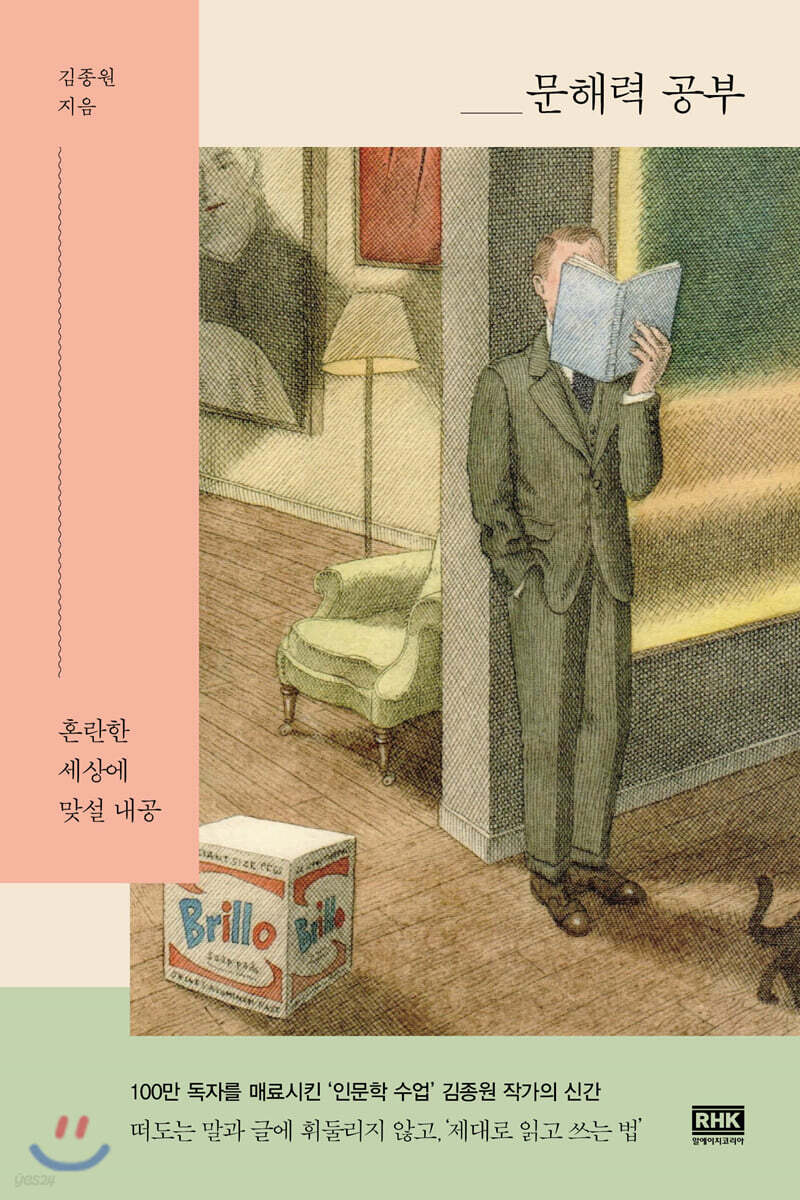
This book, which embodies the joy of discovery through reading and learning, is enhanced by the illustrations of Pierre Le-Tan, a master of literacy who expressed the message he wanted to convey to the world through pictures, adding to its collection value.
If you want to live a better life than you do now, you must go beyond simply learning from others and become a literate person who has more of their own knowledge, that is, who sees and thinks for themselves.
Then, I myself will become a complete, wonderful world, and I will be able to live without wavering even in a world full of uncertainty.
The author of 'Humanities Class', which captivated 1 million readers,
Kim Jong-won's new power to lead the world
Everyone hopes that the life they are living now is the life they dream of.
Here's someone who encourages everyone to create that kind of life.
Author Kim Jong-won has been giving lectures on humanities for 20 years with the belief that “you have to learn to grow.”
In his new book, "Studying Literacy," he preaches how to change lives through the "power of language."
“No matter how hard you try, things don’t go as planned, so it’s hard.” This is something we’ve all said or heard at least once.
Author Kim Jong-won has met readers who have shared these concerns in hundreds of lectures.
Their worries were very different, but the ending was the same.
Even though he tried so hard, why is he still suffering?
He wanted to offer them a simple, yet clear solution.
So what I finally found was literacy.
"Literacy Studies" covers how to survive among misused language, how to understand the context of words you didn't know the intention of, how to read differently, and how to make literacy your competitive edge.
This book, which embodies the joy of discovery through reading and learning, is enhanced by the illustrations of Pierre Le-Tan, a master of literacy who expressed the message he wanted to convey to the world through pictures, adding to its collection value.
If you want to live a better life than you do now, you must go beyond simply learning from others and become a literate person who has more of their own knowledge, that is, who sees and thinks for themselves.
Then, I myself will become a complete, wonderful world, and I will be able to live without wavering even in a world full of uncertainty.
- You can preview some of the book's contents.
Preview
index
prolog.
If one book could save our lives
Chapter 1: The Intention Only I Didn't Know
Literacy is the weapon that erases the miracles of the world.
We need to start from the beginning again
Hints of thought exist everywhere.
Knowledge that is discovered, not knowledge that is learned
Make your message into a picture
The competitive edge of simple principles
People who are successful are good at reading their own inner selves.
If you don't want to be read, read it properly.
Even if it's boring, approach it until you find it.
If your life is messed up, read to unravel it.
Chapter 2: Understanding and Surviving in the Fake
Literacy is ultimately the power to live.
Even great writers dedicated their lives to something
It's more about exploration than conclusion
Why Everyone Knows It But Doesn't Practice It
All interpretations begin with me.
Determine the order of desired words and words that sell.
Don't list your thoughts, combine them.
Perspectives to be discarded in everyday reading
A question that overwhelms everything with one question
Chapter 3: Language is my world
Literacy training method
Absolute is never
Why We Fight Language
The more dangerous it is, the more intensely you read.
A single miracle that changes your daily life
Break free from the shackles of schema
Reading poetry that creates opinions
3 Steps to Becoming the Master of Your Own Life
See the world beyond the language you read
Fill your space with beautiful text
Chapter 4: Observational Methods for Discovering Multiple Branches in One
:The 'defamiliarization' technique to improve literacy
A Philosophical Perspective on 'Making Strange'
Intellectual Observation Reading: The Art of Growing Even Geniuses
Why did Goethe spend a year reading Shakespeare?
5 Ways to Become a Master of Variation
Constantly thinking outside the box
The power to imagine something that never existed and bring it to reality
Socratic Dialogue for Literacy
An intellectual walk is enough
How to never miss an inspiring moment in life
Chapter 5: Your Own Way of Absorbing Information and Knowledge
:The difference between observation and literacy
The art of insight starting from a single word
A way of thinking that trains information and knowledge
A way of appreciating music that expands your expression
Think about each line ten times
A three-step process for looking at things
A training method learned from observing Goethe's sculptures
How to examine sentence structure closely
Categorizing people and things
Chapter 6: Read Differently to Discover Different Things
:The essence of literacy is reading.
The Secret of Literacy Geniuses Who Master It with Just One Line
The meaning of intelligent reading
The three-step process of intellectual reading
How to avoid being fooled by fake news
The Socratic Reading Method for Easily Understanding the Essence
Goethe's Reading Method for Maximizing Immersion
Read densely
Chapter 7: How the Unreachable Gap Is Created
:The Reality of Survival Keywords Found in Literacy
Questioning that changes the depth of interpretation
The Birth of a Great Spirit Who Cultivated 'My Nature'
The art of conceptualizing and systematically selecting wisdom
Discover trending topics with questions
The power to express myself by stimulating the question circuit
A world inhabited only by those who know how to discover art
How to maintain your philosophy without being fooled by words
Epilogue.
Literacy begins with cherishing everyday life.
supplement.
Recommended books to help you learn literacy
If one book could save our lives
Chapter 1: The Intention Only I Didn't Know
Literacy is the weapon that erases the miracles of the world.
We need to start from the beginning again
Hints of thought exist everywhere.
Knowledge that is discovered, not knowledge that is learned
Make your message into a picture
The competitive edge of simple principles
People who are successful are good at reading their own inner selves.
If you don't want to be read, read it properly.
Even if it's boring, approach it until you find it.
If your life is messed up, read to unravel it.
Chapter 2: Understanding and Surviving in the Fake
Literacy is ultimately the power to live.
Even great writers dedicated their lives to something
It's more about exploration than conclusion
Why Everyone Knows It But Doesn't Practice It
All interpretations begin with me.
Determine the order of desired words and words that sell.
Don't list your thoughts, combine them.
Perspectives to be discarded in everyday reading
A question that overwhelms everything with one question
Chapter 3: Language is my world
Literacy training method
Absolute is never
Why We Fight Language
The more dangerous it is, the more intensely you read.
A single miracle that changes your daily life
Break free from the shackles of schema
Reading poetry that creates opinions
3 Steps to Becoming the Master of Your Own Life
See the world beyond the language you read
Fill your space with beautiful text
Chapter 4: Observational Methods for Discovering Multiple Branches in One
:The 'defamiliarization' technique to improve literacy
A Philosophical Perspective on 'Making Strange'
Intellectual Observation Reading: The Art of Growing Even Geniuses
Why did Goethe spend a year reading Shakespeare?
5 Ways to Become a Master of Variation
Constantly thinking outside the box
The power to imagine something that never existed and bring it to reality
Socratic Dialogue for Literacy
An intellectual walk is enough
How to never miss an inspiring moment in life
Chapter 5: Your Own Way of Absorbing Information and Knowledge
:The difference between observation and literacy
The art of insight starting from a single word
A way of thinking that trains information and knowledge
A way of appreciating music that expands your expression
Think about each line ten times
A three-step process for looking at things
A training method learned from observing Goethe's sculptures
How to examine sentence structure closely
Categorizing people and things
Chapter 6: Read Differently to Discover Different Things
:The essence of literacy is reading.
The Secret of Literacy Geniuses Who Master It with Just One Line
The meaning of intelligent reading
The three-step process of intellectual reading
How to avoid being fooled by fake news
The Socratic Reading Method for Easily Understanding the Essence
Goethe's Reading Method for Maximizing Immersion
Read densely
Chapter 7: How the Unreachable Gap Is Created
:The Reality of Survival Keywords Found in Literacy
Questioning that changes the depth of interpretation
The Birth of a Great Spirit Who Cultivated 'My Nature'
The art of conceptualizing and systematically selecting wisdom
Discover trending topics with questions
The power to express myself by stimulating the question circuit
A world inhabited only by those who know how to discover art
How to maintain your philosophy without being fooled by words
Epilogue.
Literacy begins with cherishing everyday life.
supplement.
Recommended books to help you learn literacy
Detailed image
Into the book
The depth of his literacy determines the scale of the world he dreams and envisions in the future.
Until now, the map of power was drawn by those with a lot of money or high status, but now wealth and power are concentrated in the hands of those with high literacy.
Do you want to be someone who only inspires others, or do you want to be an everyday innovator who notices the subtle changes happening around you and shares them with the world, inspiring others?
The world desperately wants the latter.
People who cannot think for themselves and who cannot delicately observe the subtle movements around them and express them in public language inevitably live with a constant sense of anxiety.
Because nothing works.
Eventually, they become people who are less and less able to control their emotions and are driven only by emotions rather than reason.
Look around you now.
The world is already changing like that.
I'm talking about a reality that has already arrived.
--- p.10, If one book could save our lives
To you who is worried that you are trying but not achieving anything, I want to ask you a question.
Are you someone who throws anywhere, or someone who throws wherever they want? You can't just throw wherever you want.
First, you need to build up the stamina to throw, find the target point to throw to, and practice the delicate technique to throw to that point one by one.
Literacy is ultimately determined by the level and direction of vision.
It is not about accumulating, but about excluding, and it is not about learning, but about discovering.
Opportunities exist everywhere when you look at them with a fresh perspective.
Landscape and knowledge are equally available to everyone, but it is up to each individual to take advantage of them, depending on their level of visual literacy.
--- p.33, Make the message into a picture
Knowing how to answer one question is like holding one of the greatest weapons you will ever have.
However, there are still many people who do not know what they know and what they do.
Whenever I write about what I practice in my daily life and share it with others, the words and phrases I hear most often are these.
"The author puts into practice what everyone knows but finds difficult to put into practice." Why? First, let me reveal the essence of the sentence.
“Not practicing is not knowing properly.” So knowing and not practicing cannot appear together in the same sentence.
Because those who know its value cannot help but practice it.
--- p.68, Why it's difficult for everyone to put into practice even if they know it
To convey only half of what you have due to a lack of language skills is to throw away half of the life you have painstakingly prepared.
Exaggerating one's abilities is dangerous, but conversely, those who fail to demonstrate their abilities make us feel sorry for them.
This happens a lot at work too.
"So what exactly are you trying to say?" "Is that the problem? The cause? The solution?" "How should we address this going forward?" "What's the bottom line? Can you summarize it in a nutshell?" Ultimately, regardless of industry, our job is to endlessly seek and provide answers to the four questions listed above.
Within the company, various meetings and presentations are held, and proposals and plans must be prepared accordingly.
Outside, you have to meet and communicate with customers.
(…) The reason why the shape becomes blurry and uneasy without being able to find the center of the work is because you cannot see ahead.
Anything you start after deciding on your own future will naturally bring you confidence.
Conversely, the reason we lose confidence in our lives is because we are barely surviving without even looking ahead to the future.
--- p.98, Why We Fight Language
It's not about winning, it's about helping.
Just as Yulgok always submitted a petition to the king containing information necessary for the people and the country, what we read should be able to teach us what to put into practice.
To do that, we need principles for why we observe and read.
Yulgok's fundamental reason was his desire to help.
That is also the reason why we were able to pursue policies for the country and its people.
If you read with the intention of helping, what you read will naturally lead you to put it into practice.
Yulgok's observational reading was different in depth and delicacy from that of others.
He said, “I came to know this” after observing and studying every word and every speck of dust that existed in the world he had created.
I didn't stop observing until I was no longer suspicious.
His ability to grasp the people's difficulties in detail was also due to his unique observational reading method.
A person who understands one thing well does not need to read much.
Until now, the map of power was drawn by those with a lot of money or high status, but now wealth and power are concentrated in the hands of those with high literacy.
Do you want to be someone who only inspires others, or do you want to be an everyday innovator who notices the subtle changes happening around you and shares them with the world, inspiring others?
The world desperately wants the latter.
People who cannot think for themselves and who cannot delicately observe the subtle movements around them and express them in public language inevitably live with a constant sense of anxiety.
Because nothing works.
Eventually, they become people who are less and less able to control their emotions and are driven only by emotions rather than reason.
Look around you now.
The world is already changing like that.
I'm talking about a reality that has already arrived.
--- p.10, If one book could save our lives
To you who is worried that you are trying but not achieving anything, I want to ask you a question.
Are you someone who throws anywhere, or someone who throws wherever they want? You can't just throw wherever you want.
First, you need to build up the stamina to throw, find the target point to throw to, and practice the delicate technique to throw to that point one by one.
Literacy is ultimately determined by the level and direction of vision.
It is not about accumulating, but about excluding, and it is not about learning, but about discovering.
Opportunities exist everywhere when you look at them with a fresh perspective.
Landscape and knowledge are equally available to everyone, but it is up to each individual to take advantage of them, depending on their level of visual literacy.
--- p.33, Make the message into a picture
Knowing how to answer one question is like holding one of the greatest weapons you will ever have.
However, there are still many people who do not know what they know and what they do.
Whenever I write about what I practice in my daily life and share it with others, the words and phrases I hear most often are these.
"The author puts into practice what everyone knows but finds difficult to put into practice." Why? First, let me reveal the essence of the sentence.
“Not practicing is not knowing properly.” So knowing and not practicing cannot appear together in the same sentence.
Because those who know its value cannot help but practice it.
--- p.68, Why it's difficult for everyone to put into practice even if they know it
To convey only half of what you have due to a lack of language skills is to throw away half of the life you have painstakingly prepared.
Exaggerating one's abilities is dangerous, but conversely, those who fail to demonstrate their abilities make us feel sorry for them.
This happens a lot at work too.
"So what exactly are you trying to say?" "Is that the problem? The cause? The solution?" "How should we address this going forward?" "What's the bottom line? Can you summarize it in a nutshell?" Ultimately, regardless of industry, our job is to endlessly seek and provide answers to the four questions listed above.
Within the company, various meetings and presentations are held, and proposals and plans must be prepared accordingly.
Outside, you have to meet and communicate with customers.
(…) The reason why the shape becomes blurry and uneasy without being able to find the center of the work is because you cannot see ahead.
Anything you start after deciding on your own future will naturally bring you confidence.
Conversely, the reason we lose confidence in our lives is because we are barely surviving without even looking ahead to the future.
--- p.98, Why We Fight Language
It's not about winning, it's about helping.
Just as Yulgok always submitted a petition to the king containing information necessary for the people and the country, what we read should be able to teach us what to put into practice.
To do that, we need principles for why we observe and read.
Yulgok's fundamental reason was his desire to help.
That is also the reason why we were able to pursue policies for the country and its people.
If you read with the intention of helping, what you read will naturally lead you to put it into practice.
Yulgok's observational reading was different in depth and delicacy from that of others.
He said, “I came to know this” after observing and studying every word and every speck of dust that existed in the world he had created.
I didn't stop observing until I was no longer suspicious.
His ability to grasp the people's difficulties in detail was also due to his unique observational reading method.
A person who understands one thing well does not need to read much.
--- p.140, 'Intellectual Observation Reading' that Helps Even Geniuses Grow
Publisher's Review
As chaos increases, clear literacy becomes more important!
How to read and write properly without being swayed by floating words and writings
Literacy is borrowed from the English word Literacy, meaning the ability to read and write.
Let's take another look at this word, which is based on the idea that if you have the ability to read and write a language well, you can also understand the flow of the world well.
The word 'read' has many meanings, including expressing the words out loud, figuring out the meaning contained in the words, memorizing them, and seeing them.
'Write' also has various meanings, such as expressing something in writing, creating a document for a specific purpose, and expressing thoughts.
There are endless ways to utilize language to suit different purposes and situations.
Booktubers who read good books or introduce them in a wonderful way, writers who write engagingly, lecturers who convey specialized knowledge in an easily understandable way… These are the representatives of those who use language well.
On the other hand, media outlets that spread fake news, unsolicited information that leads to wrong investments, and sweet talk to lure others for personal gain... these are examples of using language to harm me.
Kim Jong-won, a humanities education expert who sparked the "One Line of Humanities a Day" craze among Korean parents, has realized, after teaching humanities for over 20 years, that those who are good at using language, that is, those with high literacy, are the ones who ultimately move the world and create change.
Especially now, when uncertainty is increasing, it is said that literacy, which allows one to filter out false knowledge, distinguish real knowledge, and reproduce it in one's own words, is shining the brightest.
《Studying Literacy》 is the first book to seriously address literacy, which will become a core competitive edge for future talent.
Inspire the world with your own language!
Chapter 1 first explains why we find it difficult to read a book and then think about it again.
And I recommend reading it simply as an immediate prescription to solve this.
Chapter 2 goes beyond reading books and deals with reading the world.
In other words, it is a way to properly find a direction that will elicit a response from many people.
I have to constantly check if what I want matches what others want.
Eye contact, thought measurement, and questioning techniques make this process easy to monitor.
Chapter 3 talks about how to strengthen literacy skills.
We examine the extent of the impact of a single sentence and point out points to watch out for to minimize errors in expression.
Chapter 4 discusses several branches of observation that can further enhance literacy.
This observation method, inspired by 'making things strange', helps us apply all the ideas that suddenly come into our lives to reality without missing a single moment.
The author adds one piece of advice to those who want to write something special, in addition to the observation method.
It's good to read and write a lot, but it's also good to focus on just one book for a year.
If you delve into the meaning contained in one volume, you will be able to play variations skillfully.
Let's not forget that we can do it.
Chapters 5 and 6 delve deeper into the nature of literacy.
We discuss how to look at things, think about them over and over again, and how to overwhelm your surroundings with just one line.
As the author's mentor, Dr. Lee Eo-ryeong, advised, if you read and reflect on texts with the mindset that "there are absolutely no absolutes," you can discover the hidden meaning behind every text in the world.
Finally, Chapter 7 explains the changes that literacy brings to real life.
As the author said, "Beware of the illusion that you know something just because you've read it," you should stop and think again after reading.
Repeat the reading and thinking exercises in this book to stimulate your thinking circuits.
Find a topic and constantly try new ideas.
My language, so refined, will become an expression that stimulates the world and bring about a wonderful life.
How to read and write properly without being swayed by floating words and writings
Literacy is borrowed from the English word Literacy, meaning the ability to read and write.
Let's take another look at this word, which is based on the idea that if you have the ability to read and write a language well, you can also understand the flow of the world well.
The word 'read' has many meanings, including expressing the words out loud, figuring out the meaning contained in the words, memorizing them, and seeing them.
'Write' also has various meanings, such as expressing something in writing, creating a document for a specific purpose, and expressing thoughts.
There are endless ways to utilize language to suit different purposes and situations.
Booktubers who read good books or introduce them in a wonderful way, writers who write engagingly, lecturers who convey specialized knowledge in an easily understandable way… These are the representatives of those who use language well.
On the other hand, media outlets that spread fake news, unsolicited information that leads to wrong investments, and sweet talk to lure others for personal gain... these are examples of using language to harm me.
Kim Jong-won, a humanities education expert who sparked the "One Line of Humanities a Day" craze among Korean parents, has realized, after teaching humanities for over 20 years, that those who are good at using language, that is, those with high literacy, are the ones who ultimately move the world and create change.
Especially now, when uncertainty is increasing, it is said that literacy, which allows one to filter out false knowledge, distinguish real knowledge, and reproduce it in one's own words, is shining the brightest.
《Studying Literacy》 is the first book to seriously address literacy, which will become a core competitive edge for future talent.
Inspire the world with your own language!
Chapter 1 first explains why we find it difficult to read a book and then think about it again.
And I recommend reading it simply as an immediate prescription to solve this.
Chapter 2 goes beyond reading books and deals with reading the world.
In other words, it is a way to properly find a direction that will elicit a response from many people.
I have to constantly check if what I want matches what others want.
Eye contact, thought measurement, and questioning techniques make this process easy to monitor.
Chapter 3 talks about how to strengthen literacy skills.
We examine the extent of the impact of a single sentence and point out points to watch out for to minimize errors in expression.
Chapter 4 discusses several branches of observation that can further enhance literacy.
This observation method, inspired by 'making things strange', helps us apply all the ideas that suddenly come into our lives to reality without missing a single moment.
The author adds one piece of advice to those who want to write something special, in addition to the observation method.
It's good to read and write a lot, but it's also good to focus on just one book for a year.
If you delve into the meaning contained in one volume, you will be able to play variations skillfully.
Let's not forget that we can do it.
Chapters 5 and 6 delve deeper into the nature of literacy.
We discuss how to look at things, think about them over and over again, and how to overwhelm your surroundings with just one line.
As the author's mentor, Dr. Lee Eo-ryeong, advised, if you read and reflect on texts with the mindset that "there are absolutely no absolutes," you can discover the hidden meaning behind every text in the world.
Finally, Chapter 7 explains the changes that literacy brings to real life.
As the author said, "Beware of the illusion that you know something just because you've read it," you should stop and think again after reading.
Repeat the reading and thinking exercises in this book to stimulate your thinking circuits.
Find a topic and constantly try new ideas.
My language, so refined, will become an expression that stimulates the world and bring about a wonderful life.
GOODS SPECIFICS
- Publication date: November 13, 2020
- Page count, weight, size: 288 pages | 380g | 140*210*20mm
- ISBN13: 9788925589787
- ISBN10: 8925589788
You may also like
카테고리
korean


korean

![GQ KOREA Mark (Monthly): December [2025]](http://librairie.coreenne.fr/cdn/shop/files/8ef265dbbfbf186523ed75ba7319009d.jpg?v=1765340328&width=3840)


