

Natural history of the future
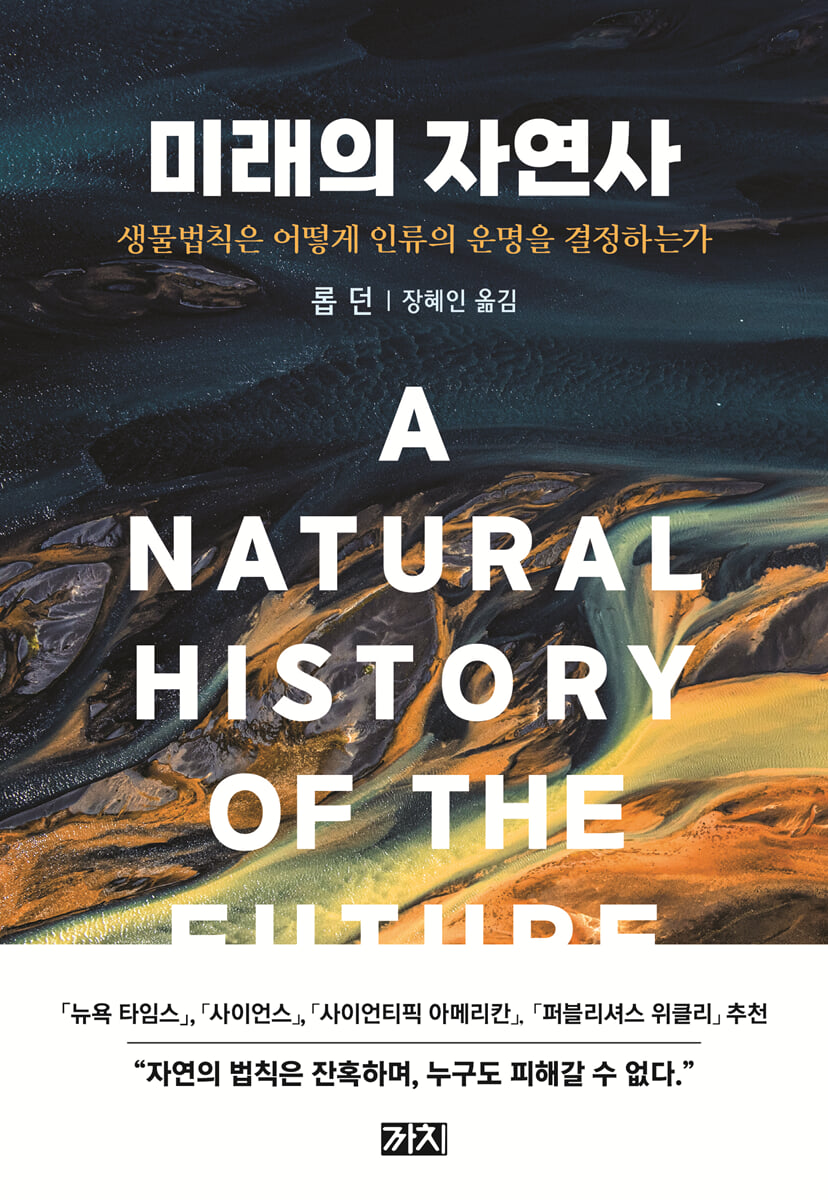 |
Description
Book Introduction
Highly recommended by The New York Times, Science, and Scientific American
The evolution of life is never ending, and no one can escape it.
The future of humanity seen through the eyes of biological law
Since the development of science and technology, mankind has constantly controlled nature and transformed it into a resource that can be used at will.
However, humans are not the center of life on Earth, and the environment that has been adapted to humans is actually changing in a direction that is unsuitable for humans.
So, what kind of future does humanity face, and how should we act to ensure our long-term survival? Biologist and bestselling author Rob Dunn argues that there are biological laws that apply to life on Earth, and humans are not immune to these laws.
Accordingly, unlike existing discussions that focus on the past and describe natural history, he depicts the future that humanity will face based on the laws of biology.
It also explains how evolution occurs around us by applying biological laws to the urban environment in which most of humanity lives today.
This book, which diagnoses humanity's current situation and predicts the future based on the seven laws of biology, will enable readers to gauge the direction in which they should move for the future environment and humanity.
The evolution of life is never ending, and no one can escape it.
The future of humanity seen through the eyes of biological law
Since the development of science and technology, mankind has constantly controlled nature and transformed it into a resource that can be used at will.
However, humans are not the center of life on Earth, and the environment that has been adapted to humans is actually changing in a direction that is unsuitable for humans.
So, what kind of future does humanity face, and how should we act to ensure our long-term survival? Biologist and bestselling author Rob Dunn argues that there are biological laws that apply to life on Earth, and humans are not immune to these laws.
Accordingly, unlike existing discussions that focus on the past and describe natural history, he depicts the future that humanity will face based on the laws of biology.
It also explains how evolution occurs around us by applying biological laws to the urban environment in which most of humanity lives today.
This book, which diagnoses humanity's current situation and predicts the future based on the seven laws of biology, will enable readers to gauge the direction in which they should move for the future environment and humanity.
- You can preview some of the book's contents.
Preview
index
Introduction
Chapter 1: Surprise Attack by Creatures
Chapter 2: The Galapagos of Cities
Chapter 3: The Ark Made Without Thinking
Chapter 4: The Final Escape
Chapter 5: The niche where humans can live
Chapter 6: The Intelligence of Crows
Chapter 7: Embracing Diversity to Offset Risk
Chapter 8: The Law of Dependence
Chapter 9: Humpty Dumpty and the Robot Bee
Chapter 10: Living with Evolution
Chapter 11: A Future That Isn't the End of Nature
Outgoing remarks: We are no longer with living things.
main
Translator's Note
Biographical Index
Chapter 1: Surprise Attack by Creatures
Chapter 2: The Galapagos of Cities
Chapter 3: The Ark Made Without Thinking
Chapter 4: The Final Escape
Chapter 5: The niche where humans can live
Chapter 6: The Intelligence of Crows
Chapter 7: Embracing Diversity to Offset Risk
Chapter 8: The Law of Dependence
Chapter 9: Humpty Dumpty and the Robot Bee
Chapter 10: Living with Evolution
Chapter 11: A Future That Isn't the End of Nature
Outgoing remarks: We are no longer with living things.
main
Translator's Note
Biographical Index
Detailed image
.jpg)
Publisher's Review
Humans are just a part of nature.
The Seven Laws of Biology That Will Determine the Fate of Humanity
Just as there are laws of physics, such as the law of gravity and the laws of thermodynamics, there are also laws of biology in the biological world.
Applied ecologist and author Rob Dunn says the laws of biology are the first thing we need to keep in mind when trying to understand the future that lies before us, and he presents seven laws of biology.
First, natural selection is the most robust biological law, which states that individuals with a high probability of survival and reproduction will pass on their genes to the next generation.
Darwin, who first discussed natural selection, thought that this law was a slow process, but recent experimental results show that natural selection can occur very quickly.
The species-area law shows that the number of species that can live in a particular habitat is proportional to its size.
Knowing this law allows us to predict not only when and where species will become extinct, but also when new species will evolve.
The laws of passage determine how species will migrate in response to future climate change, while the laws of escape explain how a species can thrive by avoiding pests or parasites.
The law of niches tells us where species, including humans, might live and where they are likely to survive after climate change.
The law of dependence shows that all living species must depend on each other to survive, and for humans, this is especially true for microorganisms.
The law of diversity is divided into the law that organisms with the creative ability to adapt to a rapidly changing environment survive, and the law of diversity-stability line that the more diverse the species, the more stable the ecosystem.
Rapid climate change will force diverse species to evolve rapidly and find new habitats.
Humanity must also find ways to escape pests and parasites as it moves to suitable habitats.
The author of this book, Rob Dunn, says that while the future ahead of us is by no means easy, if we pay attention to the laws of biology, humanity may have a chance of surviving for millions of years.
Evolution occurs wherever living things live.
Ecology of the Urban Environment
The laws of evolution and biology also apply to the urban environments where most humans live today.
Accordingly, this book expands its perspective beyond jungles, deep mountains, forests, and islands to include cities, based on various experimental results and recent research findings.
For example, a median strip in the middle of a road, a flower bed in an apartment building, or a patch of forest in the middle of farmland are all island-like environments that serve as stages for the evolution of the creatures that live there.
For example, rats and mosquitoes living in cities are differentiated in various ways in a small area of the city according to the species-area law, and they even take on completely different forms depending on whether they live above or below ground.
Meanwhile, pigeons in the city center use the expanding city as a passageway according to the law of passage, and cockroaches use the temperature-controlled train as a passageway to spread out over a wide area.
Through this book, which presents real-life cases and research results, readers will be able to see that the laws of biology apply to everything around us.
The end is just a future scenario that humanity will face.
Climate change is an opportunity for most species in the biosphere.
Humanity often refers to climate change as a crisis and urges action to protect the Earth.
In these arguments, the Earth's environment is portrayed as an object suffering due to humans.
But is climate change truly driving the entire planet to its doom? The claim that human-induced changes are wiping out life on Earth is true when we consider humans, but it's not true when we consider all life on Earth.
Rob Dunn says most life on Earth is made up of microorganisms, many of which prefer extreme environments unsuitable for humans.
Many species live in environments that are inhospitable to humans, such as those that are excessively hot, acidic, or even contain chlorine in the air.
On the other hand, humans and their beloved pets and livestock are facing threats to their survival due to climate change.
Rob Dunn argues that our efforts to control and adapt nature to our needs are leading humanity down the worst path, and that we must understand the laws of biology and restore balance to the Earth's environment.
Someday, science and technology may take over the role of the destroyed environment.
But humanity has failed to achieve complete replacement.
As science and technology advance, there is a view that technology will replace the functions of nature.
In fact, water treatment plants have saved millions of lives through their biocides, and robotic bees are expected to replace insects in pollination.
But on the other hand, these technologies may actually worsen the environment.
Water treatment plants create environments ideal for other microbes, and one study suggests that robotic bees could also have a range of negative side effects.
Accordingly, Rob Dunn argues that rather than relying on future technologies that have not yet been realized, we should not destroy the environmental benefits we enjoy now.
According to him, there has never been a case where human technology has completely replaced the functions of nature, and humans have not properly understood the role that nature plays.
It is important to preserve its benefits by minimizing additional human intervention as much as possible.
This book argues that humans, as a part of living organisms, are not free from the influence of biological laws, and unfolds a future for humanity based on the latest research.
Humans are exploring ways to sustain life on Earth through various technologies, but no amount of science or technology can separate humans from the laws of biology.
This book, which predicts the future humanity will face and provides guidelines for action based on the biological laws that apply to nature in general, will help readers realize that even in today's world of advanced science and technology, humans are still a type of living organism and find better ways to survive.
A captivating vision of the harsh natural world.
Robdon strongly argues that we must quickly recognize that we live according to biological laws.
― The New York Times
Humans must learn from other life forms to mitigate the impacts of climate change.
A thoughtful and accessible book.
─ Publisher's Weekly
A timely, clear, and important book.
─ "Science"
The Seven Laws of Biology That Will Determine the Fate of Humanity
Just as there are laws of physics, such as the law of gravity and the laws of thermodynamics, there are also laws of biology in the biological world.
Applied ecologist and author Rob Dunn says the laws of biology are the first thing we need to keep in mind when trying to understand the future that lies before us, and he presents seven laws of biology.
First, natural selection is the most robust biological law, which states that individuals with a high probability of survival and reproduction will pass on their genes to the next generation.
Darwin, who first discussed natural selection, thought that this law was a slow process, but recent experimental results show that natural selection can occur very quickly.
The species-area law shows that the number of species that can live in a particular habitat is proportional to its size.
Knowing this law allows us to predict not only when and where species will become extinct, but also when new species will evolve.
The laws of passage determine how species will migrate in response to future climate change, while the laws of escape explain how a species can thrive by avoiding pests or parasites.
The law of niches tells us where species, including humans, might live and where they are likely to survive after climate change.
The law of dependence shows that all living species must depend on each other to survive, and for humans, this is especially true for microorganisms.
The law of diversity is divided into the law that organisms with the creative ability to adapt to a rapidly changing environment survive, and the law of diversity-stability line that the more diverse the species, the more stable the ecosystem.
Rapid climate change will force diverse species to evolve rapidly and find new habitats.
Humanity must also find ways to escape pests and parasites as it moves to suitable habitats.
The author of this book, Rob Dunn, says that while the future ahead of us is by no means easy, if we pay attention to the laws of biology, humanity may have a chance of surviving for millions of years.
Evolution occurs wherever living things live.
Ecology of the Urban Environment
The laws of evolution and biology also apply to the urban environments where most humans live today.
Accordingly, this book expands its perspective beyond jungles, deep mountains, forests, and islands to include cities, based on various experimental results and recent research findings.
For example, a median strip in the middle of a road, a flower bed in an apartment building, or a patch of forest in the middle of farmland are all island-like environments that serve as stages for the evolution of the creatures that live there.
For example, rats and mosquitoes living in cities are differentiated in various ways in a small area of the city according to the species-area law, and they even take on completely different forms depending on whether they live above or below ground.
Meanwhile, pigeons in the city center use the expanding city as a passageway according to the law of passage, and cockroaches use the temperature-controlled train as a passageway to spread out over a wide area.
Through this book, which presents real-life cases and research results, readers will be able to see that the laws of biology apply to everything around us.
The end is just a future scenario that humanity will face.
Climate change is an opportunity for most species in the biosphere.
Humanity often refers to climate change as a crisis and urges action to protect the Earth.
In these arguments, the Earth's environment is portrayed as an object suffering due to humans.
But is climate change truly driving the entire planet to its doom? The claim that human-induced changes are wiping out life on Earth is true when we consider humans, but it's not true when we consider all life on Earth.
Rob Dunn says most life on Earth is made up of microorganisms, many of which prefer extreme environments unsuitable for humans.
Many species live in environments that are inhospitable to humans, such as those that are excessively hot, acidic, or even contain chlorine in the air.
On the other hand, humans and their beloved pets and livestock are facing threats to their survival due to climate change.
Rob Dunn argues that our efforts to control and adapt nature to our needs are leading humanity down the worst path, and that we must understand the laws of biology and restore balance to the Earth's environment.
Someday, science and technology may take over the role of the destroyed environment.
But humanity has failed to achieve complete replacement.
As science and technology advance, there is a view that technology will replace the functions of nature.
In fact, water treatment plants have saved millions of lives through their biocides, and robotic bees are expected to replace insects in pollination.
But on the other hand, these technologies may actually worsen the environment.
Water treatment plants create environments ideal for other microbes, and one study suggests that robotic bees could also have a range of negative side effects.
Accordingly, Rob Dunn argues that rather than relying on future technologies that have not yet been realized, we should not destroy the environmental benefits we enjoy now.
According to him, there has never been a case where human technology has completely replaced the functions of nature, and humans have not properly understood the role that nature plays.
It is important to preserve its benefits by minimizing additional human intervention as much as possible.
This book argues that humans, as a part of living organisms, are not free from the influence of biological laws, and unfolds a future for humanity based on the latest research.
Humans are exploring ways to sustain life on Earth through various technologies, but no amount of science or technology can separate humans from the laws of biology.
This book, which predicts the future humanity will face and provides guidelines for action based on the biological laws that apply to nature in general, will help readers realize that even in today's world of advanced science and technology, humans are still a type of living organism and find better ways to survive.
A captivating vision of the harsh natural world.
Robdon strongly argues that we must quickly recognize that we live according to biological laws.
― The New York Times
Humans must learn from other life forms to mitigate the impacts of climate change.
A thoughtful and accessible book.
─ Publisher's Weekly
A timely, clear, and important book.
─ "Science"
GOODS SPECIFICS
- Date of issue: April 20, 2023
- Page count, weight, size: 351 pages | 496g | 145*210*22mm
- ISBN13: 9788972917960
- ISBN10: 8972917966
You may also like
카테고리
korean


korean

![GQ KOREA Mark (Monthly): December [2025]](http://librairie.coreenne.fr/cdn/shop/files/8ef265dbbfbf186523ed75ba7319009d.jpg?v=1765340328&width=3840)


