

MBTI of an unbearable being
 |
Description
Book Introduction
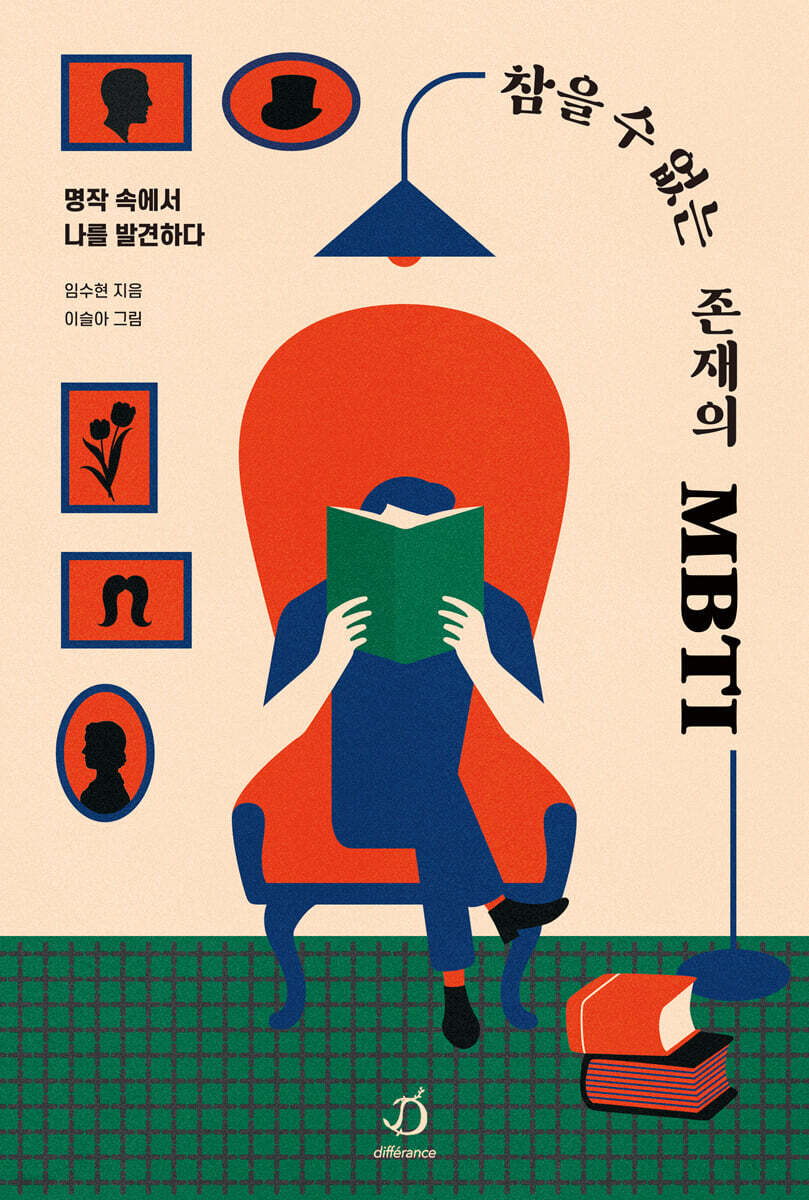
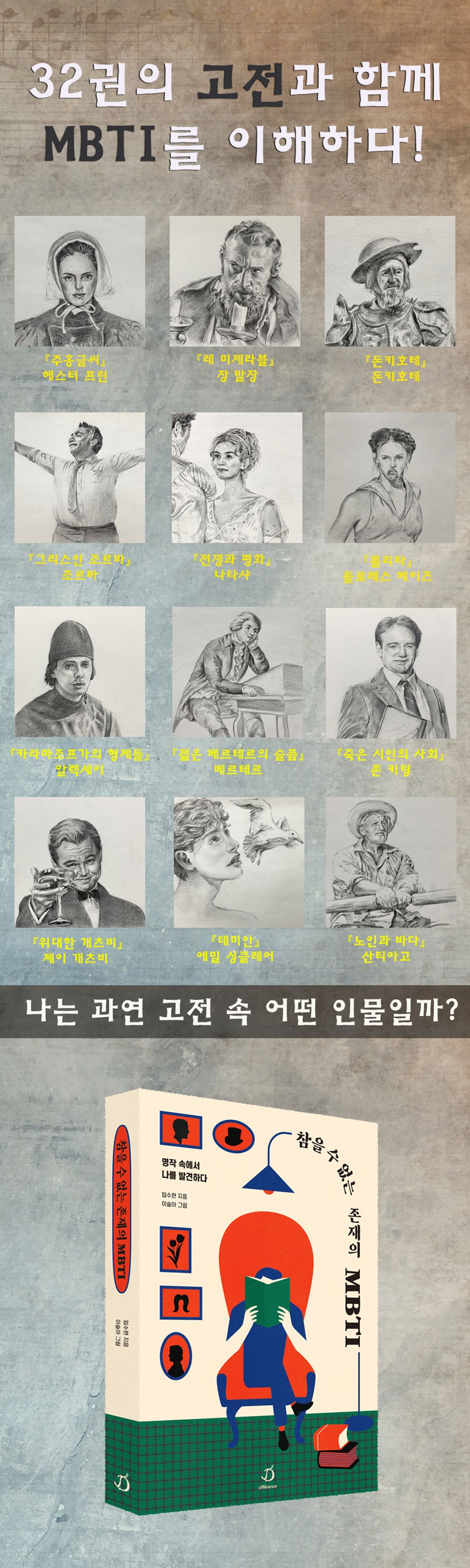
What kind of character am I in a classic novel? Anyone who has opened this book has likely taken the MBTI test at least once. Some may question whether the MBTI type truly reflects their true self. The author answers this question by analyzing the words and actions and psychology of characters in literary works, and discusses how MBTI is expressed in an individual's personality, whether MBTI has actually helped them a lot in communicating and interacting with others, and what MBTI can mean to us. In particular, characters appearing in classic works that have been widely read and have excellent completeness are created with their own roles that contribute to the development of the play, and thus are characterized by exhibiting the characteristics of MBTI types more clearly and consistently than real-life characters. This book analyzes the MBTI types of characters from classics that have been consistently loved by people around the world. A total of 32 characters were selected from the representative works of great writers such as Leo Tolstoy, Hermann Hesse, George Orwell, Jean-Paul Sartre, Marcel Proust, Fyodor Dostoevsky, Milan Kundera, Stendhal, and Mark Twain. By examining the language habits, behaviors, emotions, and psychological states of characters representing each type and the consequences they bring about, we will be able to gain insight and gain opportunities for self-reflection. |
- You can preview some of the book's contents.
Preview
index
Prologue _ What kind of character am I in a classic novel?
1. ENFJ
Les Misérables, Jean Valjean
The Scarlet Letter, Hester Prynne
2. ENFP
Don Quixote, Don Quixote
Knulp, Knulp
ENTJ
1984, O'Brien
Brave New World, Mustafa Mond
4. ENTP
The Red and the Black, Julien Sorel
The Unbearable Lightness of Being, by Tomas
5. ESFJ
Great Expectations, by Joe Gargery
The Adventures of Huckleberry Finn, Jim
6. ESFP
Zorba the Greek, Zorba
War and Peace, Natasha
7. ESTJ
King Lear, King Lear
The Death of Ivan Ilyich, Ivan Ilyich
8. ESTP
Lolita, Dolores Hayes
The Adventures of Tom Sawyer, Tom Sawyer
9. INFJ
Crime and Punishment, Raskolnikov
The Brothers Karamazov, Alexei
10. INFP
The Sorrows of Young Werther, Werther
Dead Poets Society, John Keating
11. INTJ
Nausea, Antoine Roquentin
The Great Gatsby, Jay Gatsby
12. INTP
Hamlet, Hamlet
The Catcher in the Rye, Holden Caulfield
13. ISFJ
The Metamorphosis, Gregor Samsa
In Search of Lost Time, Marcel
14. ISFP
Demian, Emil Sinclair
Beneath the Wheel, Hans Giebenrath
15. ISTJ
Anna Karenina, Alexei Karenin
Pride and Prejudice, Darcy
16. ISTP
The Old Man and the Sea, Santiago
Perfume, Jean-Baptiste Grenouille
Epilogue _ No one is perfect
1. ENFJ
Les Misérables, Jean Valjean
The Scarlet Letter, Hester Prynne
2. ENFP
Don Quixote, Don Quixote
Knulp, Knulp
ENTJ
1984, O'Brien
Brave New World, Mustafa Mond
4. ENTP
The Red and the Black, Julien Sorel
The Unbearable Lightness of Being, by Tomas
5. ESFJ
Great Expectations, by Joe Gargery
The Adventures of Huckleberry Finn, Jim
6. ESFP
Zorba the Greek, Zorba
War and Peace, Natasha
7. ESTJ
King Lear, King Lear
The Death of Ivan Ilyich, Ivan Ilyich
8. ESTP
Lolita, Dolores Hayes
The Adventures of Tom Sawyer, Tom Sawyer
9. INFJ
Crime and Punishment, Raskolnikov
The Brothers Karamazov, Alexei
10. INFP
The Sorrows of Young Werther, Werther
Dead Poets Society, John Keating
11. INTJ
Nausea, Antoine Roquentin
The Great Gatsby, Jay Gatsby
12. INTP
Hamlet, Hamlet
The Catcher in the Rye, Holden Caulfield
13. ISFJ
The Metamorphosis, Gregor Samsa
In Search of Lost Time, Marcel
14. ISFP
Demian, Emil Sinclair
Beneath the Wheel, Hans Giebenrath
15. ISTJ
Anna Karenina, Alexei Karenin
Pride and Prejudice, Darcy
16. ISTP
The Old Man and the Sea, Santiago
Perfume, Jean-Baptiste Grenouille
Epilogue _ No one is perfect
Detailed image
Into the book
People are not perfect.
Humans are creatures who make countless mistakes, whether intentional or unintentional, rationalize and justify their mistakes even when they are aware of them, and make undesirable choices by making excuses like, "I can't help it because of the circumstances."
The letter 'A' that Hester must engrave on her heart for the rest of her life is nothing less than proof of the frailty and imperfection of being human.
--- p.37
Don Quixote's image of redefining his own identity by projecting himself onto a virtual image created through imagination is due to the distorted operation of ENFP's dominant function, Extraverted Intuition (Ne).
The curiosity and creativity about the outside world go too far and manifest as a paradoxical phenomenon that confuses imagination and reality.
The movement to write a protagonist's narrative by giving names to each person around you and supporting yourself as a hero is achieved through the collaboration of the dominant function, extraverted intuition, and the tertiary function, extraverted thinking (Te).
However, because of their immature extroverted thinking, their goal-oriented thoughts and actions are one-sided and aggressive, without considering the circumstances or feelings of others.
--- p.48
He is building a solid internal logic system to justify the system and incite the masses.
The deep insight that comes from the auxiliary function, introverted intuition (Ni), allows ENTJs to see the core of a problem and establish their own response system.
Mustafa Mond is always prepared with evidence and persuasive means to support his claims and to expose the flaws in the system, so he can gently refute anyone he argues with and defeat his opponent.
--- p.82
Any material and finite goal must have an end.
This makes us want more and more, which makes us feel thirsty, but it is physically impossible to satisfy this endlessly, which in turn increases our internal frustration.
The end of vanity and pretense is nothing but vanity.
Rather, Great Expectations tells us that it is far more meaningful to live a life of inner growth, self-development, and the achievement of noble and enduring values that are invisible but enduring, such as true love.
--- p.125
Most modern people live their lives mortgaged, caught up in responsibilities and obligations.
Zorba's image of enjoying the present moment without planning for the future is interesting, but it also raises concerns and doubts about whether it is okay to live like that.
Zorba's life, wandering from place to place without achieving anything, is clearly a life of failure from the perspective of an industrial society obsessed with performance and efficiency.
However, it can be evaluated as meaningful in the sense that it is a life that is completed independently according to one's own standards without being swayed by external views.
--- p.153
Ivan Ilyich sees himself and how he has lived through the cold gaze of those around him.
It is not that I found my self through experience and reflection, but rather that I finally saw myself in the cold gaze of others.
Due to the lack of his inferior function, introverted feeling (Fe), he was unable to properly understand his own feelings and emotions, and this void was almost entirely filled by the extraverted thinking function that weighs gains and losses.
He deluded himself into thinking he knew himself well, but in fact his identity was completely molded by the gaze of others.
--- p.186
Nevertheless, the reason why 『Lolita』 is selected as the best book by the Nobel Institute and recommended by the world's leading media and universities is because of the work's outstanding literary value.
Nevertheless, questions still remain.
Is it okay to tackle any unethical topic to create beautiful art? Is immoral subject matter acceptable simply for the sake of art, without any political, social, or ethical considerations? The dilemma of art that deals with taboos persists to this day.
--- p.201
As we go through life, we all sin, feel guilty, and are punished in various ways.
Raskolnikov's vain thoughts and impulsiveness may in fact be a universal weakness of human existence that lies dormant within all of us.
It is probably in this sense that the great German author Hermann Hesse said to read Dostoevsky when “the pain is so great that you can no longer bear it, when your whole life feels like a burning wound.”
--- p.223
Although Keating eventually left, the teaching of 'carpe diem', or 'seize the day', remains with a strong resonance in the hearts of not only students but also readers.
The fact that I am the master of my life and that the stage of my life is the present moment will not change even if he leaves.
Only by realizing that I am the only one who can enjoy the one life given to me and that I am also the one who must take responsibility for my choices can we live more proactively and independently.
Keating teaches us that this is ultimately the path to happiness.
--- p.260
Gatsby is a character who symbolizes the distorted 'American Dream'.
The spirit of the Puritans who arrived in New England on the Mayflower and dreamed of building a great nation was originally sound, armed with diligence and sincerity.
However, behind the dazzling development and enduring success of the United States, the "American Dream" has also led to dark consequences, such as a secular and materialistic direction, which has led to an inhumane and immoral society and a degenerative society.
It is true that the word 'great' used to describe Gatsby contains a certain amount of sarcasm and criticism.
--- p.283
Hamlet's inability to control his intense, rage-filled emotions stems from a deficiency in his inferior function, extraverted feeling (Fe). Because INTPs typically prefer to conceal their emotions, when they do surface, they tend to explode like immature children.
In other words, when the emotional line crosses to a level that is difficult to control, a situation unfolds where one loses reason and is completely dominated by emotions, caught up in the black-and-white logic of 'this or that'.
--- p.293
We all know that no one can stop children from growing up and becoming adults.
No matter how hard the watchman works in the rye field, children will naturally grow older and become adults.
This is also why Holden's monologue, "I want to be a watchman to prevent children from losing their innocence and becoming corrupted as adults," feels so lonely and empty.
--- p.305
The main driving force behind the overall narrative of the novel is the protagonist Marcel's memory.
The tendency to vividly remember and ruminate on the details of past experiences and situations stems from ISFJ's dominant function, Introverted Sensing (Si).
As psychologist Marie-Louise von Franz noted, strong introverted sensation is like a "highly sensitive photographic plate," allowing us to perceive and remember minute details of color and shape in people and landscapes.
--- p.325
Sinclair ponders Demian's teachings on the battlefield.
What will the new birth look like after the giant egg called this world breaks?
Through all the situations he sees, hears, and feels on the merciless battlefield, Sinclair completes his insight.
This is a passage that clearly reveals the aspect of ISFP's auxiliary function, extraverted sensing (Se), which establishes internal judgment and reflection as an external emanation.
--- p.344
Perhaps it is because it reflects Hesse's real-life experience of once being crushed under a cart wheel and struggling.
Hans' story is so vivid and heartbreaking that it breaks your heart.
The 'wheel' signifies oppressive systems and regulations, from which no one is free.
We all live each day with difficulty, rolling our own cartwheels.
If it is our destiny in life to endure gravity and move forward, we must become stronger and more resilient.
Like Hesse, who overcame failure to become a great writer.
--- p.357
With the positive belief that he'll definitely catch a big fish today, he waits for the fish to bite. ISTPs tend to have a weaker tertiary function, Introverted Intuition (Ni), so they tend to focus on what's happening right now rather than future-oriented thinking.
There are few useless thoughts.
This is the power that allows Santiago to live in the present without being frustrated.
Humans are creatures who make countless mistakes, whether intentional or unintentional, rationalize and justify their mistakes even when they are aware of them, and make undesirable choices by making excuses like, "I can't help it because of the circumstances."
The letter 'A' that Hester must engrave on her heart for the rest of her life is nothing less than proof of the frailty and imperfection of being human.
--- p.37
Don Quixote's image of redefining his own identity by projecting himself onto a virtual image created through imagination is due to the distorted operation of ENFP's dominant function, Extraverted Intuition (Ne).
The curiosity and creativity about the outside world go too far and manifest as a paradoxical phenomenon that confuses imagination and reality.
The movement to write a protagonist's narrative by giving names to each person around you and supporting yourself as a hero is achieved through the collaboration of the dominant function, extraverted intuition, and the tertiary function, extraverted thinking (Te).
However, because of their immature extroverted thinking, their goal-oriented thoughts and actions are one-sided and aggressive, without considering the circumstances or feelings of others.
--- p.48
He is building a solid internal logic system to justify the system and incite the masses.
The deep insight that comes from the auxiliary function, introverted intuition (Ni), allows ENTJs to see the core of a problem and establish their own response system.
Mustafa Mond is always prepared with evidence and persuasive means to support his claims and to expose the flaws in the system, so he can gently refute anyone he argues with and defeat his opponent.
--- p.82
Any material and finite goal must have an end.
This makes us want more and more, which makes us feel thirsty, but it is physically impossible to satisfy this endlessly, which in turn increases our internal frustration.
The end of vanity and pretense is nothing but vanity.
Rather, Great Expectations tells us that it is far more meaningful to live a life of inner growth, self-development, and the achievement of noble and enduring values that are invisible but enduring, such as true love.
--- p.125
Most modern people live their lives mortgaged, caught up in responsibilities and obligations.
Zorba's image of enjoying the present moment without planning for the future is interesting, but it also raises concerns and doubts about whether it is okay to live like that.
Zorba's life, wandering from place to place without achieving anything, is clearly a life of failure from the perspective of an industrial society obsessed with performance and efficiency.
However, it can be evaluated as meaningful in the sense that it is a life that is completed independently according to one's own standards without being swayed by external views.
--- p.153
Ivan Ilyich sees himself and how he has lived through the cold gaze of those around him.
It is not that I found my self through experience and reflection, but rather that I finally saw myself in the cold gaze of others.
Due to the lack of his inferior function, introverted feeling (Fe), he was unable to properly understand his own feelings and emotions, and this void was almost entirely filled by the extraverted thinking function that weighs gains and losses.
He deluded himself into thinking he knew himself well, but in fact his identity was completely molded by the gaze of others.
--- p.186
Nevertheless, the reason why 『Lolita』 is selected as the best book by the Nobel Institute and recommended by the world's leading media and universities is because of the work's outstanding literary value.
Nevertheless, questions still remain.
Is it okay to tackle any unethical topic to create beautiful art? Is immoral subject matter acceptable simply for the sake of art, without any political, social, or ethical considerations? The dilemma of art that deals with taboos persists to this day.
--- p.201
As we go through life, we all sin, feel guilty, and are punished in various ways.
Raskolnikov's vain thoughts and impulsiveness may in fact be a universal weakness of human existence that lies dormant within all of us.
It is probably in this sense that the great German author Hermann Hesse said to read Dostoevsky when “the pain is so great that you can no longer bear it, when your whole life feels like a burning wound.”
--- p.223
Although Keating eventually left, the teaching of 'carpe diem', or 'seize the day', remains with a strong resonance in the hearts of not only students but also readers.
The fact that I am the master of my life and that the stage of my life is the present moment will not change even if he leaves.
Only by realizing that I am the only one who can enjoy the one life given to me and that I am also the one who must take responsibility for my choices can we live more proactively and independently.
Keating teaches us that this is ultimately the path to happiness.
--- p.260
Gatsby is a character who symbolizes the distorted 'American Dream'.
The spirit of the Puritans who arrived in New England on the Mayflower and dreamed of building a great nation was originally sound, armed with diligence and sincerity.
However, behind the dazzling development and enduring success of the United States, the "American Dream" has also led to dark consequences, such as a secular and materialistic direction, which has led to an inhumane and immoral society and a degenerative society.
It is true that the word 'great' used to describe Gatsby contains a certain amount of sarcasm and criticism.
--- p.283
Hamlet's inability to control his intense, rage-filled emotions stems from a deficiency in his inferior function, extraverted feeling (Fe). Because INTPs typically prefer to conceal their emotions, when they do surface, they tend to explode like immature children.
In other words, when the emotional line crosses to a level that is difficult to control, a situation unfolds where one loses reason and is completely dominated by emotions, caught up in the black-and-white logic of 'this or that'.
--- p.293
We all know that no one can stop children from growing up and becoming adults.
No matter how hard the watchman works in the rye field, children will naturally grow older and become adults.
This is also why Holden's monologue, "I want to be a watchman to prevent children from losing their innocence and becoming corrupted as adults," feels so lonely and empty.
--- p.305
The main driving force behind the overall narrative of the novel is the protagonist Marcel's memory.
The tendency to vividly remember and ruminate on the details of past experiences and situations stems from ISFJ's dominant function, Introverted Sensing (Si).
As psychologist Marie-Louise von Franz noted, strong introverted sensation is like a "highly sensitive photographic plate," allowing us to perceive and remember minute details of color and shape in people and landscapes.
--- p.325
Sinclair ponders Demian's teachings on the battlefield.
What will the new birth look like after the giant egg called this world breaks?
Through all the situations he sees, hears, and feels on the merciless battlefield, Sinclair completes his insight.
This is a passage that clearly reveals the aspect of ISFP's auxiliary function, extraverted sensing (Se), which establishes internal judgment and reflection as an external emanation.
--- p.344
Perhaps it is because it reflects Hesse's real-life experience of once being crushed under a cart wheel and struggling.
Hans' story is so vivid and heartbreaking that it breaks your heart.
The 'wheel' signifies oppressive systems and regulations, from which no one is free.
We all live each day with difficulty, rolling our own cartwheels.
If it is our destiny in life to endure gravity and move forward, we must become stronger and more resilient.
Like Hesse, who overcame failure to become a great writer.
--- p.357
With the positive belief that he'll definitely catch a big fish today, he waits for the fish to bite. ISTPs tend to have a weaker tertiary function, Introverted Intuition (Ni), so they tend to focus on what's happening right now rather than future-oriented thinking.
There are few useless thoughts.
This is the power that allows Santiago to live in the present without being frustrated.
--- p.391
Publisher's Review
Understanding MBTI while reading the classics!
The MBTI personality test is a self-report personality type assessment tool based on the psychological typology of Swiss psychoanalyst Carl Jung. The MBTI's meteoric rise to popularity has also sparked considerable criticism.
Despite various objections, ranging from the fact that it was created by a non-psychology specialist to criticism that it is unscientific, its popularity and interest in the public remain undiminished.
Jung developed his own theory of psychological types by gaining insight from philosopher Nietzsche's classification of human types as 'Dionysian/Apollinian'.
Therefore, the basis of MBTI is closer to philosophy than science.
Rather than serving as a scientific tool for rigorously and objectively diagnosing an individual's personality, it may have greater value as a philosophical guide for reflecting on one's inner self and rectifying the direction of one's life.
The Myers-Briggs mother and daughter who first created the MBTI test stated that they created it to "help people better understand the people around them and to help people find a way to respect, rather than destroy, each other."
The fundamental purpose of MBTI is to help us have an open mind that recognizes each person's innate tendencies and preferences.
In fact, what is more important than this is the task of properly understanding myself through MBTI.
If I accurately understand what I am best at, what tendencies and preferences I have, and what inferiority complexes and defense mechanisms are operating in my subconscious, and use them as nutrients for better judgment and choices at important moments in life, I will be able to live a wiser and more intelligent life.
The author encourages us to take the time to reflect on ourselves and seek harmonious coexistence with others in light of the diverse human figures that appear in literature.
The MBTI personality test is a self-report personality type assessment tool based on the psychological typology of Swiss psychoanalyst Carl Jung. The MBTI's meteoric rise to popularity has also sparked considerable criticism.
Despite various objections, ranging from the fact that it was created by a non-psychology specialist to criticism that it is unscientific, its popularity and interest in the public remain undiminished.
Jung developed his own theory of psychological types by gaining insight from philosopher Nietzsche's classification of human types as 'Dionysian/Apollinian'.
Therefore, the basis of MBTI is closer to philosophy than science.
Rather than serving as a scientific tool for rigorously and objectively diagnosing an individual's personality, it may have greater value as a philosophical guide for reflecting on one's inner self and rectifying the direction of one's life.
The Myers-Briggs mother and daughter who first created the MBTI test stated that they created it to "help people better understand the people around them and to help people find a way to respect, rather than destroy, each other."
The fundamental purpose of MBTI is to help us have an open mind that recognizes each person's innate tendencies and preferences.
In fact, what is more important than this is the task of properly understanding myself through MBTI.
If I accurately understand what I am best at, what tendencies and preferences I have, and what inferiority complexes and defense mechanisms are operating in my subconscious, and use them as nutrients for better judgment and choices at important moments in life, I will be able to live a wiser and more intelligent life.
The author encourages us to take the time to reflect on ourselves and seek harmonious coexistence with others in light of the diverse human figures that appear in literature.
GOODS SPECIFICS
- Date of issue: March 30, 2023
- Page count, weight, size: 420 pages | 562g | 145*215*20mm
- ISBN13: 9791185264653
- ISBN10: 1185264655
You may also like
카테고리
korean


korean

![GQ KOREA Mark (Monthly): December [2025]](http://librairie.coreenne.fr/cdn/shop/files/8ef265dbbfbf186523ed75ba7319009d.jpg?v=1765340328&width=3840)


