

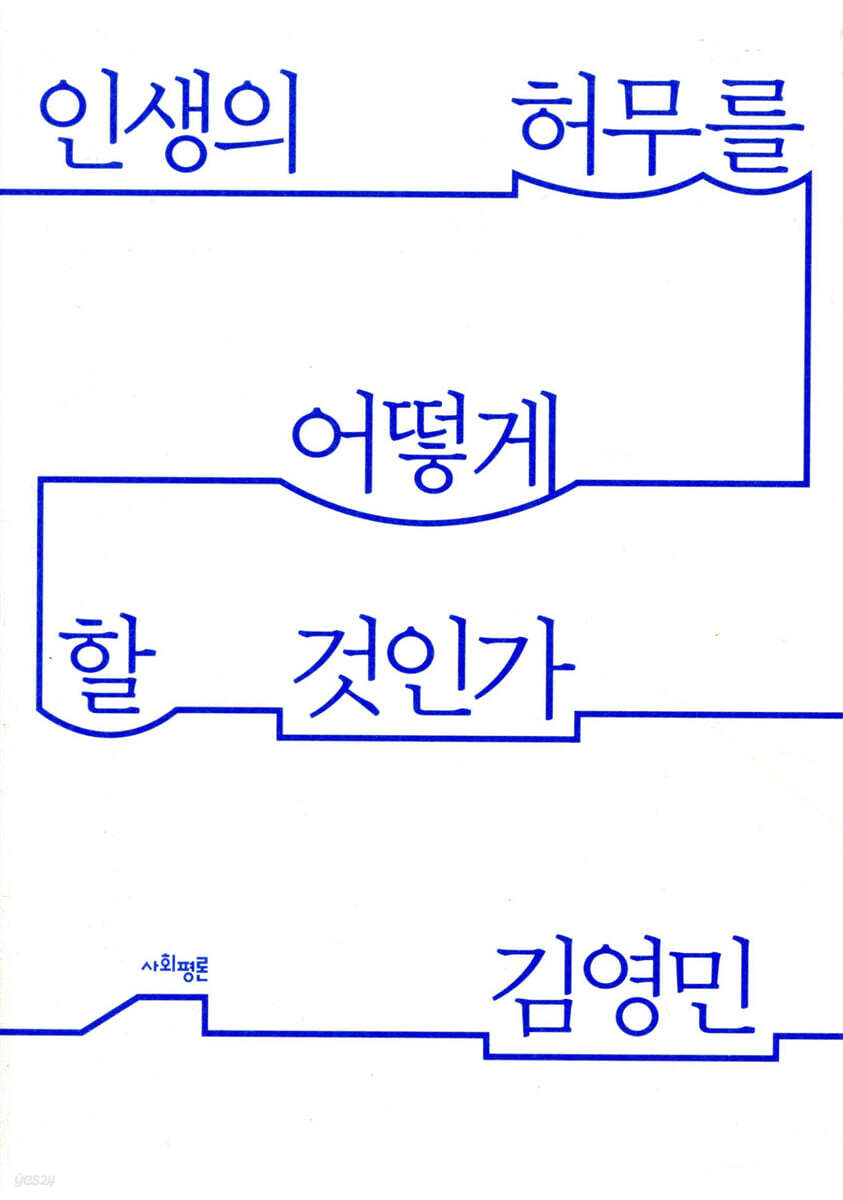
What to do with the emptiness of life
 |
Description
Book Introduction
- A word from MD
-
Life is inherently futileA new work by Professor Kim Young-min, a researcher of the history of political thought and renowned for his sharp and humorous writing style.
The topic he faced this time was vanity.
The confrontation with nihilism, which begins with the news of "Red Cliff," continues across various texts, including classics, films, and paintings.
Even in a life of futility, I explored the possibility of an active life.
October 28, 2022. Humanities PD Son Min-gyu
How to live with the futility of life, as told by Professor Kim Young-min of Seoul National University, a researcher of the history of thought and columnist.
Taking "Red Cliffs" by Su Shi, a writer of the Northern Song Dynasty, as a motif, he captured and reinterpreted the results of long-standing thoughts on "emptiness," a universal problem of humanity, through his own unique perspective.
As it deals with the theme of nihilism, death and skeletons appear, but thanks to Kim Young-min's humor and insight, we are able to face and accept nihilism without it being too heavy, yet not too light.
Anyone who has ever experienced a moment when life feels futile can find small comforts in his writings that can help them endure their daily lives.
The more you read it slowly, the more you keep it by your side and savor it for a long time, the more its value shines.
Taking "Red Cliffs" by Su Shi, a writer of the Northern Song Dynasty, as a motif, he captured and reinterpreted the results of long-standing thoughts on "emptiness," a universal problem of humanity, through his own unique perspective.
As it deals with the theme of nihilism, death and skeletons appear, but thanks to Kim Young-min's humor and insight, we are able to face and accept nihilism without it being too heavy, yet not too light.
Anyone who has ever experienced a moment when life feels futile can find small comforts in his writings that can help them endure their daily lives.
The more you read it slowly, the more you keep it by your side and savor it for a long time, the more its value shines.
- You can preview some of the book's contents.
Preview
index
Prologue: Facing the Void
1.
In the waves of nothingness
Spring days are passing by
Writing in the void
stare at the ruins
Look at the horizon
For rehabilitation
2.
The whereabouts of wealth, fame, and beauty
Life is a bubble
Dance with Death
See a corpse
Ask the skeleton
3.
Mortals in Time
What is time
Life in Time
Life is not a score, it's a performance
Identity is a fiction meant to endure time.
4.
Living long and becoming a god
Defending old age
The story of a dementia patient who became aware of his/her dementia
Between a free man and a homeless person
Have you seen the freshness?
5.
Day by day
The myth of Sisyphus continues
To love the hamster wheel of life
Seeing the clouds means
Slow is the recipe for life
6.
A matter of perspective
How to get out of sadness
Beyond imitation
You can't see the true face of a mountain in the mountains.
What is a mental victory?
7.
Nihilism and Politics
To compete or not to compete
Politics of Good Intentions
Politics is like love
Embrace the Cathedral
8.
Enjoying life
Play with life
Recipe for Sweetness
How to Enjoy Life's Desserts
Towards a society where people eat well and live well
Epilogue: For a life without purpose
Appendix News: "Red Cliffs"
List of illustrations and citation sources
1.
In the waves of nothingness
Spring days are passing by
Writing in the void
stare at the ruins
Look at the horizon
For rehabilitation
2.
The whereabouts of wealth, fame, and beauty
Life is a bubble
Dance with Death
See a corpse
Ask the skeleton
3.
Mortals in Time
What is time
Life in Time
Life is not a score, it's a performance
Identity is a fiction meant to endure time.
4.
Living long and becoming a god
Defending old age
The story of a dementia patient who became aware of his/her dementia
Between a free man and a homeless person
Have you seen the freshness?
5.
Day by day
The myth of Sisyphus continues
To love the hamster wheel of life
Seeing the clouds means
Slow is the recipe for life
6.
A matter of perspective
How to get out of sadness
Beyond imitation
You can't see the true face of a mountain in the mountains.
What is a mental victory?
7.
Nihilism and Politics
To compete or not to compete
Politics of Good Intentions
Politics is like love
Embrace the Cathedral
8.
Enjoying life
Play with life
Recipe for Sweetness
How to Enjoy Life's Desserts
Towards a society where people eat well and live well
Epilogue: For a life without purpose
Appendix News: "Red Cliffs"
List of illustrations and citation sources
Into the book
Life is meaningless.
The void is like the smell of blood in the human soul, so as long as the soul exists, no matter how much you wash it, it will never be completely erased.
Just as humans can live without losing their souls, humans can live with the futility of life.
I dream of a state where time can pass quietly, without human goodwill, without hope, without meaning.
---From "Prologue: Facing the Nihilism"
Life goes by so quickly, even though I haven't accomplished anything.
What we fear in times like these is not a volcanic eruption, a comet collision, a sudden thunderstorm, or a sudden power outage.
What's truly scary is just the passing of the days.
Time passes without a care, the day dawns without hesitation, and I am afraid of the wind blowing.
---From "Spring Days Are Passing"
Like Patterson, I go to bed at a set time.
I take a walk before bed, take a shower, upload the music I want to listen to that night to Facebook, read a book or watch a video I've been reading that day, and then fall asleep.
And then I wake up at a certain time and boil eggs.
I am amazed at how the liquid is neatly contained within the oval shell.
Because I've been doing this for so long, I can cook eggs just the way I want them.
I hope I can continue this routine for a long time.
I hope that I can continue without the anxiety that comes from not being able to achieve my goals, or the feeling of emptiness that comes from achieving them.
I hope to write a poem about my life that will disappear into the flow of time like water.
---From "Life in Time"
Cicero argues that even old age does not regress or that regression can be compensated for.
But I think differently.
As you get older, you regress.
There is no way to avoid regression.
So, we need to actively enjoy regression.
That is precisely the joy of old age.
How can you enjoy regression? It's about rekindling what you've already achieved.
---From "Defending Old Age"
Excessive leisure makes people empty, bored, idle, and wasteful.
Salvation is not about eliminating labor, but about changing the quality of labor.
Salvation does not come from being free from work, but from being able to enjoy work.
---From "To Love the Hamster Wheel of Life"
How can we enjoy our work? William Morris argues.
Art will save us.
The painstaking effort to create the good things we need for life, the small arts and beauty embedded in the details of everyday life, is what will save us.
They are what make our work enjoyable.
---From "To Love the Hamster Wheel of Life"
It seems that Zhuangzi has finally found a way out of the hell of his mind.
…when a person dies, he or she returns to the state before birth.
Have you ever felt sad about your pre-birth state, either before or after you were born?
I never grieved about my condition before I was born, so why am I grieving now that he died?
To empathize with this kind of comfort from the elders, we need to think of life as part of a larger flow.
It takes the power of mind to imagine not only the state after death, but also the state before birth.
---From "How to Escape from Sadness"
No political ideology or system can withstand the test of time.
People will become corrupt and lazy, and institutions will become old and creaky.
How can we maintain the vitality and health of the political body in the midst of all this?
Will you endure this worldly time without the promise of salvation?
This is a political and philosophical question for a new era.
---From "Politics is Like Love"
When you say you want to live a purposeless life, some people misunderstand that as you lying down and 'sucking honey'.
It's a big misunderstanding.
Isn't life such that even resting isn't easy?
You shouldn't rest passively.
You have to actively rest to get rest.
You have to rest hard and do your best to live leisurely.
The same goes for a life without purpose.
You can live without purpose only if you do your best.
It doesn't necessarily have to be purposeless.
I want a life without a purpose.
I don't want to live life, I don't want to do the task of living.
The void is like the smell of blood in the human soul, so as long as the soul exists, no matter how much you wash it, it will never be completely erased.
Just as humans can live without losing their souls, humans can live with the futility of life.
I dream of a state where time can pass quietly, without human goodwill, without hope, without meaning.
---From "Prologue: Facing the Nihilism"
Life goes by so quickly, even though I haven't accomplished anything.
What we fear in times like these is not a volcanic eruption, a comet collision, a sudden thunderstorm, or a sudden power outage.
What's truly scary is just the passing of the days.
Time passes without a care, the day dawns without hesitation, and I am afraid of the wind blowing.
---From "Spring Days Are Passing"
Like Patterson, I go to bed at a set time.
I take a walk before bed, take a shower, upload the music I want to listen to that night to Facebook, read a book or watch a video I've been reading that day, and then fall asleep.
And then I wake up at a certain time and boil eggs.
I am amazed at how the liquid is neatly contained within the oval shell.
Because I've been doing this for so long, I can cook eggs just the way I want them.
I hope I can continue this routine for a long time.
I hope that I can continue without the anxiety that comes from not being able to achieve my goals, or the feeling of emptiness that comes from achieving them.
I hope to write a poem about my life that will disappear into the flow of time like water.
---From "Life in Time"
Cicero argues that even old age does not regress or that regression can be compensated for.
But I think differently.
As you get older, you regress.
There is no way to avoid regression.
So, we need to actively enjoy regression.
That is precisely the joy of old age.
How can you enjoy regression? It's about rekindling what you've already achieved.
---From "Defending Old Age"
Excessive leisure makes people empty, bored, idle, and wasteful.
Salvation is not about eliminating labor, but about changing the quality of labor.
Salvation does not come from being free from work, but from being able to enjoy work.
---From "To Love the Hamster Wheel of Life"
How can we enjoy our work? William Morris argues.
Art will save us.
The painstaking effort to create the good things we need for life, the small arts and beauty embedded in the details of everyday life, is what will save us.
They are what make our work enjoyable.
---From "To Love the Hamster Wheel of Life"
It seems that Zhuangzi has finally found a way out of the hell of his mind.
…when a person dies, he or she returns to the state before birth.
Have you ever felt sad about your pre-birth state, either before or after you were born?
I never grieved about my condition before I was born, so why am I grieving now that he died?
To empathize with this kind of comfort from the elders, we need to think of life as part of a larger flow.
It takes the power of mind to imagine not only the state after death, but also the state before birth.
---From "How to Escape from Sadness"
No political ideology or system can withstand the test of time.
People will become corrupt and lazy, and institutions will become old and creaky.
How can we maintain the vitality and health of the political body in the midst of all this?
Will you endure this worldly time without the promise of salvation?
This is a political and philosophical question for a new era.
---From "Politics is Like Love"
When you say you want to live a purposeless life, some people misunderstand that as you lying down and 'sucking honey'.
It's a big misunderstanding.
Isn't life such that even resting isn't easy?
You shouldn't rest passively.
You have to actively rest to get rest.
You have to rest hard and do your best to live leisurely.
The same goes for a life without purpose.
You can live without purpose only if you do your best.
It doesn't necessarily have to be purposeless.
I want a life without a purpose.
I don't want to live life, I don't want to do the task of living.
---From "For a Life Without a Purpose"
Publisher's Review
A new question from Professor Kim Young-min, a researcher of the history of thought
“What to do with the emptiness of life”
Professor Kim Young-min of Seoul National University, a researcher of the history of thought and columnist, has published a humanities essay on the topic of “the futility of life.”
Although the theme of 'futility' appeared in previous prose collections, this is the first book to contain his thoughts solely on the futility of life.
Everyone, regardless of age or gender, has felt at least once that life is meaningless.
What would you do each time? Would you delve deep into the source of the futility, skip over it, ignore it, or overcome it? Professor Kim Young-min bluntly states, "Life is futile."
He declares that “just as humans can live without losing their souls, so too can humans live with the emptiness of life,” while saying that emptiness is like the smell of blood in the human soul, and that it cannot be erased no matter how much one washes it as long as the soul exists.
What exactly does it mean to live with emptiness? Author Kim Young-min argues that hope, goodwill, and meaning aren't always the answers to life's problems.
What good is it to offer hope, goodwill, and meaning to those who appear fine on the outside but are already exhausted, distrustful of the world, or empty inside?
That is why the author dreams of a state in which time can pass quietly without good intentions, without hope, and without meaning.
I want a life without a purpose.
Because I don't want to live life, I don't want to do the task of living.
This author's attitude toward life gives us a glimpse into what it means to live with emptiness.
Full of Kim Young-min's humor, wit, and insight
How to Live with a 'Vain Life'
So how can we live with the futility of life? This book offers a variety of ways to live with it.
As the book deals with the theme of futility, death, corpses, and skeletons often appear, but as always, thanks to Kim Young-min's humor, wit, and insightful writing, readers are able to maintain an appropriate distance from the futility of life without it being too heavy or too light.
The author's brilliant prose, which speaks of the medieval "dance of death" with skeletons, William Morris's argument for salvation through art, Sisyphus's repetitive labor to endure boredom, and the shift in perspective that overcomes Zhuangzi's sorrow, sometimes represents the readers' thoughts, while also leading them to new paths of thought they might not have normally considered.
His essays are not soft or sweet, and do not directly comfort anyone who feels that life is meaningless.
However, his writing makes the reader nod, underline, record, or copy it to remember it for a long time.
In addition, it is enriched with a list of paintings, films, poems, and novels that readers can look at with the same perspective as the author.
That alone gives me a little comfort in getting through my daily life.
The more you read it slowly, the more you keep it by your side and savor it for a long time, the more its value shines.
News of "Red Cliffs",
Becoming a motif for writing about nihilism
The origins of this book, "What to Do About the Vanity of Life," date back to a special lecture commemorating the publication of "A History of Chinese Political Thought" in the spring of 2021.
The special lecture topic of this book, which tells a new Chinese story that we have never experienced before by freely crossing over vast Eastern and Western literature, was 'What to do with the futility of life' based on 'Red Cliff' by Su Shi, a writer of the Northern Song Dynasty.
"Battle of Red Cliffs" is a poem written by Su Shi (Su Dongpo) while he was in exile and traveling along the Yangtze River. It contains the story of forgetting one's worries by reminiscing about the famous "Battle of Red Cliffs" from "Romance of the Three Kingdoms" and realizing that life is short and fleeting, unlike the long-lasting nature.
Since this unique lecture, which linked the "History of Chinese Political Thought" and the "Futility of Life," the author has published fragments of his thoughts on living with futility in various publications. This book is a new reorganization of those writings, tailored to the flow of "Red Cliff."
Each piece, arranged in accordance with the eight-chapter structure, is an independent piece, but at the same time, it is connected to each other and continues with the same flow and breathing as “Red Cliffs.”
If you examine the contents of "Red Cliffs" included in the appendix in connection with the main text, you can enjoy a different kind of pleasure in reading the book.
The futility of life is not just a common problem, but a universal problem that has plagued countless people for a long time.
The author crosses the boundaries between literary works such as poetry and novels and numerous artistic works such as paintings and films, capturing and reinterpreting the thoughts of those who have previously pondered the futility of life through his own unique perspective.
In that sense, this book is the author's reply to those who have already pondered the futility of life, and at the same time, it can be said to be a new commentary on So Shi's "Red Cliffs."
A feast of images that make you intuitively perceive the void
Another unique feature of this book is its images.
Just as images existed before text in the beginning, the author focuses on images that speak of the futility of life, separate from text.
This book contains a variety of nihilistic images, including paintings, murals, prints, wallpaper, ceramics, picture books, films, and installations that transcend time and space.
Sometimes the image seems to support the text, but other times the text explains the image as if it were supporting the text.
Another way to read this book is to first encounter the images and intuitively experience the emptiness before reading the text.
The author's affection for this visual culture, which allows us to intuitively understand the meaning of nothingness just by looking at it, is evident throughout the book.
Images that could not be included due to space limitations will be republished in another edition.
“What to do with the emptiness of life”
Professor Kim Young-min of Seoul National University, a researcher of the history of thought and columnist, has published a humanities essay on the topic of “the futility of life.”
Although the theme of 'futility' appeared in previous prose collections, this is the first book to contain his thoughts solely on the futility of life.
Everyone, regardless of age or gender, has felt at least once that life is meaningless.
What would you do each time? Would you delve deep into the source of the futility, skip over it, ignore it, or overcome it? Professor Kim Young-min bluntly states, "Life is futile."
He declares that “just as humans can live without losing their souls, so too can humans live with the emptiness of life,” while saying that emptiness is like the smell of blood in the human soul, and that it cannot be erased no matter how much one washes it as long as the soul exists.
What exactly does it mean to live with emptiness? Author Kim Young-min argues that hope, goodwill, and meaning aren't always the answers to life's problems.
What good is it to offer hope, goodwill, and meaning to those who appear fine on the outside but are already exhausted, distrustful of the world, or empty inside?
That is why the author dreams of a state in which time can pass quietly without good intentions, without hope, and without meaning.
I want a life without a purpose.
Because I don't want to live life, I don't want to do the task of living.
This author's attitude toward life gives us a glimpse into what it means to live with emptiness.
Full of Kim Young-min's humor, wit, and insight
How to Live with a 'Vain Life'
So how can we live with the futility of life? This book offers a variety of ways to live with it.
As the book deals with the theme of futility, death, corpses, and skeletons often appear, but as always, thanks to Kim Young-min's humor, wit, and insightful writing, readers are able to maintain an appropriate distance from the futility of life without it being too heavy or too light.
The author's brilliant prose, which speaks of the medieval "dance of death" with skeletons, William Morris's argument for salvation through art, Sisyphus's repetitive labor to endure boredom, and the shift in perspective that overcomes Zhuangzi's sorrow, sometimes represents the readers' thoughts, while also leading them to new paths of thought they might not have normally considered.
His essays are not soft or sweet, and do not directly comfort anyone who feels that life is meaningless.
However, his writing makes the reader nod, underline, record, or copy it to remember it for a long time.
In addition, it is enriched with a list of paintings, films, poems, and novels that readers can look at with the same perspective as the author.
That alone gives me a little comfort in getting through my daily life.
The more you read it slowly, the more you keep it by your side and savor it for a long time, the more its value shines.
News of "Red Cliffs",
Becoming a motif for writing about nihilism
The origins of this book, "What to Do About the Vanity of Life," date back to a special lecture commemorating the publication of "A History of Chinese Political Thought" in the spring of 2021.
The special lecture topic of this book, which tells a new Chinese story that we have never experienced before by freely crossing over vast Eastern and Western literature, was 'What to do with the futility of life' based on 'Red Cliff' by Su Shi, a writer of the Northern Song Dynasty.
"Battle of Red Cliffs" is a poem written by Su Shi (Su Dongpo) while he was in exile and traveling along the Yangtze River. It contains the story of forgetting one's worries by reminiscing about the famous "Battle of Red Cliffs" from "Romance of the Three Kingdoms" and realizing that life is short and fleeting, unlike the long-lasting nature.
Since this unique lecture, which linked the "History of Chinese Political Thought" and the "Futility of Life," the author has published fragments of his thoughts on living with futility in various publications. This book is a new reorganization of those writings, tailored to the flow of "Red Cliff."
Each piece, arranged in accordance with the eight-chapter structure, is an independent piece, but at the same time, it is connected to each other and continues with the same flow and breathing as “Red Cliffs.”
If you examine the contents of "Red Cliffs" included in the appendix in connection with the main text, you can enjoy a different kind of pleasure in reading the book.
The futility of life is not just a common problem, but a universal problem that has plagued countless people for a long time.
The author crosses the boundaries between literary works such as poetry and novels and numerous artistic works such as paintings and films, capturing and reinterpreting the thoughts of those who have previously pondered the futility of life through his own unique perspective.
In that sense, this book is the author's reply to those who have already pondered the futility of life, and at the same time, it can be said to be a new commentary on So Shi's "Red Cliffs."
A feast of images that make you intuitively perceive the void
Another unique feature of this book is its images.
Just as images existed before text in the beginning, the author focuses on images that speak of the futility of life, separate from text.
This book contains a variety of nihilistic images, including paintings, murals, prints, wallpaper, ceramics, picture books, films, and installations that transcend time and space.
Sometimes the image seems to support the text, but other times the text explains the image as if it were supporting the text.
Another way to read this book is to first encounter the images and intuitively experience the emptiness before reading the text.
The author's affection for this visual culture, which allows us to intuitively understand the meaning of nothingness just by looking at it, is evident throughout the book.
Images that could not be included due to space limitations will be republished in another edition.
GOODS SPECIFICS
- Publication date: October 31, 2022
- Page count, weight, size: 308 pages | 470g | 140*200*20mm
- ISBN13: 9791167070791
- ISBN10: 1167070798
You may also like
카테고리
korean


korean

![ELLE 엘르 스페셜 에디션 A형 : 12월 [2025]](http://librairie.coreenne.fr/cdn/shop/files/b8e27a3de6c9538896439686c6b0e8fb.jpg?v=1766436872&width=3840)


