

Gardens in Art
 |
Description
Book Introduction
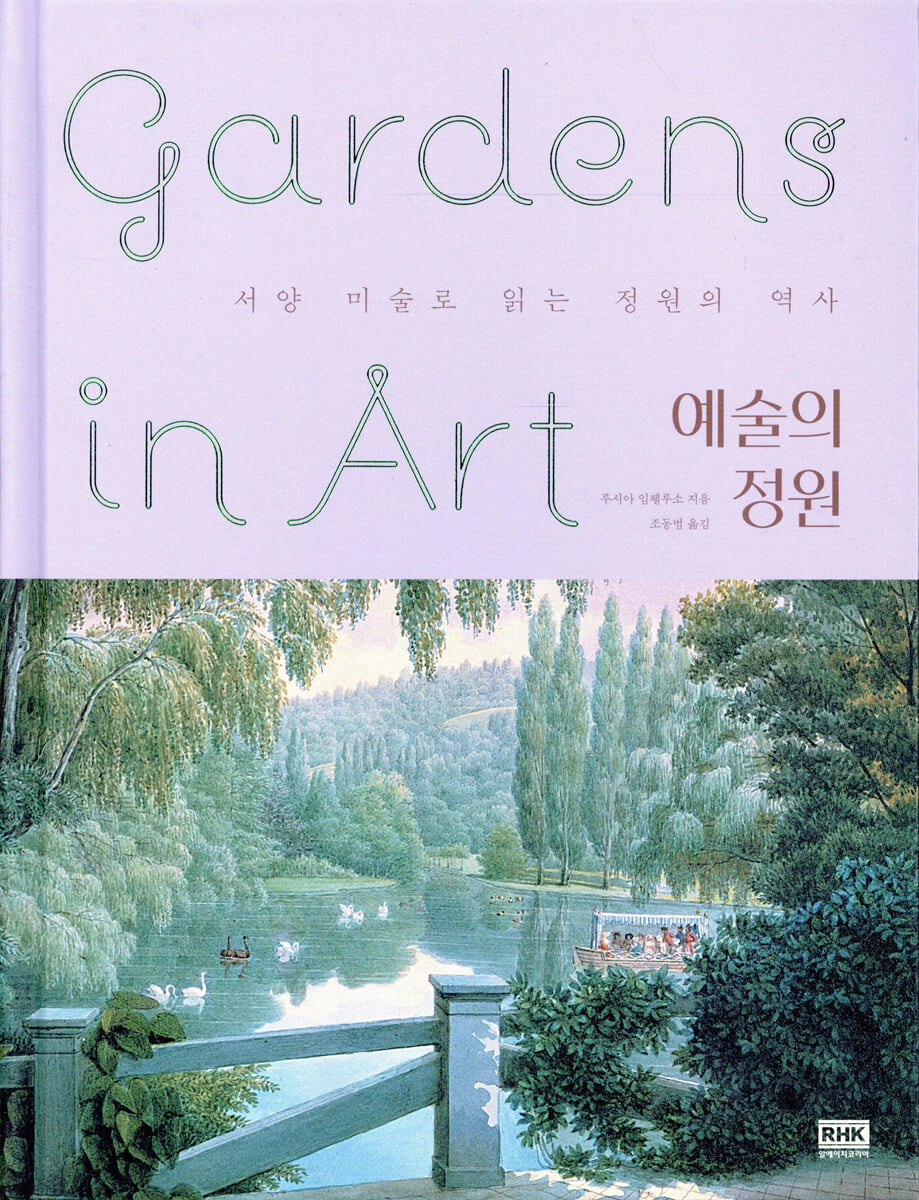
“Art is harmony with nature.” _Paul Cézanne Finding the meaning and symbolism of the garden hidden in the painting As times change, there is something that has developed along with art. That's the garden. Gardens are an art form that represents an era, reflecting the history of myths, religions, popes, monarchs and kings, and in some times they have served as a medium for inspiration for artists' stories and paintings. "The Garden of Art" guides us through the diverse world of gardens in Western art from ancient times to the 19th century, including gardens in the general sense known to the public, gardens that embody the lifestyle of the time, gardens with symbolic concepts, gardens depicted in literary works and painters' paintings, and gardens as religious sites. The purpose of this book is to elicit the multi-layered interpretations contained in paintings and artworks depicting gardens. There were times when the garden depicted in the painting was treated as a background for the painting or was looked down upon as something that only served to decorate the subject. However, hidden within that green microcosm are symbols and meanings that reflect the tastes and aesthetics of the times that have endured and continued to bear life. Through the over 300 garden paintings in Western art included in the text, you will encounter a diverse history and interpretation of gardens. |
- You can preview some of the book's contents.
Preview
index
introduction
PART 1: The Garden of the Secular and the Achievement
1 Ancient Egypt
2 Ancient Greece
3 Ancient Rome
4 Islamic Gardens
5 Monastery Gardens
6. Garden of the World
PART 2 The Gardens of the Pope and the Monarch
1 Renaissance Garden
2 Literature on gardens during the Renaissance
3 Medici Gardens
4 City Housing
5 Gardens outside the city walls
6. Belvedere, the Pope's Garden
7 Villa d'Este Gardens
The Forest of the 8 Cardinals
9 Bomarzo Gardens
PART 3 The Garden of Kings
1 Baroque Garden
2 Garden of Challenges
3 Gardens of Versailles
4 The King's Garden
5 Schönbrunn Palace
6 Royal Palace of Caserta
7 Tsar's Garden
8 The Netherlands in the Era of Democracy
9 Tulip Mania
10 Rococo Gardens
PART 4 The Garden of Liberty
1 Landscape Garden
2 Nature as a Model
3 Poet's Garden
4 Storehead Gardens
5 Political Gardens
6 Repton's Garden
7 Ermnonville
8 Wilhelmshöhe
9 Malmaison
10 Garden of the Sublime
PART 5 Public Gardens for the Public
1. Public parks in Paris
2 Public parks in London
3 Berlin Victoria Park
4 New York Central Park
PART 6 ELEMENTS OF THE GARDEN
1 wall
2 Plant Fences
3 Topiary
4 trellis
5 Living Architecture
6 The Secret Garden
7 caves
8 mountains
9 pieces
10 Garden Trails
11 Amazing Elements of the Garden
12 Mazes
13 Seating facilities in the garden
14 flowers
15 water
16 Engineering in the Garden
17 Garden Stage
18 Decorative Flower Beds
19 Fake Architecture and Poly
20 greenhouses
21 The Orient in the Garden
22 trees
23 Alien plants
24 flower pots
25 Ruins
26 Artificial Gardens
PART 7 Life in the Garden
1 Daily Life
2 Science in the Garden
3 Work in the garden
4 Love in the Garden
5 Festival in the Garden
6 Games, Sports, and Other Activities
7 Fashion Promenade
8 Portraits in the Garden
9 The Garden of Hubert Robert
10 Monet's Giverny Garden
PART 8 Gardens of Symbols
1 Sacred Forest
2 Paradise
3 The Garden of Christ
4 Garden of the Virgin Mary
5 The defiled garden
6 The Garden of Good and Evil
Garden of the 7 Senses
8 The Garden of Alchemy
9 Emblem Garden
10 Still Life
11 Philosopher's Garden
12 The Garden of Secret Societies
13 Garden of the Dead
14 Garden of Meditation
15 Circular Gardens
PART 9 Gardens in Literature
1 Garden of the Golden Age
2 Garden of the Hesperides
3 Flora's Garden
4 Pomona Gardens
5 Garden of Venus
6 Rose Story
7 Dante's Garden
8 Boccaccio's Garden
9 Petrarch's Garden
10 The Garden of Polyphile
11 Armid's Garden
12 Paradise Lost
13 Garden Fairies
Index│Notes│Subject Index│Artist Index│References│Copyrights and Sources of Works
Translator's Note
PART 1: The Garden of the Secular and the Achievement
1 Ancient Egypt
2 Ancient Greece
3 Ancient Rome
4 Islamic Gardens
5 Monastery Gardens
6. Garden of the World
PART 2 The Gardens of the Pope and the Monarch
1 Renaissance Garden
2 Literature on gardens during the Renaissance
3 Medici Gardens
4 City Housing
5 Gardens outside the city walls
6. Belvedere, the Pope's Garden
7 Villa d'Este Gardens
The Forest of the 8 Cardinals
9 Bomarzo Gardens
PART 3 The Garden of Kings
1 Baroque Garden
2 Garden of Challenges
3 Gardens of Versailles
4 The King's Garden
5 Schönbrunn Palace
6 Royal Palace of Caserta
7 Tsar's Garden
8 The Netherlands in the Era of Democracy
9 Tulip Mania
10 Rococo Gardens
PART 4 The Garden of Liberty
1 Landscape Garden
2 Nature as a Model
3 Poet's Garden
4 Storehead Gardens
5 Political Gardens
6 Repton's Garden
7 Ermnonville
8 Wilhelmshöhe
9 Malmaison
10 Garden of the Sublime
PART 5 Public Gardens for the Public
1. Public parks in Paris
2 Public parks in London
3 Berlin Victoria Park
4 New York Central Park
PART 6 ELEMENTS OF THE GARDEN
1 wall
2 Plant Fences
3 Topiary
4 trellis
5 Living Architecture
6 The Secret Garden
7 caves
8 mountains
9 pieces
10 Garden Trails
11 Amazing Elements of the Garden
12 Mazes
13 Seating facilities in the garden
14 flowers
15 water
16 Engineering in the Garden
17 Garden Stage
18 Decorative Flower Beds
19 Fake Architecture and Poly
20 greenhouses
21 The Orient in the Garden
22 trees
23 Alien plants
24 flower pots
25 Ruins
26 Artificial Gardens
PART 7 Life in the Garden
1 Daily Life
2 Science in the Garden
3 Work in the garden
4 Love in the Garden
5 Festival in the Garden
6 Games, Sports, and Other Activities
7 Fashion Promenade
8 Portraits in the Garden
9 The Garden of Hubert Robert
10 Monet's Giverny Garden
PART 8 Gardens of Symbols
1 Sacred Forest
2 Paradise
3 The Garden of Christ
4 Garden of the Virgin Mary
5 The defiled garden
6 The Garden of Good and Evil
Garden of the 7 Senses
8 The Garden of Alchemy
9 Emblem Garden
10 Still Life
11 Philosopher's Garden
12 The Garden of Secret Societies
13 Garden of the Dead
14 Garden of Meditation
15 Circular Gardens
PART 9 Gardens in Literature
1 Garden of the Golden Age
2 Garden of the Hesperides
3 Flora's Garden
4 Pomona Gardens
5 Garden of Venus
6 Rose Story
7 Dante's Garden
8 Boccaccio's Garden
9 Petrarch's Garden
10 The Garden of Polyphile
11 Armid's Garden
12 Paradise Lost
13 Garden Fairies
Index│Notes│Subject Index│Artist Index│References│Copyrights and Sources of Works
Translator's Note
Detailed image
.jpg)
Into the book
In the chaotic times following the division of the Eastern and Western Roman Empires, medieval monasteries played a vital role in preserving ancient cultures, including art and science, and in passing down agricultural techniques, such as orchards and horticulture, and in gardening.
The monks' profound thoughts about nature were influenced by the images of ancient paradise.
He devoted himself to cultivating his garden, and even in seclusion, he cultivated his religious discipline with the earthly hope of finding the lost Promised Land.
The walls surrounding the monastery were a boundary between domesticated plants and wild nature, between order and chaos.
The cultivated land within the walls was used for various purposes, such as vegetable gardens, herb gardens, and orchards.
--- p.30 From “The Garden of the Monastery”
An inscription carved into the garden reveals the date 1552 when the garden was first created and who owned it.
The inscription, “Solo per sfogar il core”, indicates that the purpose of creating the garden was to express one’s inner world.
This is a kind of garden of wonders, and among the many sights, the stone structures are the most striking.
There are various stone carvings placed in the chaotic nature, including giants wrestling in the midst of nature, a river god, a sea god, Ceres the goddess of grain, Pegasus the winged white horse, as well as elephants, dolphins, a turtle carrying a female on its back, Cerberus the dog guarding the underworld, and three goddesses of vengeance.
Scholars sometimes view the area where this garden is located as a supernatural place.
---- p.76 From "The Garden of Bomarzo"
Rococo gardens favor asymmetrical forms with deliberate disorder, carefully arranged to encourage leisure and play in intimate, intimate spaces.
Thus, the garden was separated from the surrounding landscape and returned to its introverted character, regaining a comfortable atmosphere for contemplation and inner pleasure.
---- p.115 From “Rococo Garden”
Monet adjusted the poses in his garden every day as if he were meeting figures posing for him.
In the garden, it seemed possible to describe countless places where each season and each moment of the day continued.
The old artist tried to bring out the charm and poetic feeling of each landscape through his excellent use of color.
Water lilies became Monet's most captivating subject, a passion that lasted until his death from cataracts.
----- p.378 From "Monet's Garden at Giverny"
The painting of the Virgin in the Closed Garden gradually took shape in the 15th and 16th centuries.
Classical paintings of the Virgin, including her main attributes, the baby Jesus and angels playing musical instruments, are varied.
One such painting is The Mysterious Hunt, in which Mary's garden is depicted as a unicorn's haven.
The Feast of the Assumption of the Blessed Virgin Mary is often depicted as taking place in a garden.
Another variation depicts the Virgin with the baby Jesus in the porch, with the garden acting as a 'middle ground' between the sacred scene and the surrounding cityscape.
Here the themes of closed space and formal garden seem to be combined.
The monks' profound thoughts about nature were influenced by the images of ancient paradise.
He devoted himself to cultivating his garden, and even in seclusion, he cultivated his religious discipline with the earthly hope of finding the lost Promised Land.
The walls surrounding the monastery were a boundary between domesticated plants and wild nature, between order and chaos.
The cultivated land within the walls was used for various purposes, such as vegetable gardens, herb gardens, and orchards.
--- p.30 From “The Garden of the Monastery”
An inscription carved into the garden reveals the date 1552 when the garden was first created and who owned it.
The inscription, “Solo per sfogar il core”, indicates that the purpose of creating the garden was to express one’s inner world.
This is a kind of garden of wonders, and among the many sights, the stone structures are the most striking.
There are various stone carvings placed in the chaotic nature, including giants wrestling in the midst of nature, a river god, a sea god, Ceres the goddess of grain, Pegasus the winged white horse, as well as elephants, dolphins, a turtle carrying a female on its back, Cerberus the dog guarding the underworld, and three goddesses of vengeance.
Scholars sometimes view the area where this garden is located as a supernatural place.
---- p.76 From "The Garden of Bomarzo"
Rococo gardens favor asymmetrical forms with deliberate disorder, carefully arranged to encourage leisure and play in intimate, intimate spaces.
Thus, the garden was separated from the surrounding landscape and returned to its introverted character, regaining a comfortable atmosphere for contemplation and inner pleasure.
---- p.115 From “Rococo Garden”
Monet adjusted the poses in his garden every day as if he were meeting figures posing for him.
In the garden, it seemed possible to describe countless places where each season and each moment of the day continued.
The old artist tried to bring out the charm and poetic feeling of each landscape through his excellent use of color.
Water lilies became Monet's most captivating subject, a passion that lasted until his death from cataracts.
----- p.378 From "Monet's Garden at Giverny"
The painting of the Virgin in the Closed Garden gradually took shape in the 15th and 16th centuries.
Classical paintings of the Virgin, including her main attributes, the baby Jesus and angels playing musical instruments, are varied.
One such painting is The Mysterious Hunt, in which Mary's garden is depicted as a unicorn's haven.
The Feast of the Assumption of the Blessed Virgin Mary is often depicted as taking place in a garden.
Another variation depicts the Virgin with the baby Jesus in the porch, with the garden acting as a 'middle ground' between the sacred scene and the surrounding cityscape.
Here the themes of closed space and formal garden seem to be combined.
---- p.397 From “The Garden of the Virgin Mary”
Publisher's Review
The history of gardens, which has accompanied human history since the beginning of time
Gardens have been with humans since the beginning of human history.
For example, the ancient Romans called the land where they grew vegetables and crops, a kind of outdoor storage close to the kitchen, 'hortus'.
Although the term is the same, the plural form hortus refers primarily to gardens used for leisure activities.
Louis XIV of France, who also loved everything related to gardens, wanted to enjoy the blessings of nature by recreating his hortus in Versailles as an earthly paradise like the Garden of Eden.
In this way, gardens have been a part of human history and context, and 『The Garden of Art』 covers the history of gardens that have accompanied humans in a multi-layered manner.
You can also see gardens from the Garden of Eden, ancient Egyptian, Greek, and Roman myths, as well as the ultimate in royal splendor.
It also includes numerous Western art pieces with rich commentary, allowing viewers to truly enjoy the meaning and symbolism of gardens hidden within the paintings.
Gardens of the Emperors, public gardens for the masses…
And it inspired artists
The colorful world of gardens hidden in literature
Gardens in the past were the property of those with power and money, and have changed in various ways over time.
This extends beyond the liberal era to the era of public gardens for the masses.
Public parks in Paris and London, Victoria Park in Berlin, and Central Park in New York were created by confiscating land once owned by royalty, clergy, and aristocrats and converting it into parks.
Public parks were created to address urban problems during the turbulent times of capitalism during the Industrial Revolution, and people used parks as spaces for social activities and play.
This book interprets the history of these gardens and the meaning and paintings contained within them.
You can also see paintings of not only Western gardens, but also ancient Asian gardens such as those of China and Japan.
And the appearance of these gardens was engraved in the paintings and literature of artists.
Shakespeare portrayed gardens through folk tales and tales of fairies living in the forest, as seen in A Midsummer Night's Dream and The Tempest.
Victorian artists, including Burne-Jones and Turner, often drew inspiration from Shakespeare's works to describe 'gardens' as 'worlds of fantasy', and in this book, you can encounter this 'world of fantasy' called gardens through colorful Western art.
Gardens have been with humans since the beginning of human history.
For example, the ancient Romans called the land where they grew vegetables and crops, a kind of outdoor storage close to the kitchen, 'hortus'.
Although the term is the same, the plural form hortus refers primarily to gardens used for leisure activities.
Louis XIV of France, who also loved everything related to gardens, wanted to enjoy the blessings of nature by recreating his hortus in Versailles as an earthly paradise like the Garden of Eden.
In this way, gardens have been a part of human history and context, and 『The Garden of Art』 covers the history of gardens that have accompanied humans in a multi-layered manner.
You can also see gardens from the Garden of Eden, ancient Egyptian, Greek, and Roman myths, as well as the ultimate in royal splendor.
It also includes numerous Western art pieces with rich commentary, allowing viewers to truly enjoy the meaning and symbolism of gardens hidden within the paintings.
Gardens of the Emperors, public gardens for the masses…
And it inspired artists
The colorful world of gardens hidden in literature
Gardens in the past were the property of those with power and money, and have changed in various ways over time.
This extends beyond the liberal era to the era of public gardens for the masses.
Public parks in Paris and London, Victoria Park in Berlin, and Central Park in New York were created by confiscating land once owned by royalty, clergy, and aristocrats and converting it into parks.
Public parks were created to address urban problems during the turbulent times of capitalism during the Industrial Revolution, and people used parks as spaces for social activities and play.
This book interprets the history of these gardens and the meaning and paintings contained within them.
You can also see paintings of not only Western gardens, but also ancient Asian gardens such as those of China and Japan.
And the appearance of these gardens was engraved in the paintings and literature of artists.
Shakespeare portrayed gardens through folk tales and tales of fairies living in the forest, as seen in A Midsummer Night's Dream and The Tempest.
Victorian artists, including Burne-Jones and Turner, often drew inspiration from Shakespeare's works to describe 'gardens' as 'worlds of fantasy', and in this book, you can encounter this 'world of fantasy' called gardens through colorful Western art.
GOODS SPECIFICS
- Publication date: February 16, 2022
- Format: Hardcover book binding method guide
- Page count, weight, size: 528 pages | 1,100g | 170*223*32mm
- ISBN13: 9788925579115
- ISBN10: 8925579111
You may also like
카테고리
korean


korean

![GQ KOREA Mark (Monthly): December [2025]](http://librairie.coreenne.fr/cdn/shop/files/8ef265dbbfbf186523ed75ba7319009d.jpg?v=1765340328&width=3840)


