

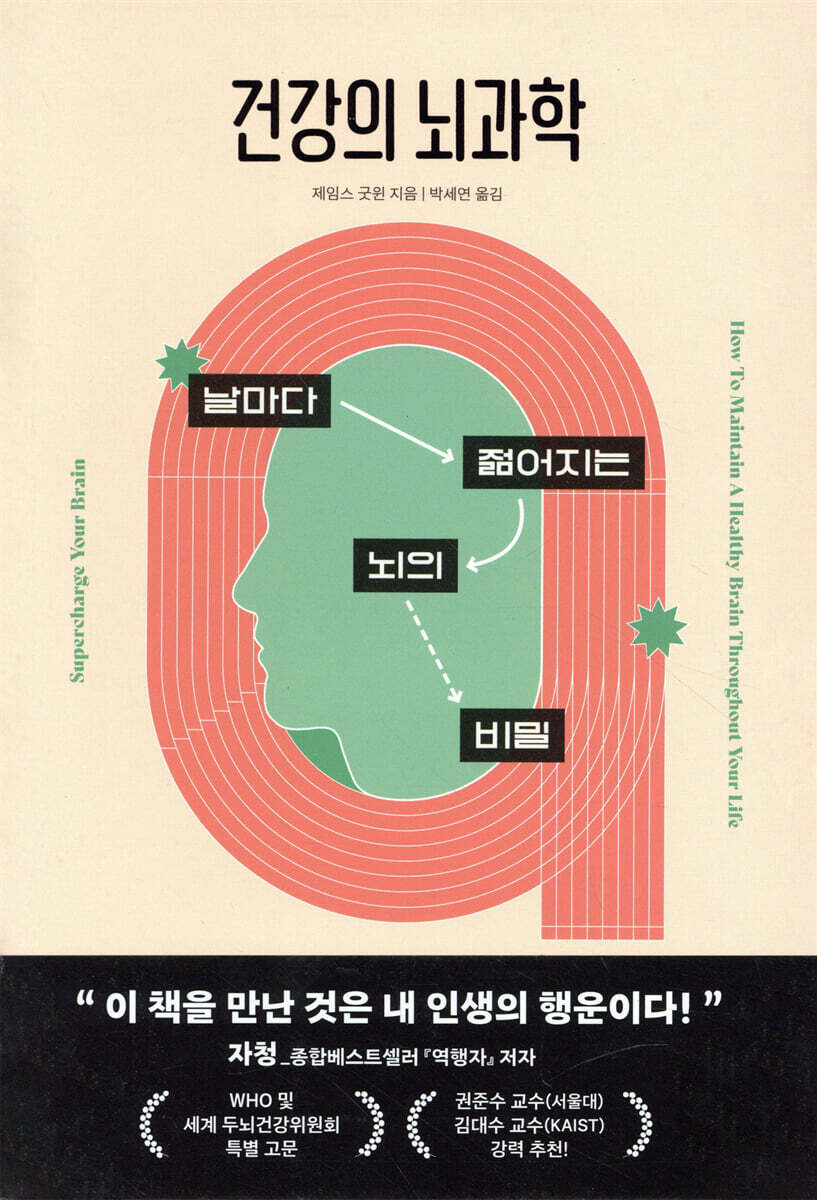
Neuroscience of Health
 |
Description
Book Introduction
“Coming across this book is the luck of my life!” _Voluntary_ Author of the comprehensive bestseller "The Retrograde" A book that provides proven brain science knowledge and practical methods. “A Brain User Manual for Lifelong Health!” Professor Kim Dae-soo (KAIST Department of Life Sciences, Neuroscientist) The foundation of neuroscience knowledge for lifelong health To make it easy to apply this in daily life A book full of practical tips What if someone approached me and told me that with just a few simple practices, I could sharpen my mind and maintain that sharpness? And what if the practices were easy, undemanding, and even fun? What if all these methods were scientifically "validated," so I wouldn't risk wasting my time chasing fads? And what if the person outlining them was a special advisor to the World Brain Health Council, one of the most popular and actionable experts on aging-related topics? Based on the latest research in brain science, this book contains the secrets to maintaining a wiser, happier, and healthier brain as you age. By integrating the latest research findings verified through 2020 with interesting issues in sociology (human relations) and everyday life, this book systematically organizes and suggests brain usage methods necessary for a "happy second half of life" regardless of age. |
- You can preview some of the book's contents.
Preview
index
Recommendation
Introduction: Standing at the forefront of brain science
Chapter 1: A Brain That Gets Younger Every Day
Chapter 2 The Most Deadly Habits for Your Health
Chapter 3: There's Another Brain Inside My Body
Chapter 4: Brains and Microbes: A Perfect Community of Destiny
Chapter 5: Superfoods for the Brain
Chapter 6: The Brain is Not an Island
Chapter 7: Sex and Brain Health
Chapter 8: How to Use Your Brain to Enhance Cognitive Ability
Chapter 9: To Sleep or Not to Sleep
Chapter 10: Happiness and Brain Science
Epilogue
Acknowledgements
Americas
References
Image and table sources
Introduction: Standing at the forefront of brain science
Chapter 1: A Brain That Gets Younger Every Day
Chapter 2 The Most Deadly Habits for Your Health
Chapter 3: There's Another Brain Inside My Body
Chapter 4: Brains and Microbes: A Perfect Community of Destiny
Chapter 5: Superfoods for the Brain
Chapter 6: The Brain is Not an Island
Chapter 7: Sex and Brain Health
Chapter 8: How to Use Your Brain to Enhance Cognitive Ability
Chapter 9: To Sleep or Not to Sleep
Chapter 10: Happiness and Brain Science
Epilogue
Acknowledgements
Americas
References
Image and table sources
Detailed image
.jpg)
Into the book
A 2012 paper published in Nature posed one of the most controversial questions in brain science.
“Is it nature (genes) or nurture (environment) that determines IQ?” Research results revealed that 50 percent of adult intelligence can be explained by childhood (11-year-old) IQ.
So what about the other factors? It turns out that only a quarter of the changes in IQ, or brain function, across adulthood are determined by DNA.
The remaining three-quarters are determined by our environment and lifestyle, or in other words, by our actions.
---From "Entering"
It is revealed that engaging in 'specific activities' in your 20s and 30s can improve your brain health in your 40s and 50s.
The idea that we could slow down the pace of change like this would have been laughed at just 20 or 30 years ago.
But new research goes further, showing that it's never too late to improve your brain health.
---「Chapter 1.
From "The Brain That Gets Younger Every Day"
The impact of neuroscience on our daily lives is rapidly increasing.
I will try to clear readers' doubts by presenting a few examples.
All of this has happened over the past two years.
There are many things that are very surprising and threatening.
· It became possible to connect the brain to a computer.
It is an innovation with tremendous potential and risk.
An intriguing study conducted at the University of California, San Francisco, showed that computers can recognize brain signals and translate them into words.
As of late 2020, several American companies are developing brain-machine interfaces, including Elon Musk's Neuralink.
· A study conducted in April 2019 showed that the adult brain continues to generate new neurons into the 90s.
This means that even in our 90s, our brains continue to renew themselves.
This is clear evidence of neuroplasticity and the potential for maintaining brain health and function over time.
· It has been found that high-sugar foods reward the brain in exactly the same way as drugs like cocaine or heroin.
· A new type of electrical signal has been discovered in the human brain that distinguishes humans from other species.
· The U.S. Food and Drug Administration has approved Spravato, a nasal spray medication, to relieve depression in adults.
· There is a chilling study that has had a profound impact on the concept of consciousness.
Challenging the perception that brain death is a terminal condition, Yale researchers successfully revived the brains of pigs that had been euthanized and had their torsos removed four hours later.
· In relation to our consciousness, scientists have created 'mini brains' with the ability to think.
Here, the mini-brains are clusters of neurons, each 5 to 6 millimeters in size, grown in the laboratory.
It organizes itself into a brain-like structure.
This discovery conjures up nightmares of “disembodied brains” trapped in a cycle of eternal suffering.
· American company Biogen received approval for Aducanumab as a treatment for Alzheimer's disease.
Their achievements were a great shock to many pharmaceutical companies that had not been interested in neurotherapy.
Our society still has no cure for the 400 neurological disorders classified by medicine.
---「Chapter 1.
From "The Brain That Gets Younger Every Day"
A 2011 National Institute of Scientific Research report cited a study of 120 older adults that found that aerobic exercise increased the size of the hippocampus, which led to improved memory.
When people exercised regularly, their hippocampus grew in size by 2 percent per year, effectively reversing the age-related decline.
As most people pass middle age, the hippocampus loses about 1 to 2 percent of its size each year.
Scientists have discovered that this phenomenon is closely related to memory loss.
But regular aerobic exercise actually protects our neural function.
This is what we want.
(…)
Now I'm going to tell you the horrifying truth.
Even if we exercise daily and exceed the recommended amount of exercise, prolonged sitting can negate all the benefits of physical activity! Sitting is incredibly destructive and wreaks havoc on our bodies.
Data analysis suggests that for every additional hour of sitting per day, mortality increases by 2 percent, and for every additional hour of sitting per day exceeding 8 hours, mortality increases by 8 percent.
A sedentary lifestyle, coupled with persistently low levels of physical activity, increases the risk of nearly every major chronic disease, including heart disease, high blood pressure, diabetes, obesity, and cancer.
(…)
---「Chapter 2.
Among the “most detrimental habits to your health”
A recent study of 1,500 older adults found that those who sat for 10 hours a day and got less than 40 minutes of moderate exercise had the same physical and health status as someone eight years older.
Cutting calories alone won't solve this problem.
The solution is to reduce the inflammation caused by sedentary habits, which in the long term leads to increased activity levels and a diet that reduces inflammation.
… research results show that sedentary habits are a precursor to Alzheimer's.
It is estimated that approximately 13 percent of Alzheimer's cases worldwide are the result of inactivity.
It is estimated that reducing sitting time by 25 percent could prevent approximately 1 million cases of Alzheimer's disease worldwide.
---「Chapter 2.
Among the “most detrimental habits to your health”
Humans also have another brain 'inside the body', along with the inside of the skull.
The brain is made up of 500 million neurons, 20 different types of nerve cells and a variety of complex 'microcircuits'.
So to speak, this is our Godzilla brain.
This brain monitors food as it enters the body and records its taste, texture, and condition.
It also controls digestion.
It breaks down food, passes it through the organs, absorbs the broken down food, and manages the process of excreting the residue.
Some parts of the process are, of course, unsatisfactory.
During this time, the second brain continues to communicate with the brain.
…
Serotonin, the 'happiness hormone', one of the brain's most important messenger substances, is not only produced in the brain.
Surprisingly, about 90 percent of all serotonin is produced in the gut, specifically among the trillions of bacteria known as the gut microbiota, or microbiota.
Serotonin is a very important substance that affects our emotional state.
In other words, bad food makes you feel bad.
---「Chapter 3.
From "There is another brain inside my body"
The human body is made up of 30 to 37 trillion cells.
However, according to a paper by Israeli scientists reported in Nature in 2016, there are 50 trillion microorganisms living in the human body.
This means that we are 43 percent 'human' and 57 percent 'microbial'.
No matter how diligently we wash our bodies! Simply put, we are not ourselves.
…about 70 percent of our immune system is found in the gut, where the microbiota plays a role in supporting our immune system by minimizing inflammation and infection.
…the extent of the influence of microbes extends far beyond the emotions of stress or the gut itself.
Recently, it has been discovered that gut microbes have a powerful influence on our thoughts and behavior.
…bacteria enhance their chances of survival by altering our social behavior.
Moreover, there is now evidence that adding certain types of bacteria to the diet of people with social behavioral deficits, such as autism, can alleviate anxiety and antisocial behavior and improve sociability, language, and communication.
---「Chapter 4.
From "Brain and Microbes, a Perfect Community of Destiny"
People who frequently use social media are three times more likely to feel lonely than those who don't, a new study has found.
… analyzed data from a large sample of approximately 20,000 adults aged 17 to 89.
As a result, they confirmed that 'social isolation' predicted the risk of death as strongly as traditional clinical risk factors such as smoking or high blood pressure.
… the increased risk of death due to social isolation, loneliness, and living alone was found to be 29, 26, and 32 percent, respectively.
For example, a lack of social connections is said to be as harmful as smoking 15 cigarettes a day, drinking a bottle of gin, or being morbidly obese.
…
A wealth of social capital throughout life supports our brain health from childhood through old age.
Through all these activities, we can build what psychologists call "cognitive reserve," a cognitive resilience against brain damage.
Cognitive reserve is the brain's ability to identify important challenges and develop alternative ways to overcome them.
“Is it nature (genes) or nurture (environment) that determines IQ?” Research results revealed that 50 percent of adult intelligence can be explained by childhood (11-year-old) IQ.
So what about the other factors? It turns out that only a quarter of the changes in IQ, or brain function, across adulthood are determined by DNA.
The remaining three-quarters are determined by our environment and lifestyle, or in other words, by our actions.
---From "Entering"
It is revealed that engaging in 'specific activities' in your 20s and 30s can improve your brain health in your 40s and 50s.
The idea that we could slow down the pace of change like this would have been laughed at just 20 or 30 years ago.
But new research goes further, showing that it's never too late to improve your brain health.
---「Chapter 1.
From "The Brain That Gets Younger Every Day"
The impact of neuroscience on our daily lives is rapidly increasing.
I will try to clear readers' doubts by presenting a few examples.
All of this has happened over the past two years.
There are many things that are very surprising and threatening.
· It became possible to connect the brain to a computer.
It is an innovation with tremendous potential and risk.
An intriguing study conducted at the University of California, San Francisco, showed that computers can recognize brain signals and translate them into words.
As of late 2020, several American companies are developing brain-machine interfaces, including Elon Musk's Neuralink.
· A study conducted in April 2019 showed that the adult brain continues to generate new neurons into the 90s.
This means that even in our 90s, our brains continue to renew themselves.
This is clear evidence of neuroplasticity and the potential for maintaining brain health and function over time.
· It has been found that high-sugar foods reward the brain in exactly the same way as drugs like cocaine or heroin.
· A new type of electrical signal has been discovered in the human brain that distinguishes humans from other species.
· The U.S. Food and Drug Administration has approved Spravato, a nasal spray medication, to relieve depression in adults.
· There is a chilling study that has had a profound impact on the concept of consciousness.
Challenging the perception that brain death is a terminal condition, Yale researchers successfully revived the brains of pigs that had been euthanized and had their torsos removed four hours later.
· In relation to our consciousness, scientists have created 'mini brains' with the ability to think.
Here, the mini-brains are clusters of neurons, each 5 to 6 millimeters in size, grown in the laboratory.
It organizes itself into a brain-like structure.
This discovery conjures up nightmares of “disembodied brains” trapped in a cycle of eternal suffering.
· American company Biogen received approval for Aducanumab as a treatment for Alzheimer's disease.
Their achievements were a great shock to many pharmaceutical companies that had not been interested in neurotherapy.
Our society still has no cure for the 400 neurological disorders classified by medicine.
---「Chapter 1.
From "The Brain That Gets Younger Every Day"
A 2011 National Institute of Scientific Research report cited a study of 120 older adults that found that aerobic exercise increased the size of the hippocampus, which led to improved memory.
When people exercised regularly, their hippocampus grew in size by 2 percent per year, effectively reversing the age-related decline.
As most people pass middle age, the hippocampus loses about 1 to 2 percent of its size each year.
Scientists have discovered that this phenomenon is closely related to memory loss.
But regular aerobic exercise actually protects our neural function.
This is what we want.
(…)
Now I'm going to tell you the horrifying truth.
Even if we exercise daily and exceed the recommended amount of exercise, prolonged sitting can negate all the benefits of physical activity! Sitting is incredibly destructive and wreaks havoc on our bodies.
Data analysis suggests that for every additional hour of sitting per day, mortality increases by 2 percent, and for every additional hour of sitting per day exceeding 8 hours, mortality increases by 8 percent.
A sedentary lifestyle, coupled with persistently low levels of physical activity, increases the risk of nearly every major chronic disease, including heart disease, high blood pressure, diabetes, obesity, and cancer.
(…)
---「Chapter 2.
Among the “most detrimental habits to your health”
A recent study of 1,500 older adults found that those who sat for 10 hours a day and got less than 40 minutes of moderate exercise had the same physical and health status as someone eight years older.
Cutting calories alone won't solve this problem.
The solution is to reduce the inflammation caused by sedentary habits, which in the long term leads to increased activity levels and a diet that reduces inflammation.
… research results show that sedentary habits are a precursor to Alzheimer's.
It is estimated that approximately 13 percent of Alzheimer's cases worldwide are the result of inactivity.
It is estimated that reducing sitting time by 25 percent could prevent approximately 1 million cases of Alzheimer's disease worldwide.
---「Chapter 2.
Among the “most detrimental habits to your health”
Humans also have another brain 'inside the body', along with the inside of the skull.
The brain is made up of 500 million neurons, 20 different types of nerve cells and a variety of complex 'microcircuits'.
So to speak, this is our Godzilla brain.
This brain monitors food as it enters the body and records its taste, texture, and condition.
It also controls digestion.
It breaks down food, passes it through the organs, absorbs the broken down food, and manages the process of excreting the residue.
Some parts of the process are, of course, unsatisfactory.
During this time, the second brain continues to communicate with the brain.
…
Serotonin, the 'happiness hormone', one of the brain's most important messenger substances, is not only produced in the brain.
Surprisingly, about 90 percent of all serotonin is produced in the gut, specifically among the trillions of bacteria known as the gut microbiota, or microbiota.
Serotonin is a very important substance that affects our emotional state.
In other words, bad food makes you feel bad.
---「Chapter 3.
From "There is another brain inside my body"
The human body is made up of 30 to 37 trillion cells.
However, according to a paper by Israeli scientists reported in Nature in 2016, there are 50 trillion microorganisms living in the human body.
This means that we are 43 percent 'human' and 57 percent 'microbial'.
No matter how diligently we wash our bodies! Simply put, we are not ourselves.
…about 70 percent of our immune system is found in the gut, where the microbiota plays a role in supporting our immune system by minimizing inflammation and infection.
…the extent of the influence of microbes extends far beyond the emotions of stress or the gut itself.
Recently, it has been discovered that gut microbes have a powerful influence on our thoughts and behavior.
…bacteria enhance their chances of survival by altering our social behavior.
Moreover, there is now evidence that adding certain types of bacteria to the diet of people with social behavioral deficits, such as autism, can alleviate anxiety and antisocial behavior and improve sociability, language, and communication.
---「Chapter 4.
From "Brain and Microbes, a Perfect Community of Destiny"
People who frequently use social media are three times more likely to feel lonely than those who don't, a new study has found.
… analyzed data from a large sample of approximately 20,000 adults aged 17 to 89.
As a result, they confirmed that 'social isolation' predicted the risk of death as strongly as traditional clinical risk factors such as smoking or high blood pressure.
… the increased risk of death due to social isolation, loneliness, and living alone was found to be 29, 26, and 32 percent, respectively.
For example, a lack of social connections is said to be as harmful as smoking 15 cigarettes a day, drinking a bottle of gin, or being morbidly obese.
…
A wealth of social capital throughout life supports our brain health from childhood through old age.
Through all these activities, we can build what psychologists call "cognitive reserve," a cognitive resilience against brain damage.
Cognitive reserve is the brain's ability to identify important challenges and develop alternative ways to overcome them.
---「Chapter 6.
From "The Brain is Not an Island"
From "The Brain is Not an Island"
Publisher's Review
What you need to know to age gracefully
All About Brain and Health
People over 40 often remember that their intelligence level (IQ) as a child has a significant impact on their adult life.
However, it has recently been revealed that this is only 25% true.
In other words, innate factors such as DNA only explain a quarter of an adult's intellectual level.
The remaining 75% depends on the person's lifestyle, that is, how they set their mind to it and 'act'.
This conclusion has enormous implications.
This means that the rate of aging that occurs in our bodies is controllable and largely within our control.
It has been revealed that even degenerative brain diseases such as Alzheimer's, which are difficult to treat with current technology, can be 'prevented' through 'changes in eating habits' and relatively simple exercise.
This book proves that this hopeful message is true and provides simple, effective guidelines for daily life to achieve it.
Based on the latest research in brain science, it contains the secrets to maintaining a wiser, happier, and healthier brain as you age.
By integrating the latest research findings verified through 2020 with interesting issues in sociology (human relations) and everyday life, this book systematically organizes and suggests brain usage methods necessary for a "happy second half of life" regardless of age.
It also helps us understand the real threats we must avoid as we inevitably age (disease, sleep deprivation, obesity, social isolation, etc.) and how to cope with the signs of aging while maintaining our intellectual abilities.
Health tips and implications suggested in this book
· People aged 19 to 64 can prevent various chronic diseases such as cardiovascular disease, obesity, and high blood pressure by doing just 150 minutes of aerobic exercise per week.
Aerobic exercise improved all types of intellectual function, including decision-making, thinking speed, and memory.
· Certain lifestyle changes can reduce your risk of cognitive decline by 30 percent over your lifetime.
For example, exercise can actually slow down the aging process by increasing the size of the hippocampus by 2 percent per year (which is enough to reverse two years of aging).
There's a reason they say that exercising makes you smarter.
A study conducted in April 2019 showed that the adult brain continues to generate new neurons into its 90s.
This means that even in your 90s, your brain continues to renew itself.
· Let's reduce sitting time by just 20 percent.
Shockingly, the most detrimental habit to your health is sitting for long periods of time! Even if you exercise daily, sitting is so bad that it negates all the benefits of physical activity.
For every additional hour of sitting time per day, mortality increased by 2 percent and the risk of nearly every chronic disease, including heart disease, high blood pressure, diabetes, obesity and cancer, increased.
When I reduced this time, I burned an average of 350 more calories per day.
· Eat less.
Small meals are a proven health food.
A high calorie intake (more than 2,143 Kcal per day) after middle age 'doubled' the risk of developing memory loss in old age compared to a control group consuming less than 1,500 Kcal per day.
The standard for news should be to the point where you feel 'hunger' at least once a day.
Try to eat about 20 percent less than your average.
On the other hand, extreme calorie restriction has been shown to be less effective than expected.
· About 90 percent of the happiness hormone 'serotonin' is produced in the intestines, not the brain.
This is why the intestines are called the 'second brain'.
Gut microbes also have a major influence on our thoughts and behavior.
Bacteria also enhance their chances of survival by altering our social behavior.
There are even studies showing that changes in the composition of the microbiome can affect anxiety and depression.
· If you want to take care of your brain, chew gum.
Doctors found that improved chewing ability was linked to increased gray matter volume in the brain's premotor cortex (which helps control muscle movement).
Twenty-three studies conducted around the world have proven this.
· Let's focus on small actions.
For example, increasing fruit intake by one serving per day can reduce the risk of cardiovascular death by 8 percent.
This could prevent 60,000 deaths in the United States and 1.6 million worldwide.
Our brains are sensitive to such small but helpful changes.
In addition to this, there are many practical tips for daily life, both big and small.
And all of this knowledge has been verified and cross-checked by neuroscientists around the world.
It's never too late to upgrade your brain.
How long do books on brain science last? According to the author, 3,000 new scientific papers are published every day, demonstrating an accelerating explosion of knowledge.
Among them, there is still a lot of knowledge that is being debated (moderate drinking is good for your health vs.
There is a lot of knowledge that is in a gray area where it is difficult to understand what it means because it is so complex (e.g., not even one glass).
But what if someone approached you and told you that with just a few simple practices, you could sharpen your mind and maintain that sharpness? And what if the practices were easy, undemanding, and even fun? What if all these methods were scientifically "validated," so you wouldn't risk wasting your time chasing fads? What if the person outlining them was a special advisor to the World Brain Health Council, one of the most popular and actionable experts on aging-related topics? This book guides you on how to compound these benefits in your daily life, so that they pay off in a big way over time.
All About Brain and Health
People over 40 often remember that their intelligence level (IQ) as a child has a significant impact on their adult life.
However, it has recently been revealed that this is only 25% true.
In other words, innate factors such as DNA only explain a quarter of an adult's intellectual level.
The remaining 75% depends on the person's lifestyle, that is, how they set their mind to it and 'act'.
This conclusion has enormous implications.
This means that the rate of aging that occurs in our bodies is controllable and largely within our control.
It has been revealed that even degenerative brain diseases such as Alzheimer's, which are difficult to treat with current technology, can be 'prevented' through 'changes in eating habits' and relatively simple exercise.
This book proves that this hopeful message is true and provides simple, effective guidelines for daily life to achieve it.
Based on the latest research in brain science, it contains the secrets to maintaining a wiser, happier, and healthier brain as you age.
By integrating the latest research findings verified through 2020 with interesting issues in sociology (human relations) and everyday life, this book systematically organizes and suggests brain usage methods necessary for a "happy second half of life" regardless of age.
It also helps us understand the real threats we must avoid as we inevitably age (disease, sleep deprivation, obesity, social isolation, etc.) and how to cope with the signs of aging while maintaining our intellectual abilities.
Health tips and implications suggested in this book
· People aged 19 to 64 can prevent various chronic diseases such as cardiovascular disease, obesity, and high blood pressure by doing just 150 minutes of aerobic exercise per week.
Aerobic exercise improved all types of intellectual function, including decision-making, thinking speed, and memory.
· Certain lifestyle changes can reduce your risk of cognitive decline by 30 percent over your lifetime.
For example, exercise can actually slow down the aging process by increasing the size of the hippocampus by 2 percent per year (which is enough to reverse two years of aging).
There's a reason they say that exercising makes you smarter.
A study conducted in April 2019 showed that the adult brain continues to generate new neurons into its 90s.
This means that even in your 90s, your brain continues to renew itself.
· Let's reduce sitting time by just 20 percent.
Shockingly, the most detrimental habit to your health is sitting for long periods of time! Even if you exercise daily, sitting is so bad that it negates all the benefits of physical activity.
For every additional hour of sitting time per day, mortality increased by 2 percent and the risk of nearly every chronic disease, including heart disease, high blood pressure, diabetes, obesity and cancer, increased.
When I reduced this time, I burned an average of 350 more calories per day.
· Eat less.
Small meals are a proven health food.
A high calorie intake (more than 2,143 Kcal per day) after middle age 'doubled' the risk of developing memory loss in old age compared to a control group consuming less than 1,500 Kcal per day.
The standard for news should be to the point where you feel 'hunger' at least once a day.
Try to eat about 20 percent less than your average.
On the other hand, extreme calorie restriction has been shown to be less effective than expected.
· About 90 percent of the happiness hormone 'serotonin' is produced in the intestines, not the brain.
This is why the intestines are called the 'second brain'.
Gut microbes also have a major influence on our thoughts and behavior.
Bacteria also enhance their chances of survival by altering our social behavior.
There are even studies showing that changes in the composition of the microbiome can affect anxiety and depression.
· If you want to take care of your brain, chew gum.
Doctors found that improved chewing ability was linked to increased gray matter volume in the brain's premotor cortex (which helps control muscle movement).
Twenty-three studies conducted around the world have proven this.
· Let's focus on small actions.
For example, increasing fruit intake by one serving per day can reduce the risk of cardiovascular death by 8 percent.
This could prevent 60,000 deaths in the United States and 1.6 million worldwide.
Our brains are sensitive to such small but helpful changes.
In addition to this, there are many practical tips for daily life, both big and small.
And all of this knowledge has been verified and cross-checked by neuroscientists around the world.
It's never too late to upgrade your brain.
How long do books on brain science last? According to the author, 3,000 new scientific papers are published every day, demonstrating an accelerating explosion of knowledge.
Among them, there is still a lot of knowledge that is being debated (moderate drinking is good for your health vs.
There is a lot of knowledge that is in a gray area where it is difficult to understand what it means because it is so complex (e.g., not even one glass).
But what if someone approached you and told you that with just a few simple practices, you could sharpen your mind and maintain that sharpness? And what if the practices were easy, undemanding, and even fun? What if all these methods were scientifically "validated," so you wouldn't risk wasting your time chasing fads? What if the person outlining them was a special advisor to the World Brain Health Council, one of the most popular and actionable experts on aging-related topics? This book guides you on how to compound these benefits in your daily life, so that they pay off in a big way over time.
GOODS SPECIFICS
- Date of issue: July 12, 2022
- Page count, weight, size: 424 pages | 642g | 150*222*28mm
- ISBN13: 9791139706673
- ISBN10: 1139706675
You may also like
카테고리
korean


korean

![GQ KOREA Mark (Monthly): December [2025]](http://librairie.coreenne.fr/cdn/shop/files/8ef265dbbfbf186523ed75ba7319009d.jpg?v=1765340328&width=3840)


