

Declaration of complete recovery
 |
Description
Book Introduction
- A word from MD
-
How to Age Healthy with MenopauseEverything you need to know about menopause, written by the world's most renowned obstetrician and gynecologist.
Menopause, which all women must experience for more than a third of their lives, is addressed with medical truths and various treatments.
We bring the neglected field of menopause into the spotlight and provide practical information and warm comfort to help people age healthily.
June 28, 2022. Natural Science PD Kim Yu-ri
From the world's most renowned obstetrician and gynecologist
All about menstruation (the female body)!
Here comes a book that promises to revolutionize the way women experience menopause.
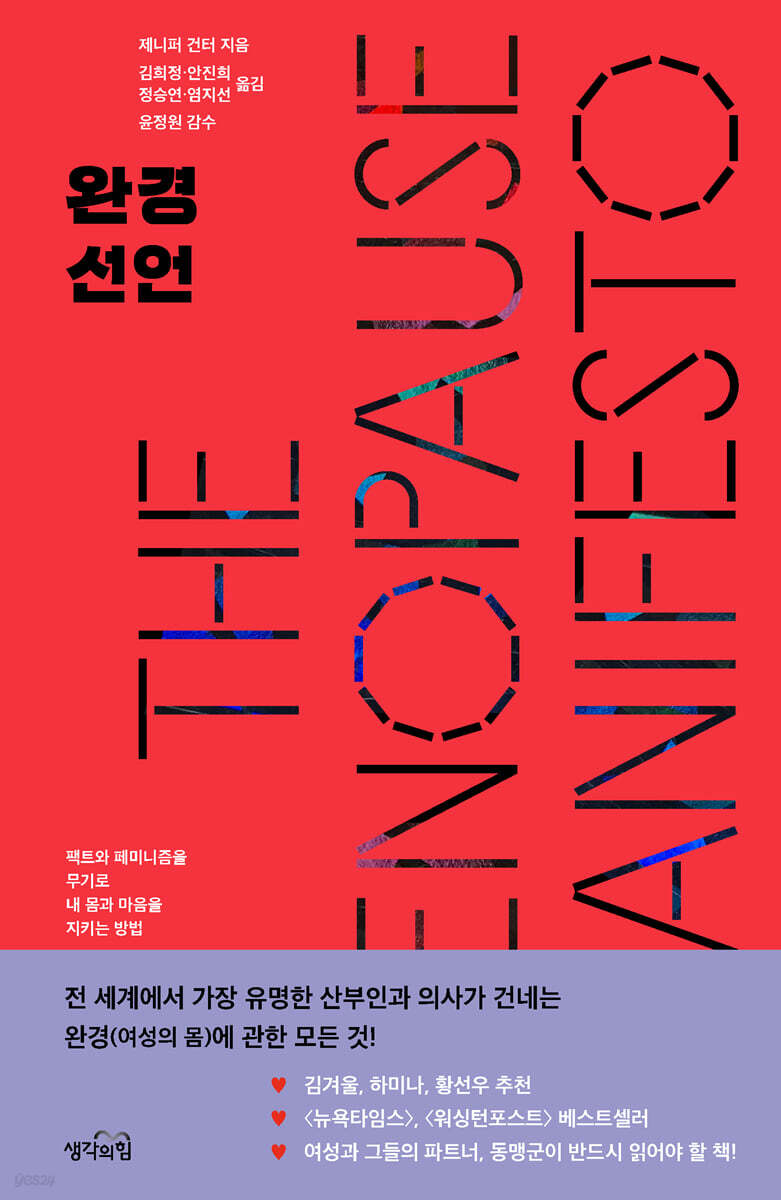
This is the "Wan-gyeong Declaration," a book packed with tips on how to protect your body and mind with facts and feminism as weapons.
Jennifer Gunter, the world's most famous obstetrician and gynecologist, has come to Korea to confront the absence of discussion, the flood of misinformation, the use of derogatory language, the indifference of the medical community, and above all, the dominance of patriarchy.
The book unravels the tangled web of myths, misconceptions, and silences surrounding menopause and perimenopause, drawing on scientific, historical, and medical evidence.
It covers women's physical and mental health from both an emotional and practical perspective, including pre- and post-menopausal period, fever, cardiovascular health, sleep disorders, depression and mood swings, skin and hair problems, pseudoscience and folk remedies, bladder health, hormone therapy, contraception, and diet.
Gunther is vocal in her emphasis that menopause should not be a mystery to women, and that its symptoms are not a minor problem experienced by a small minority.
The "Wan-gyeong Declaration" is a guide, a manual, a partner, and an ally that accompanies you on this journey.
All about menstruation (the female body)!
Here comes a book that promises to revolutionize the way women experience menopause.
This is the "Wan-gyeong Declaration," a book packed with tips on how to protect your body and mind with facts and feminism as weapons.
Jennifer Gunter, the world's most famous obstetrician and gynecologist, has come to Korea to confront the absence of discussion, the flood of misinformation, the use of derogatory language, the indifference of the medical community, and above all, the dominance of patriarchy.
The book unravels the tangled web of myths, misconceptions, and silences surrounding menopause and perimenopause, drawing on scientific, historical, and medical evidence.
It covers women's physical and mental health from both an emotional and practical perspective, including pre- and post-menopausal period, fever, cardiovascular health, sleep disorders, depression and mood swings, skin and hair problems, pseudoscience and folk remedies, bladder health, hormone therapy, contraception, and diet.
Gunther is vocal in her emphasis that menopause should not be a mystery to women, and that its symptoms are not a minor problem experienced by a small minority.
The "Wan-gyeong Declaration" is a guide, a manual, a partner, and an ally that accompanies you on this journey.
- You can preview some of the book's contents.
Preview
index
Declaration
Part 1: Reclaiming Change: Understanding Your Body Through Feminism
Chapter 1: The Second Coming of Age: Why Menopause Matters
Chapter 2: The History and Language of Wan-gyeong: From the 'Time of Crisis' to the 'Time of Change'
Chapter 3: The Biology of Menopause: The Brain-Ovary Connection
Chapter 4 The Evolutionary Advantage of the Girdle: A Sign of Strength, Not Weakness
Chapter 5: Timing the Menstrual Cycle: Understanding the Clock
Chapter 6: If Menstruation and Ovulation Stopped Before Age 40: Causes and Recommended Treatments
Understanding the Changes Part 2: What to Expect as You Enter Menopause
Chapter 7 Changes Due to Menopause: Changes in Physical Strength, Body Size, and Shape
Chapter 8: The Heart of the Problem: Cardiovascular Disease
Chapter 9: Is It Too Hot in Here? Is It Just Me?: Vasomotor Symptoms and How to Put Them Out
Chapter 10 Menstrual Disturbances: Abnormal Bleeding, What to Do
Chapter 11: Bone Health: Basic Knowledge for Bone Biology, Osteoporosis, and Fracture Prevention
Chapter 12: What Happens to the Brain When Menopause Approaches: Brain Fog, Depression, and Dementia
Chapter 13: Vagina and Vulva: Menopausal Urogenital Syndrome and Treatment
Chapter 14: Bladder Health: Breaking the Culture of Silence
Chapter 15: Talking About Sex: The Complex Story of Sexual Desire
Chapter 16: Can You Ever Feel Well Rested Again?: Sleep Disorders and Solutions
Part 3: A Step Toward Change: Hormones, Food, and Health Supplements
Chapter 17: Menopausal Hormone Therapy: A Twisted History and Today's Situation
Chapter 18: The Dramatic World of Hormones: Which MHT Is Right for Me?
Chapter 19: Phytoestrogens, Food, and Hormones: Facts and Fads
Chapter 20: Bioidentical Hormones, Natural Hormones, and Formulated Hormones: Medicine Is Not Marketing
Chapter 21: Menopause Diet: For Healthy Menopause and Beyond
Chapter 22: Menoceuticals: Health Functional Foods and Menopause
Chapter 23: Contraception and the Menopausal Transition: Pregnancy Prevention and Menstrual Management
Part 4: Taking the Lead in Change
Chapter 24: Welcome to My Menopause Party: How Obstetricians and Gynecologists Deal with Menopause
Chapter 25: Concluding Remarks: Summarizing
Acknowledgements
Supplementary Materials
supplement
References
Search
Part 1: Reclaiming Change: Understanding Your Body Through Feminism
Chapter 1: The Second Coming of Age: Why Menopause Matters
Chapter 2: The History and Language of Wan-gyeong: From the 'Time of Crisis' to the 'Time of Change'
Chapter 3: The Biology of Menopause: The Brain-Ovary Connection
Chapter 4 The Evolutionary Advantage of the Girdle: A Sign of Strength, Not Weakness
Chapter 5: Timing the Menstrual Cycle: Understanding the Clock
Chapter 6: If Menstruation and Ovulation Stopped Before Age 40: Causes and Recommended Treatments
Understanding the Changes Part 2: What to Expect as You Enter Menopause
Chapter 7 Changes Due to Menopause: Changes in Physical Strength, Body Size, and Shape
Chapter 8: The Heart of the Problem: Cardiovascular Disease
Chapter 9: Is It Too Hot in Here? Is It Just Me?: Vasomotor Symptoms and How to Put Them Out
Chapter 10 Menstrual Disturbances: Abnormal Bleeding, What to Do
Chapter 11: Bone Health: Basic Knowledge for Bone Biology, Osteoporosis, and Fracture Prevention
Chapter 12: What Happens to the Brain When Menopause Approaches: Brain Fog, Depression, and Dementia
Chapter 13: Vagina and Vulva: Menopausal Urogenital Syndrome and Treatment
Chapter 14: Bladder Health: Breaking the Culture of Silence
Chapter 15: Talking About Sex: The Complex Story of Sexual Desire
Chapter 16: Can You Ever Feel Well Rested Again?: Sleep Disorders and Solutions
Part 3: A Step Toward Change: Hormones, Food, and Health Supplements
Chapter 17: Menopausal Hormone Therapy: A Twisted History and Today's Situation
Chapter 18: The Dramatic World of Hormones: Which MHT Is Right for Me?
Chapter 19: Phytoestrogens, Food, and Hormones: Facts and Fads
Chapter 20: Bioidentical Hormones, Natural Hormones, and Formulated Hormones: Medicine Is Not Marketing
Chapter 21: Menopause Diet: For Healthy Menopause and Beyond
Chapter 22: Menoceuticals: Health Functional Foods and Menopause
Chapter 23: Contraception and the Menopausal Transition: Pregnancy Prevention and Menstrual Management
Part 4: Taking the Lead in Change
Chapter 24: Welcome to My Menopause Party: How Obstetricians and Gynecologists Deal with Menopause
Chapter 25: Concluding Remarks: Summarizing
Acknowledgements
Supplementary Materials
supplement
References
Search
Detailed image

Into the book
When it comes to menopause, only terrible stories are told.
But to be honest, the experience of being a diasporic person is one of enormous scale.
Many women experience only mild or moderate symptoms, while others experience extreme pain.
Symptoms often appear and disappear briefly, but sometimes they can last a long time.
It is true that the biological changes that occur in the body with menopause increase the risk of developing certain medical problems, such as cardiovascular disease and osteoporosis.
However, the paint that paints a picture that captures the entire female figure is not the only one that has the phenomenon of wankyung.
Age, other health conditions, diet, exercise, and even childhood adversity all add color to the portrait.
So, if you're a woman determined to develop a strategy, it's important to take a step back and look at the whole picture.
Caring for the body during menopause is the ultimate form of holistic medicine that takes the entire body into account.
---From the "Declaration"
Social shame extends beyond the doctor's office.
There is a general disdain for aging women.
Perhaps the word 'disrespect' is not appropriate.
The problems associated with aging women are often so trivial that they are not worth even the slightest effort.
They are so simply ignored that their very existence is ignored.
---From Chapter 1, “Second Adulthood”
The term 'menopause' existed before science discovered the existence of hormones.
The term never meant 'stop'.
The term was coined by a man who believed women should cover their arms and avoid wearing makeup.
This man's book on menopause contributed nothing to the body of knowledge on the subject other than to perpetually shackle women to menstruation.
Except that it left behind one term that would forever link women to menstruation.
Since then, the word "menopause" has been weaponized by the pharmaceutical industry, turning an annoying stage of life into a lifelong disease that affects all women.
Moreover, it was not just any disease, but the worst disease that turned women into beings that men did not want.
This chapter was not a beautiful etymology story.
The word 'man-gyeong-gi' needs an update.
---From Chapter 2, “History and Language of Wan-gyeong”
The menopausal transition period has several important biological characteristics.
These include accelerated loss of follicles, changes in hormone production patterns in the remaining follicles, and changes in signals from the brain.
There are several potential reasons why these changes occur.
At the ovarian level, the primordial follicles may themselves be aging, or the remaining follicles may not have been very healthy to begin with.
This may be why these follicles have not ovulated in the first place.
Additionally, blood flow to the ovaries may decrease with age.
This may affect your ability to produce hormones.
Some of the changes in the signals the brain sends correspond to changes in hormone production patterns in the follicles, but others are associated with aging.
Fundamentally, the menopausal transition is a complex process involving several mechanisms working together.
---From Chapter 3, “The Biology of Perfection”
Human intelligence has enabled us to grow beyond our evolutionary programming in many ways.
Therefore, even if the grandmother hypothesis explains how we came to have menopause, it is important to note that this does not mean that women have value only as grandmothers.
The function of the grandmother hypothesis is to deliver a major blow to society's prejudice against women who have had menopause.
The grandmother hypothesis makes the patriarchal idea that a woman's worth is diminished when ovulation stops seem even more repulsive.
Because women who have had menopause are truly helping the evolutionary process.
We must also acknowledge that not all women become grandmothers, either by choice or, unfortunately, due to infertility or the death of a child or grandchild.
We must also acknowledge that not all grandmothers add value to the lives of their children.
---From Chapter 4, “The Evolutionary Advantages of Perfection”
Primary ovarian insufficiency (POI) refers to the cessation of menstruation before the age of 40.
Until relatively recently, this medical condition was referred to as 'premature ovarian failure (POF)' or 'premature menopause', but the name has changed for several reasons.
Menopause is the permanent cessation of menstruation, but in about half of women with primary ovarian insufficiency, ovarian function may return (ovulation may occur suddenly again, and menstruation may occur intermittently).
Women who have had menopause cannot become pregnant, but women with primary ovarian insufficiency can become pregnant, with some studies reporting pregnancy rates of 5 to 10 percent.
Besides, the word 'failure' is insulting.
---From Chapter 6, “If Menstruation and Ovulation Stop Before Age 40”
I'm cautious about how I talk about my weight.
There are many cases where people quickly conclude that obesity is the cause of women's health problems without properly examining their health, which puts many women at risk for their health and even their lives.
It's a shame that overweight women are not welcomed in the medical community.
I, too, have been on a diet for 31 years, and I hope no one else has to suffer that cursed fate.
I strictly controlled what I ate every day, and I felt guilty when I failed to do so.
This phenomenon is a combination of the influence of my mother, who told me I was fat when I was a teenager, and the fact that I grew up in the 1980s, when fitness culture was just emerging and people emphasized that being thin was beautiful and good.
I first joined Weight Watchers when I was sixteen and weighed 70 kg (154 pounds).
At just sixteen years old, with a BMI of 21.8, I was accepted.
---From Chapter 7, “Changes Due to the End of the World”
The differences between women and men in managing CVD are striking.
Forty-two percent of women die within a year after suffering a heart attack, compared to 24 percent of men during the same period.
Women under 55 who suffer a myocardial infarction while hospitalized have a mortality rate two to three times higher than men of the same age.
Some of this disparity may be due to the biological characteristics of heart disease in women.
For example, there may be biological differences between women and men in the way atherosclerotic plaque breaks off and causes a heart attack.
But, apart from this, deaths due to misogyny are not uncommon.
Women are often excluded from studies on heart disease, claiming they receive the "best care," but in reality, the best care is often for men.
Another problem is the misconception that women, especially young women, are less at risk for CVD than men.
And women are less likely than men to receive medical advice about heart disease and are less likely to be prescribed statins.
Statins are drugs that can significantly reduce the risk of heart attack and stroke by lowering cholesterol levels.
It is particularly rare for Black women to be prescribed statins.
---From Chapter 8, “The Heart of the Problem”
Cognitive behavioral therapy (CBT) is a treatment method that considers the connection between the mind and body.
This does not mean that menopausal fever is a made-up or imaginary symptom.
Since the neurotransmitters that direct thoughts and actions can also influence feelings of heat, this means that menopausal feelings of heat may actually influence emotions and vice versa.
CBT for menopausal hot flashes involves not only gaining a medical understanding of what is happening, but also teaching people how to replace negative beliefs with more positive, or at least objectively accurate, facts.
For example, in response to menopausal fever, you might think, “My head feels like a waiting room of hell” or “This will never end.”
These negative thoughts are called cognitive distortions, and in these cases, we feel that they are accurate (we firmly believe they are accurate) or even rational, but in fact, we are exaggerating and emphasizing the negative aspects.
If this happens repeatedly, you may end up feeling worse and the fever may feel more painful.
These negative thoughts can also reinforce parts of the brain that transmit messages about feeling hot, making the onset of a fever more likely or more severe.
---From Chapter 9, “Isn’t It Too Hot Here? Is It Just Me?”
When you ask a female patient if she has heavy menstrual bleeding, the answer is usually no.
However, if you ask the same patient whether it is severe enough to wet his clothes or if it is 'pouring', he will say yes.
It's not that he doesn't know his body well.
This is because they have always had heavy bleeding and have either ignored it or been ignored by medical staff or parents when they previously expressed concerns about the amount of bleeding.
Personally, I prefer to use the word "pouring" to describe heavy bleeding during menstruation.
When most women use this word, it seems to mean that their clothes are soaked with blood or that they narrowly escape disaster.
Some women may be surprised by the increased amount of menstrual flow during the menopause.
Culturally, women are trained to feel shame about their menstrual experiences, which often prevents them from discussing them with other women, and medical professionals often not only fail to provide women with adequate information, but also readily dismiss them.
As women go through the menopause, they begin to feel that their bodies are being ruined and that they are the only ones who “feel” their periods (a common experience, in fact), which is a form of oppression against women.
---From Chapter 10, “Menstrual Chaos”
If you're reading this book and are in your late twenties, you're already losing your bones as you turn the pages.
Bones are constantly being remodeled, meaning they are constantly being absorbed and new bone is being created.
This process is ongoing and can be considered as the entire skeleton being replaced approximately once every ten years.
Women reach peak bone mass in their late 20s, after which bone loss begins, gradually but steadily, at a rate of less than 0.4 percent per year.
Estrogen plays an important role in bone formation.
Therefore, bone loss is most active about one year before the last menstrual period and continues for about three years.
On average, women lose 6 percent of their bone mass over these three years, but some lose as much as 3 to 5 percent per year.
Even after this period, when bone loss is most rapid, bone loss continues at a rate higher than before menopause, at about 0.5 to 1 percent per year.
Aging also weakens bones in several ways.
---From Chapter 11, Bone Health
Science is important in all matters related to menopause, but especially when discussing brain health, it's important to base our discussions on the most clear and scientifically sound facts.
Because there are so many harmful cultural discourses that link women's abilities to hormonal function.
We are constantly criticized for our hormonal mood swings before, during, during, and after our periods.
And what happens after you're finally free from those "toxic" hormones? You're now told there's something wrong with your brain.
Judging women by their hormones is a clear personal attack.
No, I think 'Goddess Attack' would be the correct expression.
This is character assassination and a core tenet of patriarchy.
---From Chapter 12, “What Happens to the Brain When Menopause Comes?”
Progestin was added to MHT in the 1960s to manage bleeding caused by MHT, making it less resistant to MHT in women (estrogen thickens the endometrium, and without progestogen, the endometrium becomes unstable and breaks down randomly, causing irregular bleeding).
Moreover, the regularity of menstruation due to progestin fits with the 'natural' marketing of MHT, which is based on the notion that it replenishes the hormones that every woman must have.
This perfectly illustrates how absurd the word 'natural' can become.
Because there is nothing more unnatural than a postmenopausal woman experiencing menstruation.
In "The Eternal Feminine," Dr. Wilson describes menstruation as "a certificate of femininity."
Yes, that's right.
Before menopause, menstruation was a terrible curse, but as soon as it disappeared, it became a blessing and a symbol of sexual attraction to men.
What beat should I follow?
Is it possible for a woman's body to never remain in a 'good' state?
---From Chapter 17, “Menopausal Hormone Therapy”
I think many women will simply not feel comfortable reading the information in this book about so-called "natural remedies and hormone replacements."
It's a normal reaction to want to pretend you don't know this information.
Because I have to admit that I have been on the wrong path so far.
It's important to remember that without accurate information, it was impossible to make informed decisions about these products in the first place.
If custom-formulated drugs or so-called plant-based products were truly great and better, there would be good documentation about them, professionals like myself would be prescribing them, and professional organizations would be promoting their use.
If it's truly safe and effective, why isn't there a single study in a billion-dollar market proving it?
---From Chapter 20, “Bioidentical Hormones, Natural Hormones, and Prepared Hormones”
About 60 percent of adult women living in the United States take at least one health supplement.
Although they are usually taken for general health issues or preventative treatment purposes, during the menopausal transition and postmenopausal period, many women seek out various products to relieve symptoms or address menopausal-related issues.
I call these health functional foods related to menopause 'Menoceuticals.'
In the previous two chapters, we examined the evolution of menopausal hormone therapy from biological, chemical, and economic perspectives.
Now, let's take a look at the health functional food industry in a natural order.
The health functional food manufacturing industry is not just a neighborhood healing evangelist selling medicines made in small batches in their own kitchens. It is an industry in itself.
It is so huge that it boasts a scale of over 30 billion dollars per year in the United States.
Health functional foods are cultivating their brand image as promoting a healthy lifestyle—a lifestyle that's healthy from the inside out! However, associating health functional foods with wellness is no different from associating Premarin with a glamorous and sophisticated lifestyle in the 1950s.
The ugly truth is that lifestyle marketing strategies always work.
---From Chapter 22, Menoceuticals
The failure rate for combined hormonal contraception is typically 9 percent in women under 45, but only 0.3 percent when used exactly as directed.
Looking at the difference between these typical failure rates and ideal failure rates, we can see that remembering to take your pills every day or changing your patch or ring is not easy for many people (even for their gynecologists).
As pregnancy rates decline during the menopausal transition, the failure rates of these contraceptive methods also decline.
Basically, even if a 47-year-old woman misses two birth control pills, she is much less likely to ovulate during the same time period than a 27-year-old woman.
---From Chapter 23, “Contraception and the Menopausal Transition Period”
Of course, some people believe that menopause is a normal phase of life and that estrogen should never be taken.
However, this is an attitude that does not take into account the risk of developing diseases such as osteoporosis and depression due to menopause, as well as the quality of life.
If estrogen could safely improve the quality of life of a woman who suffers from hot flashes twenty times a day and sleeps poorly for weeks, why wouldn't it be used? Pregnancy is a normal phase of life, but we don't refuse measures to alleviate morning sickness or labor pain, or refuse blood transfusions during labor due to excessive bleeding.
Excessive bleeding can occur even after labor has proceeded completely normally.
The reality is that many women find estrogen helpful for a variety of reasons, while many others do not need this help.
This is precisely why it is important to know as much as possible about menopause so that you can make the right choice for yourself.
---From Chapter 24, “Welcome to my farewell party”
Throughout my transition, I was consumed by a seething anger that grew more and more intense.
Witnessing so many women experiencing similar conditions as I did made me wonder why.
It took me quite a while to gather my thoughts.
Because for a really long time, I couldn't think of anything else but screaming at the top of my lungs.
But screaming into the void might feel good in the short term, but it's ultimately exhausting and doesn't do much to help you take care of yourself or change.
What is the root of my anger?
Only by figuring out what was going on could I stop that anger from taking over my mind and use its power constructively.
And in the process of writing this book, I was able to see the core of the problem more clearly.
But to be honest, the experience of being a diasporic person is one of enormous scale.
Many women experience only mild or moderate symptoms, while others experience extreme pain.
Symptoms often appear and disappear briefly, but sometimes they can last a long time.
It is true that the biological changes that occur in the body with menopause increase the risk of developing certain medical problems, such as cardiovascular disease and osteoporosis.
However, the paint that paints a picture that captures the entire female figure is not the only one that has the phenomenon of wankyung.
Age, other health conditions, diet, exercise, and even childhood adversity all add color to the portrait.
So, if you're a woman determined to develop a strategy, it's important to take a step back and look at the whole picture.
Caring for the body during menopause is the ultimate form of holistic medicine that takes the entire body into account.
---From the "Declaration"
Social shame extends beyond the doctor's office.
There is a general disdain for aging women.
Perhaps the word 'disrespect' is not appropriate.
The problems associated with aging women are often so trivial that they are not worth even the slightest effort.
They are so simply ignored that their very existence is ignored.
---From Chapter 1, “Second Adulthood”
The term 'menopause' existed before science discovered the existence of hormones.
The term never meant 'stop'.
The term was coined by a man who believed women should cover their arms and avoid wearing makeup.
This man's book on menopause contributed nothing to the body of knowledge on the subject other than to perpetually shackle women to menstruation.
Except that it left behind one term that would forever link women to menstruation.
Since then, the word "menopause" has been weaponized by the pharmaceutical industry, turning an annoying stage of life into a lifelong disease that affects all women.
Moreover, it was not just any disease, but the worst disease that turned women into beings that men did not want.
This chapter was not a beautiful etymology story.
The word 'man-gyeong-gi' needs an update.
---From Chapter 2, “History and Language of Wan-gyeong”
The menopausal transition period has several important biological characteristics.
These include accelerated loss of follicles, changes in hormone production patterns in the remaining follicles, and changes in signals from the brain.
There are several potential reasons why these changes occur.
At the ovarian level, the primordial follicles may themselves be aging, or the remaining follicles may not have been very healthy to begin with.
This may be why these follicles have not ovulated in the first place.
Additionally, blood flow to the ovaries may decrease with age.
This may affect your ability to produce hormones.
Some of the changes in the signals the brain sends correspond to changes in hormone production patterns in the follicles, but others are associated with aging.
Fundamentally, the menopausal transition is a complex process involving several mechanisms working together.
---From Chapter 3, “The Biology of Perfection”
Human intelligence has enabled us to grow beyond our evolutionary programming in many ways.
Therefore, even if the grandmother hypothesis explains how we came to have menopause, it is important to note that this does not mean that women have value only as grandmothers.
The function of the grandmother hypothesis is to deliver a major blow to society's prejudice against women who have had menopause.
The grandmother hypothesis makes the patriarchal idea that a woman's worth is diminished when ovulation stops seem even more repulsive.
Because women who have had menopause are truly helping the evolutionary process.
We must also acknowledge that not all women become grandmothers, either by choice or, unfortunately, due to infertility or the death of a child or grandchild.
We must also acknowledge that not all grandmothers add value to the lives of their children.
---From Chapter 4, “The Evolutionary Advantages of Perfection”
Primary ovarian insufficiency (POI) refers to the cessation of menstruation before the age of 40.
Until relatively recently, this medical condition was referred to as 'premature ovarian failure (POF)' or 'premature menopause', but the name has changed for several reasons.
Menopause is the permanent cessation of menstruation, but in about half of women with primary ovarian insufficiency, ovarian function may return (ovulation may occur suddenly again, and menstruation may occur intermittently).
Women who have had menopause cannot become pregnant, but women with primary ovarian insufficiency can become pregnant, with some studies reporting pregnancy rates of 5 to 10 percent.
Besides, the word 'failure' is insulting.
---From Chapter 6, “If Menstruation and Ovulation Stop Before Age 40”
I'm cautious about how I talk about my weight.
There are many cases where people quickly conclude that obesity is the cause of women's health problems without properly examining their health, which puts many women at risk for their health and even their lives.
It's a shame that overweight women are not welcomed in the medical community.
I, too, have been on a diet for 31 years, and I hope no one else has to suffer that cursed fate.
I strictly controlled what I ate every day, and I felt guilty when I failed to do so.
This phenomenon is a combination of the influence of my mother, who told me I was fat when I was a teenager, and the fact that I grew up in the 1980s, when fitness culture was just emerging and people emphasized that being thin was beautiful and good.
I first joined Weight Watchers when I was sixteen and weighed 70 kg (154 pounds).
At just sixteen years old, with a BMI of 21.8, I was accepted.
---From Chapter 7, “Changes Due to the End of the World”
The differences between women and men in managing CVD are striking.
Forty-two percent of women die within a year after suffering a heart attack, compared to 24 percent of men during the same period.
Women under 55 who suffer a myocardial infarction while hospitalized have a mortality rate two to three times higher than men of the same age.
Some of this disparity may be due to the biological characteristics of heart disease in women.
For example, there may be biological differences between women and men in the way atherosclerotic plaque breaks off and causes a heart attack.
But, apart from this, deaths due to misogyny are not uncommon.
Women are often excluded from studies on heart disease, claiming they receive the "best care," but in reality, the best care is often for men.
Another problem is the misconception that women, especially young women, are less at risk for CVD than men.
And women are less likely than men to receive medical advice about heart disease and are less likely to be prescribed statins.
Statins are drugs that can significantly reduce the risk of heart attack and stroke by lowering cholesterol levels.
It is particularly rare for Black women to be prescribed statins.
---From Chapter 8, “The Heart of the Problem”
Cognitive behavioral therapy (CBT) is a treatment method that considers the connection between the mind and body.
This does not mean that menopausal fever is a made-up or imaginary symptom.
Since the neurotransmitters that direct thoughts and actions can also influence feelings of heat, this means that menopausal feelings of heat may actually influence emotions and vice versa.
CBT for menopausal hot flashes involves not only gaining a medical understanding of what is happening, but also teaching people how to replace negative beliefs with more positive, or at least objectively accurate, facts.
For example, in response to menopausal fever, you might think, “My head feels like a waiting room of hell” or “This will never end.”
These negative thoughts are called cognitive distortions, and in these cases, we feel that they are accurate (we firmly believe they are accurate) or even rational, but in fact, we are exaggerating and emphasizing the negative aspects.
If this happens repeatedly, you may end up feeling worse and the fever may feel more painful.
These negative thoughts can also reinforce parts of the brain that transmit messages about feeling hot, making the onset of a fever more likely or more severe.
---From Chapter 9, “Isn’t It Too Hot Here? Is It Just Me?”
When you ask a female patient if she has heavy menstrual bleeding, the answer is usually no.
However, if you ask the same patient whether it is severe enough to wet his clothes or if it is 'pouring', he will say yes.
It's not that he doesn't know his body well.
This is because they have always had heavy bleeding and have either ignored it or been ignored by medical staff or parents when they previously expressed concerns about the amount of bleeding.
Personally, I prefer to use the word "pouring" to describe heavy bleeding during menstruation.
When most women use this word, it seems to mean that their clothes are soaked with blood or that they narrowly escape disaster.
Some women may be surprised by the increased amount of menstrual flow during the menopause.
Culturally, women are trained to feel shame about their menstrual experiences, which often prevents them from discussing them with other women, and medical professionals often not only fail to provide women with adequate information, but also readily dismiss them.
As women go through the menopause, they begin to feel that their bodies are being ruined and that they are the only ones who “feel” their periods (a common experience, in fact), which is a form of oppression against women.
---From Chapter 10, “Menstrual Chaos”
If you're reading this book and are in your late twenties, you're already losing your bones as you turn the pages.
Bones are constantly being remodeled, meaning they are constantly being absorbed and new bone is being created.
This process is ongoing and can be considered as the entire skeleton being replaced approximately once every ten years.
Women reach peak bone mass in their late 20s, after which bone loss begins, gradually but steadily, at a rate of less than 0.4 percent per year.
Estrogen plays an important role in bone formation.
Therefore, bone loss is most active about one year before the last menstrual period and continues for about three years.
On average, women lose 6 percent of their bone mass over these three years, but some lose as much as 3 to 5 percent per year.
Even after this period, when bone loss is most rapid, bone loss continues at a rate higher than before menopause, at about 0.5 to 1 percent per year.
Aging also weakens bones in several ways.
---From Chapter 11, Bone Health
Science is important in all matters related to menopause, but especially when discussing brain health, it's important to base our discussions on the most clear and scientifically sound facts.
Because there are so many harmful cultural discourses that link women's abilities to hormonal function.
We are constantly criticized for our hormonal mood swings before, during, during, and after our periods.
And what happens after you're finally free from those "toxic" hormones? You're now told there's something wrong with your brain.
Judging women by their hormones is a clear personal attack.
No, I think 'Goddess Attack' would be the correct expression.
This is character assassination and a core tenet of patriarchy.
---From Chapter 12, “What Happens to the Brain When Menopause Comes?”
Progestin was added to MHT in the 1960s to manage bleeding caused by MHT, making it less resistant to MHT in women (estrogen thickens the endometrium, and without progestogen, the endometrium becomes unstable and breaks down randomly, causing irregular bleeding).
Moreover, the regularity of menstruation due to progestin fits with the 'natural' marketing of MHT, which is based on the notion that it replenishes the hormones that every woman must have.
This perfectly illustrates how absurd the word 'natural' can become.
Because there is nothing more unnatural than a postmenopausal woman experiencing menstruation.
In "The Eternal Feminine," Dr. Wilson describes menstruation as "a certificate of femininity."
Yes, that's right.
Before menopause, menstruation was a terrible curse, but as soon as it disappeared, it became a blessing and a symbol of sexual attraction to men.
What beat should I follow?
Is it possible for a woman's body to never remain in a 'good' state?
---From Chapter 17, “Menopausal Hormone Therapy”
I think many women will simply not feel comfortable reading the information in this book about so-called "natural remedies and hormone replacements."
It's a normal reaction to want to pretend you don't know this information.
Because I have to admit that I have been on the wrong path so far.
It's important to remember that without accurate information, it was impossible to make informed decisions about these products in the first place.
If custom-formulated drugs or so-called plant-based products were truly great and better, there would be good documentation about them, professionals like myself would be prescribing them, and professional organizations would be promoting their use.
If it's truly safe and effective, why isn't there a single study in a billion-dollar market proving it?
---From Chapter 20, “Bioidentical Hormones, Natural Hormones, and Prepared Hormones”
About 60 percent of adult women living in the United States take at least one health supplement.
Although they are usually taken for general health issues or preventative treatment purposes, during the menopausal transition and postmenopausal period, many women seek out various products to relieve symptoms or address menopausal-related issues.
I call these health functional foods related to menopause 'Menoceuticals.'
In the previous two chapters, we examined the evolution of menopausal hormone therapy from biological, chemical, and economic perspectives.
Now, let's take a look at the health functional food industry in a natural order.
The health functional food manufacturing industry is not just a neighborhood healing evangelist selling medicines made in small batches in their own kitchens. It is an industry in itself.
It is so huge that it boasts a scale of over 30 billion dollars per year in the United States.
Health functional foods are cultivating their brand image as promoting a healthy lifestyle—a lifestyle that's healthy from the inside out! However, associating health functional foods with wellness is no different from associating Premarin with a glamorous and sophisticated lifestyle in the 1950s.
The ugly truth is that lifestyle marketing strategies always work.
---From Chapter 22, Menoceuticals
The failure rate for combined hormonal contraception is typically 9 percent in women under 45, but only 0.3 percent when used exactly as directed.
Looking at the difference between these typical failure rates and ideal failure rates, we can see that remembering to take your pills every day or changing your patch or ring is not easy for many people (even for their gynecologists).
As pregnancy rates decline during the menopausal transition, the failure rates of these contraceptive methods also decline.
Basically, even if a 47-year-old woman misses two birth control pills, she is much less likely to ovulate during the same time period than a 27-year-old woman.
---From Chapter 23, “Contraception and the Menopausal Transition Period”
Of course, some people believe that menopause is a normal phase of life and that estrogen should never be taken.
However, this is an attitude that does not take into account the risk of developing diseases such as osteoporosis and depression due to menopause, as well as the quality of life.
If estrogen could safely improve the quality of life of a woman who suffers from hot flashes twenty times a day and sleeps poorly for weeks, why wouldn't it be used? Pregnancy is a normal phase of life, but we don't refuse measures to alleviate morning sickness or labor pain, or refuse blood transfusions during labor due to excessive bleeding.
Excessive bleeding can occur even after labor has proceeded completely normally.
The reality is that many women find estrogen helpful for a variety of reasons, while many others do not need this help.
This is precisely why it is important to know as much as possible about menopause so that you can make the right choice for yourself.
---From Chapter 24, “Welcome to my farewell party”
Throughout my transition, I was consumed by a seething anger that grew more and more intense.
Witnessing so many women experiencing similar conditions as I did made me wonder why.
It took me quite a while to gather my thoughts.
Because for a really long time, I couldn't think of anything else but screaming at the top of my lungs.
But screaming into the void might feel good in the short term, but it's ultimately exhausting and doesn't do much to help you take care of yourself or change.
What is the root of my anger?
Only by figuring out what was going on could I stop that anger from taking over my mind and use its power constructively.
And in the process of writing this book, I was able to see the core of the problem more clearly.
---From Chapter 25, “Concluding Remarks”
Publisher's Review
♥Recommended by Kim Gyul-woo, Ha Mi-na, and Hwang Seon-woo
♥ New York Times, Washington Post, USA Today, San Francisco Chronicle bestseller
♥“A thrilling story and comprehensive review of everything menopause”_North American Menopause Society
♥“Let’s read together, learn together, and make loud demands on the medical field and policymakers.” _Jeongwon Yoon (obstetrician/gynecologist)
♥A must-read for women, their partners, and allies!
Let's forget everything we knew about 'menopause'!
The story of 'menopause' that women around the world have been waiting for
When it comes to menopause, only terrible stories are told.
Although it is a universal phenomenon that occurs to all women, many women are not fully aware of the symptoms, physical changes, medical issues, or treatment options of menopause.
This information gap is the result of a harmful combination of medical misogyny—a long-standing tradition of male-dominated medicine—and the failure of medical professionals to meet patients' educational needs.
As a result, women dismissed symptoms or health problems associated with menopause as something made up, something unimportant, or something to be endured - simply 'part of being a woman.'
Jennifer Gunter, a courageous defender of our women, stands up against this stigma and tragedy.
Here comes a book that promises to revolutionize the way women experience menopause.
This is the "Wan-gyeong Declaration," a book packed with tips on how to protect your body and mind with facts and feminism as weapons.
Jennifer Gunter, the world's most famous obstetrician and gynecologist, has come to Korea to confront the absence of discussion, the flood of misinformation, the use of derogatory language, the indifference of the medical community, and above all, the dominance of patriarchy.
The author, who delivered the message of 'taking care of your own health' to women around the world through her previous work, 'Vaginal Health Manual', has been working as an obstetrician and gynecologist in the US and Canada for over 30 years, and is a passionate women's health activist and star doctor who heats up social media.
Jennifer Gunter takes readers on a journey to understand what's happening to their bodies and why, and equip them with the facts and feminism to make decisions that are right for them.
To empower ourselves with accurate information, and to escape the shadow of the patriarchy that dominates everything we do.
The book unravels the tangled web of myths, misconceptions, and silences surrounding menopause and perimenopause, drawing on scientific, historical, and medical evidence.
It covers women's physical and mental health from both an emotional and practical perspective, including pre- and post-menopausal period, fever, cardiovascular health, sleep disorders, depression and mood swings, skin and hair problems, pseudoscience and folk remedies, bladder health, hormone therapy, contraception, and diet.
It is time to bring order to all the uncertainty that surrounds us.
In a world where medical knowledge is scarce and full of confusion,
The most fascinating reading material on the subject of menopause (the female body)
Jennifer Gunther says in the powerful opening, "Manifesto,"
“As I repeatedly heard from women all over the world that they needed knowledge about menopause, I became obsessed with the idea that all women should have knowledge about menopause at the level of an obstetrician-gynecologist, and I put that wish into this book (p. 17).” And, living up to that ambition, she has completed the task of thoroughly revealing everything about menopause.
Comprised of 25 chapters in four parts, the book offers readers a thrilling story and comprehensive review.
First, in Part 1, ‘Reclaiming Change,’ we understand the female body through feminism.
Unlike puberty, the basic facts about 'menopause', which is shrouded in secrecy, are explained in a friendly manner at the reader's level.
To this end, we devote a significant portion of the page to exploring the etymology of the word 'menopause', which is in dire need of an update.
We also do not neglect the work of examining ancient medicine, which was extremely interested in women's menstruation (it is no exaggeration to say it was an 'obsession').
Examining the history of medicine, a past filled with shortcomings and confusion, provides readers with a refreshing and lingering shock that naturally leads them to wonder, "Why hasn't such an attempt been made before?"
After a brief background explanation, Gunther begins his lecture on 'The Biology of the Perfect World'.
Beginning with what menopause is (did you know that most women spend between a third and a half of their lives in menopause?), it covers the menstrual cycle, the hormonal changes that occur during the menopausal transition, the evolutionary advantages of menopause (the "grandmother hypothesis," p. 86), social determinants of health, primary ovarian failure, and more.
Part 2, "Understanding Change," explains what to expect as you enter menopause.
Gunther opens Part 2 with the thoughtful yet perfectly matter-of-fact statement, “Talking about women’s bodies is not easy” (p. 129).
It also reminds us that menopause and aging occur simultaneously, with many women entering menopause with the same body they have been in their entire lives, only to find that by the time they reach the end of menopause, they feel like they are in a completely different body.
Next, we share practical information about the changes that occur in your body during and after menopause, the impact on your health, and ways to mitigate these changes.
It also goes into great detail about cardiovascular disease, the number one cause of death for women (yet only 8 percent of all women recognize it as the biggest threat to their health), with the chilling statement, “Every minute, one woman dies from cardiovascular disease (page 152).”
The authors point out that the disparities between women and men in managing cardiovascular disease are particularly stark, and they also point out the problems of misdiagnosis and undertreatment.
It also looks into the causes and treatments of vasomotor symptoms (including the so-called 'feeling of heat'), and in the process, it provides detailed and meticulous product names without neglecting any direction, including drug and non-drug treatments, finished hormone products from pharmaceutical companies, non-hormonal drug prescriptions, and herbal remedies.
In addition, it provides detailed and rich information on various topics that many women are curious about, such as abnormal bleeding (menstrual bleeding that is irregular or excessively heavy), bone health focusing on osteoporosis, depression and dementia, vagina and vulva (menopausal urogenital syndrome), bladder health, sleep disorders, and sex.
“Not all women’s bodies are like that,”
“It’s unbearable!”
Part 3, “One Step Toward Change,” contains information about hormones, food, and health functional foods.
First, we examine the history of menopausal hormone therapy (MHT), which has been called hormone replacement therapy for a long time, and its current situation (page 325).
Menopausal hormone therapy is a treatment method that involves injecting hormones to manage symptoms that appear during the menopausal transition or postmenopausal period and to prevent complications that may occur during this period.
In the research and production process, “menopause is a disease, estrogen is a cure” is defined, and the series of events that led to estrogen’s emergence as a miracle drug (and the subsequent complete collapse of this sacred proposition) are examined.
And as the simplest solution, he prescribes “explaining to women” all these problems (p. 349).
Gunther is dedicated to explaining to women how to weigh risks and benefits and make the right (and ultimately best) choices.
It also carefully covers topics that women need to know, such as the interaction between hormones and food, the truth and lies surrounding bioidentical hormones, menopausal diet, contraception, and menstrual management.
Under the premise that fear is business, the author emphasizes that it is important to recognize that women have long been deceived by the medical establishment's lies.
The same goes for our country.
Considering the countless misinformation and fake news related to women's health that are flooding internet portals and social media, it's easy to imagine the author's concerns and anger.
Based on all this precise knowledge, Gunther guides readers to the long-awaited 'Seizing the Lead in Part 4 Change'.
I wonder how many women have swallowed the questions that have been on their minds, never even saying them out loud.
This is because women who experience menopause, or in other words, those best able to speak about this experience, have been silenced in the medical discourse.
“For too long, patriarchy has controlled our sexuality, demanding our silence, and controlling the very words we use when we do speak up.
We are still paying the price for it.” _Page 492
Gunther is vocal in her emphasis that menopause should not be a mystery to women, and that its symptoms are not a minor problem experienced by a small minority.
Menopausal health care is medicine for women's health (p. 497).
He then preaches the tender and concise truth that understanding what's happening to your body and knowing that you have options to deal with it can be healing in itself.
The "Wan-gyeong Declaration" is a guide, an instruction manual, a partner, and an ally that accompanies you on this journey.
The year 2021 marked the 200th anniversary of the introduction of the word ‘wan-gyeong’.
The author says that it is very late at the latest.
Next, I declare:
We demand that the silence and shame surrounding menopause be dispelled and replaced with facts and feminism, that menopause be stopped as a disease, and that what patriarchal society thinks about menopause is irrelevant.
“I hope that when we hear stories about menopause in a patriarchal society that associate it with lost youth, fragility, and a decline in value, we remember:
At such times, we must sharpen our values, identity, voice, and knowledge to maintain our health and demand our rightful share.
This is my declaration of completeness.” _Page 509
♥ New York Times, Washington Post, USA Today, San Francisco Chronicle bestseller
♥“A thrilling story and comprehensive review of everything menopause”_North American Menopause Society
♥“Let’s read together, learn together, and make loud demands on the medical field and policymakers.” _Jeongwon Yoon (obstetrician/gynecologist)
♥A must-read for women, their partners, and allies!
Let's forget everything we knew about 'menopause'!
The story of 'menopause' that women around the world have been waiting for
When it comes to menopause, only terrible stories are told.
Although it is a universal phenomenon that occurs to all women, many women are not fully aware of the symptoms, physical changes, medical issues, or treatment options of menopause.
This information gap is the result of a harmful combination of medical misogyny—a long-standing tradition of male-dominated medicine—and the failure of medical professionals to meet patients' educational needs.
As a result, women dismissed symptoms or health problems associated with menopause as something made up, something unimportant, or something to be endured - simply 'part of being a woman.'
Jennifer Gunter, a courageous defender of our women, stands up against this stigma and tragedy.
Here comes a book that promises to revolutionize the way women experience menopause.
This is the "Wan-gyeong Declaration," a book packed with tips on how to protect your body and mind with facts and feminism as weapons.
Jennifer Gunter, the world's most famous obstetrician and gynecologist, has come to Korea to confront the absence of discussion, the flood of misinformation, the use of derogatory language, the indifference of the medical community, and above all, the dominance of patriarchy.
The author, who delivered the message of 'taking care of your own health' to women around the world through her previous work, 'Vaginal Health Manual', has been working as an obstetrician and gynecologist in the US and Canada for over 30 years, and is a passionate women's health activist and star doctor who heats up social media.
Jennifer Gunter takes readers on a journey to understand what's happening to their bodies and why, and equip them with the facts and feminism to make decisions that are right for them.
To empower ourselves with accurate information, and to escape the shadow of the patriarchy that dominates everything we do.
The book unravels the tangled web of myths, misconceptions, and silences surrounding menopause and perimenopause, drawing on scientific, historical, and medical evidence.
It covers women's physical and mental health from both an emotional and practical perspective, including pre- and post-menopausal period, fever, cardiovascular health, sleep disorders, depression and mood swings, skin and hair problems, pseudoscience and folk remedies, bladder health, hormone therapy, contraception, and diet.
It is time to bring order to all the uncertainty that surrounds us.
In a world where medical knowledge is scarce and full of confusion,
The most fascinating reading material on the subject of menopause (the female body)
Jennifer Gunther says in the powerful opening, "Manifesto,"
“As I repeatedly heard from women all over the world that they needed knowledge about menopause, I became obsessed with the idea that all women should have knowledge about menopause at the level of an obstetrician-gynecologist, and I put that wish into this book (p. 17).” And, living up to that ambition, she has completed the task of thoroughly revealing everything about menopause.
Comprised of 25 chapters in four parts, the book offers readers a thrilling story and comprehensive review.
First, in Part 1, ‘Reclaiming Change,’ we understand the female body through feminism.
Unlike puberty, the basic facts about 'menopause', which is shrouded in secrecy, are explained in a friendly manner at the reader's level.
To this end, we devote a significant portion of the page to exploring the etymology of the word 'menopause', which is in dire need of an update.
We also do not neglect the work of examining ancient medicine, which was extremely interested in women's menstruation (it is no exaggeration to say it was an 'obsession').
Examining the history of medicine, a past filled with shortcomings and confusion, provides readers with a refreshing and lingering shock that naturally leads them to wonder, "Why hasn't such an attempt been made before?"
After a brief background explanation, Gunther begins his lecture on 'The Biology of the Perfect World'.
Beginning with what menopause is (did you know that most women spend between a third and a half of their lives in menopause?), it covers the menstrual cycle, the hormonal changes that occur during the menopausal transition, the evolutionary advantages of menopause (the "grandmother hypothesis," p. 86), social determinants of health, primary ovarian failure, and more.
Part 2, "Understanding Change," explains what to expect as you enter menopause.
Gunther opens Part 2 with the thoughtful yet perfectly matter-of-fact statement, “Talking about women’s bodies is not easy” (p. 129).
It also reminds us that menopause and aging occur simultaneously, with many women entering menopause with the same body they have been in their entire lives, only to find that by the time they reach the end of menopause, they feel like they are in a completely different body.
Next, we share practical information about the changes that occur in your body during and after menopause, the impact on your health, and ways to mitigate these changes.
It also goes into great detail about cardiovascular disease, the number one cause of death for women (yet only 8 percent of all women recognize it as the biggest threat to their health), with the chilling statement, “Every minute, one woman dies from cardiovascular disease (page 152).”
The authors point out that the disparities between women and men in managing cardiovascular disease are particularly stark, and they also point out the problems of misdiagnosis and undertreatment.
It also looks into the causes and treatments of vasomotor symptoms (including the so-called 'feeling of heat'), and in the process, it provides detailed and meticulous product names without neglecting any direction, including drug and non-drug treatments, finished hormone products from pharmaceutical companies, non-hormonal drug prescriptions, and herbal remedies.
In addition, it provides detailed and rich information on various topics that many women are curious about, such as abnormal bleeding (menstrual bleeding that is irregular or excessively heavy), bone health focusing on osteoporosis, depression and dementia, vagina and vulva (menopausal urogenital syndrome), bladder health, sleep disorders, and sex.
“Not all women’s bodies are like that,”
“It’s unbearable!”
Part 3, “One Step Toward Change,” contains information about hormones, food, and health functional foods.
First, we examine the history of menopausal hormone therapy (MHT), which has been called hormone replacement therapy for a long time, and its current situation (page 325).
Menopausal hormone therapy is a treatment method that involves injecting hormones to manage symptoms that appear during the menopausal transition or postmenopausal period and to prevent complications that may occur during this period.
In the research and production process, “menopause is a disease, estrogen is a cure” is defined, and the series of events that led to estrogen’s emergence as a miracle drug (and the subsequent complete collapse of this sacred proposition) are examined.
And as the simplest solution, he prescribes “explaining to women” all these problems (p. 349).
Gunther is dedicated to explaining to women how to weigh risks and benefits and make the right (and ultimately best) choices.
It also carefully covers topics that women need to know, such as the interaction between hormones and food, the truth and lies surrounding bioidentical hormones, menopausal diet, contraception, and menstrual management.
Under the premise that fear is business, the author emphasizes that it is important to recognize that women have long been deceived by the medical establishment's lies.
The same goes for our country.
Considering the countless misinformation and fake news related to women's health that are flooding internet portals and social media, it's easy to imagine the author's concerns and anger.
Based on all this precise knowledge, Gunther guides readers to the long-awaited 'Seizing the Lead in Part 4 Change'.
I wonder how many women have swallowed the questions that have been on their minds, never even saying them out loud.
This is because women who experience menopause, or in other words, those best able to speak about this experience, have been silenced in the medical discourse.
“For too long, patriarchy has controlled our sexuality, demanding our silence, and controlling the very words we use when we do speak up.
We are still paying the price for it.” _Page 492
Gunther is vocal in her emphasis that menopause should not be a mystery to women, and that its symptoms are not a minor problem experienced by a small minority.
Menopausal health care is medicine for women's health (p. 497).
He then preaches the tender and concise truth that understanding what's happening to your body and knowing that you have options to deal with it can be healing in itself.
The "Wan-gyeong Declaration" is a guide, an instruction manual, a partner, and an ally that accompanies you on this journey.
The year 2021 marked the 200th anniversary of the introduction of the word ‘wan-gyeong’.
The author says that it is very late at the latest.
Next, I declare:
We demand that the silence and shame surrounding menopause be dispelled and replaced with facts and feminism, that menopause be stopped as a disease, and that what patriarchal society thinks about menopause is irrelevant.
“I hope that when we hear stories about menopause in a patriarchal society that associate it with lost youth, fragility, and a decline in value, we remember:
At such times, we must sharpen our values, identity, voice, and knowledge to maintain our health and demand our rightful share.
This is my declaration of completeness.” _Page 509
GOODS SPECIFICS
- Date of issue: June 30, 2022
- Page count, weight, size: 544 pages | 618g | 140*215*35mm
- ISBN13: 9791190955638
- ISBN10: 1190955636
You may also like
카테고리
korean


korean

![GQ KOREA Mark (Monthly): December [2025]](http://librairie.coreenne.fr/cdn/shop/files/8ef265dbbfbf186523ed75ba7319009d.jpg?v=1765340328&width=3840)


