

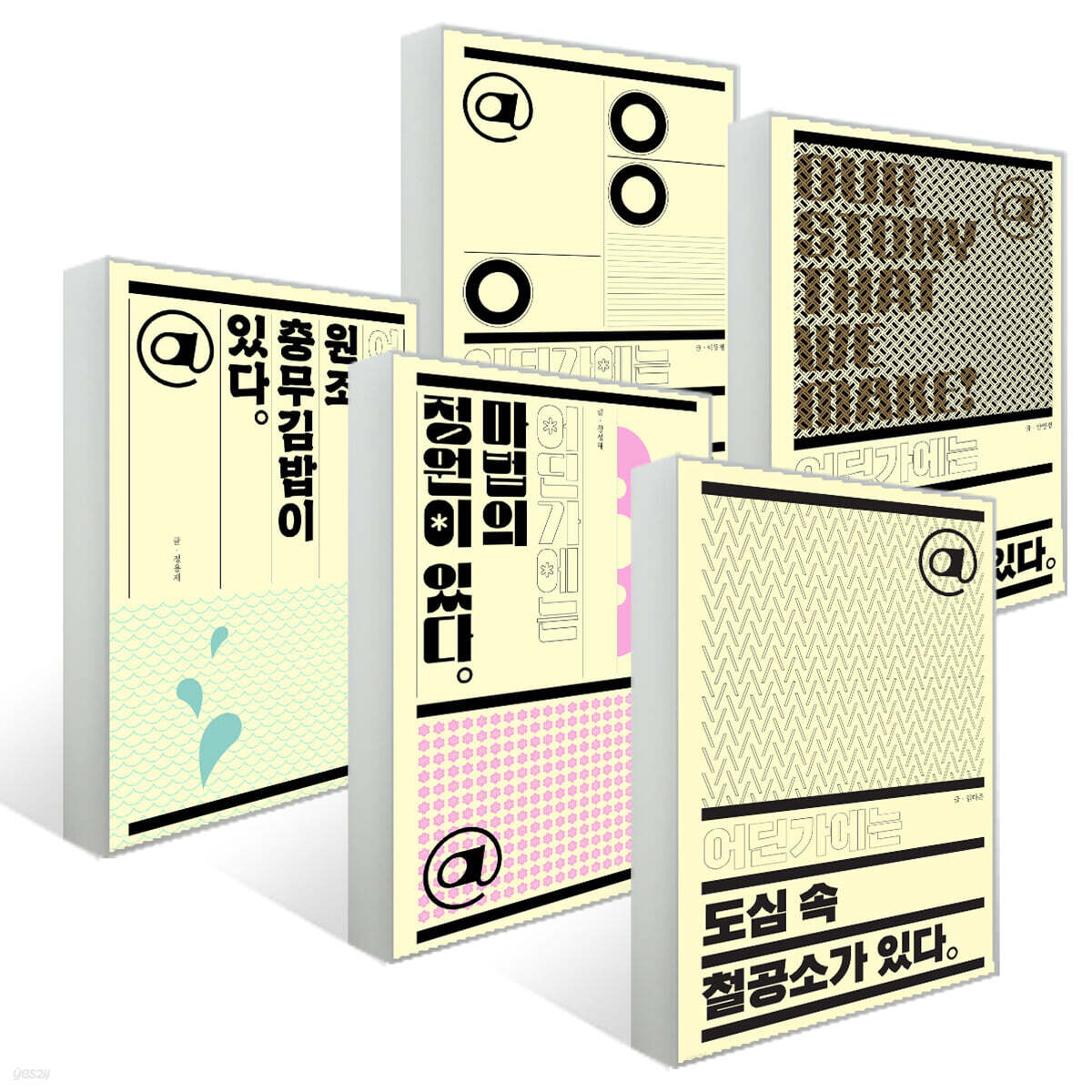
The "Somewhere There is @" series
 |
Description
Book Introduction
This product is a product made by YES24. (Individual returns are not possible.) [Book] Somewhere There Is a Magic Garden A young man who thinks about the region and ecology, not competition, plants a magical garden in an old village. The author, who was depressed about having to live in an endless competition even after graduating from college, came down to Suncheon, where his parents live, to catch his breath. I had no knowledge or interest in the region, but somehow the local work I started by chance was more interesting than my college studies. Meeting the merchants and citizens who created the region's history and culture shatters the preconceived notion that the region is simply inconvenient and vague. Determined to make the value of these inconspicuous areas known, he calls himself an "ecological culture planner" and takes on the role of a bridge. In a world of rapid change, when his peers in their twenties were heading to big cities, he recognized the power of the local community and boldly created his own work. In fact, the young man dreamed of becoming a flower fairy, admiring the cartoon film “Marybel the Flower Fairy.” Because I wanted to have the magical power to make anyone happy when they see flowers. [Book] Somewhere, There Are Fighting Immigrant Women “It wasn’t an easy decision. We want to live well. Here and now.” Here, there are immigrant women who have decided not to face discrimination, prejudice, and hatred any longer. There are those who speak out for their human rights and stand up against hatred. There are those who have vowed not to lose any more friends. This is the story of immigrant women living in Okcheon County. They hope to live as 'me'. Immigrant women, who were only recognized for their 'value of existence' when they were someone's wife, someone's daughter-in-law, or someone's mother, are now shouting that they will live as 'themselves.' To do this, they sought out, approached, and held hands with migrant women who were experiencing difficulties. We begin with the story of Okcheon immigrant women who formed an organization called the Okcheon County Marriage Immigrant Women's Association and supported each other, fighting against prejudice and persecution and caring for one another. [Book] Somewhere There's an Amateur Printer 『There Is an Amateur Printer Somewhere』 is a collection of essays by author Lee Dong-haeng, who works with his wife in letterpress printing in Taebaek, Gangwon-do, and tells the story of a couple of amateur printers who have found their way to the city with extraordinary dexterity and tenacity. This couple's story of settling in Taebaek unfolds quite differently from that of other regional immigrants. As readers hear about their motivations for entering letterpress and how they ended up in the mountainous city of Taebaek, they will find themselves nodding along to this somewhat unfamiliar but fascinating story. Artist Lee Dong-haeng and his wife paint nature-themed pictures, engrave them on copper plates, and then express them on paper. Although it has only been five years since it began operations, it is now mastering the difficult and tedious printing process. In the winter of early 2019, when I first met them and talked with them, I began to harbor a vague hope that 'these people's stories would be good to publish in a book.' [Book] Somewhere, There's the Original Chungmu Kimbap Tongyeong honey bread is "Tongyeong" honey bread, but why is Chungmu kimbap called "Chungmu" kimbap? Among the countless original Chungmu kimbap shops lining the streets, which is the true origin? A look at the region's local history and culinary culture through Chungmu kimbap! Is there any other food that evokes regional flavor as much as Chungmu kimbap? When did this kimbap get its name from the region, "Chungmu?" Anyone who lives in Tongyeong is bound to hear the question, "Where is the original Chungmu kimbap restaurant?" However, I can't immediately remember which of these numerous stores is the original, or when so many Chungmu Gimbap restaurants first appeared in Tongyeong. The author, a local journalist and cultural planner with a deep interest in Tongyeong culture, embarks on a journey to find the origin of Chungmu Kimbap. We meet with elders who remember Tongyeong's history, discover the origins of Chungmu Gimbap, interview the owner of Chungmu Gimbap, and trace the secrets of its delicious taste. [Book] Somewhere in the City Center, There's a Steelworks A series about exploring the ironworks streets of Daejeon's downtown area: "Somewhere @ is there." Writer Da-eun Lim, who spent her school days in Daejeon and runs a local shop, has published a travelogue of the city center out of her love for the local area. We explored and recorded the ironworks street near Daejeon Station, which was called Daejeon's mini-industrial complex and where machines were running nonstop. Thanks to its convenient location, this area was once bustling with logistics and now has left its glory days behind and is bearing the weight of time. On the ironworks street of Wondong, which has preserved the history of over 70 years, we met three artisans who have devoted their youth to making metal products and who have quietly stood by their posts. |
- You can preview some of the book's contents.
Preview
index
"There's a magic garden somewhere."
Somewhere, there are immigrant women fighting.
Somewhere there is an amateur printer.
"Somewhere, There's the Original Chungmu Kimbap"
"Somewhere in the heart of the city, there's a steelworks."
Somewhere, there are immigrant women fighting.
Somewhere there is an amateur printer.
"Somewhere, There's the Original Chungmu Kimbap"
"Somewhere in the heart of the city, there's a steelworks."
Into the book
A gift of flowers brings a smile to the recipient's face.
This is the power of flowers, the magic of flowers.
I've always wanted to know more about the power of these flowers.
So even now that I'm an adult, I often think of the theme song of "Marybel, the Flower Fairy."
Since ancient times, people have left behind secrets, techniques, and things that need to be passed down in secret through songs.
---From "Entering_Flower Fairy Marybell"
As the market was filled with customers and sales naturally increased, smiles appeared on the faces of the market merchants.
The once quiet traditional market was filled with energy.
It was truly magical.
The essence of this magic was to reveal and enable people to experience the invisible 'value'.
---From "Do you know a cultural planner?"
In 1997, Suncheon citizens planned the first Suncheon Bay Reed Festival, hoping that more people would empathize with the value of Suncheon Bay.
The Reed Festival is an example of how environmental issues, which were sensitive at the time, were addressed through festivals rather than protests.
It was amazing how they elevated local issues into everyday pleasures and a culture that connected to their lives.
---From "Dance with the Black Crane"
Inside the birdhouse, which was about the size of my palm, there were several eggs, and soon a small bird flew in and nestled the eggs.
I was simply amazed by the sight I was seeing for the first time in my life, and realized anew that I was living in a vivid nature.
---From "A Step Into the Forest"
I liked 'Living in the Forest', which was one of the major courses at Arangot.
This class was a time to awaken the wild instincts of humans and learn the skills to live with one's own hands.
The highlight was ‘Analog Forestry’, a training course created in Sri Lanka.
---From "Analog Forestry"
In a city tangled with complex and diverse problems, how can we find solutions and create a sustainable ecosystem? Just as detectives search for clues at crime scenes, urban problems also require on-site investigation.
So, I started observing the low voltage first.
I walked down the alleys, met people, and observed what kind of conversations were going on, what was inconvenient, and what characteristics and history each alley had.
---From "The Garden is the Master Key"
The garden was not a destination to be reached, but rather a place where people could come together and share stories with a willing heart.
In Jeondong, the garden was a shortcut in itself.
---From "The Shortcut to the Garden"
Ultimately, creating a village through urban regeneration depends not on how beautiful the garden is, but on how to build a network of relationships that care for one another.
---From "The Grandmothers' Chairs"
I was ashamed of myself for thinking that until then, I had only valued plants that I could eat or enjoy looking at.
There was a need to look at plants again from the perspective of the forest, the cycle of life, rather than from the perspective of humans who only consider immediate profits.
---From "Seven Colored Butterflies"
Personally, my favorite part was sharing tulip bulbs at the last town hall meeting of the year.
“We’ll be apart for a while during the winter and meet again in early April when the tulips are in bloom!” I thought making promises like this was “garden village-like.”
---From "Inviting Plant Thieves"
Putting down roots means choosing between two paths.
Find the right place for you, or make the place you're at a great place.
Today, I walk the alleys of Jeojeon-dong, where I live, to make it a better village with what I have learned from nature and people in Suncheon.
This is the power of flowers, the magic of flowers.
I've always wanted to know more about the power of these flowers.
So even now that I'm an adult, I often think of the theme song of "Marybel, the Flower Fairy."
Since ancient times, people have left behind secrets, techniques, and things that need to be passed down in secret through songs.
---From "Entering_Flower Fairy Marybell"
As the market was filled with customers and sales naturally increased, smiles appeared on the faces of the market merchants.
The once quiet traditional market was filled with energy.
It was truly magical.
The essence of this magic was to reveal and enable people to experience the invisible 'value'.
---From "Do you know a cultural planner?"
In 1997, Suncheon citizens planned the first Suncheon Bay Reed Festival, hoping that more people would empathize with the value of Suncheon Bay.
The Reed Festival is an example of how environmental issues, which were sensitive at the time, were addressed through festivals rather than protests.
It was amazing how they elevated local issues into everyday pleasures and a culture that connected to their lives.
---From "Dance with the Black Crane"
Inside the birdhouse, which was about the size of my palm, there were several eggs, and soon a small bird flew in and nestled the eggs.
I was simply amazed by the sight I was seeing for the first time in my life, and realized anew that I was living in a vivid nature.
---From "A Step Into the Forest"
I liked 'Living in the Forest', which was one of the major courses at Arangot.
This class was a time to awaken the wild instincts of humans and learn the skills to live with one's own hands.
The highlight was ‘Analog Forestry’, a training course created in Sri Lanka.
---From "Analog Forestry"
In a city tangled with complex and diverse problems, how can we find solutions and create a sustainable ecosystem? Just as detectives search for clues at crime scenes, urban problems also require on-site investigation.
So, I started observing the low voltage first.
I walked down the alleys, met people, and observed what kind of conversations were going on, what was inconvenient, and what characteristics and history each alley had.
---From "The Garden is the Master Key"
The garden was not a destination to be reached, but rather a place where people could come together and share stories with a willing heart.
In Jeondong, the garden was a shortcut in itself.
---From "The Shortcut to the Garden"
Ultimately, creating a village through urban regeneration depends not on how beautiful the garden is, but on how to build a network of relationships that care for one another.
---From "The Grandmothers' Chairs"
I was ashamed of myself for thinking that until then, I had only valued plants that I could eat or enjoy looking at.
There was a need to look at plants again from the perspective of the forest, the cycle of life, rather than from the perspective of humans who only consider immediate profits.
---From "Seven Colored Butterflies"
Personally, my favorite part was sharing tulip bulbs at the last town hall meeting of the year.
“We’ll be apart for a while during the winter and meet again in early April when the tulips are in bloom!” I thought making promises like this was “garden village-like.”
---From "Inviting Plant Thieves"
Putting down roots means choosing between two paths.
Find the right place for you, or make the place you're at a great place.
Today, I walk the alleys of Jeojeon-dong, where I live, to make it a better village with what I have learned from nature and people in Suncheon.
---From "In Front of Sustainability"
My wife not only found it fascinating to create with her hands, but she also valued learning and practicing the entire process.
Looking at that, I felt a small sense of confidence that maybe if we worked together, we could achieve anything.
This image would also be in line with the image of 'a certain life' that we dream of.
And then one day, out of the blue, my wife showed me a video of a machine called 'Chandler & Price', and our lives began to change little by little.
--- p.
9
There are many reasons why letterpress printing began, but those reasons are merely conscious meanings that were attached after time passed.
To be honest, what led us at that time was 'coincidence'.
I didn't start the letterpress business with any grand intention.
However, my wife and I were thinking the same thing.
We have decided to accept that our lives are in a certain process.
I thought that the process might be a series of countless failures.
My wife said, 'Everyone fails at least once.
Life is something that can go wrong at any time, so let's try anything.
He showed his courage by saying, 'I have both hands and both feet and a head, so what can't I do?'
--- p.
22
Until the 1960s and 1970s, letterpress printing was actively used in Korea, but it began to decline rapidly in the 1980s with the development of digital publishing technology.
For this reason, for my wife and I, who were born in the 80s and 90s, letterpress couldn't help but seem even more unfamiliar and novel.
It seemed like a very cumbersome task to manually insert each sheet of paper, checking the ink color, the appropriate amount, and whether it was positioned correctly.
(…) But at some point, that ‘hassle’ became attractive.
In a world where printing is done with the push of a button, the process of mixing ink, applying it to a plate, and printing it onto paper seemed special.
In this fast-paced world, isn't it fascinating to do things step by step, one drop at a time?
--- pp.
29~30
The moment we left the tailor shop, saying, "I'll come back next time," we let out a small sigh of relief that we had finally done it.
I was so happy.
With a sigh of relief, my wife and I looked over the cut papers.
The cross-section was so clean it sparkled! I was truly satisfied and once again impressed by the cutting machine's performance.
The foundation fee that day was 5,000 won.
Those 5,000 won were the most valuable 5,000 won in our lives, as they blew away all the stress that had built up over the years due to the difficult problem of the foundation.
--- p.
46
There was a time when I couldn't even think of breaking through the hustle and bustle of life in Euljiro.
If we hadn't ventured out that day with such enthusiasm, it might have been remembered as a place of constant fear.
So we really knew nothing about printing and they were veterans.
The wall seemed really high.
But what we have come to realize is the simple truth: if you don't ask, you won't get anything.
When we ask for exactly what we want, someone points out what's wrong and what needs to be fixed, and tells us more.
Having learned the language and ecosystem of Euljiro through direct encounters like that, I now feel like I can create anything with the local owners.
For us, Euljiro is the most reliable support.
My wife not only found it fascinating to create with her hands, but she also valued learning and practicing the entire process.
Looking at that, I felt a small sense of confidence that maybe if we worked together, we could achieve anything.
This image would also be in line with the image of 'a certain life' that we dream of.
And then one day, out of the blue, my wife showed me a video of a machine called 'Chandler & Price', and our lives began to change little by little.
--- p.
9
There are many reasons why letterpress printing began, but those reasons are merely conscious meanings that were attached after time passed.
To be honest, what led us at that time was 'coincidence'.
I didn't start the letterpress business with any grand intention.
However, my wife and I were thinking the same thing.
We have decided to accept that our lives are in a certain process.
I thought that the process might be a series of countless failures.
My wife said, 'Everyone fails at least once.
Life is something that can go wrong at any time, so let's try anything.
He showed his courage by saying, 'I have both hands and both feet and a head, so what can't I do?'
--- p.
22
Until the 1960s and 1970s, letterpress printing was actively used in Korea, but it began to decline rapidly in the 1980s with the development of digital publishing technology.
For this reason, for my wife and I, who were born in the 80s and 90s, letterpress couldn't help but seem even more unfamiliar and novel.
It seemed like a very cumbersome task to manually insert each sheet of paper, checking the ink color, the appropriate amount, and whether it was positioned correctly.
(…) But at some point, that ‘hassle’ became attractive.
In a world where printing is done with the push of a button, the process of mixing ink, applying it to a plate, and printing it onto paper seemed special.
In this fast-paced world, isn't it fascinating to do things step by step, one drop at a time?
--- pp.
29~30
The moment we left the tailor shop, saying, "I'll come back next time," we let out a small sigh of relief that we had finally done it.
I was so happy.
With a sigh of relief, my wife and I looked over the cut papers.
The cross-section was so clean it sparkled! I was truly satisfied and once again impressed by the cutting machine's performance.
The foundation fee that day was 5,000 won.
Those 5,000 won were the most valuable 5,000 won in our lives, as they blew away all the stress that had built up over the years due to the difficult problem of the foundation.
--- p.
46
There was a time when I couldn't even think of breaking through the hustle and bustle of life in Euljiro.
If we hadn't ventured out that day with such enthusiasm, it might have been remembered as a place of constant fear.
So we really knew nothing about printing and they were veterans.
The wall seemed really high.
But what we have come to realize is the simple truth: if you don't ask, you won't get anything.
When we ask for exactly what we want, someone points out what's wrong and what needs to be fixed, and tells us more.
Having learned the language and ecosystem of Euljiro through direct encounters like that, I now feel like I can create anything with the local owners.
For us, Euljiro is the most reliable support.
Looking at that, I felt a small sense of confidence that maybe if we worked together, we could achieve anything.
This image would also be in line with the image of 'a certain life' that we dream of.
And then one day, out of the blue, my wife showed me a video of a machine called 'Chandler & Price', and our lives began to change little by little.
--- p.
9
There are many reasons why letterpress printing began, but those reasons are merely conscious meanings that were attached after time passed.
To be honest, what led us at that time was 'coincidence'.
I didn't start the letterpress business with any grand intention.
However, my wife and I were thinking the same thing.
We have decided to accept that our lives are in a certain process.
I thought that the process might be a series of countless failures.
My wife said, 'Everyone fails at least once.
Life is something that can go wrong at any time, so let's try anything.
He showed his courage by saying, 'I have both hands and both feet and a head, so what can't I do?'
--- p.
22
Until the 1960s and 1970s, letterpress printing was actively used in Korea, but it began to decline rapidly in the 1980s with the development of digital publishing technology.
For this reason, for my wife and I, who were born in the 80s and 90s, letterpress couldn't help but seem even more unfamiliar and novel.
It seemed like a very cumbersome task to manually insert each sheet of paper, checking the ink color, the appropriate amount, and whether it was positioned correctly.
(…) But at some point, that ‘hassle’ became attractive.
In a world where printing is done with the push of a button, the process of mixing ink, applying it to a plate, and printing it onto paper seemed special.
In this fast-paced world, isn't it fascinating to do things step by step, one drop at a time?
--- pp.
29~30
The moment we left the tailor shop, saying, "I'll come back next time," we let out a small sigh of relief that we had finally done it.
I was so happy.
With a sigh of relief, my wife and I looked over the cut papers.
The cross-section was so clean it sparkled! I was truly satisfied and once again impressed by the cutting machine's performance.
The foundation fee that day was 5,000 won.
Those 5,000 won were the most valuable 5,000 won in our lives, as they blew away all the stress that had built up over the years due to the difficult problem of the foundation.
--- p.
46
There was a time when I couldn't even think of breaking through the hustle and bustle of life in Euljiro.
If we hadn't ventured out that day with such enthusiasm, it might have been remembered as a place of constant fear.
So we really knew nothing about printing and they were veterans.
The wall seemed really high.
But what we have come to realize is the simple truth: if you don't ask, you won't get anything.
When we ask for exactly what we want, someone points out what's wrong and what needs to be fixed, and tells us more.
Having learned the language and ecosystem of Euljiro through direct encounters like that, I now feel like I can create anything with the local owners.
For us, Euljiro is the most reliable support.
My wife not only found it fascinating to create with her hands, but she also valued learning and practicing the entire process.
Looking at that, I felt a small sense of confidence that maybe if we worked together, we could achieve anything.
This image would also be in line with the image of 'a certain life' that we dream of.
And then one day, out of the blue, my wife showed me a video of a machine called 'Chandler & Price', and our lives began to change little by little.
--- p.
9
There are many reasons why letterpress printing began, but those reasons are merely conscious meanings that were attached after time passed.
To be honest, what led us at that time was 'coincidence'.
I didn't start the letterpress business with any grand intention.
However, my wife and I were thinking the same thing.
We have decided to accept that our lives are in a certain process.
I thought that the process might be a series of countless failures.
My wife said, 'Everyone fails at least once.
Life is something that can go wrong at any time, so let's try anything.
He showed his courage by saying, 'I have both hands and both feet and a head, so what can't I do?'
--- p.
22
Until the 1960s and 1970s, letterpress printing was actively used in Korea, but it began to decline rapidly in the 1980s with the development of digital publishing technology.
For this reason, for my wife and I, who were born in the 80s and 90s, letterpress couldn't help but seem even more unfamiliar and novel.
It seemed like a very cumbersome task to manually insert each sheet of paper, checking the ink color, the appropriate amount, and whether it was positioned correctly.
(…) But at some point, that ‘hassle’ became attractive.
In a world where printing is done with the push of a button, the process of mixing ink, applying it to a plate, and printing it onto paper seemed special.
In this fast-paced world, isn't it fascinating to do things step by step, one drop at a time?
--- pp.
29~30
The moment we left the tailor shop, saying, "I'll come back next time," we let out a small sigh of relief that we had finally done it.
I was so happy.
With a sigh of relief, my wife and I looked over the cut papers.
The cross-section was so clean it sparkled! I was truly satisfied and once again impressed by the cutting machine's performance.
The foundation fee that day was 5,000 won.
Those 5,000 won were the most valuable 5,000 won in our lives, as they blew away all the stress that had built up over the years due to the difficult problem of the foundation.
--- p.
46
There was a time when I couldn't even think of breaking through the hustle and bustle of life in Euljiro.
If we hadn't ventured out that day with such enthusiasm, it might have been remembered as a place of constant fear.
So we really knew nothing about printing and they were veterans.
The wall seemed really high.
But what we have come to realize is the simple truth: if you don't ask, you won't get anything.
When we ask for exactly what we want, someone points out what's wrong and what needs to be fixed, and tells us more.
Having learned the language and ecosystem of Euljiro through direct encounters like that, I now feel like I can create anything with the local owners.
For us, Euljiro is the most reliable support.
--- pp.
49~50
49~50
Who are migrant women?
They named themselves this way:
'The eldest daughter of a poor family'.
It's a familiar word.
This is exactly what happened to Korea's 'eldest daughters' who went to Seoul to earn money from rural societies that had become rapidly impoverished during the industrialization period.
--- p.17
As immigrant women adjust to life in Korea, they often experience their hopes and dreams being dashed.
It is an experience that shatters the success myth that immigration can help one's original family rise in social status and the illusion that one can live a life like in a drama.
In the process, sometimes people say they were 'fooled'.
But he did not become discouraged by this and continued to work tirelessly to improve the situation.
Although it is a new environment, in order to change their lives, they perform unpaid work such as housework, childbirth and childcare, caring for their in-laws, and domestic work (farming), while also earning a living.
--- p.21
Immigrant women are members of multicultural families.
A multicultural family literally means a family with a mixture of different cultures.
However, immigrant women said that their lives were not those of multicultural families.
This is because they are forced to abandon the culture, language, and traditions they grew up with and assimilate into Korean culture.
--- p.32
“Since you’re in Korea, just follow Korean law.”
And don't let them speak Vietnamese.
And they don't even let me watch Vietnamese broadcasts.
There are people who don't let me eat Vietnamese food.
To only eat Korean food at home.
Don't Koreans like Vietnamese food, too? Koreans don't change their food just because they go to a different country.
“I don’t understand why they always tell me to trade food, language, and friends only for Vietnamese people.”
--- p.33
“I wish you would let me do it on my own.
Even though I worked a lot of overtime, I still got paid 1.5 million won.
But since my husband doesn't earn money, I have to use that for living expenses.
At that time, my mother-in-law said that if I didn't save money, she wouldn't let me see the baby, so even though it was hard, I closed my eyes and saved 500,000 won every month.
Not my bank account, but my mother-in-law's bank account.
Because my mother-in-law has to check.
(...) I don't have a life at all.
“I can’t even send money to my parents’ house.”
--- p.39
“I’m just a person.
I feel like you keep looking at me with bad eyes.
I think they think that if they just give me money, I can buy it.
The reason I got married was simply to live well with one person and to live my life well.
But just looking at this incident, it's like they keep saying you can buy it if you pay a certain amount, like it's some kind of object."
--- p.42
“If it were a Korean daughter-in-law, she would try to make up with her husband after a fight and scold her son, but to a Vietnamese daughter-in-law, she would ask how much she should be paid.
I think running away is also because of money.
So I think that if you give them money, they are the kind of person you can treat any way you want.
I told you.
Mother, we didn't get married to get money.
It's true that we came to Korea to make money, but we also came here to get married and live a better life.
“It’s not like I’m just trying to get paid in exchange for marriage.”
--- p.63
“There are a lot of instances of people actually cursing and hitting.
I just think that hitting a few times is something that can happen when you're angry and let it go.
But it gets worse.
If it's serious enough to warrant calling 112 later, it's serious.
It's like strangling someone and you really feel like you could die.
But the police came and told us to get along.
“No matter how many times I reported it, they always come and tell me to get along.”
--- p.66
“I changed my name and obtained citizenship before the divorce.
That's the end of it.
My husband said that he was glad that I didn't kick him out.
Since I don't have money, I can't hire a lawyer.
I would be grateful if you could even show me the baby's face.
I have a friend who divorced her husband because he beat her, but then had her baby taken away from her.
“I cry every day because I miss my baby.”
--- p.68
“My friend worked in his mother-in-law’s field his whole life.
When I leave, I don't have a single penny.
All the money from selling crops goes into my mother-in-law's bank account.
Since I work from home, I don't get paid.
“I wanted to raise a child, but I was told that I had to go out and work to look after the child, so I worked in the fields every day. But when it came time to part ways, I ended up leaving empty-handed.”
--- p.69
“There is something called the Multicultural Family Council.
But that council is male-dominated.
That's why I asked the chairman about it.
Can't women become executives at the Multicultural Family Council?
Then he said this.
Here, only men are executives.
So I even sarcastically suggested that if only men had the authority to express opinions and make decisions, we should change the name to the Multicultural Husbands Council.”
--- p.86
“Support for multicultural families means that even if immigrant women have a hard time within a multicultural family, it’s okay as long as the multicultural family itself runs well.
Then, if the immigrant woman is eliminated, she just has to return to her home country.
Then, bring another immigrant woman and place her in a multicultural family.
Then what am I?
“Am I a scapegoat for the peace of multicultural families?”
--- p.87
“I want to live under my name ○○○.
But, in the name of multicultural family, they only support me when I am someone's daughter-in-law, wife, or mother.
If I leave that position.
I can't get any support.
“I just want to live as myself.”
--- pp.
93~95
“I wanted to tell our story here.
What we want is not something grand.
We are also residents of Okcheon.
Please listen to our stories to find out what we struggle with, what challenges we face, and how we can overcome them.
“I wanted to tell our story as ordinary people before being someone’s wife or mother.” Who are migrant women?
They named themselves this way:
'The eldest daughter of a poor family'.
It's a familiar word.
This is exactly what happened to Korea's 'eldest daughters' who went to Seoul to earn money from rural societies that had become rapidly impoverished during the industrialization period.
--- p.17
As immigrant women adjust to life in Korea, they often experience their hopes and dreams being dashed.
It is an experience that shatters the success myth that immigration can help one's original family rise in social status and the illusion that one can live a life like in a drama.
In the process, sometimes people say they were 'fooled'.
But he did not become discouraged by this and continued to work tirelessly to improve the situation.
Although it is a new environment, in order to change their lives, they perform unpaid work such as housework, childbirth and childcare, caring for their in-laws, and domestic work (farming), while also earning a living.
--- p.21
Immigrant women are members of multicultural families.
A multicultural family literally means a family with a mixture of different cultures.
However, immigrant women said that their lives were not those of multicultural families.
This is because they are forced to abandon the culture, language, and traditions they grew up with and assimilate into Korean culture.
--- p.32
“Since you’re in Korea, just follow Korean law.”
And don't let them speak Vietnamese.
And they don't even let me watch Vietnamese broadcasts.
There are people who don't let me eat Vietnamese food.
To only eat Korean food at home.
Don't Koreans like Vietnamese food, too? Koreans don't change their food just because they go to a different country.
“I don’t understand why they always tell me to trade food, language, and friends only for Vietnamese people.”
--- p.33
“I wish you would let me do it on my own.
Even though I worked a lot of overtime, I still got paid 1.5 million won.
But since my husband doesn't earn money, I have to use that for living expenses.
At that time, my mother-in-law said that if I didn't save money, she wouldn't let me see the baby, so even though it was hard, I closed my eyes and saved 500,000 won every month.
Not my bank account, but my mother-in-law's bank account.
Because my mother-in-law has to check.
(...) I don't have a life at all.
“I can’t even send money to my parents’ house.”
--- p.39
“I’m just a person.
I feel like people keep looking at me with bad eyes.
I think they think that if they just give me money, I can buy it.
The reason I got married was simply to live well with one person and to live my life well.
But just looking at this incident, it's like they keep saying you can buy it if you pay a certain amount, like it's some kind of object."
--- p.42
“If it were a Korean daughter-in-law, she would try to make up with her husband after a fight and scold her son, but to a Vietnamese daughter-in-law, she would ask how much she should be paid.
I think running away is also because of money.
So I think that if you give them money, they are the kind of person you can treat any way you want.
I told you.
Mother, we didn't get married to get money.
It's true that we came to Korea to make money, but we also came here to get married and live a better life.
“It’s not like I’m just trying to get paid in exchange for marriage.”
--- p.63
“There are a lot of instances of people actually cursing and hitting.
I just think that hitting a few times is something that can happen when you're angry and let it go.
But it gets worse.
If it's serious enough to warrant calling 112 later, it's serious.
It's like strangling someone and you really feel like you could die.
But the police came and told us to get along.
“No matter how many times I reported it, they always come and tell me to get along.”
--- p.66
“I changed my name and obtained citizenship before the divorce.
That's the end of it.
My husband said that he was glad that I didn't kick him out.
Since I don't have money, I can't hire a lawyer.
I would be grateful if you could even show me the baby's face.
I have a friend who divorced her husband because he beat her, but then had her baby taken away from her.
“I cry every day because I miss my baby.”
--- p.68
“My friend worked in his mother-in-law’s field his whole life.
When I leave, I don't have a single penny.
All the money from selling crops goes into my mother-in-law's bank account.
Since I work from home, I don't get paid.
“I wanted to raise a child, but I was told that I had to go out and work to look after the child, so I worked in the fields every day. But when it came time to part ways, I ended up leaving empty-handed.”
--- p.69
“There is something called the Multicultural Family Council.
But that council is male-dominated.
That's why I asked the chairman about it.
Can't women become executives at the Multicultural Family Council?
Then he said this.
Here, only men are executives.
So I even sarcastically suggested that if only men had the authority to express opinions and make decisions, we should change the name to the Multicultural Husbands Council.”
--- p.86
“Support for multicultural families means that even if immigrant women have a hard time within a multicultural family, it’s okay as long as the multicultural family itself runs well.
Then, if the immigrant woman is eliminated, she just has to return to her home country.
Then, bring another immigrant woman and place her in a multicultural family.
Then what am I?
“Am I a scapegoat for the peace of multicultural families?”
--- p.87
“I want to live under my name ○○○.
But, in the name of multicultural family, they only support me when I am someone's daughter-in-law, wife, or mother.
If I leave that position.
I can't get any support.
“I just want to live as myself.”
--- pp.
93~95
“I wanted to tell our story here.
What we want is not something grand.
We are also residents of Okcheon.
Please listen to our stories to find out what we struggle with, what challenges we face, and how we can overcome them.
“I wanted to tell our story as ordinary people, before being someone’s wife or mother.”
They named themselves this way:
'The eldest daughter of a poor family'.
It's a familiar word.
This is exactly what happened to Korea's 'eldest daughters' who went to Seoul to earn money from rural societies that had become rapidly impoverished during the industrialization period.
--- p.17
As immigrant women adjust to life in Korea, they often experience their hopes and dreams being dashed.
It is an experience that shatters the success myth that immigration can help one's original family rise in social status and the illusion that one can live a life like in a drama.
In the process, sometimes people say they were 'fooled'.
But he did not become discouraged by this and continued to work tirelessly to improve the situation.
Although it is a new environment, in order to change their lives, they perform unpaid work such as housework, childbirth and childcare, caring for their in-laws, and domestic work (farming), while also earning a living.
--- p.21
Immigrant women are members of multicultural families.
A multicultural family literally means a family with a mixture of different cultures.
However, immigrant women said that their lives were not those of multicultural families.
This is because they are forced to abandon the culture, language, and traditions they grew up with and assimilate into Korean culture.
--- p.32
“Since you’re in Korea, just follow Korean law.”
And don't let them speak Vietnamese.
And they don't even let me watch Vietnamese broadcasts.
There are people who don't let me eat Vietnamese food.
To only eat Korean food at home.
Don't Koreans like Vietnamese food, too? Koreans don't change their food just because they go to a different country.
“I don’t understand why they always tell me to trade food, language, and friends only for Vietnamese people.”
--- p.33
“I wish you would let me do it on my own.
Even though I worked a lot of overtime, I still got paid 1.5 million won.
But since my husband doesn't earn money, I have to use that for living expenses.
At that time, my mother-in-law said that if I didn't save money, she wouldn't let me see the baby, so even though it was hard, I closed my eyes and saved 500,000 won every month.
Not my bank account, but my mother-in-law's bank account.
Because my mother-in-law has to check.
(...) I don't have a life at all.
“I can’t even send money to my parents’ house.”
--- p.39
“I’m just a person.
I feel like you keep looking at me with bad eyes.
I think they think that if they just give me money, I can buy it.
The reason I got married was simply to live well with one person and to live my life well.
But just looking at this incident, it's like they keep saying you can buy it if you pay a certain amount, like it's some kind of object."
--- p.42
“If it were a Korean daughter-in-law, she would try to make up with her husband after a fight and scold her son, but to a Vietnamese daughter-in-law, she would ask how much she should be paid.
I think running away is also because of money.
So I think that if you give them money, they are the kind of person you can treat any way you want.
I told you.
Mother, we didn't get married to get money.
It's true that we came to Korea to make money, but we also came here to get married and live a better life.
“It’s not like I’m just trying to get paid in exchange for marriage.”
--- p.63
“There are a lot of instances of people actually cursing and hitting.
I just think that hitting a few times is something that can happen when you're angry and let it go.
But it gets worse.
If it's serious enough to warrant calling 112 later, it's serious.
It's like strangling someone and you really feel like you could die.
But the police came and told us to get along.
“No matter how many times I reported it, they always come and tell me to get along.”
--- p.66
“I changed my name and obtained citizenship before the divorce.
That's the end of it.
My husband said that he was glad that I didn't kick him out.
Since I don't have money, I can't hire a lawyer.
I would be grateful if you could even show me the baby's face.
I have a friend who divorced her husband because he beat her, but then had her baby taken away from her.
“I cry every day because I miss my baby.”
--- p.68
“My friend worked in his mother-in-law’s field his whole life.
When I leave, I don't have a single penny.
All the money from selling crops goes into my mother-in-law's bank account.
Since I work from home, I don't get paid.
“I wanted to raise a child, but I was told that I had to go out and work to look after the child, so I worked in the fields every day. But when it came time to part ways, I ended up leaving empty-handed.”
--- p.69
“There is something called the Multicultural Family Council.
But that council is male-dominated.
That's why I asked the chairman about it.
Can't women become executives at the Multicultural Family Council?
Then he said this.
Here, only men are executives.
So I even sarcastically suggested that if only men had the authority to express opinions and make decisions, we should change the name to the Multicultural Husbands Council.”
--- p.86
“Support for multicultural families means that even if immigrant women have a hard time within a multicultural family, it’s okay as long as the multicultural family itself runs well.
Then, if the immigrant woman is eliminated, she just has to return to her home country.
Then, bring another immigrant woman and place her in a multicultural family.
Then what am I?
“Am I a scapegoat for the peace of multicultural families?”
--- p.87
“I want to live under my name ○○○.
But, in the name of multicultural family, they only support me when I am someone's daughter-in-law, wife, or mother.
If I leave that position.
I can't get any support.
“I just want to live as myself.”
--- pp.
93~95
“I wanted to tell our story here.
What we want is not something grand.
We are also residents of Okcheon.
Please listen to our stories to find out what we struggle with, what challenges we face, and how we can overcome them.
“I wanted to tell our story as ordinary people before being someone’s wife or mother.” Who are migrant women?
They named themselves this way:
'The eldest daughter of a poor family'.
It's a familiar word.
This is exactly what happened to Korea's 'eldest daughters' who went to Seoul to earn money from rural societies that had become rapidly impoverished during the industrialization period.
--- p.17
As immigrant women adjust to life in Korea, they often experience their hopes and dreams being dashed.
It is an experience that shatters the success myth that immigration can help one's original family rise in social status and the illusion that one can live a life like in a drama.
In the process, sometimes people say they were 'fooled'.
But he did not become discouraged by this and continued to work tirelessly to improve the situation.
Although it is a new environment, in order to change their lives, they perform unpaid work such as housework, childbirth and childcare, caring for their in-laws, and domestic work (farming), while also earning a living.
--- p.21
Immigrant women are members of multicultural families.
A multicultural family literally means a family with a mixture of different cultures.
However, immigrant women said that their lives were not those of multicultural families.
This is because they are forced to abandon the culture, language, and traditions they grew up with and assimilate into Korean culture.
--- p.32
“Since you’re in Korea, just follow Korean law.”
And don't let them speak Vietnamese.
And they don't even let me watch Vietnamese broadcasts.
There are people who don't let me eat Vietnamese food.
To only eat Korean food at home.
Don't Koreans like Vietnamese food, too? Koreans don't change their food just because they go to a different country.
“I don’t understand why they always tell me to trade food, language, and friends only for Vietnamese people.”
--- p.33
“I wish you would let me do it on my own.
Even though I worked a lot of overtime, I still got paid 1.5 million won.
But since my husband doesn't earn money, I have to use that for living expenses.
At that time, my mother-in-law said that if I didn't save money, she wouldn't let me see the baby, so even though it was hard, I closed my eyes and saved 500,000 won every month.
Not my bank account, but my mother-in-law's bank account.
Because my mother-in-law has to check.
(...) I don't have a life at all.
“I can’t even send money to my parents’ house.”
--- p.39
“I’m just a person.
I feel like people keep looking at me with bad eyes.
I think they think that if they just give me money, I can buy it.
The reason I got married was simply to live well with one person and to live my life well.
But just looking at this incident, it's like they keep saying you can buy it if you pay a certain amount, like it's some kind of object."
--- p.42
“If it were a Korean daughter-in-law, she would try to make up with her husband after a fight and scold her son, but to a Vietnamese daughter-in-law, she would ask how much she should be paid.
I think running away is also because of money.
So I think that if you give them money, they are the kind of person you can treat any way you want.
I told you.
Mother, we didn't get married to get money.
It's true that we came to Korea to make money, but we also came here to get married and live a better life.
“It’s not like I’m just trying to get paid in exchange for marriage.”
--- p.63
“There are a lot of instances of people actually cursing and hitting.
I just think that hitting a few times is something that can happen when you're angry and let it go.
But it gets worse.
If it's serious enough to warrant calling 112 later, it's serious.
It's like strangling someone and you really feel like you could die.
But the police came and told us to get along.
“No matter how many times I reported it, they always come and tell me to get along.”
--- p.66
“I changed my name and obtained citizenship before the divorce.
That's the end of it.
My husband said that he was glad that I didn't kick him out.
Since I don't have money, I can't hire a lawyer.
I would be grateful if you could even show me the baby's face.
I have a friend who divorced her husband because he beat her, but then had her baby taken away from her.
“I cry every day because I miss my baby.”
--- p.68
“My friend worked in his mother-in-law’s field his whole life.
When I leave, I don't have a single penny.
All the money from selling crops goes into my mother-in-law's bank account.
Since I work from home, I don't get paid.
“I wanted to raise a child, but I was told that I had to go out and work to look after the child, so I worked in the fields every day. But when it came time to part ways, I ended up leaving empty-handed.”
--- p.69
“There is something called the Multicultural Family Council.
But that council is male-dominated.
That's why I asked the chairman about it.
Can't women become executives at the Multicultural Family Council?
Then he said this.
Here, only men are executives.
So I even sarcastically suggested that if only men had the authority to express opinions and make decisions, we should change the name to the Multicultural Husbands Council.”
--- p.86
“Support for multicultural families means that even if immigrant women have a hard time within a multicultural family, it’s okay as long as the multicultural family itself runs well.
Then, if the immigrant woman is eliminated, she just has to return to her home country.
Then, bring another immigrant woman and place her in a multicultural family.
Then what am I?
“Am I a scapegoat for the peace of multicultural families?”
--- p.87
“I want to live under my name ○○○.
But, in the name of multicultural family, they only support me when I am someone's daughter-in-law, wife, or mother.
If I leave that position.
I can't get any support.
“I just want to live as myself.”
--- pp.
93~95
“I wanted to tell our story here.
What we want is not something grand.
We are also residents of Okcheon.
Please listen to our stories to find out what we struggle with, what challenges we face, and how we can overcome them.
“I wanted to tell our story as ordinary people, before being someone’s wife or mother.”
--- p.100
Quite a few people ask this question.
“Where is the original Chungmu Kimbap restaurant?”
It's a question I've heard so many times that I've just absentmindedly picked out an appropriate answer and given it, but thinking about it now, it's kind of surprising.
Since when did so many Chungmu Gimbap restaurants start to appear along the Tongyeong Port?
---From "Since when have there been so many Chungmu Gimbap restaurants in Ganggu?"
The Chungmu Kimbap I remember from the 1990s was served with a fairly large cuttlefish skewered or cut into several pieces and made like squid salad, served as a side dish.
Of course, it is completely different from the fried dried squid from the dried fish store.
---From "The Standard of Chungmu Kimbap"
If you ever felt that Chungmu Gimbap wasn't tasty, the reason is clear.
It's because they used low-quality ingredients or didn't put enough effort into making it.
This is true for any food, but Chungmu Kimbap in particular clearly shows the level of care put into handling the ingredients.
It is a food that is simple and clear, yet delicious, and whose taste cannot be deceived by any tricks.
---From "A Taste That Seems Nothing Special"
The angle of the mixed rice cake was not cut by the grandmothers and ajummas of Chungmu Gimbap House by measuring each and every one of them, but was achieved through sharing and inheriting experiences.
It is truly a 'hand-made taste'.
It is important to cut the radish into large, wide pieces, as if cutting it in a circular motion, rather than cutting it neatly and evenly.
It should not be too thick, but rather thin enough so that the seasoning is well absorbed and creates a refreshing texture.
---From "Mixed, Between 15 and 20 Degrees"
There is a Chungmu Gimbap restaurant on every tourist route in Tongyeong.
A companion for travelers in Tongyeong.
The first local food that greets travelers upon arriving in Tongyeong is Chungmu Gimbap, and the first thing travelers heading to the island see is the Chungmu Gimbap sign.
Chungmu Gimbap was originally created as a convenient food for sailors or passengers on passenger ships, so its identity as a ‘traveler’s food’ can be seen in the location of the Chungmu Gimbap restaurant.
---Among the places with the most kimbap restaurants in the world
The space of Chungmu Kimbap is not the interior of the restaurant, but rather the harbor seen from the window of the restaurant, or the Tongyeong scenery itself.
It could be Dongpirang and the top of Dongporu, it could be Seopirang and the hill, or it could be the beach at Yi Sun-sin Park.
Eating Chungmu Gimbap on the ferry between Hansando and Jeseungdang becomes the 'decisive moment' of your trip to Tongyeong.
Quite a few people ask this question.
“Where is the original Chungmu Kimbap restaurant?”
It's a question I've heard so many times that I've just absentmindedly picked out an appropriate answer and given it, but thinking about it now, it's kind of surprising.
Since when did so many Chungmu Gimbap restaurants start to appear along the Tongyeong Port?
---From "Since when have there been so many Chungmu Gimbap restaurants in Ganggu?"
The Chungmu Kimbap I remember from the 1990s was served with a fairly large cuttlefish skewered or cut into several pieces and made like squid salad, served as a side dish.
Of course, it is completely different from the fried dried squid from the dried fish store.
---From "The Standard of Chungmu Kimbap"
If you ever felt that Chungmu Gimbap wasn't tasty, the reason is clear.
It's because they used low-quality ingredients or didn't put enough effort into making it.
This is true for any food, but Chungmu Kimbap in particular clearly shows the level of care put into handling the ingredients.
It is a food that is simple and clear, yet delicious, and whose taste cannot be deceived by any tricks.
---From "A Taste That Seems Nothing Special"
The angle of the mixed rice cake was not cut by the grandmothers and ajummas of Chungmu Gimbap House by measuring each and every one of them, but was achieved through sharing and inheriting experiences.
It is truly a 'hand-made taste'.
It is important to cut the radish into large, wide pieces, as if cutting it in a circular motion, rather than slicing it neatly and evenly.
It should not be too thick, but rather thin enough so that the seasoning is well absorbed and creates a refreshing texture.
---From "Mixed, Between 15 and 20 Degrees"
There is a Chungmu Gimbap restaurant on every tourist route in Tongyeong.
A companion for travelers in Tongyeong.
The first local food that greets travelers upon arriving in Tongyeong is Chungmu Gimbap, and the first thing travelers heading to the island see is the Chungmu Gimbap sign.
Chungmu Gimbap was originally created as a convenient food for sailors or passengers on passenger ships, so its identity as a ‘traveler’s food’ can be seen in the location of the Chungmu Gimbap restaurant.
---Among the places with the most kimbap restaurants in the world
The space of Chungmu Kimbap is not the interior of the restaurant, but rather the harbor seen from the window of the restaurant, or the Tongyeong scenery itself.
It could be Dongpirang and the top of Dongporu, it could be Seopirang and the hill, or it could be the beach at Yi Sun-sin Park.
Eating Chungmu Gimbap on the ferry between Hansando and Jeseungdang becomes the 'decisive moment' of your trip to Tongyeong.
“Where is the original Chungmu Kimbap restaurant?”
It's a question I've heard so many times that I've just absentmindedly picked out an appropriate answer and given it, but thinking about it now, it's kind of surprising.
Since when did so many Chungmu Gimbap restaurants start to appear along the Tongyeong Port?
---From "Since when have there been so many Chungmu Gimbap restaurants in Ganggu?"
The Chungmu Kimbap I remember from the 1990s was served with a fairly large cuttlefish skewered or cut into several pieces and made like squid salad, served as a side dish.
Of course, it is completely different from the fried dried squid from the dried fish store.
---From "The Standard of Chungmu Kimbap"
If you ever felt that Chungmu Gimbap wasn't tasty, the reason is clear.
It's because they used low-quality ingredients or didn't put enough effort into making it.
This is true for any food, but Chungmu Kimbap in particular clearly shows the level of care put into handling the ingredients.
It is a food that is simple and clear, yet delicious, and whose taste cannot be deceived by any tricks.
---From "A Taste That Seems Nothing Special"
The angle of the mixed rice cake was not cut by the grandmothers and ajummas of Chungmu Gimbap House by measuring each and every one of them, but was achieved through sharing and inheriting experiences.
It is truly a 'hand-made taste'.
It is important to cut the radish into large, wide pieces, as if cutting it in a circular motion, rather than cutting it neatly and evenly.
It should not be too thick, but rather thin enough so that the seasoning is well absorbed and creates a refreshing texture.
---From "Mixed, Between 15 and 20 Degrees"
There is a Chungmu Gimbap restaurant on every tourist route in Tongyeong.
A companion for travelers in Tongyeong.
The first local food that greets travelers upon arriving in Tongyeong is Chungmu Gimbap, and the first thing travelers heading to the island see is the Chungmu Gimbap sign.
Chungmu Gimbap was originally created as a convenient food for sailors or passengers on passenger ships, so its identity as a ‘traveler’s food’ can be seen in the location of the Chungmu Gimbap restaurant.
---Among the places with the most kimbap restaurants in the world
The space of Chungmu Kimbap is not the interior of the restaurant, but rather the harbor seen from the window of the restaurant, or the Tongyeong scenery itself.
It could be Dongpirang and the top of Dongporu, it could be Seopirang and the hill, or it could be the beach at Yi Sun-sin Park.
Eating Chungmu Gimbap on the ferry between Hansando and Jeseungdang becomes the 'decisive moment' of your trip to Tongyeong.
Quite a few people ask this question.
“Where is the original Chungmu Kimbap restaurant?”
It's a question I've heard so many times that I've just absentmindedly picked out an appropriate answer and given it, but thinking about it now, it's kind of surprising.
Since when did so many Chungmu Gimbap restaurants start to appear along the Tongyeong Port?
---From "Since when have there been so many Chungmu Gimbap restaurants in Ganggu?"
The Chungmu Kimbap I remember from the 1990s was served with a fairly large cuttlefish skewered or cut into several pieces and made like squid salad, served as a side dish.
Of course, it is completely different from the fried dried squid from the dried fish store.
---From "The Standard of Chungmu Kimbap"
If you ever felt that Chungmu Gimbap wasn't tasty, the reason is clear.
It's because they used low-quality ingredients or didn't put enough effort into making it.
This is true for any food, but Chungmu Kimbap in particular clearly shows the level of care put into handling the ingredients.
It is a food that is simple and clear, yet delicious, and whose taste cannot be deceived by any tricks.
---From "A Taste That Seems Nothing Special"
The angle of the mixed rice cake was not cut by the grandmothers and ajummas of Chungmu Gimbap House by measuring each and every one of them, but was achieved through sharing and inheriting experiences.
It is truly a 'hand-made taste'.
It is important to cut the radish into large, wide pieces, as if cutting it in a circular motion, rather than slicing it neatly and evenly.
It should not be too thick, but rather thin enough so that the seasoning is well absorbed and creates a refreshing texture.
---From "Mixed, Between 15 and 20 Degrees"
There is a Chungmu Gimbap restaurant on every tourist route in Tongyeong.
A companion for travelers in Tongyeong.
The first local food that greets travelers upon arriving in Tongyeong is Chungmu Gimbap, and the first thing travelers heading to the island see is the Chungmu Gimbap sign.
Chungmu Gimbap was originally created as a convenient food for sailors or passengers on passenger ships, so its identity as a ‘traveler’s food’ can be seen in the location of the Chungmu Gimbap restaurant.
---Among the places with the most kimbap restaurants in the world
The space of Chungmu Kimbap is not the interior of the restaurant, but rather the harbor seen from the window of the restaurant, or the Tongyeong scenery itself.
It could be Dongpirang and the top of Dongporu, it could be Seopirang and the hill, or it could be the beach at Yi Sun-sin Park.
Eating Chungmu Gimbap on the ferry between Hansando and Jeseungdang becomes the 'decisive moment' of your trip to Tongyeong.
---From "The Perfection of Taste is the Scenery of Tongyeong"
Although Jungang Market is overflowing with delicious food, the most famous dish of Daejeon Station is undoubtedly 'Garak Guksu'.
There is an interesting story behind how this garak guksu became famous.
Following the opening of the Gyeongbu Line, the Honam Line was opened in Daejeon in 1914.
If you wanted to transfer from the Gyeongbu Line to the Honam Line, you had to go through Daejeon Station.
At this time, the train stopped for a moment to change direction, and passengers used the short break while waiting to transfer to quickly eat garak noodles on the platform.
A bowl of noodles that you can slurp down at the train station in a short amount of time.
Just thinking about it makes my mouth water.
--- p.19
The Yeokjeon Market, which was established during the Korean War and boasts a 70-year tradition, is closely linked to the history of Daejeon City.
This market, which was formed when farmers from surrounding areas came to Daejeon Station Square, near the train station, to sell their goods, once enjoyed its heyday due to its abundance of high-quality agricultural products.
But now it is difficult to find traces of those glorious times.
As you go deeper into the alleys of the station market, the number of shops and the number of people coming and going decrease.
--- p.27
“My house was in the mountains, and it was very rural at the time.
I dropped out of school after my third year of middle school.
Because I don't have money.
Back then, they said that you could make a lot of money running a steel mill.
So, my father's acquaintance recommended me to a place called Namseon Gi-gong, and I got a job in the foundry department there.
“I was seventeen at the time.”
--- p.53
In the past, there were many small shacks called hakgobang around Namseongi Gong.
After the Korean War, refugees flocked to Wondong, near Daejeon Station, and lived in unlicensed shacks.
It was a desperate struggle of refugees to survive in a land devastated by war.
On March 1, 1950, the day when Namseon Gi-gong was first established, the Korean War broke out just over 100 days later.
At that time, Wondong was a time when the wounds of war and poverty were intertwined, and incidents and accidents occurred one after another.
--- pp.56~57
“When I came to work in the morning wearing my work clothes and riding my factory bike, my friends who went to Chungnam Middle School were happy to see me and kept saying how nice (the bike) was.
They also loaded their bags onto the bike.
There used to be a factory next to the Yeonggwang Church, and there was a time when kids would come there and carry their bags (loaded on their bikes) to school.
“I was really jealous of those kids.”
--- p.93
“When I was working at a machine manufacturing company in Indong, there was a notice that someone had worked at the factory for a short time before being appointed as a teacher.
One day he came in wearing a suit, and his wrist was cut off while he was working that day.
I was working on the big machine side and he was working on the small machine, and then I heard a noise and looked over and saw something flying around.
It was his hand.
So I rushed to the hospital holding his hand like this.
It was midsummer and the weather was gloomy and stuff.
I was so shocked when I saw that that day that I even considered changing careers.
I started to hate doing this job.
“I had to go visit him while he was hospitalized, and I could barely move my feet when I imagined how discouraged he would look.”
--- p.110
Except for a short meal break, they worked diligently at their respective desks during work hours, and only after work did they meet technicians from other factories.
After work, having a glass of makgeolli with tofu stew or squid stew was a pleasure for technicians who had a busy and hard day.
When work was in full swing, everyone was so busy that they didn't have time to see each other, so having a drink after work was the only time the ironworkers could socialize.
After a hard day's work, chatting and having a drink together was a comfort and a source of happiness.
--- p.131
Although he is a craftsman who has never studied design or formally learned how to draw, after working in this field for a long time, he has naturally become proficient in drawing for production.
If you listen to the customer's requests, sketch them out on paper, and show them, communication will be much faster and smoother.
The craftsman's abilities do not end here.
Drawing is a necessary process for communicating with customers, but sketching is not necessary when doing personal creative work.
Just move your hands as your mind takes you and before you know it, you'll have a wonderful piece of ironwork completed.
The craftsman's creations made in this way are hidden throughout the transmission precision factory.
Although Jungang Market is overflowing with delicious food, the most famous dish of Daejeon Station is undoubtedly 'Garak Guksu'.
There is an interesting story behind how this garak guksu became famous.
Following the opening of the Gyeongbu Line, the Honam Line was opened in Daejeon in 1914.
If you wanted to transfer from the Gyeongbu Line to the Honam Line, you had to go through Daejeon Station.
At this time, the train stopped for a moment to change direction, and passengers used the short break while waiting to transfer to quickly eat garak noodles on the platform.
A bowl of noodles that you can slurp down at the train station in a short amount of time.
Just thinking about it makes my mouth water.
--- p.19
The Yeokjeon Market, which was established during the Korean War and boasts a 70-year tradition, is closely linked to the history of Daejeon City.
This market, which was formed when farmers from surrounding areas came to Daejeon Station Square, near the train station, to sell their goods, once enjoyed its heyday due to its abundance of high-quality agricultural products.
But now it is difficult to find traces of those glorious times.
As you go deeper into the alleys of the station market, the number of shops and the number of people coming and going decrease.
--- p.27
“My house was in the mountains, and it was very rural at the time.
I dropped out of school after my third year of middle school.
Because I don't have money.
Back then, they said that you could make a lot of money running a steel mill.
So, my father's acquaintance recommended me to a place called Namseon Gi-gong, and I got a job in the foundry department there.
“I was seventeen at the time.”
--- p.53
In the past, there were many small shacks called hakgobang around Namseongi Gong.
After the Korean War, refugees flocked to Wondong, near Daejeon Station, and lived in unlicensed shacks.
It was a desperate struggle of refugees to survive in a land devastated by war.
On March 1, 1950, the day when Namseon Gi-gong was first established, the Korean War broke out just over 100 days later.
At that time, Wondong was a time when the wounds of war and poverty were intertwined, and incidents and accidents occurred one after another.
--- pp.56~57
“When I came to work in the morning wearing my work clothes and riding my factory bike, my friends who go to Chungnam Middle School were happy to see me and kept saying how nice (the bike) was.
They also loaded their bags onto the bike.
There used to be a factory next to the Yeonggwang Church, and there was a time when kids would come there and carry their bags (loaded on their bikes) to school.
“I was really jealous of those kids.”
--- p.93
“When I was working at a machine manufacturing company in Indong, there was a notice that someone had worked at the factory for a short time before being appointed as a teacher.
One day he came in wearing a suit, and it turned out that his wrist had been cut off while he was working that day.
I was working on the big machine side and he was working on the small machine, and then I heard a noise and looked over and saw something flying around.
It was his hand.
So I quickly went to the hospital holding his hand like this.
It was midsummer and the weather was gloomy and stuff.
I was so shocked when I saw that that day that I even considered changing careers.
I started to hate doing this job.
“I had to go visit him while he was hospitalized, and I could barely move my feet when I imagined how discouraged he would look.”
--- p.110
Except for a short meal break, they worked hard at their respective desks during work hours, and only after work did they meet technicians from other factories.
After work, having a glass of makgeolli with tofu stew or squid stew was a pleasure for technicians who had a busy and hard day.
When work was in full swing, everyone was so busy that they didn't have time to see each other, so having a drink after work was the only time the ironworkers could socialize.
After a hard day's work, chatting and having a drink together was a comfort and a source of happiness.
--- p.131
Although he is a craftsman who has never studied design or formally learned how to draw, after working in this field for a long time, he has naturally become proficient in drawing for production.
If you listen to the customer's requests, sketch them out on paper, and show them, communication will be much faster and smoother.
The craftsman's abilities do not end here.
Drawing is a necessary process for communicating with customers, but sketching is not necessary when doing personal creative work.
Just move your hands as your mind takes you and before you know it, you'll have a wonderful piece of ironwork completed.
The craftsman's creations made in this way are hidden throughout the transmission precision factory.
There is an interesting story behind how this garak guksu became famous.
Following the opening of the Gyeongbu Line, the Honam Line was opened in Daejeon in 1914.
If you wanted to transfer from the Gyeongbu Line to the Honam Line, you had to go through Daejeon Station.
At this time, the train stopped for a moment to change direction, and passengers used the short break while waiting to transfer to quickly eat garak noodles on the platform.
A bowl of noodles that you can slurp down at the train station in a short amount of time.
Just thinking about it makes my mouth water.
--- p.19
The Yeokjeon Market, which was established during the Korean War and boasts a 70-year tradition, is closely linked to the history of Daejeon City.
This market, which was formed when farmers from surrounding areas came to Daejeon Station Square, near the train station, to sell their goods, once enjoyed its heyday due to its abundance of high-quality agricultural products.
But now it is difficult to find traces of those glorious times.
As you go deeper into the alleys of the station market, the number of shops and the number of people coming and going decrease.
--- p.27
“My house was in the mountains, and it was very rural at the time.
I dropped out of school after my third year of middle school.
Because I don't have money.
Back then, they said that you could make a lot of money running a steel mill.
So, my father's acquaintance recommended me to a place called Namseon Gi-gong, and I got a job in the foundry department there.
“I was seventeen at the time.”
--- p.53
In the past, there were many small shacks called hakgobang around Namseongi Gong.
After the Korean War, refugees flocked to Wondong, near Daejeon Station, and lived in unlicensed shacks.
It was a desperate struggle of refugees to survive in a land devastated by war.
On March 1, 1950, the day when Namseon Gi-gong was first established, the Korean War broke out just over 100 days later.
At that time, Wondong was a time when the wounds of war and poverty were intertwined, and incidents and accidents occurred one after another.
--- pp.56~57
“When I came to work in the morning wearing my work clothes and riding my factory bike, my friends who went to Chungnam Middle School were happy to see me and kept saying how nice (the bike) was.
They also loaded their bags onto the bike.
There used to be a factory next to the Yeonggwang Church, and there was a time when kids would come there and carry their bags (loaded on their bikes) to school.
“I was really jealous of those kids.”
--- p.93
“When I was working at a machine manufacturing company in Indong, there was a notice that someone had worked at the factory for a short time before being appointed as a teacher.
One day he came in wearing a suit, and his wrist was cut off while he was working that day.
I was working on the big machine side and he was working on the small machine, and then I heard a noise and looked over and saw something flying around.
It was his hand.
So I rushed to the hospital holding his hand like this.
It was midsummer and the weather was gloomy and stuff.
I was so shocked when I saw that that day that I even considered changing careers.
I started to hate doing this job.
“I had to go visit him while he was hospitalized, and I could barely move my feet when I imagined how discouraged he would look.”
--- p.110
Except for a short meal break, they worked diligently at their respective desks during work hours, and only after work did they meet technicians from other factories.
After work, having a glass of makgeolli with tofu stew or squid stew was a pleasure for technicians who had a busy and hard day.
When work was in full swing, everyone was so busy that they didn't have time to see each other, so having a drink after work was the only time the ironworkers could socialize.
After a hard day's work, chatting and having a drink together was a comfort and a source of happiness.
--- p.131
Although he is a craftsman who has never studied design or formally learned how to draw, after working in this field for a long time, he has naturally become proficient in drawing for production.
If you listen to the customer's requests, sketch them out on paper, and show them, communication will be much faster and smoother.
The craftsman's abilities do not end here.
Drawing is a necessary process for communicating with customers, but sketching is not necessary when doing personal creative work.
Just move your hands as your mind takes you and before you know it, you'll have a wonderful piece of ironwork completed.
The craftsman's creations made in this way are hidden throughout the transmission precision factory.
Although Jungang Market is overflowing with delicious food, the most famous dish of Daejeon Station is undoubtedly 'Garak Guksu'.
There is an interesting story behind how this garak guksu became famous.
Following the opening of the Gyeongbu Line, the Honam Line was opened in Daejeon in 1914.
If you wanted to transfer from the Gyeongbu Line to the Honam Line, you had to go through Daejeon Station.
At this time, the train stopped for a moment to change direction, and passengers used the short break while waiting to transfer to quickly eat garak noodles on the platform.
A bowl of noodles that you can slurp down at the train station in a short amount of time.
Just thinking about it makes my mouth water.
--- p.19
The Yeokjeon Market, which was established during the Korean War and boasts a 70-year tradition, is closely linked to the history of Daejeon City.
This market, which was formed when farmers from surrounding areas came to Daejeon Station Square, near the train station, to sell their goods, once enjoyed its heyday due to its abundance of high-quality agricultural products.
But now it is difficult to find traces of those glorious times.
As you go deeper into the alleys of the station market, the number of shops and the number of people coming and going decrease.
--- p.27
“My house was in the mountains, and it was very rural at the time.
I dropped out of school after my third year of middle school.
Because I don't have money.
Back then, they said that you could make a lot of money running a steel mill.
So, my father's acquaintance recommended me to a place called Namseon Gi-gong, and I got a job in the foundry department there.
“I was seventeen at the time.”
--- p.53
In the past, there were many small shacks called hakgobang around Namseongi Gong.
After the Korean War, refugees flocked to Wondong, near Daejeon Station, and lived in unlicensed shacks.
It was a desperate struggle of refugees to survive in a land devastated by war.
On March 1, 1950, the day when Namseon Gi-gong was first established, the Korean War broke out just over 100 days later.
At that time, Wondong was a time when the wounds of war and poverty were intertwined, and incidents and accidents occurred one after another.
--- pp.56~57
“When I came to work in the morning wearing my work clothes and riding my factory bike, my friends who go to Chungnam Middle School were happy to see me and kept saying how nice (the bike) was.
They also loaded their bags onto the bike.
There used to be a factory next to the Yeonggwang Church, and there was a time when kids would come there and carry their bags (loaded on their bikes) to school.
“I was really jealous of those kids.”
--- p.93
“When I was working at a machine manufacturing company in Indong, there was a notice that someone had worked at the factory for a short time before being appointed as a teacher.
One day he came in wearing a suit, and it turned out that his wrist had been cut off while he was working that day.
I was working on the big machine side and he was working on the small machine, and then I heard a noise and looked over and saw something flying around.
It was his hand.
So I quickly went to the hospital holding his hand like this.
It was midsummer and the weather was gloomy and stuff.
I was so shocked when I saw that that day that I even considered changing careers.
I started to hate doing this job.
“I had to go visit him while he was hospitalized, and I could barely move my feet when I imagined how discouraged he would look.”
--- p.110
Except for a short meal break, they worked hard at their respective desks during work hours, and only after work did they meet technicians from other factories.
After work, having a glass of makgeolli with tofu stew or squid stew was a pleasure for technicians who had a busy and hard day.
When work was in full swing, everyone was so busy that they didn't have time to see each other, so having a drink after work was the only time the ironworkers could socialize.
After a hard day's work, chatting and having a drink together was a comfort and a source of happiness.
--- p.131
Although he is a craftsman who has never studied design or formally learned how to draw, after working in this field for a long time, he has naturally become proficient in drawing for production.
If you listen to the customer's requests, sketch them out on paper, and show them, communication will be much faster and smoother.
The craftsman's abilities do not end here.
Drawing is a necessary process for communicating with customers, but sketching is not necessary when doing personal creative work.
Just move your hands as your mind takes you and before you know it, you'll have a wonderful piece of ironwork completed.
The craftsman's creations made in this way are hidden throughout the transmission precision factory.
--- pp.146~147
Publisher's Review
Local citizens who protected the reed fields and black-faced cranes
Dreaming of an eco-city and sustainable gardens
Suncheon Bay National Garden and Suncheon Bay Ecological Wetland, the most popular tourist destinations in Suncheon, are not local tourist destinations that suddenly appeared one day.
This is the result of citizens' long-term wetland conservation activities to protect the reed fields and various flora and fauna, including black-faced spoonbills, of Suncheon Bay.
However, the author, seeing flowers discarded every season even in the national gardens he was so proud of, began to deeply contemplate the true ecological value.
A young man who wondered what true ecology was and whether it was possible to live ecologically in the city left Suncheon with questions inside him and began studying.
I traveled around the world to explore eco-villages and cities restored to forests (analog forestry) and learned about sustainable farming methods (permaculture).
And after learning a lot, I return to Suncheon again.
This is because I thought that ecological value was a process, not a result, and that it was a place where we could continue to pursue it in life.
With the thought that 'If it's hard to find a place that suits me, what if I make the place I live better?', the author planned community gardens, eco-camps, and waste-free festivals, which received great attention not only in Suncheon but also in other regions.
Magical moments that illuminate an old town
A garden blooms between walls and alleys, between people and the city.
When we think of a garden, we often think of an image of lush flowers and trees.
But if you look at the gardens created throughout Jeodong-dong, Suncheon, you will be able to break free from such stereotypes.
This is because it is not a space created simply to decorate the exterior and increase green space, but a ‘village garden’ created to alleviate the difficulties of the village and reflect the wishes of the residents.
Like many communities losing their vitality, Suncheon's Jeondong neighborhood was plagued by problems such as a decline in the number of students and residents, empty stores, dangerous pedestrian walkways and alleys, and strained neighborly relationships.
The author, who became the director of the Suncheon City Urban Regeneration Low-Electricity Field Support Center, seeks to solve these problems in the old downtown area by creating ecological and sustainable village gardens.
The author and residents are using the empty school playground to create an 'ecological playground garden' and creating a 'rainwater road garden' on the road overflowing with rainwater.
We also created a 'food garden' large enough to host a neighborhood feast, and created a 'triangle garden' and a 'belt garden' where you can find plants even in small spaces.
The biggest change was the transformation of the alley walls, which had felt closed off, into brighter places by opening up private gardens as 'neighborhood gardens'.
Now, they use their power to care for the garden together to stop plant thieves and solve neighborhood problems together.
Thanks to the voluntary efforts of the village gardeners, Jeojeon-dong has become a village filled with leaves and flowers.
After three years of activity, the author, now a resident of Jeondong, dreams of making his garden more beautiful and sharing the power of village gardens with many people.
There is @ somewhere
Regional Humanities Series from Five Publishers
Ondapress in Gosung, Gangwon Province, Podobat Publishing in Okcheon, Chungcheongbuk Province, Iyu Publishing in Daejeon, Yeolmaehana in Suncheon, Jeollanam Province, and Namhae Spring Day in Tongyeong, Gyeongsangnam Province.
Five local publishers, who have been showcasing solid and colorful books, have been planning and producing together for over two years and are publishing the “Somewhere @ Is” series simultaneously.
You'll encounter unfamiliar place names, unfamiliar people, unfamiliar objects, and stories of people who beautify their lives and work in places other than Seoul or major cities.
Small but not light, solid and diverse, this full-color humanities series captures the unique culture and life of the region.
The book design for the entire series is the work of graphic designer Samyeol Ahn, who is famous for his typography.
Dreaming of an eco-city and sustainable gardens
Suncheon Bay National Garden and Suncheon Bay Ecological Wetland, the most popular tourist destinations in Suncheon, are not local tourist destinations that suddenly appeared one day.
This is the result of citizens' long-term wetland conservation activities to protect the reed fields and various flora and fauna, including black-faced spoonbills, of Suncheon Bay.
However, the author, seeing flowers discarded every season even in the national gardens he was so proud of, began to deeply contemplate the true ecological value.
A young man who wondered what true ecology was and whether it was possible to live ecologically in the city left Suncheon with questions inside him and began studying.
I traveled around the world to explore eco-villages and cities restored to forests (analog forestry) and learned about sustainable farming methods (permaculture).
And after learning a lot, I return to Suncheon again.
This is because I thought that ecological value was a process, not a result, and that it was a place where we could continue to pursue it in life.
With the thought that 'If it's hard to find a place that suits me, what if I make the place I live better?', the author planned community gardens, eco-camps, and waste-free festivals, which received great attention not only in Suncheon but also in other regions.
Magical moments that illuminate an old town
A garden blooms between walls and alleys, between people and the city.
When we think of a garden, we often think of an image of lush flowers and trees.
But if you look at the gardens created throughout Jeodong-dong, Suncheon, you will be able to break free from such stereotypes.
This is because it is not a space created simply to decorate the exterior and increase green space, but a ‘village garden’ created to alleviate the difficulties of the village and reflect the wishes of the residents.
Like many communities losing their vitality, Suncheon's Jeondong neighborhood was plagued by problems such as a decline in the number of students and residents, empty stores, dangerous pedestrian walkways and alleys, and strained neighborly relationships.
The author, who became the director of the Suncheon City Urban Regeneration Low-Electricity Field Support Center, seeks to solve these problems in the old downtown area by creating ecological and sustainable village gardens.
The author and residents are using the empty school playground to create an 'ecological playground garden' and creating a 'rainwater road garden' on the road overflowing with rainwater.
We also created a 'food garden' large enough to host a neighborhood feast, and created a 'triangle garden' and a 'belt garden' where you can find plants even in small spaces.
The biggest change was the transformation of the alley walls, which had felt closed off, into brighter places by opening up private gardens as 'neighborhood gardens'.
Now, they use their power to care for the garden together to stop plant thieves and solve neighborhood problems together.
Thanks to the voluntary efforts of the village gardeners, Jeojeon-dong has become a village filled with leaves and flowers.
After three years of activity, the author, now a resident of Jeondong, dreams of making his garden more beautiful and sharing the power of village gardens with many people.
There is @ somewhere
Regional Humanities Series from Five Publishers
Ondapress in Gosung, Gangwon Province, Podobat Publishing in Okcheon, Chungcheongbuk Province, Iyu Publishing in Daejeon, Yeolmaehana in Suncheon, Jeollanam Province, and Namhae Spring Day in Tongyeong, Gyeongsangnam Province.
Five local publishers, who have been showcasing solid and colorful books, have been planning and producing together for over two years and are publishing the “Somewhere @ Is” series simultaneously.
You'll encounter unfamiliar place names, unfamiliar people, unfamiliar objects, and stories of people who beautify their lives and work in places other than Seoul or major cities.
Small but not light, solid and diverse, this full-color humanities series captures the unique culture and life of the region.
The book design for the entire series is the work of graphic designer Samyeol Ahn, who is famous for his typography.
A gentle and fresh story with a strong sense of determination
Author Lee Dong-haeng originally studied creative writing in college, but spent most of his time there learning game graphics.
However, after I became somewhat comfortable with using graphic tools, I began to feel regretful that my work could not be used in real life and was only useful in virtual spaces.
He felt a strong desire to take it outside the monitor and create something tangible that he could touch with his own hands.
The work I started with my current wife before we got married was, of course, in the graphics field.
However, he gradually began to explore other possibilities beyond graphics, and one day he saw a craftsman printing by hand on a large printing press made of cast iron.
This is the moment when the author couple stepped into the 'old but new' field of letterpress.
At this point, the story might seem to suggest that the couple will achieve many things in terms of work, immigration, and settlement, but the actual story is filled with episodes of ups and downs that simply show their innocence and honesty.
At the heart of these stories lies the author's belief that his achievements were merely a result of 'coincidence.'
I think this candid confession is the greatest highlight and charm of this book.
There are many reasons why letterpress printing began, but those reasons are merely conscious meanings that were attached after time passed.
To be honest, what led us at that time was 'coincidence'.
I didn't start the letterpress business with any grand intention.
However, my wife and I were thinking the same thing.
We have decided to accept that our lives are in a certain process.
I thought that the process might be a series of countless failures.
(Page 22)
Mastering rare skills, I head to the distant Taebaek.
Letterpress is a general term for the process of printing letters using a printing plate made by imitating each letter with metal type.
Until the 1960s and 1970s, letterpress printing was actively used for almost all printed materials, but it began to decline rapidly in the 1980s with the development of digital publishing technology.
As such, it is not easy to find a place that generates profits through letterpress printing in the 2020s.
Letterpress experts are also rare.
Letterpress is a very meticulous job that does not allow even a single millimeter of error during the process.
It must have taken a long time and a lot of effort for those who did not specialize in such advanced work to master it.
First, they bought a kit called Evolution, the most basic letterpress machine, and tried printing pictures, but the results were not good.
They began to accumulate the know-how of letterpress printing by cutting paper themselves with a knife, knocking on the doors of paper cutting shops in Euljiro, and also by visiting antique dealers to obtain the actual printing press, the Adana.
By undertaking seemingly absurd and reckless tasks, they acquire a thorough understanding of the concepts of letterpress printing.
Here, by adding sketches that had been drawn for a long time and had solid fundamentals, I was able to present high-quality works.
These two ordinary people, born and raised in the city, were drawn to letterpress by 'coincidence' and moved to a mountain village in Gangwon-do to live there.
They say they are not too tied down by traditional career concepts and that the reason they chose this profession was simply 'coincidental'.
But no matter how you look at it, anyone who has read this book will think that they have 'found their calling.'
Otherwise, how could one accomplish such a difficult task while humming a song?
I believe that the lives of the writer couple Lee Dong-haeng and Lee Moon-young in 'A Certain Scene' will provide a little inspiration and food for thought to others.
A gentle and fresh story with a strong sense of determination
Author Lee Dong-haeng originally studied creative writing in college, but spent most of his time there learning game graphics.
However, after I became somewhat comfortable with using graphic tools, I began to feel regretful that my work could not be used in real life and was only useful in virtual spaces.
He felt a strong desire to take it outside the monitor and create something tangible that he could touch with his own hands.
The work I started with my current wife before we got married was, of course, in the graphics field.
However, he gradually began to explore other possibilities beyond graphics, and one day he saw a craftsman printing by hand on a large printing press made of cast iron.
This is the moment when the author couple stepped into the 'old but new' field of letterpress.
At this point, the story might seem to suggest that the couple will achieve many things in terms of work, immigration, and settlement, but the actual story is filled with episodes of ups and downs that simply show their innocence and honesty.
At the heart of these stories lies the author's belief that his achievements were merely a result of 'coincidence.'
I think this candid confession is the greatest highlight and charm of this book.
There are many reasons why letterpress printing began, but those reasons are merely conscious meanings that were attached after time passed.
To be honest, what led us at that time was 'coincidence'.
I didn't start the letterpress business with any grand intention.
However, my wife and I were thinking the same thing.
We have decided to accept that our lives are in a certain process.
I thought that the process might be a series of countless failures.
(Page 22)
Mastering rare skills, I head to the distant Taebaek.
Letterpress is a general term for the process of printing letters using a printing plate made by imitating each letter with metal type.
Until the 1960s and 1970s, letterpress printing was actively used for almost all printed materials, but it began to decline rapidly in the 1980s with the development of digital publishing technology.
As such, it is not easy to find a place that generates profits through letterpress printing in the 2020s.
Letterpress experts are also rare.
Letterpress is a very meticulous job that does not allow even a single millimeter of error during the process.
It must have taken a long time and a lot of effort for those who did not specialize in such advanced work to master it.
First, they bought a kit called Evolution, the most basic letterpress machine, and tried printing pictures, but the results were not good.
They began to accumulate the know-how of letterpress printing by cutting paper themselves with a knife, knocking on the doors of paper cutting shops in Euljiro, and also by visiting antique dealers to obtain the actual printing press, the Adana.
By undertaking seemingly absurd and reckless tasks, they acquire a thorough understanding of the concepts of letterpress printing.
Here, by adding sketches that had been drawn for a long time and had solid fundamentals, I was able to present high-quality works.
These two ordinary people, born and raised in the city, were drawn to letterpress by 'coincidence' and moved to a mountain village in Gangwon-do to live there.
They say they are not too tied down by traditional career concepts and that the reason they chose this profession was simply 'coincidental'.
But no matter how you look at it, anyone who has read this book will think that they have 'found their calling.'
Otherwise, how could one accomplish such a difficult task while humming a song?
I believe that the lives of the writer couple Lee Dong-haeng and Lee Moon-young in 'A Certain Scene' will provide a little inspiration and food for thought to others.
Author Lee Dong-haeng originally studied creative writing in college, but spent most of his time there learning game graphics.
However, after I became somewhat comfortable with using graphic tools, I began to feel regretful that my work could not be used in real life and was only useful in virtual spaces.
He felt a strong desire to take it outside the monitor and create something tangible that he could touch with his own hands.
The work I started with my current wife before we got married was, of course, in the graphics field.
However, he gradually began to explore other possibilities beyond graphics, and one day he saw a craftsman printing by hand on a large printing press made of cast iron.
This is the moment when the author couple stepped into the 'old but new' field of letterpress.
At this point, the story might seem to suggest that the couple will achieve many things in terms of work, immigration, and settlement, but the actual story is filled with episodes of ups and downs that simply show their innocence and honesty.
At the heart of these stories lies the author's belief that his achievements were merely a result of 'coincidence.'
I think this candid confession is the greatest highlight and charm of this book.
There are many reasons why letterpress printing began, but those reasons are merely conscious meanings that were attached after time passed.
To be honest, what led us at that time was 'coincidence'.
I didn't start the letterpress business with any grand intention.
However, my wife and I were thinking the same thing.
We have decided to accept that our lives are in a certain process.
I thought that the process might be a series of countless failures.
(Page 22)
Mastering rare skills, I head to the distant Taebaek.
Letterpress is a general term for the process of printing letters using a printing plate made by imitating each letter with metal type.
Until the 1960s and 1970s, letterpress printing was actively used for almost all printed materials, but it began to decline rapidly in the 1980s with the development of digital publishing technology.
As such, it is not easy to find a place that generates profits through letterpress printing in the 2020s.
Letterpress experts are also rare.
Letterpress is a very meticulous job that does not allow even a single millimeter of error during the process.
It must have taken a long time and a lot of effort for those who did not specialize in such advanced work to master it.
First, they bought a kit called Evolution, the most basic letterpress machine, and tried printing pictures, but the results were not good.
They began to accumulate the know-how of letterpress printing by cutting paper themselves with a knife, knocking on the doors of paper cutting shops in Euljiro, and also by visiting antique dealers to obtain the actual printing press, the Adana.
By undertaking seemingly absurd and reckless tasks, they acquire a thorough understanding of the concepts of letterpress printing.
Here, by adding sketches that had been drawn for a long time and had solid fundamentals, I was able to present high-quality works.
These two ordinary people, born and raised in the city, were drawn to letterpress by 'coincidence' and moved to a mountain village in Gangwon-do to live there.
They say they are not too tied down by traditional career concepts and that the reason they chose this profession was simply 'coincidental'.
But no matter how you look at it, anyone who has read this book will think that they have 'found their calling.'
Otherwise, how could one accomplish such a difficult task while humming a song?
I believe that the lives of the writer couple Lee Dong-haeng and Lee Moon-young in 'A Certain Scene' will provide a little inspiration and food for thought to others.
A gentle and fresh story with a strong sense of determination
Author Lee Dong-haeng originally studied creative writing in college, but spent most of his time there learning game graphics.
However, after I became somewhat comfortable with using graphic tools, I began to feel regretful that my work could not be used in real life and was only useful in virtual spaces.
He felt a strong desire to take it outside the monitor and create something tangible that he could touch with his own hands.
The work I started with my current wife before we got married was, of course, in the graphics field.
However, he gradually began to explore other possibilities beyond graphics, and one day he saw a craftsman printing by hand on a large printing press made of cast iron.
This is the moment when the author couple stepped into the 'old but new' field of letterpress.
At this point, the story might seem to suggest that the couple will achieve many things in terms of work, immigration, and settlement, but the actual story is filled with episodes of ups and downs that simply show their innocence and honesty.
At the heart of these stories lies the author's belief that his achievements were merely a result of 'coincidence.'
I think this candid confession is the greatest highlight and charm of this book.
There are many reasons why letterpress printing began, but those reasons are merely conscious meanings that were attached after time passed.
To be honest, what led us at that time was 'coincidence'.
I didn't start the letterpress business with any grand intention.
However, my wife and I were thinking the same thing.
We have decided to accept that our lives are in a certain process.
I thought that the process might be a series of countless failures.
(Page 22)
Mastering rare skills, I head to the distant Taebaek.
Letterpress is a general term for the process of printing letters using a printing plate made by imitating each letter with metal type.
Until the 1960s and 1970s, letterpress printing was actively used for almost all printed materials, but it began to decline rapidly in the 1980s with the development of digital publishing technology.
As such, it is not easy to find a place that generates profits through letterpress printing in the 2020s.
Letterpress experts are also rare.
Letterpress is a very meticulous job that does not allow even a single millimeter of error during the process.
It must have taken a long time and a lot of effort for those who did not specialize in such advanced work to master it.
First, they bought a kit called Evolution, the most basic letterpress machine, and tried printing pictures, but the results were not good.
They began to accumulate the know-how of letterpress printing by cutting paper themselves with a knife, knocking on the doors of paper cutting shops in Euljiro, and also by visiting antique dealers to obtain the actual printing press, the Adana.
By undertaking seemingly absurd and reckless tasks, they acquire a thorough understanding of the concepts of letterpress printing.
Here, by adding sketches that had been drawn for a long time and had solid fundamentals, I was able to present high-quality works.
These two ordinary people, born and raised in the city, were drawn to letterpress by 'coincidence' and moved to a mountain village in Gangwon-do to live there.
They say they are not too tied down by traditional career concepts and that the reason they chose this profession was simply 'coincidental'.
But no matter how you look at it, anyone who has read this book will think that they have 'found their calling.'
Otherwise, how could one accomplish such a difficult task while humming a song?
I believe that the lives of the writer couple Lee Dong-haeng and Lee Moon-young in 'A Certain Scene' will provide a little inspiration and food for thought to others.
Immigrant women face discrimination and prejudice on a daily basis.
Rude people ask questions without any hesitation.
How poor their home country is, how poor their family is, how much they were paid to marry, and how much they send to their family...
Ask casually.
Instead of calling it by its name, they sometimes call it ‘Vietnam’ or ‘Wolnam’.
Even though it was our first time meeting, he spoke informally to me without hesitation.
They don't let you use your native language at home.
Immigrant women who are prohibited from using their native language are unable to teach their children their native language.
As time goes by, the child becomes more fluent in Korean, but it is not easy for the immigrant woman to learn Korean, and eventually, a gap develops between her and her child, making it impossible to have deep conversations.
The child gradually feels distant from his mother.
A significant number of migrant women suffer from excessive workload.
Taking charge of housework is a given, and they constantly do paid labor.
The money they earn often goes into their mother-in-law's or husband's bank account.
They spend most of their time working, except for sleeping, but they have nothing.
Even so, she hears rude remarks like, "So how much do you send to your parents?" and unbearable insults like, "You sold your body to make money and got married."
It is not a crime for Korean daughters-in-law to send pocket money to their parents, but immigrant women are called thieves if they send even a little of their savings to their parents.
There is a place called the Multicultural Center.
At first glance, it seems like a place that supports immigrant women, but a closer look reveals otherwise.
The content of 'multicultural family' support is the process of assimilating immigrant women into Korean families.
The Korean family remains the same, but the immigrant woman is forced to abandon her identity and conform to the 'law' of the Korean family.
Immigrant women are raising issues, saying that the current operation of multicultural centers and multicultural family policies are excluding and alienating them.
How can it be 'multicultural' when one side (immigrant women) abandons their own culture and only follows the other side's culture (Korean families) as if it were law?
This happened when the local election campaign was in full swing.
Immigrant women held press conferences and policy debates with relevant figures to demand immigrant-related pledges from election candidates.
We researched and compiled examples of activities in other regions and referenceable ordinances and delivered them to candidates for election, and also specifically reported the 'reality of immigrant women and immigrants.'
It was a hot scene.
But even in the speeches of candidates who attended with interest, bias was seriously evident.
They say that their presence is important because the birth rate of immigrant women is as high as 6%, and that their children are helping fill the student body of small local schools, so we need to pay more attention to them, etc.
The perception that migrant women are recognized only as someone's wife, daughter-in-law, or mother, and that their very existence is ignored, is terrifyingly entrenched.
Even if you report domestic violence to the police, the police who arrive only listen to what the husband says in Korean and leave.
Even when the assaulted immigrant woman was frightened and tried to explain the situation in broken Korean, the police said, “Just try to resolve it.
No, I wish my husband would go to jail.” He just says something like that and tries to leave in a hurry.
Not all immigrant women will experience the above.
However, it is difficult to find an immigrant woman who has not experienced one of these situations.
The web of discrimination, prejudice, and hatred is that dense.
Here are immigrant women who have decided not to suffer any more violence such as discrimination, prejudice, and hatred.
There are those who speak out for their human rights and stand up against hatred.
There are those who have vowed not to lose any more friends.
This is the story of immigrant women living in Okcheon County.
They hope to live as 'me'.
Immigrant women, who were only recognized for their 'value' as someone's wife, someone's daughter-in-law, or someone's mother, are now shouting that they will live as themselves.
To do this, they sought out, approached, and held hands with migrant women who were experiencing difficulties.
We begin with the story of Okcheon immigrant women who formed an organization called the Okcheon County Marriage Immigrant Women's Association and supported each other, fighting against prejudice and persecution and caring for one another.
Immigrant women face discrimination and prejudice on a daily basis.
Rude people ask questions without any hesitation.
How poor their home country is, how poor their family is, how much they were paid to marry, and how much they send to their family...
Ask casually.
Instead of calling it by its name, they sometimes call it ‘Vietnam’ or ‘Wolnam’.
Even though it was our first time meeting, he spoke informally to me without hesitation.
They don't let you use your native language at home.
Immigrant women who are prohibited from using their native language are unable to teach their children their native language.
As time goes by, the child becomes more fluent in Korean, but it is not easy for the immigrant woman to learn Korean, and eventually, a gap develops between her and her child, making it impossible to have deep conversations.
The child gradually feels distant from his mother.
A significant number of migrant women suffer from excessive workload.
Taking charge of housework is a given, and they constantly do paid labor.
The money they earn often goes into their mother-in-law's or husband's bank account.
They spend most of their time working, except for sleeping, but they have nothing.
Even so, she hears rude remarks like, "So how much do you send to your parents?" and unbearable insults like, "You sold your body to make money and got married."
It is not a crime for Korean daughters-in-law to send pocket money to their parents, but immigrant women are called thieves if they send even a little of their savings to their parents.
There is a place called the Multicultural Center.
At first glance, it seems like a place that supports immigrant women, but a closer look reveals otherwise.
The content of 'multicultural family' support is the process of assimilating immigrant women into Korean families.
The Korean family remains the same, but the immigrant woman is forced to abandon her identity and conform to the 'law' of the Korean family.
Immigrant women are raising issues, saying that the current operation of multicultural centers and multicultural family policies are excluding and alienating them.
How can it be 'multicultural' when one side (immigrant women) abandons their own culture and only follows the other side's culture (Korean families) as if it were law?
This happened when the local election campaign was in full swing.
Immigrant women held press conferences and policy debates with relevant figures to demand immigrant-related pledges from election candidates.
We researched and compiled examples of activities in other regions and referenceable ordinances and delivered them to candidates for election, and also specifically reported the 'reality of immigrant women and immigrants.'
It was a hot scene.
But even in the speeches of candidates who attended with interest, bias was seriously evident.
They say that their presence is important because the birth rate of immigrant women is as high as 6%, and that their children are helping fill the student body of small local schools, so we need to pay more attention to them, etc.
The perception that migrant women are recognized only as someone's wife, daughter-in-law, or mother, and that their very existence is ignored, is terrifyingly entrenched.
Even if you report domestic violence to the police, the police who arrive only listen to what the husband says in Korean and leave.
Even when the assaulted immigrant woman was frightened and tried to explain the situation in broken Korean, the police said, “Just try to resolve it.
No, I wish my husband would go to jail.” He just says something like that and tries to leave in a hurry.
Not all immigrant women will experience the above.
However, it is difficult to find an immigrant woman who has not experienced one of these situations.
The web of discrimination, prejudice, and hatred is that dense.
Here are immigrant women who have decided not to suffer any more violence such as discrimination, prejudice, and hatred.
There are those who speak out for their human rights and stand up against hatred.
There are those who have vowed not to lose any more friends.
This is the story of immigrant women living in Okcheon County.
They hope to live as 'me'.
Immigrant women, who were only recognized for their 'value' as someone's wife, someone's daughter-in-law, or someone's mother, are now shouting that they will live as themselves.
To do this, they sought out, approached, and held hands with migrant women who were experiencing difficulties.
We begin with the story of Okcheon immigrant women who formed an organization called the Okcheon County Marriage Immigrant Women's Association and supported each other, fighting against prejudice and persecution and caring for one another.
Rude people ask questions without any hesitation.
How poor their home country is, how poor their family is, how much they were paid to marry, and how much they send to their family...
Ask casually.
Instead of calling it by its name, they sometimes call it ‘Vietnam’ or ‘Wolnam’.
Even though it was our first time meeting, he spoke informally to me without hesitation.
They don't let you use your native language at home.
Immigrant women who are prohibited from using their native language are unable to teach their children their native language.
As time goes by, the child becomes more fluent in Korean, but it is not easy for the immigrant woman to learn Korean, and eventually, a gap develops between her and her child, making it impossible to have deep conversations.
The child gradually feels distant from his mother.
A significant number of migrant women suffer from excessive workload.
Taking charge of housework is a given, and they constantly do paid labor.
The money they earn often goes into their mother-in-law's or husband's bank account.
They spend most of their time working, except for sleeping, but they have nothing.
Even so, she hears rude remarks like, "So how much do you send to your parents?" and unbearable insults like, "You sold your body to make money and got married."
It is not a crime for Korean daughters-in-law to send pocket money to their parents, but immigrant women are called thieves if they send even a little of their savings to their parents.
There is a place called the Multicultural Center.
At first glance, it seems like a place that supports immigrant women, but a closer look reveals otherwise.
The content of 'multicultural family' support is the process of assimilating immigrant women into Korean families.
The Korean family remains the same, but the immigrant woman is forced to abandon her identity and conform to the 'law' of the Korean family.
Immigrant women are raising issues, saying that the current operation of multicultural centers and multicultural family policies are excluding and alienating them.
How can it be 'multicultural' when one side (immigrant women) abandons their own culture and only follows the other side's culture (Korean families) as if it were law?
This happened when the local election campaign was in full swing.
Immigrant women held press conferences and policy debates with relevant figures to demand immigrant-related pledges from election candidates.
We researched and compiled examples of activities in other regions and referenceable ordinances and delivered them to candidates for election, and also specifically reported the 'reality of immigrant women and immigrants.'
It was a hot scene.
But even in the speeches of candidates who attended with interest, bias was seriously evident.
They say that their presence is important because the birth rate of immigrant women is as high as 6%, and that their children are helping fill the student body of small local schools, so we need to pay more attention to them, etc.
The perception that migrant women are recognized only as someone's wife, daughter-in-law, or mother, and that their very existence is ignored, is terrifyingly entrenched.
Even if you report domestic violence to the police, the police who arrive only listen to what the husband says in Korean and leave.
Even when the assaulted immigrant woman was frightened and tried to explain the situation in broken Korean, the police said, “Just try to resolve it.
No, I wish my husband would go to jail.” He just says something like that and tries to leave in a hurry.
Not all immigrant women will experience the above.
However, it is difficult to find an immigrant woman who has not experienced one of these situations.
The web of discrimination, prejudice, and hatred is that dense.
Here are immigrant women who have decided not to suffer any more violence such as discrimination, prejudice, and hatred.
There are those who speak out for their human rights and stand up against hatred.
There are those who have vowed not to lose any more friends.
This is the story of immigrant women living in Okcheon County.
They hope to live as 'me'.
Immigrant women, who were only recognized for their 'value' as someone's wife, someone's daughter-in-law, or someone's mother, are now shouting that they will live as themselves.
To do this, they sought out, approached, and held hands with migrant women who were experiencing difficulties.
We begin with the story of Okcheon immigrant women who formed an organization called the Okcheon County Marriage Immigrant Women's Association and supported each other, fighting against prejudice and persecution and caring for one another.
Immigrant women face discrimination and prejudice on a daily basis.
Rude people ask questions without any hesitation.
How poor their home country is, how poor their family is, how much they were paid to marry, and how much they send to their family...
Ask casually.
Instead of calling it by its name, they sometimes call it ‘Vietnam’ or ‘Wolnam’.
Even though it was our first time meeting, he spoke informally to me without hesitation.
They don't let you use your native language at home.
Immigrant women who are prohibited from using their native language are unable to teach their children their native language.
As time goes by, the child becomes more fluent in Korean, but it is not easy for the immigrant woman to learn Korean, and eventually, a gap develops between her and her child, making it impossible to have deep conversations.
The child gradually feels distant from his mother.
A significant number of migrant women suffer from excessive workload.
Taking charge of housework is a given, and they constantly do paid labor.
The money they earn often goes into their mother-in-law's or husband's bank account.
They spend most of their time working, except for sleeping, but they have nothing.
Even so, she hears rude remarks like, "So how much do you send to your parents?" and unbearable insults like, "You sold your body to make money and got married."
It is not a crime for Korean daughters-in-law to send pocket money to their parents, but immigrant women are called thieves if they send even a little of their savings to their parents.
There is a place called the Multicultural Center.
At first glance, it seems like a place that supports immigrant women, but a closer look reveals otherwise.
The content of 'multicultural family' support is the process of assimilating immigrant women into Korean families.
The Korean family remains the same, but the immigrant woman is forced to abandon her identity and conform to the 'law' of the Korean family.
Immigrant women are raising issues, saying that the current operation of multicultural centers and multicultural family policies are excluding and alienating them.
How can it be 'multicultural' when one side (immigrant women) abandons their own culture and only follows the other side's culture (Korean families) as if it were law?
This happened when the local election campaign was in full swing.
Immigrant women held press conferences and policy debates with relevant figures to demand immigrant-related pledges from election candidates.
We researched and compiled examples of activities in other regions and referenceable ordinances and delivered them to candidates for election, and also specifically reported the 'reality of immigrant women and immigrants.'
It was a hot scene.
But even in the speeches of candidates who attended with interest, bias was seriously evident.
They say that their presence is important because the birth rate of immigrant women is as high as 6%, and that their children are helping fill the student body of small local schools, so we need to pay more attention to them, etc.
The perception that migrant women are recognized only as someone's wife, daughter-in-law, or mother, and that their very existence is ignored, is terrifyingly entrenched.
Even if you report domestic violence to the police, the police who arrive only listen to what the husband says in Korean and leave.
Even when the assaulted immigrant woman was frightened and tried to explain the situation in broken Korean, the police said, “Just try to resolve it.
No, I wish my husband would go to jail.” He just says something like that and tries to leave in a hurry.
Not all immigrant women will experience the above.
However, it is difficult to find an immigrant woman who has not experienced one of these situations.
The web of discrimination, prejudice, and hatred is that dense.
Here are immigrant women who have decided not to suffer any more violence such as discrimination, prejudice, and hatred.
There are those who speak out for their human rights and stand up against hatred.
There are those who have vowed not to lose any more friends.
This is the story of immigrant women living in Okcheon County.
They hope to live as 'me'.
Immigrant women, who were only recognized for their 'value' as someone's wife, someone's daughter-in-law, or someone's mother, are now shouting that they will live as themselves.
To do this, they sought out, approached, and held hands with migrant women who were experiencing difficulties.
We begin with the story of Okcheon immigrant women who formed an organization called the Okcheon County Marriage Immigrant Women's Association and supported each other, fighting against prejudice and persecution and caring for one another.
A culinary journey set against the backdrop of the sea
Running around, listening, counting and measuring everything
The story of Chungmu Gimbap, unraveled in detail
Chungmu Gimbap is considered one of Tongyeong's representative dishes and is known nationwide, but despite its fame, there are few records of Chungmu Gimbap.
It is estimated that the history of Chungmu Gimbap began at least in the 1950s at Chungmu Port, when passenger ships were actively operating, but it is difficult to find records that organize this in local history.
Accordingly, the author begins to trace the story of Chungmu Kimbap by meeting many people, including the elderly who remember the old days and the owners of long-established Chungmu Kimbap restaurants, in order to find the origin of Chungmu Kimbap.
In addition, to find the elements that determine the taste of Chungmu Kimbap, we approach Chungmu Kimbap from various perspectives, such as measuring the angle at which the radish is cut, which affects the taste of the mixed rice, and measuring the average number and size of rice grains in one kimbap.
What he discovered in this process is not the golden ratio of Chungmu Kimbap, but the 'taste' of the grandmothers and ajummas of Chungmu Kimbap restaurant, which has been passed down through sharing and passing on experiences over a long period of time, and the memories of Chungmu Kimbap that have melted into the elders' memories of the years that have passed.
Isn't the current Chungmu Kimbap completed through their experiences and memories?
In an era where ‘original’ is used as a marketing tool,
What is true aid?
If you go to a famous restaurant street in each region, you will often see numerous stores displaying the word "original" on their signs as a promotional tool to attract customers.
"Original" refers to the person or thing that started something. So how can we pinpoint a single original among those who tout their origins? In our search for the original Chungmu Kimbap, we discovered countless signs, each with its own proud story.
However, leaving aside the debate over the origin of the dish, the original form and ingredients of Chungmu Gimbap may have changed with the times and circumstances, but if we trace back to the beginning of those who have continued the tradition to this day, there are the grandmothers and middle-aged women of Tongyeong who carried and sold gimbap on their backs and endured difficult times together.
Food culture constantly changes with the times and environment, and the people we meet in the process of change, the scenery of Tongyeong, the memories and culture are the real protagonists that made today's Chungmu Gimbap what it is.
**〈Somewhere @ Is There〉 Series
Newly heard place names, unfamiliar people, unfamiliar objects, and the voices of local people who beautify their lives and work in places other than Seoul, the metropolitan area, or major cities.
Small but not light, solid and diverse in color, the five publishers who moved from Seoul to the region have put together a record of the region's unique culture and life: Ondapress in Goseong, Gangwon Province, Podobat Publishing in Okcheon, Chungcheongbuk Province, Iyu Publishing in Daejeon, Yeolmaehana in Suncheon, Jeollanam-do, and Namhae Spring Day in Tongyeong, Gyeongsangnam-do.
A culinary journey set against the backdrop of the sea
Running around, listening, counting and measuring everything
The story of Chungmu Gimbap, unraveled in detail
Chungmu Gimbap is considered one of Tongyeong's representative dishes and is known nationwide, but despite its fame, there are few records of Chungmu Gimbap.
It is estimated that the history of Chungmu Gimbap began at least in the 1950s at Chungmu Port, when passenger ships were actively operating, but it is difficult to find records that organize this in local history.
Accordingly, the author begins to trace the story of Chungmu Kimbap by meeting many people, including the elderly who remember the old days and the owners of long-established Chungmu Kimbap restaurants, in order to find the origin of Chungmu Kimbap.
In addition, to find the elements that determine the taste of Chungmu Kimbap, we approach Chungmu Kimbap from various perspectives, such as measuring the angle at which the radish is cut, which affects the taste of the mixed rice, and measuring the average number and size of rice grains in one kimbap.
What he discovered in this process is not the golden ratio of Chungmu Kimbap, but the 'taste' of the grandmothers and ajummas of Chungmu Kimbap restaurant, which has been passed down through sharing and passing on experiences over a long period of time, and the memories of Chungmu Kimbap that have melted into the elders' memories of the years that have passed.
Isn't the current Chungmu Kimbap completed through their experiences and memories?
In an era where ‘original’ is used as a marketing tool,
What is true aid?
If you go to a famous restaurant street in each region, you will often see numerous stores displaying the word "original" on their signs as a promotional tool to attract customers.
"Original" refers to the person or thing that started something. So how can we pinpoint a single original among those who tout their origins? In our search for the original Chungmu Kimbap, we discovered countless signs, each with its own proud story.
However, leaving aside the debate over the origin of the dish, the original form and ingredients of Chungmu Gimbap may have changed with the times and circumstances, but if we trace back to the beginning of those who have continued the tradition to this day, there are the grandmothers and middle-aged women of Tongyeong who carried and sold gimbap on their backs and endured difficult times together.
Food culture constantly changes with the times and environment, and the people we meet in the process of change, the scenery of Tongyeong, the memories and culture are the real protagonists that made today's Chungmu Gimbap what it is.
**〈Somewhere @ Is There〉 Series
Newly heard place names, unfamiliar people, unfamiliar objects, and the voices of local people who beautify their lives and work in places other than Seoul, the metropolitan area, or major cities.
Small but not light, solid and diverse in color, the five publishers who moved from Seoul to the region have put together a record of the region's unique culture and life: Ondapress in Goseong, Gangwon Province, Podobat Publishing in Okcheon, Chungcheongbuk Province, Iyu Publishing in Daejeon, Yeolmaehana in Suncheon, Jeollanam-do, and Namhae Spring Day in Tongyeong, Gyeongsangnam-do.
Running around, listening, counting and measuring everything
The story of Chungmu Gimbap, unraveled in detail
Chungmu Gimbap is considered one of Tongyeong's representative dishes and is known nationwide, but despite its fame, there are few records of Chungmu Gimbap.
It is estimated that the history of Chungmu Gimbap began at least in the 1950s at Chungmu Port, when passenger ships were actively operating, but it is difficult to find records that organize this in local history.
Accordingly, the author begins to trace the story of Chungmu Kimbap by meeting many people, including the elderly who remember the old days and the owners of long-established Chungmu Kimbap restaurants, in order to find the origin of Chungmu Kimbap.
In addition, to find the elements that determine the taste of Chungmu Kimbap, we approach Chungmu Kimbap from various perspectives, such as measuring the angle at which the radish is cut, which affects the taste of the mixed rice, and measuring the average number and size of rice grains in one kimbap.
What he discovered in this process is not the golden ratio of Chungmu Kimbap, but the 'taste' of the grandmothers and ajummas of Chungmu Kimbap restaurant, which has been passed down through sharing and passing on experiences over a long period of time, and the memories of Chungmu Kimbap that have melted into the elders' memories of the years that have passed.
Isn't the current Chungmu Kimbap completed through their experiences and memories?
In an era where ‘original’ is used as a marketing tool,
What is true aid?
If you go to a famous restaurant street in each region, you will often see numerous stores displaying the word "original" on their signs as a promotional tool to attract customers.
"Original" refers to the person or thing that started something. So how can we pinpoint a single original among those who tout their origins? In our search for the original Chungmu Kimbap, we discovered countless signs, each with its own proud story.
However, leaving aside the debate over the origin of the dish, the original form and ingredients of Chungmu Gimbap may have changed with the times and circumstances, but if we trace back to the beginning of those who have continued the tradition to this day, there are the grandmothers and middle-aged women of Tongyeong who carried and sold gimbap on their backs and endured difficult times together.
Food culture constantly changes with the times and environment, and the people we meet in the process of change, the scenery of Tongyeong, the memories and culture are the real protagonists that made today's Chungmu Gimbap what it is.
**〈Somewhere @ Is There〉 Series
Newly heard place names, unfamiliar people, unfamiliar objects, and the voices of local people who beautify their lives and work in places other than Seoul, the metropolitan area, or major cities.
Small but not light, solid and diverse in color, the five publishers who moved from Seoul to the region have put together a record of the region's unique culture and life: Ondapress in Goseong, Gangwon Province, Podobat Publishing in Okcheon, Chungcheongbuk Province, Iyu Publishing in Daejeon, Yeolmaehana in Suncheon, Jeollanam-do, and Namhae Spring Day in Tongyeong, Gyeongsangnam-do.
A culinary journey set against the backdrop of the sea
Running around, listening, counting and measuring everything
The story of Chungmu Gimbap, unraveled in detail
Chungmu Gimbap is considered one of Tongyeong's representative dishes and is known nationwide, but despite its fame, there are few records of Chungmu Gimbap.
It is estimated that the history of Chungmu Gimbap began at least in the 1950s at Chungmu Port, when passenger ships were actively operating, but it is difficult to find records that organize this in local history.
Accordingly, the author begins to trace the story of Chungmu Kimbap by meeting many people, including the elderly who remember the old days and the owners of long-established Chungmu Kimbap restaurants, in order to find the origin of Chungmu Kimbap.
In addition, to find the elements that determine the taste of Chungmu Kimbap, we approach Chungmu Kimbap from various perspectives, such as measuring the angle at which the radish is cut, which affects the taste of the mixed rice, and measuring the average number and size of rice grains in one kimbap.
What he discovered in this process is not the golden ratio of Chungmu Kimbap, but the 'taste' of the grandmothers and ajummas of Chungmu Kimbap restaurant, which has been passed down through sharing and passing on experiences over a long period of time, and the memories of Chungmu Kimbap that have melted into the elders' memories of the years that have passed.
Isn't the current Chungmu Kimbap completed through their experiences and memories?
In an era where ‘original’ is used as a marketing tool,
What is true aid?
If you go to a famous restaurant street in each region, you will often see numerous stores displaying the word "original" on their signs as a promotional tool to attract customers.
"Original" refers to the person or thing that started something. So how can we pinpoint a single original among those who tout their origins? In our search for the original Chungmu Kimbap, we discovered countless signs, each with its own proud story.
However, leaving aside the debate over the origin of the dish, the original form and ingredients of Chungmu Gimbap may have changed with the times and circumstances, but if we trace back to the beginning of those who have continued the tradition to this day, there are the grandmothers and middle-aged women of Tongyeong who carried and sold gimbap on their backs and endured difficult times together.
Food culture constantly changes with the times and environment, and the people we meet in the process of change, the scenery of Tongyeong, the memories and culture are the real protagonists that made today's Chungmu Gimbap what it is.
**〈Somewhere @ Is There〉 Series
Newly heard place names, unfamiliar people, unfamiliar objects, and the voices of local people who beautify their lives and work in places other than Seoul, the metropolitan area, or major cities.
Small but not light, solid and diverse in color, the five publishers who moved from Seoul to the region have put together a record of the region's unique culture and life: Ondapress in Goseong, Gangwon Province, Podobat Publishing in Okcheon, Chungcheongbuk Province, Iyu Publishing in Daejeon, Yeolmaehana in Suncheon, Jeollanam-do, and Namhae Spring Day in Tongyeong, Gyeongsangnam-do.
Craftsmen who became the living history of Ironworks Street
Master Song Ki-ryong always works in front of hot fire.
He started out as a machinist making sewing machine legs at Namseon Machinery, the first industrial company in Daejeon established in Wondong in 1950, and has been working in foundry work his entire life.
It is like a living history of Wondong, having experienced all of modern Korean history, from the period immediately following the Korean War to the period of the 1988 Olympics, when Korea enjoyed its greatest prosperity, and the difficult IMF period.
Craftsman Yoon Chang-ho began working as an ironworker at the age of 14 to help ease the hardships of his single mother.
While I miss the old days when I would drink makgeolli with my colleagues after work and reminisce, I constantly learn new skills and take on new challenges.
After striving to create products that meet the needs of customers, we created a hit product called Seongchanggalgori.
Craftsman Hong Gyeong-seok is the youngest member of the Changjogil group with 35 years of experience in the iron industry.
He is an all-round craftsman who can sketch and quickly create all kinds of products using various machines such as presses, shibori, and lathes.
I started working in the ironworks industry in the late 1980s and I vividly remember the heyday of the mini-industrial complex, where 10 people would operate the machines in one factory.
Compared to those days, the ironworks street has become much more deserted, but it still stands today without fail.
Another side of Daejeon we should remember
Today's retro craze reflects our era's desire for the past.
The high-growth era of the 70s and 80s.
Traces of that era, symbolized by the vibrant machines that rotate, seem to have disappeared in the 21st century, but if you look closely, they still exist throughout the city.
This book examines Daejeon, known as a city of science and transportation, from a different perspective, reminding us that the Wondong Ironworks Street was renowned as the mecca of Korea's metal manufacturing industry before the IMF crisis.
The streets, now empty and quiet after a glorious era, make us feel nostalgic.
Just like the twists and turns of modern history where light and darkness coexist, in the prosperous Wondong Ironworks Street, there were people who had their hands cut off by machines, their ribs broken, and who had to learn their trade by going to work while watching their friends go to school and getting beaten with hammers.
In that place, which has become a back alley of the times, artisans still live like hot molten iron in a furnace.
Their lives are also a reflection of the Great War that we must remember.
Introducing the "Somewhere @ Is" series
Ondapress in Gosung, Gangwon Province, Podobat Publishing in Okcheon, Chungcheongbuk Province, Iyu Publishing in Daejeon, Yeolmaehana in Suncheon, Jeollanam Province, and Namhae Spring Day in Tongyeong, Gyeongsangnam Province.
Five local publishers, who have been showcasing solid and colorful books, have planned and produced together for over two years and simultaneously published the “Somewhere @ Is” series.
You'll encounter unfamiliar place names, unfamiliar people, unfamiliar objects, and stories of people who beautify their lives and work in places other than Seoul or major cities.
Small but not light, solid and diverse, this full-color humanities series captures the unique culture and life of the region.
The book design for the entire series is the work of designer Samyeol Ahn, famous for his Samyeol font.
Craftsmen who became the living history of Ironworks Street
Master Song Ki-ryong always works in front of hot fire.
He started out as a machinist making sewing machine legs at Namseon Machinery, the first industrial company in Daejeon established in Wondong in 1950, and has been working in foundry work his entire life.
It is like a living history of Wondong, having experienced all of modern Korean history, from the period immediately following the Korean War to the period of the 1988 Olympics, when Korea enjoyed its greatest prosperity, and the difficult IMF period.
Craftsman Yoon Chang-ho began working as an ironworker at the age of 14 to help ease the hardships of his single mother.
While I miss the old days when I would drink makgeolli with my colleagues after work and reminisce, I constantly learn new skills and take on new challenges.
After striving to create products that meet the needs of customers, we created a hit product called Seongchanggalgori.
Craftsman Hong Gyeong-seok is the youngest member of the Changjogil group with 35 years of experience in the iron industry.
He is an all-round craftsman who can sketch and quickly create all kinds of products using various machines such as presses, shibori, and lathes.
I started working in the ironworks industry in the late 1980s and I vividly remember the heyday of the mini-industrial complex, where 10 people would operate the machines in one factory.
Compared to those days, the ironworks street has become much more deserted, but it still stands today without fail.
Another side of Daejeon we should remember
Today's retro craze reflects our era's desire for the past.
The high-growth era of the 70s and 80s.
Traces of that era, symbolized by the vibrant machines that rotate, seem to have disappeared in the 21st century, but if you look closely, they still exist throughout the city.
This book examines Daejeon, known as a city of science and transportation, from a different perspective, reminding us that the Wondong Ironworks Street was renowned as the mecca of Korea's metal manufacturing industry before the IMF crisis.
The streets, now empty and quiet after a glorious era, make us feel nostalgic.
Just like the twists and turns of modern history where light and darkness coexist, in the prosperous Wondong Ironworks Street, there were people who had their hands cut off by machines, their ribs broken, and who had to learn their trade by going to work while watching their friends go to school and getting beaten with hammers.
In that place, which has become a back alley of the times, artisans still live like hot molten iron in a furnace.
Their lives are also a reflection of the Great War that we must remember.
Introducing the "Somewhere @ Is" series
Ondapress in Gosung, Gangwon Province, Podobat Publishing in Okcheon, Chungcheongbuk Province, Iyu Publishing in Daejeon, Yeolmaehana in Suncheon, Jeollanam Province, and Namhae Spring Day in Tongyeong, Gyeongsangnam Province.
Five local publishers, who have been showcasing solid and colorful books, have planned and produced together for over two years and simultaneously published the “Somewhere @ Is” series.
You'll encounter unfamiliar place names, unfamiliar people, unfamiliar objects, and stories of people who beautify their lives and work in places other than Seoul or major cities.
Small but not light, solid and diverse, this full-color humanities series captures the unique culture and life of the region.
The book design for the entire series is the work of designer Samyeol Ahn, famous for his Samyeol font.
Master Song Ki-ryong always works in front of hot fire.
He started out as a machinist making sewing machine legs at Namseon Machinery, the first industrial company in Daejeon established in Wondong in 1950, and has been working in foundry work his entire life.
It is like a living history of Wondong, having experienced all of modern Korean history, from the period immediately following the Korean War to the period of the 1988 Olympics, when Korea enjoyed its greatest prosperity, and the difficult IMF period.
Craftsman Yoon Chang-ho began working as an ironworker at the age of 14 to help ease the hardships of his single mother.
While I miss the old days when I would drink makgeolli with my colleagues after work and reminisce, I constantly learn new skills and take on new challenges.
After striving to create products that meet the needs of customers, we created a hit product called Seongchanggalgori.
Craftsman Hong Gyeong-seok is the youngest member of the Changjogil group with 35 years of experience in the iron industry.
He is an all-round craftsman who can sketch and quickly create all kinds of products using various machines such as presses, shibori, and lathes.
I started working in the ironworks industry in the late 1980s and I vividly remember the heyday of the mini-industrial complex, where 10 people would operate the machines in one factory.
Compared to those days, the ironworks street has become much more deserted, but it still stands today without fail.
Another side of Daejeon we should remember
Today's retro craze reflects our era's desire for the past.
The high-growth era of the 70s and 80s.
Traces of that era, symbolized by the vibrant machines that rotate, seem to have disappeared in the 21st century, but if you look closely, they still exist throughout the city.
This book examines Daejeon, known as a city of science and transportation, from a different perspective, reminding us that the Wondong Ironworks Street was renowned as the mecca of Korea's metal manufacturing industry before the IMF crisis.
The streets, now empty and quiet after a glorious era, make us feel nostalgic.
Just like the twists and turns of modern history where light and darkness coexist, in the prosperous Wondong Ironworks Street, there were people who had their hands cut off by machines, their ribs broken, and who had to learn their trade by going to work while watching their friends go to school and getting beaten with hammers.
In that place, which has become a back alley of the times, artisans still live like hot molten iron in a furnace.
Their lives are also a reflection of the Great War that we must remember.
Introducing the "Somewhere @ Is" series
Ondapress in Gosung, Gangwon Province, Podobat Publishing in Okcheon, Chungcheongbuk Province, Iyu Publishing in Daejeon, Yeolmaehana in Suncheon, Jeollanam Province, and Namhae Spring Day in Tongyeong, Gyeongsangnam Province.
Five local publishers, who have been showcasing solid and colorful books, have planned and produced together for over two years and simultaneously published the “Somewhere @ Is” series.
You'll encounter unfamiliar place names, unfamiliar people, unfamiliar objects, and stories of people who beautify their lives and work in places other than Seoul or major cities.
Small but not light, solid and diverse, this full-color humanities series captures the unique culture and life of the region.
The book design for the entire series is the work of designer Samyeol Ahn, famous for his Samyeol font.
Craftsmen who became the living history of Ironworks Street
Master Song Ki-ryong always works in front of hot fire.
He started out as a machinist making sewing machine legs at Namseon Machinery, the first industrial company in Daejeon established in Wondong in 1950, and has been working in foundry work his entire life.
It is like a living history of Wondong, having experienced all of modern Korean history, from the period immediately following the Korean War to the period of the 1988 Olympics, when Korea enjoyed its greatest prosperity, and the difficult IMF period.
Craftsman Yoon Chang-ho began working as an ironworker at the age of 14 to help ease the hardships of his single mother.
While I miss the old days when I would drink makgeolli with my colleagues after work and reminisce, I constantly learn new skills and take on new challenges.
After striving to create products that meet the needs of customers, we created a hit product called Seongchanggalgori.
Craftsman Hong Gyeong-seok is the youngest member of the Changjogil group with 35 years of experience in the iron industry.
He is an all-round craftsman who can sketch and quickly create all kinds of products using various machines such as presses, shibori, and lathes.
I started working in the ironworks industry in the late 1980s and I vividly remember the heyday of the mini-industrial complex, where 10 people would operate the machines in one factory.
Compared to those days, the ironworks street has become much more deserted, but it still stands today without fail.
Another side of Daejeon we should remember
Today's retro craze reflects our era's desire for the past.
The high-growth era of the 70s and 80s.
Traces of that era, symbolized by the vibrant machines that rotate, seem to have disappeared in the 21st century, but if you look closely, they still exist throughout the city.
This book examines Daejeon, known as a city of science and transportation, from a different perspective, reminding us that the Wondong Ironworks Street was renowned as the mecca of Korea's metal manufacturing industry before the IMF crisis.
The streets, now empty and quiet after a glorious era, make us feel nostalgic.
Just like the twists and turns of modern history where light and darkness coexist, in the prosperous Wondong Ironworks Street, there were people who had their hands cut off by machines, their ribs broken, and who had to learn their trade by going to work while watching their friends go to school and getting beaten with hammers.
In that place, which has become a back alley of the times, artisans still live like hot molten iron in a furnace.
Their lives are also a reflection of the Great War that we must remember.
Introducing the "Somewhere @ Is" series
Ondapress in Gosung, Gangwon Province, Podobat Publishing in Okcheon, Chungcheongbuk Province, Iyu Publishing in Daejeon, Yeolmaehana in Suncheon, Jeollanam Province, and Namhae Spring Day in Tongyeong, Gyeongsangnam Province.
Five local publishers, who have been showcasing solid and colorful books, have planned and produced together for over two years and simultaneously published the “Somewhere @ Is” series.
You'll encounter unfamiliar place names, unfamiliar people, unfamiliar objects, and stories of people who beautify their lives and work in places other than Seoul or major cities.
Small but not light, solid and diverse, this full-color humanities series captures the unique culture and life of the region.
The book design for the entire series is the work of designer Samyeol Ahn, famous for his Samyeol font.
GOODS SPECIFICS
- Publication date: July 6, 2022
- Page count, weight, size: 808 pages | 1,136g | 125*195*40mm
You may also like
카테고리
korean


korean

![GQ KOREA Mark (Monthly): December [2025]](http://librairie.coreenne.fr/cdn/shop/files/8ef265dbbfbf186523ed75ba7319009d.jpg?v=1765340328&width=3840)


