

Origin
 |
Description
Book Introduction
How has the world changed, and how did humanity come to dominate it?
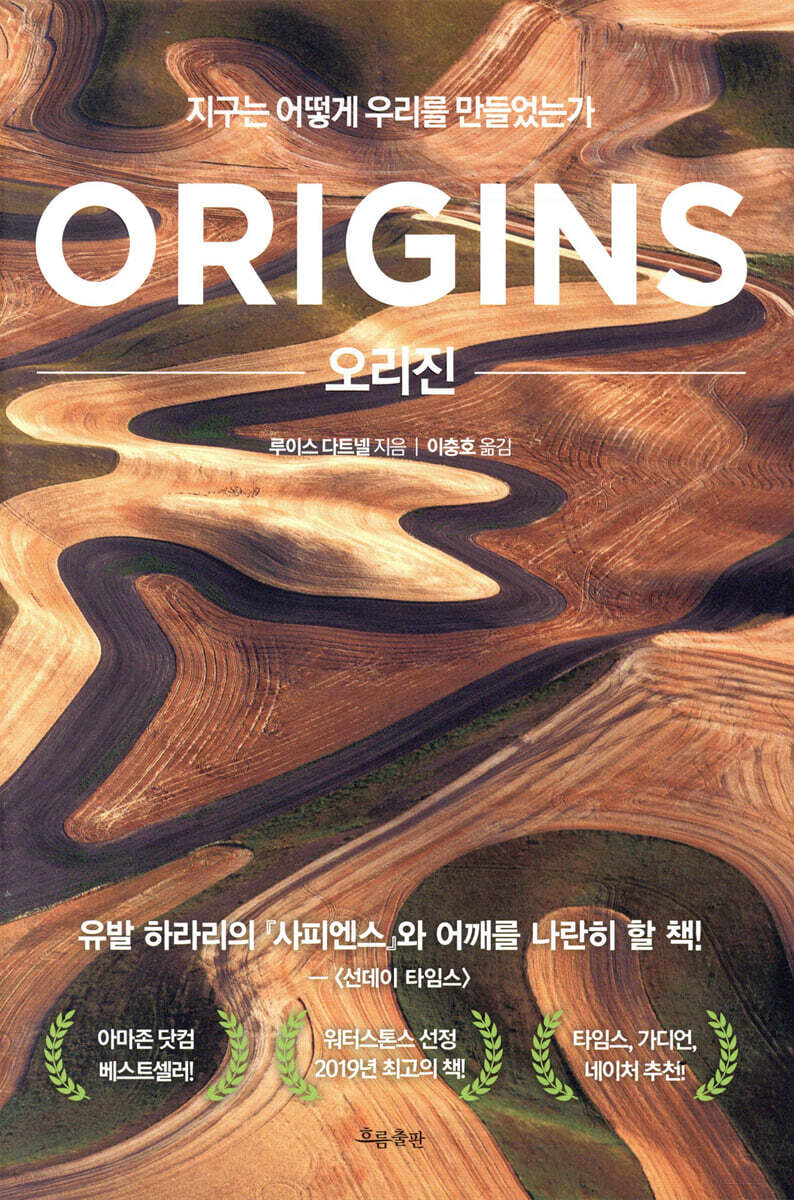
A grand journey spanning 4.6 billion years to find answers to human origins and evolution! When we talk about human history, we often focus on the great migrations of a few leaders and groups, and on decisive wars. But there is something being overlooked here. It is the very planet we live on, the Earth itself. Was human history truly wrought solely by humanity's own efforts? Did the Earth play no role in determining humanity's fate? This is precisely the question that "Origin" begins with. Professor Lewis Dartnell, a scientist at the UK Space Agency, takes us back billions of years to Earth's past to reveal humanity's ultimate origins. From plate tectonics and climate change to atmospheric circulation and ocean currents, human history has constantly evolved in response to changes on Earth. The geological forces that first carved up a single continent drove our evolution in East Africa. But humanity's versatility and intelligence are actually products of the cosmic cycles that created Earth's natural environment. How did Greece's unique mountainous terrain influence the birth of democracy? Why do American voting patterns today mirror ancient ocean floors? How do the Himalayas relate to the Earth's orbit? How did the end of the Ice Age shape the formation of the British Isles? Only when history becomes a science can we begin to see the vast networks that form the foundation of the modern world and help us meet the challenges of the future. This book is a 'true' story about the planet Earth and the amazing and fantastic ensemble of humanity that has survived and evolved on it. |
- You can preview some of the book's contents.
Preview
index
Chapter 1: How We Were Made
Earth Cooling | A Hotbed of Evolution | Coming Down from the Trees to Make Tools | Climate Oscillations | We Are the Children of Plateau Movement
Chapter 2: Why Did Sapiens Start Moving?
Chilly Times | The Clockwork of the Sky | From Greenhouse to Icehouse | The Great Escape | The Many Repercussions of the Ice Age | Island Nation
Chapter 3: Biogeographic Environments that Facilitated Human Evolution
Paradises Found and Lost | The Neolithic Revolution | The Seeds of Change | Crossing the Bridge of No Return | Domesticating Wild Animals | The Reproductive Revolution | Civilization and APP Mammals | Global Fever | The Eurasian Advantage | Water Towers
Chapter 4: The World of Sinbad
Turning Water into Wealth | Inland Sea | The World of Sinbad | The Spice World | Bottleneck | Black Artery | Black Belt
Chapter 5: Materials that Shape the Urban Landscape
Biological rocks | Wood and clay | Limestone and marble | Chalk and flint | Fire and limestone | Products of the violent activity of plates | The ground beneath our feet
Chapter 6: How Metals Transformed Human Society
The Dawn of the Bronze Age | From the Seabed to the Mountaintop | From Wrought Iron to Steel | The Iron Heart of a Star | When the World Rusted | The Periodic Table in Your Pocket | Endangered Elements
Chapter 7: A Map of the Silk Road Shaped by Climate
The East-West Highway | The Sea of Grass | The Great Migration | The Decline and Fall of the Roman Empire | Pax Mongolica | The End of an Era
Chapter 8: Ocean Currents and Winds: Ushering in an Era of Great Human Exploration
Volta do Mar | Cape of Storms | New World | Global Wind Machine | Towards the Monsoon Sea | Monsoon Metronome | Empire of Water | Towards Globalization
Chapter 9: How Coal and Oil Changed Human Culture
The Power of Sunlight and Muscle | The Energy Revolution | Fossilized Sunlight | The Politics of Coal | The Black Death | Eliminating the Middleman
Earth Cooling | A Hotbed of Evolution | Coming Down from the Trees to Make Tools | Climate Oscillations | We Are the Children of Plateau Movement
Chapter 2: Why Did Sapiens Start Moving?
Chilly Times | The Clockwork of the Sky | From Greenhouse to Icehouse | The Great Escape | The Many Repercussions of the Ice Age | Island Nation
Chapter 3: Biogeographic Environments that Facilitated Human Evolution
Paradises Found and Lost | The Neolithic Revolution | The Seeds of Change | Crossing the Bridge of No Return | Domesticating Wild Animals | The Reproductive Revolution | Civilization and APP Mammals | Global Fever | The Eurasian Advantage | Water Towers
Chapter 4: The World of Sinbad
Turning Water into Wealth | Inland Sea | The World of Sinbad | The Spice World | Bottleneck | Black Artery | Black Belt
Chapter 5: Materials that Shape the Urban Landscape
Biological rocks | Wood and clay | Limestone and marble | Chalk and flint | Fire and limestone | Products of the violent activity of plates | The ground beneath our feet
Chapter 6: How Metals Transformed Human Society
The Dawn of the Bronze Age | From the Seabed to the Mountaintop | From Wrought Iron to Steel | The Iron Heart of a Star | When the World Rusted | The Periodic Table in Your Pocket | Endangered Elements
Chapter 7: A Map of the Silk Road Shaped by Climate
The East-West Highway | The Sea of Grass | The Great Migration | The Decline and Fall of the Roman Empire | Pax Mongolica | The End of an Era
Chapter 8: Ocean Currents and Winds: Ushering in an Era of Great Human Exploration
Volta do Mar | Cape of Storms | New World | Global Wind Machine | Towards the Monsoon Sea | Monsoon Metronome | Empire of Water | Towards Globalization
Chapter 9: How Coal and Oil Changed Human Culture
The Power of Sunlight and Muscle | The Energy Revolution | Fossilized Sunlight | The Politics of Coal | The Black Death | Eliminating the Middleman
Detailed image
Into the book
Most ancient civilizations are located very close to the edges of the plates.
This is a remarkable correlation, considering the amount of habitable land on Earth.
Despite the dangers of earthquakes, tsunamis, and volcanoes caused by tectonic fractures, there must be some great secret behind why ancient civilizations favored plate boundaries.
Collisions of plates create high mountain ranges, but they also create low-lying basins where the surrounding crust sinks under the immense weight of the mountain ranges.
The Indus and Ganges rivers, flowing down from the Himalayas, flowed through this basin (front basin) in front of them, depositing sediments carried down from the mountains and creating fertile soil favorable for early agriculture.
Therefore, it can be said that the Harappan civilization was a product of the collision between the Indian plate and the Eurasian plate.
Volcanoes also provide fertile soil.
The deformation of the plates also creates cracks in the rocks or pushes up blocks of land to create thrust faults, which often form springs where groundwater wells up.
Along this road, towns and villages sprang up here and there, centered around springs that gushed from the foothills, welcoming traveling merchants.
We are the children of the board's activities.
Some of the world's largest cities today are built on faults created by plate tectonics, and throughout history, many early civilizations were built on the boundaries of the plates that make up the Earth's crust.
--- From "How We Were Made"
The nature of the North Sea has had another important influence in shaping the modern world.
The Low Countries of Belgium and the Netherlands lie on the flat coastlines of the Northern European Plain, and from the 13th century onwards the Dutch used windmills to drain the sea and marshes to create new farmland.
In effect, they have restored part of the Doggerland from the Ice Age, which was once again submerged by rising sea levels.
However, building levees and windmills to clear the land was expensive, and the cost could be covered by sharing the community's resources.
The necessary funds were raised by local churches and councils borrowing money from residents, and the profits from farming the newly cleared land were distributed to the investors.
Soon, everyone in society was investing their surplus funds in bonds to finance this massive project, which in turn led to a significant surge in the credit market.
The demands of the natural environment and the need to manage the sea made the Netherlands a land of capitalists.
The first official stock market, as well as the first central bank, emerged in Amsterdam in the early 17th century, making the Netherlands the most financially developed country in Europe at the time.
These properly formed instruments of capitalism quickly spread to other countries, creating the financial institutions necessary for the Industrial Revolution.
This is a remarkable correlation, considering the amount of habitable land on Earth.
Despite the dangers of earthquakes, tsunamis, and volcanoes caused by tectonic fractures, there must be some great secret behind why ancient civilizations favored plate boundaries.
Collisions of plates create high mountain ranges, but they also create low-lying basins where the surrounding crust sinks under the immense weight of the mountain ranges.
The Indus and Ganges rivers, flowing down from the Himalayas, flowed through this basin (front basin) in front of them, depositing sediments carried down from the mountains and creating fertile soil favorable for early agriculture.
Therefore, it can be said that the Harappan civilization was a product of the collision between the Indian plate and the Eurasian plate.
Volcanoes also provide fertile soil.
The deformation of the plates also creates cracks in the rocks or pushes up blocks of land to create thrust faults, which often form springs where groundwater wells up.
Along this road, towns and villages sprang up here and there, centered around springs that gushed from the foothills, welcoming traveling merchants.
We are the children of the board's activities.
Some of the world's largest cities today are built on faults created by plate tectonics, and throughout history, many early civilizations were built on the boundaries of the plates that make up the Earth's crust.
--- From "How We Were Made"
The nature of the North Sea has had another important influence in shaping the modern world.
The Low Countries of Belgium and the Netherlands lie on the flat coastlines of the Northern European Plain, and from the 13th century onwards the Dutch used windmills to drain the sea and marshes to create new farmland.
In effect, they have restored part of the Doggerland from the Ice Age, which was once again submerged by rising sea levels.
However, building levees and windmills to clear the land was expensive, and the cost could be covered by sharing the community's resources.
The necessary funds were raised by local churches and councils borrowing money from residents, and the profits from farming the newly cleared land were distributed to the investors.
Soon, everyone in society was investing their surplus funds in bonds to finance this massive project, which in turn led to a significant surge in the credit market.
The demands of the natural environment and the need to manage the sea made the Netherlands a land of capitalists.
The first official stock market, as well as the first central bank, emerged in Amsterdam in the early 17th century, making the Netherlands the most financially developed country in Europe at the time.
These properly formed instruments of capitalism quickly spread to other countries, creating the financial institutions necessary for the Industrial Revolution.
--- From "The World of Sinbad"
Publisher's Review
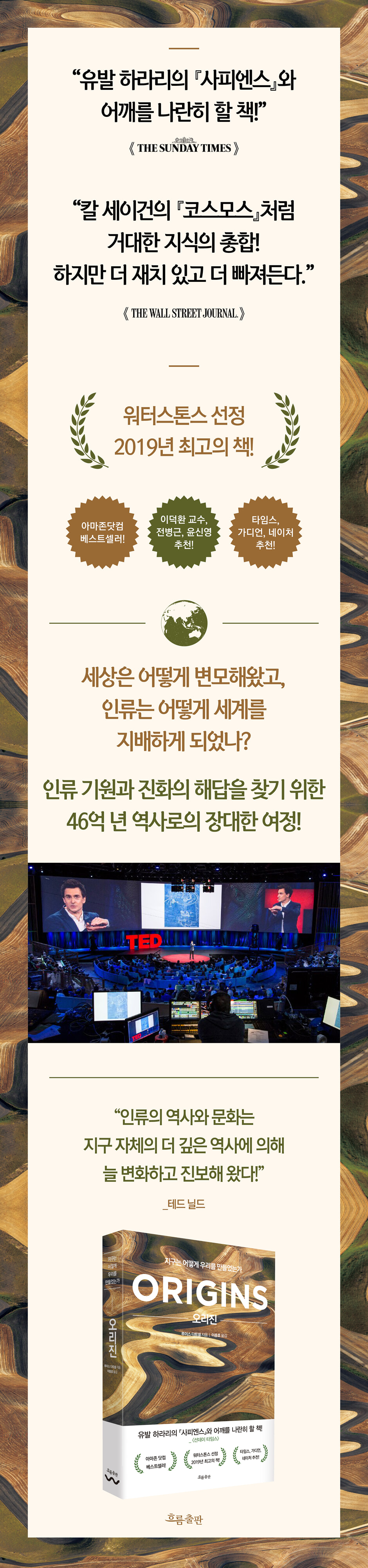
“A book that stands shoulder to shoulder with Yuval Harari’s ‘Sapiens’!”
A vast sum of knowledge! The final installment of Big History's "Earth" series!
From the dreamtime of the Australian Aboriginal people to the creation myth of the Zulu people, every culture has its own origin story.
But in modern society, science has been proving how our world came to be and how we humans have become the world's rulers, and this has become increasingly extensive and sophisticated.
Now, unlike in the past when we relied solely on imagination, we can use the precise investigative tools of science to clearly reveal the chronology of creation.
Published with rave reviews such as “A book to rival Yuval Harari’s Sapiens” (The Sunday Times) and “A vast trove of knowledge, like Carl Sagan’s Cosmos, but wittier and more engrossing” (The Wall Street Journal), Origins is the new work of Professor Lewis Dartnell, a researcher at the British Space Agency, a popular TED speaker, and a genius scientist.
In this book, Dartnell demonstrates the essence of 'Big History' by covering all fields of humanities, including earth science, geology, oceanography, paleontology, archaeology, and history.
A story of ultimate origins! This book is a grand narrative about humanity from its beginnings to the present, and about the planet we live on, from its birth to the present.
The story of humanity created by the Earth VS the story of the Earth created by humanity!
A enchanting harmony of the evolution of civilization and the history of the Earth!
Humanity has been consuming the Earth's resources to survive long before we started using tools.
In modern times, humans are having a significant and lasting impact on the Earth through the construction of cities, roads, dams, industrial activities, mining, etc., altering the natural landscape and causing climate change.
In this way, we humans as a species are inextricably linked to the Earth.
Just as our activities leave a clear mark on the natural world, the history of the Earth is also engraved on us.
Therefore, to properly understand our own story, we must first look at the history of the Earth itself.
If so, the first question we must ask is:
Why is Earth the way it is? What caused the creation of its major features—its physical landscape of continents, oceans, mountain ranges, and deserts? How have Earth's topography and activities, and beyond that, the cosmic environment, influenced the emergence and development of our species? How have they influenced the history of society and civilization? And, just as Earth has, how has humanity influenced the Earth itself?
We are all apes.
The human branch on the evolutionary tree, called hominins, is part of a larger group of animals called primates.
When our primate ancestors were living in trees, eating fruit and leaves, a dramatic event occurred in our native East Africa, transforming the lush forest habitat into a dry savanna.
This event triggered our evolution from tree-dwelling primates to bipedal hominins who roamed the rich grasslands and hunted.
What global causes brought about such changes in this region, creating an environment conducive to the evolution of intelligent and adaptable animals? The underlying foundation was the complex tectonic activity of the Earth's plates, the resulting volcanic eruptions, and the massive amounts of volcanic ash that blanketed the planet.
Ultimately, this dynamic, planetary movement was the decisive first step in the evolution of Homo sapiens.
_ From the text
In this book, Dartnell traces the threads of history back further into the past to find the roots of the modern world.
These roots extend far back in time, dating back to the very birth of the Earth.
We will examine how nature has changed and life has developed on Earth over the past 'billions' of years, how humans have evolved from our ape ancestors over the past '5 million' years, how human abilities have developed and spread around the world over the past 'hundreds of thousands' years, how civilization has developed over the past 'ten thousand' years, the trends of commercialization, industrialization, and globalization over the past 'thousand' years, and finally, how humanity has come to understand this wondrous story of origins over the past 'hundreds' of years.
For example, Dartnell uses Milankovitch cycles to examine why Earth has undergone a cooling and drying trend over the past tens of millions of years, and how this environment has shaped the plant species we cultivate and the herbivorous mammal species we domesticate.
We also explore how the last ice age influenced our spread across the globe and why humans only began settling down and farming during the current interglacial period.
If the Earth were perfectly upright, there would be no seasonal changes.
However, because the axis of rotation is tilted, the northern hemisphere, which is tilted toward the sun, receives more sunlight than the southern hemisphere for half the year, resulting in summer.
The eccentricity of the Earth's orbit, the tilt of its axis, and its wobble all affect the Earth's climate, and these change periodically over time.
These periodic changes are called Milankovitch cycles.
From the beginning of this ice reservoir period, about 2.6 million years ago, the pulse of glacial periods followed the 41,000-year Milankovitch cycle, which governs the tilt of the Earth's axis, but for reasons not clearly understood, about 1 million years ago it shifted to a slower but more extreme cycle, the cycle of Earth's orbital eccentricity, which lasts about 100,000 years.
The icebergs were struck in time with another drum that was slower but louder.
Each ice age became more powerful and lasted longer.
_ From the text
Dartnell also explores how we discovered how to mine and harness various metals from the Earth's crust, leading to a series of revolutions in toolmaking and technology throughout history, and how the fossil fuel resources that powered the world after the Industrial Revolution emerged.
It looks back on the Age of Exploration within the context of the circulatory systems of Earth's atmosphere and oceans, explaining how navigators gradually understood wind patterns and ocean currents, ultimately establishing intercontinental trade routes and maritime empires.
We explore how Earth's history has shaped today's geostrategically significant locations and how they continue to influence modern politics (why sediments from an ancient sea that existed 75 million years ago continue to influence which party voters in the modern-day American southeast, and how the location of 320 million-year-old Carboniferous rock layers influence British voting patterns).
The ultimate answer to the origins of humanity!
The Earth made us!
History is messy, confusing, and random.
Years of drought have led to social unrest, a volcano erupts, wiping out nearby cities and towns, and a general's misjudgment amidst the chaos and carnage of battle destroys an entire kingdom.
But if we look at the world from a sufficiently broad perspective, encompassing both time and space, beyond the contingencies of history, reliable trends and reliable, immutable conditions emerge, and we can explain the ultimate causes behind events.
Historians decipher and interpret written records left by humans to uncover the stories of early civilizations.
Archaeologists who dust off ancient artifacts and ruins tell the story of our prehistoric past and the people who lived as hunter-gatherers.
Paleontologists collect and synthesize a wealth of evidence to uncover how we evolved as a species.
Dartnell brings together knowledge from all fields that study the footsteps of humanity, leading us on a journey to the distant 'origins'.
Along the way, Dartnell analyzes records preserved in the rock layers that make up the Earth's structure, deciphers ancient genetic codes stored in the DNA libraries of each cell in our bodies, and peers through telescopes to examine the cosmic forces that shaped our world.
The story of this book was completed as the threads of history and science intertwined like the warp and woof of a cloth.
A unique book offering a fresh perspective on the relationship between humanity and the Earth! Dartnell is an expert in geology, geography, anthropology, physics, chemistry, biology, astronomy, and history.
But what makes him even more special is his ability to explain the interconnectedness of these fields in a clear, logical, and entertaining way.
In a word, we can say that he is the best.
_ The Times
A fascinating book! A fantastic book!
_ The Guardian
The story in 『Origin』 is beautiful.
Lewis Dartnell guides readers through a synthesis of geology, oceanography, meteorology, geography, paleontology, archaeology, and political history, reminiscent of Jared Diamond's Guns, Germs, and Steel.
_ 〈Nature〉
Like Carl Sagan's Cosmos, Origins is a big history, a vast collection of knowledge spanning many fields.
Yet, Dartnell's witty and humorous prose keeps you hooked without a moment of boredom.
_ The Wall Street Journal
This book does a great job of explaining human history from a geological perspective.
And sometimes it's even surprising.
_ 〈Publisher's Weekly〉
A vast sum of knowledge! The final installment of Big History's "Earth" series!
From the dreamtime of the Australian Aboriginal people to the creation myth of the Zulu people, every culture has its own origin story.
But in modern society, science has been proving how our world came to be and how we humans have become the world's rulers, and this has become increasingly extensive and sophisticated.
Now, unlike in the past when we relied solely on imagination, we can use the precise investigative tools of science to clearly reveal the chronology of creation.
Published with rave reviews such as “A book to rival Yuval Harari’s Sapiens” (The Sunday Times) and “A vast trove of knowledge, like Carl Sagan’s Cosmos, but wittier and more engrossing” (The Wall Street Journal), Origins is the new work of Professor Lewis Dartnell, a researcher at the British Space Agency, a popular TED speaker, and a genius scientist.
In this book, Dartnell demonstrates the essence of 'Big History' by covering all fields of humanities, including earth science, geology, oceanography, paleontology, archaeology, and history.
A story of ultimate origins! This book is a grand narrative about humanity from its beginnings to the present, and about the planet we live on, from its birth to the present.
The story of humanity created by the Earth VS the story of the Earth created by humanity!
A enchanting harmony of the evolution of civilization and the history of the Earth!
Humanity has been consuming the Earth's resources to survive long before we started using tools.
In modern times, humans are having a significant and lasting impact on the Earth through the construction of cities, roads, dams, industrial activities, mining, etc., altering the natural landscape and causing climate change.
In this way, we humans as a species are inextricably linked to the Earth.
Just as our activities leave a clear mark on the natural world, the history of the Earth is also engraved on us.
Therefore, to properly understand our own story, we must first look at the history of the Earth itself.
If so, the first question we must ask is:
Why is Earth the way it is? What caused the creation of its major features—its physical landscape of continents, oceans, mountain ranges, and deserts? How have Earth's topography and activities, and beyond that, the cosmic environment, influenced the emergence and development of our species? How have they influenced the history of society and civilization? And, just as Earth has, how has humanity influenced the Earth itself?
We are all apes.
The human branch on the evolutionary tree, called hominins, is part of a larger group of animals called primates.
When our primate ancestors were living in trees, eating fruit and leaves, a dramatic event occurred in our native East Africa, transforming the lush forest habitat into a dry savanna.
This event triggered our evolution from tree-dwelling primates to bipedal hominins who roamed the rich grasslands and hunted.
What global causes brought about such changes in this region, creating an environment conducive to the evolution of intelligent and adaptable animals? The underlying foundation was the complex tectonic activity of the Earth's plates, the resulting volcanic eruptions, and the massive amounts of volcanic ash that blanketed the planet.
Ultimately, this dynamic, planetary movement was the decisive first step in the evolution of Homo sapiens.
_ From the text
In this book, Dartnell traces the threads of history back further into the past to find the roots of the modern world.
These roots extend far back in time, dating back to the very birth of the Earth.
We will examine how nature has changed and life has developed on Earth over the past 'billions' of years, how humans have evolved from our ape ancestors over the past '5 million' years, how human abilities have developed and spread around the world over the past 'hundreds of thousands' years, how civilization has developed over the past 'ten thousand' years, the trends of commercialization, industrialization, and globalization over the past 'thousand' years, and finally, how humanity has come to understand this wondrous story of origins over the past 'hundreds' of years.
For example, Dartnell uses Milankovitch cycles to examine why Earth has undergone a cooling and drying trend over the past tens of millions of years, and how this environment has shaped the plant species we cultivate and the herbivorous mammal species we domesticate.
We also explore how the last ice age influenced our spread across the globe and why humans only began settling down and farming during the current interglacial period.
If the Earth were perfectly upright, there would be no seasonal changes.
However, because the axis of rotation is tilted, the northern hemisphere, which is tilted toward the sun, receives more sunlight than the southern hemisphere for half the year, resulting in summer.
The eccentricity of the Earth's orbit, the tilt of its axis, and its wobble all affect the Earth's climate, and these change periodically over time.
These periodic changes are called Milankovitch cycles.
From the beginning of this ice reservoir period, about 2.6 million years ago, the pulse of glacial periods followed the 41,000-year Milankovitch cycle, which governs the tilt of the Earth's axis, but for reasons not clearly understood, about 1 million years ago it shifted to a slower but more extreme cycle, the cycle of Earth's orbital eccentricity, which lasts about 100,000 years.
The icebergs were struck in time with another drum that was slower but louder.
Each ice age became more powerful and lasted longer.
_ From the text
Dartnell also explores how we discovered how to mine and harness various metals from the Earth's crust, leading to a series of revolutions in toolmaking and technology throughout history, and how the fossil fuel resources that powered the world after the Industrial Revolution emerged.
It looks back on the Age of Exploration within the context of the circulatory systems of Earth's atmosphere and oceans, explaining how navigators gradually understood wind patterns and ocean currents, ultimately establishing intercontinental trade routes and maritime empires.
We explore how Earth's history has shaped today's geostrategically significant locations and how they continue to influence modern politics (why sediments from an ancient sea that existed 75 million years ago continue to influence which party voters in the modern-day American southeast, and how the location of 320 million-year-old Carboniferous rock layers influence British voting patterns).
The ultimate answer to the origins of humanity!
The Earth made us!
History is messy, confusing, and random.
Years of drought have led to social unrest, a volcano erupts, wiping out nearby cities and towns, and a general's misjudgment amidst the chaos and carnage of battle destroys an entire kingdom.
But if we look at the world from a sufficiently broad perspective, encompassing both time and space, beyond the contingencies of history, reliable trends and reliable, immutable conditions emerge, and we can explain the ultimate causes behind events.
Historians decipher and interpret written records left by humans to uncover the stories of early civilizations.
Archaeologists who dust off ancient artifacts and ruins tell the story of our prehistoric past and the people who lived as hunter-gatherers.
Paleontologists collect and synthesize a wealth of evidence to uncover how we evolved as a species.
Dartnell brings together knowledge from all fields that study the footsteps of humanity, leading us on a journey to the distant 'origins'.
Along the way, Dartnell analyzes records preserved in the rock layers that make up the Earth's structure, deciphers ancient genetic codes stored in the DNA libraries of each cell in our bodies, and peers through telescopes to examine the cosmic forces that shaped our world.
The story of this book was completed as the threads of history and science intertwined like the warp and woof of a cloth.
A unique book offering a fresh perspective on the relationship between humanity and the Earth! Dartnell is an expert in geology, geography, anthropology, physics, chemistry, biology, astronomy, and history.
But what makes him even more special is his ability to explain the interconnectedness of these fields in a clear, logical, and entertaining way.
In a word, we can say that he is the best.
_ The Times
A fascinating book! A fantastic book!
_ The Guardian
The story in 『Origin』 is beautiful.
Lewis Dartnell guides readers through a synthesis of geology, oceanography, meteorology, geography, paleontology, archaeology, and political history, reminiscent of Jared Diamond's Guns, Germs, and Steel.
_ 〈Nature〉
Like Carl Sagan's Cosmos, Origins is a big history, a vast collection of knowledge spanning many fields.
Yet, Dartnell's witty and humorous prose keeps you hooked without a moment of boredom.
_ The Wall Street Journal
This book does a great job of explaining human history from a geological perspective.
And sometimes it's even surprising.
_ 〈Publisher's Weekly〉
GOODS SPECIFICS
- Date of issue: September 20, 2020
- Page count, weight, size: 392 pages | 580g | 148*218*25mm
- ISBN13: 9788965964001
- ISBN10: 8965964008
You may also like
카테고리
korean


korean

![GQ KOREA Mark (Monthly): December [2025]](http://librairie.coreenne.fr/cdn/shop/files/8ef265dbbfbf186523ed75ba7319009d.jpg?v=1765340328&width=3840)


